 |
 |
 |
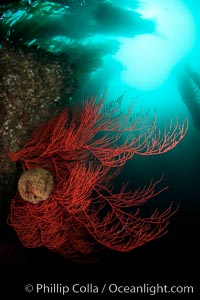
Bryozoan grows on a red gorgonian on rocky reef, below kelp forest, underwater. The red gorgonian is a filter-feeding temperate colonial species that lives on the rocky bottom at depths between 50 to 200 feet deep. Gorgonians are oriented at right angles to prevailing water currents to capture plankton drifting by. Beck Setb Photo.
Image ID: 25395
Species: Red gorgonian, Lophogorgia chilensis
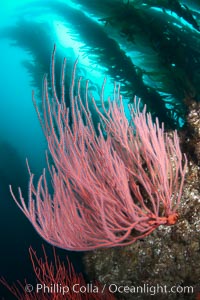
Location: San Clemente Island, California, USA | Red gorgonian on rocky reef, below kelp forest, underwater. The red gorgonian is a filter-feeding temperate colonial species that lives on the rocky bottom at depths between 50 to 200 feet deep. Gorgonians are oriented at right angles to prevailing water currents to capture plankton drifting by. Beck Setb Picture.
Image ID: 25393
Species: Red gorgonian, Lophogorgia chilensis
Location: San Clemente Island, California, USA | Red gorgonian on rocky reef, below kelp forest, underwater. The red gorgonian is a filter-feeding temperate colonial species that lives on the rocky bottom at depths between 50 to 200 feet deep. Gorgonians are oriented at right angles to prevailing water currents to capture plankton drifting by. Stock Photography of Beck Setb.
Image ID: 25394
Species: Red gorgonian, Lophogorgia chilensis
Location: San Clemente Island, California, USA |
|
|
|
Kelp fronds and pneumatocysts. Pneumatocysts, gas-filled bladders, float the kelp plant off the ocean bottom toward the surface and sunlight, where the leaf-like blades and stipes of the kelp plant grow fastest. Giant kelp can grow up to 2' in a single day given optimal conditions. Epic submarine forests of kelp grow throughout California's Southern Channel Islands. Photograph of Beck Setb.
Image ID: 25396
Species: Giant kelp, Macrocystis pyrifera
Location: San Clemente Island, California, USA | Giant kelp, blades, stipes and pneumatocysts, backlit by the sun in shallow water. Beck Setb Photos.
Image ID: 25401
Species: Giant kelp, Macrocystis pyrifera
Location: San Clemente Island, California, USA | California golden gorgonian on rocky reef, underwater. The golden gorgonian is a filter-feeding temperate colonial species that lives on the rocky bottom at depths between 50 to 200 feet deep. Each individual polyp is a distinct animal, together they secrete calcium that forms the structure of the colony. Gorgonians are oriented at right angles to prevailing water currents to capture plankton drifting by. Beck Setb Image.
Image ID: 25397
Species: California golden gorgonian, Muricea californica
Location: San Clemente Island, California, USA |
|
|
|
Brown gorgonians on rocky reef, below kelp forest, underwater. Gorgonians are filter-feeding temperate colonial species that live on the rocky bottom at depths between 50 to 200 feet deep. Each individual polyp is a distinct animal, together they secrete calcium that forms the structure of the colony. Gorgonians are oriented at right angles to prevailing water currents to capture plankton drifting by Professional stock photos of Beck Setb.
Image ID: 25398
Species: Brown gorgonian, Muricea fruticosa
Location: San Clemente Island, California, USA | Kelp fronds and pneumatocysts. Pneumatocysts, gas-filled bladders, float the kelp plant off the ocean bottom toward the surface and sunlight, where the leaf-like blades and stipes of the kelp plant grow fastest. Giant kelp can grow up to 2' in a single day given optimal conditions. Epic submarine forests of kelp grow throughout California's Southern Channel Islands. Pictures of Beck Setb.
Image ID: 25399
Species: Giant kelp, Macrocystis pyrifera
Location: San Clemente Island, California, USA | A view of an underwater forest of giant kelp. Giant kelp grows rapidly, up to 2' per day, from the rocky reef on the ocean bottom to which it is anchored, toward the ocean surface where it spreads to form a thick canopy. Myriad species of fishes, mammals and invertebrates form a rich community in the kelp forest. Lush forests of kelp are found through California's Southern Channel Islands. Beck Setb Photo.
Image ID: 25400
Species: Giant kelp, Macrocystis pyrifera
Location: San Clemente Island, California, USA |
|
|
|
Kelp fronds and pneumatocysts. Pneumatocysts, gas-filled bladders, float the kelp plant off the ocean bottom toward the surface and sunlight, where the leaf-like blades and stipes of the kelp plant grow fastest. Giant kelp can grow up to 2' in a single day given optimal conditions. Epic submarine forests of kelp grow throughout California's Southern Channel Islands. Beck Setb Picture.
Image ID: 25403
Species: Giant kelp, Macrocystis pyrifera
Location: San Clemente Island, California, USA | Kelp fronds and pneumatocysts. Pneumatocysts, gas-filled bladders, float the kelp plant off the ocean bottom toward the surface and sunlight, where the leaf-like blades and stipes of the kelp plant grow fastest. Giant kelp can grow up to 2' in a single day given optimal conditions. Epic submarine forests of kelp grow throughout California's Southern Channel Islands. Stock Photography of Beck Setb.
Image ID: 25412
Species: Giant kelp, Macrocystis pyrifera
Location: San Clemente Island, California, USA | A view of an underwater forest of giant kelp. Giant kelp grows rapidly, up to 2' per day, from the rocky reef on the ocean bottom to which it is anchored, toward the ocean surface where it spreads to form a thick canopy. Myriad species of fishes, mammals and invertebrates form a rich community in the kelp forest. Lush forests of kelp are found through California's Southern Channel Islands. Photograph of Beck Setb.
Image ID: 25432
Species: Giant kelp, Macrocystis pyrifera
Location: San Clemente Island, California, USA |
|
|
|
Kelp fronds and pneumatocysts. Pneumatocysts, gas-filled bladders, float the kelp plant off the ocean bottom toward the surface and sunlight, where the leaf-like blades and stipes of the kelp plant grow fastest. Giant kelp can grow up to 2' in a single day given optimal conditions. Epic submarine forests of kelp grow throughout California's Southern Channel Islands. Beck Setb Photos.
Image ID: 25405
Species: Giant kelp, Macrocystis pyrifera
Location: San Clemente Island, California, USA | Marine algae cover the rocky reef. Beck Setb Image.
Image ID: 25416
Location: San Clemente Island, California, USA | Various species of marine algae, and surfgrass cover the rocky reef. Professional stock photos of Beck Setb.
Image ID: 25418
Location: San Clemente Island, California, USA |
|
|
|
Kelp fronds and pneumatocysts. Pneumatocysts, gas-filled bladders, float the kelp plant off the ocean bottom toward the surface and sunlight, where the leaf-like blades and stipes of the kelp plant grow fastest. Giant kelp can grow up to 2' in a single day given optimal conditions. Epic submarine forests of kelp grow throughout California's Southern Channel Islands. Pictures of Beck Setb.
Image ID: 25429
Species: Giant kelp, Macrocystis pyrifera
Location: San Clemente Island, California, USA | A view of an underwater forest of giant kelp. Giant kelp grows rapidly, up to 2' per day, from the rocky reef on the ocean bottom to which it is anchored, toward the ocean surface where it spreads to form a thick canopy. Myriad species of fishes, mammals and invertebrates form a rich community in the kelp forest. Lush forests of kelp are found through California's Southern Channel Islands. Beck Setb Photo.
Image ID: 25433
Species: Giant kelp, Macrocystis pyrifera
Location: San Clemente Island, California, USA | A view of an underwater forest of giant kelp. Giant kelp grows rapidly, up to 2' per day, from the rocky reef on the ocean bottom to which it is anchored, toward the ocean surface where it spreads to form a thick canopy. Myriad species of fishes, mammals and invertebrates form a rich community in the kelp forest. Lush forests of kelp are found through California's Southern Channel Islands. Beck Setb Picture.
Image ID: 25435
Species: Giant kelp, Macrocystis pyrifera
Location: San Clemente Island, California, USA |
|