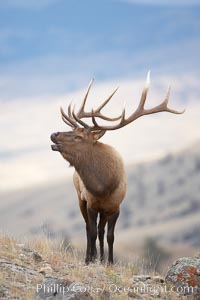
Male elk bugling during the fall rut. Large male elk are known as bulls. Male elk have large antlers which are shed each year. Male elk engage in competitive mating behaviors during the rut, including posturing, antler wrestling and bugling, a loud series of screams which is intended to establish dominance over other males and attract females.
Species: Elk, Cervus canadensis
Location: Mammoth Hot Springs, Yellowstone National Park, Wyoming
Image ID: 19693
Species: Elk, Cervus canadensis
Location: Mammoth Hot Springs, Yellowstone National Park, Wyoming
Image ID: 19693
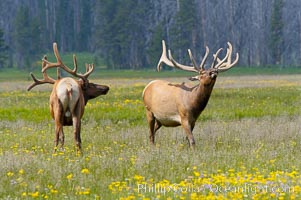
Bull elk spar to establish harems of females, Gibbon Meadow.
Species: Elk, Cervus canadensis
Location: Gibbon Meadows, Yellowstone National Park, Wyoming
Image ID: 13151
Species: Elk, Cervus canadensis
Location: Gibbon Meadows, Yellowstone National Park, Wyoming
Image ID: 13151
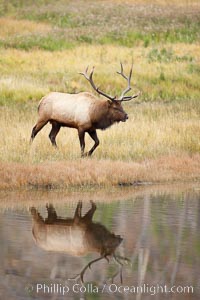
Male elk bugling during the fall rut. Large male elk are known as bulls. Male elk have large antlers which are shed each year. Male elk engage in competitive mating behaviors during the rut, including posturing, antler wrestling and bugling, a loud series of screams which is intended to establish dominance over other males and attract females.
Species: Elk, Cervus canadensis
Location: Madison River, Yellowstone National Park, Wyoming
Image ID: 19697
Species: Elk, Cervus canadensis
Location: Madison River, Yellowstone National Park, Wyoming
Image ID: 19697
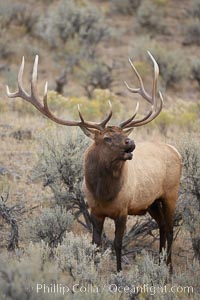
Male elk bugling during the fall rut. Large male elk are known as bulls. Male elk have large antlers which are shed each year. Male elk engage in competitive mating behaviors during the rut, including posturing, antler wrestling and bugling, a loud series of screams which is intended to establish dominance over other males and attract females.
Species: Elk, Cervus canadensis
Location: Mammoth Hot Springs, Yellowstone National Park, Wyoming
Image ID: 19698
Species: Elk, Cervus canadensis
Location: Mammoth Hot Springs, Yellowstone National Park, Wyoming
Image ID: 19698
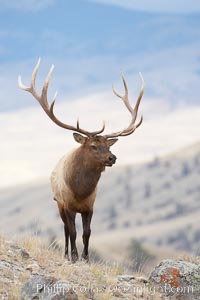
Elk, bull elk, adult male elk with large set of antlers. By September, this bull elk's antlers have reached their full size and the velvet has fallen off. This bull elk has sparred with other bulls for access to herds of females in estrous and ready to mate.
Species: Elk, Cervus canadensis
Location: Mammoth Hot Springs, Yellowstone National Park, Wyoming
Image ID: 19721
Species: Elk, Cervus canadensis
Location: Mammoth Hot Springs, Yellowstone National Park, Wyoming
Image ID: 19721
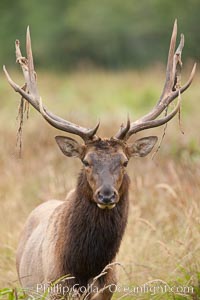
Roosevelt elk, adult bull male with large antlers. This bull elk has recently shed the velvet that covers its antlers. While an antler is growing, it is covered with highly vascular skin called velvet, which supplies oxygen and nutrients to the growing bone; once the antler has achieved its full size, the velvet is lost and the antler's bone dies. This dead bone structure is the mature antler, which is itself shed after each mating season. Roosevelt elk grow to 10' and 1300 lb, eating grasses, sedges and various berries, inhabiting the coastal rainforests of the Pacific Northwest.
Species: Roosevelt elk, Cervus canadensis roosevelti
Location: Redwood National Park, California
Image ID: 25890
Species: Roosevelt elk, Cervus canadensis roosevelti
Location: Redwood National Park, California
Image ID: 25890
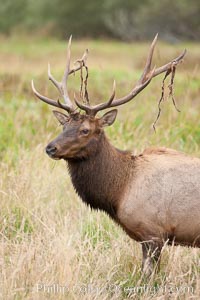
Roosevelt elk, adult bull male with large antlers. This bull elk has recently shed the velvet that covers its antlers. While an antler is growing, it is covered with highly vascular skin called velvet, which supplies oxygen and nutrients to the growing bone; once the antler has achieved its full size, the velvet is lost and the antler's bone dies. This dead bone structure is the mature antler, which is itself shed after each mating season. Roosevelt elk grow to 10' and 1300 lb, eating grasses, sedges and various berries, inhabiting the coastal rainforests of the Pacific Northwest.
Species: Roosevelt elk, Cervus canadensis roosevelti
Location: Redwood National Park, California
Image ID: 25878
Species: Roosevelt elk, Cervus canadensis roosevelti
Location: Redwood National Park, California
Image ID: 25878
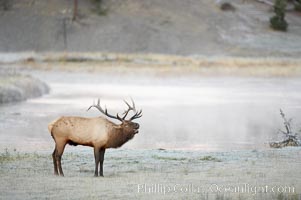
Male elk bugling during the fall rut. Large male elk are known as bulls. Male elk have large antlers which are shed each year. Male elk engage in competitive mating behaviors during the rut, including posturing, antler wrestling and bugling, a loud series of screams which is intended to establish dominance over other males and attract females.
Species: Elk, Cervus canadensis
Location: Madison River, Yellowstone National Park, Wyoming
Image ID: 19700
Species: Elk, Cervus canadensis
Location: Madison River, Yellowstone National Park, Wyoming
Image ID: 19700
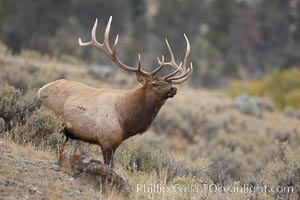
Bull elk in sage brush with large rack of antlers during the fall rut (mating season). This bull elk has sparred with other bulls to establish his harem of females with which he hopes to mate.
Species: Elk, Cervus canadensis
Location: Mammoth Hot Springs, Yellowstone National Park, Wyoming
Image ID: 19718
Species: Elk, Cervus canadensis
Location: Mammoth Hot Springs, Yellowstone National Park, Wyoming
Image ID: 19718
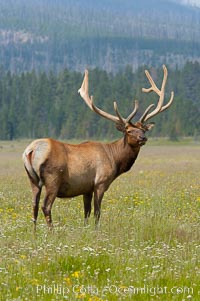
Bull elk, antlers bearing velvet, Gibbon Meadow. Elk are the most abundant large mammal found in Yellowstone National Park. More than 30,000 elk from 8 different herds summer in Yellowstone and approximately 15,000 to 22,000 winter in the park. Bulls grow antlers annually from the time they are nearly one year old. When mature, a bulls rack may have 6 to 8 points or tines on each side and weigh more than 30 pounds. The antlers are shed in March or April and begin regrowing in May, when the bony growth is nourished by blood vessels and covered by furry-looking velvet.
Species: Elk, Cervus canadensis
Location: Gibbon Meadows, Yellowstone National Park, Wyoming
Image ID: 13154
Species: Elk, Cervus canadensis
Location: Gibbon Meadows, Yellowstone National Park, Wyoming
Image ID: 13154
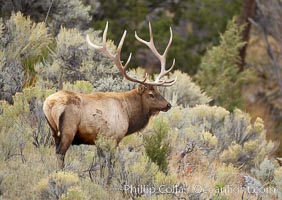
Bull elk in sage brush with large rack of antlers during the fall rut (mating season). This bull elk has sparred with other bulls to establish his harem of females with which he hopes to mate.
Species: Elk, Cervus canadensis
Location: Mammoth Hot Springs, Yellowstone National Park, Wyoming
Image ID: 19702
Species: Elk, Cervus canadensis
Location: Mammoth Hot Springs, Yellowstone National Park, Wyoming
Image ID: 19702
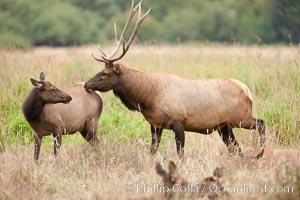
Roosevelt elk, adult bull male with large antlers. Roosevelt elk grow to 10' and 1300 lb, eating grasses, sedges and various berries, inhabiting the coastal rainforests of the Pacific Northwest.
Species: Roosevelt elk, Cervus canadensis roosevelti
Location: Redwood National Park, California
Image ID: 25879
Species: Roosevelt elk, Cervus canadensis roosevelti
Location: Redwood National Park, California
Image ID: 25879
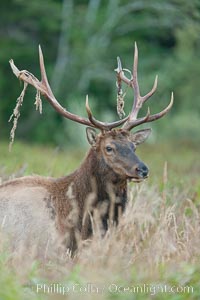
Roosevelt elk, adult bull male with large antlers. Roosevelt elk grow to 10' and 1300 lb, eating grasses, sedges and various berries, inhabiting the coastal rainforests of the Pacific Northwest.
Species: Roosevelt elk, Cervus canadensis roosevelti
Location: Redwood National Park, California
Image ID: 25885
Species: Roosevelt elk, Cervus canadensis roosevelti
Location: Redwood National Park, California
Image ID: 25885
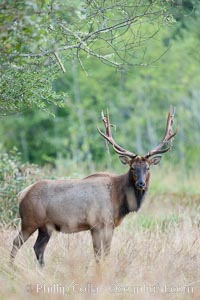
Roosevelt elk, adult bull male with large antlers. Roosevelt elk grow to 10' and 1300 lb, eating grasses, sedges and various berries, inhabiting the coastal rainforests of the Pacific Northwest.
Species: Roosevelt elk, Cervus canadensis roosevelti
Location: Redwood National Park, California
Image ID: 25883
Species: Roosevelt elk, Cervus canadensis roosevelti
Location: Redwood National Park, California
Image ID: 25883
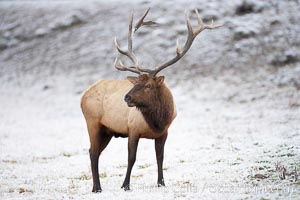
Large male elk (bull) in snow covered meadow near Madison River. Only male elk have antlers, which start growing in the spring and are shed each winter. The largest antlers may be 4 feet long and weigh up to 40 pounds. Antlers are made of bone which can grow up to one inch per day. While growing, the antlers are covered with and protected by a soft layer of highly vascularised skin known as velvet. The velvet is shed in the summer when the antlers have fully developed. Bull elk may have six or more tines on each antler, however the number of tines has little to do with the age or maturity of a particular animal.
Species: Elk, Cervus canadensis
Location: Yellowstone National Park, Wyoming
Image ID: 19692
Species: Elk, Cervus canadensis
Location: Yellowstone National Park, Wyoming
Image ID: 19692
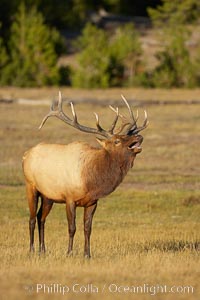
Male elk bugling during the fall rut. Large male elk are known as bulls. Male elk have large antlers which are shed each year. Male elk engage in competitive mating behaviors during the rut, including posturing, antler wrestling and bugling, a loud series of screams which is intended to establish dominance over other males and attract females.
Species: Elk, Cervus canadensis
Location: Yellowstone National Park, Wyoming
Image ID: 19695
Species: Elk, Cervus canadensis
Location: Yellowstone National Park, Wyoming
Image ID: 19695
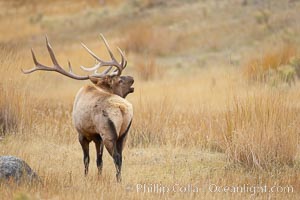
Male elk bugling during the fall rut. Large male elk are known as bulls. Male elk have large antlers which are shed each year. Male elk engage in competitive mating behaviors during the rut, including posturing, antler wrestling and bugling, a loud series of screams which is intended to establish dominance over other males and attract females.
Species: Elk, Cervus canadensis
Location: Yellowstone National Park, Wyoming
Image ID: 19703
Species: Elk, Cervus canadensis
Location: Yellowstone National Park, Wyoming
Image ID: 19703
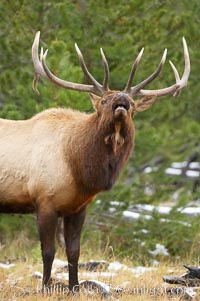
Male elk bugling during the fall rut. Large male elk are known as bulls. Male elk have large antlers which are shed each year. Male elk engage in competitive mating behaviors during the rut, including posturing, antler wrestling and bugling, a loud series of screams which is intended to establish dominance over other males and attract females.
Species: Elk, Cervus canadensis
Location: Yellowstone National Park, Wyoming
Image ID: 19708
Species: Elk, Cervus canadensis
Location: Yellowstone National Park, Wyoming
Image ID: 19708
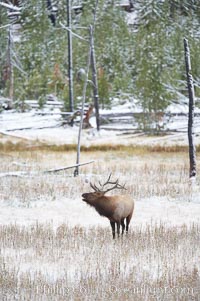
Male elk bugling during the fall rut. Large male elk are known as bulls. Male elk have large antlers which are shed each year. Male elk engage in competitive mating behaviors during the rut, including posturing, antler wrestling and bugling, a loud series of screams which is intended to establish dominance over other males and attract females.
Species: Elk, Cervus canadensis
Location: Yellowstone National Park, Wyoming
Image ID: 19714
Species: Elk, Cervus canadensis
Location: Yellowstone National Park, Wyoming
Image ID: 19714
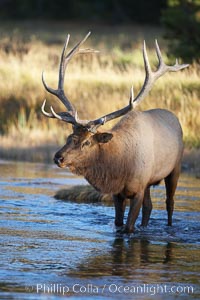
Male elk bugling during the fall rut. Large male elk are known as bulls. Male elk have large antlers which are shed each year. Male elk engage in competitive mating behaviors during the rut, including posturing, antler wrestling and bugling, a loud series of screams which is intended to establish dominance over other males and attract females.
Species: Elk, Cervus canadensis
Location: Madison River, Yellowstone National Park, Wyoming
Image ID: 19716
Species: Elk, Cervus canadensis
Location: Madison River, Yellowstone National Park, Wyoming
Image ID: 19716
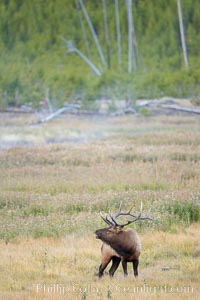
Male elk bugling during the fall rut. Large male elk are known as bulls. Male elk have large antlers which are shed each year. Male elk engage in competitive mating behaviors during the rut, including posturing, antler wrestling and bugling, a loud series of screams which is intended to establish dominance over other males and attract females.
Species: Elk, Cervus canadensis
Location: Yellowstone National Park, Wyoming
Image ID: 19699
Species: Elk, Cervus canadensis
Location: Yellowstone National Park, Wyoming
Image ID: 19699
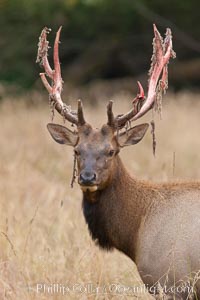
Roosevelt elk, adult bull male with large antlers. This bull elk has recently shed the velvet that covers its antlers. While an antler is growing, it is covered with highly vascular skin called velvet, which supplies oxygen and nutrients to the growing bone; once the antler has achieved its full size, the velvet is lost and the antler's bone dies. This dead bone structure is the mature antler, which is itself shed after each mating season. Roosevelt elk grow to 10' and 1300 lb, eating grasses, sedges and various berries, inhabiting the coastal rainforests of the Pacific Northwest.
Species: Roosevelt elk, Cervus canadensis roosevelti
Location: Redwood National Park, California
Image ID: 25880
Species: Roosevelt elk, Cervus canadensis roosevelti
Location: Redwood National Park, California
Image ID: 25880
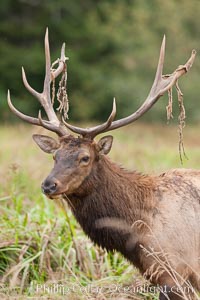
Roosevelt elk, adult bull male with large antlers. This bull elk has recently shed the velvet that covers its antlers. While an antler is growing, it is covered with highly vascular skin called velvet, which supplies oxygen and nutrients to the growing bone; once the antler has achieved its full size, the velvet is lost and the antler's bone dies. This dead bone structure is the mature antler, which is itself shed after each mating season. Roosevelt elk grow to 10' and 1300 lb, eating grasses, sedges and various berries, inhabiting the coastal rainforests of the Pacific Northwest.
Species: Roosevelt elk, Cervus canadensis roosevelti
Location: Redwood National Park, California
Image ID: 25881
Species: Roosevelt elk, Cervus canadensis roosevelti
Location: Redwood National Park, California
Image ID: 25881
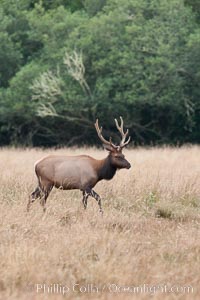
Roosevelt elk, adult bull male with large antlers. Roosevelt elk grow to 10' and 1300 lb, eating grasses, sedges and various berries, inhabiting the coastal rainforests of the Pacific Northwest.
Species: Roosevelt elk, Cervus canadensis roosevelti
Location: Redwood National Park, California
Image ID: 25882
Species: Roosevelt elk, Cervus canadensis roosevelti
Location: Redwood National Park, California
Image ID: 25882
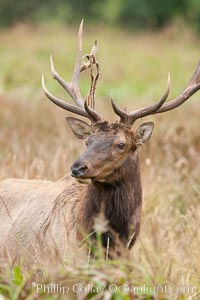
Roosevelt elk, adult bull male with large antlers. Roosevelt elk grow to 10' and 1300 lb, eating grasses, sedges and various berries, inhabiting the coastal rainforests of the Pacific Northwest.
Species: Roosevelt elk, Cervus canadensis roosevelti
Location: Redwood National Park, California
Image ID: 25884
Species: Roosevelt elk, Cervus canadensis roosevelti
Location: Redwood National Park, California
Image ID: 25884
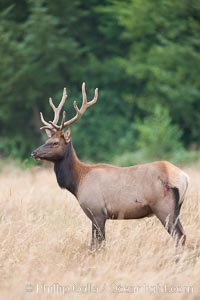
Roosevelt elk, adult bull male with large antlers. Roosevelt elk grow to 10' and 1300 lb, eating grasses, sedges and various berries, inhabiting the coastal rainforests of the Pacific Northwest.
Species: Roosevelt elk, Cervus canadensis roosevelti
Location: Redwood National Park, California
Image ID: 25886
Species: Roosevelt elk, Cervus canadensis roosevelti
Location: Redwood National Park, California
Image ID: 25886
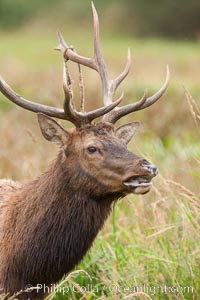
Roosevelt elk, adult bull male with large antlers. This bull elk has recently shed the velvet that covers its antlers. While an antler is growing, it is covered with highly vascular skin called velvet, which supplies oxygen and nutrients to the growing bone; once the antler has achieved its full size, the velvet is lost and the antler's bone dies. This dead bone structure is the mature antler, which is itself shed after each mating season. Roosevelt elk grow to 10' and 1300 lb, eating grasses, sedges and various berries, inhabiting the coastal rainforests of the Pacific Northwest.
Species: Roosevelt elk, Cervus canadensis roosevelti
Location: Redwood National Park, California
Image ID: 25891
Species: Roosevelt elk, Cervus canadensis roosevelti
Location: Redwood National Park, California
Image ID: 25891
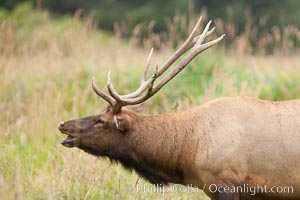
Roosevelt elk, adult bull male with large antlers. Roosevelt elk grow to 10' and 1300 lb, eating grasses, sedges and various berries, inhabiting the coastal rainforests of the Pacific Northwest.
Species: Roosevelt elk, Cervus canadensis roosevelti
Location: Redwood National Park, California
Image ID: 25888
Species: Roosevelt elk, Cervus canadensis roosevelti
Location: Redwood National Park, California
Image ID: 25888
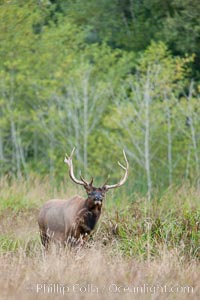
Roosevelt elk, adult bull male with large antlers. Roosevelt elk grow to 10' and 1300 lb, eating grasses, sedges and various berries, inhabiting the coastal rainforests of the Pacific Northwest.
Species: Roosevelt elk, Cervus canadensis roosevelti
Location: Redwood National Park, California
Image ID: 25889
Species: Roosevelt elk, Cervus canadensis roosevelti
Location: Redwood National Park, California
Image ID: 25889
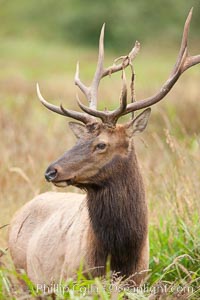
Roosevelt elk, adult bull male with large antlers. This bull elk has recently shed the velvet that covers its antlers. While an antler is growing, it is covered with highly vascular skin called velvet, which supplies oxygen and nutrients to the growing bone; once the antler has achieved its full size, the velvet is lost and the antler's bone dies. This dead bone structure is the mature antler, which is itself shed after each mating season. Roosevelt elk grow to 10' and 1300 lb, eating grasses, sedges and various berries, inhabiting the coastal rainforests of the Pacific Northwest.
Species: Roosevelt elk, Cervus canadensis roosevelti
Location: Redwood National Park, California
Image ID: 25892
Species: Roosevelt elk, Cervus canadensis roosevelti
Location: Redwood National Park, California
Image ID: 25892