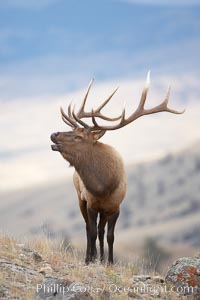
Male elk bugling during the fall rut. Large male elk are known as bulls. Male elk have large antlers which are shed each year. Male elk engage in competitive mating behaviors during the rut, including posturing, antler wrestling and bugling, a loud series of screams which is intended to establish dominance over other males and attract females.
Species: Elk, Cervus canadensis
Location: Mammoth Hot Springs, Yellowstone National Park, Wyoming
Image ID: 19693
Species: Elk, Cervus canadensis
Location: Mammoth Hot Springs, Yellowstone National Park, Wyoming
Image ID: 19693
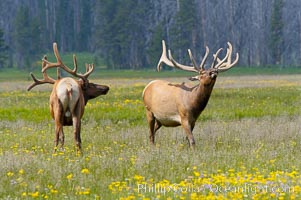
Bull elk spar to establish harems of females, Gibbon Meadow.
Species: Elk, Cervus canadensis
Location: Gibbon Meadows, Yellowstone National Park, Wyoming
Image ID: 13151
Species: Elk, Cervus canadensis
Location: Gibbon Meadows, Yellowstone National Park, Wyoming
Image ID: 13151
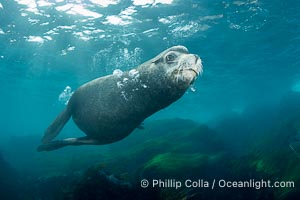
Huge California Sea Lion Male Underwater, a bull, patrolling his breeding harem and territory, Coronado Islands, Mexico. His sagittal crest, the bony bump on his head that distinguishes adult male sea lions, is clearly seen. This particular sea lion bears an orange tag on his left foreflipper, probably as a result of rescue and release as a young sea lion years earlier.
Species: California sea lion, Zalophus californianus
Location: Coronado Islands (Islas Coronado), Baja California, Mexico
Image ID: 38655
Species: California sea lion, Zalophus californianus
Location: Coronado Islands (Islas Coronado), Baja California, Mexico
Image ID: 38655
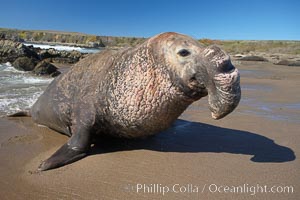
Bull elephant seal exits the water to retake his position on the beach. He shows considerable scarring on his chest and proboscis from many winters fighting other males for territory and rights to a harem of females. Sandy beach rookery, winter, Central California.
Species: Elephant seal, Mirounga angustirostris
Location: Piedras Blancas, San Simeon, California
Image ID: 15458
Species: Elephant seal, Mirounga angustirostris
Location: Piedras Blancas, San Simeon, California
Image ID: 15458
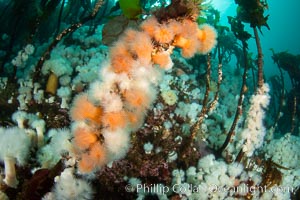
Metridium and proliferating anemones cling to bull kelp. Browning Pass, Vancouver Island.
Species: Bull kelp, Plumose anemone, Metridium senile, Nereocystis luetkeana
Location: British Columbia, Canada
Image ID: 35257
Species: Bull kelp, Plumose anemone, Metridium senile, Nereocystis luetkeana
Location: British Columbia, Canada
Image ID: 35257
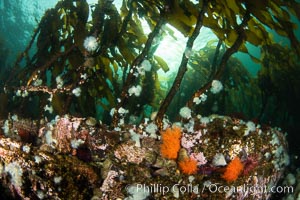
Metridium senile anemones cover the reef below a forest of bull kelp, Browning Pass, Vancouver Island.
Species: Bull kelp, Plumose anemone, Metridium senile, Nereocystis luetkeana
Location: British Columbia, Canada
Image ID: 35258
Species: Bull kelp, Plumose anemone, Metridium senile, Nereocystis luetkeana
Location: British Columbia, Canada
Image ID: 35258
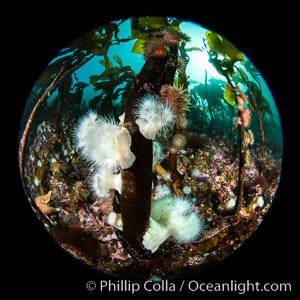
Metridium senile anemones cover the reef below a forest of bull kelp, Browning Pass, Vancouver Island.
Species: Bull kelp, Plumose anemone, Metridium senile, Nereocystis luetkeana
Location: British Columbia, Canada
Image ID: 35262
Species: Bull kelp, Plumose anemone, Metridium senile, Nereocystis luetkeana
Location: British Columbia, Canada
Image ID: 35262
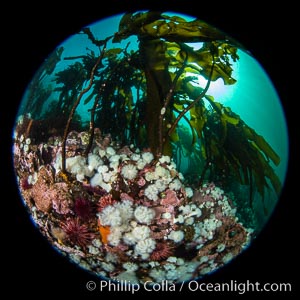
Metridium senile anemones cover the reef below a forest of bull kelp, Browning Pass, Vancouver Island.
Species: Bull kelp, Plumose anemone, Metridium senile, Nereocystis luetkeana
Location: British Columbia, Canada
Image ID: 35263
Species: Bull kelp, Plumose anemone, Metridium senile, Nereocystis luetkeana
Location: British Columbia, Canada
Image ID: 35263
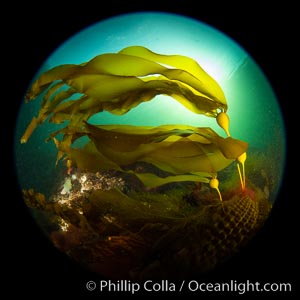
Bull kelp forest near Vancouver Island and Queen Charlotte Strait, Browning Pass, Canada.
Species: Bull kelp, Nereocystis luetkeana
Location: British Columbia, Canada
Image ID: 35266
Species: Bull kelp, Nereocystis luetkeana
Location: British Columbia, Canada
Image ID: 35266
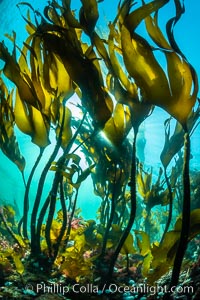
Bull kelp forest near Vancouver Island and Queen Charlotte Strait, Browning Pass, Canada.
Species: Bull kelp, Nereocystis luetkeana
Location: British Columbia, Canada
Image ID: 35279
Species: Bull kelp, Nereocystis luetkeana
Location: British Columbia, Canada
Image ID: 35279
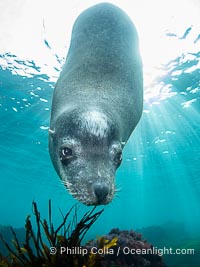
Huge California Sea Lion Male Underwater, a bull, patrolling his breeding harem and territory, Coronado Islands, Mexico. His sagittal crest, the bony bump on his head that distinguishes adult male sea lions, is clearly seen. This particular sea lion bears an orange tag on his left foreflipper, probably as a result of rescue and release as a young sea lion years earlier.
Species: California sea lion, Zalophus californianus
Location: Coronado Islands (Islas Coronado), Baja California, Mexico
Image ID: 38657
Species: California sea lion, Zalophus californianus
Location: Coronado Islands (Islas Coronado), Baja California, Mexico
Image ID: 38657
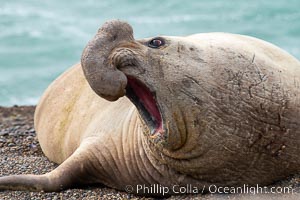
Southern elephant seal, adult male, Mirounga leonina, Valdes Peninsula, Argentina.
Species: Southern elephant seal, Mirounga leonina
Location: Puerto Piramides, Chubut, Argentina
Image ID: 38415
Species: Southern elephant seal, Mirounga leonina
Location: Puerto Piramides, Chubut, Argentina
Image ID: 38415
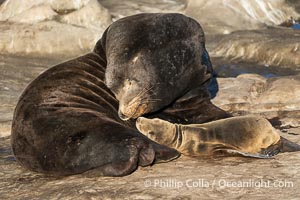
California sea lion nuzzles a huge adult male bull. This is unusual behavior but the bull accepted the tiny pup and did not push it away or injure it.
Species: California Sea Lion, Zalophus californianus
Location: La Jolla, California
Image ID: 40178
Species: California Sea Lion, Zalophus californianus
Location: La Jolla, California
Image ID: 40178
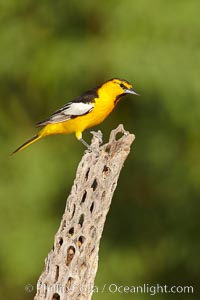
Bullock's oriole, first year male.
Species: Bullock's oriole, Icterus bullockii
Location: Amado, Arizona
Image ID: 22895
Species: Bullock's oriole, Icterus bullockii
Location: Amado, Arizona
Image ID: 22895
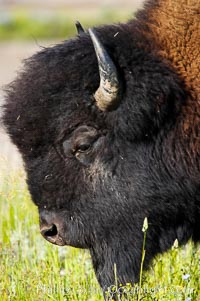
The bisons massive head is its most characteristic feature. Its forehead bulges because of its convex-shaped frontal bone. Its shoulder hump, dwindling bowlike to the haunches, is supported by unusually long spinal vertebrae. Over powerful neck and shoulder muscles grows a great shaggy coat of curly brown fur, and over the head, like an immense hood, grows a shock of black hair. Its forequarters are higher and much heavier than its haunches. A mature bull stands about 6 1/2 feet (2 meters) at the shoulder and weighs more than 2,000 pounds (900 kilograms). The bisons horns are short and black. In the male they are thick at the base and taper abruptly to sharp points as they curve outward and upward; the females horns are more slender.
Species: American bison, Bison bison
Location: Yellowstone National Park, Wyoming
Image ID: 13120
Species: American bison, Bison bison
Location: Yellowstone National Park, Wyoming
Image ID: 13120
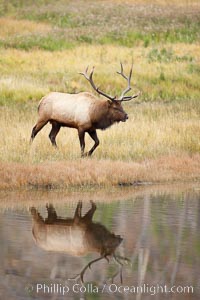
Male elk bugling during the fall rut. Large male elk are known as bulls. Male elk have large antlers which are shed each year. Male elk engage in competitive mating behaviors during the rut, including posturing, antler wrestling and bugling, a loud series of screams which is intended to establish dominance over other males and attract females.
Species: Elk, Cervus canadensis
Location: Madison River, Yellowstone National Park, Wyoming
Image ID: 19697
Species: Elk, Cervus canadensis
Location: Madison River, Yellowstone National Park, Wyoming
Image ID: 19697
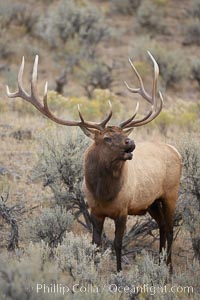
Male elk bugling during the fall rut. Large male elk are known as bulls. Male elk have large antlers which are shed each year. Male elk engage in competitive mating behaviors during the rut, including posturing, antler wrestling and bugling, a loud series of screams which is intended to establish dominance over other males and attract females.
Species: Elk, Cervus canadensis
Location: Mammoth Hot Springs, Yellowstone National Park, Wyoming
Image ID: 19698
Species: Elk, Cervus canadensis
Location: Mammoth Hot Springs, Yellowstone National Park, Wyoming
Image ID: 19698
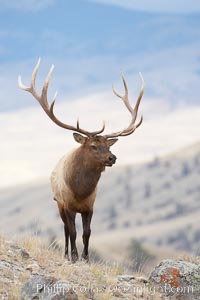
Elk, bull elk, adult male elk with large set of antlers. By September, this bull elk's antlers have reached their full size and the velvet has fallen off. This bull elk has sparred with other bulls for access to herds of females in estrous and ready to mate.
Species: Elk, Cervus canadensis
Location: Mammoth Hot Springs, Yellowstone National Park, Wyoming
Image ID: 19721
Species: Elk, Cervus canadensis
Location: Mammoth Hot Springs, Yellowstone National Park, Wyoming
Image ID: 19721
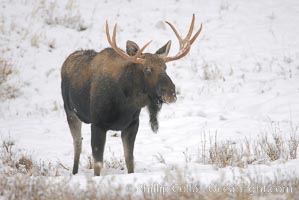
A male moose, bull moose, on snow covered field, near Cooke City.
Species: Moose, Alces alces
Location: Yellowstone National Park, Wyoming
Image ID: 19680
Species: Moose, Alces alces
Location: Yellowstone National Park, Wyoming
Image ID: 19680
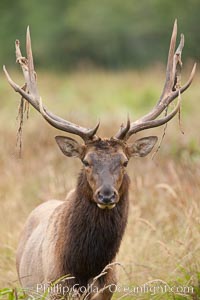
Roosevelt elk, adult bull male with large antlers. This bull elk has recently shed the velvet that covers its antlers. While an antler is growing, it is covered with highly vascular skin called velvet, which supplies oxygen and nutrients to the growing bone; once the antler has achieved its full size, the velvet is lost and the antler's bone dies. This dead bone structure is the mature antler, which is itself shed after each mating season. Roosevelt elk grow to 10' and 1300 lb, eating grasses, sedges and various berries, inhabiting the coastal rainforests of the Pacific Northwest.
Species: Roosevelt elk, Cervus canadensis roosevelti
Location: Redwood National Park, California
Image ID: 25890
Species: Roosevelt elk, Cervus canadensis roosevelti
Location: Redwood National Park, California
Image ID: 25890
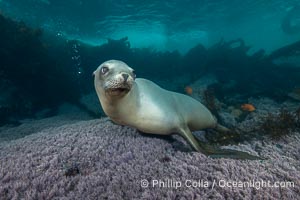
A beautiful golden-brown female California Sea Lion at the Coronado Islands, Baja California, Mexico. The huge male bull that formed the harem of which she was a part allowed her to hang out with me for a while, even while he continued patrolling just over my head.
Species: California Sea Lion, Zalophus californianus
Location: Coronado Islands (Islas Coronado), Baja California, Mexico
Image ID: 37318
Species: California Sea Lion, Zalophus californianus
Location: Coronado Islands (Islas Coronado), Baja California, Mexico
Image ID: 37318
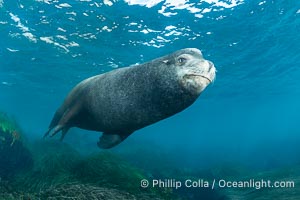
Huge California Sea Lion Male Underwater, a bull, patrolling his breeding harem and territory, Coronado Islands, Mexico. His sagittal crest, the bony bump on his head that distinguishes adult male sea lions, is clearly seen. This particular sea lion bears an orange tag on his left foreflipper, probably as a result of rescue and release as a young sea lion years earlier.
Species: California sea lion, Zalophus californianus
Location: Coronado Islands (Islas Coronado), Baja California, Mexico
Image ID: 38652
Species: California sea lion, Zalophus californianus
Location: Coronado Islands (Islas Coronado), Baja California, Mexico
Image ID: 38652
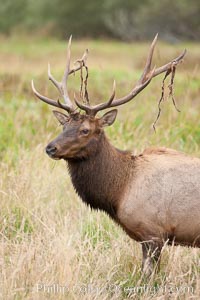
Roosevelt elk, adult bull male with large antlers. This bull elk has recently shed the velvet that covers its antlers. While an antler is growing, it is covered with highly vascular skin called velvet, which supplies oxygen and nutrients to the growing bone; once the antler has achieved its full size, the velvet is lost and the antler's bone dies. This dead bone structure is the mature antler, which is itself shed after each mating season. Roosevelt elk grow to 10' and 1300 lb, eating grasses, sedges and various berries, inhabiting the coastal rainforests of the Pacific Northwest.
Species: Roosevelt elk, Cervus canadensis roosevelti
Location: Redwood National Park, California
Image ID: 25878
Species: Roosevelt elk, Cervus canadensis roosevelti
Location: Redwood National Park, California
Image ID: 25878
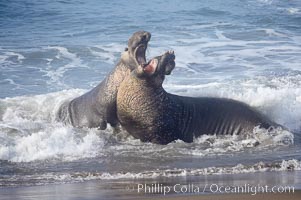
Male elephant seals (bulls) rear up on their foreflippers and fight in the surf for access for mating females that are in estrous. Such fighting among elephant seals can take place on the beach or in the water. They bite and tear at each other on the neck and shoulders, drawing blood and creating scars on the tough hides.
Species: Elephant seal, Mirounga angustirostris
Location: Piedras Blancas, San Simeon, California
Image ID: 20369
Species: Elephant seal, Mirounga angustirostris
Location: Piedras Blancas, San Simeon, California
Image ID: 20369
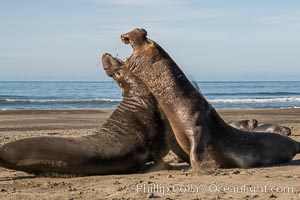
Male elephant seals (bulls) rear up on their foreflippers and fight for territory and harems of females. Bull elephant seals will haul out and fight from December through March, nearly fasting the entire time as they maintain their territory and harem. They bite and tear at each other on the neck and shoulders, drawing blood and creating scars on the tough hides. Sandy beach rookery, winter, Central California.
Species: Elephant seal, Mirounga angustirostris
Location: Piedras Blancas, San Simeon, California
Image ID: 35144
Species: Elephant seal, Mirounga angustirostris
Location: Piedras Blancas, San Simeon, California
Image ID: 35144
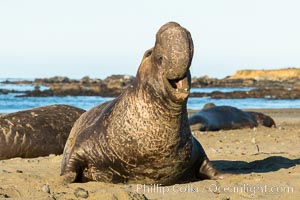
Bull elephant seal, adult male, bellowing. Its huge proboscis is characteristic of male elephant seals. Scarring from combat with other males.
Species: Elephant seal, Mirounga angustirostris
Location: Piedras Blancas, San Simeon, California
Image ID: 35149
Species: Elephant seal, Mirounga angustirostris
Location: Piedras Blancas, San Simeon, California
Image ID: 35149
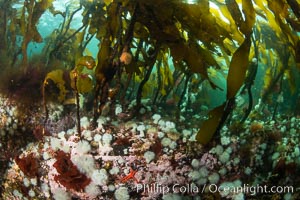
Metridium senile anemones cover the reef below a forest of bull kelp, Browning Pass, Vancouver Island.
Species: Bull kelp, Plumose anemone, Metridium senile, Nereocystis luetkeana
Location: British Columbia, Canada
Image ID: 35289
Species: Bull kelp, Plumose anemone, Metridium senile, Nereocystis luetkeana
Location: British Columbia, Canada
Image ID: 35289
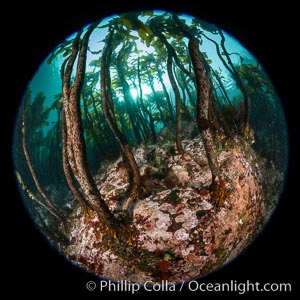
A forest of bull kelp rises above a colorful cold water reef, rich with invertebrate life. Browning Pass, Vancouver Island.
Species: Bull kelp, Nereocystis luetkeana
Location: British Columbia, Canada
Image ID: 35295
Species: Bull kelp, Nereocystis luetkeana
Location: British Columbia, Canada
Image ID: 35295
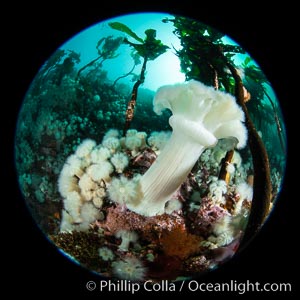
A forest of bull kelp rises above a colorful cold water reef, rich with invertebrate life. Browning Pass, Vancouver Island.
Species: Bull kelp, Giant plumose anemone, Metridium farcimen, Nereocystis luetkeana
Location: British Columbia, Canada
Image ID: 35299
Species: Bull kelp, Giant plumose anemone, Metridium farcimen, Nereocystis luetkeana
Location: British Columbia, Canada
Image ID: 35299
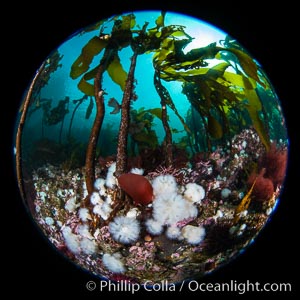
Metridium senile anemones cover the reef below a forest of bull kelp, Browning Pass, Vancouver Island.
Species: Bull kelp, Plumose anemone, Metridium senile, Nereocystis luetkeana
Location: British Columbia, Canada
Image ID: 35300
Species: Bull kelp, Plumose anemone, Metridium senile, Nereocystis luetkeana
Location: British Columbia, Canada
Image ID: 35300