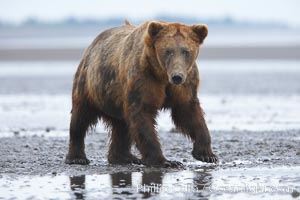
Mature male coastal brown bear boar waits on the tide flats at the mouth of Silver Salmon Creek for salmon to arrive. Grizzly bear.
Species: Brown bear, Ursus arctos
Location: Lake Clark National Park, Alaska
Image ID: 19149
Species: Brown bear, Ursus arctos
Location: Lake Clark National Park, Alaska
Image ID: 19149
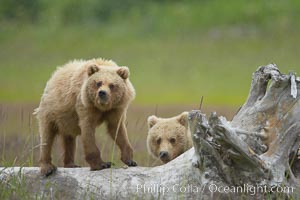
Brown bear cubs. These cubs are one and a half years old and have yet to leave their mother. They will be on their own and have to fend for themselves next summer.
Species: Brown bear, Ursus arctos
Location: Lake Clark National Park, Alaska
Image ID: 19150
Species: Brown bear, Ursus arctos
Location: Lake Clark National Park, Alaska
Image ID: 19150
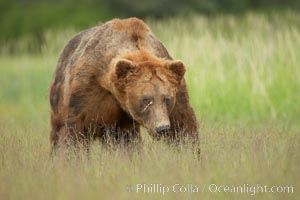
Full grown, mature male coastal brown bear boar (grizzly bear) in sedge grass meadows.
Species: Brown bear, Ursus arctos
Location: Lake Clark National Park, Alaska
Image ID: 19151
Species: Brown bear, Ursus arctos
Location: Lake Clark National Park, Alaska
Image ID: 19151
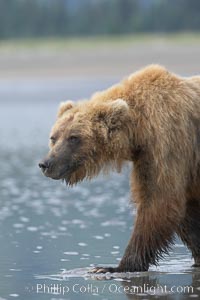
Coastal brown bear forages for razor clams in sand flats at extreme low tide. Grizzly bear.
Species: Brown bear, Ursus arctos
Location: Lake Clark National Park, Alaska
Image ID: 19152
Species: Brown bear, Ursus arctos
Location: Lake Clark National Park, Alaska
Image ID: 19152
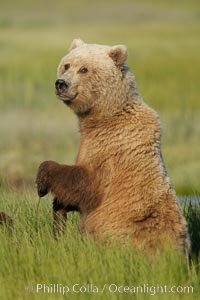
A brown bear mother (sow) stands in tall sedge grass to look for other approaching bears that may be a threat to her cubs.
Species: Brown bear, Ursus arctos
Location: Lake Clark National Park, Alaska
Image ID: 19153
Species: Brown bear, Ursus arctos
Location: Lake Clark National Park, Alaska
Image ID: 19153
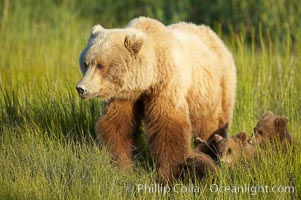
Brown bear female sow in sedge meadow, with her three spring cubs hidden by the deep grass next to her. These cubs were born earlier in the spring and will remain with their mother for almost two years, relying on her completely for their survival.
Species: Brown bear, Ursus arctos
Location: Lake Clark National Park, Alaska
Image ID: 19154
Species: Brown bear, Ursus arctos
Location: Lake Clark National Park, Alaska
Image ID: 19154
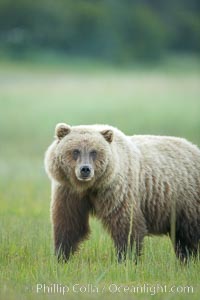
Coastal brown bear in meadow. The tall sedge grasses in this coastal meadow are a food source for brown bears, who may eat 30 lbs of it each day during summer while waiting for their preferred food, salmon, to arrive in the nearby rivers.
Species: Brown bear, Ursus arctos
Location: Lake Clark National Park, Alaska
Image ID: 19155
Species: Brown bear, Ursus arctos
Location: Lake Clark National Park, Alaska
Image ID: 19155
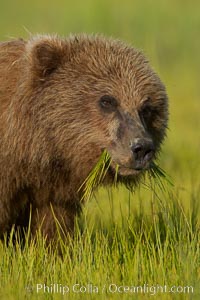
Young brown bear grazes in tall sedge grass. Brown bears can consume 30 lbs of sedge grass daily, waiting weeks until spawning salmon fill the rivers.
Species: Brown bear, Ursus arctos
Location: Lake Clark National Park, Alaska
Image ID: 19156
Species: Brown bear, Ursus arctos
Location: Lake Clark National Park, Alaska
Image ID: 19156
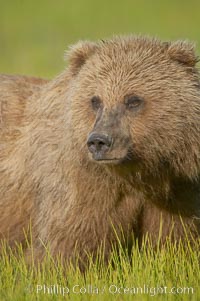
Portrait of a young brown bear, pausing while grazing in tall sedge grass. Brown bears can consume 30 lbs of sedge grass daily, waiting weeks until spawning salmon fill the rivers.
Species: Brown bear, Ursus arctos
Location: Lake Clark National Park, Alaska
Image ID: 19157
Species: Brown bear, Ursus arctos
Location: Lake Clark National Park, Alaska
Image ID: 19157
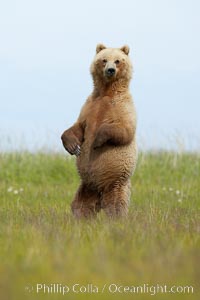
A brown bear mother (sow) stands in tall sedge grass to look for other approaching bears that may be a threat to her cubs.
Species: Brown bear, Ursus arctos
Location: Lake Clark National Park, Alaska
Image ID: 19158
Species: Brown bear, Ursus arctos
Location: Lake Clark National Park, Alaska
Image ID: 19158
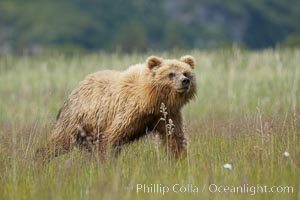
Coastal brown bear cub, one and a half years old, near Johnson River. This cub will remain with its mother for about another six months, and will be on its own next year.
Species: Brown bear, Ursus arctos
Location: Johnson River, Lake Clark National Park, Alaska
Image ID: 19159
Species: Brown bear, Ursus arctos
Location: Johnson River, Lake Clark National Park, Alaska
Image ID: 19159
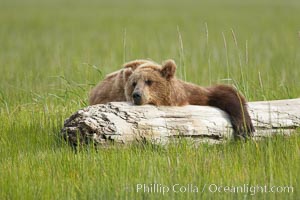
Lazy grizzly bear naps on a log, surrounding by the grass sedge grass that is typical of the coastal region of Lake Clark National Park.
Species: Brown bear, Ursus arctos
Location: Lake Clark National Park, Alaska
Image ID: 19160
Species: Brown bear, Ursus arctos
Location: Lake Clark National Park, Alaska
Image ID: 19160
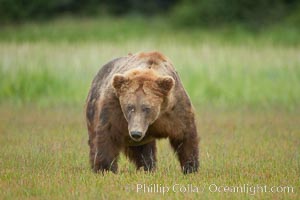
Full grown, mature male coastal brown bear boar (grizzly bear) in sedge grass meadows.
Species: Brown bear, Ursus arctos
Location: Lake Clark National Park, Alaska
Image ID: 19161
Species: Brown bear, Ursus arctos
Location: Lake Clark National Park, Alaska
Image ID: 19161
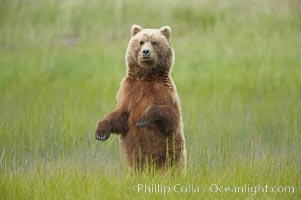
A brown bear mother (sow) stands in tall sedge grass to look for other approaching bears that may be a threat to her cubs.
Species: Brown bear, Ursus arctos
Location: Lake Clark National Park, Alaska
Image ID: 19162
Species: Brown bear, Ursus arctos
Location: Lake Clark National Park, Alaska
Image ID: 19162
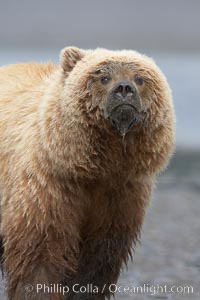
Coastal brown bear on sand flats at low tide.
Species: Brown bear, Ursus arctos
Location: Lake Clark National Park, Alaska
Image ID: 19163
Species: Brown bear, Ursus arctos
Location: Lake Clark National Park, Alaska
Image ID: 19163
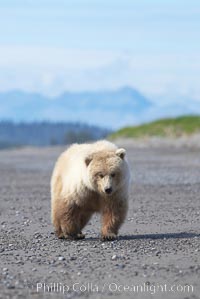
Juvenile female coastal brown bear walks on beach.
Species: Brown bear, Ursus arctos
Location: Lake Clark National Park, Alaska
Image ID: 19164
Species: Brown bear, Ursus arctos
Location: Lake Clark National Park, Alaska
Image ID: 19164
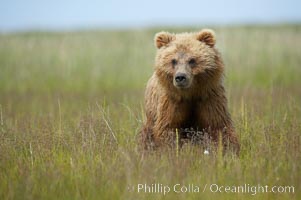
Coastal brown bear cub, one and a half years old, near Johnson River. This cub will remain with its mother for about another six months, and will be on its own next year.
Species: Brown bear, Ursus arctos
Location: Johnson River, Lake Clark National Park, Alaska
Image ID: 19199
Species: Brown bear, Ursus arctos
Location: Johnson River, Lake Clark National Park, Alaska
Image ID: 19199
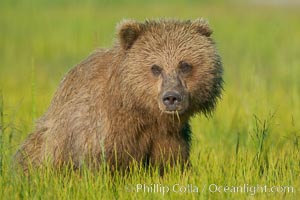
Coastal brown bear in sedge grass meadow.
Species: Brown bear, Ursus arctos
Location: Lake Clark National Park, Alaska
Image ID: 19223
Species: Brown bear, Ursus arctos
Location: Lake Clark National Park, Alaska
Image ID: 19223
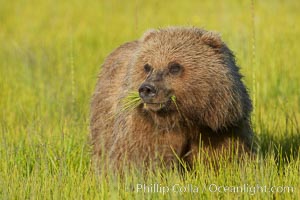
Young brown bear grazes in tall sedge grass. Brown bears can consume 30 lbs of sedge grass daily, waiting weeks until spawning salmon fill the rivers.
Species: Brown bear, Ursus arctos
Location: Lake Clark National Park, Alaska
Image ID: 19244
Species: Brown bear, Ursus arctos
Location: Lake Clark National Park, Alaska
Image ID: 19244
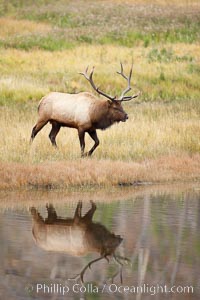
Male elk bugling during the fall rut. Large male elk are known as bulls. Male elk have large antlers which are shed each year. Male elk engage in competitive mating behaviors during the rut, including posturing, antler wrestling and bugling, a loud series of screams which is intended to establish dominance over other males and attract females.
Species: Elk, Cervus canadensis
Location: Madison River, Yellowstone National Park, Wyoming
Image ID: 19697
Species: Elk, Cervus canadensis
Location: Madison River, Yellowstone National Park, Wyoming
Image ID: 19697
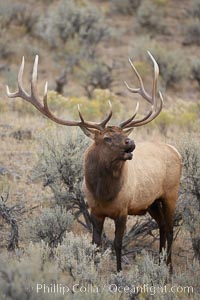
Male elk bugling during the fall rut. Large male elk are known as bulls. Male elk have large antlers which are shed each year. Male elk engage in competitive mating behaviors during the rut, including posturing, antler wrestling and bugling, a loud series of screams which is intended to establish dominance over other males and attract females.
Species: Elk, Cervus canadensis
Location: Mammoth Hot Springs, Yellowstone National Park, Wyoming
Image ID: 19698
Species: Elk, Cervus canadensis
Location: Mammoth Hot Springs, Yellowstone National Park, Wyoming
Image ID: 19698
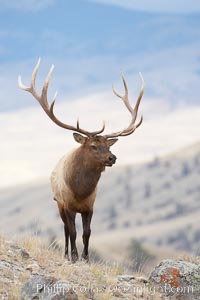
Elk, bull elk, adult male elk with large set of antlers. By September, this bull elk's antlers have reached their full size and the velvet has fallen off. This bull elk has sparred with other bulls for access to herds of females in estrous and ready to mate.
Species: Elk, Cervus canadensis
Location: Mammoth Hot Springs, Yellowstone National Park, Wyoming
Image ID: 19721
Species: Elk, Cervus canadensis
Location: Mammoth Hot Springs, Yellowstone National Park, Wyoming
Image ID: 19721
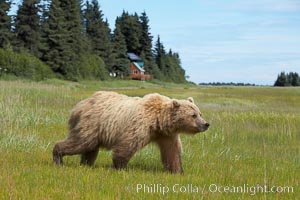
Coastal brown bear (grizzly bear) walks sedge grass meadow near Silver Salmon Creek.
Species: Brown bear, Ursus arctos
Location: Lake Clark National Park, Alaska
Image ID: 19145
Species: Brown bear, Ursus arctos
Location: Lake Clark National Park, Alaska
Image ID: 19145
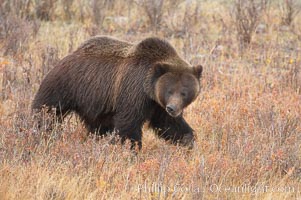
Grizzly bear in Yellowstone National Park in autumn, fall, walking through brown grasses.
Species: Grizzly bear, Ursus arctos horribilis
Location: Lamar Valley, Yellowstone National Park, Wyoming
Image ID: 19614
Species: Grizzly bear, Ursus arctos horribilis
Location: Lamar Valley, Yellowstone National Park, Wyoming
Image ID: 19614
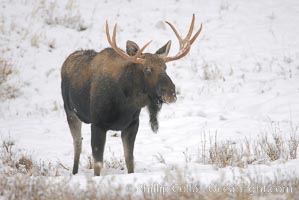
A male moose, bull moose, on snow covered field, near Cooke City.
Species: Moose, Alces alces
Location: Yellowstone National Park, Wyoming
Image ID: 19680
Species: Moose, Alces alces
Location: Yellowstone National Park, Wyoming
Image ID: 19680
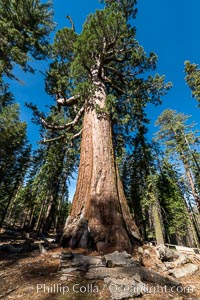
The Grizzly Giant Sequoia Tree in Yosemite. Giant sequoia trees (Sequoiadendron giganteum), roots spreading outward at the base of each massive tree, rise from the shaded forest floor. Mariposa Grove, Yosemite National Park.
Location: Mariposa Grove, Yosemite National Park, California
Image ID: 36401
Location: Mariposa Grove, Yosemite National Park, California
Image ID: 36401
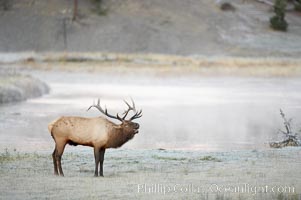
Male elk bugling during the fall rut. Large male elk are known as bulls. Male elk have large antlers which are shed each year. Male elk engage in competitive mating behaviors during the rut, including posturing, antler wrestling and bugling, a loud series of screams which is intended to establish dominance over other males and attract females.
Species: Elk, Cervus canadensis
Location: Madison River, Yellowstone National Park, Wyoming
Image ID: 19700
Species: Elk, Cervus canadensis
Location: Madison River, Yellowstone National Park, Wyoming
Image ID: 19700
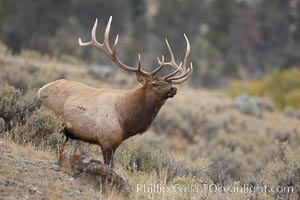
Bull elk in sage brush with large rack of antlers during the fall rut (mating season). This bull elk has sparred with other bulls to establish his harem of females with which he hopes to mate.
Species: Elk, Cervus canadensis
Location: Mammoth Hot Springs, Yellowstone National Park, Wyoming
Image ID: 19718
Species: Elk, Cervus canadensis
Location: Mammoth Hot Springs, Yellowstone National Park, Wyoming
Image ID: 19718
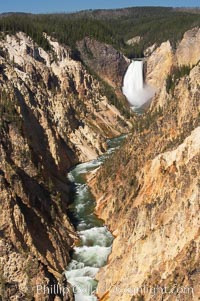
The Lower Falls of the Yellowstone River drops 308 feet at the head of the Grand Canyon of the Yellowstone. A long exposure blurs the fast-flowing water. The canyon is approximately 10,000 years old, 20 miles long, 1000 ft deep, and 2500 ft wide. Its yellow, orange and red-colored walls are due to oxidation of the various iron compounds in the soil, and to a lesser degree, sulfur content.
Location: Grand Canyon of the Yellowstone, Yellowstone National Park, Wyoming
Image ID: 13338
Location: Grand Canyon of the Yellowstone, Yellowstone National Park, Wyoming
Image ID: 13338
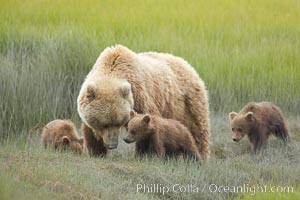
Brown bear female sow with spring cubs. These three cubs were born earlier in the spring and will remain with their mother for almost two years, relying on her completely for their survival.
Species: Brown bear, Ursus arctos
Location: Lake Clark National Park, Alaska
Image ID: 19181
Species: Brown bear, Ursus arctos
Location: Lake Clark National Park, Alaska
Image ID: 19181