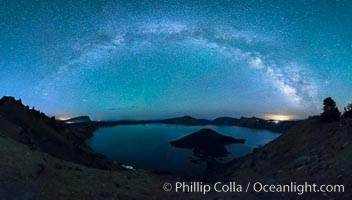
Milky Way and stars over Crater Lake at night. Panorama of Crater Lake and Wizard Island at night, Crater Lake National Park.
Location: Crater Lake National Park, Oregon
Image ID: 28641
Panorama dimensions: 7650 x 13389
Location: Crater Lake National Park, Oregon
Image ID: 28641
Panorama dimensions: 7650 x 13389
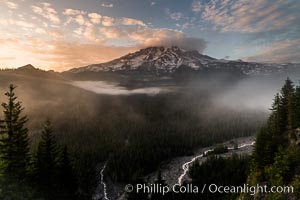
Mount Rainier sunset, viewed from Ricksecker Point.
Location: Ricksecker Point, Mount Rainier National Park, Washington
Image ID: 28722
Location: Ricksecker Point, Mount Rainier National Park, Washington
Image ID: 28722
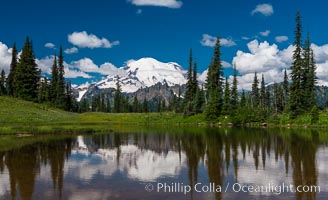
Mount Rainier reflected in Tipsoo Lake.
Location: Tipsoo Lakes, Mount Rainier National Park, Washington
Image ID: 28740
Location: Tipsoo Lakes, Mount Rainier National Park, Washington
Image ID: 28740
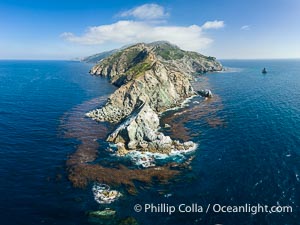
Aerial Photo of the West End of Catalina Island, California. Lush kelp forests line the rocky coastline here. Eagle Rock appears at the right.
Location: Catalina Island, California
Image ID: 39482
Location: Catalina Island, California
Image ID: 39482
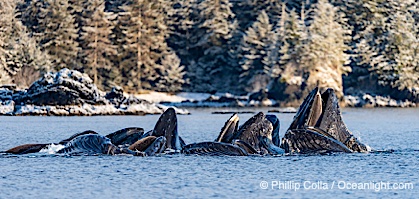
Humpback whales surface together during coordinated bubble-net feeding in Southeast Alaska. The whales use bubbles, sound, and movement to corral fish before capturing them in their open mouths.
Species: Humpback whale, Megaptera novaeangliae
Location: Sitka Sound, Alaska
Image ID: 41581
Panorama dimensions: 5297 x 11117
Species: Humpback whale, Megaptera novaeangliae
Location: Sitka Sound, Alaska
Image ID: 41581
Panorama dimensions: 5297 x 11117
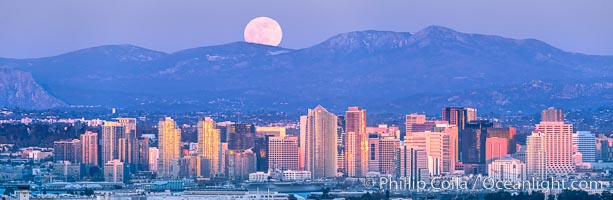
Full Moon Rises over the San Diego City Skyline and Mount Laguna, viewed from Point Loma, panoramic photograph.
Location: San Diego, California
Image ID: 36634
Panorama dimensions: 5276 x 16167
Location: San Diego, California
Image ID: 36634
Panorama dimensions: 5276 x 16167
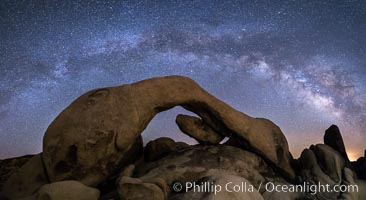
Milky Way at Night over Arch Rock, Joshua Tree National Park.
Location: Joshua Tree National Park, California
Image ID: 30220
Panorama dimensions: 4709 x 9140
Location: Joshua Tree National Park, California
Image ID: 30220
Panorama dimensions: 4709 x 9140
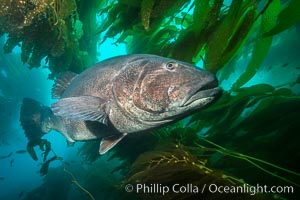
Giant black sea bass, endangered species, reaching up to 8' in length and 500 lbs, amid giant kelp forest.
Species: Giant black sea bass, Stereolepis gigas
Location: Catalina Island, California
Image ID: 33354
Species: Giant black sea bass, Stereolepis gigas
Location: Catalina Island, California
Image ID: 33354
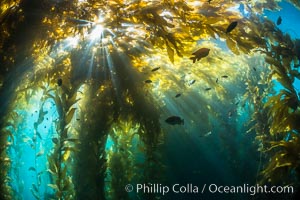
Sunlight streams through giant kelp forest. Giant kelp, the fastest growing plant on Earth, reaches from the rocky reef to the ocean's surface like a submarine forest.
Species: Giant kelp, Macrocystis pyrifera
Location: Catalina Island, California
Image ID: 33433
Species: Giant kelp, Macrocystis pyrifera
Location: Catalina Island, California
Image ID: 33433
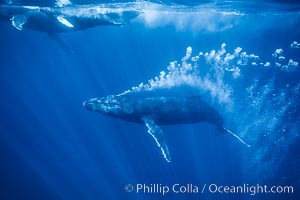
Adult male humpback whale bubble streaming underwater. The male escort humpback whale seen here is emitting a curtain of bubbles as it swims behind a mother and calf. The bubble curtain may be meant as warning or visual obstruction to other nearby male whales interested in the mother.
Species: Humpback whale, Megaptera novaeangliae
Location: Maui, Hawaii
Image ID: 05925
Species: Humpback whale, Megaptera novaeangliae
Location: Maui, Hawaii
Image ID: 05925
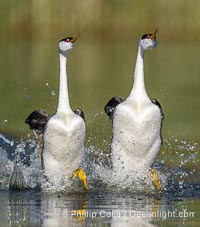
Western Grebes rushing across Lake Wohlford, exhibiting a spectacular courtship behavior in which the aquatic birds literally run across the surface of the water while their feet hit the water up to 20 times per second.
Species: Western Grebe, Aechmophorus occidentalis
Location: Lake Wohlford, Escondido, California
Image ID: 41537
Species: Western Grebe, Aechmophorus occidentalis
Location: Lake Wohlford, Escondido, California
Image ID: 41537
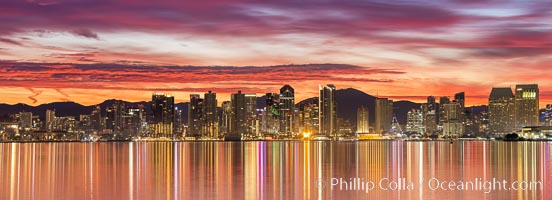
San Diego Bay and Downtown City Skyline at Dawn, spectacular clouds light up over the city. Mount San Miguel in the distance.
Location: San Diego, California
Image ID: 37636
Panorama dimensions: 5305 x 14631
Location: San Diego, California
Image ID: 37636
Panorama dimensions: 5305 x 14631
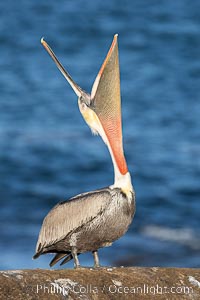
A perfect Brown Pelican Head Throw with Distant Ocean in Background, bending over backwards, stretching its neck and gular pouch, winter adult non-breeding plumage coloration.
Species: Brown Pelican, Pelecanus occidentalis, Pelecanus occidentalis californicus
Location: La Jolla, California
Image ID: 38935
Species: Brown Pelican, Pelecanus occidentalis, Pelecanus occidentalis californicus
Location: La Jolla, California
Image ID: 38935
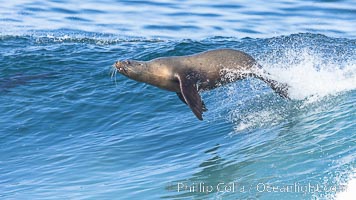
California sea lion bodysurfing in La Jolla, surfing huge waves close to shore at Boomer Beach.
Species: California Sea Lion, Zalophus californianus
Location: La Jolla, California
Image ID: 38970
Species: California Sea Lion, Zalophus californianus
Location: La Jolla, California
Image ID: 38970
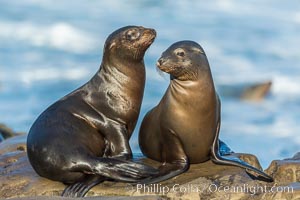
Double side-eye from two young California sea lions resting on a reef in La Jolla.
Species: California sea lion, Zalophus californianus
Location: La Jolla, California
Image ID: 34273
Species: California sea lion, Zalophus californianus
Location: La Jolla, California
Image ID: 34273
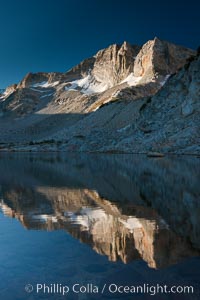
Cathedral Range peaks reflected in the still waters of Townsley Lake at sunrise.
Location: Yosemite National Park, California
Image ID: 25756
Location: Yosemite National Park, California
Image ID: 25756
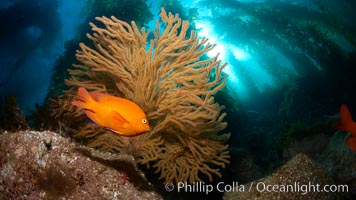
Garibaldi and golden gorgonian, with a underwater forest of giant kelp rising in the background, underwater.
Species: California golden gorgonian, Garibaldi, Hypsypops rubicundus, Muricea californica
Location: Catalina Island, California
Image ID: 23432
Species: California golden gorgonian, Garibaldi, Hypsypops rubicundus, Muricea californica
Location: Catalina Island, California
Image ID: 23432
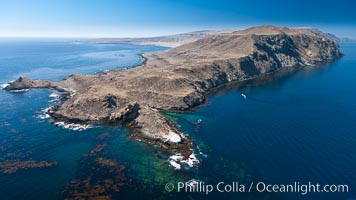
San Clemente Island Pyramid Head, the distinctive pyramid shaped southern end of the island. San Clemente Island Pyramid Head, showing geologic terracing, underwater reefs and giant kelp forests.
Location: San Clemente Island, California
Image ID: 26003
Location: San Clemente Island, California
Image ID: 26003
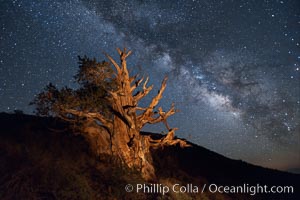
Stars and the Milky Way rise above ancient bristlecone pine trees, in the White Mountains at an elevation of 10,000' above sea level. These are some of the oldest trees in the world, reaching 4000 years in age.
Species: Bristlecone pine, Pinus longaeva
Location: Ancient Bristlecone Pine Forest, White Mountains, Inyo National Forest, California
Image ID: 27772
Species: Bristlecone pine, Pinus longaeva
Location: Ancient Bristlecone Pine Forest, White Mountains, Inyo National Forest, California
Image ID: 27772
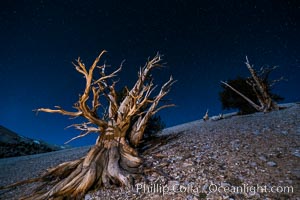
Ancient bristlecone pine trees at night, under a clear night sky full of stars, lit by a full moon, near Patriarch Grove.
Species: Ancient bristlecone pine, Pinus longaeva
Location: White Mountains, Inyo National Forest, California
Image ID: 28535
Species: Ancient bristlecone pine, Pinus longaeva
Location: White Mountains, Inyo National Forest, California
Image ID: 28535
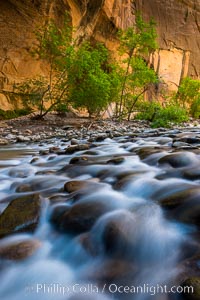
The Virgin River Narrows, where the Virgin River has carved deep, narrow canyons through the Zion National Park sandstone, creating one of the finest hikes in the world.
Location: Virgin River Narrows, Zion National Park, Utah
Image ID: 28575
Location: Virgin River Narrows, Zion National Park, Utah
Image ID: 28575
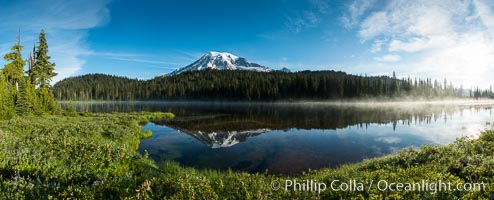
Mount Rainier is reflected in the calm waters of Reflection Lake, early morning.
Location: Reflection Lake, Mount Rainier National Park, Washington
Image ID: 28705
Panorama dimensions: 6921 x 17081
Location: Reflection Lake, Mount Rainier National Park, Washington
Image ID: 28705
Panorama dimensions: 6921 x 17081
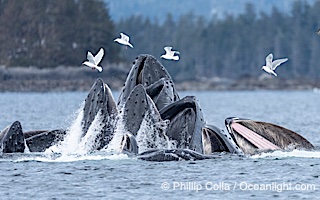
Humpback whales surface together during coordinated bubble-net feeding in Southeast Alaska. The whales use bubbles, sound, and movement to corral fish before capturing them in their open mouths.
Species: Humpback whale, Megaptera novaeangliae
Location: Sitka Sound, Alaska
Image ID: 41601
Species: Humpback whale, Megaptera novaeangliae
Location: Sitka Sound, Alaska
Image ID: 41601
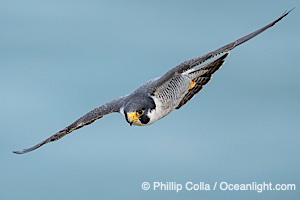
Peregrine Falcon in flight, Torrey Pines State Natural Reserve.
Species: Peregrine Falcon, Falco peregrinus
Location: Torrey Pines State Reserve, San Diego, Califoria
Image ID: 41737
Species: Peregrine Falcon, Falco peregrinus
Location: Torrey Pines State Reserve, San Diego, Califoria
Image ID: 41737
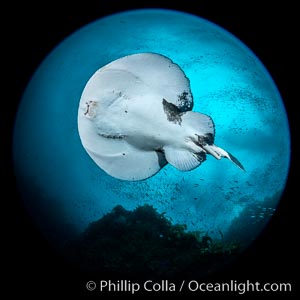
Pacific torpedo ray Tetronarce californica, amidst huge schools of fish and baitfish, Farnsworth Banks, Catalina Island. This electric ray will shock the hell out of you if you are not careful.
Species: Pacific torpedo ray, Tetronarce californica, Torpedo californica
Location: Catalina Island, California
Image ID: 37231
Species: Pacific torpedo ray, Tetronarce californica, Torpedo californica
Location: Catalina Island, California
Image ID: 37231
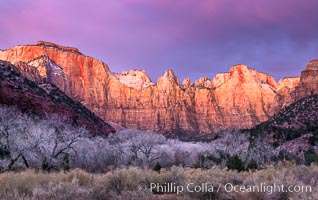
West Temple, The Sundial and the Altar of Sacrifice illuminated by soft alpenglow, about 20 minutes before sunrise.
Location: Zion National Park, Utah
Image ID: 37788
Location: Zion National Park, Utah
Image ID: 37788
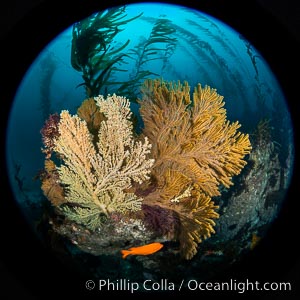
Parasitic zoanthid anemones cover, encrust and overwhelm a golden gorgonian. The gorgonian on the left has been completely parasitized by zoanthid anemones, while the gorgonian to the right remains free of zoanthids (for now). A garibaldi swims below the two sea fans. The golden gorgonian is a filter-feeding temperate colonial species that lives on the rocky bottom at depths between 50 to 200 feet deep. Each individual polyp is a distinct animal, together they secrete calcium that forms the structure of the colony. Gorgonians are oriented at right angles to prevailing water currents to capture plankton drifting by.
Species: California Golden Gorgonian, Luminescent Parazoanthid, Zoanthid Anemone, Giant Kelp, Garibaldi, Muricea californica, Parazoanthus lucificum, Savalia lucifica, Macrocystis pyrifera, Hypsypops rubicundus
Location: San Clemente Island, California
Image ID: 38493
Species: California Golden Gorgonian, Luminescent Parazoanthid, Zoanthid Anemone, Giant Kelp, Garibaldi, Muricea californica, Parazoanthus lucificum, Savalia lucifica, Macrocystis pyrifera, Hypsypops rubicundus
Location: San Clemente Island, California
Image ID: 38493
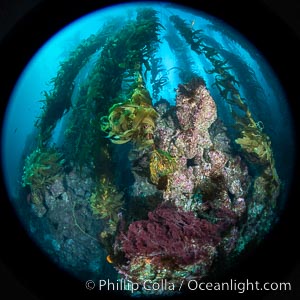
The Kelp Forest and Rocky Reef of San Clemente Island. Giant kelp grows rapidly, up to 2' per day, from the rocky reef on the ocean bottom to which it is anchored, toward the ocean surface where it spreads to form a thick canopy. Myriad species of fishes, mammals and invertebrates form a rich community in the kelp forest. Lush forests of kelp are found throughout California's Southern Channel Islands.
Species: Giant kelp, Macrocystis pyrifera
Location: San Clemente Island, California
Image ID: 38494
Species: Giant kelp, Macrocystis pyrifera
Location: San Clemente Island, California
Image ID: 38494
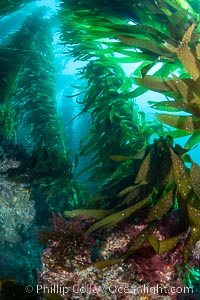
The Kelp Forest and Rocky Reef of San Clemente Island. Giant kelp grows rapidly, up to 2' per day, from the rocky reef on the ocean bottom to which it is anchored, toward the ocean surface where it spreads to form a thick canopy. Myriad species of fishes, mammals and invertebrates form a rich community in the kelp forest. Lush forests of kelp are found throughout California's Southern Channel Islands.
Species: Giant kelp, Macrocystis pyrifera
Location: San Clemente Island, California
Image ID: 38495
Species: Giant kelp, Macrocystis pyrifera
Location: San Clemente Island, California
Image ID: 38495
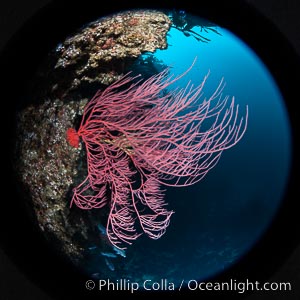
Red gorgonian on rocky reef, below kelp forest, underwater. The red gorgonian is a filter-feeding temperate colonial species that lives on the rocky bottom at depths between 50 to 200 feet deep. Gorgonians are typically oriented at right angles to prevailing water currents to capture plankton drifting by.
Species: Red gorgonian, Leptogorgia chilensis, Lophogorgia chilensis
Location: San Clemente Island, California
Image ID: 38496
Species: Red gorgonian, Leptogorgia chilensis, Lophogorgia chilensis
Location: San Clemente Island, California
Image ID: 38496