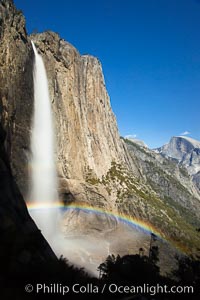
Yosemite Falls and rainbow, Half Dome in distance, viewed from the Yosemite Falls trail, spring.
Location: Yosemite Falls, Yosemite National Park, California
Image ID: 27742
Location: Yosemite Falls, Yosemite National Park, California
Image ID: 27742
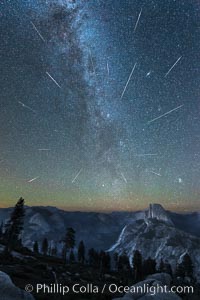
Perseid Meteor Shower and Milky Way, Andromeda Galaxy and the Pleides Cluster, over Half Dome and Yosemite National Park.
Location: Glacier Point, Yosemite National Park, California
Image ID: 28746
Location: Glacier Point, Yosemite National Park, California
Image ID: 28746
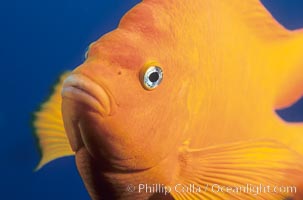
The bright orange garibaldi fish, California's state marine fish, is also clownlike in appearance.
Species: Garibaldi, Hypsypops rubicundus
Location: California
Image ID: 02416
Species: Garibaldi, Hypsypops rubicundus
Location: California
Image ID: 02416
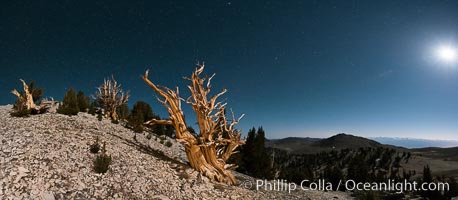
Ancient bristlecone pine trees at night, under a clear night sky full of stars, lit by a full moon, near Patriarch Grove.
Species: Ancient bristlecone pine, Pinus longaeva
Location: White Mountains, Inyo National Forest, California
Image ID: 28533
Panorama dimensions: 5144 x 11788
Species: Ancient bristlecone pine, Pinus longaeva
Location: White Mountains, Inyo National Forest, California
Image ID: 28533
Panorama dimensions: 5144 x 11788
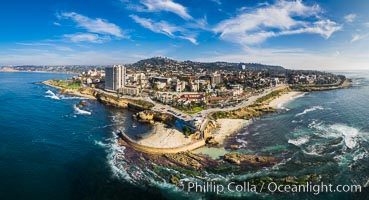
Childrens Pool Reef Exposed at Extreme Low Tide, La Jolla, California. Aerial panoramic photograph.
Location: La Jolla, California
Image ID: 37946
Panorama dimensions: 6176 x 11395
Location: La Jolla, California
Image ID: 37946
Panorama dimensions: 6176 x 11395
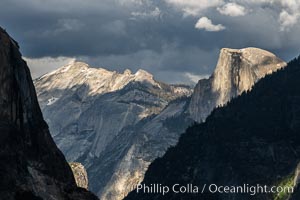
Half Dome and Clouds Rest, Sunset, Yosemite National Park.
Location: Yosemite National Park, California
Image ID: 34541
Location: Yosemite National Park, California
Image ID: 34541
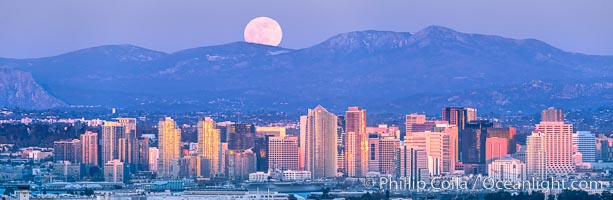
Full Moon Rises over the San Diego City Skyline and Mount Laguna, viewed from Point Loma, panoramic photograph.
Location: San Diego, California
Image ID: 36634
Panorama dimensions: 5276 x 16167
Location: San Diego, California
Image ID: 36634
Panorama dimensions: 5276 x 16167
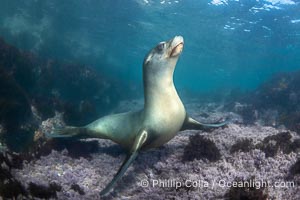
A beautiful golden-brown female California Sea Lion at the Coronado Islands, posing on a carpet of purple marine algae, Baja California, Mexico.
Species: California sea lion, Zalophus californianus
Location: Coronado Islands (Islas Coronado), Baja California, Mexico
Image ID: 38559
Species: California sea lion, Zalophus californianus
Location: Coronado Islands (Islas Coronado), Baja California, Mexico
Image ID: 38559
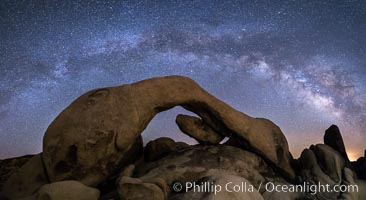
Milky Way at Night over Arch Rock, Joshua Tree National Park.
Location: Joshua Tree National Park, California
Image ID: 30220
Panorama dimensions: 4709 x 9140
Location: Joshua Tree National Park, California
Image ID: 30220
Panorama dimensions: 4709 x 9140
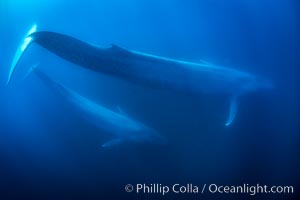
Blue whales, adult and juvenile (likely mother and calf), swimming together side by side underwater in the open ocean.
Species: Blue whale, Balaenoptera musculus
Location: San Diego, California
Image ID: 34568
Species: Blue whale, Balaenoptera musculus
Location: San Diego, California
Image ID: 34568
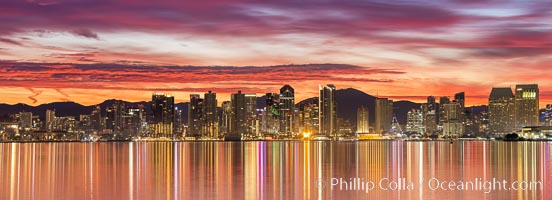
San Diego Bay and Downtown City Skyline at Dawn, spectacular clouds light up over the city. Mount San Miguel in the distance.
Location: San Diego, California
Image ID: 37636
Panorama dimensions: 5305 x 14631
Location: San Diego, California
Image ID: 37636
Panorama dimensions: 5305 x 14631
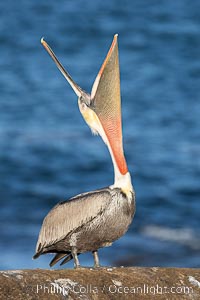
A perfect Brown Pelican Head Throw with Distant Ocean in Background, bending over backwards, stretching its neck and gular pouch, winter adult non-breeding plumage coloration.
Species: Brown Pelican, Pelecanus occidentalis, Pelecanus occidentalis californicus
Location: La Jolla, California
Image ID: 38935
Species: Brown Pelican, Pelecanus occidentalis, Pelecanus occidentalis californicus
Location: La Jolla, California
Image ID: 38935
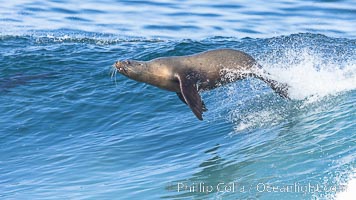
California sea lion bodysurfing in La Jolla, surfing huge waves close to shore at Boomer Beach.
Species: California Sea Lion, Zalophus californianus
Location: La Jolla, California
Image ID: 38970
Species: California Sea Lion, Zalophus californianus
Location: La Jolla, California
Image ID: 38970
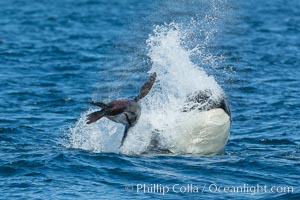
Killer whale attacking sea lion. Biggs transient orca and California sea lion.
Species: California sea lion, Killer whale, Orcinus orca, Zalophus californianus
Location: Palos Verdes, California
Image ID: 30428
Species: California sea lion, Killer whale, Orcinus orca, Zalophus californianus
Location: Palos Verdes, California
Image ID: 30428
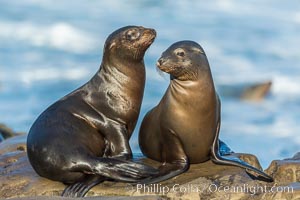
Double side-eye from two young California sea lions resting on a reef in La Jolla.
Species: California sea lion, Zalophus californianus
Location: La Jolla, California
Image ID: 34273
Species: California sea lion, Zalophus californianus
Location: La Jolla, California
Image ID: 34273
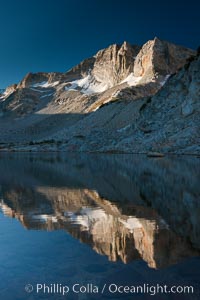
Cathedral Range peaks reflected in the still waters of Townsley Lake at sunrise.
Location: Yosemite National Park, California
Image ID: 25756
Location: Yosemite National Park, California
Image ID: 25756
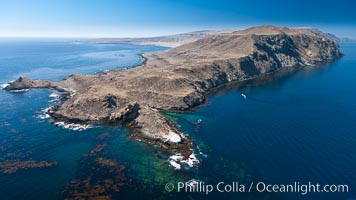
San Clemente Island Pyramid Head, the distinctive pyramid shaped southern end of the island. San Clemente Island Pyramid Head, showing geologic terracing, underwater reefs and giant kelp forests.
Location: San Clemente Island, California
Image ID: 26003
Location: San Clemente Island, California
Image ID: 26003
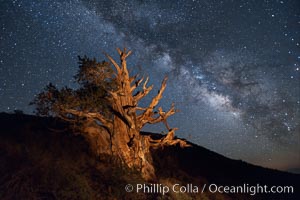
Stars and the Milky Way rise above ancient bristlecone pine trees, in the White Mountains at an elevation of 10,000' above sea level. These are some of the oldest trees in the world, reaching 4000 years in age.
Species: Bristlecone pine, Pinus longaeva
Location: Ancient Bristlecone Pine Forest, White Mountains, Inyo National Forest, California
Image ID: 27772
Species: Bristlecone pine, Pinus longaeva
Location: Ancient Bristlecone Pine Forest, White Mountains, Inyo National Forest, California
Image ID: 27772
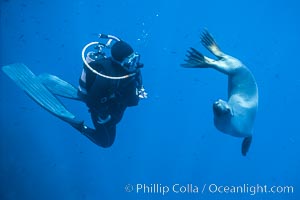
California sea lion and diver consider each other, underwater in the clear ocean water of Guadalupe Island.
Species: California sea lion, Zalophus californianus
Location: Guadalupe Island (Isla Guadalupe), Baja California, Mexico
Image ID: 02251
Species: California sea lion, Zalophus californianus
Location: Guadalupe Island (Isla Guadalupe), Baja California, Mexico
Image ID: 02251
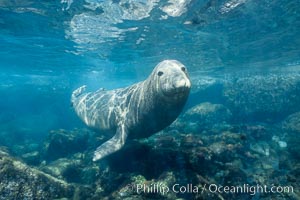
A northern elephant seal hovers underwater over a rocky bottom along the coastline of Guadalupe Island.
Species: Elephant seal, Mirounga angustirostris
Location: Guadalupe Island (Isla Guadalupe), Baja California, Mexico
Image ID: 03505
Species: Elephant seal, Mirounga angustirostris
Location: Guadalupe Island (Isla Guadalupe), Baja California, Mexico
Image ID: 03505
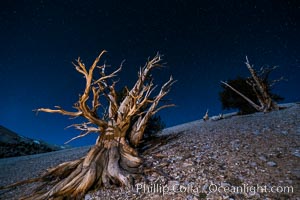
Ancient bristlecone pine trees at night, under a clear night sky full of stars, lit by a full moon, near Patriarch Grove.
Species: Ancient bristlecone pine, Pinus longaeva
Location: White Mountains, Inyo National Forest, California
Image ID: 28535
Species: Ancient bristlecone pine, Pinus longaeva
Location: White Mountains, Inyo National Forest, California
Image ID: 28535
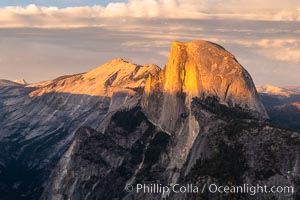
Sunset light on Half Dome and Clouds Rest, Yosemite National Park.
Location: Yosemite National Park, California
Image ID: 36397
Location: Yosemite National Park, California
Image ID: 36397
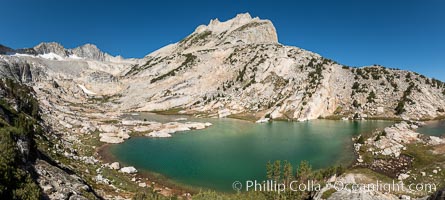
North Peak (12,242') rises over lower Conness Lake, its water colored deep blue-green by glacier runoff. Mount Conness (12,589') towers in the upper left. Hoover Wilderness, Inyo National Forest.
Location: Conness Lakes Basin, Hoover Wilderness, California
Image ID: 36427
Panorama dimensions: 7008 x 15585
Location: Conness Lakes Basin, Hoover Wilderness, California
Image ID: 36427
Panorama dimensions: 7008 x 15585
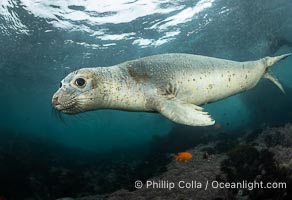
Juvenile Northern Elephant Seal Underwater, Coronado Islands, Mexico.
Species: Elephant seal, Mirounga angustirostris
Location: Coronado Islands (Islas Coronado), Baja California, Mexico
Image ID: 36465
Species: Elephant seal, Mirounga angustirostris
Location: Coronado Islands (Islas Coronado), Baja California, Mexico
Image ID: 36465
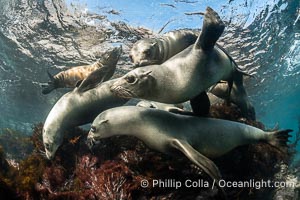
California Sea Lions Underwater, Coronado Islands, Baja California, Mexico.
Species: California sea lion, Zalophus californianus
Location: Coronado Islands (Islas Coronado), Baja California, Mexico
Image ID: 36467
Species: California sea lion, Zalophus californianus
Location: Coronado Islands (Islas Coronado), Baja California, Mexico
Image ID: 36467
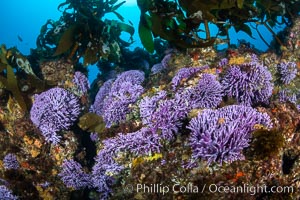
California reef covered with purple hydrocoral (Stylaster californicus, Allopora californica), Farnsworth Banks.
Species: Hydrocoral, Allopora californica, Stylaster californicus
Location: Catalina Island, California
Image ID: 37177
Species: Hydrocoral, Allopora californica, Stylaster californicus
Location: Catalina Island, California
Image ID: 37177
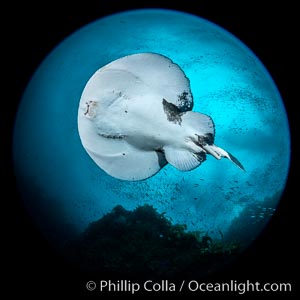
Pacific torpedo ray Tetronarce californica, amidst huge schools of fish and baitfish, Farnsworth Banks, Catalina Island. This electric ray will shock the hell out of you if you are not careful.
Species: Pacific torpedo ray, Tetronarce californica, Torpedo californica
Location: Catalina Island, California
Image ID: 37231
Species: Pacific torpedo ray, Tetronarce californica, Torpedo californica
Location: Catalina Island, California
Image ID: 37231
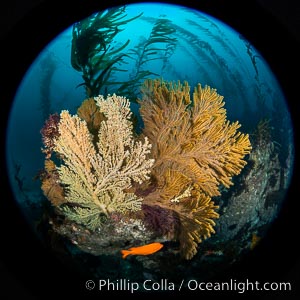
Parasitic zoanthid anemones cover, encrust and overwhelm a golden gorgonian. The gorgonian on the left has been completely parasitized by zoanthid anemones, while the gorgonian to the right remains free of zoanthids (for now). A garibaldi swims below the two sea fans. The golden gorgonian is a filter-feeding temperate colonial species that lives on the rocky bottom at depths between 50 to 200 feet deep. Each individual polyp is a distinct animal, together they secrete calcium that forms the structure of the colony. Gorgonians are oriented at right angles to prevailing water currents to capture plankton drifting by.
Species: California golden gorgonian, Luminescent parazoanthid, Zoanthid anemone, Giant kelp, Muricea californica, Parazoanthus lucificum, Savalia lucifica, Macrocystis pyrifera
Location: San Clemente Island, California
Image ID: 38493
Species: California golden gorgonian, Luminescent parazoanthid, Zoanthid anemone, Giant kelp, Muricea californica, Parazoanthus lucificum, Savalia lucifica, Macrocystis pyrifera
Location: San Clemente Island, California
Image ID: 38493
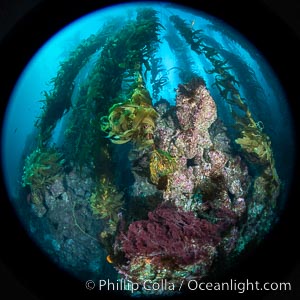
The Kelp Forest and Rocky Reef of San Clemente Island. Giant kelp grows rapidly, up to 2' per day, from the rocky reef on the ocean bottom to which it is anchored, toward the ocean surface where it spreads to form a thick canopy. Myriad species of fishes, mammals and invertebrates form a rich community in the kelp forest. Lush forests of kelp are found throughout California's Southern Channel Islands.
Species: Giant kelp, Macrocystis pyrifera
Location: San Clemente Island, California
Image ID: 38494
Species: Giant kelp, Macrocystis pyrifera
Location: San Clemente Island, California
Image ID: 38494
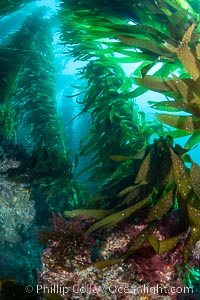
The Kelp Forest and Rocky Reef of San Clemente Island. Giant kelp grows rapidly, up to 2' per day, from the rocky reef on the ocean bottom to which it is anchored, toward the ocean surface where it spreads to form a thick canopy. Myriad species of fishes, mammals and invertebrates form a rich community in the kelp forest. Lush forests of kelp are found throughout California's Southern Channel Islands.
Species: Giant kelp, Macrocystis pyrifera
Location: San Clemente Island, California
Image ID: 38495
Species: Giant kelp, Macrocystis pyrifera
Location: San Clemente Island, California
Image ID: 38495