Search results for Yellowstone National Park


‹‹‹ Previous    1 2 3 -4- 5    Next ›››

Home   >   Blog   >   Search   >   Yellowstone National Park
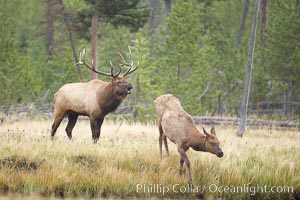
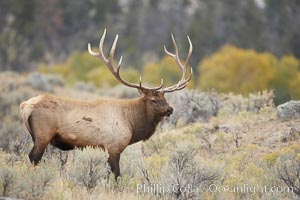
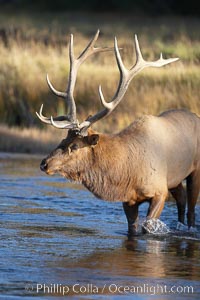
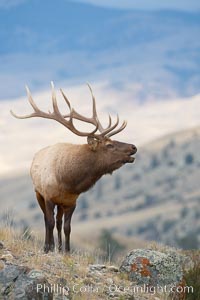
Bull elk, with large antlers, alongside female elk during rutting season, autumn.  A bull will defend his harem of 20 cows or more from competing bulls and predators. Only mature bulls have large harems and breeding success peaks at about eight years of age. Bulls between two to four years and over 11 years of age rarely have harems, and spend most of the rut on the periphery of larger harems. Young and old bulls that do acquire a harem hold it later in the breeding season than do bulls in their prime. A bull with a harem rarely feeds and he may lose up to 20 percent of his body weight while he is guarding the harem, Cervus canadensis, Yellowstone National Park, Wyoming Bull elk in sage brush with large rack of antlers during the fall rut (mating season).  This bull elk has sparred with other bulls to establish his harem of females with which he hopes to mate, Cervus canadensis, Mammoth Hot Springs, Yellowstone National Park, Wyoming Male elk bugling during the fall rut. Large male elk are known as bulls. Male elk have large antlers which are shed each year. Male elk engage in competitive mating behaviors during the rut, including posturing, antler wrestling and bugling, a loud series of screams which is intended to establish dominance over other males and attract females, Cervus canadensis, Madison River, Yellowstone National Park, Wyoming
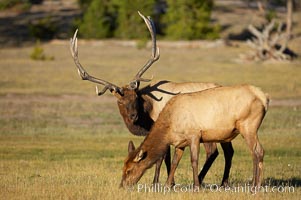
Bull elk, with large antlers, alongside female elk during rutting season, autumn. A bull will defend his harem of 20 cows or more from competing bulls and predators. Only mature bulls have large harems and breeding success peaks at about eight years of age. Bulls between two to four years and over 11 years of age rarely have harems, and spend most of the rut on the periphery of larger harems. Young and old bulls that do acquire a harem hold it later in the breeding season than do bulls in their prime. A bull with a harem rarely feeds and he may lose up to 20 percent of his body weight while he is guarding the harem.
Image ID: 19724  
Species: Elk, Cervus canadensis
Location: Yellowstone National Park, Wyoming, USA
 
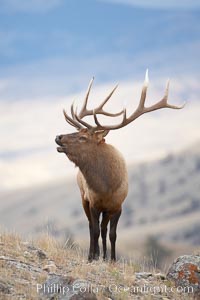
Bull elk in sage brush with large rack of antlers during the fall rut (mating season). This bull elk has sparred with other bulls to establish his harem of females with which he hopes to mate.
Image ID: 19746  
Species: Elk, Cervus canadensis
Location: Mammoth Hot Springs, Yellowstone National Park, Wyoming, USA
 
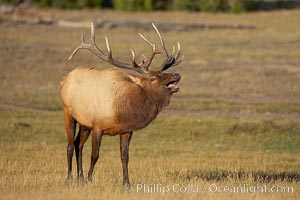
Male elk bugling during the fall rut. Large male elk are known as bulls. Male elk have large antlers which are shed each year. Male elk engage in competitive mating behaviors during the rut, including posturing, antler wrestling and bugling, a loud series of screams which is intended to establish dominance over other males and attract females.
Image ID: 19781  
Species: Elk, Cervus canadensis
Location: Madison River, Yellowstone National Park, Wyoming, USA
 
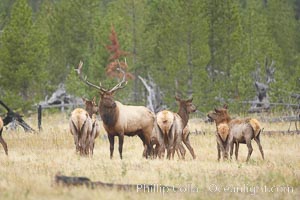
Bull elk, with large antlers, alongside female elk during rutting season, autumn.  A bull will defend his harem of 20 cows or more from competing bulls and predators. Only mature bulls have large harems and breeding success peaks at about eight years of age. Bulls between two to four years and over 11 years of age rarely have harems, and spend most of the rut on the periphery of larger harems. Young and old bulls that do acquire a harem hold it later in the breeding season than do bulls in their prime. A bull with a harem rarely feeds and he may lose up to 20 percent of his body weight while he is guarding the harem, Cervus canadensis, Yellowstone National Park, Wyoming Male elk bugling during the fall rut. Large male elk are known as bulls. Male elk have large antlers which are shed each year. Male elk engage in competitive mating behaviors during the rut, including posturing, antler wrestling and bugling, a loud series of screams which is intended to establish dominance over other males and attract females, Cervus canadensis, Mammoth Hot Springs, Yellowstone National Park, Wyoming Tourists get a good look at wild elk who have become habituated to human presence in Yellowstone National Park, Cervus canadensis
Bull elk, with large antlers, alongside female elk during rutting season, autumn. A bull will defend his harem of 20 cows or more from competing bulls and predators. Only mature bulls have large harems and breeding success peaks at about eight years of age. Bulls between two to four years and over 11 years of age rarely have harems, and spend most of the rut on the periphery of larger harems. Young and old bulls that do acquire a harem hold it later in the breeding season than do bulls in their prime. A bull with a harem rarely feeds and he may lose up to 20 percent of his body weight while he is guarding the harem.
Image ID: 19782  
Species: Elk, Cervus canadensis
Location: Yellowstone National Park, Wyoming, USA
 
Male elk bugling during the fall rut. Large male elk are known as bulls. Male elk have large antlers which are shed each year. Male elk engage in competitive mating behaviors during the rut, including posturing, antler wrestling and bugling, a loud series of screams which is intended to establish dominance over other males and attract females.
Image ID: 19788  
Species: Elk, Cervus canadensis
Location: Mammoth Hot Springs, Yellowstone National Park, Wyoming, USA
 
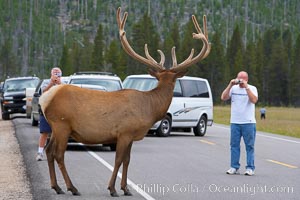
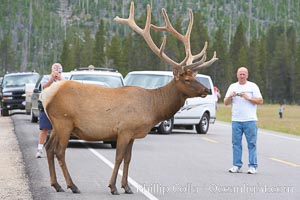
Tourists get a good look at wild elk who have become habituated to human presence in Yellowstone National Park.
Image ID: 13161  
Species: Elk, Cervus canadensis
Location: Yellowstone National Park, Wyoming, USA
 
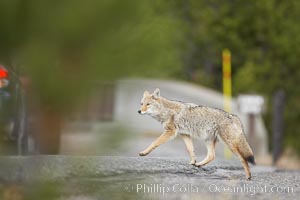
Tourists get a good look at wild elk who have become habituated to human presence in Yellowstone National Park, Cervus canadensis Coyote crosses a road in front of a car.  Dozens of coyotes, wolves, bears, elk and bison are killed each year in Yellowstone as they attempt to cross the roads in front of drivers who are not paying attention or speeding, Canis latrans, Yellowstone National Park, Wyoming Male elk bugling during the fall rut. Large male elk are known as bulls. Male elk have large antlers which are shed each year. Male elk engage in competitive mating behaviors during the rut, including posturing, antler wrestling and bugling, a loud series of screams which is intended to establish dominance over other males and attract females, Cervus canadensis, Mammoth Hot Springs, Yellowstone National Park, Wyoming
Tourists get a good look at wild elk who have become habituated to human presence in Yellowstone National Park.
Image ID: 13192  
Species: Elk, Cervus canadensis
Location: Yellowstone National Park, Wyoming, USA
 
Coyote crosses a road in front of a car. Dozens of coyotes, wolves, bears, elk and bison are killed each year in Yellowstone as they attempt to cross the roads in front of drivers who are not paying attention or speeding.
Image ID: 19649  
Species: Coyote, Canis latrans
Location: Yellowstone National Park, Wyoming, USA
 
Male elk bugling during the fall rut. Large male elk are known as bulls. Male elk have large antlers which are shed each year. Male elk engage in competitive mating behaviors during the rut, including posturing, antler wrestling and bugling, a loud series of screams which is intended to establish dominance over other males and attract females.
Image ID: 19694  
Species: Elk, Cervus canadensis
Location: Mammoth Hot Springs, Yellowstone National Park, Wyoming, USA
 
Bull elk, with large antlers, alongside female elk during rutting season, autumn.  A bull will defend his harem of 20 cows or more from competing bulls and predators. Only mature bulls have large harems and breeding success peaks at about eight years of age. Bulls between two to four years and over 11 years of age rarely have harems, and spend most of the rut on the periphery of larger harems. Young and old bulls that do acquire a harem hold it later in the breeding season than do bulls in their prime. A bull with a harem rarely feeds and he may lose up to 20 percent of his body weight while he is guarding the harem, Cervus canadensis, Yellowstone National Park, Wyoming Male elk bugling during the fall rut. Large male elk are known as bulls. Male elk have large antlers which are shed each year. Male elk engage in competitive mating behaviors during the rut, including posturing, antler wrestling and bugling, a loud series of screams which is intended to establish dominance over other males and attract females, Cervus canadensis, Mammoth Hot Springs, Yellowstone National Park, Wyoming Male elk bugling during the fall rut. Large male elk are known as bulls. Male elk have large antlers which are shed each year. Male elk engage in competitive mating behaviors during the rut, including posturing, antler wrestling and bugling, a loud series of screams which is intended to establish dominance over other males and attract females, Cervus canadensis, Madison River, Yellowstone National Park, Wyoming
Bull elk, with large antlers, alongside female elk during rutting season, autumn. A bull will defend his harem of 20 cows or more from competing bulls and predators. Only mature bulls have large harems and breeding success peaks at about eight years of age. Bulls between two to four years and over 11 years of age rarely have harems, and spend most of the rut on the periphery of larger harems. Young and old bulls that do acquire a harem hold it later in the breeding season than do bulls in their prime. A bull with a harem rarely feeds and he may lose up to 20 percent of his body weight while he is guarding the harem.
Image ID: 19696  
Species: Elk, Cervus canadensis
Location: Yellowstone National Park, Wyoming, USA
 
Male elk bugling during the fall rut. Large male elk are known as bulls. Male elk have large antlers which are shed each year. Male elk engage in competitive mating behaviors during the rut, including posturing, antler wrestling and bugling, a loud series of screams which is intended to establish dominance over other males and attract females.
Image ID: 19705  
Species: Elk, Cervus canadensis
Location: Mammoth Hot Springs, Yellowstone National Park, Wyoming, USA
 
Male elk bugling during the fall rut. Large male elk are known as bulls. Male elk have large antlers which are shed each year. Male elk engage in competitive mating behaviors during the rut, including posturing, antler wrestling and bugling, a loud series of screams which is intended to establish dominance over other males and attract females.
Image ID: 19711  
Species: Elk, Cervus canadensis
Location: Madison River, Yellowstone National Park, Wyoming, USA
 
Bull elk in sage brush with large rack of antlers during the fall rut (mating season).  This bull elk has sparred with other bulls to establish his harem of females with which he hopes to mate, Cervus canadensis, Mammoth Hot Springs, Yellowstone National Park, Wyoming Juvenile elk, autumn, Cervus canadensis, Yellowstone National Park, Wyoming Male elk bugling during the fall rut. Large male elk are known as bulls. Male elk have large antlers which are shed each year. Male elk engage in competitive mating behaviors during the rut, including posturing, antler wrestling and bugling, a loud series of screams which is intended to establish dominance over other males and attract females, Cervus canadensis, Yellowstone National Park, Wyoming
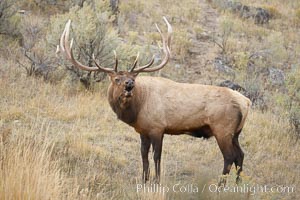
Bull elk in sage brush with large rack of antlers during the fall rut (mating season). This bull elk has sparred with other bulls to establish his harem of females with which he hopes to mate.
Image ID: 19726  
Species: Elk, Cervus canadensis
Location: Mammoth Hot Springs, Yellowstone National Park, Wyoming, USA
 
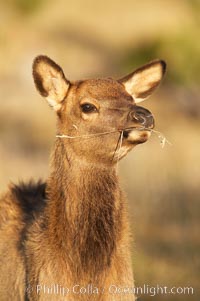
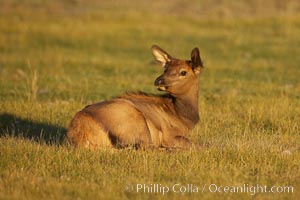
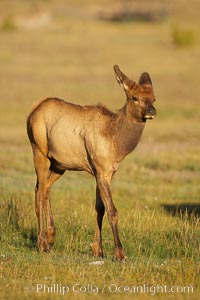
Juvenile elk, autumn.
Image ID: 19727  
Species: Elk, Cervus canadensis
Location: Yellowstone National Park, Wyoming, USA
 
Male elk bugling during the fall rut. Large male elk are known as bulls. Male elk have large antlers which are shed each year. Male elk engage in competitive mating behaviors during the rut, including posturing, antler wrestling and bugling, a loud series of screams which is intended to establish dominance over other males and attract females.
Image ID: 19729  
Species: Elk, Cervus canadensis
Location: Yellowstone National Park, Wyoming, USA
 
Male elk bugling during the fall rut. Large male elk are known as bulls. Male elk have large antlers which are shed each year. Male elk engage in competitive mating behaviors during the rut, including posturing, antler wrestling and bugling, a loud series of screams which is intended to establish dominance over other males and attract females, Cervus canadensis, Yellowstone National Park, Wyoming Bull elk in sage brush with large rack of antlers during the fall rut (mating season).  This bull elk has sparred with other bulls to establish his harem of females with which he hopes to mate, Cervus canadensis, Mammoth Hot Springs, Yellowstone National Park, Wyoming Male elk bugling during the fall rut. Large male elk are known as bulls. Male elk have large antlers which are shed each year. Male elk engage in competitive mating behaviors during the rut, including posturing, antler wrestling and bugling, a loud series of screams which is intended to establish dominance over other males and attract females, Cervus canadensis, Mammoth Hot Springs, Yellowstone National Park, Wyoming
Male elk bugling during the fall rut. Large male elk are known as bulls. Male elk have large antlers which are shed each year. Male elk engage in competitive mating behaviors during the rut, including posturing, antler wrestling and bugling, a loud series of screams which is intended to establish dominance over other males and attract females.
Image ID: 19731  
Species: Elk, Cervus canadensis
Location: Yellowstone National Park, Wyoming, USA
 
Bull elk in sage brush with large rack of antlers during the fall rut (mating season). This bull elk has sparred with other bulls to establish his harem of females with which he hopes to mate.
Image ID: 19735  
Species: Elk, Cervus canadensis
Location: Mammoth Hot Springs, Yellowstone National Park, Wyoming, USA
 
Male elk bugling during the fall rut. Large male elk are known as bulls. Male elk have large antlers which are shed each year. Male elk engage in competitive mating behaviors during the rut, including posturing, antler wrestling and bugling, a loud series of screams which is intended to establish dominance over other males and attract females.
Image ID: 19736  
Species: Elk, Cervus canadensis
Location: Mammoth Hot Springs, Yellowstone National Park, Wyoming, USA
 
Male elk bugling during the fall rut. Large male elk are known as bulls. Male elk have large antlers which are shed each year. Male elk engage in competitive mating behaviors during the rut, including posturing, antler wrestling and bugling, a loud series of screams which is intended to establish dominance over other males and attract females, Cervus canadensis, Yellowstone National Park, Wyoming Elk, bull elk, adult male elk with large set of antlers.  By September, this bull elk's antlers have reached their full size and the velvet has fallen off. This bull elk has sparred with other bulls for access to herds of females in estrous and ready to mate, Cervus canadensis, Yellowstone National Park, Wyoming Bull elk in sage brush with large rack of antlers during the fall rut (mating season).  This bull elk has sparred with other bulls to establish his harem of females with which he hopes to mate, Cervus canadensis, Mammoth Hot Springs, Yellowstone National Park, Wyoming
Male elk bugling during the fall rut. Large male elk are known as bulls. Male elk have large antlers which are shed each year. Male elk engage in competitive mating behaviors during the rut, including posturing, antler wrestling and bugling, a loud series of screams which is intended to establish dominance over other males and attract females.
Image ID: 19737  
Species: Elk, Cervus canadensis
Location: Yellowstone National Park, Wyoming, USA
 
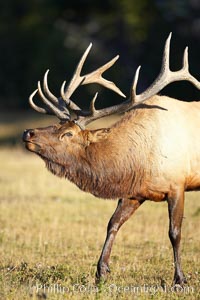
Elk, bull elk, adult male elk with large set of antlers. By September, this bull elk's antlers have reached their full size and the velvet has fallen off. This bull elk has sparred with other bulls for access to herds of females in estrous and ready to mate.
Image ID: 19739  
Species: Elk, Cervus canadensis
Location: Yellowstone National Park, Wyoming, USA
 
Bull elk in sage brush with large rack of antlers during the fall rut (mating season). This bull elk has sparred with other bulls to establish his harem of females with which he hopes to mate.
Image ID: 19744  
Species: Elk, Cervus canadensis
Location: Mammoth Hot Springs, Yellowstone National Park, Wyoming, USA
 
Bull elk in sage brush with large rack of antlers during the fall rut (mating season).  This bull elk has sparred with other bulls to establish his harem of females with which he hopes to mate, Cervus canadensis, Mammoth Hot Springs, Yellowstone National Park, Wyoming Elk, bull elk, adult male elk with large set of antlers.  By September, this bull elk's antlers have reached their full size and the velvet has fallen off. This bull elk has sparred with other bulls for access to herds of females in estrous and ready to mate, Cervus canadensis, Yellowstone National Park, Wyoming Large male elk (bull) in snow covered meadow near Madison River.  Only male elk have antlers, which start growing in the spring and are shed each winter. The largest antlers may be 4 feet long and weigh up to 40 pounds. Antlers are made of bone which can grow up to one inch per day. While growing, the antlers are covered with and protected by a soft layer of highly vascularised skin known as velvet. The velvet is shed in the summer when the antlers have fully developed. Bull elk may have six or more tines on each antler, however the number of tines has little to do with the age or maturity of a particular animal, Cervus canadensis, Yellowstone National Park, Wyoming
Bull elk in sage brush with large rack of antlers during the fall rut (mating season). This bull elk has sparred with other bulls to establish his harem of females with which he hopes to mate.
Image ID: 19745  
Species: Elk, Cervus canadensis
Location: Mammoth Hot Springs, Yellowstone National Park, Wyoming, USA
 
Elk, bull elk, adult male elk with large set of antlers. By September, this bull elk's antlers have reached their full size and the velvet has fallen off. This bull elk has sparred with other bulls for access to herds of females in estrous and ready to mate.
Image ID: 19747  
Species: Elk, Cervus canadensis
Location: Yellowstone National Park, Wyoming, USA
 
Large male elk (bull) in snow covered meadow near Madison River. Only male elk have antlers, which start growing in the spring and are shed each winter. The largest antlers may be 4 feet long and weigh up to 40 pounds. Antlers are made of bone which can grow up to one inch per day. While growing, the antlers are covered with and protected by a soft layer of highly vascularised skin known as velvet. The velvet is shed in the summer when the antlers have fully developed. Bull elk may have six or more tines on each antler, however the number of tines has little to do with the age or maturity of a particular animal.
Image ID: 19749  
Species: Elk, Cervus canadensis
Location: Yellowstone National Park, Wyoming, USA
 
Male elk bugling during the fall rut. Large male elk are known as bulls. Male elk have large antlers which are shed each year. Male elk engage in competitive mating behaviors during the rut, including posturing, antler wrestling and bugling, a loud series of screams which is intended to establish dominance over other males and attract females, Cervus canadensis, Mammoth Hot Springs, Yellowstone National Park, Wyoming Small group of female and juvenile elk, Cervus canadensis, Mammoth Hot Springs, Yellowstone National Park, Wyoming Large male elk (bull) in snow covered meadow near Madison River.  Only male elk have antlers, which start growing in the spring and are shed each winter. The largest antlers may be 4 feet long and weigh up to 40 pounds. Antlers are made of bone which can grow up to one inch per day. While growing, the antlers are covered with and protected by a soft layer of highly vascularised skin known as velvet. The velvet is shed in the summer when the antlers have fully developed. Bull elk may have six or more tines on each antler, however the number of tines has little to do with the age or maturity of a particular animal, Cervus canadensis, Yellowstone National Park, Wyoming
Male elk bugling during the fall rut. Large male elk are known as bulls. Male elk have large antlers which are shed each year. Male elk engage in competitive mating behaviors during the rut, including posturing, antler wrestling and bugling, a loud series of screams which is intended to establish dominance over other males and attract females.
Image ID: 19750  
Species: Elk, Cervus canadensis
Location: Mammoth Hot Springs, Yellowstone National Park, Wyoming, USA
 
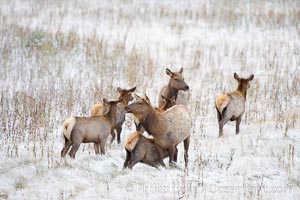
Small group of female and juvenile elk.
Image ID: 19758  
Species: Elk, Cervus canadensis
Location: Mammoth Hot Springs, Yellowstone National Park, Wyoming, USA
 
Large male elk (bull) in snow covered meadow near Madison River. Only male elk have antlers, which start growing in the spring and are shed each winter. The largest antlers may be 4 feet long and weigh up to 40 pounds. Antlers are made of bone which can grow up to one inch per day. While growing, the antlers are covered with and protected by a soft layer of highly vascularised skin known as velvet. The velvet is shed in the summer when the antlers have fully developed. Bull elk may have six or more tines on each antler, however the number of tines has little to do with the age or maturity of a particular animal.
Image ID: 19767  
Species: Elk, Cervus canadensis
Location: Yellowstone National Park, Wyoming, USA
 
Elk, bull elk, adult male elk with large set of antlers.  By September, this bull elk's antlers have reached their full size and the velvet has fallen off. This bull elk has sparred with other bulls for access to herds of females in estrous and ready to mate, Cervus canadensis, Yellowstone National Park, Wyoming Bull elk in sage brush with large rack of antlers during the fall rut (mating season).  This bull elk has sparred with other bulls to establish his harem of females with which he hopes to mate, Cervus canadensis, Mammoth Hot Springs, Yellowstone National Park, Wyoming Fly fisherman wading in the Madison River, fall, autumn, Yellowstone National Park, Wyoming
Elk, bull elk, adult male elk with large set of antlers. By September, this bull elk's antlers have reached their full size and the velvet has fallen off. This bull elk has sparred with other bulls for access to herds of females in estrous and ready to mate.
Image ID: 19773  
Species: Elk, Cervus canadensis
Location: Yellowstone National Park, Wyoming, USA
 
Bull elk in sage brush with large rack of antlers during the fall rut (mating season). This bull elk has sparred with other bulls to establish his harem of females with which he hopes to mate.
Image ID: 19779  
Species: Elk, Cervus canadensis
Location: Mammoth Hot Springs, Yellowstone National Park, Wyoming, USA
 
Fly fisherman wading in the Madison River, fall, autumn.
Image ID: 19590  
Location: Madison River, Yellowstone National Park, Wyoming, USA


Blog posts (20) related to Yellowstone National Park


Related Topics:


Keywords:

Page:   ‹‹‹ Previous   1 2 3 -4- 5   Next ›››   New Search
Categories Appearing Among These Images:
Animal  >  Bird  >  Goose (Anatidae)  >  Canada Goose
Animal  >  Mammal  >  Bear  >  Grizzly Bear
Animal  >  Mammal  >  Bison
Animal  >  Mammal  >  Coyote
Animal  >  Mammal  >  Deer
Animal  >  Mammal  >  Elk
Animal  >  Mammal  >  Elk  >  Bugling Elk
Animal  >  Mammal  >  Elk  >  Bull elk
Animal  >  Mammal  >  Elk  >  Elk Rut
Animal  >  Mammal  >  Elk  >  Flehmen Response
Animal  >  Mammal  >  Marmot
Animal  >  Mammal  >  Moose
Animal  >  Mammal  >  Pronghorn Antelope
Animal  >  Mammal  >  Squirrel
Gallery  >  Brown Bears
Gallery  >  Wildlife Portraits
Gallery  >  Yellowstone National Park
Location  >  Protected Threatened and Significant Places  >  National Parks  >  Yellowstone National Park (Wyoming)
Location  >  Protected Threatened and Significant Places  >  National Parks  >  Yellowstone National Park (Wyoming)  >  Geothermal Features  >  Geyser  >  Anemone Geyser
Location  >  Protected Threatened and Significant Places  >  National Parks  >  Yellowstone National Park (Wyoming)  >  Geothermal Features  >  Geyser  >  Castle Geyser
Location  >  Protected Threatened and Significant Places  >  National Parks  >  Yellowstone National Park (Wyoming)  >  Geothermal Features  >  Geyser  >  Clepsydra Geyser
Location  >  Protected Threatened and Significant Places  >  National Parks  >  Yellowstone National Park (Wyoming)  >  Geothermal Features  >  Geyser  >  Daisy Geyser
Location  >  Protected Threatened and Significant Places  >  National Parks  >  Yellowstone National Park (Wyoming)  >  Geothermal Features  >  Geyser  >  Grand Geyser
Location  >  Protected Threatened and Significant Places  >  National Parks  >  Yellowstone National Park (Wyoming)  >  Geothermal Features  >  Geyser  >  Ledge Geyser
Location  >  Protected Threatened and Significant Places  >  National Parks  >  Yellowstone National Park (Wyoming)  >  Geothermal Features  >  Geyser  >  Lion Geyser
Location  >  Protected Threatened and Significant Places  >  National Parks  >  Yellowstone National Park (Wyoming)  >  Geothermal Features  >  Geyser  >  Old Faithful Geyser
Location  >  Protected Threatened and Significant Places  >  National Parks  >  Yellowstone National Park (Wyoming)  >  Geothermal Features  >  Geyser  >  Pink Cone Geyser
Location  >  Protected Threatened and Significant Places  >  National Parks  >  Yellowstone National Park (Wyoming)  >  Geothermal Features  >  Geyser  >  Riverside Geyser
Location  >  Protected Threatened and Significant Places  >  National Parks  >  Yellowstone National Park (Wyoming)  >  Geothermal Features  >  Geyser  >  Sawmill Geyser
Location  >  Protected Threatened and Significant Places  >  National Parks  >  Yellowstone National Park (Wyoming)  >  Geothermal Features  >  Geyser  >  White Dome Geyser
Location  >  Protected Threatened and Significant Places  >  National Parks  >  Yellowstone National Park (Wyoming)  >  Geothermal Features  >  Spring  >  Crested Pool
Location  >  Protected Threatened and Significant Places  >  National Parks  >  Yellowstone National Park (Wyoming)  >  Geothermal Features  >  Spring  >  Grand Prismatic Spring
Location  >  Protected Threatened and Significant Places  >  National Parks  >  Yellowstone National Park (Wyoming)  >  Geothermal Features  >  Spring  >  Morning Glory Pool
Location  >  Protected Threatened and Significant Places  >  National Parks  >  Yellowstone National Park (Wyoming)  >  Geothermal Features  >  Spring  >  New Blue Spring
Location  >  Protected Threatened and Significant Places  >  National Parks  >  Yellowstone National Park (Wyoming)  >  Geothermal Features  >  Spring  >  Orange Spring Mound
Location  >  Protected Threatened and Significant Places  >  National Parks  >  Yellowstone National Park (Wyoming)  >  Geothermal Features  >  Spring  >  Tortoise Shell Spring
Location  >  Protected Threatened and Significant Places  >  National Parks  >  Yellowstone National Park (Wyoming)  >  Lamar Valley
Location  >  Protected Threatened and Significant Places  >  National Parks  >  Yellowstone National Park (Wyoming)  >  Madison River
Location  >  Protected Threatened and Significant Places  >  National Parks  >  Yellowstone National Park (Wyoming)  >  River / Waterfall  >  Firehole River
Location  >  Protected Threatened and Significant Places  >  National Parks  >  Yellowstone National Park (Wyoming)  >  River / Waterfall  >  Gibbon Falls
Location  >  Protected Threatened and Significant Places  >  National Parks  >  Yellowstone National Park (Wyoming)  >  River / Waterfall  >  Lower Yellowstone Falls
Location  >  Protected Threatened and Significant Places  >  World Heritage Sites  >  Yellowstone National Park (USA)
Location  >  USA  >  Wyoming  >  Yellowstone National Park
Natural World  >  Geothermal Features  >  Geyser
Natural World  >  Geothermal Features  >  Spring
Natural World  >  Waterfall  >  Gibbon Falls (Yellowstone)
Natural World  >  Waterfall  >  Lower Yellowstone Falls (Yellowstone)
Portfolio

Species Appearing Among These Images:
Alces alces
Antilocapra americana
Bison bison
Branta canadensis
Canis latrans
Cervus canadensis
Cygnus buccinator
Marmota flaviventris
Odocoileus hemionus
Spermophilus armatus
Ursus arctos horribilis

Blog posts (20) related to Yellowstone National Park
Yellowstone National Park Photos
Photo of Devil's Postpile National Monument
Lamar Valley and Snow, Yellowstone National Park
Madison River and Snow, Yellowstone National Park
Midway Geyser Basin Panorama, Yellowstone
Elk Photos
Photo of Elk Flehmen Response
Photos of Yellowstone Elk
Photo of Bull Elk in Sage
Bugling Elk at Mammoth Hot Springs
Mammoth Elk Photos
Photo of a Moose in Snow
Madison River Coyote in Snow
Photo of Norris Geyser Basin
Photo of a Coyote Hunting Voles
Coyote at Sheepeater Cliffs
Watching Wolves with Laurie Lyman
Photo of Grand Prismatic Spring in Winter
Photo of a Grizzly Bear in Snow
Yellowstone Deer Photos

Search for:     

Updated: November 21, 2009