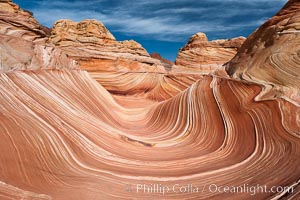
The Wave, an area of fantastic eroded sandstone featuring beautiful swirls, wild colors, countless striations, and bizarre shapes set amidst the dramatic surrounding North Coyote Buttes of Arizona and Utah. The sandstone formations of the North Coyote Buttes, including the Wave, date from the Jurassic period. Managed by the Bureau of Land Management, the Wave is located in the Paria Canyon-Vermilion Cliffs Wilderness and is accessible on foot by permit only.
Location: North Coyote Buttes, Paria Canyon-Vermilion Cliffs Wilderness, Arizona
Image ID: 20605
Location: North Coyote Buttes, Paria Canyon-Vermilion Cliffs Wilderness, Arizona
Image ID: 20605
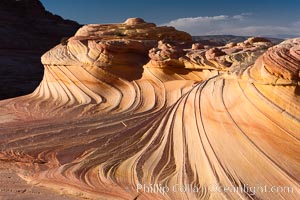
The Second Wave at Sunset, North Coyote Buttes. The Second Wave, a curiously-shaped sandstone swirl, takes on rich warm tones and dramatic shadowed textures at sunset. Set in the North Coyote Buttes of Arizona and Utah, the Second Wave is characterized by striations revealing layers of sedimentary deposits, a visible historical record depicting eons of submarine geology.
Location: North Coyote Buttes, Paria Canyon-Vermilion Cliffs Wilderness, Arizona
Image ID: 20606
Location: North Coyote Buttes, Paria Canyon-Vermilion Cliffs Wilderness, Arizona
Image ID: 20606
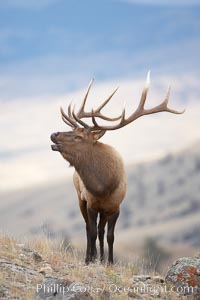
Male elk bugling during the fall rut. Large male elk are known as bulls. Male elk have large antlers which are shed each year. Male elk engage in competitive mating behaviors during the rut, including posturing, antler wrestling and bugling, a loud series of screams which is intended to establish dominance over other males and attract females.
Species: Elk, Cervus canadensis
Location: Mammoth Hot Springs, Yellowstone National Park, Wyoming
Image ID: 19693
Species: Elk, Cervus canadensis
Location: Mammoth Hot Springs, Yellowstone National Park, Wyoming
Image ID: 19693
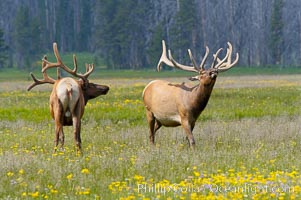
Bull elk spar to establish harems of females, Gibbon Meadow.
Species: Elk, Cervus canadensis
Location: Gibbon Meadows, Yellowstone National Park, Wyoming
Image ID: 13151
Species: Elk, Cervus canadensis
Location: Gibbon Meadows, Yellowstone National Park, Wyoming
Image ID: 13151
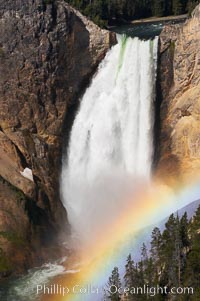
A rainbow appears in the mist of the Lower Falls of the Yellowstone River. At 308 feet, the Lower Falls of the Yellowstone River is the tallest fall in the park. This view is from Lookout Point on the North side of the Grand Canyon of the Yellowstone. When conditions are perfect in midsummer, a midmorning rainbow briefly appears in the falls.
Location: Grand Canyon of the Yellowstone, Yellowstone National Park, Wyoming
Image ID: 13319
Location: Grand Canyon of the Yellowstone, Yellowstone National Park, Wyoming
Image ID: 13319
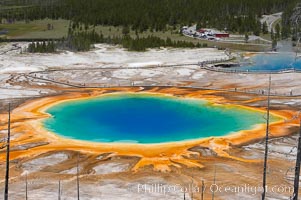
Grand Prismatic Spring (left) and Excelsior Geyser (right). Grand Prismatic Spring displays a stunning rainbow of colors created by species of thermophilac (heat-loving) bacteria that thrive in narrow temperature ranges. The blue water in the center is too hot to support any bacterial life, while the outer orange rings are the coolest water. Grand Prismatic Spring is the largest spring in the United States and the third-largest in the world. Midway Geyser Basin.
Location: Midway Geyser Basin, Yellowstone National Park, Wyoming
Image ID: 13571
Location: Midway Geyser Basin, Yellowstone National Park, Wyoming
Image ID: 13571
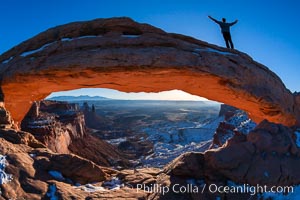
Extended High Mountain pose, Utthita Tadasana, sunrise on Mesa Arch, Utah. An exuberant hiker greets the dawning sun from atop Mesa Arch.
Location: Island in the Sky, Canyonlands National Park, Utah
Image ID: 18036
Location: Island in the Sky, Canyonlands National Park, Utah
Image ID: 18036
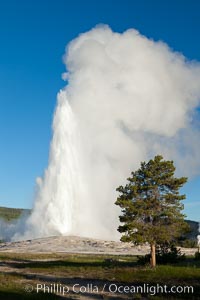
Old Faithful geyser, sunrise. Reaching up to 185' in height and lasting up to 5 minutes, Old Faithful geyser is the most famous geyser in the world and the first geyser in Yellowstone to be named.
Location: Upper Geyser Basin, Yellowstone National Park, Wyoming
Image ID: 26939
Location: Upper Geyser Basin, Yellowstone National Park, Wyoming
Image ID: 26939
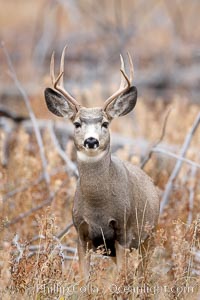
Mule deer in tall grass, fall, autumn.
Species: Mule deer, Odocoileus hemionus
Location: Yellowstone National Park, Wyoming
Image ID: 19577
Species: Mule deer, Odocoileus hemionus
Location: Yellowstone National Park, Wyoming
Image ID: 19577
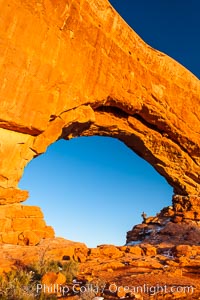
Hiker in North Window, sunset, western face. North Window is a natural sandstone arch 90 feet wide and 48 feet high.
Location: North Window, Arches National Park, Utah
Image ID: 18159
Location: North Window, Arches National Park, Utah
Image ID: 18159
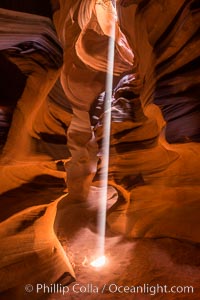
Light Beam in Upper Antelope Slot Canyon. Thin shafts of light briefly penetrate the convoluted narrows of Upper Antelope Slot Canyon, sending piercing beams through the sandstone maze to the sand floor below.
Location: Navajo Tribal Lands, Page, Arizona
Image ID: 28570
Location: Navajo Tribal Lands, Page, Arizona
Image ID: 28570
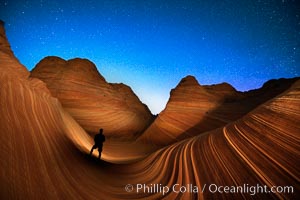
The Wave at Night, under a clear night sky full of stars. Photographer is illuminating the striated rocks with a small handheld light. The Wave, an area of fantastic eroded sandstone featuring beautiful swirls, wild colors, countless striations, and bizarre shapes is set amidst the dramatic surrounding North Coyote Buttes of Arizona and Utah. The sandstone formations of the North Coyote Buttes, including the Wave, date from the Jurassic period. Managed by the Bureau of Land Management, the Wave is located in the Paria Canyon-Vermilion Cliffs Wilderness and is accessible on foot by permit only.
Location: North Coyote Buttes, Paria Canyon-Vermilion Cliffs Wilderness, Arizona
Image ID: 28620
Location: North Coyote Buttes, Paria Canyon-Vermilion Cliffs Wilderness, Arizona
Image ID: 28620
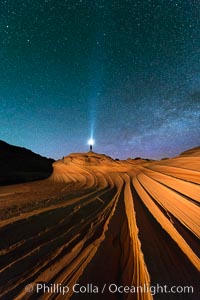
The Second Wave at Night. The Second Wave, a spectacular sandstone formation in the North Coyote Buttes, lies under a sky full of stars.
Location: North Coyote Buttes, Paria Canyon-Vermilion Cliffs Wilderness, Arizona
Image ID: 28627
Location: North Coyote Buttes, Paria Canyon-Vermilion Cliffs Wilderness, Arizona
Image ID: 28627
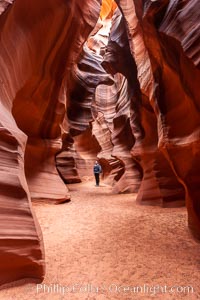
A hiker admiring the striated walls and dramatic light within Antelope Canyon, a deep narrow slot canyon formed by water and wind erosion.
Location: Navajo Tribal Lands, Page, Arizona
Image ID: 17993
Location: Navajo Tribal Lands, Page, Arizona
Image ID: 17993
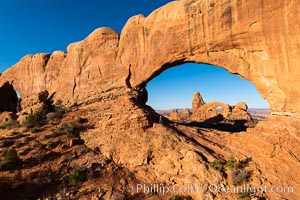
Tracy greets the dawn, with Turret Arch in the distance viewed through North Window at Sunrise.
Location: North Window, Arches National Park, Utah
Image ID: 37860
Location: North Window, Arches National Park, Utah
Image ID: 37860
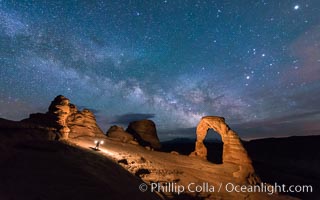
Light Painting and the Milky Way and Stars over Delicate Arch, at night, Arches National Park, Utah.
Location: Delicate Arch, Arches National Park, Utah
Image ID: 29288
Location: Delicate Arch, Arches National Park, Utah
Image ID: 29288
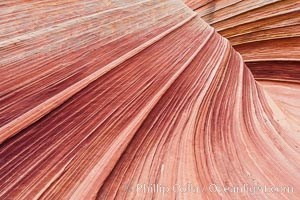
The Wave, an area of fantastic eroded sandstone featuring beautiful swirls, wild colors, countless striations, and bizarre shapes set amidst the dramatic surrounding North Coyote Buttes of Arizona and Utah. The sandstone formations of the North Coyote Buttes, including the Wave, date from the Jurassic period. Managed by the Bureau of Land Management, the Wave is located in the Paria Canyon-Vermilion Cliffs Wilderness and is accessible on foot by permit only.
Location: North Coyote Buttes, Paria Canyon-Vermilion Cliffs Wilderness, Arizona
Image ID: 20607
Location: North Coyote Buttes, Paria Canyon-Vermilion Cliffs Wilderness, Arizona
Image ID: 20607
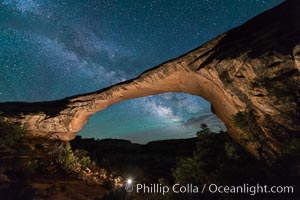
Owachomo Bridge and Milky Way. Owachomo Bridge, a natural stone bridge standing 106' high and spanning 130' wide,stretches across a canyon with the Milky Way crossing the night sky.
Location: Owachomo Bridge, Natural Bridges National Monument, Utah
Image ID: 28541
Location: Owachomo Bridge, Natural Bridges National Monument, Utah
Image ID: 28541
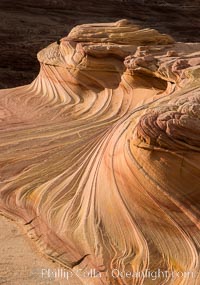
The Second Wave at Sunset, Vermillion Cliffs. The Second Wave, a curiously-shaped sandstone swirl, takes on rich warm tones and dramatic shadowed textures at sunset. Set in the North Coyote Buttes of Arizona and Utah, the Second Wave is characterized by striations revealing layers of sedimentary deposits, a visible historical record depicting eons of submarine geology.
Location: North Coyote Buttes, Paria Canyon-Vermilion Cliffs Wilderness, Arizona
Image ID: 28613
Location: North Coyote Buttes, Paria Canyon-Vermilion Cliffs Wilderness, Arizona
Image ID: 28613
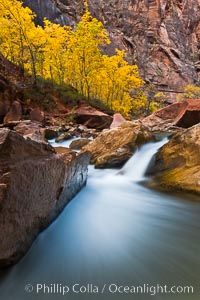
The Virgin River flows by autumn cottonwood trees, part of the Virgin River Narrows. This is a fantastic hike in fall with the comfortable temperatures, beautiful fall colors and light crowds.
Location: Virgin River Narrows, Zion National Park, Utah
Image ID: 26096
Location: Virgin River Narrows, Zion National Park, Utah
Image ID: 26096
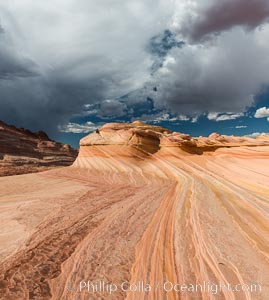
The Second Wave at sunset. The Second Wave, a curiously-shaped sandstone swirl, takes on rich warm tones and dramatic shadowed textures at sunset. Set in the North Coyote Buttes of Arizona and Utah, the Second Wave is characterized by striations revealing layers of sedimentary deposits, a visible historical record depicting eons of submarine geology.
Location: North Coyote Buttes, Paria Canyon-Vermilion Cliffs Wilderness, Arizona
Image ID: 28614
Location: North Coyote Buttes, Paria Canyon-Vermilion Cliffs Wilderness, Arizona
Image ID: 28614
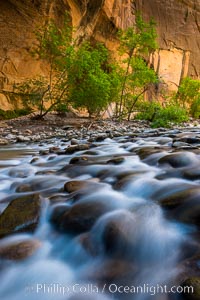
The Virgin River Narrows, where the Virgin River has carved deep, narrow canyons through the Zion National Park sandstone, creating one of the finest hikes in the world.
Location: Virgin River Narrows, Zion National Park, Utah
Image ID: 28575
Location: Virgin River Narrows, Zion National Park, Utah
Image ID: 28575
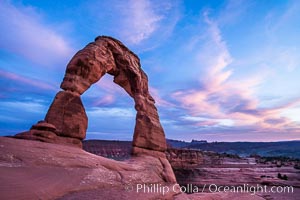
Delicate Arch at Sunset, Arches National Park.
Location: Delicate Arch, Arches National Park, Utah
Image ID: 29283
Location: Delicate Arch, Arches National Park, Utah
Image ID: 29283
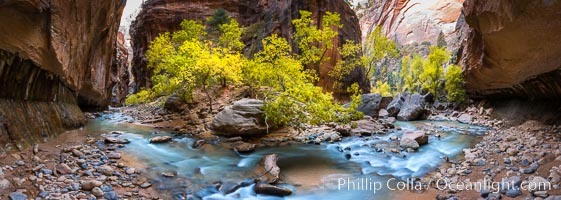
Fall Colors in the Virgin River Narrows, Zion National Park, Utah.
Location: Virgin River Narrows, Zion National Park, Utah
Image ID: 32634
Panorama dimensions: 5145 x 14424
Location: Virgin River Narrows, Zion National Park, Utah
Image ID: 32634
Panorama dimensions: 5145 x 14424
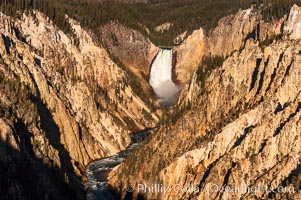
Lower Falls of the Yellowstone River. At 308 feet, the Lower Falls of the Yellowstone River is the tallest fall in the park. This view is from the famous and popular Artist Point on the south side of the Grand Canyon of the Yellowstone.
Location: Grand Canyon of the Yellowstone, Yellowstone National Park, Wyoming
Image ID: 07769
Location: Grand Canyon of the Yellowstone, Yellowstone National Park, Wyoming
Image ID: 07769
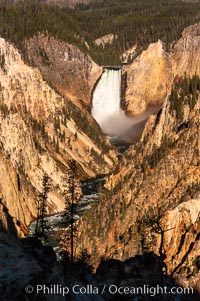
Lower Falls of the Yellowstone River. At 308 feet, the Lower Falls of the Yellowstone River is the tallest fall in the park. This view is from the famous and popular Artist Point on the south side of the Grand Canyon of the Yellowstone.
Location: Grand Canyon of the Yellowstone, Yellowstone National Park, Wyoming
Image ID: 07770
Location: Grand Canyon of the Yellowstone, Yellowstone National Park, Wyoming
Image ID: 07770
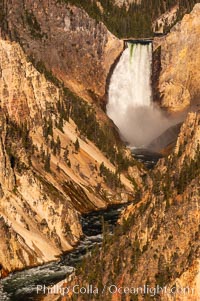
Lower Falls of the Yellowstone River. At 308 feet, the Lower Falls of the Yellowstone River is the tallest fall in the park. This view is from the famous and popular Artist Point on the south side of the Grand Canyon of the Yellowstone.
Location: Grand Canyon of the Yellowstone, Yellowstone National Park, Wyoming
Image ID: 07771
Location: Grand Canyon of the Yellowstone, Yellowstone National Park, Wyoming
Image ID: 07771
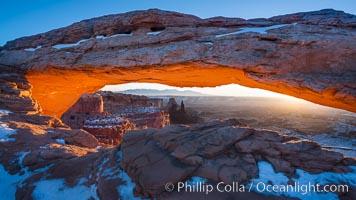
Mesa Arch spans 90 feet and stands at the edge of a mesa precipice thousands of feet above the Colorado River gorge. For a few moments at sunrise the underside of the arch glows dramatically red and orange.
Location: Island in the Sky, Canyonlands National Park, Utah
Image ID: 18040
Location: Island in the Sky, Canyonlands National Park, Utah
Image ID: 18040
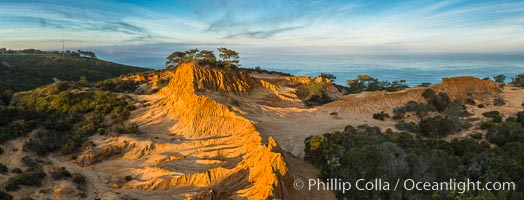
Broken Hill and view to La Jolla, panoramic photograph, from Torrey Pines State Reserve, sunrise.
Location: Torrey Pines State Reserve, San Diego, California
Image ID: 28397
Panorama dimensions: 4332 x 11344
Location: Torrey Pines State Reserve, San Diego, California
Image ID: 28397
Panorama dimensions: 4332 x 11344
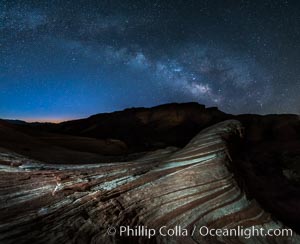
Milky Way galaxy rises above the Fire Wave, Valley of Fire State Park.
Location: Valley of Fire State Park, Nevada
Image ID: 28428
Location: Valley of Fire State Park, Nevada
Image ID: 28428