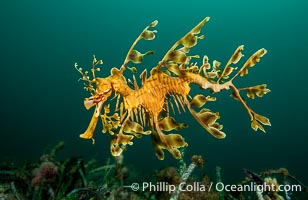
The leafy seadragon (Phycodurus eques) is found on the southern and western coasts of Australia. Its extravagent appendages serve only for camoflage, since it has a nearly-invisible dorsal fin that propels it slowly through the water. The leafy sea dragon is the marine emblem of South Australia.
Species: Leafy seadragon, Phycodurus eques
Location: Rapid Bay Jetty, South Australia
Image ID: 39137
Species: Leafy seadragon, Phycodurus eques
Location: Rapid Bay Jetty, South Australia
Image ID: 39137
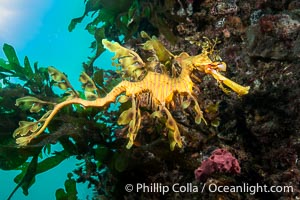
The leafy seadragon (Phycodurus eques) is found on the southern and western coasts of Australia. Its extravagent appendages serve only for camoflage, since it has a nearly-invisible dorsal fin that propels it slowly through the water. The leafy sea dragon is the marine emblem of South Australia.
Species: Leafy seadragon, Phycodurus eques
Location: Rapid Bay Jetty, South Australia
Image ID: 39134
Species: Leafy seadragon, Phycodurus eques
Location: Rapid Bay Jetty, South Australia
Image ID: 39134
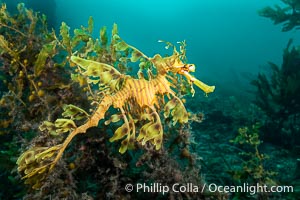
The leafy seadragon (Phycodurus eques) is found on the southern and western coasts of Australia. Its extravagent appendages serve only for camoflage, since it has a nearly-invisible dorsal fin that propels it slowly through the water. The leafy sea dragon is the marine emblem of South Australia.
Species: Leafy seadragon, Phycodurus eques
Location: Rapid Bay Jetty, South Australia
Image ID: 39357
Species: Leafy seadragon, Phycodurus eques
Location: Rapid Bay Jetty, South Australia
Image ID: 39357
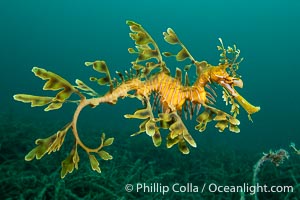
The leafy seadragon (Phycodurus eques) is found on the southern and western coasts of Australia. Its extravagent appendages serve only for camoflage, since it has a nearly-invisible dorsal fin that propels it slowly through the water. The leafy sea dragon is the marine emblem of South Australia.
Species: Leafy seadragon, Phycodurus eques
Location: Rapid Bay Jetty, South Australia
Image ID: 39360
Species: Leafy seadragon, Phycodurus eques
Location: Rapid Bay Jetty, South Australia
Image ID: 39360
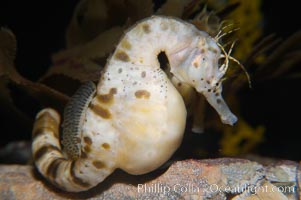
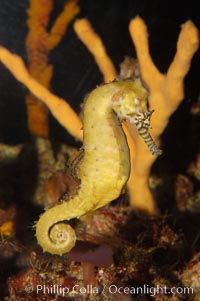
Pot-bellied seahorse, male, carrying eggs. The developing embryos are nourished by individual yolk sacs, and oxygen is supplied through a placenta-like attachment to the male. Two to six weeks after fertilization, the male gives birth. The babies must then fend for themselves, and few survive to adulthood.
Species: Pot-bellied seahorse, Hippocampus abdominalis
Image ID: 14472
Species: Pot-bellied seahorse, Hippocampus abdominalis
Image ID: 14472
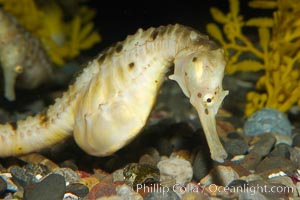
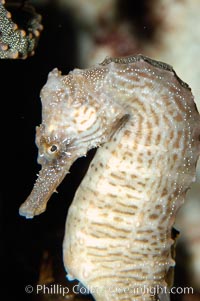
Pot-bellied seahorse, male, carrying eggs. The developing embryos are nourished by individual yolk sacs, and oxygen is supplied through a placenta-like attachment to the male. Two to six weeks after fertilization, the male gives birth. The babies must then fend for themselves, and few survive to adulthood.
Species: Pot-bellied seahorse, Hippocampus abdominalis
Image ID: 14558
Species: Pot-bellied seahorse, Hippocampus abdominalis
Image ID: 14558
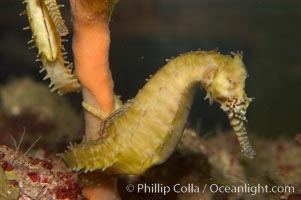
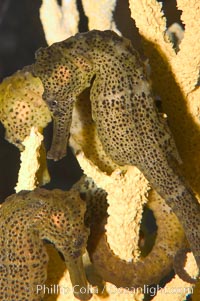
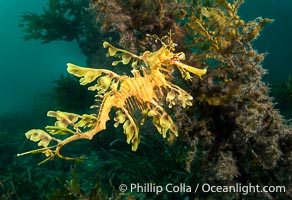
The leafy seadragon (Phycodurus eques) is found on the southern and western coasts of Australia. Its extravagent appendages serve only for camoflage, since it has a nearly-invisible dorsal fin that propels it slowly through the water. The leafy sea dragon is the marine emblem of South Australia.
Species: Leafy seadragon, Phycodurus eques
Location: Rapid Bay Jetty, South Australia
Image ID: 39132
Species: Leafy seadragon, Phycodurus eques
Location: Rapid Bay Jetty, South Australia
Image ID: 39132
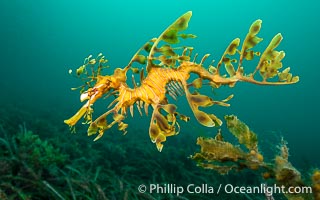
The leafy seadragon (Phycodurus eques) is found on the southern and western coasts of Australia. Its extravagent appendages serve only for camoflage, since it has a nearly-invisible dorsal fin that propels it slowly through the water. The leafy sea dragon is the marine emblem of South Australia.
Species: Leafy seadragon, Phycodurus eques
Location: Rapid Bay Jetty, South Australia
Image ID: 39135
Species: Leafy seadragon, Phycodurus eques
Location: Rapid Bay Jetty, South Australia
Image ID: 39135
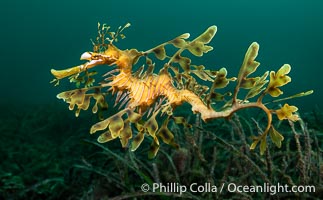
The leafy seadragon (Phycodurus eques) is found on the southern and western coasts of Australia. Its extravagent appendages serve only for camoflage, since it has a nearly-invisible dorsal fin that propels it slowly through the water. The leafy sea dragon is the marine emblem of South Australia.
Species: Leafy seadragon, Phycodurus eques
Location: Rapid Bay Jetty, South Australia
Image ID: 39138
Species: Leafy seadragon, Phycodurus eques
Location: Rapid Bay Jetty, South Australia
Image ID: 39138
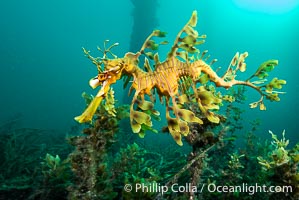
The leafy seadragon (Phycodurus eques) is found on the southern and western coasts of Australia. Its extravagent appendages serve only for camoflage, since it has a nearly-invisible dorsal fin that propels it slowly through the water. The leafy sea dragon is the marine emblem of South Australia.
Species: Leafy seadragon, Phycodurus eques
Location: Rapid Bay Jetty, South Australia
Image ID: 39133
Species: Leafy seadragon, Phycodurus eques
Location: Rapid Bay Jetty, South Australia
Image ID: 39133
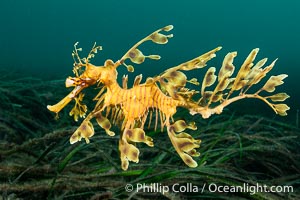
The leafy seadragon (Phycodurus eques) is found on the southern and western coasts of Australia. Its extravagent appendages serve only for camoflage, since it has a nearly-invisible dorsal fin that propels it slowly through the water. The leafy sea dragon is the marine emblem of South Australia.
Species: Leafy seadragon, Phycodurus eques
Location: Rapid Bay Jetty, South Australia
Image ID: 39136
Species: Leafy seadragon, Phycodurus eques
Location: Rapid Bay Jetty, South Australia
Image ID: 39136
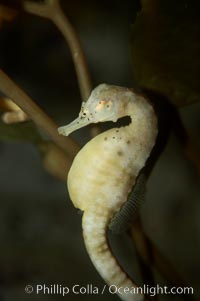
Pot-bellied seahorse, male, carrying eggs. The developing embryos are nourished by individual yolk sacs, and oxygen is supplied through a placenta-like attachment to the male. Two to six weeks after fertilization, the male gives birth. The babies must then fend for themselves, and few survive to adulthood.
Species: Pot-bellied seahorse, Hippocampus abdominalis
Image ID: 11027
Species: Pot-bellied seahorse, Hippocampus abdominalis
Image ID: 11027
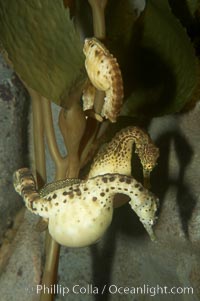
Pot-bellied seahorse, male, carrying eggs. The developing embryos are nourished by individual yolk sacs, and oxygen is supplied through a placenta-like attachment to the male. Two to six weeks after fertilization, the male gives birth. The babies must then fend for themselves, and few survive to adulthood.
Species: Pot-bellied seahorse, Hippocampus abdominalis
Image ID: 11031
Species: Pot-bellied seahorse, Hippocampus abdominalis
Image ID: 11031
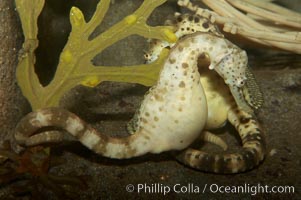
Pot-bellied seahorse, male, carrying eggs. The developing embryos are nourished by individual yolk sacs, and oxygen is supplied through a placenta-like attachment to the male. Two to six weeks after fertilization, the male gives birth. The babies must then fend for themselves, and few survive to adulthood.
Species: Pot-bellied seahorse, Hippocampus abdominalis
Image ID: 11032
Species: Pot-bellied seahorse, Hippocampus abdominalis
Image ID: 11032
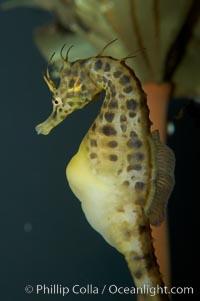
Pot-bellied seahorse, male, carrying eggs. The developing embryos are nourished by individual yolk sacs, and oxygen is supplied through a placenta-like attachment to the male. Two to six weeks after fertilization, the male gives birth. The babies must then fend for themselves, and few survive to adulthood.
Species: Pot-bellied seahorse, Hippocampus abdominalis
Image ID: 11897
Species: Pot-bellied seahorse, Hippocampus abdominalis
Image ID: 11897
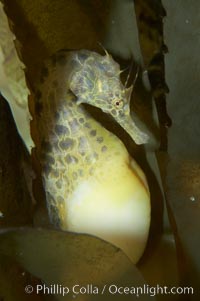
Pot-bellied seahorse, male, carrying eggs. The developing embryos are nourished by individual yolk sacs, and oxygen is supplied through a placenta-like attachment to the male. Two to six weeks after fertilization, the male gives birth. The babies must then fend for themselves, and few survive to adulthood.
Species: Pot-bellied seahorse, Hippocampus abdominalis
Image ID: 11898
Species: Pot-bellied seahorse, Hippocampus abdominalis
Image ID: 11898
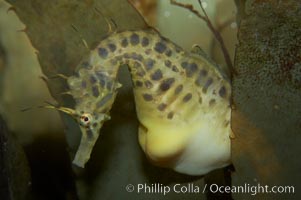
Pot-bellied seahorse, male, carrying eggs. The developing embryos are nourished by individual yolk sacs, and oxygen is supplied through a placenta-like attachment to the male. Two to six weeks after fertilization, the male gives birth. The babies must then fend for themselves, and few survive to adulthood.
Species: Pot-bellied seahorse, Hippocampus abdominalis
Image ID: 11900
Species: Pot-bellied seahorse, Hippocampus abdominalis
Image ID: 11900
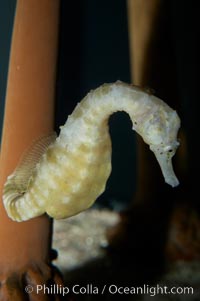
Pot-bellied seahorse, male, carrying eggs. The developing embryos are nourished by individual yolk sacs, and oxygen is supplied through a placenta-like attachment to the male. Two to six weeks after fertilization, the male gives birth. The babies must then fend for themselves, and few survive to adulthood.
Species: Pot-bellied seahorse, Hippocampus abdominalis
Image ID: 11901
Species: Pot-bellied seahorse, Hippocampus abdominalis
Image ID: 11901
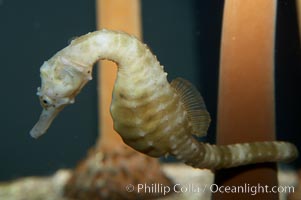
Pot-bellied seahorse, male, carrying eggs. The developing embryos are nourished by individual yolk sacs, and oxygen is supplied through a placenta-like attachment to the male. Two to six weeks after fertilization, the male gives birth. The babies must then fend for themselves, and few survive to adulthood.
Species: Pot-bellied seahorse, Hippocampus abdominalis
Image ID: 11902
Species: Pot-bellied seahorse, Hippocampus abdominalis
Image ID: 11902
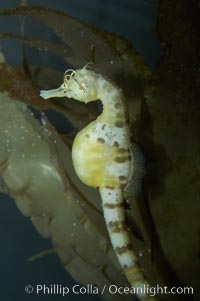
Pot-bellied seahorse, male, carrying eggs. The developing embryos are nourished by individual yolk sacs, and oxygen is supplied through a placenta-like attachment to the male. Two to six weeks after fertilization, the male gives birth. The babies must then fend for themselves, and few survive to adulthood.
Species: Pot-bellied seahorse, Hippocampus abdominalis
Image ID: 11903
Species: Pot-bellied seahorse, Hippocampus abdominalis
Image ID: 11903
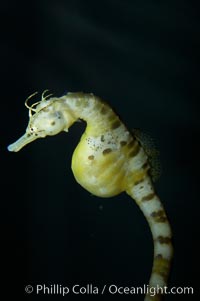
Pot-bellied seahorse, male, carrying eggs. The developing embryos are nourished by individual yolk sacs, and oxygen is supplied through a placenta-like attachment to the male. Two to six weeks after fertilization, the male gives birth. The babies must then fend for themselves, and few survive to adulthood.
Species: Pot-bellied seahorse, Hippocampus abdominalis
Image ID: 11904
Species: Pot-bellied seahorse, Hippocampus abdominalis
Image ID: 11904
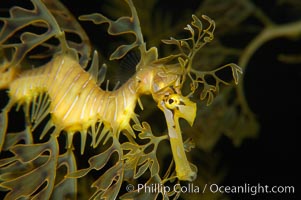
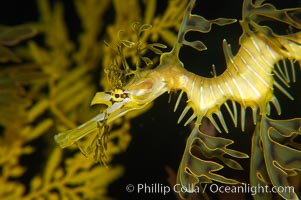
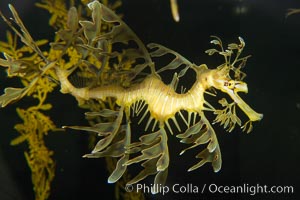
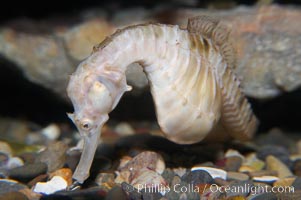
Pot-bellied seahorse, male, carrying eggs. The developing embryos are nourished by individual yolk sacs, and oxygen is supplied through a placenta-like attachment to the male. Two to six weeks after fertilization, the male gives birth. The babies must then fend for themselves, and few survive to adulthood.
Species: Pot-bellied seahorse, Hippocampus abdominalis
Image ID: 14473
Species: Pot-bellied seahorse, Hippocampus abdominalis
Image ID: 14473
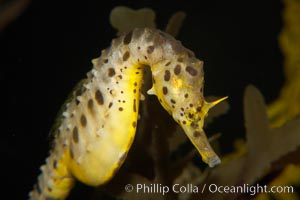
Pot-bellied seahorse, male, carrying eggs. The developing embryos are nourished by individual yolk sacs, and oxygen is supplied through a placenta-like attachment to the male. Two to six weeks after fertilization, the male gives birth. The babies must then fend for themselves, and few survive to adulthood.
Species: Pot-bellied seahorse, Hippocampus abdominalis
Image ID: 14474
Species: Pot-bellied seahorse, Hippocampus abdominalis
Image ID: 14474