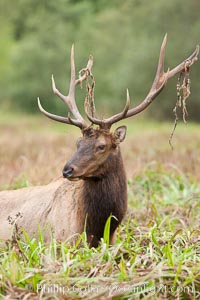
Roosevelt elk, adult bull male with large antlers. This bull elk has recently shed the velvet that covers its antlers. While an antler is growing, it is covered with highly vascular skin called velvet, which supplies oxygen and nutrients to the growing bone; once the antler has achieved its full size, the velvet is lost and the antler's bone dies. This dead bone structure is the mature antler, which is itself shed after each mating season. Roosevelt elk grow to 10' and 1300 lb, eating grasses, sedges and various berries, inhabiting the coastal rainforests of the Pacific Northwest.
Species: Roosevelt elk, Cervus canadensis roosevelti
Location: Redwood National Park, California
Image ID: 25910
Species: Roosevelt elk, Cervus canadensis roosevelti
Location: Redwood National Park, California
Image ID: 25910
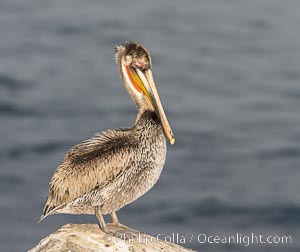
Brown pelican immature plumage, likely second winter coloration approaching breeding plumage, on cliff over the ocean.
Species: Brown Pelican, Pelecanus occidentalis, Pelecanus occidentalis californicus
Location: La Jolla, California
Image ID: 38707
Species: Brown Pelican, Pelecanus occidentalis, Pelecanus occidentalis californicus
Location: La Jolla, California
Image ID: 38707
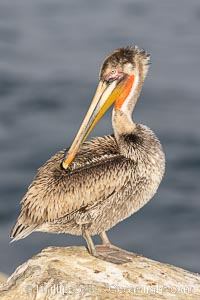
Brown pelican immature plumage, likely second winter coloration approaching breeding plumage, on cliff over the ocean.
Species: Brown Pelican, Pelecanus occidentalis, Pelecanus occidentalis californicus
Location: La Jolla, California
Image ID: 38708
Species: Brown Pelican, Pelecanus occidentalis, Pelecanus occidentalis californicus
Location: La Jolla, California
Image ID: 38708
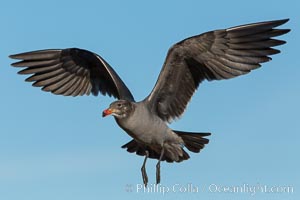
Heermann's gull, immature, in flight.
Species: Heermann's gull, Larus heermanni
Location: La Jolla, California
Image ID: 28991
Species: Heermann's gull, Larus heermanni
Location: La Jolla, California
Image ID: 28991
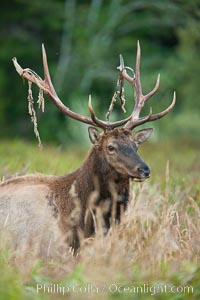
Roosevelt elk, adult bull male with large antlers. This bull elk has recently shed the velvet that covers its antlers. While an antler is growing, it is covered with highly vascular skin called velvet, which supplies oxygen and nutrients to the growing bone; once the antler has achieved its full size, the velvet is lost and the antler's bone dies. This dead bone structure is the mature antler, which is itself shed after each mating season. Roosevelt elk grow to 10' and 1300 lb, eating grasses, sedges and various berries, inhabiting the coastal rainforests of the Pacific Northwest.
Species: Roosevelt elk, Cervus canadensis roosevelti
Location: Redwood National Park, California
Image ID: 26389
Species: Roosevelt elk, Cervus canadensis roosevelti
Location: Redwood National Park, California
Image ID: 26389
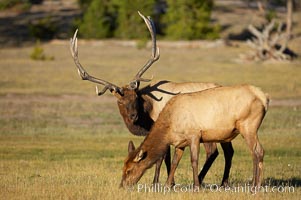
Male elk (bull) alongside female elk in grassy meadow, during rutting season. A bull will defend his harem of 20 cows or more from competing bulls and predators. Only mature bulls have large harems and breeding success peaks at about eight years of age. Bulls between two to four years and over 11 years of age rarely have harems, and spend most of the rut on the periphery of larger harems. Young and old bulls that do acquire a harem hold it later in the breeding season than do bulls in their prime. A bull with a harem rarely feeds and he may lose up to 20 percent of his body weight while he is guarding the harem.
Species: Elk, Cervus canadensis
Location: Yellowstone National Park, Wyoming
Image ID: 19723
Species: Elk, Cervus canadensis
Location: Yellowstone National Park, Wyoming
Image ID: 19723
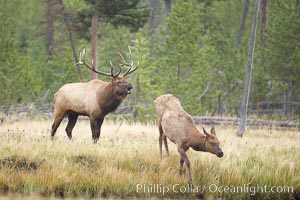
Bull elk, with large antlers, alongside female elk during rutting season, autumn. A bull will defend his harem of 20 cows or more from competing bulls and predators. Only mature bulls have large harems and breeding success peaks at about eight years of age. Bulls between two to four years and over 11 years of age rarely have harems, and spend most of the rut on the periphery of larger harems. Young and old bulls that do acquire a harem hold it later in the breeding season than do bulls in their prime. A bull with a harem rarely feeds and he may lose up to 20 percent of his body weight while he is guarding the harem.
Species: Elk, Cervus canadensis
Location: Yellowstone National Park, Wyoming
Image ID: 19724
Species: Elk, Cervus canadensis
Location: Yellowstone National Park, Wyoming
Image ID: 19724
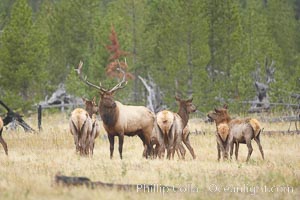
Bull elk, with large antlers, alongside female elk during rutting season, autumn. A bull will defend his harem of 20 cows or more from competing bulls and predators. Only mature bulls have large harems and breeding success peaks at about eight years of age. Bulls between two to four years and over 11 years of age rarely have harems, and spend most of the rut on the periphery of larger harems. Young and old bulls that do acquire a harem hold it later in the breeding season than do bulls in their prime. A bull with a harem rarely feeds and he may lose up to 20 percent of his body weight while he is guarding the harem.
Species: Elk, Cervus canadensis
Location: Yellowstone National Park, Wyoming
Image ID: 19782
Species: Elk, Cervus canadensis
Location: Yellowstone National Park, Wyoming
Image ID: 19782
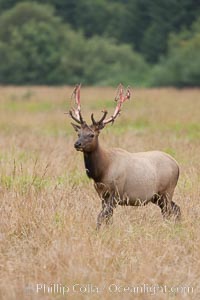
Roosevelt elk, adult bull male with large antlers. This bull elk has recently shed the velvet that covers its antlers. While an antler is growing, it is covered with highly vascular skin called velvet, which supplies oxygen and nutrients to the growing bone; once the antler has achieved its full size, the velvet is lost and the antler's bone dies. This dead bone structure is the mature antler, which is itself shed after each mating season. Roosevelt elk grow to 10' and 1300 lb, eating grasses, sedges and various berries, inhabiting the coastal rainforests of the Pacific Northwest.
Species: Roosevelt elk, Cervus canadensis roosevelti
Location: Redwood National Park, California
Image ID: 25898
Species: Roosevelt elk, Cervus canadensis roosevelti
Location: Redwood National Park, California
Image ID: 25898
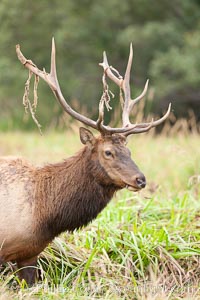
Roosevelt elk, adult bull male with large antlers. This bull elk has recently shed the velvet that covers its antlers. While an antler is growing, it is covered with highly vascular skin called velvet, which supplies oxygen and nutrients to the growing bone; once the antler has achieved its full size, the velvet is lost and the antler's bone dies. This dead bone structure is the mature antler, which is itself shed after each mating season. Roosevelt elk grow to 10' and 1300 lb, eating grasses, sedges and various berries, inhabiting the coastal rainforests of the Pacific Northwest.
Species: Roosevelt elk, Cervus canadensis roosevelti
Location: Redwood National Park, California
Image ID: 25901
Species: Roosevelt elk, Cervus canadensis roosevelti
Location: Redwood National Park, California
Image ID: 25901
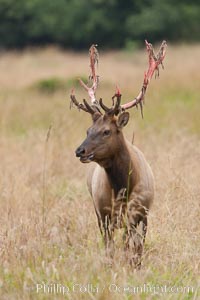
Roosevelt elk, adult bull male with large antlers. This bull elk has recently shed the velvet that covers its antlers. While an antler is growing, it is covered with highly vascular skin called velvet, which supplies oxygen and nutrients to the growing bone; once the antler has achieved its full size, the velvet is lost and the antler's bone dies. This dead bone structure is the mature antler, which is itself shed after each mating season. Roosevelt elk grow to 10' and 1300 lb, eating grasses, sedges and various berries, inhabiting the coastal rainforests of the Pacific Northwest.
Species: Roosevelt elk, Cervus canadensis roosevelti
Location: Redwood National Park, California
Image ID: 25905
Species: Roosevelt elk, Cervus canadensis roosevelti
Location: Redwood National Park, California
Image ID: 25905
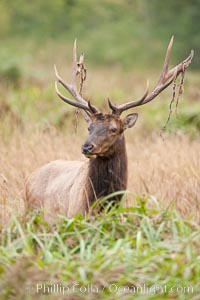
Roosevelt elk, adult bull male with large antlers. This bull elk has recently shed the velvet that covers its antlers. While an antler is growing, it is covered with highly vascular skin called velvet, which supplies oxygen and nutrients to the growing bone; once the antler has achieved its full size, the velvet is lost and the antler's bone dies. This dead bone structure is the mature antler, which is itself shed after each mating season. Roosevelt elk grow to 10' and 1300 lb, eating grasses, sedges and various berries, inhabiting the coastal rainforests of the Pacific Northwest.
Species: Roosevelt elk, Cervus canadensis roosevelti
Location: Redwood National Park, California
Image ID: 25907
Species: Roosevelt elk, Cervus canadensis roosevelti
Location: Redwood National Park, California
Image ID: 25907
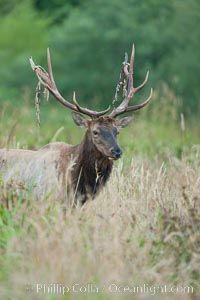
Roosevelt elk, adult bull male with large antlers. This bull elk has recently shed the velvet that covers its antlers. While an antler is growing, it is covered with highly vascular skin called velvet, which supplies oxygen and nutrients to the growing bone; once the antler has achieved its full size, the velvet is lost and the antler's bone dies. This dead bone structure is the mature antler, which is itself shed after each mating season. Roosevelt elk grow to 10' and 1300 lb, eating grasses, sedges and various berries, inhabiting the coastal rainforests of the Pacific Northwest.
Species: Roosevelt elk, Cervus canadensis roosevelti
Location: Redwood National Park, California
Image ID: 25908
Species: Roosevelt elk, Cervus canadensis roosevelti
Location: Redwood National Park, California
Image ID: 25908
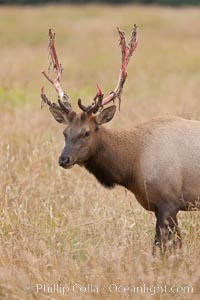
Roosevelt elk, adult bull male with large antlers. This bull elk has recently shed the velvet that covers its antlers. While an antler is growing, it is covered with highly vascular skin called velvet, which supplies oxygen and nutrients to the growing bone; once the antler has achieved its full size, the velvet is lost and the antler's bone dies. This dead bone structure is the mature antler, which is itself shed after each mating season. Roosevelt elk grow to 10' and 1300 lb, eating grasses, sedges and various berries, inhabiting the coastal rainforests of the Pacific Northwest.
Species: Roosevelt elk, Cervus canadensis roosevelti
Location: Redwood National Park, California
Image ID: 25909
Species: Roosevelt elk, Cervus canadensis roosevelti
Location: Redwood National Park, California
Image ID: 25909
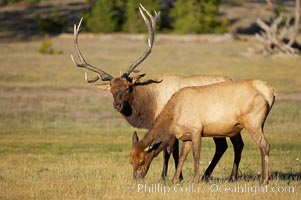
Bull elk, with large antlers, alongside female elk during rutting season, autumn. A bull will defend his harem of 20 cows or more from competing bulls and predators. Only mature bulls have large harems and breeding success peaks at about eight years of age. Bulls between two to four years and over 11 years of age rarely have harems, and spend most of the rut on the periphery of larger harems. Young and old bulls that do acquire a harem hold it later in the breeding season than do bulls in their prime. A bull with a harem rarely feeds and he may lose up to 20 percent of his body weight while he is guarding the harem.
Species: Elk, Cervus canadensis
Location: Yellowstone National Park, Wyoming
Image ID: 19696
Species: Elk, Cervus canadensis
Location: Yellowstone National Park, Wyoming
Image ID: 19696
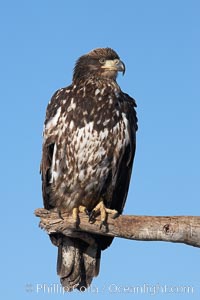
Juvenile bald eagle, second year coloration plumage, immature coloration showing white speckling on feathers.
Species: Bald eagle, Haliaeetus leucocephalus, Haliaeetus leucocephalus washingtoniensis
Location: Kachemak Bay, Homer, Alaska
Image ID: 22826
Species: Bald eagle, Haliaeetus leucocephalus, Haliaeetus leucocephalus washingtoniensis
Location: Kachemak Bay, Homer, Alaska
Image ID: 22826
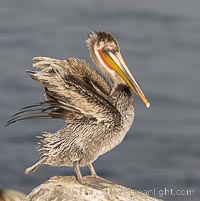
Brown pelican immature plumage, likely second winter coloration approaching breeding plumage, on cliff over the ocean.
Species: Brown Pelican, Pelecanus occidentalis, Pelecanus occidentalis californicus
Location: La Jolla, California
Image ID: 38706
Species: Brown Pelican, Pelecanus occidentalis, Pelecanus occidentalis californicus
Location: La Jolla, California
Image ID: 38706
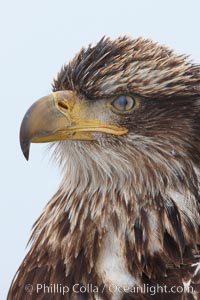
Juvenile bald eagle, second year coloration plumage, closeup of head and shoulders, snowflakes visible on feathers. Immature coloration showing white speckling on feathers.
Species: Bald eagle, Haliaeetus leucocephalus, Haliaeetus leucocephalus washingtoniensis
Location: Kachemak Bay, Homer, Alaska
Image ID: 22808
Species: Bald eagle, Haliaeetus leucocephalus, Haliaeetus leucocephalus washingtoniensis
Location: Kachemak Bay, Homer, Alaska
Image ID: 22808
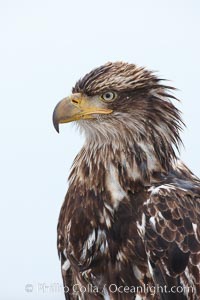
Juvenile bald eagle, second year coloration plumage, closeup of head and shoulders, snowflakes visible on feathers. Immature coloration showing white speckling on feathers.
Species: Bald eagle, Haliaeetus leucocephalus, Haliaeetus leucocephalus washingtoniensis
Location: Kachemak Bay, Homer, Alaska
Image ID: 22834
Species: Bald eagle, Haliaeetus leucocephalus, Haliaeetus leucocephalus washingtoniensis
Location: Kachemak Bay, Homer, Alaska
Image ID: 22834
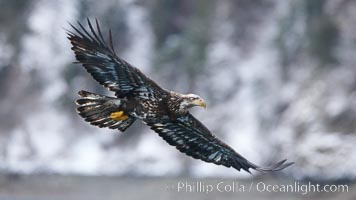
Juvenile bald eagle, second year coloration plumage, immature coloration showing white speckling on feathers.
Species: Bald eagle, Haliaeetus leucocephalus, Haliaeetus leucocephalus washingtoniensis
Location: Kenai Peninsula, Alaska
Image ID: 22845
Species: Bald eagle, Haliaeetus leucocephalus, Haliaeetus leucocephalus washingtoniensis
Location: Kenai Peninsula, Alaska
Image ID: 22845
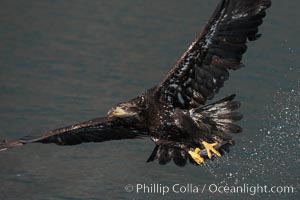
Juvenile bald eagle, second year coloration plumage, immature coloration showing white speckling on feathers.
Species: Bald eagle, Haliaeetus leucocephalus, Haliaeetus leucocephalus washingtoniensis
Location: Kenai Peninsula, Alaska
Image ID: 22868
Species: Bald eagle, Haliaeetus leucocephalus, Haliaeetus leucocephalus washingtoniensis
Location: Kenai Peninsula, Alaska
Image ID: 22868
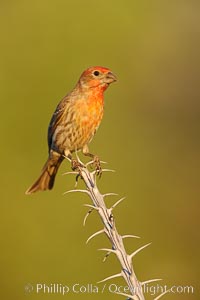
House finch, immature.
Species: House finch, Carpodacus mexicanus
Location: Amado, Arizona
Image ID: 22901
Species: House finch, Carpodacus mexicanus
Location: Amado, Arizona
Image ID: 22901
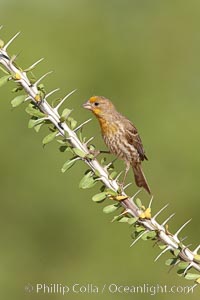
House finch, immature.
Species: House finch, Carpodacus mexicanus
Location: Amado, Arizona
Image ID: 22919
Species: House finch, Carpodacus mexicanus
Location: Amado, Arizona
Image ID: 22919
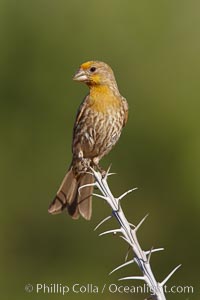
House finch, immature.
Species: House finch, Carpodacus mexicanus
Location: Amado, Arizona
Image ID: 22926
Species: House finch, Carpodacus mexicanus
Location: Amado, Arizona
Image ID: 22926
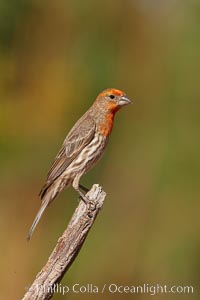
House finch, immature.
Species: House finch, Carpodacus mexicanus
Location: Amado, Arizona
Image ID: 22996
Species: House finch, Carpodacus mexicanus
Location: Amado, Arizona
Image ID: 22996
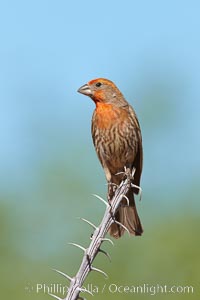
House finch, immature.
Species: House finch, Carpodacus mexicanus
Location: Amado, Arizona
Image ID: 22997
Species: House finch, Carpodacus mexicanus
Location: Amado, Arizona
Image ID: 22997
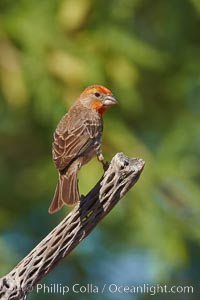
House finch, immature.
Species: House finch, Carpodacus mexicanus
Location: Amado, Arizona
Image ID: 23031
Species: House finch, Carpodacus mexicanus
Location: Amado, Arizona
Image ID: 23031
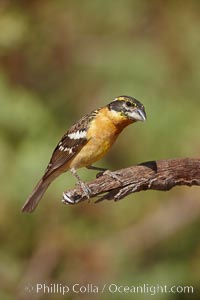
Black-headed grosbeak, immature.
Species: Black-headed grosbeak, Pheucticus melanocephalus
Location: Madera Canyon Recreation Area, Green Valley, Arizona
Image ID: 23089
Species: Black-headed grosbeak, Pheucticus melanocephalus
Location: Madera Canyon Recreation Area, Green Valley, Arizona
Image ID: 23089
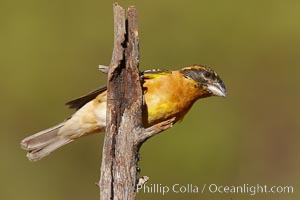
Black-headed grosbeak, immature.
Species: Black-headed grosbeak, Pheucticus melanocephalus
Location: Madera Canyon Recreation Area, Green Valley, Arizona
Image ID: 23092
Species: Black-headed grosbeak, Pheucticus melanocephalus
Location: Madera Canyon Recreation Area, Green Valley, Arizona
Image ID: 23092
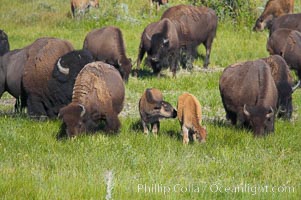
The Lamar herd of bison grazes, a mix of mature adults and young calves.
Species: American bison, Bison bison
Location: Lamar Valley, Yellowstone National Park, Wyoming
Image ID: 13131
Species: American bison, Bison bison
Location: Lamar Valley, Yellowstone National Park, Wyoming
Image ID: 13131