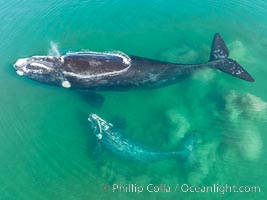
Mother and calf southern right whale stir up sand in shallow water, aerial photo. The water is so shallow that just by swimming the mother and calf can stir up the sand beneath them.
Species: Southern Right Whale, Eubalaena australis
Location: Puerto Piramides, Chubut, Argentina
Image ID: 38376
Species: Southern Right Whale, Eubalaena australis
Location: Puerto Piramides, Chubut, Argentina
Image ID: 38376
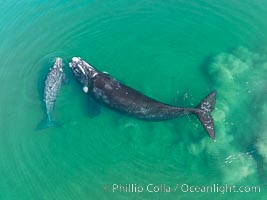
Mother and calf southern right whale stir up sand in shallow water, aerial photo. The water is so shallow that just by swimming the mother and calf can stir up the sand beneath them.
Species: Southern Right Whale, Eubalaena australis
Location: Puerto Piramides, Chubut, Argentina
Image ID: 38377
Species: Southern Right Whale, Eubalaena australis
Location: Puerto Piramides, Chubut, Argentina
Image ID: 38377
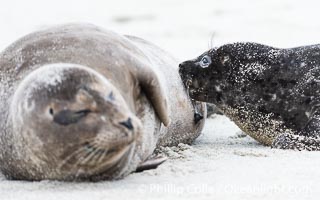
A young Pacific Harbor Seal pup nursing. Mother harbor seals will only nurse their pups for about four to six weeks, at which point the small seal is weaned and must begin to forage and fend for itself. That short period of time is crucial for the young seal to learn how to hunt, socialize and swim.
Species: Pacific harbor seal, Phoca vitulina richardsi
Location: La Jolla, California
Image ID: 39063
Species: Pacific harbor seal, Phoca vitulina richardsi
Location: La Jolla, California
Image ID: 39063
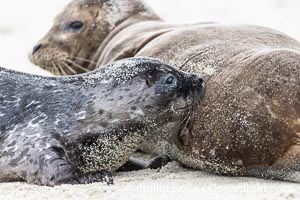
A young Pacific Harbor Seal pup nursing. Mother harbor seals will only nurse their pups for about four to six weeks, at which point the small seal is weaned and must begin to forage and fend for itself. That short period of time is crucial for the young seal to learn how to hunt, socialize and swim.
Species: Pacific harbor seal, Phoca vitulina richardsi
Location: La Jolla, California
Image ID: 39082
Species: Pacific harbor seal, Phoca vitulina richardsi
Location: La Jolla, California
Image ID: 39082
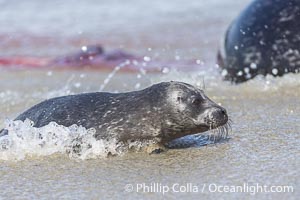
A newborn harbor seal pup in the water at the oceans edge, born just moments before in the ocean and immediately able to swim ashore. The pups placenta and mother are seen in the background.
Species: Pacific harbor seal, Phoca vitulina richardsi
Location: La Jolla, California
Image ID: 39100
Species: Pacific harbor seal, Phoca vitulina richardsi
Location: La Jolla, California
Image ID: 39100
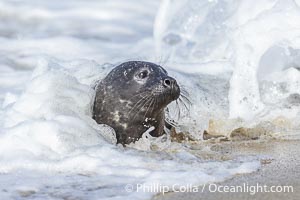
Newborn harbor seal pup just a few minutes old, has already taken to the water to learn to swim and forage. Here it is coming ashore on a sand beach, splashed by small wave as it emerges from the ocean.
Species: Pacific harbor seal, Phoca vitulina richardsi
Location: La Jolla, California
Image ID: 39102
Species: Pacific harbor seal, Phoca vitulina richardsi
Location: La Jolla, California
Image ID: 39102
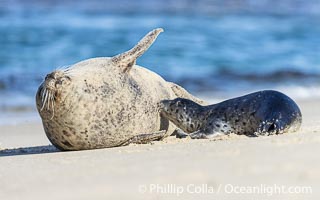
A young Pacific Harbor Seal pup nursing. Mother harbor seals will only nurse their pups for about four to six weeks, at which point the small seal is weaned and must begin to forage and fend for itself. That short period of time is crucial for the young seal to learn how to hunt, socialize and swim.
Species: Pacific harbor seal, Phoca vitulina richardsi
Location: La Jolla, California
Image ID: 39105
Species: Pacific harbor seal, Phoca vitulina richardsi
Location: La Jolla, California
Image ID: 39105
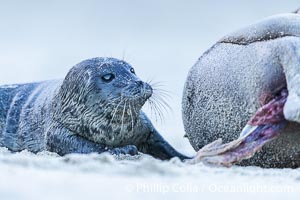
A newborn harbor seal pup rests alongside its mother, as placenta is born from the mother just a few moments after the pup was born. Within an hour of being born, this pup had learned to nurse and had entered the ocean for its first swim.
Species: Pacific harbor seal, Phoca vitulina richardsi
Location: La Jolla, California
Image ID: 39110
Species: Pacific harbor seal, Phoca vitulina richardsi
Location: La Jolla, California
Image ID: 39110
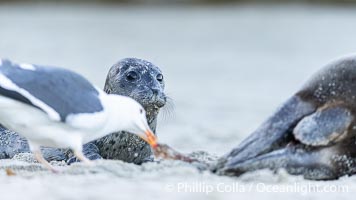
A Western seagull picks at placenta on sand beach, as the seal pup born just moments before watches and tries to understand what is going on. Within an hour of being born, this pup had learned to nurse and had entered the ocean for its first swim.
Species: Pacific harbor seal, Phoca vitulina richardsi
Location: La Jolla, California
Image ID: 39111
Species: Pacific harbor seal, Phoca vitulina richardsi
Location: La Jolla, California
Image ID: 39111
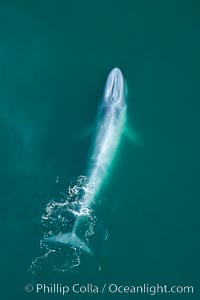
Blue whale swims at the surface of the ocean in this aerial photograph. The blue whale is the largest animal ever to have lived on Earth, exceeding 100' in length and 200 tons in weight.
Species: Blue whale, Balaenoptera musculus
Location: Redondo Beach, California
Image ID: 25952
Species: Blue whale, Balaenoptera musculus
Location: Redondo Beach, California
Image ID: 25952
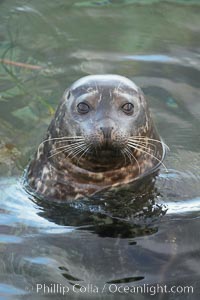
A Pacific harbor seal eyes the photographer while swimming in the shallows. This group of harbor seals, which has formed a breeding colony at a small but popular beach near San Diego, is at the center of considerable controversy. While harbor seals are protected from harassment by the Marine Mammal Protection Act and other legislation, local interests would like to see the seals leave so that people can resume using the beach.
Species: Pacific harbor seal, Phoca vitulina richardsi
Location: La Jolla, California
Image ID: 15546
Species: Pacific harbor seal, Phoca vitulina richardsi
Location: La Jolla, California
Image ID: 15546
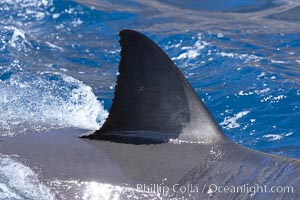
Dorsal fin of a great white shark breaks the surface as the shark swims just below.
Species: Great white shark, Carcharodon carcharias
Location: Guadalupe Island (Isla Guadalupe), Baja California, Mexico
Image ID: 19490
Species: Great white shark, Carcharodon carcharias
Location: Guadalupe Island (Isla Guadalupe), Baja California, Mexico
Image ID: 19490
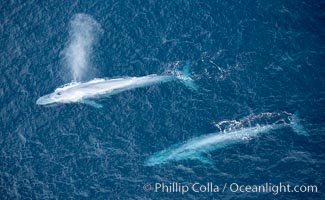
Blue whale, exhaling in a huge blow as it swims at the surface between deep dives. The blue whale's blow is a combination of water spray from around its blowhole and condensation from its warm breath.
Species: Blue whale, Balaenoptera musculus
Location: La Jolla, California
Image ID: 21254
Species: Blue whale, Balaenoptera musculus
Location: La Jolla, California
Image ID: 21254
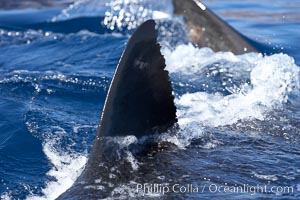
Great white shark, dorsal fin extended out of the water as it swims near the surface.
Species: Great white shark, Carcharodon carcharias
Location: Guadalupe Island (Isla Guadalupe), Baja California, Mexico
Image ID: 21353
Species: Great white shark, Carcharodon carcharias
Location: Guadalupe Island (Isla Guadalupe), Baja California, Mexico
Image ID: 21353
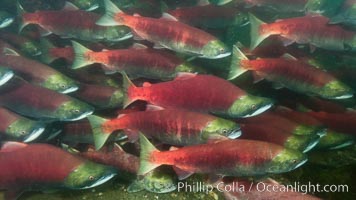
A school of sockeye salmon, swimming up the Adams River to spawn, where they will lay eggs and die.
Species: Sockeye salmon, Oncorhynchus nerka
Location: Adams River, Roderick Haig-Brown Provincial Park, British Columbia, Canada
Image ID: 26146
Species: Sockeye salmon, Oncorhynchus nerka
Location: Adams River, Roderick Haig-Brown Provincial Park, British Columbia, Canada
Image ID: 26146
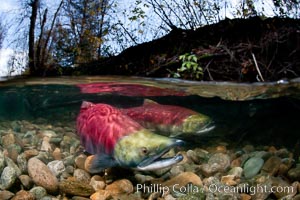
A sockeye salmon swims in the shallows of the Adams River, with the surrounding forest visible in this split-level over-under photograph.
Species: Sockeye salmon, Oncorhynchus nerka
Location: Adams River, Roderick Haig-Brown Provincial Park, British Columbia, Canada
Image ID: 26148
Species: Sockeye salmon, Oncorhynchus nerka
Location: Adams River, Roderick Haig-Brown Provincial Park, British Columbia, Canada
Image ID: 26148
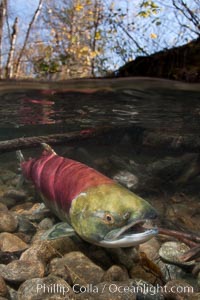
A sockeye salmon swims in the shallows of the Adams River, with the surrounding forest visible in this split-level over-under photograph.
Species: Sockeye salmon, Oncorhynchus nerka
Location: Adams River, Roderick Haig-Brown Provincial Park, British Columbia, Canada
Image ID: 26156
Species: Sockeye salmon, Oncorhynchus nerka
Location: Adams River, Roderick Haig-Brown Provincial Park, British Columbia, Canada
Image ID: 26156
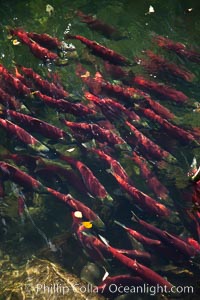
Sockeye salmon, swim upstream in the Adams River, traveling to reach the place where they hatched four years earlier in order to spawn a new generation of salmon eggs.
Species: Sockeye salmon, Oncorhynchus nerka
Location: Adams River, Roderick Haig-Brown Provincial Park, British Columbia, Canada
Image ID: 26165
Species: Sockeye salmon, Oncorhynchus nerka
Location: Adams River, Roderick Haig-Brown Provincial Park, British Columbia, Canada
Image ID: 26165
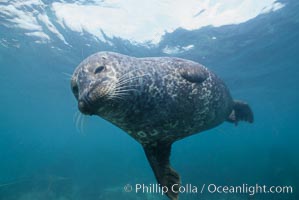
Pacific harbor seal swims in the protected waters of Childrens Pool in La Jolla, California. This group of harbor seals, which has formed a breeding colony at a small but popular beach near San Diego, is at the center of considerable controversy. While harbor seals are protected from harassment by the Marine Mammal Protection Act and other legislation, local interests would like to see the seals leave so that people can resume using the beach.
Species: Pacific harbor seal, Phoca vitulina richardsi
Location: La Jolla, California
Image ID: 03015
Species: Pacific harbor seal, Phoca vitulina richardsi
Location: La Jolla, California
Image ID: 03015
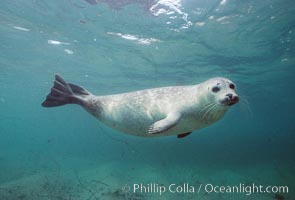
Pacific harbor seal swims in the protected waters of Childrens Pool in La Jolla, California. This group of harbor seals, which has formed a breeding colony at a small but popular beach near San Diego, is at the center of considerable controversy. While harbor seals are protected from harassment by the Marine Mammal Protection Act and other legislation, local interests would like to see the seals leave so that people can resume using the beach.
Species: Pacific harbor seal, Phoca vitulina richardsi
Location: La Jolla, California
Image ID: 03018
Species: Pacific harbor seal, Phoca vitulina richardsi
Location: La Jolla, California
Image ID: 03018
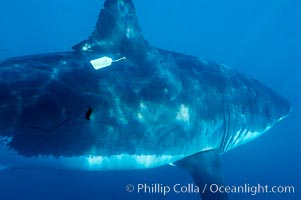
A great white shark bearing a white plastic researcher's identification ID tag near its dorsal fin swims through the clear waters of Isla Guadalupe, far offshore of the Pacific Coast of Baja California. Guadalupe Island is host to a concentration of large great white sharks, which visit the island to feed on pinnipeds and tuna.
Species: Great white shark, Carcharodon carcharias
Location: Guadalupe Island (Isla Guadalupe), Baja California, Mexico
Image ID: 07739
Species: Great white shark, Carcharodon carcharias
Location: Guadalupe Island (Isla Guadalupe), Baja California, Mexico
Image ID: 07739
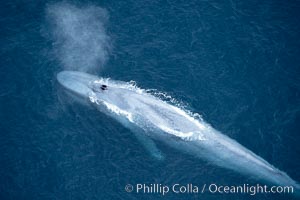
Blue whale, exhaling in a huge blow as it swims at the surface between deep dives. The blue whale's blow is a combination of water spray from around its blowhole and condensation from its warm breath.
Species: Blue whale, Balaenoptera musculus
Location: La Jolla, California
Image ID: 21256
Species: Blue whale, Balaenoptera musculus
Location: La Jolla, California
Image ID: 21256
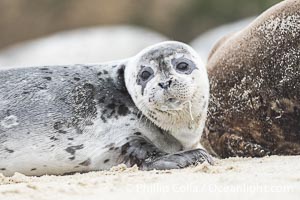
A young Pacific Harbor Seal pup with milk on its face from nursing. Mother harbor seals will only nurse their pups for about four to six weeks, at which point the small seal is weaned and must begin to forage and fend for itself. That short period of time is crucial for the young seal to learn how to hunt, socialize and swim.
Species: Pacific harbor seal, Phoca vitulina richardsi
Location: La Jolla, California
Image ID: 39130
Species: Pacific harbor seal, Phoca vitulina richardsi
Location: La Jolla, California
Image ID: 39130
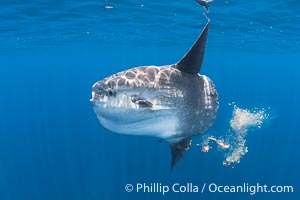
Ocean Sunfish Pooping as it Swims in the Open Ocean. Fish crapping. Fish poop. Fish shit. Defecation.
Species: Ocean sunfish, Mola mola
Location: San Diego, California
Image ID: 39462
Species: Ocean sunfish, Mola mola
Location: San Diego, California
Image ID: 39462
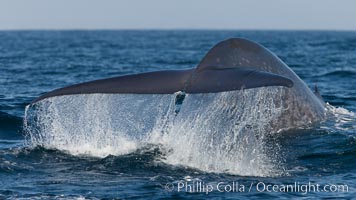
Blue whale, raising fluke prior to diving for food, fluking up, lifting tail as it swims in the open ocean foraging for food.
Species: Blue whale, Balaenoptera musculus
Location: Dana Point, California
Image ID: 27352
Species: Blue whale, Balaenoptera musculus
Location: Dana Point, California
Image ID: 27352
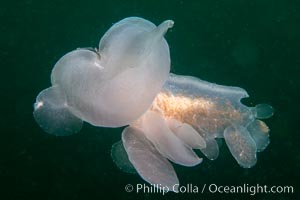
Hooded Nudibranch Melibe leonina swimming in mid water column, Browning Pass, Vancouver Island, Canada.
Species: Hooded nudibranch, Melibe leonina
Location: British Columbia, Canada
Image ID: 35316
Species: Hooded nudibranch, Melibe leonina
Location: British Columbia, Canada
Image ID: 35316
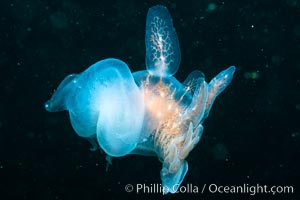
Hooded Nudibranch Melibe leonina swimming in mid water column, Browning Pass, Vancouver Island, Canada.
Species: Hooded nudibranch, Melibe leonina
Location: British Columbia, Canada
Image ID: 35319
Species: Hooded nudibranch, Melibe leonina
Location: British Columbia, Canada
Image ID: 35319
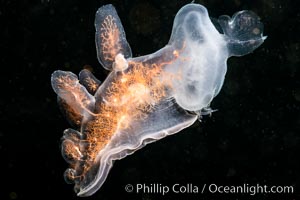
Hooded Nudibranch Melibe leonina swimming in mid water column, Browning Pass, Vancouver Island, Canada.
Species: Hooded nudibranch, Melibe leonina
Location: British Columbia, Canada
Image ID: 35320
Species: Hooded nudibranch, Melibe leonina
Location: British Columbia, Canada
Image ID: 35320
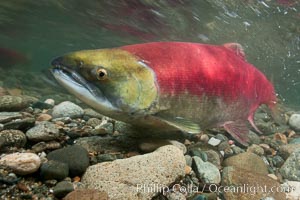
Adams River sockeye salmon. A female sockeye salmon swims upstream in the Adams River to spawn, having traveled hundreds of miles upstream from the ocean.
Species: Sockeye salmon, Oncorhynchus nerka
Location: Adams River, Roderick Haig-Brown Provincial Park, British Columbia, Canada
Image ID: 26145
Species: Sockeye salmon, Oncorhynchus nerka
Location: Adams River, Roderick Haig-Brown Provincial Park, British Columbia, Canada
Image ID: 26145
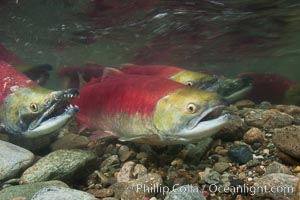
Sockeye salmon, swimming upstream in the shallow waters of the Adams River. When they reach the place where they hatched from eggs four years earlier, they will spawn and die.
Species: Sockeye salmon, Oncorhynchus nerka
Location: Adams River, Roderick Haig-Brown Provincial Park, British Columbia, Canada
Image ID: 26152
Species: Sockeye salmon, Oncorhynchus nerka
Location: Adams River, Roderick Haig-Brown Provincial Park, British Columbia, Canada
Image ID: 26152