
Moon over The Mount Soledad Cross, a landmark in La Jolla, California. The Mount Soledad Cross is a 29-foot-tall cross erected in 1954.
Location: La Jolla, California
Image ID: 36694
Location: La Jolla, California
Image ID: 36694

Hotel del Coronado with holiday Christmas night lights, known affectionately as the Hotel Del. It was once the largest hotel in the world, and is one of the few remaining wooden Victorian beach resorts. The Hotel Del is widely considered to be one of Americas most beautiful and classic hotels. Built in 1888, it was designated a National Historic Landmark in 1977.
Location: Coronado, California
Image ID: 37489
Location: Coronado, California
Image ID: 37489
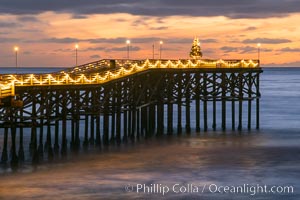
The Crystal Pier, Holiday Lights and Pacific Ocean at sunset, waves blur as they crash upon the sand. Crystal Pier, 872 feet long and built in 1925, extends out into the Pacific Ocean from the town of Pacific Beach.
Image ID: 37562
Image ID: 37562

Full Moon Rising over Hotel del Coronado, known affectionately as the Hotel Del. It was once the largest hotel in the world, and is one of the few remaining wooden Victorian beach resorts. It sits on the beach on Coronado Island, seen here with downtown San Diego in the distance. It is widely considered to be one of Americas most beautiful and classic hotels. Built in 1888, it was designated a National Historic Landmark in 1977.
Location: San Diego, California
Image ID: 29421
Location: San Diego, California
Image ID: 29421
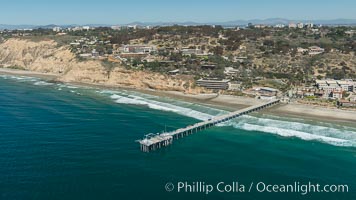
Aerial Photo of San Diego Scripps Coastal SMCA. Scripps Institution of Oceanography Research Pier.
Location: Scripps Institution of Oceanography, La Jolla, California
Image ID: 30627
Location: Scripps Institution of Oceanography, La Jolla, California
Image ID: 30627

Hotel del Coronado with holiday Christmas night lights, known affectionately as the Hotel Del. It was once the largest hotel in the world, and is one of the few remaining wooden Victorian beach resorts. The Hotel Del is widely considered to be one of Americas most beautiful and classic hotels. Built in 1888, it was designated a National Historic Landmark in 1977.
Location: Coronado, California
Image ID: 37490
Location: Coronado, California
Image ID: 37490

Hotel del Coronado with holiday Christmas night lights, known affectionately as the Hotel Del. It was once the largest hotel in the world, and is one of the few remaining wooden Victorian beach resorts. The Hotel Del is widely considered to be one of Americas most beautiful and classic hotels. Built in 1888, it was designated a National Historic Landmark in 1977.
Location: Coronado, California
Image ID: 37491
Location: Coronado, California
Image ID: 37491

Hotel del Coronado with holiday Christmas night lights, known affectionately as the Hotel Del. It was once the largest hotel in the world, and is one of the few remaining wooden Victorian beach resorts. The Hotel Del is widely considered to be one of Americas most beautiful and classic hotels. Built in 1888, it was designated a National Historic Landmark in 1977.
Location: Coronado, California
Image ID: 37492
Location: Coronado, California
Image ID: 37492
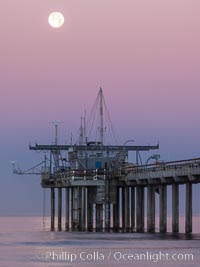
Full Moon Setting Over SIO Pier in the moments just before sunrise, Scripps Institution of Oceanography.
Location: Scripps Institution of Oceanography, La Jolla, California
Image ID: 37507
Location: Scripps Institution of Oceanography, La Jolla, California
Image ID: 37507

Hotel del Coronado with holiday Christmas night lights, known affectionately as the Hotel Del. It was once the largest hotel in the world, and is one of the few remaining wooden Victorian beach resorts. The Hotel Del is widely considered to be one of Americas most beautiful and classic hotels. Built in 1888, it was designated a National Historic Landmark in 1977.
Image ID: 36618
Panorama dimensions: 5595 x 8392
Image ID: 36618
Panorama dimensions: 5595 x 8392
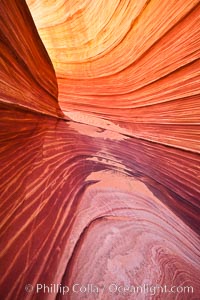
The Wave, an area of fantastic eroded sandstone featuring beautiful swirls, wild colors, countless striations, and bizarre shapes set amidst the dramatic surrounding North Coyote Buttes of Arizona and Utah. The sandstone formations of the North Coyote Buttes, including the Wave, date from the Jurassic period. Managed by the Bureau of Land Management, the Wave is located in the Paria Canyon-Vermilion Cliffs Wilderness and is accessible on foot by permit only.
Location: North Coyote Buttes, Paria Canyon-Vermilion Cliffs Wilderness, Arizona
Image ID: 20609
Location: North Coyote Buttes, Paria Canyon-Vermilion Cliffs Wilderness, Arizona
Image ID: 20609
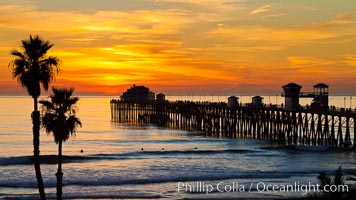
Oceanside Pier at sunset, clouds and palm trees with a brilliant sky at dusk.
Location: Oceanside Pier, California
Image ID: 27612
Location: Oceanside Pier, California
Image ID: 27612
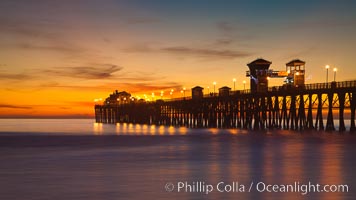
Oceanside Pier at sunset, clouds with a brilliant sky at dusk, the lights on the pier are lit.
Location: Oceanside Pier, California
Image ID: 27617
Location: Oceanside Pier, California
Image ID: 27617
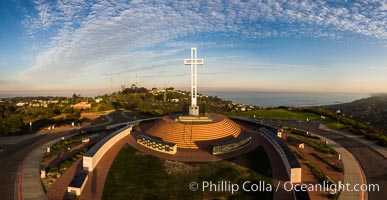
Sunrise over The Mount Soledad Cross, a landmark in La Jolla, California. The Mount Soledad Cross is a 29-foot-tall cross erected in 1954. Aerial photo.
Location: La Jolla, California
Image ID: 38125
Location: La Jolla, California
Image ID: 38125

SIO Pier, Scripps Pier, La Jolla. The Scripps Institution of Oceanography research pier is 1090 feet long and was built of reinforced concrete in 1988, replacing the original wooden pier built in 1915. The Scripps Pier is home to a variety of sensing equipment above and below water that collects various oceanographic data. The Scripps research diving facility is located at the foot of the pier. Fresh seawater is pumped from the pier to the many tanks and facilities of SIO, including the Birch Aquarium. The Scripps Pier is named in honor of Ellen Browning Scripps, the most significant donor and benefactor of the Institution.
Location: La Jolla, California
Image ID: 42032
Location: La Jolla, California
Image ID: 42032

SIO Pier, Scripps Pier, La Jolla. The Scripps Institution of Oceanography research pier is 1090 feet long and was built of reinforced concrete in 1988, replacing the original wooden pier built in 1915. The Scripps Pier is home to a variety of sensing equipment above and below water that collects various oceanographic data. The Scripps research diving facility is located at the foot of the pier. Fresh seawater is pumped from the pier to the many tanks and facilities of SIO, including the Birch Aquarium. The Scripps Pier is named in honor of Ellen Browning Scripps, the most significant donor and benefactor of the Institution.
Location: La Jolla, California
Image ID: 42033
Location: La Jolla, California
Image ID: 42033

Oak Alley Plantation and its famous shaded tunnel of 300-year-old southern live oak trees (Quercus virginiana). The plantation is now designated as a National Historic Landmark.
Species: Southern live oak, Quercus virginiana
Location: Oak Alley Plantation, Vacherie, Louisiana
Image ID: 31005
Species: Southern live oak, Quercus virginiana
Location: Oak Alley Plantation, Vacherie, Louisiana
Image ID: 31005
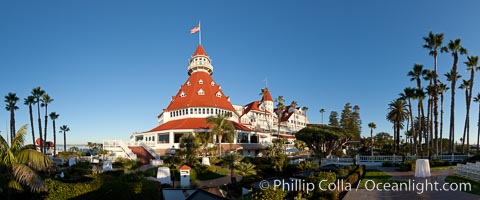
Hotel del Coronado, known affectionately as the Hotel Del. It was once the largest hotel in the world, and is one of the few remaining wooden Victorian beach resorts. It sits on the beach on Coronado Island, seen here with downtown San Diego in the distance. It is widely considered to be one of Americas most beautiful and classic hotels. Built in 1888, it was designated a National Historic Landmark in 1977.
Location: San Diego, California
Image ID: 27104
Panorama dimensions: 5288 x 12696
Location: San Diego, California
Image ID: 27104
Panorama dimensions: 5288 x 12696

Oak Alley Plantation and its famous shaded tunnel of 300-year-old southern live oak trees (Quercus virginiana). The plantation is now designated as a National Historic Landmark.
Species: Southern live oak, Quercus virginiana
Location: Oak Alley Plantation, Vacherie, Louisiana
Image ID: 31017
Species: Southern live oak, Quercus virginiana
Location: Oak Alley Plantation, Vacherie, Louisiana
Image ID: 31017
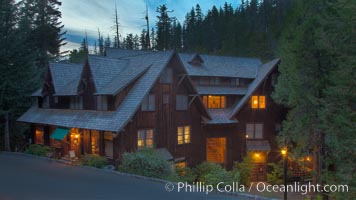
The Chateau at Oregon Caves National Monument. Considered one of the National Park System's classic Great Lodges, and a National Historic Landmark, the Chateau was completed in 1934. The Chateau is a six-story structure with a reinforced concrete foundation and a superstructure of wood frame construction with enormous post and beam interior supports. The building spans a small gorge and a great deal of the building's mass is banked into that depression. Exterior walls are shiplap siding sheathed with cedar bark, giving the building a shaggy, rustic appearance.
Location: Oregon Caves National Monument
Image ID: 25860
Location: Oregon Caves National Monument
Image ID: 25860

Oak Alley Plantation and its famous shaded tunnel of 300-year-old southern live oak trees (Quercus virginiana). The plantation is now designated as a National Historic Landmark.
Species: Southern live oak, Quercus virginiana
Location: Oak Alley Plantation, Vacherie, Louisiana
Image ID: 31012
Species: Southern live oak, Quercus virginiana
Location: Oak Alley Plantation, Vacherie, Louisiana
Image ID: 31012

A tunnel of old southern oak trees stretches off toward the Mississippi River. Oak Alley Plantation and its famous shaded tunnel of 300-year-old southern live oak trees (Quercus virginiana). The plantation is now designated as a National Historic Landmark.
Species: Southern live oak, Quercus virginiana
Location: Oak Alley Plantation, Vacherie, Louisiana
Image ID: 31021
Species: Southern live oak, Quercus virginiana
Location: Oak Alley Plantation, Vacherie, Louisiana
Image ID: 31021
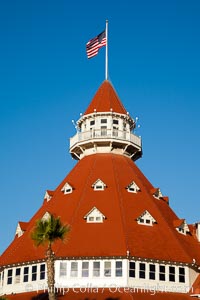
Hotel del Coronado, known affectionately as the Hotel Del. It was once the largest hotel in the world, and is one of the few remaining wooden Victorian beach resorts. It sits on the beach on Coronado Island, seen here with downtown San Diego in the distance. It is widely considered to be one of Americas most beautiful and classic hotels. Built in 1888, it was designated a National Historic Landmark in 1977.
Location: San Diego, California
Image ID: 27107
Location: San Diego, California
Image ID: 27107

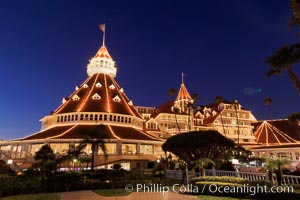
Hotel del Coronado with holiday Christmas night lights, known affectionately as the Hotel Del. It was once the largest hotel in the world, and is one of the few remaining wooden Victorian beach resorts. It sits on the beach on Coronado Island, seen here with downtown San Diego in the distance. It is widely considered to be one of Americas most beautiful and classic hotels. Built in 1888, it was designated a National Historic Landmark in 1977.
Location: San Diego, California
Image ID: 27401
Location: San Diego, California
Image ID: 27401
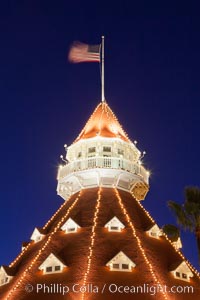
Hotel del Coronado with holiday Christmas night lights, known affectionately as the Hotel Del. It was once the largest hotel in the world, and is one of the few remaining wooden Victorian beach resorts. It sits on the beach on Coronado Island, seen here with downtown San Diego in the distance. It is widely considered to be one of Americas most beautiful and classic hotels. Built in 1888, it was designated a National Historic Landmark in 1977.
Location: San Diego, California
Image ID: 27403
Location: San Diego, California
Image ID: 27403
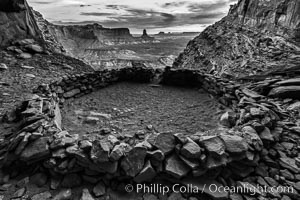
False Kiva at Sunset, Canyonlands National Park, Utah.
Location: False Kiva, Canyonlands National Park, Utah
Image ID: 28016
Location: False Kiva, Canyonlands National Park, Utah
Image ID: 28016
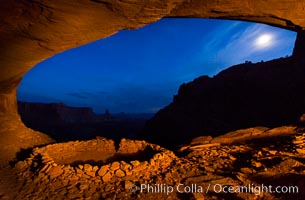
False Kiva at Sunset, Canyonlands National Park, Utah.
Location: False Kiva, Canyonlands National Park, Utah
Image ID: 28018
Location: False Kiva, Canyonlands National Park, Utah
Image ID: 28018

Scripps Institution of Oceanography Research Pier at night, lit with stars in the sky, old La Jolla town in the distance.
Location: Scripps Institution of Oceanography, La Jolla, California
Image ID: 28453
Location: Scripps Institution of Oceanography, La Jolla, California
Image ID: 28453
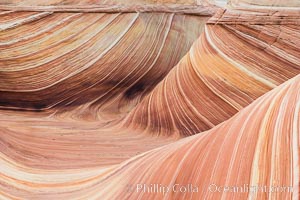
The Wave in the North Coyote Buttes, an area of fantastic eroded sandstone featuring beautiful swirls, wild colors, countless striations, and bizarre shapes set amidst the dramatic surrounding North Coyote Buttes of Arizona and Utah. The sandstone formations of the North Coyote Buttes, including the Wave, date from the Jurassic period. Managed by the Bureau of Land Management, the Wave is located in the Paria Canyon-Vermilion Cliffs Wilderness and is accessible on foot by permit only.
Location: North Coyote Buttes, Paria Canyon-Vermilion Cliffs Wilderness, Arizona
Image ID: 28609
Location: North Coyote Buttes, Paria Canyon-Vermilion Cliffs Wilderness, Arizona
Image ID: 28609