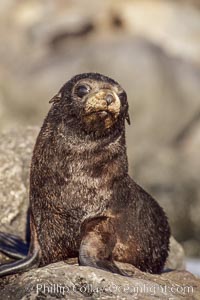
Guadalupe fur seal pup sits on brown rocks along the coastline of Guadalupe Island.
Species: Guadalupe fur seal, Arctocephalus townsendi
Location: Guadalupe Island (Isla Guadalupe), Baja California, Mexico
Image ID: 02441
Species: Guadalupe fur seal, Arctocephalus townsendi
Location: Guadalupe Island (Isla Guadalupe), Baja California, Mexico
Image ID: 02441
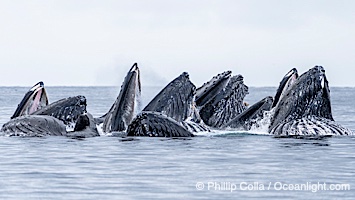
Humpback whales surface together during coordinated bubble-net feeding in Southeast Alaska. The whales use bubbles, sound, and movement to corral fish before capturing them in their open mouths.
Species: Humpback whale, Megaptera novaeangliae
Location: Sitka Sound, Alaska
Image ID: 41584
Species: Humpback whale, Megaptera novaeangliae
Location: Sitka Sound, Alaska
Image ID: 41584
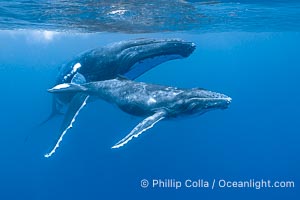
Humpback mother and calf swimming together underwater, Moorea Island, French Polynesia.
Species: Humpback whale, Megaptera novaeangliae
Location: Moorea, French Polynesia, France
Image ID: 41339
Species: Humpback whale, Megaptera novaeangliae
Location: Moorea, French Polynesia, France
Image ID: 41339
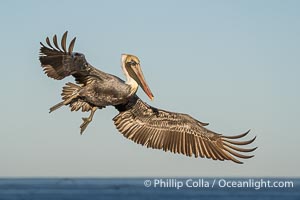
A California Brown Pelican flying over the Pacific Ocean, spreads its large wings wide to slow down as it banks, turns in midair, to land on seacliffs in La Jolla. Winter adult non-breeding plumage.
Species: Brown Pelican, Pelecanus occidentalis californicus, Pelecanus occidentalis
Location: La Jolla, California
Image ID: 39789
Species: Brown Pelican, Pelecanus occidentalis californicus, Pelecanus occidentalis
Location: La Jolla, California
Image ID: 39789
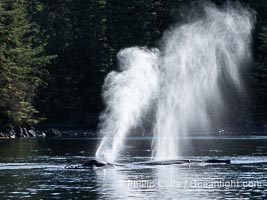
Humpback whale breath hanging in cold still air, Southeast Alaska.
Species: Humpback whale, Megaptera novaeangliae
Location: Sitka Sound, Alaska
Image ID: 40964
Species: Humpback whale, Megaptera novaeangliae
Location: Sitka Sound, Alaska
Image ID: 40964
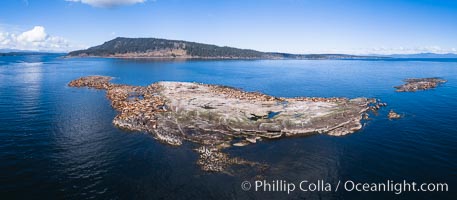
Steller Sea Lions atop Norris Rocks, Hornby Island in the distance, panoramic photo.
Species: Steller sea lion, Eumetopias jubatus
Location: British Columbia, Canada
Image ID: 34467
Panorama dimensions: 3758 x 8590
Species: Steller sea lion, Eumetopias jubatus
Location: British Columbia, Canada
Image ID: 34467
Panorama dimensions: 3758 x 8590
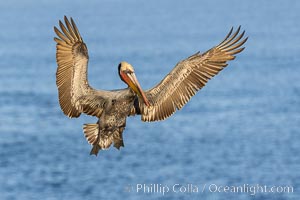
Brown pelican in flight, spreading wings wide to slow in anticipation of landing on seacliffs.
Species: Brown Pelican, Pelecanus occidentalis, Pelecanus occidentalis californicus
Location: La Jolla, California
Image ID: 37682
Species: Brown Pelican, Pelecanus occidentalis, Pelecanus occidentalis californicus
Location: La Jolla, California
Image ID: 37682
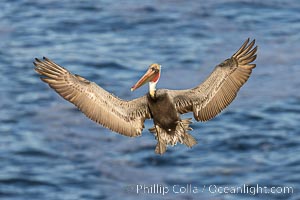
Brown pelican in flight with wings spread wide, slowing as it returns from the ocean to land on seacliffs, adult winter non-breeding plumage.
Species: Brown Pelican, Pelecanus occidentalis, Pelecanus occidentalis californicus
Location: La Jolla, California
Image ID: 38584
Species: Brown Pelican, Pelecanus occidentalis, Pelecanus occidentalis californicus
Location: La Jolla, California
Image ID: 38584
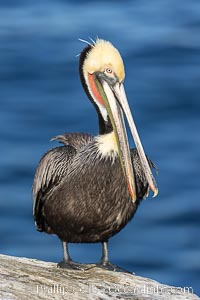
California brown pelican winter breeding plumage portrait, this adult is gently clapping its jaws, showing brown hind neck with yellow head, red and olive throat pouch, white with yellow chevron on the breast.
Species: Brown Pelican, Pelecanus occidentalis, Pelecanus occidentalis californicus
Location: La Jolla, California
Image ID: 38692
Species: Brown Pelican, Pelecanus occidentalis, Pelecanus occidentalis californicus
Location: La Jolla, California
Image ID: 38692
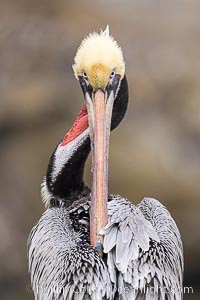
California Brown Pelican Portrait With Twisted Neck, overcast light, winter adult breeding plumage, head twisted to face backwards as it preens, eyes locked on camera.
Species: Brown Pelican, Pelecanus occidentalis, Pelecanus occidentalis californicus
Location: La Jolla, California
Image ID: 38861
Species: Brown Pelican, Pelecanus occidentalis, Pelecanus occidentalis californicus
Location: La Jolla, California
Image ID: 38861
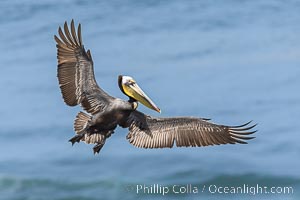
California Brown pelican in flight, La Jolla, wings outstretched, spreading wings wide to slow in anticipation of landing on seacliffs. Adult winter breeding plumage colors.
Species: Brown Pelican, Pelecanus occidentalis, Pelecanus occidentalis californicus
Location: La Jolla, California
Image ID: 38884
Species: Brown Pelican, Pelecanus occidentalis, Pelecanus occidentalis californicus
Location: La Jolla, California
Image ID: 38884
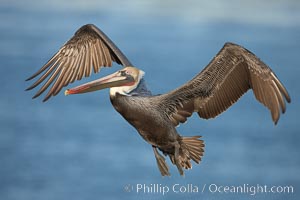
Brown pelican in flight. The wingspan of the brown pelican is over 7 feet wide. The California race of the brown pelican holds endangered species status. Adult winter non-breeding plumage.
Species: Brown Pelican, Pelecanus occidentalis, Pelecanus occidentalis californicus
Location: La Jolla, California
Image ID: 22142
Species: Brown Pelican, Pelecanus occidentalis, Pelecanus occidentalis californicus
Location: La Jolla, California
Image ID: 22142
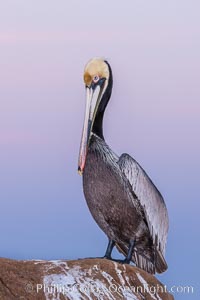
California brown pelican, portrait in pink-purple predawn light, rests on sandstone seabluff. The characteristic breeding plumage of the California race of brown pelican is shown, with red gular throat pouch and dark brown hindneck colors.
Species: Brown Pelican, Pelecanus occidentalis, Pelecanus occidentalis californicus
Location: La Jolla, California
Image ID: 23646
Species: Brown Pelican, Pelecanus occidentalis, Pelecanus occidentalis californicus
Location: La Jolla, California
Image ID: 23646
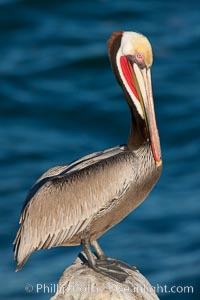
California brown pelican, showing characteristic winter plumage including red/olive throat, brown hindneck, yellow and white head colors.
Species: Brown Pelican, Pelecanus occidentalis, Pelecanus occidentalis californicus
Location: La Jolla, California
Image ID: 26462
Species: Brown Pelican, Pelecanus occidentalis, Pelecanus occidentalis californicus
Location: La Jolla, California
Image ID: 26462
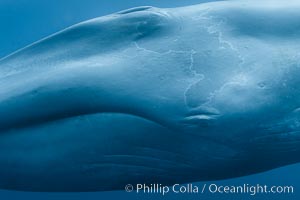
Blue whale underwater closeup photo. This incredible picture of a blue whale, the largest animal ever to inhabit earth, shows it swimming through the open ocean, a rare underwater view. Over 80' long and just a few feet from the camera, an extremely wide lens was used to photograph the entire enormous whale.
Species: Blue whale, Balaenoptera musculus
Location: California
Image ID: 27318
Species: Blue whale, Balaenoptera musculus
Location: California
Image ID: 27318
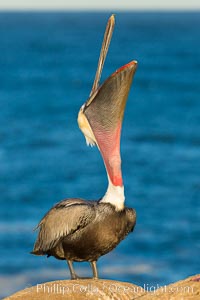
California Brown Pelican head throw, stretching its throat to keep it flexible and healthy. Adult winter non-breeding plumage.
Species: Brown Pelican, Pelecanus occidentalis, Pelecanus occidentalis californicus
Location: La Jolla, California
Image ID: 28347
Species: Brown Pelican, Pelecanus occidentalis, Pelecanus occidentalis californicus
Location: La Jolla, California
Image ID: 28347
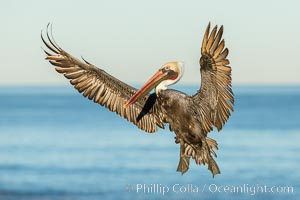
Brown pelican in flight. The wingspan of the brown pelican is over 7 feet wide. The California race of the brown pelican holds endangered species status. Adult winter non-breeding plumage.
Species: Brown Pelican, Pelecanus occidentalis, Pelecanus occidentalis californicus
Location: La Jolla, California
Image ID: 28356
Species: Brown Pelican, Pelecanus occidentalis, Pelecanus occidentalis californicus
Location: La Jolla, California
Image ID: 28356
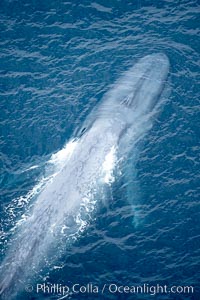
Blue whale, swimming through the open ocean.
Species: Blue whale, Balaenoptera musculus
Location: La Jolla, California
Image ID: 21248
Species: Blue whale, Balaenoptera musculus
Location: La Jolla, California
Image ID: 21248
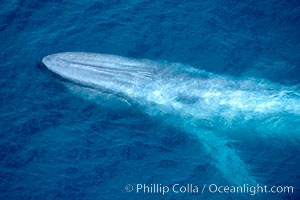
Blue whale. The sleek hydrodynamic shape of the enormous blue whale allows it to swim swiftly through the ocean, at times over one hundred miles in a single day.
Species: Blue whale, Balaenoptera musculus
Location: La Jolla, California
Image ID: 21250
Species: Blue whale, Balaenoptera musculus
Location: La Jolla, California
Image ID: 21250
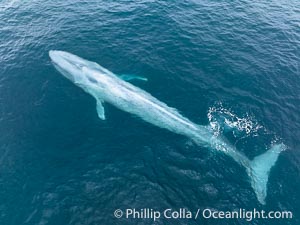
Aerial photo of blue whale near San Diego. This enormous blue whale glides at the surface of the ocean, resting and breathing before it dives to feed on subsurface krill.
Species: Blue whale, Balaenoptera musculus
Location: San Diego, California
Image ID: 39422
Species: Blue whale, Balaenoptera musculus
Location: San Diego, California
Image ID: 39422
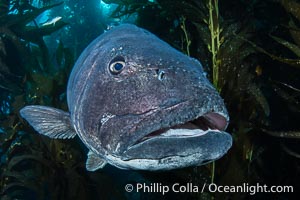
Closeup Portrait of the Face of a Giant Black Sea Bass, showing parasitic sea lice. The sea lice are parasites that find their nutrition from the skin and blood of the host giant sea bass. Smaller fishes such as senoritas and wrasses will commonly clean the sea lice off the giant sea bass.
Species: Giant black sea bass, Stereolepis gigas
Location: Catalina Island, California
Image ID: 39436
Species: Giant black sea bass, Stereolepis gigas
Location: Catalina Island, California
Image ID: 39436
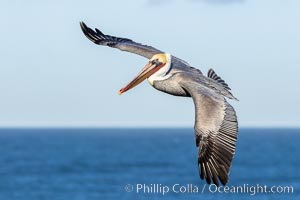
California Brown pelican in flight, soaring along sea cliffs above the ocean in La Jolla, California. The wingspan of the brown pelican is over 7 feet wide. The California race of the brown pelican holds endangered species status.
Species: Brown Pelican, Pelecanus occidentalis, Pelecanus occidentalis californicus
Image ID: 37410
Species: Brown Pelican, Pelecanus occidentalis, Pelecanus occidentalis californicus
Image ID: 37410
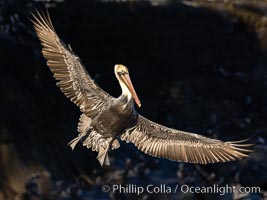
California brown pelican in flight, spreading wings wide to slow in anticipation of landing on seacliffs, dark background caused by seacliffs in morning shadow.
Species: Brown Pelican, Pelecanus occidentalis, Pelecanus occidentalis californicus
Image ID: 37411
Species: Brown Pelican, Pelecanus occidentalis, Pelecanus occidentalis californicus
Image ID: 37411
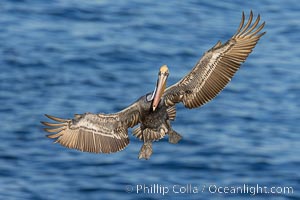
Brown pelican in flight with wings spread wide, slowing as it returns from the ocean to land on seacliffs, adult winter non-breeding plumage.
Species: Brown Pelican, Pelecanus occidentalis, Pelecanus occidentalis californicus
Location: La Jolla, California
Image ID: 38608
Species: Brown Pelican, Pelecanus occidentalis, Pelecanus occidentalis californicus
Location: La Jolla, California
Image ID: 38608
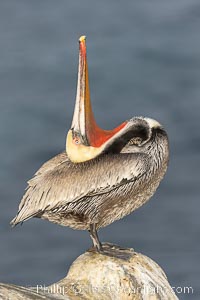
Pelican yoga, Utthita Tadasana, extended mountain pose with backbend. A California brown pelican preening, rubbing the back of its head and neck on the uropygial gland (preen gland) near the base of its tail. Preen oil from the uropygial gland is spread by the pelican's beak and back of its head to all other feathers on the pelican, helping to keep them water resistant and dry. Adult winter breeding plumage showing brown hindneck and red gular throat pouch.
Species: Brown Pelican, Pelecanus occidentalis, Pelecanus occidentalis californicus
Location: La Jolla, California
Image ID: 38710
Species: Brown Pelican, Pelecanus occidentalis, Pelecanus occidentalis californicus
Location: La Jolla, California
Image ID: 38710
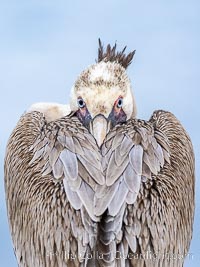
California Brown Pelican Portrait, immature with head tucked into feathers, resting and staring at the camera, overcast light, immature/juvenile plumage.
Species: Brown Pelican, Pelecanus occidentalis, Pelecanus occidentalis californicus
Location: La Jolla, California
Image ID: 38862
Species: Brown Pelican, Pelecanus occidentalis, Pelecanus occidentalis californicus
Location: La Jolla, California
Image ID: 38862
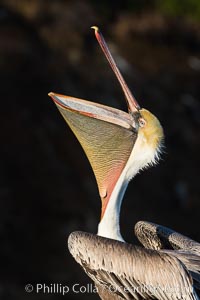
California Brown Pelican head throw, stretching its throat to keep it flexible and healthy. Adult winter non-breeding plumage.
Species: Brown Pelican, Pelecanus occidentalis, Pelecanus occidentalis californicus
Location: La Jolla, California
Image ID: 30174
Species: Brown Pelican, Pelecanus occidentalis, Pelecanus occidentalis californicus
Location: La Jolla, California
Image ID: 30174
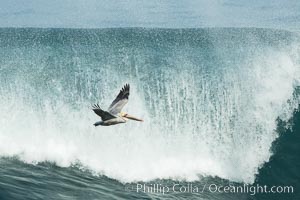
Brown pelican flying over waves and the surf.
Species: Brown Pelican, Pelecanus occidentalis, Pelecanus occidentalis californicus
Location: La Jolla, California
Image ID: 30193
Species: Brown Pelican, Pelecanus occidentalis, Pelecanus occidentalis californicus
Location: La Jolla, California
Image ID: 30193
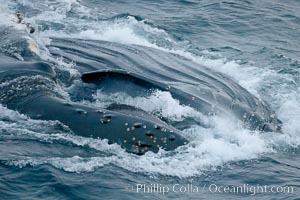
Humpback whale lunge feeding on Antarctic krill, with mouth open and baleen visible. The humbpack's throat grooves are seen as its pleated throat becomes fully distended as the whale fills its mouth with krill and water. The water will be pushed out, while the baleen strains and retains the small krill.
Species: Humpback whale, Megaptera novaeangliae
Location: Gerlache Strait, Antarctic Peninsula, Antarctica
Image ID: 25648
Species: Humpback whale, Megaptera novaeangliae
Location: Gerlache Strait, Antarctic Peninsula, Antarctica
Image ID: 25648
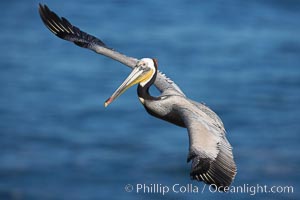
Yellow morph of the California brown pelican in flight. The wingspan of the brown pelican is over 7 feet wide. The California race of the brown pelican holds endangered species status. In winter months, breeding adults assume a dramatic plumage.
Species: Brown Pelican, Pelecanus occidentalis, Pelecanus occidentalis californicus
Location: La Jolla, California
Image ID: 15371
Species: Brown Pelican, Pelecanus occidentalis, Pelecanus occidentalis californicus
Location: La Jolla, California
Image ID: 15371