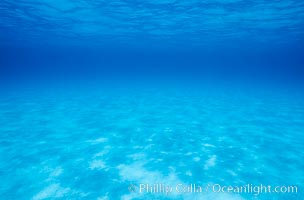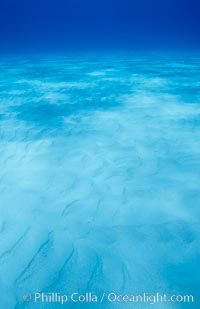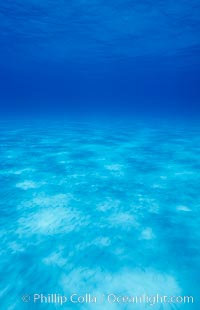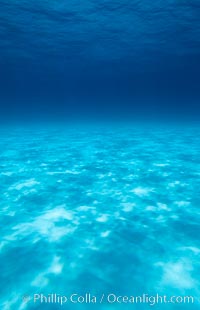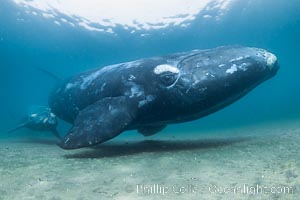
Mother and calf southern right whales underwater, swimming over sandy shallow bottom.
Species: Southern Right Whale, Eubalaena australis
Location: Puerto Piramides, Chubut, Argentina
Image ID: 38306
Species: Southern Right Whale, Eubalaena australis
Location: Puerto Piramides, Chubut, Argentina
Image ID: 38306
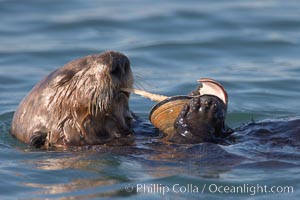
A sea otter eats a clam that it has taken from the shallow sandy bottom of Elkhorn Slough. Because sea otters have such a high metabolic rate, they eat up to 30% of their body weight each day in the form of clams, mussels, urchins, crabs and abalone. Sea otters are the only known tool-using marine mammal, using a stone or old shell to open the shells of their prey as they float on their backs.
Species: Sea otter, Enhydra lutris
Location: Elkhorn Slough National Estuarine Research Reserve, Moss Landing, California
Image ID: 21612
Species: Sea otter, Enhydra lutris
Location: Elkhorn Slough National Estuarine Research Reserve, Moss Landing, California
Image ID: 21612
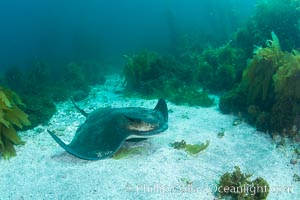
California bat ray, laying on sandy ocean bottom amid kelp and rocky reef.
Species: California bat ray, Myliobatis californica
Location: San Clemente Island, California
Image ID: 25437
Species: California bat ray, Myliobatis californica
Location: San Clemente Island, California
Image ID: 25437
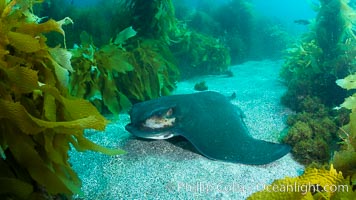
California bat ray, laying on sandy ocean bottom amid kelp and rocky reef.
Species: California bat ray, Myliobatis californica
Location: San Clemente Island, California
Image ID: 25438
Species: California bat ray, Myliobatis californica
Location: San Clemente Island, California
Image ID: 25438
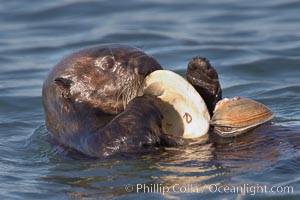
A sea otter eats a clam that it has taken from the shallow sandy bottom of Elkhorn Slough. Because sea otters have such a high metabolic rate, they eat up to 30% of their body weight each day in the form of clams, mussels, urchins, crabs and abalone. Sea otters are the only known tool-using marine mammal, using a stone or old shell to open the shells of their prey as they float on their backs.
Species: Sea otter, Enhydra lutris
Location: Elkhorn Slough National Estuarine Research Reserve, Moss Landing, California
Image ID: 21609
Species: Sea otter, Enhydra lutris
Location: Elkhorn Slough National Estuarine Research Reserve, Moss Landing, California
Image ID: 21609
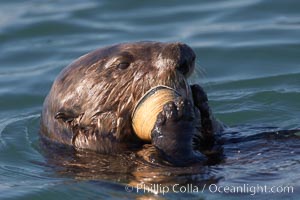
A sea otter eats a clam that it has taken from the shallow sandy bottom of Elkhorn Slough. Because sea otters have such a high metabolic rate, they eat up to 30% of their body weight each day in the form of clams, mussels, urchins, crabs and abalone. Sea otters are the only known tool-using marine mammal, using a stone or old shell to open the shells of their prey as they float on their backs.
Species: Sea otter, Enhydra lutris
Location: Elkhorn Slough National Estuarine Research Reserve, Moss Landing, California
Image ID: 21622
Species: Sea otter, Enhydra lutris
Location: Elkhorn Slough National Estuarine Research Reserve, Moss Landing, California
Image ID: 21622
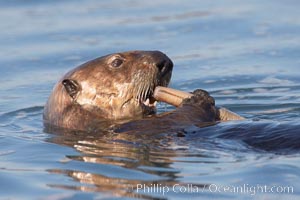
A sea otter eats a clam that it has taken from the shallow sandy bottom of Elkhorn Slough. Because sea otters have such a high metabolic rate, they eat up to 30% of their body weight each day in the form of clams, mussels, urchins, crabs and abalone. Sea otters are the only known tool-using marine mammal, using a stone or old shell to open the shells of their prey as they float on their backs.
Species: Sea otter, Enhydra lutris
Location: Elkhorn Slough National Estuarine Research Reserve, Moss Landing, California
Image ID: 21640
Species: Sea otter, Enhydra lutris
Location: Elkhorn Slough National Estuarine Research Reserve, Moss Landing, California
Image ID: 21640
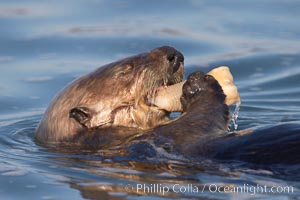
A sea otter eats a clam that it has taken from the shallow sandy bottom of Elkhorn Slough. Because sea otters have such a high metabolic rate, they eat up to 30% of their body weight each day in the form of clams, mussels, urchins, crabs and abalone. Sea otters are the only known tool-using marine mammal, using a stone or old shell to open the shells of their prey as they float on their backs.
Species: Sea otter, Enhydra lutris
Location: Elkhorn Slough National Estuarine Research Reserve, Moss Landing, California
Image ID: 21652
Species: Sea otter, Enhydra lutris
Location: Elkhorn Slough National Estuarine Research Reserve, Moss Landing, California
Image ID: 21652
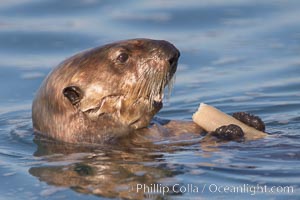
A sea otter eats a clam that it has taken from the shallow sandy bottom of Elkhorn Slough. Because sea otters have such a high metabolic rate, they eat up to 30% of their body weight each day in the form of clams, mussels, urchins, crabs and abalone. Sea otters are the only known tool-using marine mammal, using a stone or old shell to open the shells of their prey as they float on their backs.
Species: Sea otter, Enhydra lutris
Location: Elkhorn Slough National Estuarine Research Reserve, Moss Landing, California
Image ID: 21660
Species: Sea otter, Enhydra lutris
Location: Elkhorn Slough National Estuarine Research Reserve, Moss Landing, California
Image ID: 21660
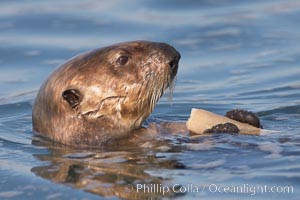
A sea otter eats a clam that it has taken from the shallow sandy bottom of Elkhorn Slough. Because sea otters have such a high metabolic rate, they eat up to 30% of their body weight each day in the form of clams, mussels, urchins, crabs and abalone. Sea otters are the only known tool-using marine mammal, using a stone or old shell to open the shells of their prey as they float on their backs.
Species: Sea otter, Enhydra lutris
Location: Elkhorn Slough National Estuarine Research Reserve, Moss Landing, California
Image ID: 21661
Species: Sea otter, Enhydra lutris
Location: Elkhorn Slough National Estuarine Research Reserve, Moss Landing, California
Image ID: 21661
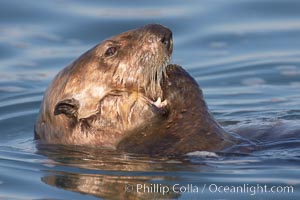
A sea otter eats a clam that it has taken from the shallow sandy bottom of Elkhorn Slough. Because sea otters have such a high metabolic rate, they eat up to 30% of their body weight each day in the form of clams, mussels, urchins, crabs and abalone. Sea otters are the only known tool-using marine mammal, using a stone or old shell to open the shells of their prey as they float on their backs.
Species: Sea otter, Enhydra lutris
Location: Elkhorn Slough National Estuarine Research Reserve, Moss Landing, California
Image ID: 21662
Species: Sea otter, Enhydra lutris
Location: Elkhorn Slough National Estuarine Research Reserve, Moss Landing, California
Image ID: 21662
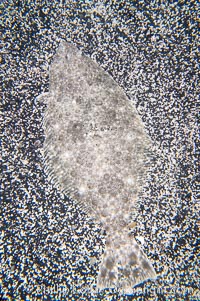
Speckled sanddab, which can alter its color and pattern to better camoflage itself against the sandy bottom on which it lies.
Species: Speckled sanddab, Citharichthys stigmaeus
Image ID: 14498
Species: Speckled sanddab, Citharichthys stigmaeus
Image ID: 14498
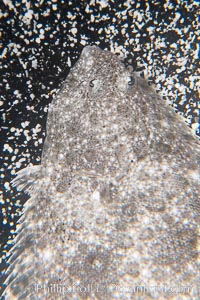
Speckled sanddab, which can alter its color and pattern to better camoflage itself against the sandy bottom on which it lies.
Species: Speckled sanddab, Citharichthys stigmaeus
Image ID: 14499
Species: Speckled sanddab, Citharichthys stigmaeus
Image ID: 14499
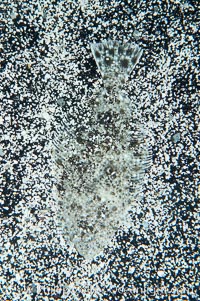
Speckled sanddab, which can alter its color and pattern to better camoflage itself against the sandy bottom on which it lies.
Species: Speckled sanddab, Citharichthys stigmaeus
Image ID: 14554
Species: Speckled sanddab, Citharichthys stigmaeus
Image ID: 14554
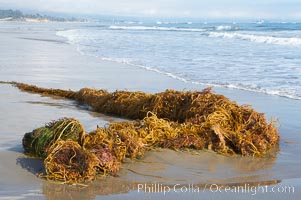
Drift kelp has washed ashore on a sandy California beach. Winter brings large surf and increased wave energy which often rips giant kelp from the ocean bottom, so that it floats down current, often washing ashore.
Species: Giant kelp, Macrocystis pyrifera
Location: Santa Barbara, California
Image ID: 14884
Species: Giant kelp, Macrocystis pyrifera
Location: Santa Barbara, California
Image ID: 14884
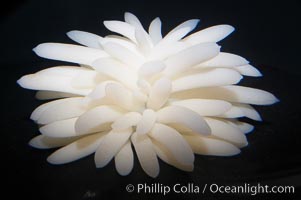
Squid egg casings. Each casing housings hundreds of tiny squid eggs. After the female squid has planted her egg casings to the sandy bottom, she will die.
Species: Common squid, Loligo opalescens
Image ID: 14931
Species: Common squid, Loligo opalescens
Image ID: 14931
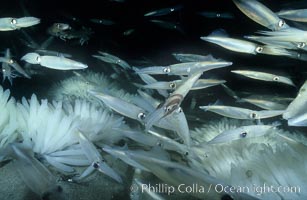
Squid mating and laying eggs, eggs on sandy bottom.
Species: Common squid, Loligo opalescens
Location: La Jolla, California
Image ID: 02547
Species: Common squid, Loligo opalescens
Location: La Jolla, California
Image ID: 02547
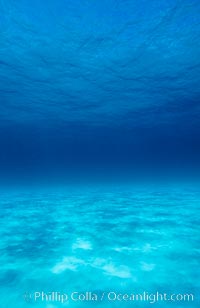
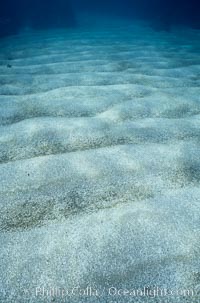
Water patterns.
Image ID: 03187
Image ID: 03187
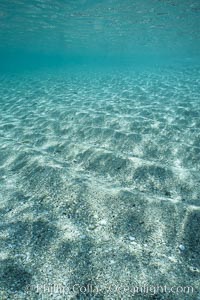
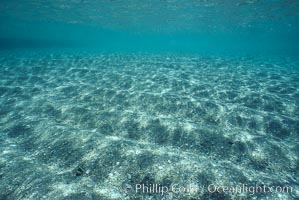
Sunlight spreads across broad sand plains, trochoidal patterns.
Location: Sea of Cortez, La Paz, Baja California, Mexico
Image ID: 04770
Location: Sea of Cortez, La Paz, Baja California, Mexico
Image ID: 04770
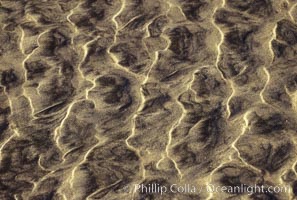
Sand ripples.
Image ID: 05648
Image ID: 05648
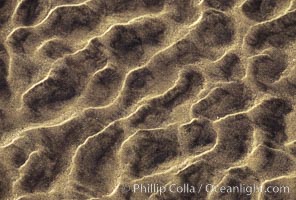
Sand ripples.
Image ID: 05649
Image ID: 05649