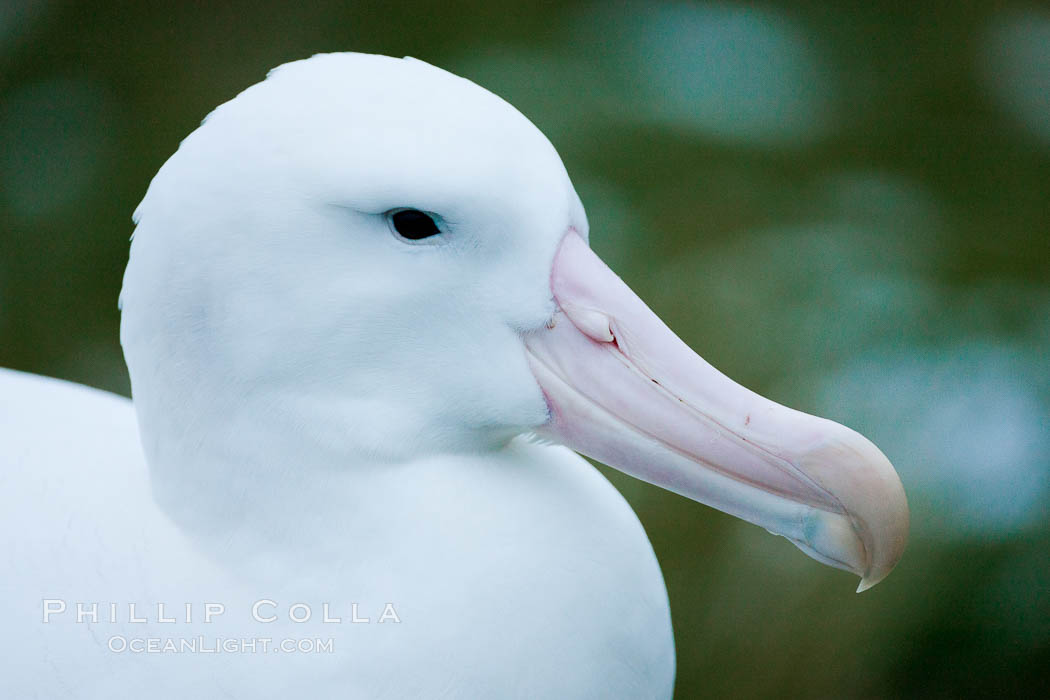
Wandering Albatross Photo, Diomedea exulans


Wandering albatross, on nest and the Prion Island colony.  The wandering albatross has the largest wingspan of any living bird, with the wingspan between, up to 12' from wingtip to wingtip. It can soar on the open ocean for hours at a time, riding the updrafts from individual swells, with a glide ratio of 22 units of distance for every unit of drop. The wandering albatross can live up to 23 years. They hunt at night on the open ocean for cephalopods, small fish, and crustaceans. The survival of the species is at risk due to mortality from long-line fishing gear. Prion Island, South Georgia Island, Diomedea exulans, natural history stock photograph, photo id 24385 Purchase A Print Of This ImageHow to request, purchase or license this imageAdd To Light TableClick To View This Photo At Its Location in Google Earth.  You must have Google Earth installed for this feature to work correctly.Click To View This Photo At Its Location in Google Maps.Click To View This Photo At Its Location in Live Search Maps.


More Diomedea exulans:

Wandering albatross in flight, over the open sea.  The wandering albatross has the largest wingspan of any living bird, with the wingspan between, up to 12' from wingtip to wingtip.  It can soar on the open ocean for hours at a time, riding the updrafts from individual swells, with a glide ratio of 22 units of distance for every unit of drop.  The wandering albatross can live up to 23 years.  They hunt at night on the open ocean for cephalopods, small fish, and crustaceans. The survival of the species is at risk due to mortality from long-line fishing gear. Southern Ocean. Image #24071
Wandering albatross in flight, over the open sea.  The wandering albatross has the largest wingspan of any living bird, with the wingspan between, up to 12' from wingtip to wingtip.  It can soar on the open ocean for hours at a time, riding the updrafts from individual swells, with a glide ratio of 22 units of distance for every unit of drop.  The wandering albatross can live up to 23 years.  They hunt at night on the open ocean for cephalopods, small fish, and crustaceans. The survival of the species is at risk due to mortality from long-line fishing gear. Southern Ocean. Image #24070
Wandering albatross in flight, over the open sea.  The wandering albatross has the largest wingspan of any living bird, with the wingspan between, up to 12' from wingtip to wingtip.  It can soar on the open ocean for hours at a time, riding the updrafts from individual swells, with a glide ratio of 22 units of distance for every unit of drop.  The wandering albatross can live up to 23 years.  They hunt at night on the open ocean for cephalopods, small fish, and crustaceans. The survival of the species is at risk due to mortality from long-line fishing gear. Southern Ocean. Image #24092
Wandering albatross, on nest and the Prion Island colony.  The wandering albatross has the largest wingspan of any living bird, with the wingspan between, up to 12' from wingtip to wingtip. It can soar on the open ocean for hours at a time, riding the updrafts from individual swells, with a glide ratio of 22 units of distance for every unit of drop. The wandering albatross can live up to 23 years. They hunt at night on the open ocean for cephalopods, small fish, and crustaceans. The survival of the species is at risk due to mortality from long-line fishing gear. Prion Island, South Georgia Island. Image #24394
Wandering albatross in flight, over the open sea.  The wandering albatross has the largest wingspan of any living bird, with the wingspan between, up to 12' from wingtip to wingtip.  It can soar on the open ocean for hours at a time, riding the updrafts from individual swells, with a glide ratio of 22 units of distance for every unit of drop.  The wandering albatross can live up to 23 years.  They hunt at night on the open ocean for cephalopods, small fish, and crustaceans. The survival of the species is at risk due to mortality from long-line fishing gear. Southern Ocean. Image #24087
Wandering albatross, on nest and the Prion Island colony.  The wandering albatross has the largest wingspan of any living bird, with the wingspan between, up to 12' from wingtip to wingtip. It can soar on the open ocean for hours at a time, riding the updrafts from individual swells, with a glide ratio of 22 units of distance for every unit of drop. The wandering albatross can live up to 23 years. They hunt at night on the open ocean for cephalopods, small fish, and crustaceans. The survival of the species is at risk due to mortality from long-line fishing gear. Prion Island, South Georgia Island. Image #24428
Wandering albatross, on nest and the Prion Island colony.  The wandering albatross has the largest wingspan of any living bird, with the wingspan between, up to 12' from wingtip to wingtip. It can soar on the open ocean for hours at a time, riding the updrafts from individual swells, with a glide ratio of 22 units of distance for every unit of drop. The wandering albatross can live up to 23 years. They hunt at night on the open ocean for cephalopods, small fish, and crustaceans. The survival of the species is at risk due to mortality from long-line fishing gear. Prion Island, South Georgia Island. Image #24429
Wandering albatross in flight, over the open sea.  The wandering albatross has the largest wingspan of any living bird, with the wingspan between, up to 12' from wingtip to wingtip.  It can soar on the open ocean for hours at a time, riding the updrafts from individual swells, with a glide ratio of 22 units of distance for every unit of drop.  The wandering albatross can live up to 23 years.  They hunt at night on the open ocean for cephalopods, small fish, and crustaceans. The survival of the species is at risk due to mortality from long-line fishing gear. Southern Ocean. Image #24088
Wandering albatross in flight, over the open sea.  The wandering albatross has the largest wingspan of any living bird, with the wingspan between, up to 12' from wingtip to wingtip.  It can soar on the open ocean for hours at a time, riding the updrafts from individual swells, with a glide ratio of 22 units of distance for every unit of drop.  The wandering albatross can live up to 23 years.  They hunt at night on the open ocean for cephalopods, small fish, and crustaceans. The survival of the species is at risk due to mortality from long-line fishing gear. Southern Ocean. Image #24089
Wandering albatross in flight, over the open sea.  The wandering albatross has the largest wingspan of any living bird, with the wingspan between, up to 12' from wingtip to wingtip.  It can soar on the open ocean for hours at a time, riding the updrafts from individual swells, with a glide ratio of 22 units of distance for every unit of drop.  The wandering albatross can live up to 23 years.  They hunt at night on the open ocean for cephalopods, small fish, and crustaceans. The survival of the species is at risk due to mortality from long-line fishing gear. Southern Ocean. Image #24090

Wandering albatross, on nest and the Prion Island colony. The wandering albatross has the largest wingspan of any living bird, with the wingspan between, up to 12' from wingtip to wingtip. It can soar on the open ocean for hours at a time, riding the updrafts from individual swells, with a glide ratio of 22 units of distance for every unit of drop. The wandering albatross can live up to 23 years. They hunt at night on the open ocean for cephalopods, small fish, and crustaceans. The survival of the species is at risk due to mortality from long-line fishing gear. Prion Island, South Georgia Island

Stock Photo: 24385  -?- 
Species: Wandering albatross, Diomedea exulans
Location: Prion Island, South Georgia Island
Lat/Long: S 054° 01' 40.46", W 037° 15' 30.02" (Coordinates: -54.02791°, -37.25834°)
Altitude: 48.00m
Format: Digital 3:2
Copyright © Phillip Colla, all rights reserved worldwide.
Purchase a print of this image
Request a review copy of this image

Keywords: albatross, animal, animalia, atlantic, aves, bay of isles, bird, chordata, diomedea, diomedea exulans, diomedeidae, exulans, oceans, prion island, procellariiformes, sea bird, seabird, south georgia island, united kingdom, vertebrata, vertebrate, wandering albatross, wildlife

Categories:

Click To View This Photo At Its Location in Google Earth.  You must have Google Earth installed for this feature to work correctly. View this photo at its location in Google Earth!


Home   >   Natural History Photography Blog   >   Search   >   
This professional quality stock photo can be licensed in high resolution form by contacting the photographer: Phillip Colla, photos@oceanlight.com, (760) 707-7153 , more info and photographer bio.

If you are a student and this photo is helpful to you, you may use a printed copy of the photo as it appears on this page in your report provided you create a web link to this website. See the note to visitors for more information.

Close this Window
[107.20.129.212] : 21 image views

About color management and monitor adjustment.

Updated: May 22, 2013

     photos@oceanlight.com   (760) 707-7153