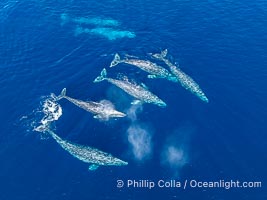
Large Seven Animal Gray Whale Courtship Group, Aerial Photo, San Diego. Courtship during the southern migration, far to the north of the Mexican lagoons of Baja California where most gray whale births take place.
Species: Gray whale, Eschrichtius robustus
Image ID: 41522
Species: Gray whale, Eschrichtius robustus
Image ID: 41522
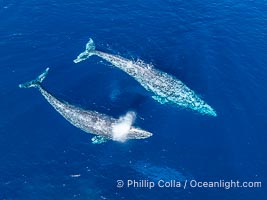
Courting Pair of Gray Whales, Aerial Photo, San Diego. Courtship during the southern migration, far to the north of the Mexican lagoons of Baja California where most gray whale births take place.
Species: Gray whale, Eschrichtius robustus
Image ID: 41523
Species: Gray whale, Eschrichtius robustus
Image ID: 41523
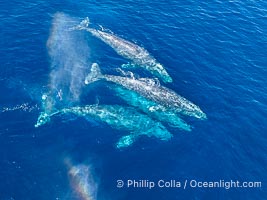
Gray Whale Courtship Group, Aerial Photo, San Diego. Courtship during the southern migration, far to the north of the Mexican lagoons of Baja California where most gray whale births take place.
Species: Gray whale, Eschrichtius robustus
Image ID: 41524
Species: Gray whale, Eschrichtius robustus
Image ID: 41524
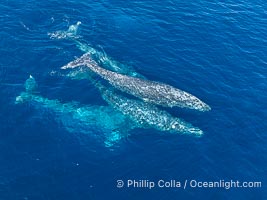
Gray Whale Courtship Group, Aerial Photo, San Diego. Courtship during the southern migration, far to the north of the Mexican lagoons of Baja California where most gray whale births take place.
Species: Gray whale, Eschrichtius robustus
Image ID: 41525
Species: Gray whale, Eschrichtius robustus
Image ID: 41525
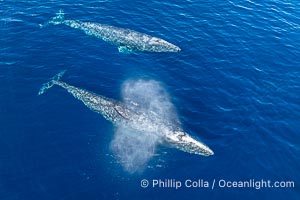
Courting Pair of Gray Whales, Aerial Photo, San Diego. Courtship during the southern migration, far to the north of the Mexican lagoons of Baja California where most gray whale births take place.
Species: Gray whale, Eschrichtius robustus
Image ID: 41526
Species: Gray whale, Eschrichtius robustus
Image ID: 41526
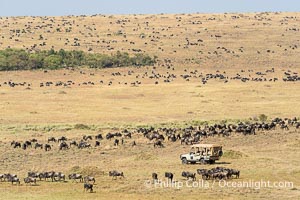
Wildebeest Migration in the Maasai Mara Reserve, Kenya.
Species: Wildebeest, Connochaetes taurinus
Location: Maasai Mara National Reserve, Kenya
Image ID: 39617
Panorama dimensions: 5760 x 8640
Species: Wildebeest, Connochaetes taurinus
Location: Maasai Mara National Reserve, Kenya
Image ID: 39617
Panorama dimensions: 5760 x 8640
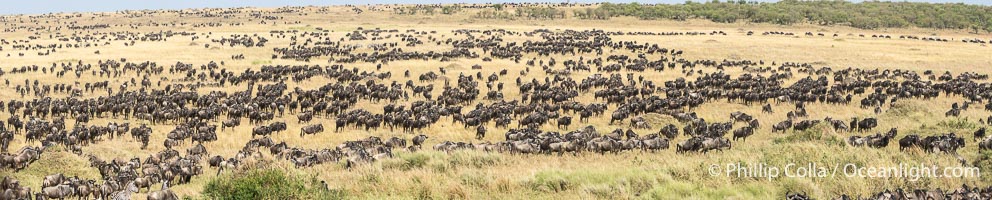
Wildebeest Migration in the Maasai Mara Reserve, Kenya.
Species: Wildebeest, Connochaetes taurinus
Location: Maasai Mara National Reserve, Kenya
Image ID: 39619
Panorama dimensions: 5217 x 25886
Species: Wildebeest, Connochaetes taurinus
Location: Maasai Mara National Reserve, Kenya
Image ID: 39619
Panorama dimensions: 5217 x 25886
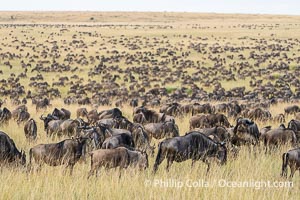
Wildebeest Herd in the Great Migration, Masai Mara, Kenya.
Species: Wildebeest, Connochaetes taurinus
Location: Maasai Mara National Reserve, Kenya
Image ID: 39631
Panorama dimensions: 5760 x 8640
Species: Wildebeest, Connochaetes taurinus
Location: Maasai Mara National Reserve, Kenya
Image ID: 39631
Panorama dimensions: 5760 x 8640
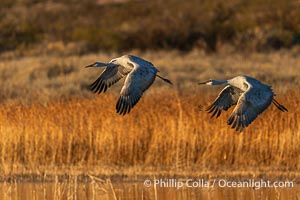
Sandhill cranes spread broad wings as they take flight in early morning light. These sandhill cranes are among thousands present in Bosque del Apache National Wildlife Refuge, stopping here during its winter migration.
Species: Sandhill Crane, Grus canadensis
Location: Bosque del Apache National Wildlife Refuge, Socorro, New Mexico
Image ID: 39910
Species: Sandhill Crane, Grus canadensis
Location: Bosque del Apache National Wildlife Refuge, Socorro, New Mexico
Image ID: 39910
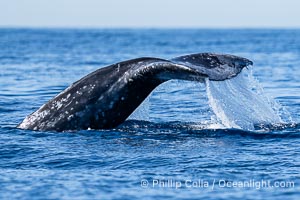
Gray Whale Raising Fluke Before Diving, San Diego, on southern migration to calving lagoons in Baja.
Species: Gray whale, Eschrichtius robustus
Image ID: 41527
Species: Gray whale, Eschrichtius robustus
Image ID: 41527
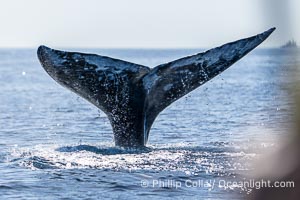
Gray Whale Raising Fluke Before Diving, San Diego, on southern migration to calving lagoons in Baja.
Species: Gray whale, Eschrichtius robustus
Image ID: 41528
Species: Gray whale, Eschrichtius robustus
Image ID: 41528
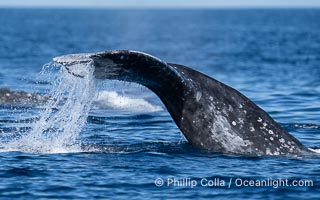
Gray Whale Raising Fluke Before Diving, San Diego, on southern migration to calving lagoons in Baja.
Species: Gray whale, Eschrichtius robustus
Image ID: 41531
Species: Gray whale, Eschrichtius robustus
Image ID: 41531
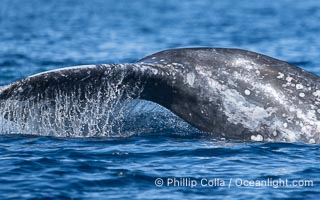
Gray Whale Raising Fluke Before Diving, San Diego, on southern migration to calving lagoons in Baja.
Species: Gray whale, Eschrichtius robustus
Image ID: 41532
Species: Gray whale, Eschrichtius robustus
Image ID: 41532
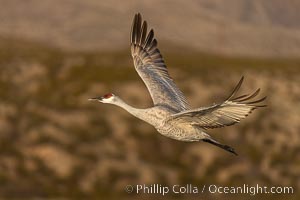
Sandhill crane spreads its broad wings as it takes flight in early morning light. This sandhill crane is among thousands present in Bosque del Apache National Wildlife Refuge, stopping here during its winter migration.
Species: Sandhill crane, Grus canadensis
Location: Bosque del Apache National Wildlife Refuge, Socorro, New Mexico
Image ID: 38751
Species: Sandhill crane, Grus canadensis
Location: Bosque del Apache National Wildlife Refuge, Socorro, New Mexico
Image ID: 38751
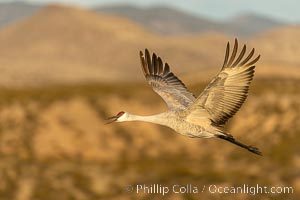
Sandhill crane spreads its broad wings as it takes flight in early morning light. This sandhill crane is among thousands present in Bosque del Apache National Wildlife Refuge, stopping here during its winter migration.
Species: Sandhill crane, Grus canadensis
Location: Bosque del Apache National Wildlife Refuge, Socorro, New Mexico
Image ID: 38754
Species: Sandhill crane, Grus canadensis
Location: Bosque del Apache National Wildlife Refuge, Socorro, New Mexico
Image ID: 38754
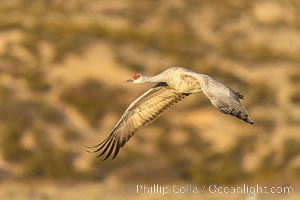
Sandhill crane spreads its broad wings as it takes flight in early morning light. This sandhill crane is among thousands present in Bosque del Apache National Wildlife Refuge, stopping here during its winter migration.
Species: Sandhill crane, Grus canadensis
Location: Bosque del Apache National Wildlife Refuge, Socorro, New Mexico
Image ID: 38755
Species: Sandhill crane, Grus canadensis
Location: Bosque del Apache National Wildlife Refuge, Socorro, New Mexico
Image ID: 38755
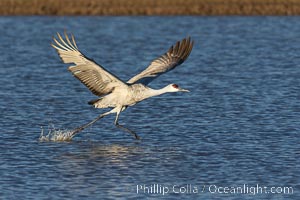
Sandhill crane spreads its broad wings as it takes flight in early morning light. This sandhill crane is among thousands present in Bosque del Apache National Wildlife Refuge, stopping here during its winter migration.
Species: Sandhill crane, Grus canadensis
Location: Bosque del Apache National Wildlife Refuge, Socorro, New Mexico
Image ID: 38763
Species: Sandhill crane, Grus canadensis
Location: Bosque del Apache National Wildlife Refuge, Socorro, New Mexico
Image ID: 38763
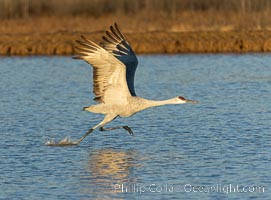
Sandhill crane spreads its broad wings as it takes flight in early morning light. This sandhill crane is among thousands present in Bosque del Apache National Wildlife Refuge, stopping here during its winter migration.
Species: Sandhill crane, Grus canadensis
Location: Bosque del Apache National Wildlife Refuge, Socorro, New Mexico
Image ID: 38767
Species: Sandhill crane, Grus canadensis
Location: Bosque del Apache National Wildlife Refuge, Socorro, New Mexico
Image ID: 38767
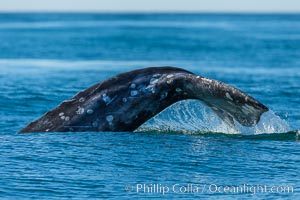
Gray whale raising fluke before diving, on southern migration to calving lagoons in Baja.
Species: Gray Whale, Eschrichtius robustus
Location: San Diego, California
Image ID: 34229
Species: Gray Whale, Eschrichtius robustus
Location: San Diego, California
Image ID: 34229
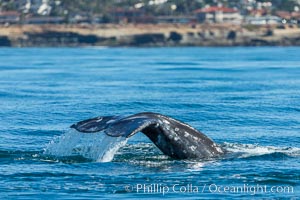
Gray whale raising fluke before diving, on southern migration to calving lagoons in Baja.
Species: Gray Whale, Eschrichtius robustus
Location: San Diego, California
Image ID: 34237
Species: Gray Whale, Eschrichtius robustus
Location: San Diego, California
Image ID: 34237
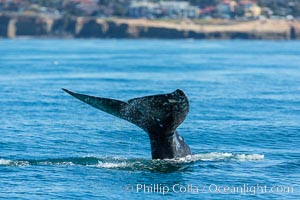
Gray whale raising fluke before diving, on southern migration to calving lagoons in Baja.
Species: Gray Whale, Eschrichtius robustus
Location: San Diego, California
Image ID: 34238
Species: Gray Whale, Eschrichtius robustus
Location: San Diego, California
Image ID: 34238
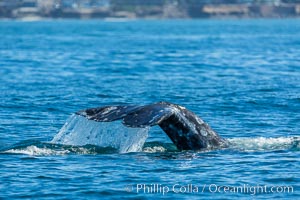
Gray whale raising fluke before diving, on southern migration to calving lagoons in Baja.
Species: Gray Whale, Eschrichtius robustus
Location: San Diego, California
Image ID: 34240
Species: Gray Whale, Eschrichtius robustus
Location: San Diego, California
Image ID: 34240
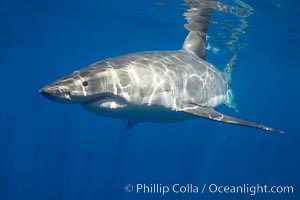
A great white shark is countershaded, with a dark gray dorsal color and light gray to white underside, making it more difficult for the shark's prey to see it as approaches from above or below in the water column. The particular undulations of the countershading line along its side, where gray meets white, is unique to each shark and helps researchers to identify individual sharks in capture-recapture studies. Guadalupe Island is host to a relatively large population of great white sharks who, through a history of video and photographs showing their countershading lines, are the subject of an ongoing study of shark behaviour, migration and population size.
Species: Great white shark, Carcharodon carcharias
Location: Guadalupe Island (Isla Guadalupe), Baja California, Mexico
Image ID: 19455
Species: Great white shark, Carcharodon carcharias
Location: Guadalupe Island (Isla Guadalupe), Baja California, Mexico
Image ID: 19455
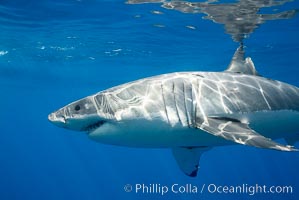
A great white shark is countershaded, with a dark gray dorsal color and light gray to white underside, making it more difficult for the shark's prey to see it as approaches from above or below in the water column. The particular undulations of the countershading line along its side, where gray meets white, is unique to each shark and helps researchers to identify individual sharks in capture-recapture studies. Guadalupe Island is host to a relatively large population of great white sharks who, through a history of video and photographs showing their countershading lines, are the subject of an ongoing study of shark behaviour, migration and population size.
Species: Great white shark, Carcharodon carcharias
Location: Guadalupe Island (Isla Guadalupe), Baja California, Mexico
Image ID: 19456
Species: Great white shark, Carcharodon carcharias
Location: Guadalupe Island (Isla Guadalupe), Baja California, Mexico
Image ID: 19456
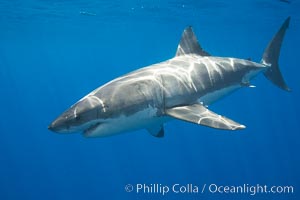
A great white shark is countershaded, with a dark gray dorsal color and light gray to white underside, making it more difficult for the shark's prey to see it as approaches from above or below in the water column. The particular undulations of the countershading line along its side, where gray meets white, is unique to each shark and helps researchers to identify individual sharks in capture-recapture studies. Guadalupe Island is host to a relatively large population of great white sharks who, through a history of video and photographs showing their countershading lines, are the subject of an ongoing study of shark behaviour, migration and population size.
Species: Great white shark, Carcharodon carcharias
Location: Guadalupe Island (Isla Guadalupe), Baja California, Mexico
Image ID: 19458
Species: Great white shark, Carcharodon carcharias
Location: Guadalupe Island (Isla Guadalupe), Baja California, Mexico
Image ID: 19458
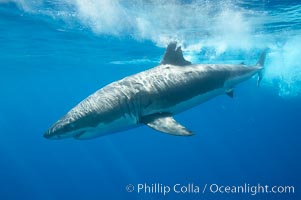
A great white shark is countershaded, with a dark gray dorsal color and light gray to white underside, making it more difficult for the shark's prey to see it as approaches from above or below in the water column. The particular undulations of the countershading line along its side, where gray meets white, is unique to each shark and helps researchers to identify individual sharks in capture-recapture studies. Guadalupe Island is host to a relatively large population of great white sharks who, through a history of video and photographs showing their countershading lines, are the subject of an ongoing study of shark behaviour, migration and population size.
Species: Great white shark, Carcharodon carcharias
Location: Guadalupe Island (Isla Guadalupe), Baja California, Mexico
Image ID: 19459
Species: Great white shark, Carcharodon carcharias
Location: Guadalupe Island (Isla Guadalupe), Baja California, Mexico
Image ID: 19459
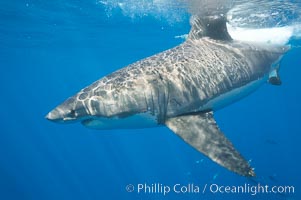
A great white shark is countershaded, with a dark gray dorsal color and light gray to white underside, making it more difficult for the shark's prey to see it as approaches from above or below in the water column. The particular undulations of the countershading line along its side, where gray meets white, is unique to each shark and helps researchers to identify individual sharks in capture-recapture studies. Guadalupe Island is host to a relatively large population of great white sharks who, through a history of video and photographs showing their countershading lines, are the subject of an ongoing study of shark behaviour, migration and population size.
Species: Great white shark, Carcharodon carcharias
Location: Guadalupe Island (Isla Guadalupe), Baja California, Mexico
Image ID: 19460
Species: Great white shark, Carcharodon carcharias
Location: Guadalupe Island (Isla Guadalupe), Baja California, Mexico
Image ID: 19460
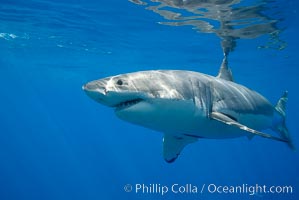
A great white shark is countershaded, with a dark gray dorsal color and light gray to white underside, making it more difficult for the shark's prey to see it as approaches from above or below in the water column. The particular undulations of the countershading line along its side, where gray meets white, is unique to each shark and helps researchers to identify individual sharks in capture-recapture studies. Guadalupe Island is host to a relatively large population of great white sharks who, through a history of video and photographs showing their countershading lines, are the subject of an ongoing study of shark behaviour, migration and population size.
Species: Great white shark, Carcharodon carcharias
Location: Guadalupe Island (Isla Guadalupe), Baja California, Mexico
Image ID: 19463
Species: Great white shark, Carcharodon carcharias
Location: Guadalupe Island (Isla Guadalupe), Baja California, Mexico
Image ID: 19463
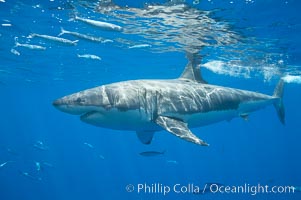
A great white shark is countershaded, with a dark gray dorsal color and light gray to white underside, making it more difficult for the shark's prey to see it as approaches from above or below in the water column. The particular undulations of the countershading line along its side, where gray meets white, is unique to each shark and helps researchers to identify individual sharks in capture-recapture studies. Guadalupe Island is host to a relatively large population of great white sharks who, through a history of video and photographs showing their countershading lines, are the subject of an ongoing study of shark behaviour, migration and population size.
Species: Great white shark, Carcharodon carcharias
Location: Guadalupe Island (Isla Guadalupe), Baja California, Mexico
Image ID: 19464
Species: Great white shark, Carcharodon carcharias
Location: Guadalupe Island (Isla Guadalupe), Baja California, Mexico
Image ID: 19464
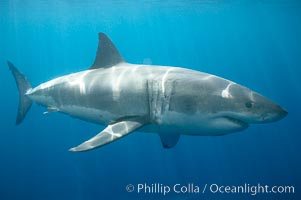
A great white shark is countershaded, with a dark gray dorsal color and light gray to white underside, making it more difficult for the shark's prey to see it as approaches from above or below in the water column. The particular undulations of the countershading line along its side, where gray meets white, is unique to each shark and helps researchers to identify individual sharks in capture-recapture studies. Guadalupe Island is host to a relatively large population of great white sharks who, through a history of video and photographs showing their countershading lines, are the subject of an ongoing study of shark behaviour, migration and population size.
Species: Great white shark, Carcharodon carcharias
Location: Guadalupe Island (Isla Guadalupe), Baja California, Mexico
Image ID: 19467
Species: Great white shark, Carcharodon carcharias
Location: Guadalupe Island (Isla Guadalupe), Baja California, Mexico
Image ID: 19467