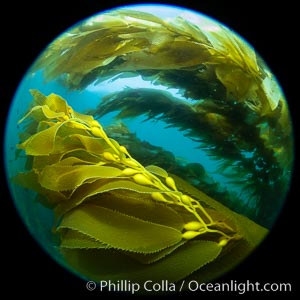
Giant Kelp Forest, West End Catalina Island.
Species: Giant kelp, Macrocystis pyrifera
Location: Catalina Island, California
Image ID: 37301
Species: Giant kelp, Macrocystis pyrifera
Location: Catalina Island, California
Image ID: 37301
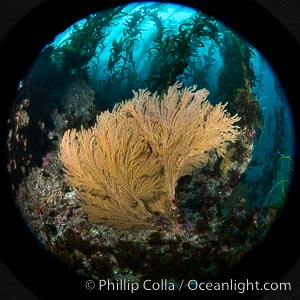
Garibaldi and California golden gorgonian on underwater rocky reef, San Clemente Island. The golden gorgonian is a filter-feeding temperate colonial species that lives on the rocky bottom at depths between 50 to 200 feet deep. Each individual polyp is a distinct animal, together they secrete calcium that forms the structure of the colony. Gorgonians are oriented at right angles to prevailing water currents to capture plankton drifting by.
Species: California Golden Gorgonian, Giant Kelp, Garibaldi, Muricea californica, Macrocystis pyrifera, Hypsypops rubicundus
Location: San Clemente Island, California
Image ID: 38501
Species: California Golden Gorgonian, Giant Kelp, Garibaldi, Muricea californica, Macrocystis pyrifera, Hypsypops rubicundus
Location: San Clemente Island, California
Image ID: 38501
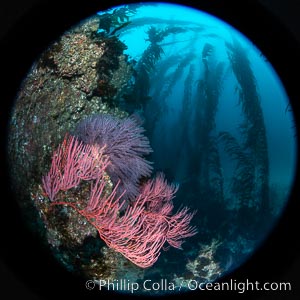
Red gorgonian on rocky reef, below kelp forest, underwater. The red gorgonian is a filter-feeding temperate colonial species that lives on the rocky bottom at depths between 50 to 200 feet deep. Gorgonians are typically oriented at right angles to prevailing water currents to capture plankton drifting by.
Species: Red gorgonian, Giant kelp, Brown gorgonian, Leptogorgia chilensis, Lophogorgia chilensis, Macrocystis pyrifera, Muricea fruticosa
Location: San Clemente Island, California
Image ID: 38502
Species: Red gorgonian, Giant kelp, Brown gorgonian, Leptogorgia chilensis, Lophogorgia chilensis, Macrocystis pyrifera, Muricea fruticosa
Location: San Clemente Island, California
Image ID: 38502
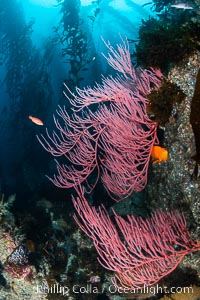
Red gorgonian on rocky reef, below kelp forest, underwater. The red gorgonian is a filter-feeding temperate colonial species that lives on the rocky bottom at depths between 50 to 200 feet deep. Gorgonians are typically oriented at right angles to prevailing water currents to capture plankton drifting by.
Species: Red gorgonian, Giant kelp, Leptogorgia chilensis, Lophogorgia chilensis, Macrocystis pyrifera
Location: San Clemente Island, California
Image ID: 38503
Species: Red gorgonian, Giant kelp, Leptogorgia chilensis, Lophogorgia chilensis, Macrocystis pyrifera
Location: San Clemente Island, California
Image ID: 38503
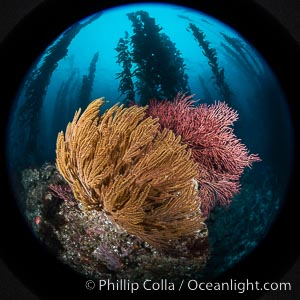
Garibaldi and California golden gorgonian on underwater rocky reef, San Clemente Island. The golden gorgonian is a filter-feeding temperate colonial species that lives on the rocky bottom at depths between 50 to 200 feet deep. Each individual polyp is a distinct animal, together they secrete calcium that forms the structure of the colony. Gorgonians are oriented at right angles to prevailing water currents to capture plankton drifting by.
Species: California Golden Gorgonian, Giant Kelp, Garibaldi, Muricea californica, Macrocystis pyrifera, Hypsypops rubicundus
Location: San Clemente Island, California
Image ID: 38504
Species: California Golden Gorgonian, Giant Kelp, Garibaldi, Muricea californica, Macrocystis pyrifera, Hypsypops rubicundus
Location: San Clemente Island, California
Image ID: 38504
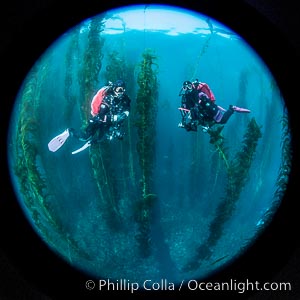
SCUBA divers, San Clemente Island.
Species: Giant kelp, Macrocystis pyrifera
Location: San Clemente Island, California
Image ID: 38507
Species: Giant kelp, Macrocystis pyrifera
Location: San Clemente Island, California
Image ID: 38507
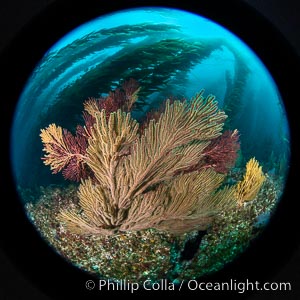
Garibaldi and California golden gorgonian on underwater rocky reef, San Clemente Island. The golden gorgonian is a filter-feeding temperate colonial species that lives on the rocky bottom at depths between 50 to 200 feet deep. Each individual polyp is a distinct animal, together they secrete calcium that forms the structure of the colony. Gorgonians are oriented at right angles to prevailing water currents to capture plankton drifting by.
Species: California Golden Gorgonian, Giant Kelp, Garibaldi, Muricea californica, Macrocystis pyrifera, Hypsypops rubicundus
Location: San Clemente Island, California
Image ID: 38509
Species: California Golden Gorgonian, Giant Kelp, Garibaldi, Muricea californica, Macrocystis pyrifera, Hypsypops rubicundus
Location: San Clemente Island, California
Image ID: 38509
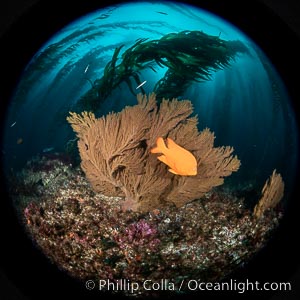
Garibaldi and California golden gorgonian on underwater rocky reef, San Clemente Island. The golden gorgonian is a filter-feeding temperate colonial species that lives on the rocky bottom at depths between 50 to 200 feet deep. Each individual polyp is a distinct animal, together they secrete calcium that forms the structure of the colony. Gorgonians are oriented at right angles to prevailing water currents to capture plankton drifting by.
Species: California golden gorgonian, Giant kelp, Garibaldi, Muricea californica, Macrocystis pyrifera, Hypsypops rubicundus
Location: San Clemente Island, California
Image ID: 38510
Species: California golden gorgonian, Giant kelp, Garibaldi, Muricea californica, Macrocystis pyrifera, Hypsypops rubicundus
Location: San Clemente Island, California
Image ID: 38510
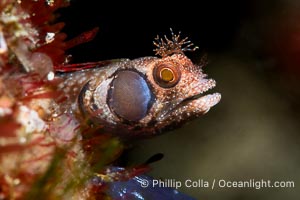
Acanthemblemaria crockeri, Brown-cheek barnacle-blenny, Islas San Lorenzo, Sea of Cortez.
Species: Brown-cheek barnacle-blenny, Acanthemblemaria crockeri
Location: Islas San Lorenzo, Baja California, Mexico
Image ID: 40444
Species: Brown-cheek barnacle-blenny, Acanthemblemaria crockeri
Location: Islas San Lorenzo, Baja California, Mexico
Image ID: 40444
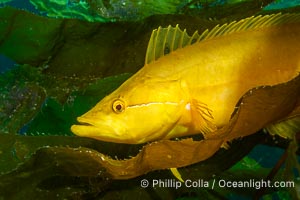
Giant kelpfish in underwater kelp forest, Catalina Island.
Species: Giant Kelpfish, Giant Kelp, Heterostichus rostratus, Macrocystis pyrifera
Location: Catalina Island, California
Image ID: 40523
Species: Giant Kelpfish, Giant Kelp, Heterostichus rostratus, Macrocystis pyrifera
Location: Catalina Island, California
Image ID: 40523
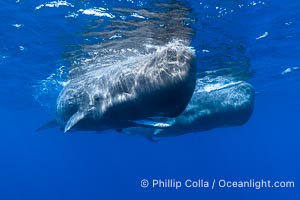
Sperm whales underwater, Physeter macrocephalus.
Species: Sperm Whale, Physeter macrocephalus
Location: Dominica
Image ID: 41463
Species: Sperm Whale, Physeter macrocephalus
Location: Dominica
Image ID: 41463
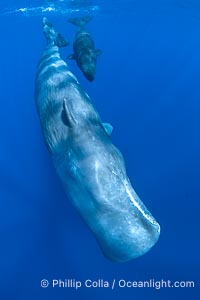
Sperm whales underwater, Physeter macrocephalus.
Species: Sperm Whale, Physeter macrocephalus
Location: Dominica
Image ID: 41464
Species: Sperm Whale, Physeter macrocephalus
Location: Dominica
Image ID: 41464
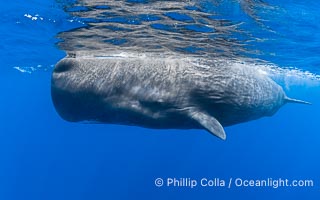
Sperm whale underwater, Physeter macrocephalus. Sperm whales are found year-round in the abyssal trench alongside the island of Dominica since this is where they forage for deep-sea squid.
Species: Sperm Whale, Physeter macrocephalus
Location: Dominica
Image ID: 41465
Species: Sperm Whale, Physeter macrocephalus
Location: Dominica
Image ID: 41465
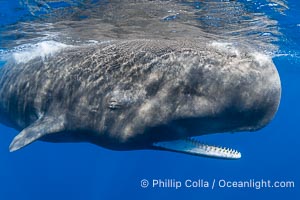
Sperm whale underwater, Physeter macrocephalus. Sperm whales are found year-round in the abyssal trench alongside the island of Dominica since this is where they forage for deep-sea squid.
Species: Sperm Whale, Physeter macrocephalus
Location: Dominica
Image ID: 41466
Species: Sperm Whale, Physeter macrocephalus
Location: Dominica
Image ID: 41466
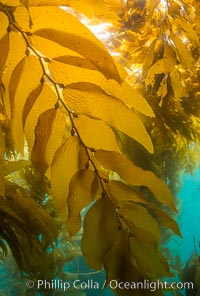
Giant kelp frond showing pneumatocysts. Small gas bladders -- pneumatocysts -- connect the kelp's stipes ("stems") to its blades ("leaves"). These bladders help elevate the kelp plant from the bottom, towards sunlight and the water's surface.
Species: Giant kelp, Macrocystis pyrifera
Location: Catalina Island, California
Image ID: 33439
Species: Giant kelp, Macrocystis pyrifera
Location: Catalina Island, California
Image ID: 33439
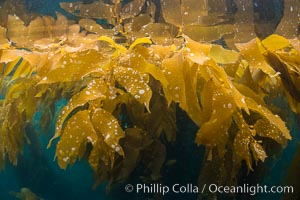
Giant kelp frond showing pneumatocysts. Small gas bladders -- pneumatocysts -- connect the kelp's stipes ("stems") to its blades ("leaves"). These bladders help elevate the kelp plant from the bottom, towards sunlight and the water's surface.
Species: Giant kelp, Macrocystis pyrifera
Location: Catalina Island, California
Image ID: 33440
Species: Giant kelp, Macrocystis pyrifera
Location: Catalina Island, California
Image ID: 33440
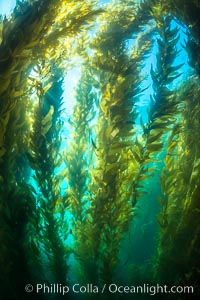
Sunlight streams through giant kelp forest. Giant kelp, the fastest growing plant on Earth, reaches from the rocky reef to the ocean's surface like a submarine forest.
Species: Giant kelp, Macrocystis pyrifera
Location: Catalina Island, California
Image ID: 33441
Species: Giant kelp, Macrocystis pyrifera
Location: Catalina Island, California
Image ID: 33441
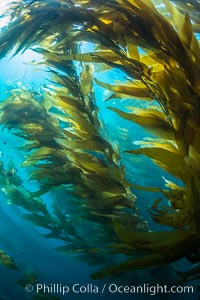
Sunlight streams through giant kelp forest. Giant kelp, the fastest growing plant on Earth, reaches from the rocky reef to the ocean's surface like a submarine forest.
Species: Giant kelp, Macrocystis pyrifera
Location: Catalina Island, California
Image ID: 33442
Species: Giant kelp, Macrocystis pyrifera
Location: Catalina Island, California
Image ID: 33442
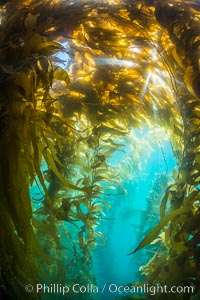
Sunlight streams through giant kelp forest. Giant kelp, the fastest growing plant on Earth, reaches from the rocky reef to the ocean's surface like a submarine forest.
Species: Giant kelp, Macrocystis pyrifera
Location: Catalina Island, California
Image ID: 33443
Species: Giant kelp, Macrocystis pyrifera
Location: Catalina Island, California
Image ID: 33443
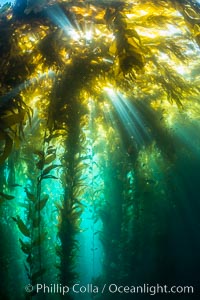
Sunlight streams through giant kelp forest. Giant kelp, the fastest growing plant on Earth, reaches from the rocky reef to the ocean's surface like a submarine forest.
Species: Giant kelp, Macrocystis pyrifera
Location: Catalina Island, California
Image ID: 33444
Species: Giant kelp, Macrocystis pyrifera
Location: Catalina Island, California
Image ID: 33444
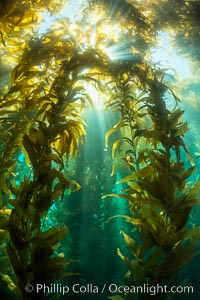
Sunlight streams through giant kelp forest. Giant kelp, the fastest growing plant on Earth, reaches from the rocky reef to the ocean's surface like a submarine forest.
Species: Giant kelp, Macrocystis pyrifera
Location: Catalina Island, California
Image ID: 33445
Species: Giant kelp, Macrocystis pyrifera
Location: Catalina Island, California
Image ID: 33445
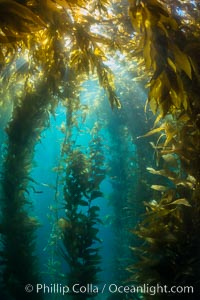
Sunlight streams through giant kelp forest. Giant kelp, the fastest growing plant on Earth, reaches from the rocky reef to the ocean's surface like a submarine forest.
Species: Giant kelp, Macrocystis pyrifera
Location: Catalina Island, California
Image ID: 33446
Species: Giant kelp, Macrocystis pyrifera
Location: Catalina Island, California
Image ID: 33446
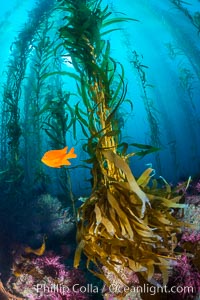
Kelp holdfast attaches the plant to the rocky reef on the oceans bottom. Kelp blades are visible above the holdfast, swaying in the current.
Species: Giant Kelp, Macrocystis pyrifera
Location: Catalina Island, California
Image ID: 34212
Species: Giant Kelp, Macrocystis pyrifera
Location: Catalina Island, California
Image ID: 34212
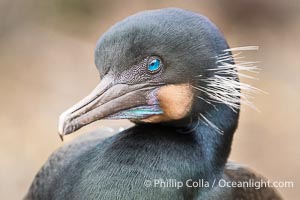
Brandt's Cormorant Portrait with Breeding Plumage, with blue throat and white feathers on each side of the head.
Species: Brandt's Cormorant, Phalacrocorax penicillatus
Location: La Jolla, California
Image ID: 40004
Species: Brandt's Cormorant, Phalacrocorax penicillatus
Location: La Jolla, California
Image ID: 40004
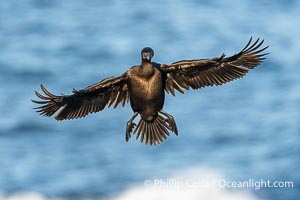
Brandt's Cormorant Spreading Wings to Land on sea cliffs overlooking the Pacific Ocean.
Species: Brandt's cormorant, Phalacrocorax penicillatus
Location: La Jolla, California
Image ID: 40084
Species: Brandt's cormorant, Phalacrocorax penicillatus
Location: La Jolla, California
Image ID: 40084
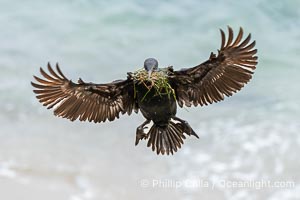
Brandt's Cormorant Flying Carrying Nesting Material, a clump of seaweed (marine algae) and surf grass, La Jolla.
Species: Brandt's Cormorant, Phalacrocorax penicillatus
Location: La Jolla, California
Image ID: 40812
Species: Brandt's Cormorant, Phalacrocorax penicillatus
Location: La Jolla, California
Image ID: 40812
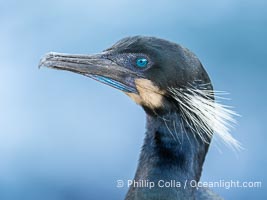
Brandt's Cormorant Portrait with Breeding Plumage, with blue throat and white feathers on each side of the head.
Species: Brandt's Cormorant, Phalacrocorax penicillatus
Location: La Jolla, California
Image ID: 40816
Species: Brandt's Cormorant, Phalacrocorax penicillatus
Location: La Jolla, California
Image ID: 40816
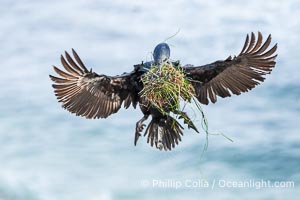
Brandt's Cormorant in flight carrying surfgrass for nest building, ocean background.
Species: Brandt's Cormorant, Phalacrocorax penicillatus
Location: La Jolla, California
Image ID: 40872
Species: Brandt's Cormorant, Phalacrocorax penicillatus
Location: La Jolla, California
Image ID: 40872
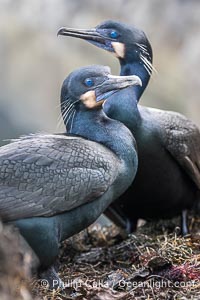
Nesting Pair of Brandt's Cormorants, on La Jolla Cliffs.
Species: Brandt's cormorant, Phalacrocorax penicillatus
Location: La Jolla, California
Image ID: 40881
Species: Brandt's cormorant, Phalacrocorax penicillatus
Location: La Jolla, California
Image ID: 40881
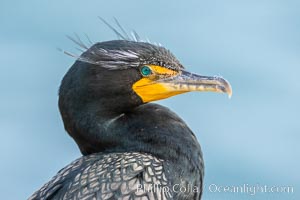
Double-crested cormorant in breeding plumage showing crest feathers on head. La Jolla, California, USA.
Species: Double-crested cormorant, Phalacrocorax auritus
Location: La Jolla, California
Image ID: 36769
Species: Double-crested cormorant, Phalacrocorax auritus
Location: La Jolla, California
Image ID: 36769