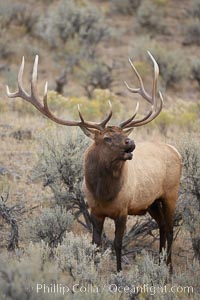
Male elk bugling during the fall rut. Large male elk are known as bulls. Male elk have large antlers which are shed each year. Male elk engage in competitive mating behaviors during the rut, including posturing, antler wrestling and bugling, a loud series of screams which is intended to establish dominance over other males and attract females.
Species: Elk, Cervus canadensis
Location: Mammoth Hot Springs, Yellowstone National Park, Wyoming
Image ID: 19698
Species: Elk, Cervus canadensis
Location: Mammoth Hot Springs, Yellowstone National Park, Wyoming
Image ID: 19698
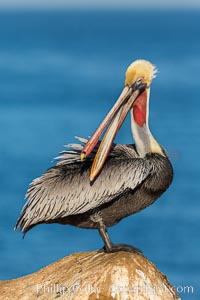
Brown pelican portrait, displaying winter non-breeding plumage with distinctive yellow head feathers and red gular throat pouch but white hind neck.
Species: Brown Pelican, Pelecanus occidentalis, Pelecanus occidentalis californicus
Location: La Jolla, California
Image ID: 28332
Species: Brown Pelican, Pelecanus occidentalis, Pelecanus occidentalis californicus
Location: La Jolla, California
Image ID: 28332
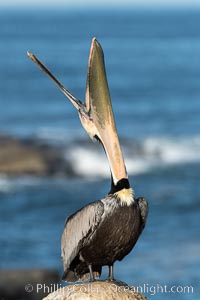
California Brown Pelican head throw, stretching its throat to keep it flexible and healthy.
Species: Brown Pelican, Pelecanus occidentalis, Pelecanus occidentalis californicus
Location: La Jolla, California
Image ID: 36678
Species: Brown Pelican, Pelecanus occidentalis, Pelecanus occidentalis californicus
Location: La Jolla, California
Image ID: 36678
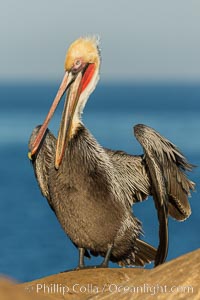
Brown pelican portrait, displaying winter plumage with distinctive yellow head feathers and red gular throat pouch. This adult is just transitioning to the brown hind neck characteristic of the brown pelican breeding plumage.
Species: Brown Pelican, Pelecanus occidentalis, Pelecanus occidentalis californicus
Location: La Jolla, California
Image ID: 30255
Species: Brown Pelican, Pelecanus occidentalis, Pelecanus occidentalis californicus
Location: La Jolla, California
Image ID: 30255
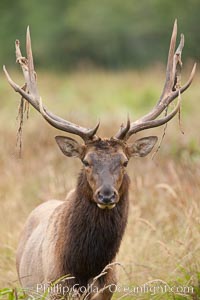
Roosevelt elk, adult bull male with large antlers. This bull elk has recently shed the velvet that covers its antlers. While an antler is growing, it is covered with highly vascular skin called velvet, which supplies oxygen and nutrients to the growing bone; once the antler has achieved its full size, the velvet is lost and the antler's bone dies. This dead bone structure is the mature antler, which is itself shed after each mating season. Roosevelt elk grow to 10' and 1300 lb, eating grasses, sedges and various berries, inhabiting the coastal rainforests of the Pacific Northwest.
Species: Roosevelt elk, Cervus canadensis roosevelti
Location: Redwood National Park, California
Image ID: 25890
Species: Roosevelt elk, Cervus canadensis roosevelti
Location: Redwood National Park, California
Image ID: 25890
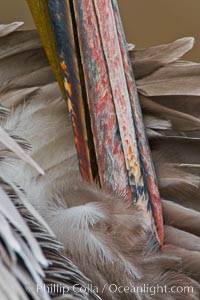
California brown pelican preening, beak and feather detail.
Species: Brown Pelican, Pelecanus occidentalis, Pelecanus occidentalis californicus
Location: La Jolla, California
Image ID: 27261
Species: Brown Pelican, Pelecanus occidentalis, Pelecanus occidentalis californicus
Location: La Jolla, California
Image ID: 27261
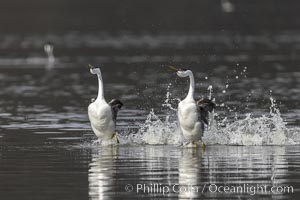
Western Grebes rushing in a courtship display. Rushing grebes run across the water 60 feet (20m) or further with their feet hitting the water as rapidly as 20 times per second. Lake Hodges, San Diego.
Species: Western grebe, Aechmophorus occidentalis
Image ID: 36888
Species: Western grebe, Aechmophorus occidentalis
Image ID: 36888
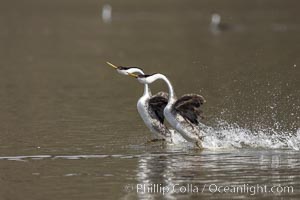
Western Grebes rushing in a courtship display. Rushing grebes run across the water 60 feet (20m) or further with their feet hitting the water as rapidly as 20 times per second. Lake Hodges, San Diego.
Species: Western grebe, Aechmophorus occidentalis
Image ID: 36889
Species: Western grebe, Aechmophorus occidentalis
Image ID: 36889
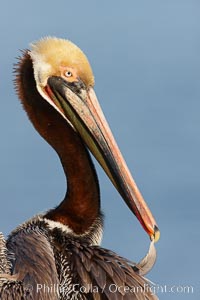
Brown pelican preening, cleaning its feathers after foraging on the ocean, with winter breeding plumage including distinctive dark brown nape, yellow head feathers and red gular throat pouch.
Species: Brown Pelican, Pelecanus occidentalis, Pelecanus occidentalis californicus
Location: La Jolla, California
Image ID: 22527
Species: Brown Pelican, Pelecanus occidentalis, Pelecanus occidentalis californicus
Location: La Jolla, California
Image ID: 22527
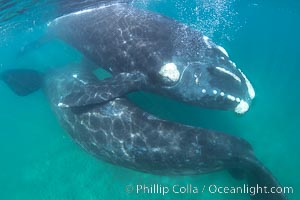
Courting pair of southern right whales underwater, Eubalaena australis. In this image, the male is below and inverted (belly up) and the female is at the surface. While the posture in this photo isn't quite mating, it is a courting behavior that often precedes mating.
Species: Southern Right Whale, Eubalaena australis
Location: Puerto Piramides, Chubut, Argentina
Image ID: 38295
Species: Southern Right Whale, Eubalaena australis
Location: Puerto Piramides, Chubut, Argentina
Image ID: 38295
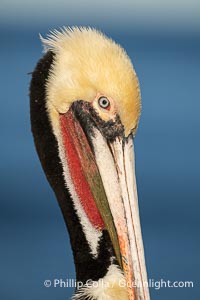
Study of a California brown pelican in winter breeding plumage, yellow head, red and olive throat, pink skin around the eye, brown hind neck with some white neck side detail.
Species: Brown Pelican, Pelecanus occidentalis, Pelecanus occidentalis californicus
Location: La Jolla, California
Image ID: 39871
Panorama dimensions: 8640 x 5760
Species: Brown Pelican, Pelecanus occidentalis, Pelecanus occidentalis californicus
Location: La Jolla, California
Image ID: 39871
Panorama dimensions: 8640 x 5760
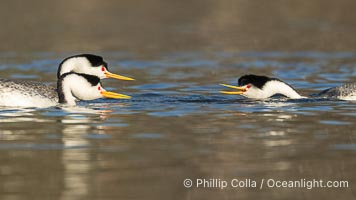
Clark's Grebes Ratchet Pointing, a courtship behavior in which the grebes assume a low facing position in the water, point beaks at one another and emit a ratchet-like sound. Coupled with dip-shaking, several rounds of ratchet pointing is often an immediate precursor to rushing.
Species: Clark's Grebe, Aechmophorus clarkii
Location: Lake Wohlford, Escondido, California
Image ID: 40891
Species: Clark's Grebe, Aechmophorus clarkii
Location: Lake Wohlford, Escondido, California
Image ID: 40891
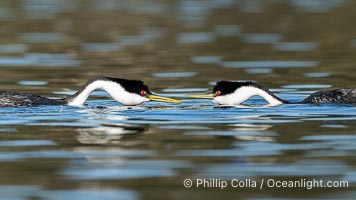
Western Grebes Ratchet Pointing, a courtship behavior in which the grebes assume a low facing position in the water, point beaks at one another and emit a ratchet-like sound. Coupled with dip-shaking, several rounds of ratchet pointing is often an immediate precursor to rushing.
Species: Western Grebe, Aechmophorus occidentalis
Location: Lake Wohlford, Escondido, California
Image ID: 40893
Species: Western Grebe, Aechmophorus occidentalis
Location: Lake Wohlford, Escondido, California
Image ID: 40893
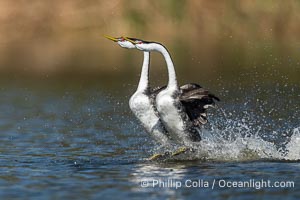
Two Rushing Western Grebes Walk on Water. Grebe rushing, a courtship behavior, happens when the birds slap the lake surface up to 20 times per second, literally running across the water.
Species: Western Grebe, Aechmophorus occidentalis
Location: Lake Wohlford, Escondido, California
Image ID: 40912
Species: Western Grebe, Aechmophorus occidentalis
Location: Lake Wohlford, Escondido, California
Image ID: 40912
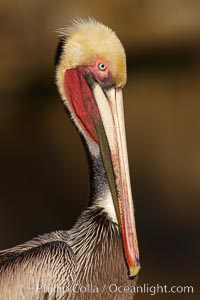
Brown pelican portrait, displaying winter breeding plumage with distinctive dark brown nape, yellow head feathers and red gular throat pouch.
Species: Brown Pelican, Pelecanus occidentalis, Pelecanus occidentalis californicus
Location: La Jolla, California
Image ID: 22529
Species: Brown Pelican, Pelecanus occidentalis, Pelecanus occidentalis californicus
Location: La Jolla, California
Image ID: 22529
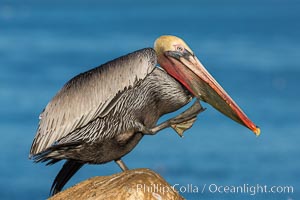
Brown pelican portrait, scratching throat pouch, displaying winter plumage with distinctive yellow head feathers and red gular throat pouch but not yet displaying the brown hind neck feathers.
Species: Brown Pelican, Pelecanus occidentalis, Pelecanus occidentalis californicus
Location: La Jolla, California
Image ID: 28329
Species: Brown Pelican, Pelecanus occidentalis, Pelecanus occidentalis californicus
Location: La Jolla, California
Image ID: 28329
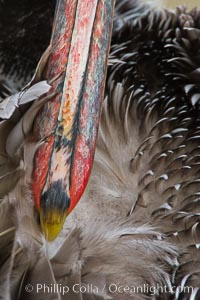
California brown pelican preening, the tip of the bill seen spreading preen oil on feathers.
Species: Brown Pelican, Pelecanus occidentalis, Pelecanus occidentalis californicus
Location: La Jolla, California
Image ID: 27262
Species: Brown Pelican, Pelecanus occidentalis, Pelecanus occidentalis californicus
Location: La Jolla, California
Image ID: 27262
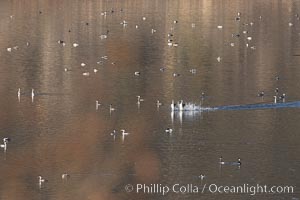
Western Grebes Rushing on Lake Hodges, amidst a mix of Western Grebes and Clarks Grebes.
Species: Western grebe, Aechmophorus occidentalis
Location: Lake Hodges, San Diego, California
Image ID: 36790
Species: Western grebe, Aechmophorus occidentalis
Location: Lake Hodges, San Diego, California
Image ID: 36790
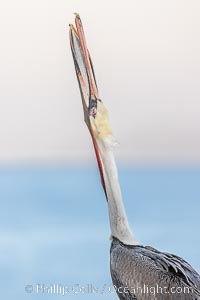
Brown pelican head throw in soft pre-sunrise light, adult winter non-breeding plumage.
Species: Brown Pelican, Pelecanus occidentalis, Pelecanus occidentalis californicus
Location: La Jolla, California
Image ID: 38585
Species: Brown Pelican, Pelecanus occidentalis, Pelecanus occidentalis californicus
Location: La Jolla, California
Image ID: 38585
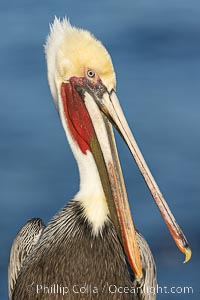
California Brown Pelican claps its jaws, sometimes rapidly several times, perhaps to dislodge debris or simply because its fun and feels good. This is not the same as the "yawn" that precedes a head throw. Adult winter non-breeding plumage. Mandible clap, jaw clap.
Species: Brown Pelican, Pelecanus occidentalis, Pelecanus occidentalis californicus
Location: La Jolla, California
Image ID: 38593
Species: Brown Pelican, Pelecanus occidentalis, Pelecanus occidentalis californicus
Location: La Jolla, California
Image ID: 38593
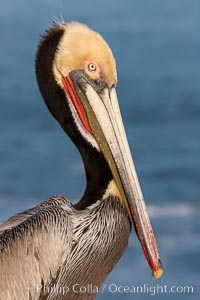
Portrait of California brown pelican, with the characteristic winter breeding plumage shown: red throat, yellow head and dark brown hindneck.
Species: Brown Pelican, Pelecanus occidentalis, Pelecanus occidentalis californicus
Location: La Jolla, California
Image ID: 23647
Species: Brown Pelican, Pelecanus occidentalis, Pelecanus occidentalis californicus
Location: La Jolla, California
Image ID: 23647
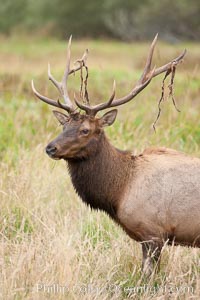
Roosevelt elk, adult bull male with large antlers. This bull elk has recently shed the velvet that covers its antlers. While an antler is growing, it is covered with highly vascular skin called velvet, which supplies oxygen and nutrients to the growing bone; once the antler has achieved its full size, the velvet is lost and the antler's bone dies. This dead bone structure is the mature antler, which is itself shed after each mating season. Roosevelt elk grow to 10' and 1300 lb, eating grasses, sedges and various berries, inhabiting the coastal rainforests of the Pacific Northwest.
Species: Roosevelt elk, Cervus canadensis roosevelti
Location: Redwood National Park, California
Image ID: 25878
Species: Roosevelt elk, Cervus canadensis roosevelti
Location: Redwood National Park, California
Image ID: 25878
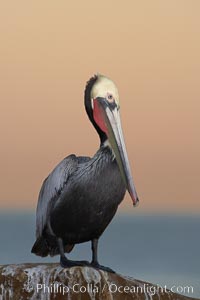
Brown pelican, winter adult breeding plumage, showing bright red gular pouch and dark brown hindneck plumage of breeding adults. This large seabird has a wingspan over 7 feet wide. The California race of the brown pelican holds endangered species status, due largely to predation in the early 1900s and to decades of poor reproduction caused by DDT poisoning.
Species: Brown Pelican, Pelecanus occidentalis, Pelecanus occidentalis californicus
Location: La Jolla, California
Image ID: 20074
Species: Brown Pelican, Pelecanus occidentalis, Pelecanus occidentalis californicus
Location: La Jolla, California
Image ID: 20074
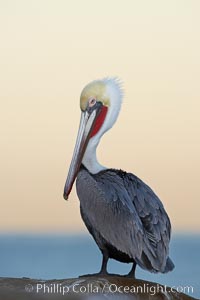
Brown pelican, non-breeding winter plumage. This large seabird has a wingspan over 7 feet wide. The California race of the brown pelican holds endangered species status, due largely to predation in the early 1900s and to decades of poor reproduction caused by DDT poisoning.
Species: Brown Pelican, Pelecanus occidentalis, Pelecanus occidentalis californicus
Location: La Jolla, California
Image ID: 20087
Species: Brown Pelican, Pelecanus occidentalis, Pelecanus occidentalis californicus
Location: La Jolla, California
Image ID: 20087
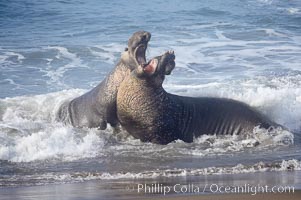
Male elephant seals (bulls) rear up on their foreflippers and fight in the surf for access for mating females that are in estrous. Such fighting among elephant seals can take place on the beach or in the water. They bite and tear at each other on the neck and shoulders, drawing blood and creating scars on the tough hides.
Species: Elephant seal, Mirounga angustirostris
Location: Piedras Blancas, San Simeon, California
Image ID: 20369
Species: Elephant seal, Mirounga angustirostris
Location: Piedras Blancas, San Simeon, California
Image ID: 20369
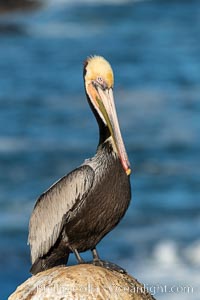
Brown pelican portrait, displaying winter plumage with distinctive yellow head feathers and colorful gular throat pouch.
Species: Brown Pelican, Pelecanus occidentalis, Pelecanus occidentalis californicus
Location: La Jolla, California
Image ID: 36684
Species: Brown Pelican, Pelecanus occidentalis, Pelecanus occidentalis californicus
Location: La Jolla, California
Image ID: 36684
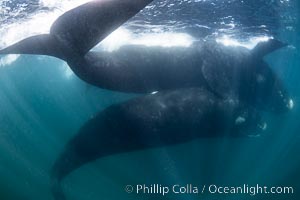
Courting pair of southern right whales underwater, Eubalaena australis. While the posture in this photo isn't quite mating, it is a courting behavior that often precedes mating. The male is below, upside down and trying to access the female belly-to-belly. However, the female does not want to mate, so she has positioned herself upside down at the surface so that the males in the courting group cannot reach her genital slit.
Species: Southern Right Whale, Eubalaena australis
Location: Puerto Piramides, Chubut, Argentina
Image ID: 38345
Species: Southern Right Whale, Eubalaena australis
Location: Puerto Piramides, Chubut, Argentina
Image ID: 38345
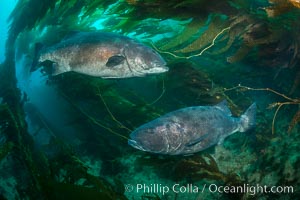
Two giant black sea bass swim in a courtship circle, part of a larger gathering of a mating aggregation amid kelp forest, Catalina Island. In summer months, black seabass gather in kelp forests in California to form mating aggregations. Courtship behaviors include circling of pairs of giant sea bass, production of booming sounds by presumed males, and nudging of females by males in what is though to be an effort to encourage spawning.
Species: Giant black sea bass, Stereolepis gigas
Location: Catalina Island, California
Image ID: 33357
Species: Giant black sea bass, Stereolepis gigas
Location: Catalina Island, California
Image ID: 33357
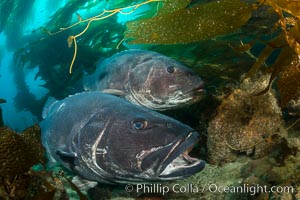
Giant black sea bass, gathering in a mating - courtship aggregation amid kelp forest, Catalina Island.
Species: Giant black sea bass, Stereolepis gigas
Location: Catalina Island, California
Image ID: 33359
Species: Giant black sea bass, Stereolepis gigas
Location: Catalina Island, California
Image ID: 33359
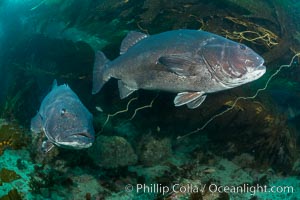
Two Giant black sea bass hover in the kelp forest as a courting pair, part of a larger mating aggregation at Catalina Island. In summer months, giant black seabass gather in kelp forests in California to form mating aggregations leading to spawning. Courtship behaviors include circling of pairs of giant sea bass, production of booming sounds by presumed males, and nudging of females by males in what is though to be an effort to encourage spawning.
Species: Giant black sea bass, Stereolepis gigas
Location: Catalina Island, California
Image ID: 33360
Species: Giant black sea bass, Stereolepis gigas
Location: Catalina Island, California
Image ID: 33360