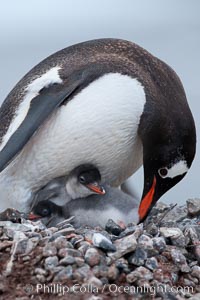
Gentoo penguin, adult tending to its two chicks, on a nest made of small stones. The chicks will remain in the nest for about 30 days after hatching.
Species: Gentoo penguin, Pygoscelis papua
Location: Cuverville Island, Antarctic Peninsula, Antarctica
Image ID: 25552
Species: Gentoo penguin, Pygoscelis papua
Location: Cuverville Island, Antarctic Peninsula, Antarctica
Image ID: 25552
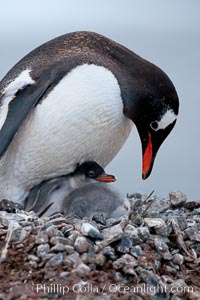
Gentoo penguin, adult tending to its two chicks, on a nest made of small stones. The chicks will remain in the nest for about 30 days after hatching.
Species: Gentoo penguin, Pygoscelis papua
Location: Cuverville Island, Antarctic Peninsula, Antarctica
Image ID: 25553
Species: Gentoo penguin, Pygoscelis papua
Location: Cuverville Island, Antarctic Peninsula, Antarctica
Image ID: 25553
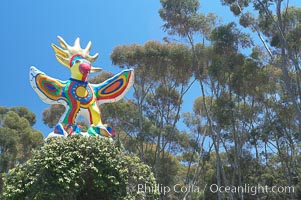
Sun God is a strange artwork, the first in the Stuart Collection at University of California San Diego (UCSD). Commissioned in 1983 and produced by Niki de Sainte Phalle, Sun God has become a landmark on the UCSD campus.
Location: University of California, San Diego, La Jolla
Image ID: 12835
Location: University of California, San Diego, La Jolla
Image ID: 12835
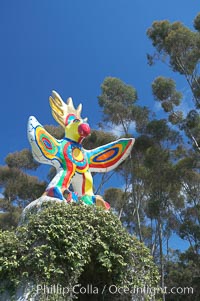
Sun God is a strange artwork, the first in the Stuart Collection at University of California San Diego (UCSD). Commissioned in 1983 and produced by Niki de Sainte Phalle, Sun God has become a landmark on the UCSD campus.
Location: University of California, San Diego, La Jolla
Image ID: 12837
Location: University of California, San Diego, La Jolla
Image ID: 12837
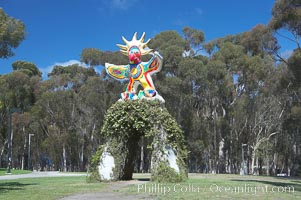
Sun God is a strange artwork, the first in the Stuart Collection at University of California San Diego (UCSD). Commissioned in 1983 and produced by Niki de Sainte Phalle, Sun God has become a landmark on the UCSD campus.
Location: University of California, San Diego, La Jolla
Image ID: 12838
Location: University of California, San Diego, La Jolla
Image ID: 12838
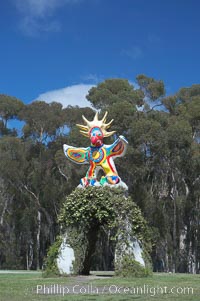
Sun God is a strange artwork, the first in the Stuart Collection at University of California San Diego (UCSD). Commissioned in 1983 and produced by Niki de Sainte Phalle, Sun God has become a landmark on the UCSD campus.
Location: University of California, San Diego, La Jolla
Image ID: 12839
Location: University of California, San Diego, La Jolla
Image ID: 12839
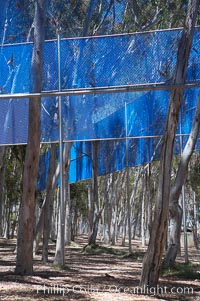
The Giraffe Traps, or what is officially known as Two Running Violet V Forms, was the second piece in the Stuart Collection at University of California San Diego (UCSD). Commissioned in 1983 and produced by Robert Irwin, the odd fence resides in the eucalyptus grove between Mandeville Auditorium and Central Library.
Location: University of California, San Diego, La Jolla
Image ID: 12840
Location: University of California, San Diego, La Jolla
Image ID: 12840
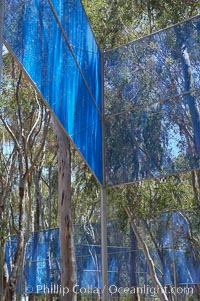
The Giraffe Traps, or what is officially known as Two Running Violet V Forms, was the second piece in the Stuart Collection at University of California San Diego (UCSD). Commissioned in 1983 and produced by Robert Irwin, the odd fence resides in the eucalyptus grove between Mandeville Auditorium and Central Library.
Location: University of California, San Diego, La Jolla
Image ID: 12841
Location: University of California, San Diego, La Jolla
Image ID: 12841
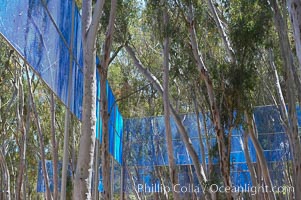
The Giraffe Traps, or what is officially known as Two Running Violet V Forms, was the second piece in the Stuart Collection at University of California San Diego (UCSD). Commissioned in 1983 and produced by Robert Irwin, the odd fence resides in the eucalyptus grove between Mandeville Auditorium and Central Library.
Location: University of California, San Diego, La Jolla
Image ID: 12843
Location: University of California, San Diego, La Jolla
Image ID: 12843
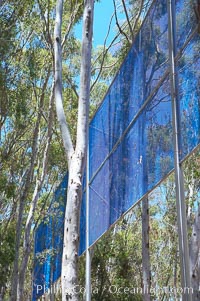
The Giraffe Traps, or what is officially known as Two Running Violet V Forms, was the second piece in the Stuart Collection at University of California San Diego (UCSD). Commissioned in 1983 and produced by Robert Irwin, the odd fence resides in the eucalyptus grove between Mandeville Auditorium and Central Library.
Location: University of California, San Diego, La Jolla
Image ID: 12844
Location: University of California, San Diego, La Jolla
Image ID: 12844
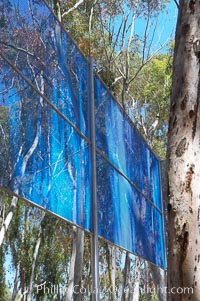
The Giraffe Traps, or what is officially known as Two Running Violet V Forms, was the second piece in the Stuart Collection at University of California San Diego (UCSD). Commissioned in 1983 and produced by Robert Irwin, the odd fence resides in the eucalyptus grove between Mandeville Auditorium and Central Library.
Location: University of California, San Diego, La Jolla
Image ID: 12845
Location: University of California, San Diego, La Jolla
Image ID: 12845
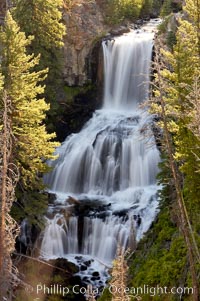
Undine Falls, between Mammoth and Tower in Yellowstone National Park, marks where Lava Creek drops 110 feet in two sections.
Location: Yellowstone National Park, Wyoming
Image ID: 13304
Location: Yellowstone National Park, Wyoming
Image ID: 13304
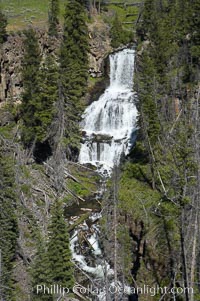
Undine Falls, between Mammoth and Tower in Yellowstone National Park, marks where Lava Creek drops 110 feet in two sections.
Location: Yellowstone National Park, Wyoming
Image ID: 13305
Location: Yellowstone National Park, Wyoming
Image ID: 13305
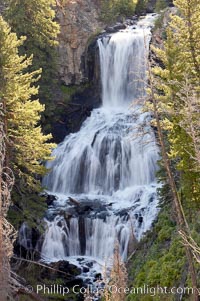
Undine Falls, between Mammoth and Tower in Yellowstone National Park, marks where Lava Creek drops 110 feet in two sections.
Location: Yellowstone National Park, Wyoming
Image ID: 13306
Location: Yellowstone National Park, Wyoming
Image ID: 13306
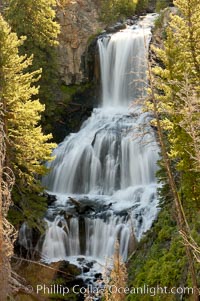
Undine Falls, between Mammoth and Tower in Yellowstone National Park, marks where Lava Creek drops 110 feet in two sections.
Location: Yellowstone National Park, Wyoming
Image ID: 13307
Location: Yellowstone National Park, Wyoming
Image ID: 13307
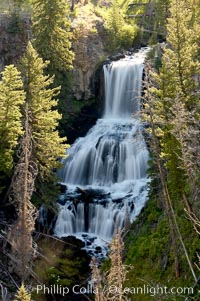
Undine Falls, between Mammoth and Tower in Yellowstone National Park, marks where Lava Creek drops 110 feet in two sections.
Location: Yellowstone National Park, Wyoming
Image ID: 13308
Location: Yellowstone National Park, Wyoming
Image ID: 13308
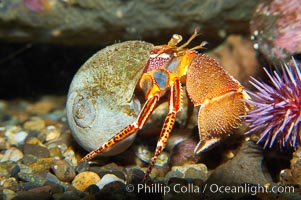
Hermit crab. Hermit crabs wear shells to protect their soft abdomens, which are asymmetrical and curved to fit the spiral shape of their shell. Like all crabs, hermit crabs are decapods; they have five pairs of legs, including a pair of claws. One claw is much larger than the other, the hermit crab uses it for defense and food shredding while it uses the smaller claw for eating. The second and third pairs of legs help the crab walk, and the last two pairs hold the hermit crab in its shell.
Species: Hermit crab, Pagurus
Image ID: 13693
Species: Hermit crab, Pagurus
Image ID: 13693
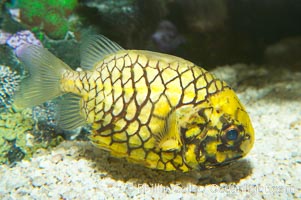
Port-and-starboard light fish. The fish, also called pinecone fish, have two light organs that are housed in pits in their lower jaws. The organs produce a greenish light that allows the fish to feed at night by luring small prey with their dim lights.
Species: Port-and-starboard light fish, Cleidopus gloriamaris
Image ID: 13973
Species: Port-and-starboard light fish, Cleidopus gloriamaris
Image ID: 13973
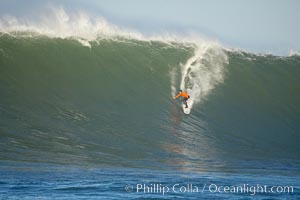
Randy Cone catches the first wave of the Mavericks surf contest two minutes into heat one, February 7, 2006.
Location: Mavericks, Half Moon Bay, California
Image ID: 15362
Location: Mavericks, Half Moon Bay, California
Image ID: 15362
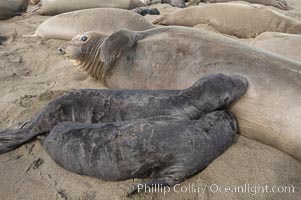
Two pups nurse on an elephant seal mother. In spite of the fact that a female only has enough milk to successfully nurse a single pup to weaning, abandoned pups may try to nurse and the inexperienced mothers may not understand that both pups are doomed. Winter, Central California.
Species: Elephant seal, Mirounga angustirostris
Location: Piedras Blancas, San Simeon, California
Image ID: 15483
Species: Elephant seal, Mirounga angustirostris
Location: Piedras Blancas, San Simeon, California
Image ID: 15483
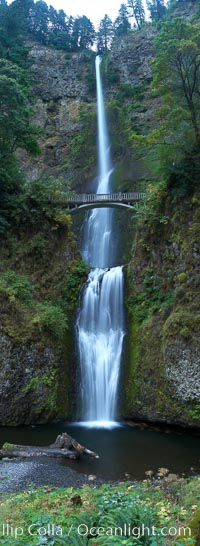
Multnomah Falls. Plummeting 620 feet from its origins on Larch Mountain, Multnomah Falls is the second highest year-round waterfall in the United States. Nearly two million visitors a year come to see this ancient waterfall making it Oregon's number one public destination.
Location: Multnomah Falls, Columbia River Gorge National Scenic Area, Oregon
Image ID: 19314
Panorama dimensions: 12723 x 4662
Location: Multnomah Falls, Columbia River Gorge National Scenic Area, Oregon
Image ID: 19314
Panorama dimensions: 12723 x 4662
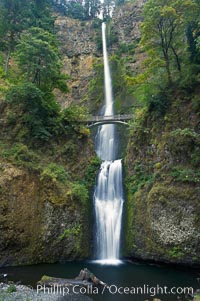
Multnomah Falls. Plummeting 620 feet from its origins on Larch Mountain, Multnomah Falls is the second highest year-round waterfall in the United States. Nearly two million visitors a year come to see this ancient waterfall making it Oregon's number one public destination.
Location: Multnomah Falls, Columbia River Gorge National Scenic Area, Oregon
Image ID: 19315
Location: Multnomah Falls, Columbia River Gorge National Scenic Area, Oregon
Image ID: 19315
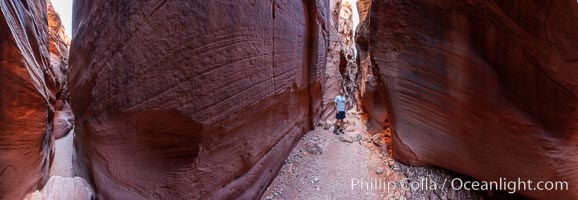
A hiker considers the Wire Pass narrows. This exceeding narrow slot canyons, in some places only two feet wide, was formed by water erosion which cuts slots deep into the surrounding sandstone plateau. This is a panorama created from eleven individual photographs.
Location: Wire Pass, Paria Canyon-Vermilion Cliffs Wilderness, Arizona
Image ID: 20707
Panorama dimensions: 4006 x 14307
Location: Wire Pass, Paria Canyon-Vermilion Cliffs Wilderness, Arizona
Image ID: 20707
Panorama dimensions: 4006 x 14307
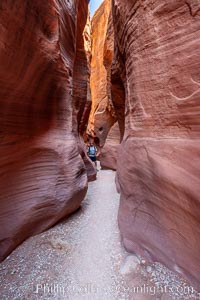
A hiker walking through the Wire Pass narrows. This exceedingly narrow slot canyon, in some places only two feet wide, is formed by water erosion which cuts slots deep into the surrounding sandstone plateau.
Location: Wire Pass, Paria Canyon-Vermilion Cliffs Wilderness, Arizona
Image ID: 20714
Location: Wire Pass, Paria Canyon-Vermilion Cliffs Wilderness, Arizona
Image ID: 20714
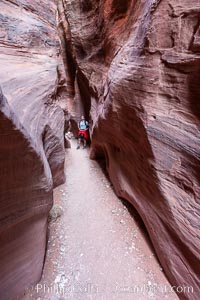
A hiker walking through the Wire Pass narrows. This exceedingly narrow slot canyon, in some places only two feet wide, is formed by water erosion which cuts slots deep into the surrounding sandstone plateau.
Location: Wire Pass, Paria Canyon-Vermilion Cliffs Wilderness, Arizona
Image ID: 20718
Location: Wire Pass, Paria Canyon-Vermilion Cliffs Wilderness, Arizona
Image ID: 20718
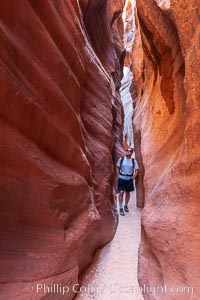
A hiker walking through the Wire Pass narrows. This exceedingly narrow slot canyon, in some places only two feet wide, is formed by water erosion which cuts slots deep into the surrounding sandstone plateau.
Location: Wire Pass, Paria Canyon-Vermilion Cliffs Wilderness, Arizona
Image ID: 20725
Location: Wire Pass, Paria Canyon-Vermilion Cliffs Wilderness, Arizona
Image ID: 20725
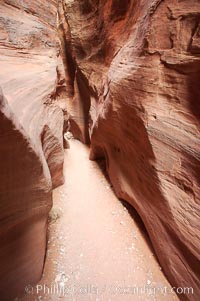
The Wire Pass narrows. This exceedingly narrow slot canyon, in some places only two feet wide, is formed by water erosion which cuts slots deep into the surrounding sandstone plateau.
Location: Wire Pass, Paria Canyon-Vermilion Cliffs Wilderness, Arizona
Image ID: 20726
Location: Wire Pass, Paria Canyon-Vermilion Cliffs Wilderness, Arizona
Image ID: 20726
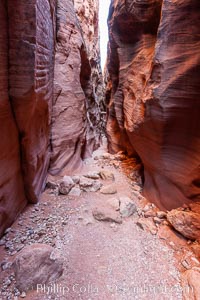
A hiker walking through the Wire Pass narrows. This exceedingly narrow slot canyon, in some places only two feet wide, is formed by water erosion which cuts slots deep into the surrounding sandstone plateau.
Location: Wire Pass, Paria Canyon-Vermilion Cliffs Wilderness, Arizona
Image ID: 20727
Location: Wire Pass, Paria Canyon-Vermilion Cliffs Wilderness, Arizona
Image ID: 20727
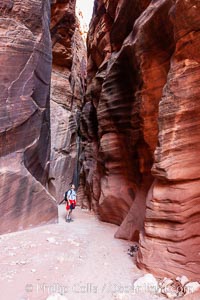
A hiker walking through the Wire Pass narrows. This exceedingly narrow slot canyon, in some places only two feet wide, is formed by water erosion which cuts slots deep into the surrounding sandstone plateau.
Location: Wire Pass, Paria Canyon-Vermilion Cliffs Wilderness, Arizona
Image ID: 20728
Location: Wire Pass, Paria Canyon-Vermilion Cliffs Wilderness, Arizona
Image ID: 20728
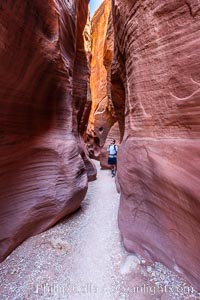
A hiker walking through the Wire Pass narrows. This exceedingly narrow slot canyon, in some places only two feet wide, is formed by water erosion which cuts slots deep into the surrounding sandstone plateau.
Location: Wire Pass, Paria Canyon-Vermilion Cliffs Wilderness, Arizona
Image ID: 20773
Location: Wire Pass, Paria Canyon-Vermilion Cliffs Wilderness, Arizona
Image ID: 20773