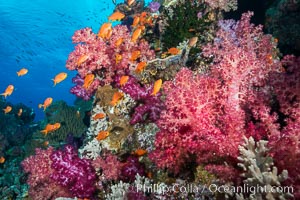
Dendronephthya soft corals and schooling Anthias fishes, feeding on plankton in strong ocean currents over a pristine coral reef. Fiji is known as the soft coral capitlal of the world.
Species: Anthias, Dendronephthya soft coral, Dendronephthya, Pseudanthias
Location: Fiji
Image ID: 31433
Species: Anthias, Dendronephthya soft coral, Dendronephthya, Pseudanthias
Location: Fiji
Image ID: 31433
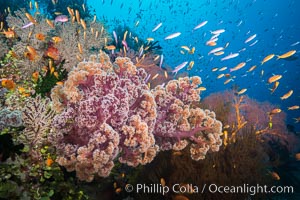
Dendronephthya soft corals and schooling Anthias fishes, feeding on plankton in strong ocean currents over a pristine coral reef. Fiji is known as the soft coral capitlal of the world.
Species: Anthias, Dendronephthya soft coral, Dendronephthya, Pseudanthias
Location: Fiji
Image ID: 31436
Species: Anthias, Dendronephthya soft coral, Dendronephthya, Pseudanthias
Location: Fiji
Image ID: 31436
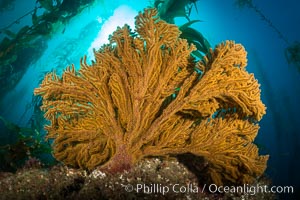
Golden gorgonian on underwater rocky reef, amid kelp forest, Catalina Island. The golden gorgonian is a filter-feeding temperate colonial species that lives on the rocky bottom at depths between 50 to 200 feet deep. Each individual polyp is a distinct animal, together they secrete calcium that forms the structure of the colony. Gorgonians are oriented at right angles to prevailing water currents to capture plankton drifting by.
Species: California golden gorgonian, Muricea californica
Location: Catalina Island, California
Image ID: 34219
Species: California golden gorgonian, Muricea californica
Location: Catalina Island, California
Image ID: 34219
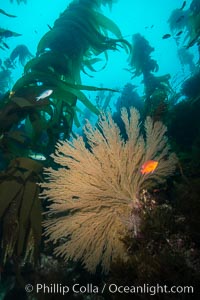
Garibaldi and California golden gorgonian on underwater rocky reef, San Clemente Island. The golden gorgonian is a filter-feeding temperate colonial species that lives on the rocky bottom at depths between 50 to 200 feet deep. Each individual polyp is a distinct animal, together they secrete calcium that forms the structure of the colony. Gorgonians are oriented at right angles to prevailing water currents to capture plankton drifting by.
Species: California golden gorgonian, Garibaldi, Hypsypops rubicundus, Muricea californica
Location: San Clemente Island, California
Image ID: 30864
Species: California golden gorgonian, Garibaldi, Hypsypops rubicundus, Muricea californica
Location: San Clemente Island, California
Image ID: 30864
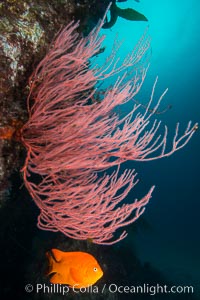
Garibaldi and red gorgonian on rocky reef, below kelp forest, underwater. The red gorgonian is a filter-feeding temperate colonial species that lives on the rocky bottom at depths between 50 to 200 feet deep. Gorgonians are oriented at right angles to prevailing water currents to capture plankton drifting by.
Species: Garibaldi, Red gorgonian, Hypsypops rubicundus, Leptogorgia chilensischilensis, Lophogorgia chilensis
Location: San Clemente Island, California
Image ID: 30870
Species: Garibaldi, Red gorgonian, Hypsypops rubicundus, Leptogorgia chilensischilensis, Lophogorgia chilensis
Location: San Clemente Island, California
Image ID: 30870
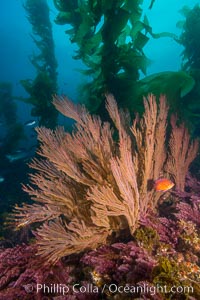
California golden gorgonian on underwater rocky reef below kelp forest, San Clemente Island. The golden gorgonian is a filter-feeding temperate colonial species that lives on the rocky bottom at depths between 50 to 200 feet deep. Each individual polyp is a distinct animal, together they secrete calcium that forms the structure of the colony. Gorgonians are oriented at right angles to prevailing water currents to capture plankton drifting by, San Clemente Island.
Species: California golden gorgonian, Muricea californica
Location: San Clemente Island, California
Image ID: 30909
Species: California golden gorgonian, Muricea californica
Location: San Clemente Island, California
Image ID: 30909
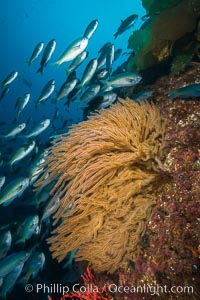
Blacksmith Chromis and California golden gorgonian on underwater rocky reef, San Clemente Island. The golden gorgonian is a filter-feeding temperate colonial species that lives on the rocky bottom at depths between 50 to 200 feet deep. Each individual polyp is a distinct animal, together they secrete calcium that forms the structure of the colony. Gorgonians are oriented at right angles to prevailing water currents to capture plankton drifting by.
Species: Blacksmith, California golden gorgonian, Chromis punctipinnis, Muricea californica
Location: San Clemente Island, California
Image ID: 30956
Species: Blacksmith, California golden gorgonian, Chromis punctipinnis, Muricea californica
Location: San Clemente Island, California
Image ID: 30956
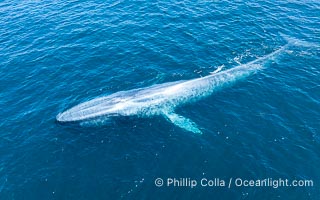
Aerial photo of blue whale near San Diego. This enormous blue whale glides at the surface of the ocean, resting and breathing before it dives to feed on subsurface krill.
Species: Blue whale, Balaenoptera musculus
Location: San Diego, California
Image ID: 40610
Species: Blue whale, Balaenoptera musculus
Location: San Diego, California
Image ID: 40610
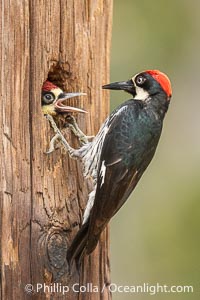
Acorn Woodpecker Adult Feeding Chick at the Nest, Lake Hodges.
Species: Acorn Woodpecker, Melanerpes formicivorus
Location: Lake Hodges, San Diego, California
Image ID: 39396
Species: Acorn Woodpecker, Melanerpes formicivorus
Location: Lake Hodges, San Diego, California
Image ID: 39396
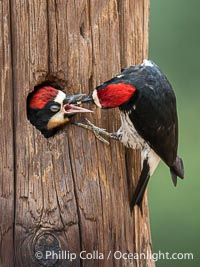
Acorn Woodpecker Adult Feeding Chick at Nest.
Species: Acorn Woodpecker, Melanerpes formicivorus
Location: Lake Hodges, San Diego, California
Image ID: 39413
Species: Acorn Woodpecker, Melanerpes formicivorus
Location: Lake Hodges, San Diego, California
Image ID: 39413
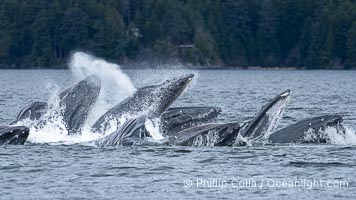
Humpback whales bubblenet feeding in Southeast Alaska. Coordinated bubble-net feeding is a specialized cooperative feeding technique used by humpback whales, where a group of whales works together to trap fish or krill in a net of bubbles then lunge through to feed.
Species: Humpback whale, Megaptera novaeangliae
Location: Sitka Sound, Alaska
Image ID: 40923
Species: Humpback whale, Megaptera novaeangliae
Location: Sitka Sound, Alaska
Image ID: 40923
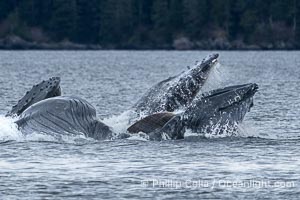
Humpback whales bubblenet feeding in Southeast Alaska. Coordinated bubble-net feeding is a specialized cooperative feeding technique used by humpback whales, where a group of whales works together to trap fish or krill in a net of bubbles then lunge through to feed.
Species: Humpback whale, Megaptera novaeangliae
Location: Sitka Sound, Alaska
Image ID: 40924
Species: Humpback whale, Megaptera novaeangliae
Location: Sitka Sound, Alaska
Image ID: 40924
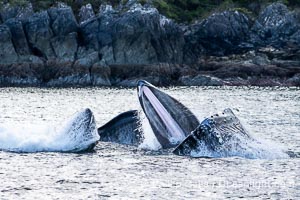
Humpback whales bubblenet feeding in Southeast Alaska. Coordinated bubble-net feeding is a specialized cooperative feeding technique used by humpback whales, where a group of whales works together to trap fish or krill in a net of bubbles then lunge through to feed.
Species: Humpback whale, Megaptera novaeangliae
Location: Sitka Sound, Alaska
Image ID: 40925
Species: Humpback whale, Megaptera novaeangliae
Location: Sitka Sound, Alaska
Image ID: 40925
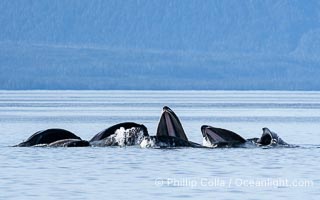
Humpback whales bubblenet feeding in Southeast Alaska. Coordinated bubble-net feeding is a specialized cooperative feeding technique used by humpback whales, where a group of whales works together to trap fish or krill in a net of bubbles then lunge through to feed.
Species: Humpback whale, Megaptera novaeangliae
Location: Sitka Sound, Alaska
Image ID: 40926
Species: Humpback whale, Megaptera novaeangliae
Location: Sitka Sound, Alaska
Image ID: 40926
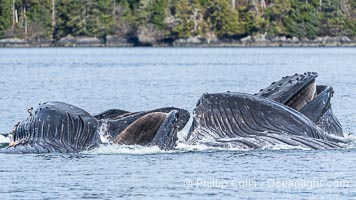
Humpback whales bubblenet feeding in Southeast Alaska. Coordinated bubble-net feeding is a specialized cooperative feeding technique used by humpback whales, where a group of whales works together to trap fish or krill in a net of bubbles then lunge through to feed.
Species: Humpback whale, Megaptera novaeangliae
Location: Sitka Sound, Alaska
Image ID: 40927
Species: Humpback whale, Megaptera novaeangliae
Location: Sitka Sound, Alaska
Image ID: 40927
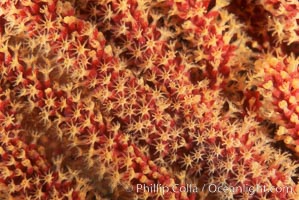
California Golden gorgonian polyps. The golden gorgonian is a colonial organism composed of thousands of tiny polyps. Each polyp secretes calcium which accumulates to form the structure of the colony. The fan-shaped gorgonian is oriented perpendicular to prevailing ocean currents to better enable to filter-feeding polyps to capture passing plankton and detritus passing by.
Species: California golden gorgonian, Muricea californica
Location: San Clemente Island, California
Image ID: 03481
Species: California golden gorgonian, Muricea californica
Location: San Clemente Island, California
Image ID: 03481
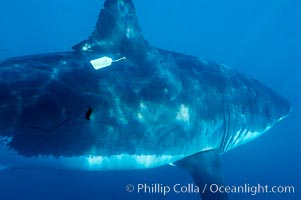
A great white shark bearing a white plastic researcher's identification ID tag near its dorsal fin swims through the clear waters of Isla Guadalupe, far offshore of the Pacific Coast of Baja California. Guadalupe Island is host to a concentration of large great white sharks, which visit the island to feed on pinnipeds and tuna.
Species: Great white shark, Carcharodon carcharias
Location: Guadalupe Island (Isla Guadalupe), Baja California, Mexico
Image ID: 07739
Species: Great white shark, Carcharodon carcharias
Location: Guadalupe Island (Isla Guadalupe), Baja California, Mexico
Image ID: 07739
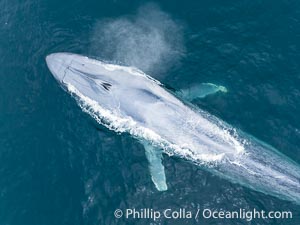
Aerial photo of blue whale exhalilng with a giant blow at the ocean surface near San Diego. This enormous blue whale glides at the surface of the ocean, resting and breathing before it dives to feed on subsurface krill.
Species: Blue whale, Balaenoptera musculus
Location: San Diego, California
Image ID: 39424
Species: Blue whale, Balaenoptera musculus
Location: San Diego, California
Image ID: 39424
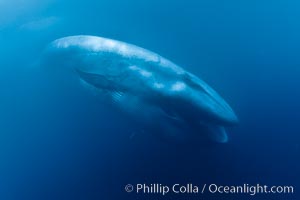
Blue whale feeding on krill underwater closeup photo. A picture of a blue whale with its throat pleats inflated with a mouthful of krill.
Species: Blue whale, Balaenoptera musculus
Location: California
Image ID: 27309
Species: Blue whale, Balaenoptera musculus
Location: California
Image ID: 27309
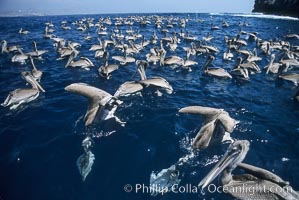
Brown pelicans feeding en masse on clouds of krill, Coronado Islands, Mexico.
Species: Brown pelican, Pelecanus occidentalis
Location: Coronado Islands (Islas Coronado), Baja California, Mexico
Image ID: 03171
Species: Brown pelican, Pelecanus occidentalis
Location: Coronado Islands (Islas Coronado), Baja California, Mexico
Image ID: 03171
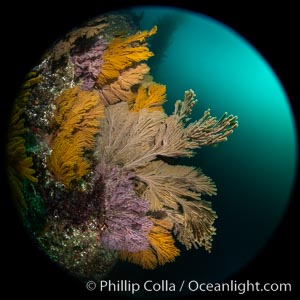
Brown gorgonian and California golden gorgonian on underwater rocky reef below kelp forest, Catalina Island. Gorgonians are filter-feeding temperate colonial species that lives on the rocky bottom at depths between 50 to 200 feet deep. Each individual polyp is a distinct animal, together they secrete calcium that forms the structure of the colony. Gorgonians are oriented at right angles to prevailing water currents to capture plankton drifting by.
Species: Brown gorgonian, California golden gorgonian, Muricea californica, Muricea fruticosa
Location: Catalina Island, California
Image ID: 37292
Species: Brown gorgonian, California golden gorgonian, Muricea californica, Muricea fruticosa
Location: Catalina Island, California
Image ID: 37292
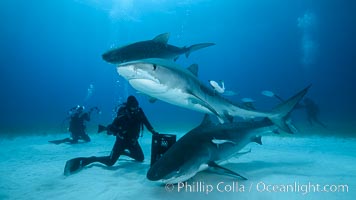
Expert hand feeds multiple tiger sharks in the Bahamas.
Species: Tiger shark, Galeocerdo cuvier
Location: Bahamas
Image ID: 31899
Species: Tiger shark, Galeocerdo cuvier
Location: Bahamas
Image ID: 31899
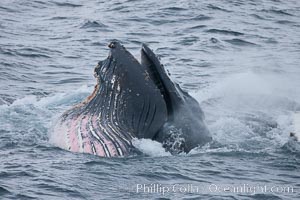
Humpback whale lunge feeding on Antarctic krill, with mouth open and baleen visible. The humbpack's pink throat grooves are seen as its pleated throat becomes fully distended as the whale fills its mouth with krill and water. The water will be pushed out, while the baleen strains and retains the small krill.
Species: Humpback whale, Megaptera novaeangliae
Location: Gerlache Strait, Antarctic Peninsula, Antarctica
Image ID: 25660
Species: Humpback whale, Megaptera novaeangliae
Location: Gerlache Strait, Antarctic Peninsula, Antarctica
Image ID: 25660
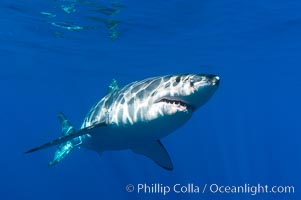
A great white shark swims through the clear waters of Isla Guadalupe, far offshore of the Pacific Coast of Baja California. Guadalupe Island is host to a concentration of large great white sharks, which visit the island to feed on pinnipeds and tuna.
Species: Great white shark, Carcharodon carcharias
Location: Guadalupe Island (Isla Guadalupe), Baja California, Mexico
Image ID: 07667
Species: Great white shark, Carcharodon carcharias
Location: Guadalupe Island (Isla Guadalupe), Baja California, Mexico
Image ID: 07667
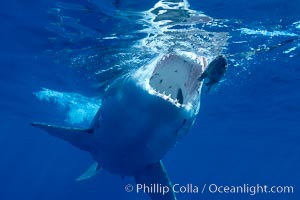
A great white shark swims through the clear waters of Isla Guadalupe, far offshore of the Pacific Coast of Baja California. Guadalupe Island is host to a concentration of large great white sharks, which visit the island to feed on pinnipeds and tuna.
Species: Great white shark, Carcharodon carcharias
Location: Guadalupe Island (Isla Guadalupe), Baja California, Mexico
Image ID: 07733
Species: Great white shark, Carcharodon carcharias
Location: Guadalupe Island (Isla Guadalupe), Baja California, Mexico
Image ID: 07733
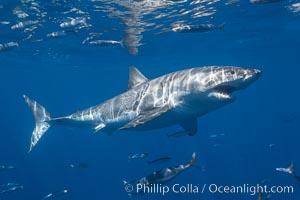
A great white shark swims through the clear waters of Isla Guadalupe, far offshore of the Pacific Coast of Mexico's Baja California. Guadalupe Island is host to a concentration of large great white sharks, which visit the island to feed on pinnipeds and use it as a staging area before journeying farther into the Pacific ocean.
Species: Great white shark, Carcharodon carcharias
Location: Guadalupe Island (Isla Guadalupe), Baja California, Mexico
Image ID: 19453
Species: Great white shark, Carcharodon carcharias
Location: Guadalupe Island (Isla Guadalupe), Baja California, Mexico
Image ID: 19453
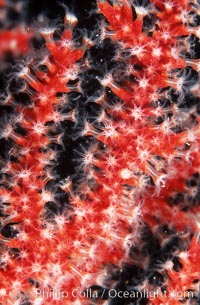
Red gorgonian polyps. The red gorgonian is a colonial organism composed of thousands of tiny polyps. Each polyp secretes calcium which accumulates to form the structure of the colony. The fan-shaped gorgonian is oriented perpendicular to prevailing ocean currents to better enable to filter-feeding polyps to capture passing plankton and detritus passing by.
Species: Red gorgonian, Leptogorgia chilensis, Lophogorgia chilensis
Location: San Clemente Island, California
Image ID: 03480
Species: Red gorgonian, Leptogorgia chilensis, Lophogorgia chilensis
Location: San Clemente Island, California
Image ID: 03480
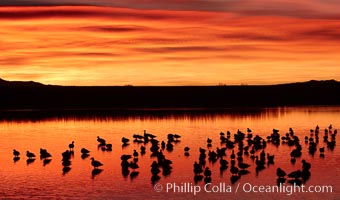
Snow geese rest on a still pond in rich orange and yellow sunrise light. These geese have spent their night's rest on the main empoundment and will leave around sunrise to feed in nearby corn fields.
Species: Snow goose, Chen caerulescens
Location: Bosque del Apache National Wildlife Refuge, Socorro, New Mexico
Image ID: 21802
Species: Snow goose, Chen caerulescens
Location: Bosque del Apache National Wildlife Refuge, Socorro, New Mexico
Image ID: 21802
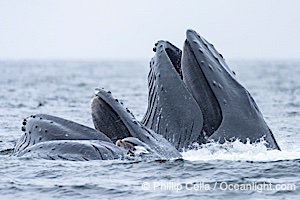
Humpback whales surface together during coordinated bubble-net feeding in Southeast Alaska. The whales use bubbles, sound, and movement to corral fish before capturing them in their open mouths.
Species: Humpback whale, Megaptera novaeangliae
Location: Sitka Sound, Alaska
Image ID: 41605
Species: Humpback whale, Megaptera novaeangliae
Location: Sitka Sound, Alaska
Image ID: 41605
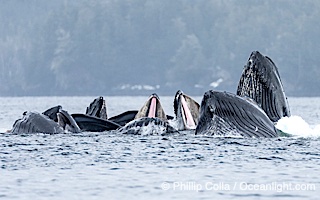
Humpback whales surface together during coordinated bubble-net feeding in Southeast Alaska. The whales use bubbles, sound, and movement to corral fish before capturing them in their open mouths.
Species: Humpback whale, Megaptera novaeangliae
Location: Sitka Sound, Alaska
Image ID: 41607
Species: Humpback whale, Megaptera novaeangliae
Location: Sitka Sound, Alaska
Image ID: 41607