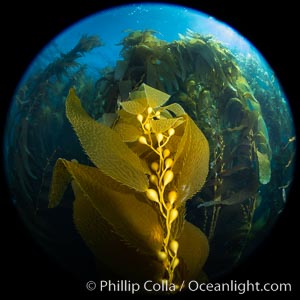
Kelp fronds and pneumatocysts. Pneumatocysts, gas-filled bladders, float the kelp off the ocean bottom toward the surface and sunlight, where the leaf-like blades and stipes of the kelp plant grow fastest. Catalina Island, California.
Species: Giant kelp, Macrocystis pyrifera
Location: Catalina Island, California
Image ID: 37278
Species: Giant kelp, Macrocystis pyrifera
Location: Catalina Island, California
Image ID: 37278
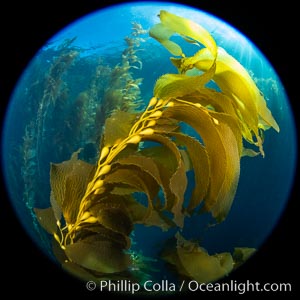
Kelp fronds and pneumatocysts. Pneumatocysts, gas-filled bladders, float the kelp off the ocean bottom toward the surface and sunlight, where the leaf-like blades and stipes of the kelp plant grow fastest. Catalina Island, California.
Species: Giant kelp, Macrocystis pyrifera
Location: Catalina Island, California
Image ID: 37281
Species: Giant kelp, Macrocystis pyrifera
Location: Catalina Island, California
Image ID: 37281
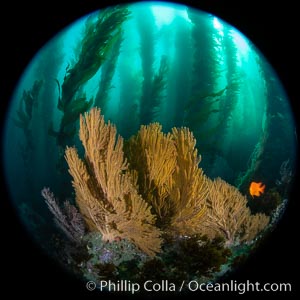
Golden gorgonian on underwater rocky reef, amid kelp forest, Catalina Island. The golden gorgonian is a filter-feeding temperate colonial species that lives on the rocky bottom at depths between 50 to 200 feet deep. Each individual polyp is a distinct animal, together they secrete calcium that forms the structure of the colony. Gorgonians are oriented at right angles to prevailing water currents to capture plankton drifting by.
Species: Giant kelp, California golden gorgonian, Macrocystis pyrifera, Muricea californica
Location: Catalina Island, California
Image ID: 37298
Species: Giant kelp, California golden gorgonian, Macrocystis pyrifera, Muricea californica
Location: Catalina Island, California
Image ID: 37298
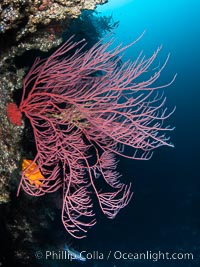
Red gorgonian on rocky reef, below kelp forest, underwater. The red gorgonian is a filter-feeding temperate colonial species that lives on the rocky bottom at depths between 50 to 200 feet deep. Gorgonians are typically oriented at right angles to prevailing water currents to capture plankton drifting by.
Species: Red gorgonian, Leptogorgia chilensis, Lophogorgia chilensis
Location: San Clemente Island, California
Image ID: 38519
Species: Red gorgonian, Leptogorgia chilensis, Lophogorgia chilensis
Location: San Clemente Island, California
Image ID: 38519
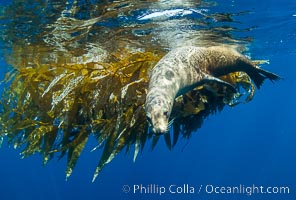
California sea lion on drift kelp paddy, underwater. This adult female California sea lion was hanging out underneath a paddy of drift kelp, well offshore the coastline of San Diego.
Species: California sea lion, Zalophus californianus
Location: San Diego, California
Image ID: 38541
Species: California sea lion, Zalophus californianus
Location: San Diego, California
Image ID: 38541
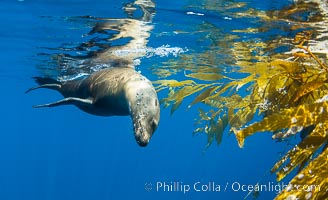
California sea lion on drift kelp paddy, underwater. This adult female California sea lion was hanging out underneath a paddy of drift kelp, well offshore the coastline of San Diego.
Species: California sea lion, Zalophus californianus
Location: San Diego, California
Image ID: 38542
Species: California sea lion, Zalophus californianus
Location: San Diego, California
Image ID: 38542
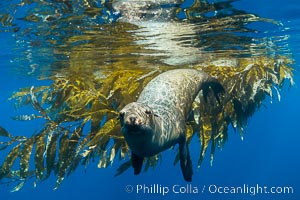
California sea lion on drift kelp paddy, underwater. This adult female California sea lion was hanging out underneath a paddy of drift kelp, well offshore the coastline of San Diego.
Species: California sea lion, Zalophus californianus
Location: San Diego, California
Image ID: 38543
Species: California sea lion, Zalophus californianus
Location: San Diego, California
Image ID: 38543
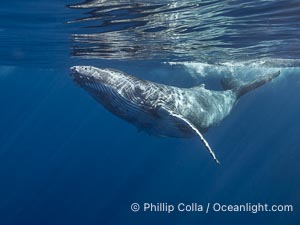
Humpback whale calf swims up to the camera, offshore of Moorea, French Polynesia.
Species: Humpback whale, Megaptera novaeangliae
Location: Moorea, French Polynesia, France
Image ID: 41390
Species: Humpback whale, Megaptera novaeangliae
Location: Moorea, French Polynesia, France
Image ID: 41390
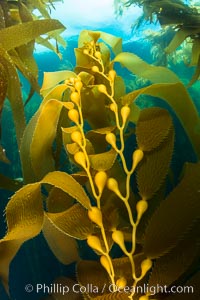
Kelp fronds and pneumatocysts. Pneumatocysts, gas-filled bladders, float the kelp plant off the ocean bottom toward the surface and sunlight, where the leaf-like blades and stipes of the kelp plant grow fastest. Giant kelp can grow up to 2' in a single day given optimal conditions. Epic submarine forests of kelp grow throughout California's Southern Channel Islands.
Species: Giant Kelp, Macrocystis pyrifera
Location: Catalina Island, California
Image ID: 34166
Species: Giant Kelp, Macrocystis pyrifera
Location: Catalina Island, California
Image ID: 34166
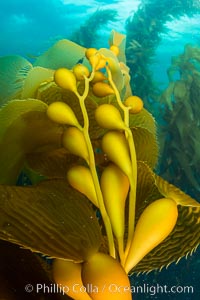
Kelp fronds and pneumatocysts. Pneumatocysts, gas-filled bladders, float the kelp plant off the ocean bottom toward the surface and sunlight, where the leaf-like blades and stipes of the kelp plant grow fastest. Giant kelp can grow up to 2' in a single day given optimal conditions. Epic submarine forests of kelp grow throughout California's Southern Channel Islands.
Species: Giant Kelp, Macrocystis pyrifera
Location: Catalina Island, California
Image ID: 34167
Species: Giant Kelp, Macrocystis pyrifera
Location: Catalina Island, California
Image ID: 34167
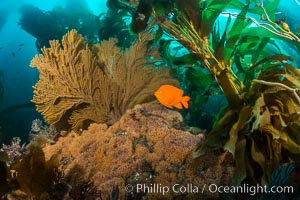
Garibaldi and golden gorgonian, bryozoans, with an underwater forest of giant kelp rising in the background, underwater.
Species: Garibaldi, California Golden Gorgonian, Hypsypops rubicundus, Muricea californica
Location: Catalina Island, California
Image ID: 34169
Species: Garibaldi, California Golden Gorgonian, Hypsypops rubicundus, Muricea californica
Location: Catalina Island, California
Image ID: 34169
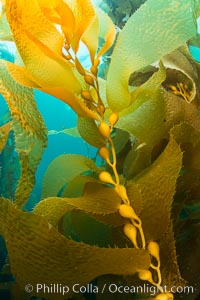
Kelp fronds and pneumatocysts. Pneumatocysts, gas-filled bladders, float the kelp plant off the ocean bottom toward the surface and sunlight, where the leaf-like blades and stipes of the kelp plant grow fastest. Giant kelp can grow up to 2' in a single day given optimal conditions. Epic submarine forests of kelp grow throughout California's Southern Channel Islands.
Species: Giant Kelp, Macrocystis pyrifera
Location: Catalina Island, California
Image ID: 34173
Species: Giant Kelp, Macrocystis pyrifera
Location: Catalina Island, California
Image ID: 34173
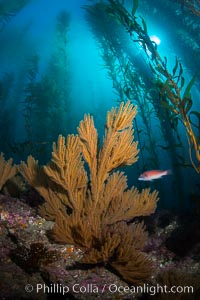
Golden gorgonian on underwater rocky reef, amid kelp forest, Catalina Island. The golden gorgonian is a filter-feeding temperate colonial species that lives on the rocky bottom at depths between 50 to 200 feet deep. Each individual polyp is a distinct animal, together they secrete calcium that forms the structure of the colony. Gorgonians are oriented at right angles to prevailing water currents to capture plankton drifting by.
Species: California golden gorgonian, Muricea californica
Location: Catalina Island, California
Image ID: 34214
Species: California golden gorgonian, Muricea californica
Location: Catalina Island, California
Image ID: 34214
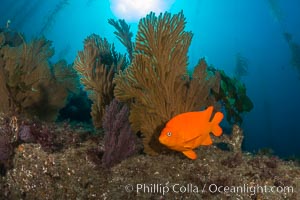
Garibaldi and golden gorgonian, with a underwater forest of giant kelp rising in the background, underwater.
Species: California Golden Gorgonian, Garibaldi, Muricea californica, Hypsypops rubicundus
Location: Catalina Island, California
Image ID: 34216
Species: California Golden Gorgonian, Garibaldi, Muricea californica, Hypsypops rubicundus
Location: Catalina Island, California
Image ID: 34216
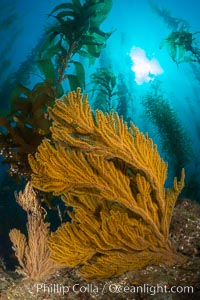
Golden gorgonian on underwater rocky reef, amid kelp forest, Catalina Island. The golden gorgonian is a filter-feeding temperate colonial species that lives on the rocky bottom at depths between 50 to 200 feet deep. Each individual polyp is a distinct animal, together they secrete calcium that forms the structure of the colony. Gorgonians are oriented at right angles to prevailing water currents to capture plankton drifting by.
Species: California golden gorgonian, Muricea californica
Location: Catalina Island, California
Image ID: 34217
Species: California golden gorgonian, Muricea californica
Location: Catalina Island, California
Image ID: 34217
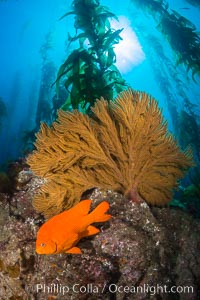
Garibaldi and golden gorgonian, with a underwater forest of giant kelp rising in the background, underwater.
Species: California Golden Gorgonian, Garibaldi, Muricea californica, Hypsypops rubicundus
Location: Catalina Island, California
Image ID: 34218
Species: California Golden Gorgonian, Garibaldi, Muricea californica, Hypsypops rubicundus
Location: Catalina Island, California
Image ID: 34218
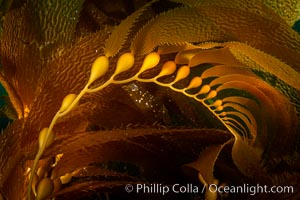
Kelp fronds and pneumatocysts. Pneumatocysts, gas-filled bladders, float the kelp plant off the ocean bottom toward the surface and sunlight, where the leaf-like blades and stipes of the kelp plant grow fastest. Giant kelp can grow up to 2' in a single day given optimal conditions. Epic submarine forests of kelp grow throughout California's Southern Channel Islands.
Species: Giant kelp, Macrocystis pyrifera
Location: San Clemente Island, California
Image ID: 34599
Species: Giant kelp, Macrocystis pyrifera
Location: San Clemente Island, California
Image ID: 34599
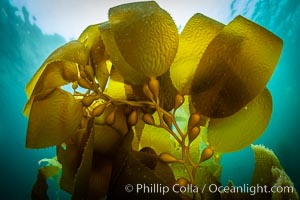
Kelp fronds and pneumatocysts. Pneumatocysts, gas-filled bladders, float the kelp plant off the ocean bottom toward the surface and sunlight, where the leaf-like blades and stipes of the kelp plant grow fastest. Giant kelp can grow up to 2' in a single day given optimal conditions. Epic submarine forests of kelp grow throughout California's Southern Channel Islands.
Species: Giant kelp, Macrocystis pyrifera
Location: San Clemente Island, California
Image ID: 34600
Species: Giant kelp, Macrocystis pyrifera
Location: San Clemente Island, California
Image ID: 34600
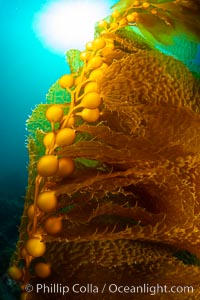
Kelp fronds and pneumatocysts. Pneumatocysts, gas-filled bladders, float the kelp plant off the ocean bottom toward the surface and sunlight, where the leaf-like blades and stipes of the kelp plant grow fastest. Giant kelp can grow up to 2' in a single day given optimal conditions. Epic submarine forests of kelp grow throughout California's Southern Channel Islands.
Species: Giant kelp, Macrocystis pyrifera
Location: San Clemente Island, California
Image ID: 34601
Species: Giant kelp, Macrocystis pyrifera
Location: San Clemente Island, California
Image ID: 34601
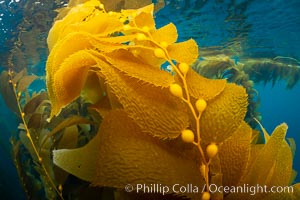
Kelp fronds and pneumatocysts. Pneumatocysts, gas-filled bladders, float the kelp plant off the ocean bottom toward the surface and sunlight, where the leaf-like blades and stipes of the kelp plant grow fastest. Giant kelp can grow up to 2' in a single day given optimal conditions. Epic submarine forests of kelp grow throughout California's Southern Channel Islands.
Species: Giant kelp, Macrocystis pyrifera
Location: San Clemente Island, California
Image ID: 34602
Species: Giant kelp, Macrocystis pyrifera
Location: San Clemente Island, California
Image ID: 34602
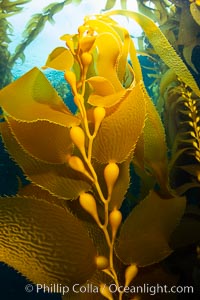
Kelp fronds and pneumatocysts. Pneumatocysts, gas-filled bladders, float the kelp plant off the ocean bottom toward the surface and sunlight, where the leaf-like blades and stipes of the kelp plant grow fastest. Giant kelp can grow up to 2' in a single day given optimal conditions. Epic submarine forests of kelp grow throughout California's Southern Channel Islands.
Species: Giant kelp, Macrocystis pyrifera
Location: San Clemente Island, California
Image ID: 34603
Species: Giant kelp, Macrocystis pyrifera
Location: San Clemente Island, California
Image ID: 34603
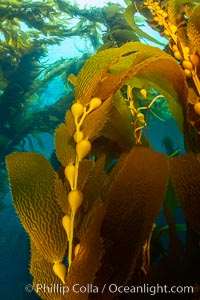
Kelp fronds and pneumatocysts. Pneumatocysts, gas-filled bladders, float the kelp plant off the ocean bottom toward the surface and sunlight, where the leaf-like blades and stipes of the kelp plant grow fastest. Giant kelp can grow up to 2' in a single day given optimal conditions. Epic submarine forests of kelp grow throughout California's Southern Channel Islands.
Species: Giant kelp, Macrocystis pyrifera
Location: San Clemente Island, California
Image ID: 34604
Species: Giant kelp, Macrocystis pyrifera
Location: San Clemente Island, California
Image ID: 34604
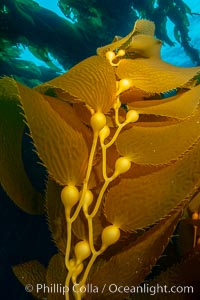
Kelp fronds and pneumatocysts. Pneumatocysts, gas-filled bladders, float the kelp plant off the ocean bottom toward the surface and sunlight, where the leaf-like blades and stipes of the kelp plant grow fastest. Giant kelp can grow up to 2' in a single day given optimal conditions. Epic submarine forests of kelp grow throughout California's Southern Channel Islands.
Species: Giant kelp, Macrocystis pyrifera
Location: San Clemente Island, California
Image ID: 34605
Species: Giant kelp, Macrocystis pyrifera
Location: San Clemente Island, California
Image ID: 34605
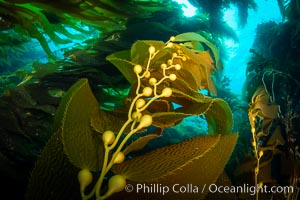
Kelp fronds and pneumatocysts. Pneumatocysts, gas-filled bladders, float the kelp plant off the ocean bottom toward the surface and sunlight, where the leaf-like blades and stipes of the kelp plant grow fastest. Giant kelp can grow up to 2' in a single day given optimal conditions. Epic submarine forests of kelp grow throughout California's Southern Channel Islands.
Species: Giant kelp, Macrocystis pyrifera
Location: San Clemente Island, California
Image ID: 34606
Species: Giant kelp, Macrocystis pyrifera
Location: San Clemente Island, California
Image ID: 34606
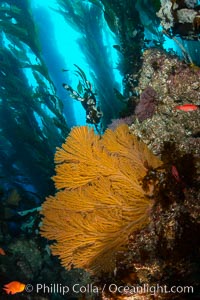
California golden gorgonian on underwater rocky reef, Catalina Island. The golden gorgonian is a filter-feeding temperate colonial species that lives on the rocky bottom at depths between 50 to 200 feet deep. Each individual polyp is a distinct animal, together they secrete calcium that forms the structure of the colony. Gorgonians are oriented at right angles to prevailing water currents to capture plankton drifting by. Catalina Island, California, USA.
Species: California Golden Gorgonian, Garibaldi, Muricea californica, Hypsypops rubicundus
Location: Catalina Island, California
Image ID: 34622
Species: California Golden Gorgonian, Garibaldi, Muricea californica, Hypsypops rubicundus
Location: Catalina Island, California
Image ID: 34622
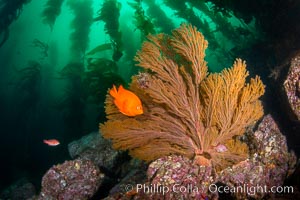
California golden gorgonian on underwater rocky reef, Catalina Island. The golden gorgonian is a filter-feeding temperate colonial species that lives on the rocky bottom at depths between 50 to 200 feet deep. Each individual polyp is a distinct animal, together they secrete calcium that forms the structure of the colony. Gorgonians are oriented at right angles to prevailing water currents to capture plankton drifting by. Catalina Island, California, USA.
Species: California Golden Gorgonian, Garibaldi, Muricea californica, Hypsypops rubicundus
Location: Catalina Island, California
Image ID: 34624
Species: California Golden Gorgonian, Garibaldi, Muricea californica, Hypsypops rubicundus
Location: Catalina Island, California
Image ID: 34624
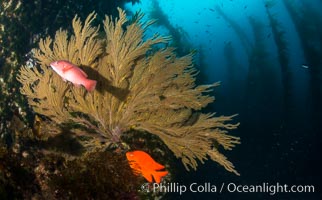
California golden gorgonian, Garibaldi and Sheephead wrasse fishes on rocky reef, below kelp forest, underwater. The golden gorgonian is a filter-feeding temperate colonial species that lives on the rocky bottom at depths between 50 to 200 feet deep. Each individual polyp is a distinct animal, together they secrete calcium that forms the structure of the colony. Gorgonians are oriented at right angles to prevailing water currents to capture plankton drifting by.
Species: California golden gorgonian, California sheephead wrasse, Garibaldi, Hypsypops rubicundus, Muricea californica, Semicossyphus pulcher
Location: San Clemente Island, California
Image ID: 30922
Species: California golden gorgonian, California sheephead wrasse, Garibaldi, Hypsypops rubicundus, Muricea californica, Semicossyphus pulcher
Location: San Clemente Island, California
Image ID: 30922
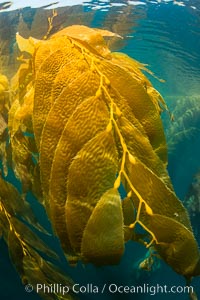
The Kelp Forest offshore of La Jolla, California. A kelp forest. Giant kelp grows rapidly, up to 2' per day, from the rocky reef on the ocean bottom to which it is anchored, toward the ocean surface where it spreads to form a thick canopy. Myriad species of fishes, mammals and invertebrates form a rich community in the kelp forest. Lush forests of kelp are found throughout California's Southern Channel Islands.
Species: Giant kelp, Macrocystis pyrifera
Location: La Jolla, California
Image ID: 30989
Species: Giant kelp, Macrocystis pyrifera
Location: La Jolla, California
Image ID: 30989
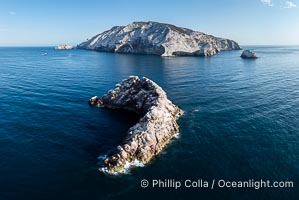
Offshore Islets of San Pedro Martir Island, Sea of Cortez. Small rocky islets around the larger Midriff Islands in the Sea of Cortez offer some of the best diving in the Sea of Cortez with a rich variety of invertebrate and fish life.
Location: Isla San Pedro Martir, Sonora, Mexico
Image ID: 40423
Location: Isla San Pedro Martir, Sonora, Mexico
Image ID: 40423
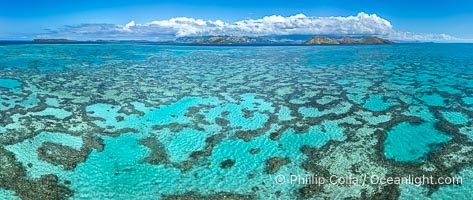
Aerial View of the extensive coral reefs offshore of Rakiraki, Fiji Islands.
Location: Viti Levu Island, Fiji
Image ID: 41083
Panorama dimensions: 4736 x 11195
Location: Viti Levu Island, Fiji
Image ID: 41083
Panorama dimensions: 4736 x 11195