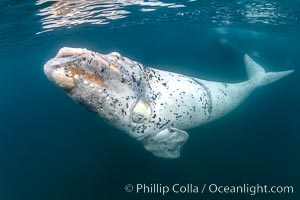
White southern right whale calf underwater, Eubalaena australis. About five per cent of southern right whales are born white due to a condition known as grey morphism and will gradually turn dark as they age. They are not albino (which is a complete lack of pigmentation). Sometimes referred to as "brindled", the white coloration is a recessive genetic trait and only lasts a few months. Typically, but not always, white calves will become much darker as they mature but will still be somewhat lighter than normal even as adults.
Species: Southern Right Whale, Eubalaena australis
Location: Puerto Piramides, Chubut, Argentina
Image ID: 35908
Species: Southern Right Whale, Eubalaena australis
Location: Puerto Piramides, Chubut, Argentina
Image ID: 35908
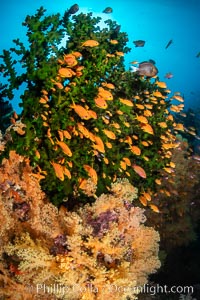
Anthias fish school around green fan coral, Fiji.
Species: Anthias, Pseudanthias
Location: Fiji
Image ID: 34740
Species: Anthias, Pseudanthias
Location: Fiji
Image ID: 34740
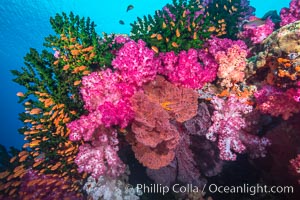
Beautiful South Pacific coral reef, with gorgonian sea fans, schooling anthias fish and colorful dendronephthya soft corals, Fiji.
Species: Anthias, Black sun coral, Dendronephthya soft coral, Gorgonian, Dendronephthya, Gorgonacea, Pseudanthias, Tubastrea micrantha
Location: Fiji
Image ID: 31312
Species: Anthias, Black sun coral, Dendronephthya soft coral, Gorgonian, Dendronephthya, Gorgonacea, Pseudanthias, Tubastrea micrantha
Location: Fiji
Image ID: 31312
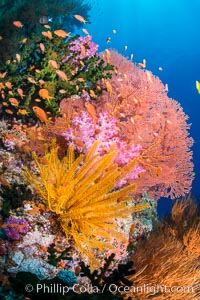
Spectacular pristine tropical reef with vibrant colorful soft corals. Dendronephthya soft corals, crinoids, sea fan gorgonians and schooling Anthias fishes, pulsing with life in a strong current over a pristine coral reef. Fiji is known as the soft coral capitlal of the world.
Species: Anthias, Black sun coral, Crinoid feather star, Dendronephthya soft coral, Gorgonian, Crinoidea, Dendronephthya, Gorgonacea, Pseudanthias, Tubastrea micrantha
Location: Vatu I Ra Passage, Bligh Waters, Viti Levu Island, Fiji
Image ID: 31313
Species: Anthias, Black sun coral, Crinoid feather star, Dendronephthya soft coral, Gorgonian, Crinoidea, Dendronephthya, Gorgonacea, Pseudanthias, Tubastrea micrantha
Location: Vatu I Ra Passage, Bligh Waters, Viti Levu Island, Fiji
Image ID: 31313
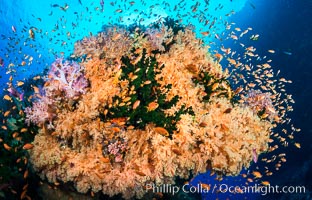
Colorful Dendronephthya soft corals and schooling Anthias fish on coral reef, Fiji.
Species: Anthias, Black sun coral, Dendronephthya soft coral, Dendronephthya, Pseudanthias, Tubastrea micrantha
Location: Vatu I Ra Passage, Bligh Waters, Viti Levu Island, Fiji
Image ID: 31316
Species: Anthias, Black sun coral, Dendronephthya soft coral, Dendronephthya, Pseudanthias, Tubastrea micrantha
Location: Vatu I Ra Passage, Bligh Waters, Viti Levu Island, Fiji
Image ID: 31316
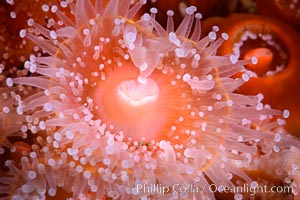
Corynactis anemone polyp, a corallimorph, extends its arms into passing ocean currents to catch food.
Species: Strawberry anemone, Corynactis californica
Location: San Diego, California
Image ID: 33472
Species: Strawberry anemone, Corynactis californica
Location: San Diego, California
Image ID: 33472
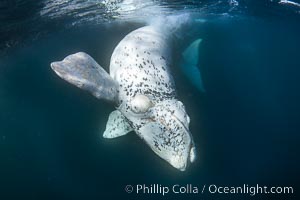
White southern right whale calf underwater, Eubalaena australis. About five per cent of southern right whales are born white due to a condition known as grey morphism and will gradually turn dark as they age. They are not albino (which is a complete lack of pigmentation). Sometimes referred to as "brindled", the white coloration is a recessive genetic trait and only lasts a few months. Typically, but not always, white calves will become much darker as they mature but will still be somewhat lighter than normal even as adults.
Species: Southern Right Whale, Eubalaena australis
Location: Puerto Piramides, Chubut, Argentina
Image ID: 38279
Species: Southern Right Whale, Eubalaena australis
Location: Puerto Piramides, Chubut, Argentina
Image ID: 38279
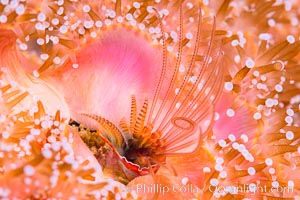
Acorn Barnacle extends to feed in ocean current, amid colony of Corynactis anemones.
Species: Acorn barnacle, Strawberry anemone, Corynactis californica, Megabalanus californicus
Location: San Diego, California
Image ID: 33455
Species: Acorn barnacle, Strawberry anemone, Corynactis californica, Megabalanus californicus
Location: San Diego, California
Image ID: 33455
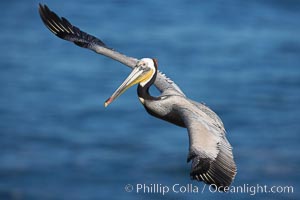
Yellow morph of the California brown pelican in flight. The wingspan of the brown pelican is over 7 feet wide. The California race of the brown pelican holds endangered species status. In winter months, breeding adults assume a dramatic plumage.
Species: Brown Pelican, Pelecanus occidentalis, Pelecanus occidentalis californicus
Location: La Jolla, California
Image ID: 15371
Species: Brown Pelican, Pelecanus occidentalis, Pelecanus occidentalis californicus
Location: La Jolla, California
Image ID: 15371
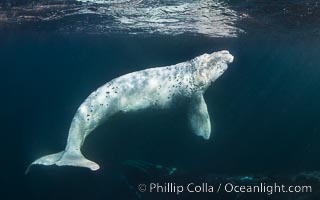
White southern right whale calf underwater, Eubalaena australis. About five per cent of southern right whales are born white due to a condition known as grey morphism and will gradually turn dark as they age. They are not albino (which is a complete lack of pigmentation). Sometimes referred to as "brindled", the white coloration is a recessive genetic trait and only lasts a few months. Typically, but not always, white calves will become much darker as they mature but will still be somewhat lighter than normal even as adults.
Species: Southern Right Whale, Eubalaena australis
Location: Puerto Piramides, Chubut, Argentina
Image ID: 38261
Species: Southern Right Whale, Eubalaena australis
Location: Puerto Piramides, Chubut, Argentina
Image ID: 38261
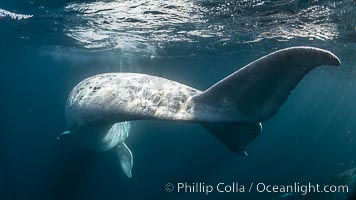
White southern right whale calf underwater, Eubalaena australis. About five per cent of southern right whales are born white due to a condition known as grey morphism and will gradually turn dark as they age. They are not albino (which is a complete lack of pigmentation). Sometimes referred to as "brindled", the white coloration is a recessive genetic trait and only lasts a few months. Typically, but not always, white calves will become much darker as they mature but will still be somewhat lighter than normal even as adults.
Species: Southern Right Whale, Eubalaena australis
Location: Puerto Piramides, Chubut, Argentina
Image ID: 38434
Species: Southern Right Whale, Eubalaena australis
Location: Puerto Piramides, Chubut, Argentina
Image ID: 38434
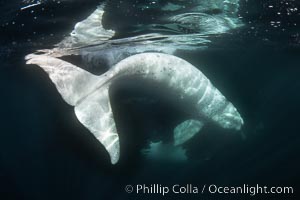
White southern right whale calf underwater, Eubalaena australis. About five per cent of southern right whales are born white due to a condition known as grey morphism and will gradually turn dark as they age. They are not albino (which is a complete lack of pigmentation). Sometimes referred to as "brindled", the white coloration is a recessive genetic trait and only lasts a few months. Typically, but not always, white calves will become much darker as they mature but will still be somewhat lighter than normal even as adults.
Species: Southern Right Whale, Eubalaena australis
Location: Puerto Piramides, Chubut, Argentina
Image ID: 38438
Species: Southern Right Whale, Eubalaena australis
Location: Puerto Piramides, Chubut, Argentina
Image ID: 38438
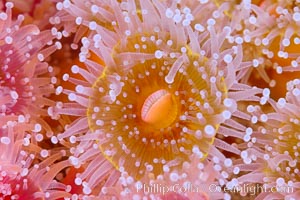
Corynactis anemone polyp, a corallimorph, extends its arms into passing ocean currents to catch food.
Species: Strawberry anemone, Corynactis californica
Location: San Diego, California
Image ID: 33476
Species: Strawberry anemone, Corynactis californica
Location: San Diego, California
Image ID: 33476
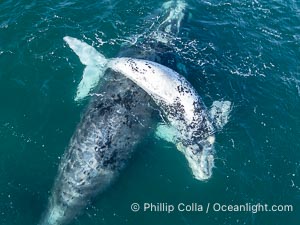
Aerial photo of white Southern Right Whale calf with its mother. The mother is gray in color, rather than dark black, since she was a white calf herself and gradually darkened to gray as she matured. About five per cent of southern right whales are born white due to a condition known as grey morphism and will gradually turn dark as they age. They are not albino (which is a complete lack of pigmentation). The white coloration is a recessive genetic trait and only lasts a few months. Typically white calves become much darker as they mature but will still be lighter than normal even as adults. By permission of the Government of Argentina, Chubut, permit # 51 / 2025-SsCyA.
Species: Southern Right Whale, Eubalaena australis
Location: Puerto Piramides, Chubut, Argentina
Image ID: 41180
Species: Southern Right Whale, Eubalaena australis
Location: Puerto Piramides, Chubut, Argentina
Image ID: 41180
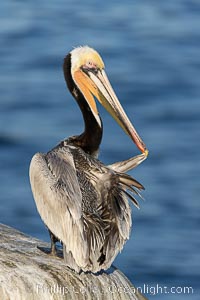
California brown pelican orange morph, preening its feathers while on cliffs over the ocean. While this adult brown pelican exhibits the brown hind neck of a breeding adult, it displays an unusual orange throat rather than the more typical red.
Species: Brown Pelican, Pelecanus occidentalis, Pelecanus occidentalis californicus
Location: La Jolla, California
Image ID: 38688
Species: Brown Pelican, Pelecanus occidentalis, Pelecanus occidentalis californicus
Location: La Jolla, California
Image ID: 38688
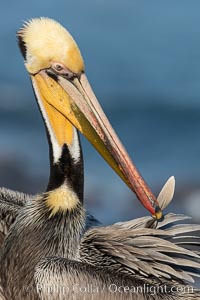
Yellow morph California brown pelican preening, cleaning its feathers after foraging on the ocean, with distinctive winter breeding plumage with distinctive dark brown nape, yellow head feathers. Note the unusual yellow gular throat pouch.
Species: Brown Pelican, Pelecanus occidentalis, Pelecanus occidentalis californicus
Location: La Jolla, California
Image ID: 36681
Species: Brown Pelican, Pelecanus occidentalis, Pelecanus occidentalis californicus
Location: La Jolla, California
Image ID: 36681
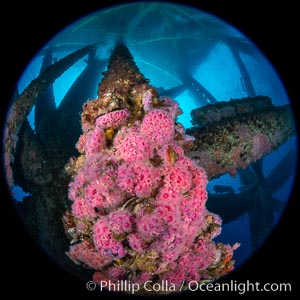
Oil Rig Eureka, Underwater Structure and invertebrate Life.
Species: Strawberry anemone, Corynactis californica
Location: Long Beach, California
Image ID: 34660
Species: Strawberry anemone, Corynactis californica
Location: Long Beach, California
Image ID: 34660
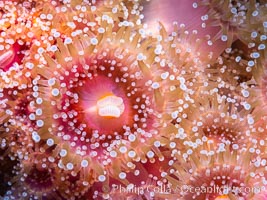
The corallimorph Corynactis californica, similar to both stony corals and anemones, is typified by a wide oral disk and short tentacles that radiate from the mouth. The tentacles grasp food passing by in ocean currents.
Species: Strawberry anemone, Corynactis californica
Location: San Diego, California
Image ID: 37212
Species: Strawberry anemone, Corynactis californica
Location: San Diego, California
Image ID: 37212
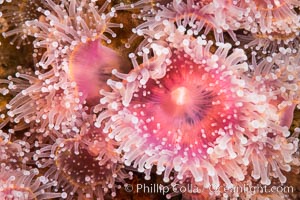
The corallimorph Corynactis californica, similar to both stony corals and anemones, is typified by a wide oral disk and short tentacles that radiate from the mouth. The tentacles grasp food passing by in ocean currents.
Species: Strawberry anemone, Corynactis californica
Location: San Diego, California
Image ID: 37215
Species: Strawberry anemone, Corynactis californica
Location: San Diego, California
Image ID: 37215
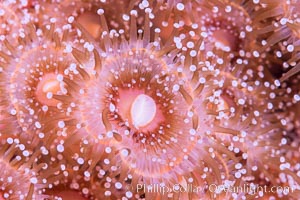
A corynactis anemone polyp, Corynactis californica is a corallimorph found in genetically identical clusters, club-tipped anemone.
Species: Strawberry anemone, Corynactis californica
Location: San Diego, California
Image ID: 33453
Species: Strawberry anemone, Corynactis californica
Location: San Diego, California
Image ID: 33453
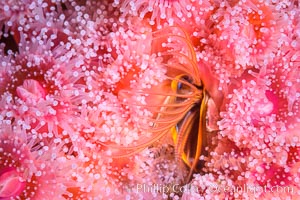
Acorn Barnacle extends to feed in ocean current, amid colony of Corynactis anemones.
Species: Acorn barnacle, Strawberry anemone, Corynactis californica, Megabalanus californicus
Location: San Diego, California
Image ID: 33473
Species: Acorn barnacle, Strawberry anemone, Corynactis californica, Megabalanus californicus
Location: San Diego, California
Image ID: 33473
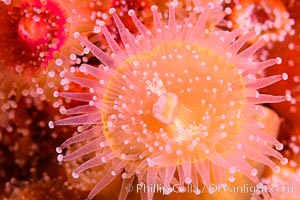
Corynactis anemone polyp, a corallimorph, extends its arms into passing ocean currents to catch food.
Species: Strawberry anemone, Corynactis californica
Location: San Diego, California
Image ID: 33474
Species: Strawberry anemone, Corynactis californica
Location: San Diego, California
Image ID: 33474
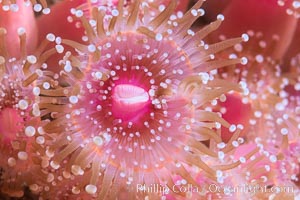
The corallimorph Corynactis californica, similar to both stony corals and anemones, is typified by a wide oral disk and short tentacles that radiate from the mouth. The tentacles grasp food passing by in ocean currents.
Species: Strawberry anemone, Corynactis californica
Location: San Diego, California
Image ID: 37201
Species: Strawberry anemone, Corynactis californica
Location: San Diego, California
Image ID: 37201
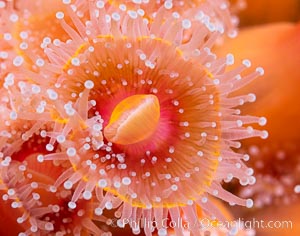
The corallimorph Corynactis californica, similar to both stony corals and anemones, is typified by a wide oral disk and short tentacles that radiate from the mouth. The tentacles grasp food passing by in ocean currents.
Species: Strawberry anemone, Corynactis californica
Location: San Diego, California
Image ID: 37208
Species: Strawberry anemone, Corynactis californica
Location: San Diego, California
Image ID: 37208
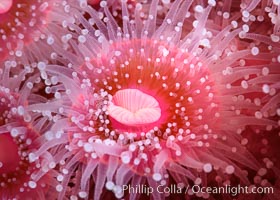
Corynactis anemone polyp, a corallimorph, extends its arms into passing ocean currents to catch food.
Species: Strawberry anemone, Corynactis californica
Location: San Diego, California
Image ID: 33475
Species: Strawberry anemone, Corynactis californica
Location: San Diego, California
Image ID: 33475
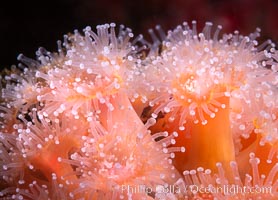
The corallimorph Corynactis californica, similar to both stony corals and anemones, is typified by a wide oral disk and short tentacles that radiate from the mouth. The tentacles grasp food passing by in ocean currents.
Species: Strawberry anemone, Corynactis californica
Location: San Diego, California
Image ID: 37202
Species: Strawberry anemone, Corynactis californica
Location: San Diego, California
Image ID: 37202
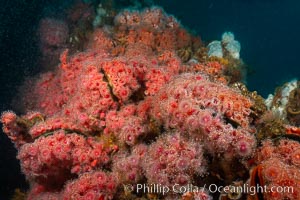
Corynactis anemones on Oil Rig Elly underwater structure.
Species: Strawberry anemone, Corynactis californica
Location: Long Beach, California
Image ID: 31121
Species: Strawberry anemone, Corynactis californica
Location: Long Beach, California
Image ID: 31121
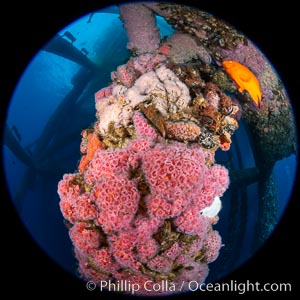
Oil Rig Eureka, Underwater Structure and invertebrate Life.
Species: Strawberry anemone, Corynactis californica
Location: Long Beach, California
Image ID: 34664
Species: Strawberry anemone, Corynactis californica
Location: Long Beach, California
Image ID: 34664
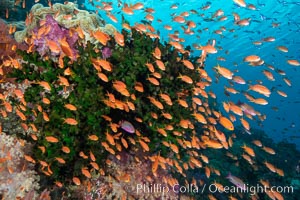
Anthias fish school around green fan coral, Fiji.
Species: Anthias, Pseudanthias
Location: Fiji
Image ID: 34806
Species: Anthias, Pseudanthias
Location: Fiji
Image ID: 34806
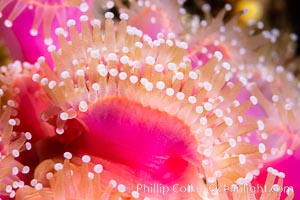
Corynactis anemone polyp, a corallimorph, extends its arms into passing ocean currents to catch food.
Species: Strawberry anemone, Corynactis californica
Image ID: 35070
Species: Strawberry anemone, Corynactis californica
Image ID: 35070