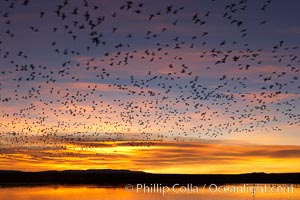
Snow geese at dawn. Snow geese often "blast off" just before or after dawn, leaving the ponds where they rest for the night to forage elsewhere during the day.
Species: Snow goose, Chen caerulescens
Location: Bosque del Apache National Wildlife Refuge, Socorro, New Mexico
Image ID: 21806
Species: Snow goose, Chen caerulescens
Location: Bosque del Apache National Wildlife Refuge, Socorro, New Mexico
Image ID: 21806
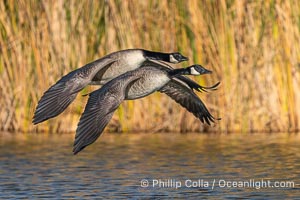
Canada Geese in flight, Branta canadensis, Santee Lakes.
Species: Canada goose, Branta canadensis
Location: Santee Lakes, California
Image ID: 41481
Species: Canada goose, Branta canadensis
Location: Santee Lakes, California
Image ID: 41481
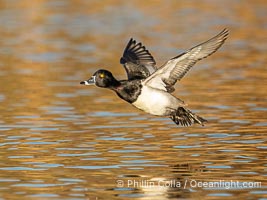
Ring-necked duck, male, Aythya collaris, Santee Lakes.
Species: Ring-necked duck, Aythya collaris
Location: Santee Lakes, California
Image ID: 41497
Species: Ring-necked duck, Aythya collaris
Location: Santee Lakes, California
Image ID: 41497
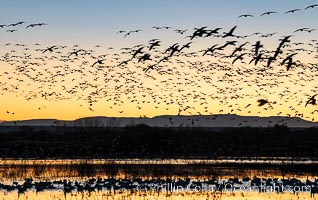
Snow geese fly in huge numbers at sunrise. Thousands of wintering snow geese take to the sky in predawn light in Bosque del Apache's famous "blast off". The flock can be as large as 20,000 geese or more.
Species: Snow goose, Chen caerulescens
Location: Bosque del Apache National Wildlife Refuge, Socorro, New Mexico
Image ID: 38742
Species: Snow goose, Chen caerulescens
Location: Bosque del Apache National Wildlife Refuge, Socorro, New Mexico
Image ID: 38742
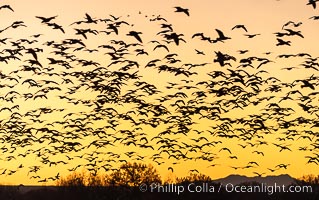
Snow geese fly in huge numbers at sunrise. Thousands of wintering snow geese take to the sky in predawn light in Bosque del Apache's famous "blast off". The flock can be as large as 20,000 geese or more.
Species: Snow goose, Chen caerulescens
Location: Bosque del Apache National Wildlife Refuge, Socorro, New Mexico
Image ID: 38715
Species: Snow goose, Chen caerulescens
Location: Bosque del Apache National Wildlife Refuge, Socorro, New Mexico
Image ID: 38715
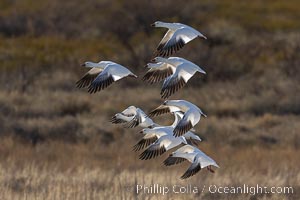
Snow Geese in Flight, Bosque del Apache NWR.
Species: Snow goose, Chen caerulescens
Location: Bosque del Apache National Wildlife Refuge, Socorro, New Mexico
Image ID: 38717
Species: Snow goose, Chen caerulescens
Location: Bosque del Apache National Wildlife Refuge, Socorro, New Mexico
Image ID: 38717
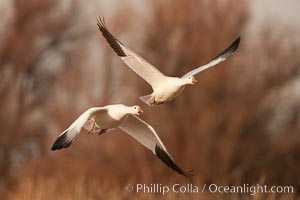
Snow geese in flight.
Species: Snow goose, Chen caerulescens
Location: Bosque Del Apache, Socorro, New Mexico
Image ID: 26196
Species: Snow goose, Chen caerulescens
Location: Bosque Del Apache, Socorro, New Mexico
Image ID: 26196
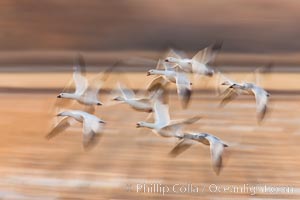
Snow geese in flight, wings are blurred in long time exposure as they are flying.
Species: Snow goose, Chen caerulescens
Location: Bosque Del Apache, Socorro, New Mexico
Image ID: 26211
Species: Snow goose, Chen caerulescens
Location: Bosque Del Apache, Socorro, New Mexico
Image ID: 26211
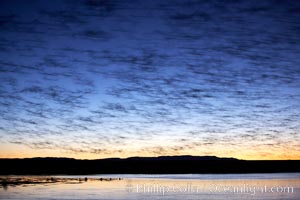
Snow geese at dawn. Snow geese often "blast off" just before or after dawn, leaving the ponds where they rest for the night to forage elsewhere during the day.
Species: Snow goose, Chen caerulescens
Location: Bosque del Apache National Wildlife Refuge, Socorro, New Mexico
Image ID: 21800
Species: Snow goose, Chen caerulescens
Location: Bosque del Apache National Wildlife Refuge, Socorro, New Mexico
Image ID: 21800
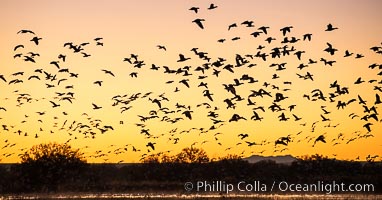
Snow geese fly in huge numbers at sunrise. Thousands of wintering snow geese take to the sky in predawn light in Bosque del Apache's famous "blast off". The flock can be as large as 20,000 geese or more.
Species: Snow goose, Chen caerulescens
Location: Bosque del Apache National Wildlife Refuge, Socorro, New Mexico
Image ID: 38738
Species: Snow goose, Chen caerulescens
Location: Bosque del Apache National Wildlife Refuge, Socorro, New Mexico
Image ID: 38738
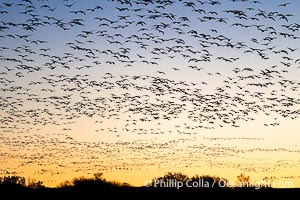
Snow geese fly in huge numbers at sunrise. Thousands of wintering snow geese take to the sky in predawn light in Bosque del Apache's famous "blast off". The flock can be as large as 20,000 geese or more.
Species: Snow Goose, Chen caerulescens
Location: Bosque del Apache National Wildlife Refuge, Socorro, New Mexico
Image ID: 39904
Panorama dimensions: 5566 x 8349
Species: Snow Goose, Chen caerulescens
Location: Bosque del Apache National Wildlife Refuge, Socorro, New Mexico
Image ID: 39904
Panorama dimensions: 5566 x 8349
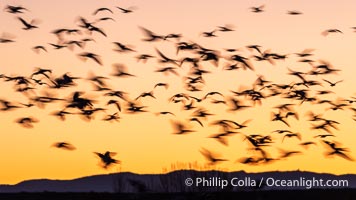
Snow geese fly in huge numbers at sunrise. Thousands of wintering snow geese take to the sky in predawn light in Bosque del Apache's famous "blast off". The flock can be as large as 20,000 geese or more.
Species: Snow Goose, Chen caerulescens
Location: Bosque del Apache National Wildlife Refuge, Socorro, New Mexico
Image ID: 39905
Species: Snow Goose, Chen caerulescens
Location: Bosque del Apache National Wildlife Refuge, Socorro, New Mexico
Image ID: 39905
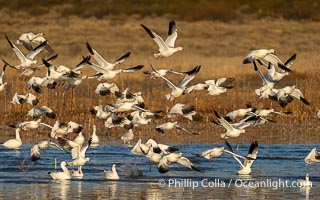
Snow Geese Take Flight at Sunrise, Bosque del Apache NWR.
Species: Snow Goose, Chen caerulescens
Location: Bosque del Apache National Wildlife Refuge, Socorro, New Mexico
Image ID: 39913
Species: Snow Goose, Chen caerulescens
Location: Bosque del Apache National Wildlife Refuge, Socorro, New Mexico
Image ID: 39913
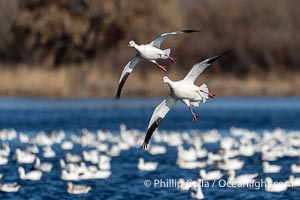
Snow Geese in Flight in Large Flock, Bosque del Apache National Wildlife Refuge.
Species: Snow Goose, Chen caerulescens
Location: Bosque del Apache National Wildlife Refuge, Socorro, New Mexico
Image ID: 39921
Species: Snow Goose, Chen caerulescens
Location: Bosque del Apache National Wildlife Refuge, Socorro, New Mexico
Image ID: 39921
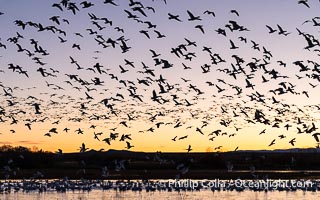
Snow geese fly in huge numbers at sunrise. Thousands of wintering snow geese take to the sky in predawn light in Bosque del Apache's famous "blast off". The flock can be as large as 20,000 geese or more.
Species: Snow Goose, Chen caerulescens
Location: Bosque del Apache National Wildlife Refuge, Socorro, New Mexico
Image ID: 39931
Species: Snow Goose, Chen caerulescens
Location: Bosque del Apache National Wildlife Refuge, Socorro, New Mexico
Image ID: 39931
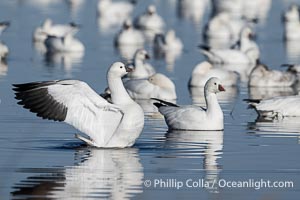
Snow geese resting, on a still pond in early morning light, in groups of several thousands.
Species: Snow Goose, Chen caerulescens
Location: Bosque del Apache National Wildlife Refuge, Socorro, New Mexico
Image ID: 39938
Species: Snow Goose, Chen caerulescens
Location: Bosque del Apache National Wildlife Refuge, Socorro, New Mexico
Image ID: 39938
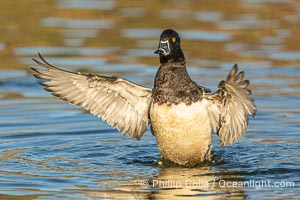
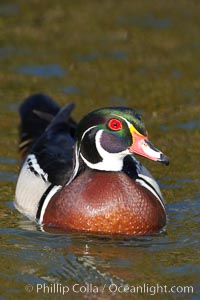
Ring-necked duck, male, Aythya collaris, Santee Lakes.
Species: Ring-necked duck, Aythya collaris
Location: Santee Lakes, California
Image ID: 41487
Species: Ring-necked duck, Aythya collaris
Location: Santee Lakes, California
Image ID: 41487
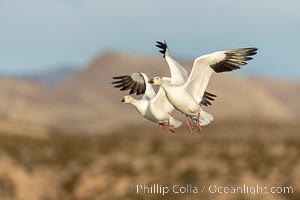
Snow Geese in Flight, Bosque del Apache NWR.
Species: Snow goose, Chen caerulescens
Location: Bosque del Apache National Wildlife Refuge, Socorro, New Mexico
Image ID: 38714
Species: Snow goose, Chen caerulescens
Location: Bosque del Apache National Wildlife Refuge, Socorro, New Mexico
Image ID: 38714
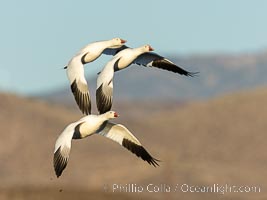
Snow Geese in Flight, Bosque del Apache NWR.
Species: Snow goose, Chen caerulescens
Location: Bosque del Apache National Wildlife Refuge, Socorro, New Mexico
Image ID: 38724
Species: Snow goose, Chen caerulescens
Location: Bosque del Apache National Wildlife Refuge, Socorro, New Mexico
Image ID: 38724
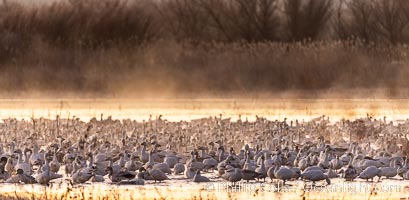
Snow geese resting, on a still pond in early morning light, in groups of several thousands.
Species: Snow goose, Chen caerulescens
Location: Bosque del Apache National Wildlife Refuge, Socorro, New Mexico
Image ID: 38737
Species: Snow goose, Chen caerulescens
Location: Bosque del Apache National Wildlife Refuge, Socorro, New Mexico
Image ID: 38737
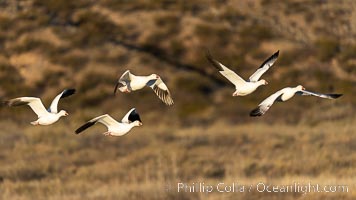
Snow Geese in Flight, Bosque del Apache NWR.
Species: Snow goose, Chen caerulescens
Location: Bosque del Apache National Wildlife Refuge, Socorro, New Mexico
Image ID: 38741
Species: Snow goose, Chen caerulescens
Location: Bosque del Apache National Wildlife Refuge, Socorro, New Mexico
Image ID: 38741
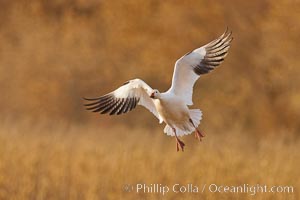
Snow goose in flight.
Species: Snow goose, Chen caerulescens
Location: Bosque Del Apache, Socorro, New Mexico
Image ID: 26199
Species: Snow goose, Chen caerulescens
Location: Bosque Del Apache, Socorro, New Mexico
Image ID: 26199
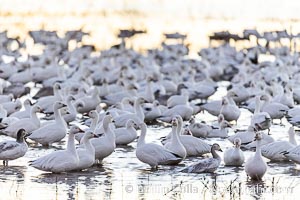
Snow geese resting, on a still pond in early morning light, in groups of several thousands.
Species: Snow goose, Chen caerulescens
Location: Bosque del Apache National Wildlife Refuge, Socorro, New Mexico
Image ID: 38722
Species: Snow goose, Chen caerulescens
Location: Bosque del Apache National Wildlife Refuge, Socorro, New Mexico
Image ID: 38722
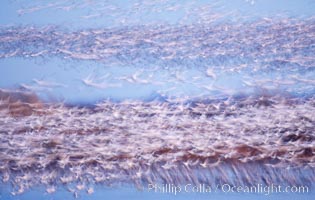
Snow geese at sunrise. Thousands of wintering snow geese take to the sky in predawn light in Bosque del Apache's famous "blast off". The flock can be as large as 20,000 geese or more. Long time exposure creates blurring among the geese.
Species: Snow goose, Chen caerulescens
Location: Bosque del Apache National Wildlife Refuge, Socorro, New Mexico
Image ID: 21799
Species: Snow goose, Chen caerulescens
Location: Bosque del Apache National Wildlife Refuge, Socorro, New Mexico
Image ID: 21799
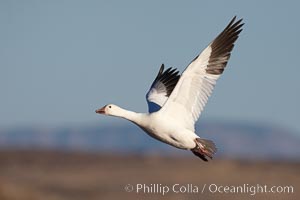
Snow goose in flight.
Species: Snow goose, Chen caerulescens
Location: Bosque del Apache National Wildlife Refuge, Socorro, New Mexico
Image ID: 21801
Species: Snow goose, Chen caerulescens
Location: Bosque del Apache National Wildlife Refuge, Socorro, New Mexico
Image ID: 21801
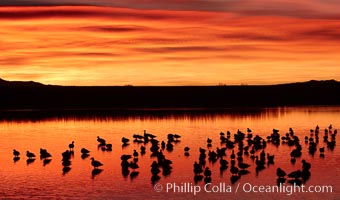
Snow geese rest on a still pond in rich orange and yellow sunrise light. These geese have spent their night's rest on the main empoundment and will leave around sunrise to feed in nearby corn fields.
Species: Snow goose, Chen caerulescens
Location: Bosque del Apache National Wildlife Refuge, Socorro, New Mexico
Image ID: 21802
Species: Snow goose, Chen caerulescens
Location: Bosque del Apache National Wildlife Refuge, Socorro, New Mexico
Image ID: 21802
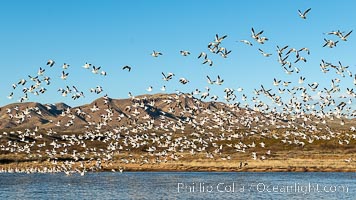
Snow Geese in Flight, Bosque del Apache NWR.
Species: Snow goose, Chen caerulescens
Location: Bosque del Apache National Wildlife Refuge, Socorro, New Mexico
Image ID: 38719
Species: Snow goose, Chen caerulescens
Location: Bosque del Apache National Wildlife Refuge, Socorro, New Mexico
Image ID: 38719
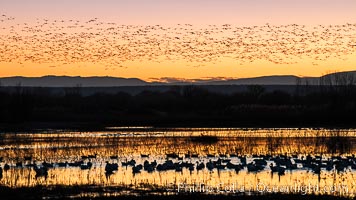
Snow geese fly in huge numbers at sunrise. Thousands of wintering snow geese take to the sky in predawn light in Bosque del Apache's famous "blast off". The flock can be as large as 20,000 geese or more.
Species: Snow goose, Chen caerulescens
Location: Bosque del Apache National Wildlife Refuge, Socorro, New Mexico
Image ID: 38770
Species: Snow goose, Chen caerulescens
Location: Bosque del Apache National Wildlife Refuge, Socorro, New Mexico
Image ID: 38770
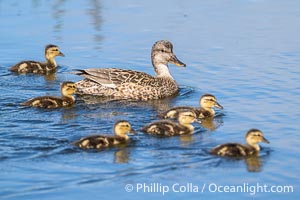
Mallard mother and ducklings, San Elijo Lagoon, Encinitas.
Species: Mallard, Anas platyrhynchos
Location: San Elijo Lagoon, Encinitas, California
Image ID: 39345
Species: Mallard, Anas platyrhynchos
Location: San Elijo Lagoon, Encinitas, California
Image ID: 39345