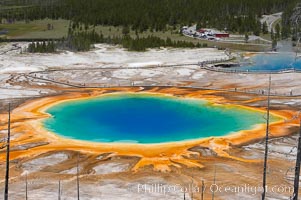
Grand Prismatic Spring (left) and Excelsior Geyser (right). Grand Prismatic Spring displays a stunning rainbow of colors created by species of thermophilac (heat-loving) bacteria that thrive in narrow temperature ranges. The blue water in the center is too hot to support any bacterial life, while the outer orange rings are the coolest water. Grand Prismatic Spring is the largest spring in the United States and the third-largest in the world. Midway Geyser Basin.
Location: Midway Geyser Basin, Yellowstone National Park, Wyoming
Image ID: 13571
Location: Midway Geyser Basin, Yellowstone National Park, Wyoming
Image ID: 13571
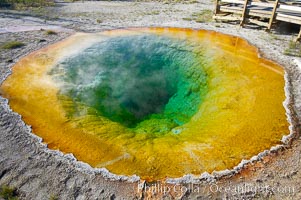
Morning Glory Pool has long been considered a must-see site in Yellowstone. At one time a road brought visitors to its brink. Over the years they threw coins, bottles and trash in the pool, reducing its flow and causing the red and orange bacteria to creep in from its edge, replacing the blue bacteria that thrive in the hotter water at the center of the pool. The pool is now accessed only by a foot path. Upper Geyser Basin.
Location: Upper Geyser Basin, Yellowstone National Park, Wyoming
Image ID: 13352
Location: Upper Geyser Basin, Yellowstone National Park, Wyoming
Image ID: 13352
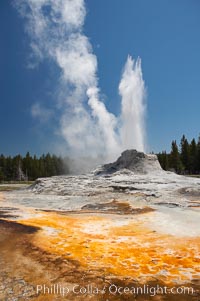
Castle Geyser erupts with the colorful bacteria mats of Tortoise Shell Spring in the foreground. Castle Geyser reaches 60 to 90 feet in height and lasts 20 minutes. While Castle Geyser has a 12 foot sinter cone that took 5,000 to 15,000 years to form, it is in fact situated atop geyserite terraces that themselves may have taken 200,000 years to form, making it likely the oldest active geyser in the park. Upper Geyser Basin.
Location: Upper Geyser Basin, Yellowstone National Park, Wyoming
Image ID: 13426
Location: Upper Geyser Basin, Yellowstone National Park, Wyoming
Image ID: 13426
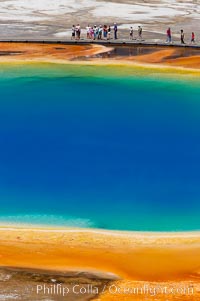
Grand Prismatic Spring displays a stunning rainbow of colors created by species of thermophilac (heat-loving) bacteria that thrive in narrow temperature ranges. The blue water in the center is too hot to support any bacterial life, while the outer orange rings are the coolest water. Grand Prismatic Spring is the largest spring in the United States and the third-largest in the world. Midway Geyser Basin.
Location: Midway Geyser Basin, Yellowstone National Park, Wyoming
Image ID: 13573
Location: Midway Geyser Basin, Yellowstone National Park, Wyoming
Image ID: 13573
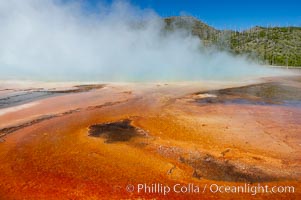
Grand Prismatic Spring displays brilliant colors along its edges, created by species of thermophilac (heat-loving) bacteria that thrive in narrow temperature ranges. The outer orange and red regions are the coolest water in the spring, where the overflow runs off. Midway Geyser Basin.
Location: Midway Geyser Basin, Yellowstone National Park, Wyoming
Image ID: 13587
Location: Midway Geyser Basin, Yellowstone National Park, Wyoming
Image ID: 13587
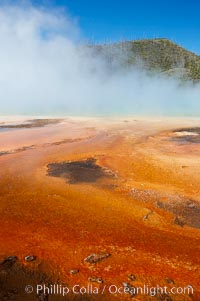
Grand Prismatic Spring displays brilliant colors along its edges, created by species of thermophilac (heat-loving) bacteria that thrive in narrow temperature ranges. The outer orange and red regions are the coolest water in the spring, where the overflow runs off. Midway Geyser Basin.
Location: Midway Geyser Basin, Yellowstone National Park, Wyoming
Image ID: 13591
Location: Midway Geyser Basin, Yellowstone National Park, Wyoming
Image ID: 13591
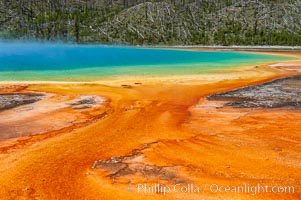
Grand Prismatic Spring displays brilliant colors along its edges, created by species of thermophilac (heat-loving) bacteria that thrive in narrow temperature ranges. The outer orange and red regions are the coolest water in the spring, where the overflow runs off.
Location: Midway Geyser Basin, Yellowstone National Park, Wyoming
Image ID: 07265
Location: Midway Geyser Basin, Yellowstone National Park, Wyoming
Image ID: 07265
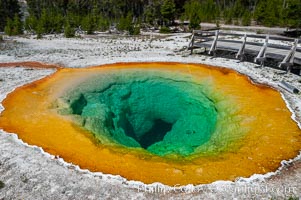
Morning Glory Pool has long been considered a must-see site in Yellowstone. At one time a road brought visitors to its brink. Over the years they threw coins, bottles and trash in the pool, reducing its flow and causing the red and orange bacteria to creep in from its edge, replacing the blue bacteria that thrive in the hotter water at the center of the pool. The pool is now accessed only by a foot path. Upper Geyser Basin.
Location: Upper Geyser Basin, Yellowstone National Park, Wyoming
Image ID: 07268
Location: Upper Geyser Basin, Yellowstone National Park, Wyoming
Image ID: 07268
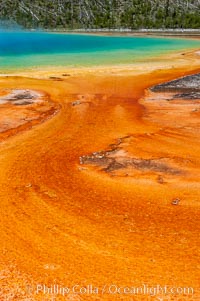
Grand Prismatic Spring displays brilliant colors along its edges, created by species of thermophilac (heat-loving) bacteria that thrive in narrow temperature ranges. The outer orange and red regions are the coolest water in the spring, where the overflow runs off.
Location: Midway Geyser Basin, Yellowstone National Park, Wyoming
Image ID: 07264
Location: Midway Geyser Basin, Yellowstone National Park, Wyoming
Image ID: 07264
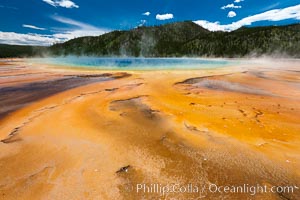
Bacteria mats and Grand Prismatic Spring. The orange color is due to bacteria which thrive only on the cooler fringes of the hot spring, while the hotter center of the spring hosts blue-colored bacteria.
Location: Midway Geyser Basin, Yellowstone National Park, Wyoming
Image ID: 26954
Location: Midway Geyser Basin, Yellowstone National Park, Wyoming
Image ID: 26954
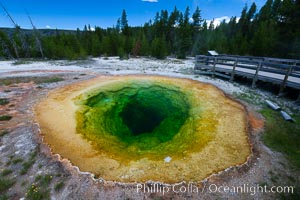
Morning Glory Pool, has long been considered a must-see site in Yellowstone. At one time a road brought visitors to its brink. Over the years they threw coins, bottles and trash in the pool, reducing its flow and causing the red and orange bacteria to creep in from its edge, replacing the blue bacteria that thrive in the hotter water at the center of the pool. The pool is now accessed only by a foot path.
Location: Upper Geyser Basin, Yellowstone National Park, Wyoming
Image ID: 26955
Location: Upper Geyser Basin, Yellowstone National Park, Wyoming
Image ID: 26955
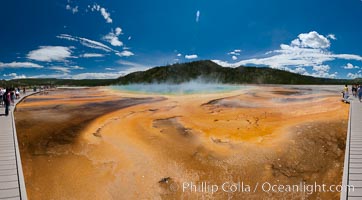
Bacteria mats and Grand Prismatic Spring. The orange color is due to bacteria which thrive only on the cooler fringes of the hot spring, while the hotter center of the spring hosts blue-colored bacteria.
Location: Midway Geyser Basin, Yellowstone National Park, Wyoming
Image ID: 26958
Panorama dimensions: 4624 x 8376
Location: Midway Geyser Basin, Yellowstone National Park, Wyoming
Image ID: 26958
Panorama dimensions: 4624 x 8376
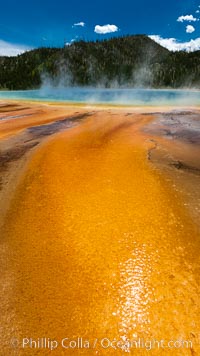
Bacteria mats and Grand Prismatic Spring. The orange color is due to bacteria which thrive only on the cooler fringes of the hot spring, while the hotter center of the spring hosts blue-colored bacteria.
Location: Midway Geyser Basin, Yellowstone National Park, Wyoming
Image ID: 26964
Location: Midway Geyser Basin, Yellowstone National Park, Wyoming
Image ID: 26964
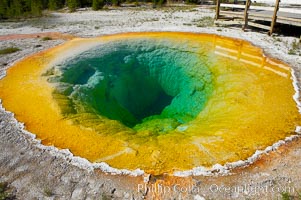
Morning Glory Pool has long been considered a must-see site in Yellowstone. At one time a road brought visitors to its brink. Over the years they threw coins, bottles and trash in the pool, reducing its flow and causing the red and orange bacteria to creep in from its edge, replacing the blue bacteria that thrive in the hotter water at the center of the pool. The pool is now accessed only by a foot path. Upper Geyser Basin.
Location: Upper Geyser Basin, Yellowstone National Park, Wyoming
Image ID: 13353
Location: Upper Geyser Basin, Yellowstone National Park, Wyoming
Image ID: 13353
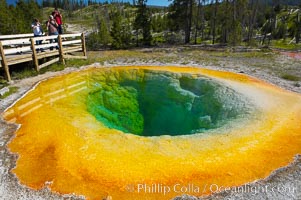
Morning Glory Pool has long been considered a must-see site in Yellowstone. At one time a road brought visitors to its brink. Over the years they threw coins, bottles and trash in the pool, reducing its flow and causing the red and orange bacteria to creep in from its edge, replacing the blue bacteria that thrive in the hotter water at the center of the pool. The pool is now accessed only by a foot path. Upper Geyser Basin.
Location: Upper Geyser Basin, Yellowstone National Park, Wyoming
Image ID: 13354
Location: Upper Geyser Basin, Yellowstone National Park, Wyoming
Image ID: 13354
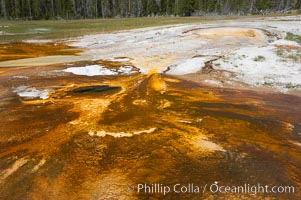
Colorful bacteria mats mark the hot water flowing from Pump Geyser.
Location: Upper Geyser Basin, Yellowstone National Park, Wyoming
Image ID: 13412
Location: Upper Geyser Basin, Yellowstone National Park, Wyoming
Image ID: 13412
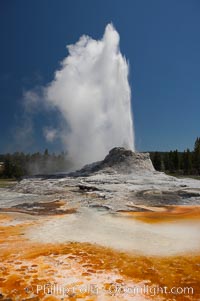
Castle Geyser erupts with the colorful bacteria mats of Tortoise Shell Spring in the foreground. Castle Geyser reaches 60 to 90 feet in height and lasts 20 minutes. While Castle Geyser has a 12 foot sinter cone that took 5,000 to 15,000 years to form, it is in fact situated atop geyserite terraces that themselves may have taken 200,000 years to form, making it likely the oldest active geyser in the park. Upper Geyser Basin.
Location: Upper Geyser Basin, Yellowstone National Park, Wyoming
Image ID: 13418
Location: Upper Geyser Basin, Yellowstone National Park, Wyoming
Image ID: 13418
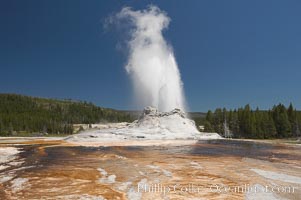
Castle Geyser erupts with the colorful bacteria mats of Tortoise Shell Spring in the foreground. Castle Geyser reaches 60 to 90 feet in height and lasts 20 minutes. While Castle Geyser has a 12 foot sinter cone that took 5,000 to 15,000 years to form, it is in fact situated atop geyserite terraces that themselves may have taken 200,000 years to form, making it likely the oldest active geyser in the park. Upper Geyser Basin.
Location: Upper Geyser Basin, Yellowstone National Park, Wyoming
Image ID: 13420
Location: Upper Geyser Basin, Yellowstone National Park, Wyoming
Image ID: 13420
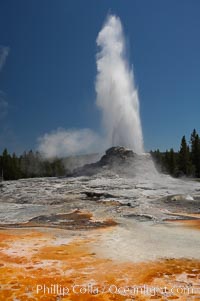
Castle Geyser erupts with the colorful bacteria mats of Tortoise Shell Spring in the foreground. Castle Geyser reaches 60 to 90 feet in height and lasts 20 minutes. While Castle Geyser has a 12 foot sinter cone that took 5,000 to 15,000 years to form, it is in fact situated atop geyserite terraces that themselves may have taken 200,000 years to form, making it likely the oldest active geyser in the park. Upper Geyser Basin.
Location: Upper Geyser Basin, Yellowstone National Park, Wyoming
Image ID: 13421
Location: Upper Geyser Basin, Yellowstone National Park, Wyoming
Image ID: 13421
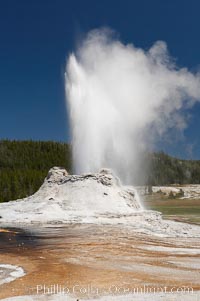
Castle Geyser erupts with the colorful bacteria mats of Tortoise Shell Spring in the foreground. Castle Geyser reaches 60 to 90 feet in height and lasts 20 minutes. While Castle Geyser has a 12 foot sinter cone that took 5,000 to 15,000 years to form, it is in fact situated atop geyserite terraces that themselves may have taken 200,000 years to form, making it likely the oldest active geyser in the park. Upper Geyser Basin.
Location: Upper Geyser Basin, Yellowstone National Park, Wyoming
Image ID: 13425
Location: Upper Geyser Basin, Yellowstone National Park, Wyoming
Image ID: 13425
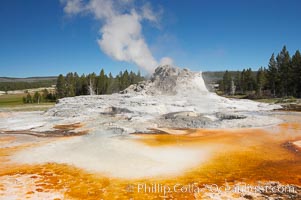
Castle Geyser (during steam phase, not eruption) with the colorful bacteria mats of Tortoise Shell Spring in the foreground. While Castle Geyser has a 12 foot sinter cone that took 5,000 to 15,000 years to form, it is in fact situated atop geyserite terraces that themselves may have taken 200,000 years to form, making it likely the oldest active geyser in the park. Upper Geyser Basin.
Location: Upper Geyser Basin, Yellowstone National Park, Wyoming
Image ID: 13427
Location: Upper Geyser Basin, Yellowstone National Park, Wyoming
Image ID: 13427
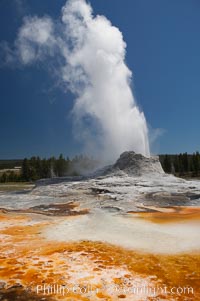
Castle Geyser erupts with the colorful bacteria mats of Tortoise Shell Spring in the foreground. Castle Geyser reaches 60 to 90 feet in height and lasts 20 minutes. While Castle Geyser has a 12 foot sinter cone that took 5,000 to 15,000 years to form, it is in fact situated atop geyserite terraces that themselves may have taken 200,000 years to form, making it likely the oldest active geyser in the park. Upper Geyser Basin.
Location: Upper Geyser Basin, Yellowstone National Park, Wyoming
Image ID: 13437
Location: Upper Geyser Basin, Yellowstone National Park, Wyoming
Image ID: 13437
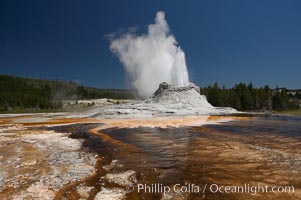
Castle Geyser erupts with the colorful bacteria mats of Tortoise Shell Spring in the foreground. Castle Geyser reaches 60 to 90 feet in height and lasts 20 minutes. While Castle Geyser has a 12 foot sinter cone that took 5,000 to 15,000 years to form, it is in fact situated atop geyserite terraces that themselves may have taken 200,000 years to form, making it likely the oldest active geyser in the park. Upper Geyser Basin.
Location: Upper Geyser Basin, Yellowstone National Park, Wyoming
Image ID: 13443
Location: Upper Geyser Basin, Yellowstone National Park, Wyoming
Image ID: 13443
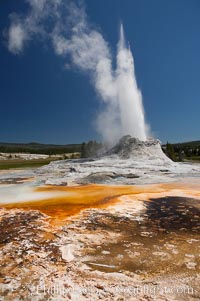
Castle Geyser erupts with the colorful bacteria mats of Tortoise Shell Spring in the foreground. Castle Geyser reaches 60 to 90 feet in height and lasts 20 minutes. While Castle Geyser has a 12 foot sinter cone that took 5,000 to 15,000 years to form, it is in fact situated atop geyserite terraces that themselves may have taken 200,000 years to form, making it likely the oldest active geyser in the park. Upper Geyser Basin.
Location: Upper Geyser Basin, Yellowstone National Park, Wyoming
Image ID: 13444
Location: Upper Geyser Basin, Yellowstone National Park, Wyoming
Image ID: 13444
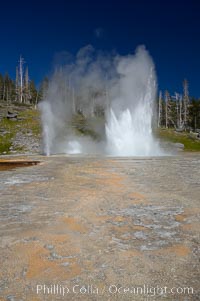
Grand Geyser (right), Turban Geyser (center) and Vent Geyser (left) erupt in concert. An apron of bacteria covered sinter occupies the foreground when water from the eruptions flows away. Grand Geyser is a fountain-type geyser reaching 200 feet in height and lasting up to 12 minutes. Grand Geyser is considered the tallest predictable geyser in the world, erupting about every 12 hours. It is often accompanied by burst or eruptions from Vent Geyser and Turban Geyser just to its left. Upper Geyser Basin.
Location: Upper Geyser Basin, Yellowstone National Park, Wyoming
Image ID: 13449
Location: Upper Geyser Basin, Yellowstone National Park, Wyoming
Image ID: 13449
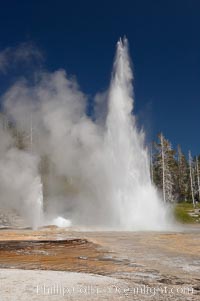
Grand Geyser (right), Turban Geyser (center) and Vent Geyser (left) erupt in concert. An apron of bacteria covered sinter occupies the foreground when water from the eruptions flows away. Grand Geyser is a fountain-type geyser reaching 200 feet in height and lasting up to 12 minutes. Grand Geyser is considered the tallest predictable geyser in the world, erupting about every 12 hours. It is often accompanied by burst or eruptions from Vent Geyser and Turban Geyser just to its left. Upper Geyser Basin.
Location: Upper Geyser Basin, Yellowstone National Park, Wyoming
Image ID: 13453
Location: Upper Geyser Basin, Yellowstone National Park, Wyoming
Image ID: 13453
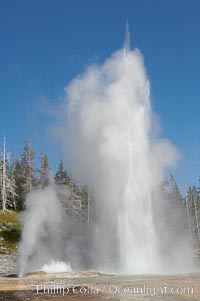
Grand Geyser (right), Turban Geyser (center) and Vent Geyser (left) erupt in concert. An apron of bacteria covered sinter occupies the foreground when water from the eruptions flows away. Grand Geyser is a fountain-type geyser reaching 200 feet in height and lasting up to 12 minutes. Grand Geyser is considered the tallest predictable geyser in the world, erupting about every 12 hours. It is often accompanied by burst or eruptions from Vent Geyser and Turban Geyser just to its left. Upper Geyser Basin.
Location: Upper Geyser Basin, Yellowstone National Park, Wyoming
Image ID: 13455
Location: Upper Geyser Basin, Yellowstone National Park, Wyoming
Image ID: 13455
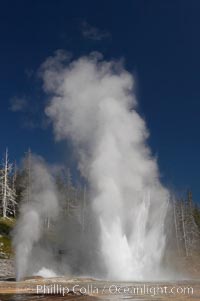
Grand Geyser (right), Turban Geyser (center) and Vent Geyser (left) erupt in concert. An apron of bacteria covered sinter occupies the foreground when water from the eruptions flows away. Grand Geyser is a fountain-type geyser reaching 200 feet in height and lasting up to 12 minutes. Grand Geyser is considered the tallest predictable geyser in the world, erupting about every 12 hours. It is often accompanied by burst or eruptions from Vent Geyser and Turban Geyser just to its left. Upper Geyser Basin.
Location: Upper Geyser Basin, Yellowstone National Park, Wyoming
Image ID: 13459
Location: Upper Geyser Basin, Yellowstone National Park, Wyoming
Image ID: 13459
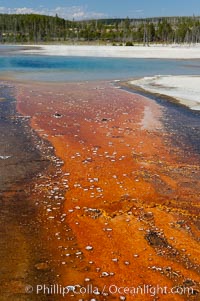
Colorful bacteria mats mark the runoff from Sunset Lake.
Location: Black Sand Basin, Yellowstone National Park, Wyoming
Image ID: 13511
Location: Black Sand Basin, Yellowstone National Park, Wyoming
Image ID: 13511
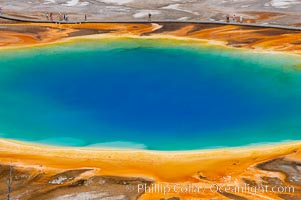
Grand Prismatic Spring displays a stunning rainbow of colors created by species of thermophilac (heat-loving) bacteria that thrive in narrow temperature ranges. The blue water in the center is too hot to support any bacterial life, while the outer orange rings are the coolest water. Grand Prismatic Spring is the largest spring in the United States and the third-largest in the world. Midway Geyser Basin.
Location: Midway Geyser Basin, Yellowstone National Park, Wyoming
Image ID: 13572
Location: Midway Geyser Basin, Yellowstone National Park, Wyoming
Image ID: 13572