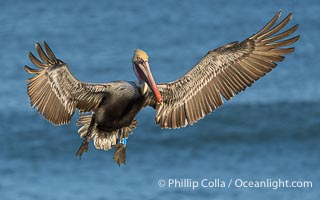
Brown Pelican with Identification Tags on Legs, blue on left leg and metal alloy on right leg. These tags aid scientists in understanding how the birds travel and recover if they have been rehabilitated.
Species: Brown Pelican, Pelecanus occidentalis californicus, Pelecanus occidentalis
Image ID: 39885
Species: Brown Pelican, Pelecanus occidentalis californicus, Pelecanus occidentalis
Image ID: 39885
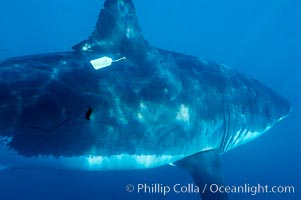
A great white shark bearing a white plastic researcher's identification ID tag near its dorsal fin swims through the clear waters of Isla Guadalupe, far offshore of the Pacific Coast of Baja California. Guadalupe Island is host to a concentration of large great white sharks, which visit the island to feed on pinnipeds and tuna.
Species: Great white shark, Carcharodon carcharias
Location: Guadalupe Island (Isla Guadalupe), Baja California, Mexico
Image ID: 07739
Species: Great white shark, Carcharodon carcharias
Location: Guadalupe Island (Isla Guadalupe), Baja California, Mexico
Image ID: 07739
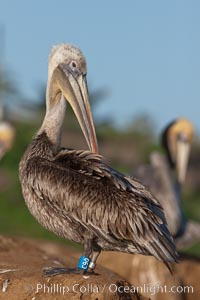
Brown pelican, juvenile with blue and gray identification bands on its legs. These tags aid scientists in understanding how the birds travel and recover if they have been rehabilitated. This large seabird has a wingspan over 7 feet wide. The California race of the brown pelican holds endangered species status, due largely to predation in the early 1900s and to decades of poor reproduction caused by DDT poisoning.
Species: Brown Pelican, Pelecanus occidentalis, Pelecanus occidentalis californicus
Location: La Jolla, California
Image ID: 23630
Species: Brown Pelican, Pelecanus occidentalis, Pelecanus occidentalis californicus
Location: La Jolla, California
Image ID: 23630
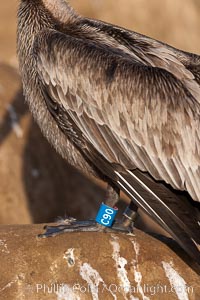
Brown pelican, juvenile with blue and gray identification bands on its legs. These tags aid scientists in understanding how the birds travel and recover if they have been rehabilitated. This large seabird has a wingspan over 7 feet wide. The California race of the brown pelican holds endangered species status, due largely to predation in the early 1900s and to decades of poor reproduction caused by DDT poisoning.
Species: Brown Pelican, Pelecanus occidentalis, Pelecanus occidentalis californicus
Location: La Jolla, California
Image ID: 23631
Species: Brown Pelican, Pelecanus occidentalis, Pelecanus occidentalis californicus
Location: La Jolla, California
Image ID: 23631
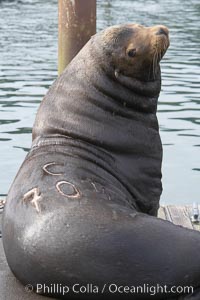
A bull sea lion shows a brand burned into its hide by the Oregon Department of Fish and Wildlife, to monitor it from season to season as it travels between California, Oregon and Washington. Some California sea lions, such as this one C-704, prey upon migrating salmon that gather in the downstream waters and fish ladders of Bonneville Dam on the Columbia River. The "C" in its brand denotes Columbia River. These sea lions also form bachelor colonies that haul out on public docks in Astoria's East Mooring Basin and elsewhere, where they can damage or even sink docks.
Species: California sea lion, Zalophus californianus
Location: Columbia River, Astoria, Oregon
Image ID: 19419
Species: California sea lion, Zalophus californianus
Location: Columbia River, Astoria, Oregon
Image ID: 19419
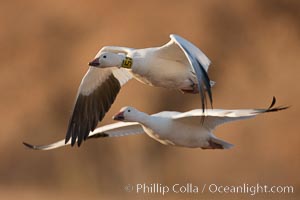
Snow goose bearing neck and leg research ID tags, in flight.
Species: Snow goose, Chen caerulescens
Location: Bosque Del Apache, Socorro, New Mexico
Image ID: 26209
Species: Snow goose, Chen caerulescens
Location: Bosque Del Apache, Socorro, New Mexico
Image ID: 26209
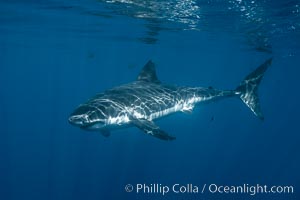
Great white shark, research identification photograph. A great white shark is countershaded, with a dark gray dorsal color and light gray to white underside, making it more difficult for the shark's prey to see it as approaches from above or below in the water column. The particular undulations of the countershading line along its side, where gray meets white, is unique to each shark and helps researchers to identify individual sharks in capture-recapture studies. Guadalupe Island is host to a relatively large population of great white sharks who, through a history of video and photographs showing their countershading lines, are the subject of an ongoing study of shark behaviour, migration and population size.
Species: Great white shark, Carcharodon carcharias
Location: Guadalupe Island (Isla Guadalupe), Baja California, Mexico
Image ID: 28768
Species: Great white shark, Carcharodon carcharias
Location: Guadalupe Island (Isla Guadalupe), Baja California, Mexico
Image ID: 28768
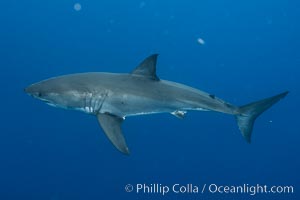
Great white shark, research identification photograph. A great white shark is countershaded, with a dark gray dorsal color and light gray to white underside, making it more difficult for the shark's prey to see it as approaches from above or below in the water column. The particular undulations of the countershading line along its side, where gray meets white, is unique to each shark and helps researchers to identify individual sharks in capture-recapture studies. Guadalupe Island is host to a relatively large population of great white sharks who, through a history of video and photographs showing their countershading lines, are the subject of an ongoing study of shark behaviour, migration and population size.
Species: Great white shark, Carcharodon carcharias
Location: Guadalupe Island (Isla Guadalupe), Baja California, Mexico
Image ID: 28761
Species: Great white shark, Carcharodon carcharias
Location: Guadalupe Island (Isla Guadalupe), Baja California, Mexico
Image ID: 28761
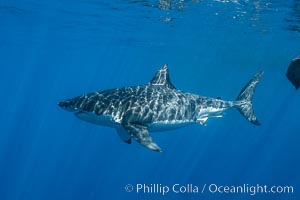
Great white shark, research identification photograph. A great white shark is countershaded, with a dark gray dorsal color and light gray to white underside, making it more difficult for the shark's prey to see it as approaches from above or below in the water column. The particular undulations of the countershading line along its side, where gray meets white, is unique to each shark and helps researchers to identify individual sharks in capture-recapture studies. Guadalupe Island is host to a relatively large population of great white sharks who, through a history of video and photographs showing their countershading lines, are the subject of an ongoing study of shark behaviour, migration and population size.
Species: Great white shark, Carcharodon carcharias
Location: Guadalupe Island (Isla Guadalupe), Baja California, Mexico
Image ID: 28762
Species: Great white shark, Carcharodon carcharias
Location: Guadalupe Island (Isla Guadalupe), Baja California, Mexico
Image ID: 28762
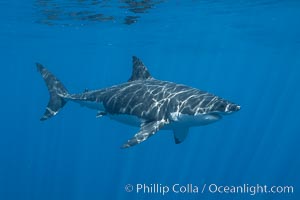
Great white shark, research identification photograph. A great white shark is countershaded, with a dark gray dorsal color and light gray to white underside, making it more difficult for the shark's prey to see it as approaches from above or below in the water column. The particular undulations of the countershading line along its side, where gray meets white, is unique to each shark and helps researchers to identify individual sharks in capture-recapture studies. Guadalupe Island is host to a relatively large population of great white sharks who, through a history of video and photographs showing their countershading lines, are the subject of an ongoing study of shark behaviour, migration and population size.
Species: Great white shark, Carcharodon carcharias
Location: Guadalupe Island (Isla Guadalupe), Baja California, Mexico
Image ID: 28763
Species: Great white shark, Carcharodon carcharias
Location: Guadalupe Island (Isla Guadalupe), Baja California, Mexico
Image ID: 28763
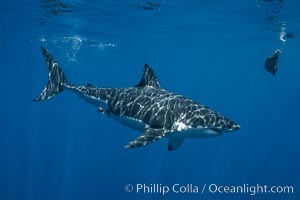
Great white shark, research identification photograph. A great white shark is countershaded, with a dark gray dorsal color and light gray to white underside, making it more difficult for the shark's prey to see it as approaches from above or below in the water column. The particular undulations of the countershading line along its side, where gray meets white, is unique to each shark and helps researchers to identify individual sharks in capture-recapture studies. Guadalupe Island is host to a relatively large population of great white sharks who, through a history of video and photographs showing their countershading lines, are the subject of an ongoing study of shark behaviour, migration and population size.
Species: Great white shark, Carcharodon carcharias
Location: Guadalupe Island (Isla Guadalupe), Baja California, Mexico
Image ID: 28764
Species: Great white shark, Carcharodon carcharias
Location: Guadalupe Island (Isla Guadalupe), Baja California, Mexico
Image ID: 28764
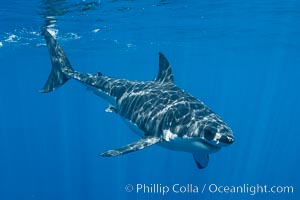
Great white shark, research identification photograph. A great white shark is countershaded, with a dark gray dorsal color and light gray to white underside, making it more difficult for the shark's prey to see it as approaches from above or below in the water column. The particular undulations of the countershading line along its side, where gray meets white, is unique to each shark and helps researchers to identify individual sharks in capture-recapture studies. Guadalupe Island is host to a relatively large population of great white sharks who, through a history of video and photographs showing their countershading lines, are the subject of an ongoing study of shark behaviour, migration and population size.
Species: Great white shark, Carcharodon carcharias
Location: Guadalupe Island (Isla Guadalupe), Baja California, Mexico
Image ID: 28765
Species: Great white shark, Carcharodon carcharias
Location: Guadalupe Island (Isla Guadalupe), Baja California, Mexico
Image ID: 28765
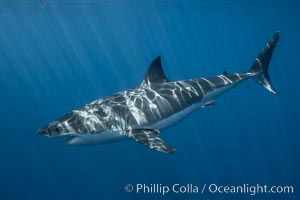
Great white shark, research identification photograph. A great white shark is countershaded, with a dark gray dorsal color and light gray to white underside, making it more difficult for the shark's prey to see it as approaches from above or below in the water column. The particular undulations of the countershading line along its side, where gray meets white, is unique to each shark and helps researchers to identify individual sharks in capture-recapture studies. Guadalupe Island is host to a relatively large population of great white sharks who, through a history of video and photographs showing their countershading lines, are the subject of an ongoing study of shark behaviour, migration and population size.
Species: Great white shark, Carcharodon carcharias
Location: Guadalupe Island (Isla Guadalupe), Baja California, Mexico
Image ID: 28766
Species: Great white shark, Carcharodon carcharias
Location: Guadalupe Island (Isla Guadalupe), Baja California, Mexico
Image ID: 28766
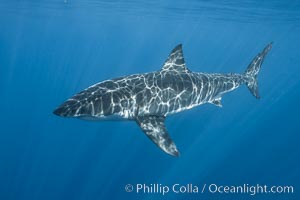
Great white shark, research identification photograph. A great white shark is countershaded, with a dark gray dorsal color and light gray to white underside, making it more difficult for the shark's prey to see it as approaches from above or below in the water column. The particular undulations of the countershading line along its side, where gray meets white, is unique to each shark and helps researchers to identify individual sharks in capture-recapture studies. Guadalupe Island is host to a relatively large population of great white sharks who, through a history of video and photographs showing their countershading lines, are the subject of an ongoing study of shark behaviour, migration and population size.
Species: Great white shark, Carcharodon carcharias
Location: Guadalupe Island (Isla Guadalupe), Baja California, Mexico
Image ID: 28767
Species: Great white shark, Carcharodon carcharias
Location: Guadalupe Island (Isla Guadalupe), Baja California, Mexico
Image ID: 28767
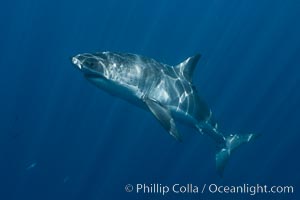
Great white shark, research identification photograph. A great white shark is countershaded, with a dark gray dorsal color and light gray to white underside, making it more difficult for the shark's prey to see it as approaches from above or below in the water column. The particular undulations of the countershading line along its side, where gray meets white, is unique to each shark and helps researchers to identify individual sharks in capture-recapture studies. Guadalupe Island is host to a relatively large population of great white sharks who, through a history of video and photographs showing their countershading lines, are the subject of an ongoing study of shark behaviour, migration and population size.
Species: Great white shark, Carcharodon carcharias
Location: Guadalupe Island (Isla Guadalupe), Baja California, Mexico
Image ID: 28769
Species: Great white shark, Carcharodon carcharias
Location: Guadalupe Island (Isla Guadalupe), Baja California, Mexico
Image ID: 28769
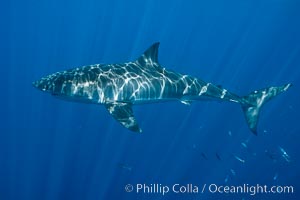
Great white shark, research identification photograph. A great white shark is countershaded, with a dark gray dorsal color and light gray to white underside, making it more difficult for the shark's prey to see it as approaches from above or below in the water column. The particular undulations of the countershading line along its side, where gray meets white, is unique to each shark and helps researchers to identify individual sharks in capture-recapture studies. Guadalupe Island is host to a relatively large population of great white sharks who, through a history of video and photographs showing their countershading lines, are the subject of an ongoing study of shark behaviour, migration and population size.
Species: Great white shark, Carcharodon carcharias
Location: Guadalupe Island (Isla Guadalupe), Baja California, Mexico
Image ID: 28770
Species: Great white shark, Carcharodon carcharias
Location: Guadalupe Island (Isla Guadalupe), Baja California, Mexico
Image ID: 28770
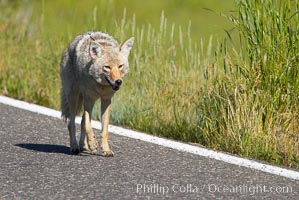
Coyote, Lamar Valley. This coyote bears not only a radio tracking collar, so researchers can follow its daily movements, but also a small green tag on its left ear.
Species: Coyote, Canis latrans
Location: Lamar Valley, Yellowstone National Park, Wyoming
Image ID: 13093
Species: Coyote, Canis latrans
Location: Lamar Valley, Yellowstone National Park, Wyoming
Image ID: 13093
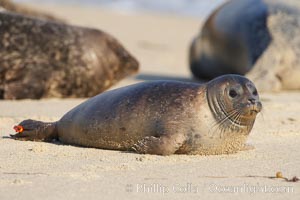
Pacific harbor seal, juvenile, with research identification tag on hind flipper. Childrens Pool.
Species: Pacific harbor seal, Phoca vitulina richardsi
Location: La Jolla, California
Image ID: 18263
Species: Pacific harbor seal, Phoca vitulina richardsi
Location: La Jolla, California
Image ID: 18263
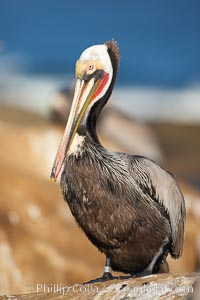
California brown pelican wearing identification tag, winter mating plumage. These tags aid scientists in understanding how the birds travel and recover if they have been rehabilitated.
Species: Brown Pelican, Pelecanus occidentalis, Pelecanus occidentalis californicus
Location: La Jolla, California
Image ID: 18524
Species: Brown Pelican, Pelecanus occidentalis, Pelecanus occidentalis californicus
Location: La Jolla, California
Image ID: 18524
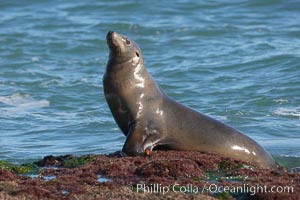
California sea lion wearing identification tag on left foreflipper.
Species: California sea lion, Zalophus californianus
Location: La Jolla, California
Image ID: 18544
Species: California sea lion, Zalophus californianus
Location: La Jolla, California
Image ID: 18544
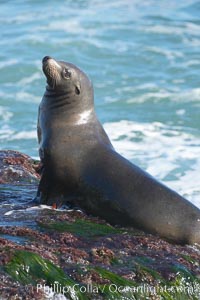
California sea lion.
Species: California sea lion, Zalophus californianus
Location: La Jolla, California
Image ID: 18554
Species: California sea lion, Zalophus californianus
Location: La Jolla, California
Image ID: 18554
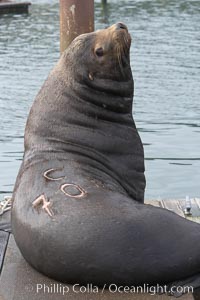
A bull sea lion shows a brand burned into its hide by the Oregon Department of Fish and Wildlife, to monitor it from season to season as it travels between California, Oregon and Washington. Some California sea lions, such as this one C-704, prey upon migrating salmon that gather in the downstream waters and fish ladders of Bonneville Dam on the Columbia River. The "C" in its brand denotes Columbia River. These sea lions also form bachelor colonies that haul out on public docks in Astoria's East Mooring Basin and elsewhere, where they can damage or even sink docks.
Species: California sea lion, Zalophus californianus
Location: Columbia River, Astoria, Oregon
Image ID: 19430
Species: California sea lion, Zalophus californianus
Location: Columbia River, Astoria, Oregon
Image ID: 19430
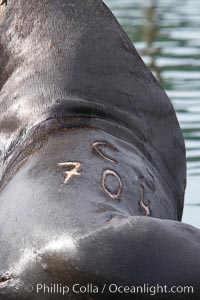
A bull sea lion shows a brand burned into its hide by the Oregon Department of Fish and Wildlife, to monitor it from season to season as it travels between California, Oregon and Washington. Some California sea lions, such as this one C-704, prey upon migrating salmon that gather in the downstream waters and fish ladders of Bonneville Dam on the Columbia River. The "C" in its brand denotes Columbia River. These sea lions also form bachelor colonies that haul out on public docks in Astoria's East Mooring Basin and elsewhere, where they can damage or even sink docks.
Species: California sea lion, Zalophus californianus
Location: Columbia River, Astoria, Oregon
Image ID: 19433
Species: California sea lion, Zalophus californianus
Location: Columbia River, Astoria, Oregon
Image ID: 19433
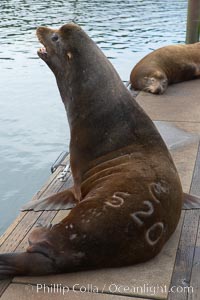
A bull sea lion shows a brand burned into its hide by the Oregon Department of Fish and Wildlife, to monitor it from season to season as it travels between California, Oregon and Washington. Some California sea lions, such as this one C-520, prey upon migrating salmon that gather in the downstream waters and fish ladders of Bonneville Dam on the Columbia River. The "C" in its brand denotes Columbia River. These sea lions also form bachelor colonies that haul out on public docks in Astoria's East Mooring Basin and elsewhere, where they can damage or even sink docks.
Species: California sea lion, Zalophus californianus
Location: Columbia River, Astoria, Oregon
Image ID: 19434
Species: California sea lion, Zalophus californianus
Location: Columbia River, Astoria, Oregon
Image ID: 19434
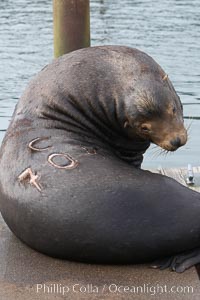
A bull sea lion shows a brand burned into its hide by the Oregon Department of Fish and Wildlife, to monitor it from season to season as it travels between California, Oregon and Washington. Some California sea lions, such as this one C-704, prey upon migrating salmon that gather in the downstream waters and fish ladders of Bonneville Dam on the Columbia River. The "C" in its brand denotes Columbia River. These sea lions also form bachelor colonies that haul out on public docks in Astoria's East Mooring Basin and elsewhere, where they can damage or even sink docks.
Species: California sea lion, Zalophus californianus
Location: Columbia River, Astoria, Oregon
Image ID: 19441
Species: California sea lion, Zalophus californianus
Location: Columbia River, Astoria, Oregon
Image ID: 19441
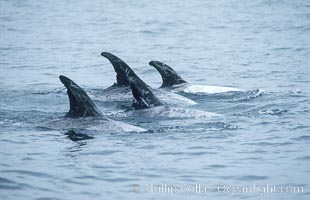
A group of Rissos dolphin surfaces. Extensive scarring on adult Rissos dolphins allows identification of individuals based on their dorsal fins, provided the identification methodology incorporates scarring acquired in future years. Offshore near San Diego.
Species: Risso's dolphin, Grampus griseus
Location: San Diego, California
Image ID: 07601
Species: Risso's dolphin, Grampus griseus
Location: San Diego, California
Image ID: 07601
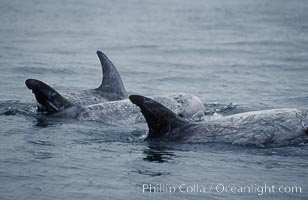
A group of Rissos dolphin surfaces. Extensive scarring on adult Rissos dolphins allows identification of individuals based on their dorsal fins, provided the identification methodology incorporates scarring acquired in future years. Offshore near San Diego.
Species: Risso's dolphin, Grampus griseus
Location: San Diego, California
Image ID: 07600
Species: Risso's dolphin, Grampus griseus
Location: San Diego, California
Image ID: 07600
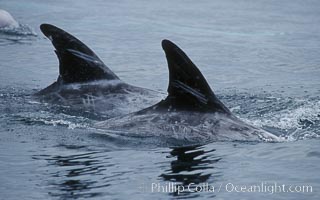
A group of Rissos dolphin surfaces. Extensive scarring on adult Rissos dolphins allows identification of individuals based on their dorsal fins, provided the identification methodology incorporates scarring acquired in future years. Offshore near San Diego.
Species: Risso's dolphin, Grampus griseus
Location: San Diego, California
Image ID: 07602
Species: Risso's dolphin, Grampus griseus
Location: San Diego, California
Image ID: 07602
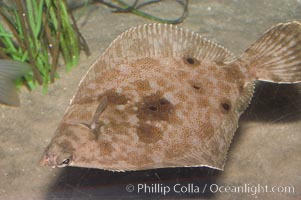
English sole (probable but uncertain identification).
Species: English sole, Parophrys vetulus
Image ID: 07885
Species: English sole, Parophrys vetulus
Image ID: 07885
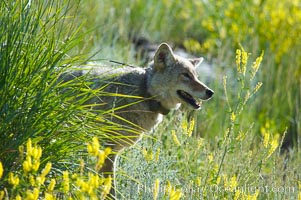
Coyote, Lamar Valley. This coyote bears not only a radio tracking collar, so researchers can follow its daily movements, but also a small green tag on its left ear.
Species: Coyote, Canis latrans
Location: Lamar Valley, Yellowstone National Park, Wyoming
Image ID: 13091
Species: Coyote, Canis latrans
Location: Lamar Valley, Yellowstone National Park, Wyoming
Image ID: 13091