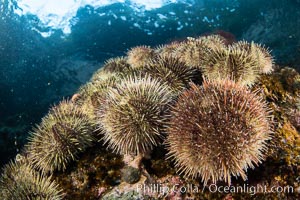
Sea urchins cling to a shallow reef in Browning Pass, Vancouver Island.
Location: British Columbia, Canada
Image ID: 35323
Location: British Columbia, Canada
Image ID: 35323
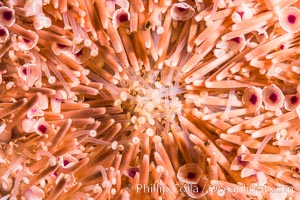
Sea Urchin Detail, Sea of Cortez, Mexico.
Location: Isla San Francisquito, Baja California, Mexico
Image ID: 33648
Location: Isla San Francisquito, Baja California, Mexico
Image ID: 33648
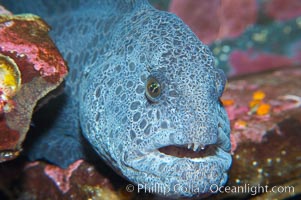
Wolf eel, although similar in shape to eels, is cartilaginous and not a true fish. Its powerful jaws can crush invertibrates, such as spiny sea urchins. It can grow to 6 feet (2m) in length.
Species: Wolf eel, Anarrhichthys ocellatus
Image ID: 13702
Species: Wolf eel, Anarrhichthys ocellatus
Image ID: 13702
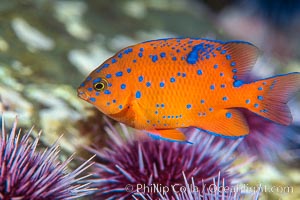
Juvenile garibaldi and purple urchins, Coronado Islands.
Species: Garibaldi, Hypsypops rubicundus, Strongylocentrotus purpuratus
Location: Coronado Islands (Islas Coronado), Baja California, Mexico
Image ID: 02513
Species: Garibaldi, Hypsypops rubicundus, Strongylocentrotus purpuratus
Location: Coronado Islands (Islas Coronado), Baja California, Mexico
Image ID: 02513
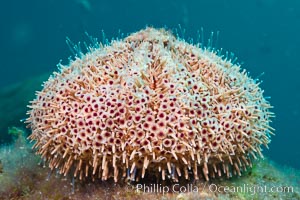
Flower sea urchin with pedicellariae visible.
Species: Flower sea urchin, Toxopneustes roseus
Location: Sea of Cortez, Baja California, Mexico
Image ID: 27528
Species: Flower sea urchin, Toxopneustes roseus
Location: Sea of Cortez, Baja California, Mexico
Image ID: 27528
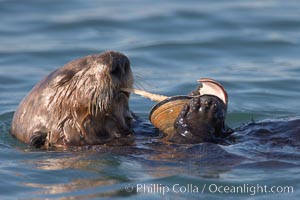
A sea otter eats a clam that it has taken from the shallow sandy bottom of Elkhorn Slough. Because sea otters have such a high metabolic rate, they eat up to 30% of their body weight each day in the form of clams, mussels, urchins, crabs and abalone. Sea otters are the only known tool-using marine mammal, using a stone or old shell to open the shells of their prey as they float on their backs.
Species: Sea otter, Enhydra lutris
Location: Elkhorn Slough National Estuarine Research Reserve, Moss Landing, California
Image ID: 21612
Species: Sea otter, Enhydra lutris
Location: Elkhorn Slough National Estuarine Research Reserve, Moss Landing, California
Image ID: 21612
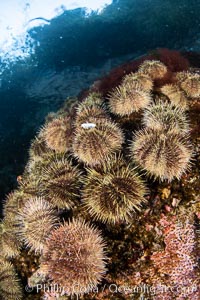
Sea urchins cling to a shallow reef in Browning Pass, Vancouver Island.
Location: British Columbia, Canada
Image ID: 35457
Location: British Columbia, Canada
Image ID: 35457
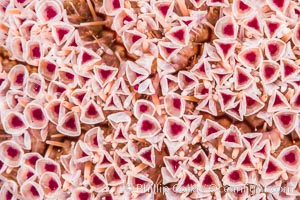
Sea Urchin Detail, Sea of Cortez, Mexico.
Location: Isla San Francisquito, Baja California, Mexico
Image ID: 33647
Location: Isla San Francisquito, Baja California, Mexico
Image ID: 33647
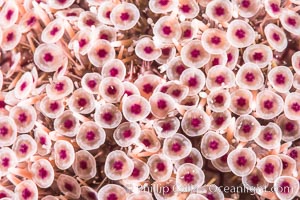
Sea Urchin Detail, Sea of Cortez, Mexico.
Location: Isla San Francisquito, Baja California, Mexico
Image ID: 33649
Location: Isla San Francisquito, Baja California, Mexico
Image ID: 33649
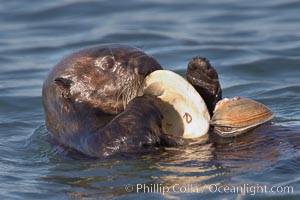
A sea otter eats a clam that it has taken from the shallow sandy bottom of Elkhorn Slough. Because sea otters have such a high metabolic rate, they eat up to 30% of their body weight each day in the form of clams, mussels, urchins, crabs and abalone. Sea otters are the only known tool-using marine mammal, using a stone or old shell to open the shells of their prey as they float on their backs.
Species: Sea otter, Enhydra lutris
Location: Elkhorn Slough National Estuarine Research Reserve, Moss Landing, California
Image ID: 21609
Species: Sea otter, Enhydra lutris
Location: Elkhorn Slough National Estuarine Research Reserve, Moss Landing, California
Image ID: 21609
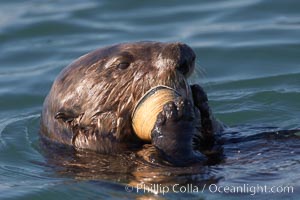
A sea otter eats a clam that it has taken from the shallow sandy bottom of Elkhorn Slough. Because sea otters have such a high metabolic rate, they eat up to 30% of their body weight each day in the form of clams, mussels, urchins, crabs and abalone. Sea otters are the only known tool-using marine mammal, using a stone or old shell to open the shells of their prey as they float on their backs.
Species: Sea otter, Enhydra lutris
Location: Elkhorn Slough National Estuarine Research Reserve, Moss Landing, California
Image ID: 21622
Species: Sea otter, Enhydra lutris
Location: Elkhorn Slough National Estuarine Research Reserve, Moss Landing, California
Image ID: 21622
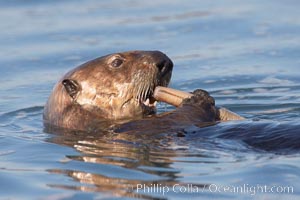
A sea otter eats a clam that it has taken from the shallow sandy bottom of Elkhorn Slough. Because sea otters have such a high metabolic rate, they eat up to 30% of their body weight each day in the form of clams, mussels, urchins, crabs and abalone. Sea otters are the only known tool-using marine mammal, using a stone or old shell to open the shells of their prey as they float on their backs.
Species: Sea otter, Enhydra lutris
Location: Elkhorn Slough National Estuarine Research Reserve, Moss Landing, California
Image ID: 21640
Species: Sea otter, Enhydra lutris
Location: Elkhorn Slough National Estuarine Research Reserve, Moss Landing, California
Image ID: 21640
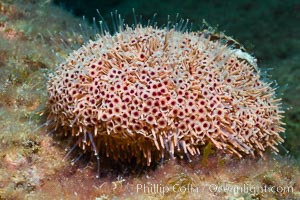
Flower sea urchin with pedicellariae visible.
Species: Flower sea urchin, Toxopneustes roseus
Location: Sea of Cortez, Baja California, Mexico
Image ID: 27533
Species: Flower sea urchin, Toxopneustes roseus
Location: Sea of Cortez, Baja California, Mexico
Image ID: 27533
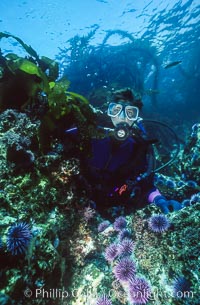
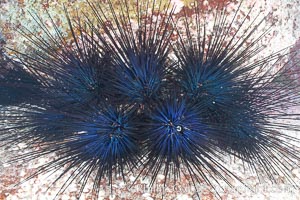
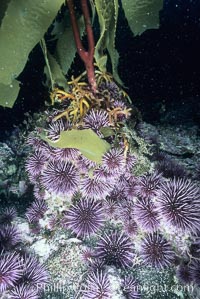
Purple urchins destroying/eating giant kelp holdfast.
Species: Purple Urchin, Giant Kelp, Macrocystis pyrifera, Strongylocentrotus purpuratus
Location: Santa Barbara Island, California
Image ID: 03404
Species: Purple Urchin, Giant Kelp, Macrocystis pyrifera, Strongylocentrotus purpuratus
Location: Santa Barbara Island, California
Image ID: 03404
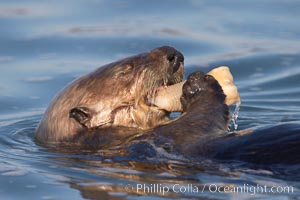
A sea otter eats a clam that it has taken from the shallow sandy bottom of Elkhorn Slough. Because sea otters have such a high metabolic rate, they eat up to 30% of their body weight each day in the form of clams, mussels, urchins, crabs and abalone. Sea otters are the only known tool-using marine mammal, using a stone or old shell to open the shells of their prey as they float on their backs.
Species: Sea otter, Enhydra lutris
Location: Elkhorn Slough National Estuarine Research Reserve, Moss Landing, California
Image ID: 21652
Species: Sea otter, Enhydra lutris
Location: Elkhorn Slough National Estuarine Research Reserve, Moss Landing, California
Image ID: 21652
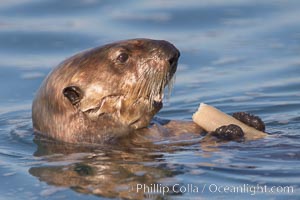
A sea otter eats a clam that it has taken from the shallow sandy bottom of Elkhorn Slough. Because sea otters have such a high metabolic rate, they eat up to 30% of their body weight each day in the form of clams, mussels, urchins, crabs and abalone. Sea otters are the only known tool-using marine mammal, using a stone or old shell to open the shells of their prey as they float on their backs.
Species: Sea otter, Enhydra lutris
Location: Elkhorn Slough National Estuarine Research Reserve, Moss Landing, California
Image ID: 21660
Species: Sea otter, Enhydra lutris
Location: Elkhorn Slough National Estuarine Research Reserve, Moss Landing, California
Image ID: 21660
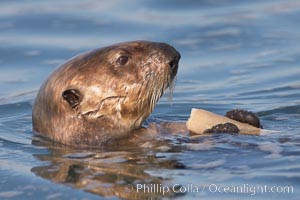
A sea otter eats a clam that it has taken from the shallow sandy bottom of Elkhorn Slough. Because sea otters have such a high metabolic rate, they eat up to 30% of their body weight each day in the form of clams, mussels, urchins, crabs and abalone. Sea otters are the only known tool-using marine mammal, using a stone or old shell to open the shells of their prey as they float on their backs.
Species: Sea otter, Enhydra lutris
Location: Elkhorn Slough National Estuarine Research Reserve, Moss Landing, California
Image ID: 21661
Species: Sea otter, Enhydra lutris
Location: Elkhorn Slough National Estuarine Research Reserve, Moss Landing, California
Image ID: 21661
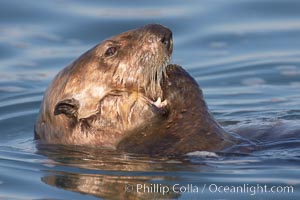
A sea otter eats a clam that it has taken from the shallow sandy bottom of Elkhorn Slough. Because sea otters have such a high metabolic rate, they eat up to 30% of their body weight each day in the form of clams, mussels, urchins, crabs and abalone. Sea otters are the only known tool-using marine mammal, using a stone or old shell to open the shells of their prey as they float on their backs.
Species: Sea otter, Enhydra lutris
Location: Elkhorn Slough National Estuarine Research Reserve, Moss Landing, California
Image ID: 21662
Species: Sea otter, Enhydra lutris
Location: Elkhorn Slough National Estuarine Research Reserve, Moss Landing, California
Image ID: 21662
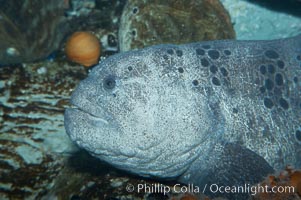
Wolf eel, although similar in shape to eels, is cartilaginous and not a true fish. Its powerful jaws can crush invertibrates, such as spiny sea urchins. It can grow to 6 feet (2m) in length.
Species: Wolf eel, Anarrhichthys ocellatus
Image ID: 11847
Species: Wolf eel, Anarrhichthys ocellatus
Image ID: 11847
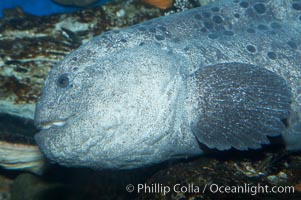
Wolf eel, although similar in shape to eels, is cartilaginous and not a true fish. Its powerful jaws can crush invertibrates, such as spiny sea urchins. It can grow to 6 feet (2m) in length.
Species: Wolf eel, Anarrhichthys ocellatus
Image ID: 11848
Species: Wolf eel, Anarrhichthys ocellatus
Image ID: 11848
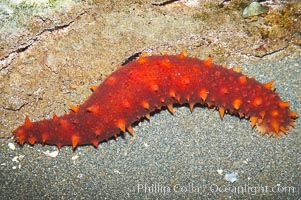
California sea cucumber. Sea cucumbers are related to sea stars and sea urchins. The sharp looking spines are soft to the touch and disappear into the skin when disturbed. If this visual defense doesnt work, the sea cucumber will expel its respiratory system. When this occurs in the wild it can regrow the lost organs.
Species: California sea cucumber, Parastichopus californicus
Image ID: 13732
Species: California sea cucumber, Parastichopus californicus
Image ID: 13732
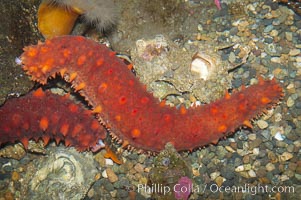
California sea cucumber. Sea cucumbers are related to sea stars and sea urchins. The sharp looking spines are soft to the touch and disappear into the skin when disturbed. If this visual defense doesnt work, the sea cucumber will expel its respiratory system. When this occurs in the wild it can regrow the lost organs.
Species: California sea cucumber, Parastichopus californicus
Image ID: 13733
Species: California sea cucumber, Parastichopus californicus
Image ID: 13733
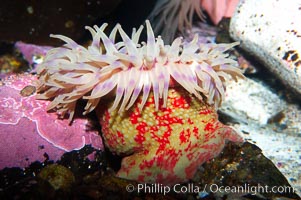
Christmas anemone, feeds on small crabs, urchins and fish, may live 60 to 80 years.
Species: Christmas anemone, Urticina crassicornis
Image ID: 16965
Species: Christmas anemone, Urticina crassicornis
Image ID: 16965
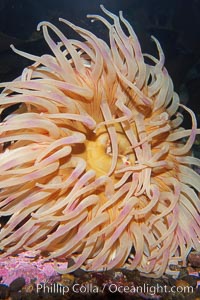
Christmas anemone, feeds on small crabs, urchins and fish, may live 60 to 80 years.
Species: Christmas anemone, Urticina crassicornis
Image ID: 16966
Species: Christmas anemone, Urticina crassicornis
Image ID: 16966
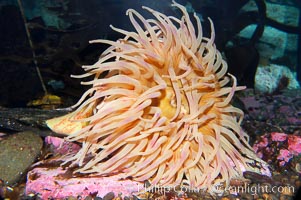
Christmas anemone, feeds on small crabs, urchins and fish, may live 60 to 80 years.
Species: Christmas anemone, Urticina crassicornis
Image ID: 16967
Species: Christmas anemone, Urticina crassicornis
Image ID: 16967
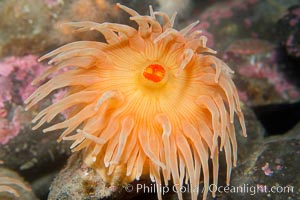
Christmas anemone, feeds on small crabs, urchins and fish, may live 60 to 80 years.
Species: Christmas anemone, Urticina crassicornis
Image ID: 16971
Species: Christmas anemone, Urticina crassicornis
Image ID: 16971
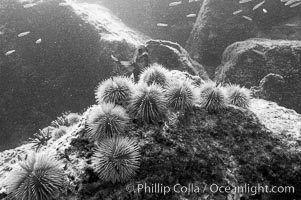
Urchins on rock, black and white / grainy.
Location: Isla Lobos, Galapagos Islands, Ecuador
Image ID: 16418
Location: Isla Lobos, Galapagos Islands, Ecuador
Image ID: 16418
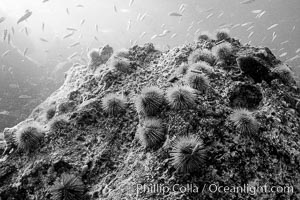
Urchins on rock, black and white / grainy.
Location: Isla Lobos, Galapagos Islands, Ecuador
Image ID: 16419
Location: Isla Lobos, Galapagos Islands, Ecuador
Image ID: 16419