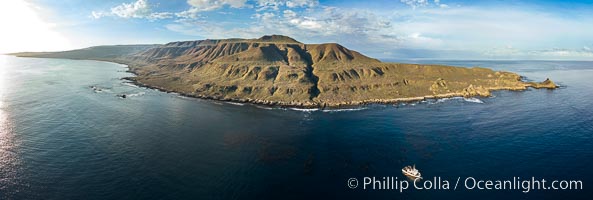
San Clemente Island aerial photo, Pyramid Head and Balanced Rock at the southern end of the island. San Clemente Island Pyramid Head, the distinctive pyramid shaped southern end of the island, exhibits distinctive geologic terracing, underwater reefs and giant kelp forests.
Location: San Clemente Island, California
Image ID: 38485
Panorama dimensions: 4232 x 12542
Location: San Clemente Island, California
Image ID: 38485
Panorama dimensions: 4232 x 12542
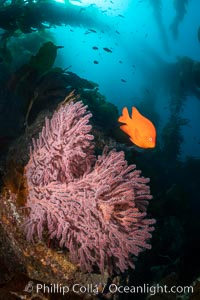
Garibaldi and Brown Gorgonian Muricea fruticosa, Catalina Island, with giant kelp stands reaching from the reef to the surface of the ocean in the distance. The clown prince of the kelp forest, the Garibaldi, alternately poses for me and chirps at me to move away from his gorgonian.
Species: Garibaldi, Hypsypops rubicundus
Location: Catalina Island, California
Image ID: 37157
Species: Garibaldi, Hypsypops rubicundus
Location: Catalina Island, California
Image ID: 37157
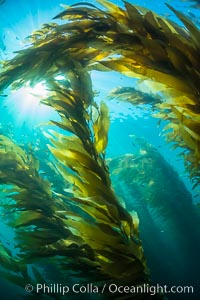
Sunlight streams through giant kelp forest. Giant kelp, the fastest growing plant on Earth, reaches from the rocky reef to the ocean's surface like a submarine forest.
Species: Giant kelp, Macrocystis pyrifera
Location: Catalina Island, California
Image ID: 33438
Species: Giant kelp, Macrocystis pyrifera
Location: Catalina Island, California
Image ID: 33438
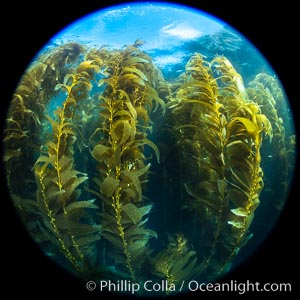
Giant Kelp Forest, West End Catalina Island, rendered in the round by a circular fisheye lens.
Species: Giant kelp, Macrocystis pyrifera
Location: Catalina Island, California
Image ID: 37279
Species: Giant kelp, Macrocystis pyrifera
Location: Catalina Island, California
Image ID: 37279
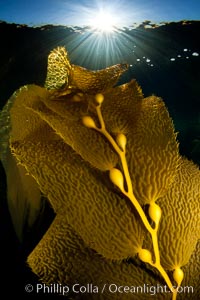
Kelp fronds and pneumatocysts. Pneumatocysts, gas-filled bladders, float the kelp plant off the ocean bottom toward the surface and sunlight, where the leaf-like blades and stipes of the kelp plant grow fastest. Giant kelp can grow up to 2' in a single day given optimal conditions. Epic submarine forests of kelp grow throughout California's Southern Channel Islands.
Species: Giant kelp, Macrocystis pyrifera
Location: San Clemente Island, California
Image ID: 25396
Species: Giant kelp, Macrocystis pyrifera
Location: San Clemente Island, California
Image ID: 25396
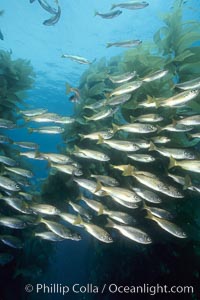
Salema schooling amid kelp forest.
Species: Salema, Giant Kelp, Macrocystis pyrifera, Xenistius californiensis
Location: Catalina Island, California
Image ID: 01022
Species: Salema, Giant Kelp, Macrocystis pyrifera, Xenistius californiensis
Location: Catalina Island, California
Image ID: 01022
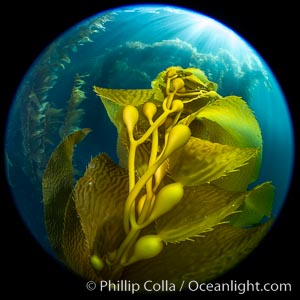
Kelp fronds and pneumatocysts. Pneumatocysts, gas-filled bladders, float the kelp off the ocean bottom toward the surface and sunlight, where the leaf-like blades and stipes of the kelp plant grow fastest. Catalina Island, California.
Species: Giant kelp, Macrocystis pyrifera
Location: Catalina Island, California
Image ID: 37282
Species: Giant kelp, Macrocystis pyrifera
Location: Catalina Island, California
Image ID: 37282
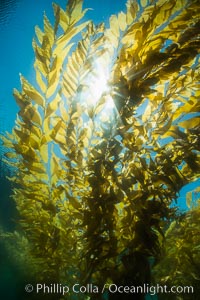
The Kelp Forest offshore of La Jolla, California. A kelp forest. Giant kelp grows rapidly, up to 2' per day, from the rocky reef on the ocean bottom to which it is anchored, toward the ocean surface where it spreads to form a thick canopy. Myriad species of fishes, mammals and invertebrates form a rich community in the kelp forest. Lush forests of kelp are found throughout California's Southern Channel Islands.
Species: Giant kelp, Macrocystis pyrifera
Image ID: 30986
Species: Giant kelp, Macrocystis pyrifera
Image ID: 30986
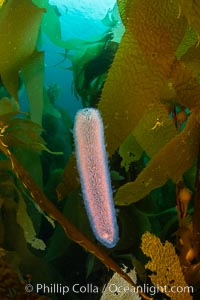
Pyrosome in Kelp Forest, Santa Barbara Island.
Species: Pyrosome, Giant Kelp, Pyrosoma, Macrocystis pyrifera
Location: Santa Barbara Island, California
Image ID: 35826
Species: Pyrosome, Giant Kelp, Pyrosoma, Macrocystis pyrifera
Location: Santa Barbara Island, California
Image ID: 35826
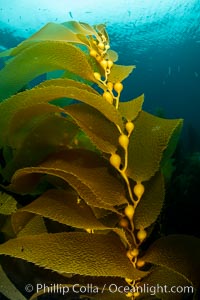
Kelp fronds showing pneumatocysts, bouyant gas-filled bubble-like structures which float the kelp plant off the ocean bottom toward the surface, where it will spread to form a roof-like canopy.
Species: Giant Kelp, Macrocystis pyrifera
Location: Santa Barbara Island, California
Image ID: 35827
Species: Giant Kelp, Macrocystis pyrifera
Location: Santa Barbara Island, California
Image ID: 35827
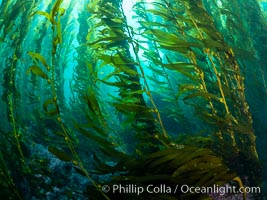
Kelp Forest, Santa Barbara Island.
Species: Giant Kelp, Macrocystis pyrifera
Location: Santa Barbara Island, California
Image ID: 35830
Species: Giant Kelp, Macrocystis pyrifera
Location: Santa Barbara Island, California
Image ID: 35830
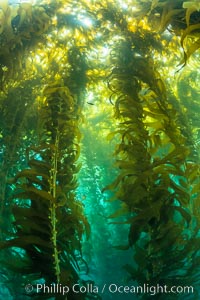
Sunlight glows throughout a giant kelp forest. Giant kelp, the fastest growing plant on Earth, reaches from the rocky reef to the ocean's surface like a submarine forest.
Species: Giant kelp, Macrocystis pyrifera
Location: San Clemente Island, California
Image ID: 37086
Species: Giant kelp, Macrocystis pyrifera
Location: San Clemente Island, California
Image ID: 37086
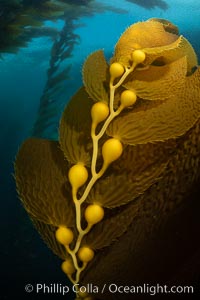
Kelp fronds and pneumatocysts. Pneumatocysts, gas-filled bladders, float the kelp plant off the ocean bottom toward the surface and sunlight, where the leaf-like blades and stipes of the kelp plant grow fastest. Giant kelp can grow up to 2' in a single day given optimal conditions. Epic submarine forests of kelp grow throughout California's Southern Channel Islands.
Species: Giant kelp, Macrocystis pyrifera
Location: San Clemente Island, California
Image ID: 37100
Species: Giant kelp, Macrocystis pyrifera
Location: San Clemente Island, California
Image ID: 37100
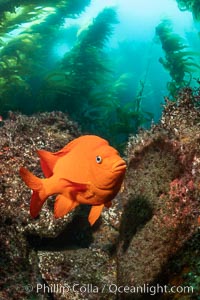
Garibaldi maintains a patch of algae (just in front of the fish) to entice a female to lay a clutch of eggs.
Species: Garibaldi, Giant Kelp, Hypsypops rubicundus, Macrocystis pyrifera
Image ID: 37144
Species: Garibaldi, Giant Kelp, Hypsypops rubicundus, Macrocystis pyrifera
Image ID: 37144
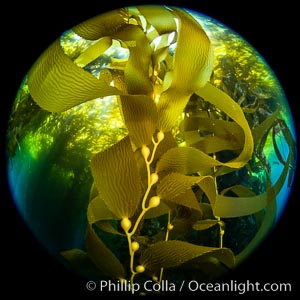
Kelp fronds and pneumatocysts, giant kelp forest, Catalina Island.
Species: Giant Kelp, Macrocystis pyrifera
Location: Catalina Island, California
Image ID: 37193
Species: Giant Kelp, Macrocystis pyrifera
Location: Catalina Island, California
Image ID: 37193
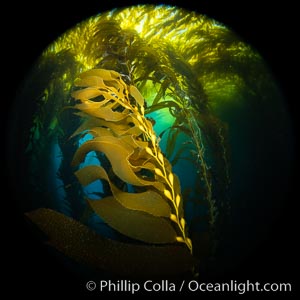
Kelp fronds and pneumatocysts, giant kelp forest, Catalina Island.
Species: Giant Kelp, Macrocystis pyrifera
Location: Catalina Island, California
Image ID: 37199
Species: Giant Kelp, Macrocystis pyrifera
Location: Catalina Island, California
Image ID: 37199
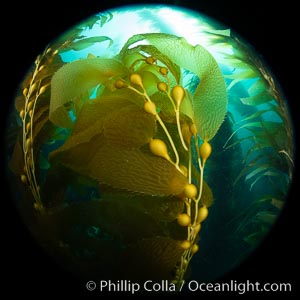
Kelp fronds and pneumatocysts. Pneumatocysts, gas-filled bladders, float the kelp off the ocean bottom toward the surface and sunlight, where the leaf-like blades and stipes of the kelp plant grow fastest.
Species: Giant kelp, Macrocystis pyrifera
Location: Catalina Island, California
Image ID: 37297
Species: Giant kelp, Macrocystis pyrifera
Location: Catalina Island, California
Image ID: 37297
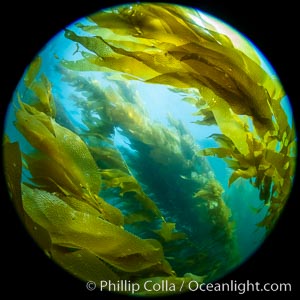
Giant Kelp Forest, West End Catalina Island.
Species: Giant kelp, Macrocystis pyrifera
Location: Catalina Island, California
Image ID: 37300
Species: Giant kelp, Macrocystis pyrifera
Location: Catalina Island, California
Image ID: 37300
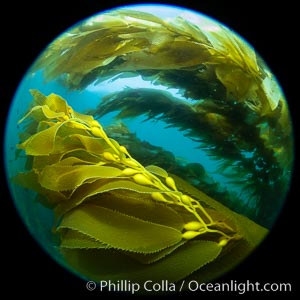
Giant Kelp Forest, West End Catalina Island.
Species: Giant kelp, Macrocystis pyrifera
Location: Catalina Island, California
Image ID: 37301
Species: Giant kelp, Macrocystis pyrifera
Location: Catalina Island, California
Image ID: 37301
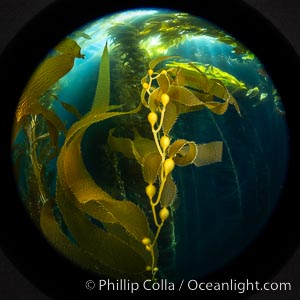
Giant Kelp Forest, West End Catalina Island, rendered in the round by a circular fisheye lens.
Location: Catalina Island, California
Image ID: 38480
Location: Catalina Island, California
Image ID: 38480
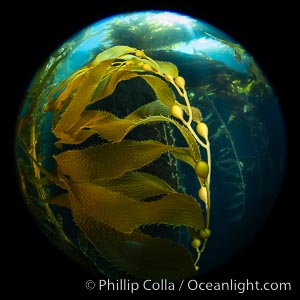
Giant Kelp Forest, West End Catalina Island, rendered in the round by a circular fisheye lens.
Location: Catalina Island, California
Image ID: 38481
Location: Catalina Island, California
Image ID: 38481
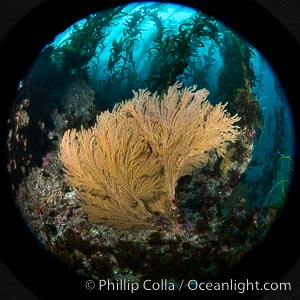
Garibaldi and California golden gorgonian on underwater rocky reef, San Clemente Island. The golden gorgonian is a filter-feeding temperate colonial species that lives on the rocky bottom at depths between 50 to 200 feet deep. Each individual polyp is a distinct animal, together they secrete calcium that forms the structure of the colony. Gorgonians are oriented at right angles to prevailing water currents to capture plankton drifting by.
Species: California Golden Gorgonian, Giant Kelp, Garibaldi, Muricea californica, Macrocystis pyrifera, Hypsypops rubicundus
Location: San Clemente Island, California
Image ID: 38501
Species: California Golden Gorgonian, Giant Kelp, Garibaldi, Muricea californica, Macrocystis pyrifera, Hypsypops rubicundus
Location: San Clemente Island, California
Image ID: 38501
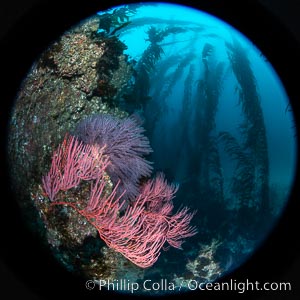
Red gorgonian on rocky reef, below kelp forest, underwater. The red gorgonian is a filter-feeding temperate colonial species that lives on the rocky bottom at depths between 50 to 200 feet deep. Gorgonians are typically oriented at right angles to prevailing water currents to capture plankton drifting by.
Species: Red gorgonian, Giant kelp, Brown gorgonian, Leptogorgia chilensis, Lophogorgia chilensis, Macrocystis pyrifera, Muricea fruticosa
Location: San Clemente Island, California
Image ID: 38502
Species: Red gorgonian, Giant kelp, Brown gorgonian, Leptogorgia chilensis, Lophogorgia chilensis, Macrocystis pyrifera, Muricea fruticosa
Location: San Clemente Island, California
Image ID: 38502
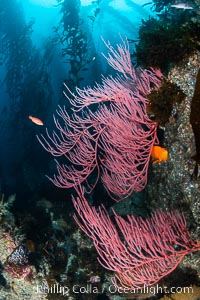
Red gorgonian on rocky reef, below kelp forest, underwater. The red gorgonian is a filter-feeding temperate colonial species that lives on the rocky bottom at depths between 50 to 200 feet deep. Gorgonians are typically oriented at right angles to prevailing water currents to capture plankton drifting by.
Species: Red gorgonian, Giant kelp, Leptogorgia chilensis, Lophogorgia chilensis, Macrocystis pyrifera
Location: San Clemente Island, California
Image ID: 38503
Species: Red gorgonian, Giant kelp, Leptogorgia chilensis, Lophogorgia chilensis, Macrocystis pyrifera
Location: San Clemente Island, California
Image ID: 38503
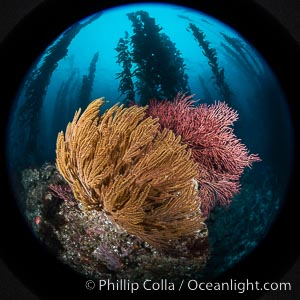
Garibaldi and California golden gorgonian on underwater rocky reef, San Clemente Island. The golden gorgonian is a filter-feeding temperate colonial species that lives on the rocky bottom at depths between 50 to 200 feet deep. Each individual polyp is a distinct animal, together they secrete calcium that forms the structure of the colony. Gorgonians are oriented at right angles to prevailing water currents to capture plankton drifting by.
Species: California Golden Gorgonian, Giant Kelp, Garibaldi, Muricea californica, Macrocystis pyrifera, Hypsypops rubicundus
Location: San Clemente Island, California
Image ID: 38504
Species: California Golden Gorgonian, Giant Kelp, Garibaldi, Muricea californica, Macrocystis pyrifera, Hypsypops rubicundus
Location: San Clemente Island, California
Image ID: 38504
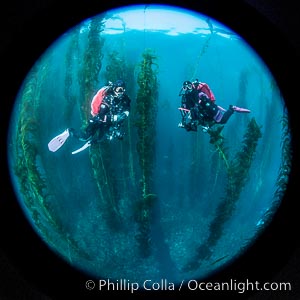
SCUBA divers, San Clemente Island.
Species: Giant kelp, Macrocystis pyrifera
Location: San Clemente Island, California
Image ID: 38507
Species: Giant kelp, Macrocystis pyrifera
Location: San Clemente Island, California
Image ID: 38507
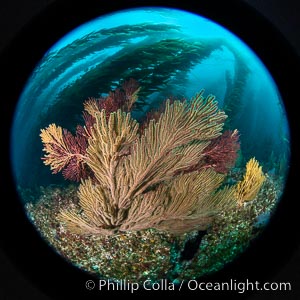
Garibaldi and California golden gorgonian on underwater rocky reef, San Clemente Island. The golden gorgonian is a filter-feeding temperate colonial species that lives on the rocky bottom at depths between 50 to 200 feet deep. Each individual polyp is a distinct animal, together they secrete calcium that forms the structure of the colony. Gorgonians are oriented at right angles to prevailing water currents to capture plankton drifting by.
Species: California Golden Gorgonian, Giant Kelp, Garibaldi, Muricea californica, Macrocystis pyrifera, Hypsypops rubicundus
Location: San Clemente Island, California
Image ID: 38509
Species: California Golden Gorgonian, Giant Kelp, Garibaldi, Muricea californica, Macrocystis pyrifera, Hypsypops rubicundus
Location: San Clemente Island, California
Image ID: 38509
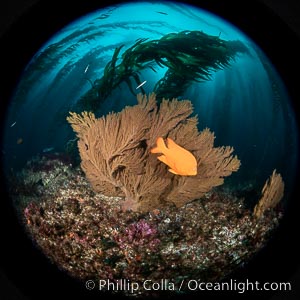
Garibaldi and California golden gorgonian on underwater rocky reef, San Clemente Island. The golden gorgonian is a filter-feeding temperate colonial species that lives on the rocky bottom at depths between 50 to 200 feet deep. Each individual polyp is a distinct animal, together they secrete calcium that forms the structure of the colony. Gorgonians are oriented at right angles to prevailing water currents to capture plankton drifting by.
Species: California golden gorgonian, Giant kelp, Garibaldi, Muricea californica, Macrocystis pyrifera, Hypsypops rubicundus
Location: San Clemente Island, California
Image ID: 38510
Species: California golden gorgonian, Giant kelp, Garibaldi, Muricea californica, Macrocystis pyrifera, Hypsypops rubicundus
Location: San Clemente Island, California
Image ID: 38510
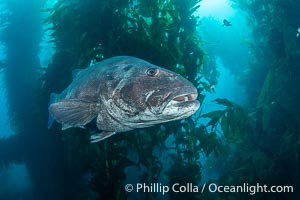
Giant Black Sea Bass with Distinctive Identifying Black Spots that allow researchers to carry out sight/resight studies on the animals distributions and growth. Black sea bass can reach 500 pounds and 8 feet in length.
Species: Giant black sea bass, Stereolepis gigas
Location: Catalina Island, California
Image ID: 39437
Species: Giant black sea bass, Stereolepis gigas
Location: Catalina Island, California
Image ID: 39437
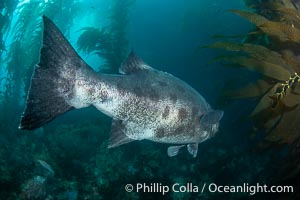
Broad Tail of a Black Sea Bass in the California Kelp Forest showing distinctive unique black spots that allow researchers to identify individual giant sea bass.
Species: Giant black sea bass, Stereolepis gigas
Location: Catalina Island, California
Image ID: 39438
Species: Giant black sea bass, Stereolepis gigas
Location: Catalina Island, California
Image ID: 39438