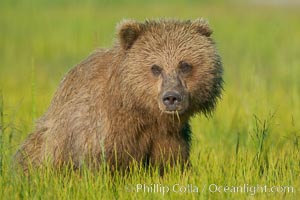
Coastal brown bear in sedge grass meadow.
Species: Brown bear, Ursus arctos
Location: Lake Clark National Park, Alaska
Image ID: 19223
Species: Brown bear, Ursus arctos
Location: Lake Clark National Park, Alaska
Image ID: 19223
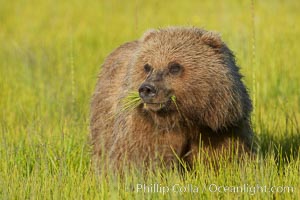
Young brown bear grazes in tall sedge grass. Brown bears can consume 30 lbs of sedge grass daily, waiting weeks until spawning salmon fill the rivers.
Species: Brown bear, Ursus arctos
Location: Lake Clark National Park, Alaska
Image ID: 19244
Species: Brown bear, Ursus arctos
Location: Lake Clark National Park, Alaska
Image ID: 19244
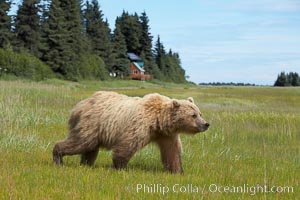
Coastal brown bear (grizzly bear) walks sedge grass meadow near Silver Salmon Creek.
Species: Brown bear, Ursus arctos
Location: Lake Clark National Park, Alaska
Image ID: 19145
Species: Brown bear, Ursus arctos
Location: Lake Clark National Park, Alaska
Image ID: 19145
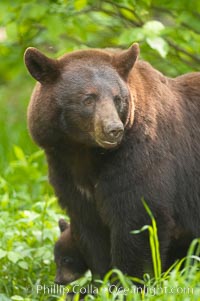
Black bear portrait. American black bears range in color from deepest black to chocolate and cinnamon brown. They prefer forested and meadow environments. This bear still has its thick, full winter coat, which will be shed soon with the approach of summer.
Species: American black bear, Ursus americanus
Location: Orr, Minnesota
Image ID: 18742
Species: American black bear, Ursus americanus
Location: Orr, Minnesota
Image ID: 18742
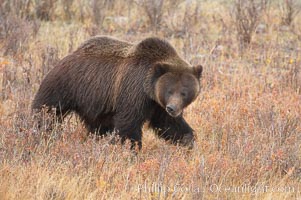
Grizzly bear in Yellowstone National Park in autumn, fall, walking through brown grasses.
Species: Grizzly bear, Ursus arctos horribilis
Location: Lamar Valley, Yellowstone National Park, Wyoming
Image ID: 19614
Species: Grizzly bear, Ursus arctos horribilis
Location: Lamar Valley, Yellowstone National Park, Wyoming
Image ID: 19614
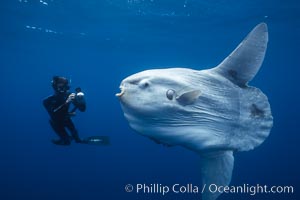
Ocean sunfish and freediving photographer, open ocean.
Species: Ocean sunfish, Mola mola
Location: San Diego, California
Image ID: 03325
Species: Ocean sunfish, Mola mola
Location: San Diego, California
Image ID: 03325
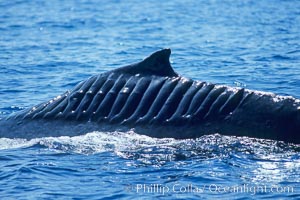
North Pacific humpback whale showing extensive scarring, almost certainly from a boat propeller, on dorsal ridge. This female North Pacific humpback whale was first seen with the depicted lacerations near the island of Maui in the Hawaiian Islands in the mid-90s, and is the original humpback to bear the name 'Blade Runner'. This female has apparently recovered, as evidenced the calf she was observed nurturing. A South Pacific humpback whale endured a similar injury in Sydney Australia in 2001, and bears a remarkably similar scar pattern to the above-pictured whale.
Species: Humpback whale, Megaptera novaeangliae
Location: Maui, Hawaii
Image ID: 05909
Species: Humpback whale, Megaptera novaeangliae
Location: Maui, Hawaii
Image ID: 05909
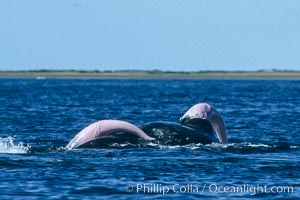
Gray whales, two males both with extended penis during courtship socialization, Laguna San Ignacio.
Species: Gray whale, Eschrichtius robustus
Location: San Ignacio Lagoon, Baja California, Mexico
Image ID: 06431
Species: Gray whale, Eschrichtius robustus
Location: San Ignacio Lagoon, Baja California, Mexico
Image ID: 06431
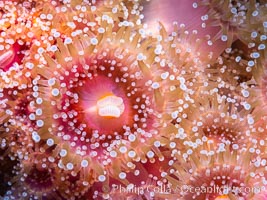
The corallimorph Corynactis californica, similar to both stony corals and anemones, is typified by a wide oral disk and short tentacles that radiate from the mouth. The tentacles grasp food passing by in ocean currents.
Species: Strawberry anemone, Corynactis californica
Location: San Diego, California
Image ID: 37212
Species: Strawberry anemone, Corynactis californica
Location: San Diego, California
Image ID: 37212
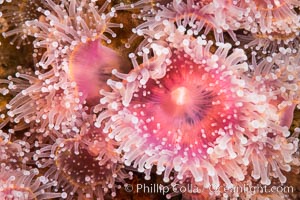
The corallimorph Corynactis californica, similar to both stony corals and anemones, is typified by a wide oral disk and short tentacles that radiate from the mouth. The tentacles grasp food passing by in ocean currents.
Species: Strawberry anemone, Corynactis californica
Location: San Diego, California
Image ID: 37215
Species: Strawberry anemone, Corynactis californica
Location: San Diego, California
Image ID: 37215
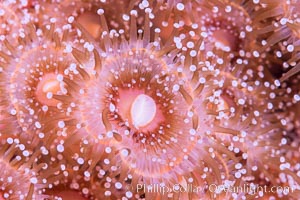
A corynactis anemone polyp, Corynactis californica is a corallimorph found in genetically identical clusters, club-tipped anemone.
Species: Strawberry anemone, Corynactis californica
Location: San Diego, California
Image ID: 33453
Species: Strawberry anemone, Corynactis californica
Location: San Diego, California
Image ID: 33453
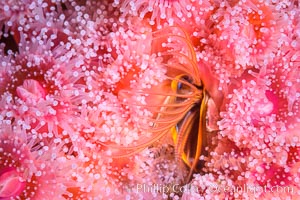
Acorn Barnacle extends to feed in ocean current, amid colony of Corynactis anemones.
Species: Acorn barnacle, Strawberry anemone, Corynactis californica, Megabalanus californicus
Location: San Diego, California
Image ID: 33473
Species: Acorn barnacle, Strawberry anemone, Corynactis californica, Megabalanus californicus
Location: San Diego, California
Image ID: 33473
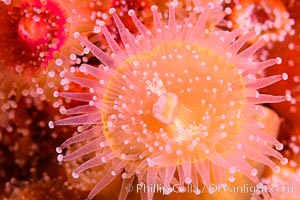
Corynactis anemone polyp, a corallimorph, extends its arms into passing ocean currents to catch food.
Species: Strawberry anemone, Corynactis californica
Location: San Diego, California
Image ID: 33474
Species: Strawberry anemone, Corynactis californica
Location: San Diego, California
Image ID: 33474
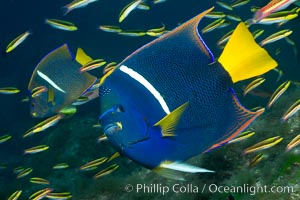
King angelfish in the Sea of Cortez, Mexico.
Species: King angelfish, Holacanthus passer
Location: Sea of Cortez, Baja California, Mexico
Image ID: 27470
Species: King angelfish, Holacanthus passer
Location: Sea of Cortez, Baja California, Mexico
Image ID: 27470
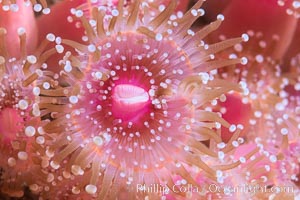
The corallimorph Corynactis californica, similar to both stony corals and anemones, is typified by a wide oral disk and short tentacles that radiate from the mouth. The tentacles grasp food passing by in ocean currents.
Species: Strawberry anemone, Corynactis californica
Location: San Diego, California
Image ID: 37201
Species: Strawberry anemone, Corynactis californica
Location: San Diego, California
Image ID: 37201
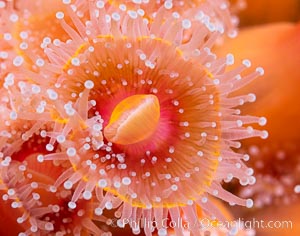
The corallimorph Corynactis californica, similar to both stony corals and anemones, is typified by a wide oral disk and short tentacles that radiate from the mouth. The tentacles grasp food passing by in ocean currents.
Species: Strawberry anemone, Corynactis californica
Location: San Diego, California
Image ID: 37208
Species: Strawberry anemone, Corynactis californica
Location: San Diego, California
Image ID: 37208
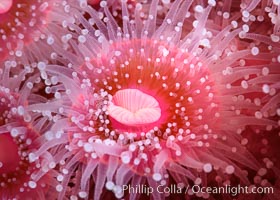
Corynactis anemone polyp, a corallimorph, extends its arms into passing ocean currents to catch food.
Species: Strawberry anemone, Corynactis californica
Location: San Diego, California
Image ID: 33475
Species: Strawberry anemone, Corynactis californica
Location: San Diego, California
Image ID: 33475
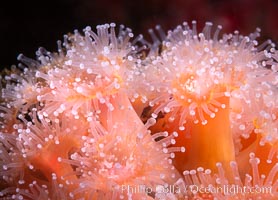
The corallimorph Corynactis californica, similar to both stony corals and anemones, is typified by a wide oral disk and short tentacles that radiate from the mouth. The tentacles grasp food passing by in ocean currents.
Species: Strawberry anemone, Corynactis californica
Location: San Diego, California
Image ID: 37202
Species: Strawberry anemone, Corynactis californica
Location: San Diego, California
Image ID: 37202
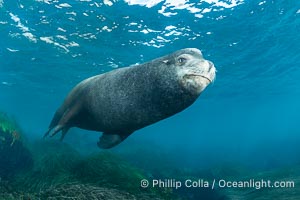
Huge California Sea Lion Male Underwater, a bull, patrolling his breeding harem and territory, Coronado Islands, Mexico. His sagittal crest, the bony bump on his head that distinguishes adult male sea lions, is clearly seen. This particular sea lion bears an orange tag on his left foreflipper, probably as a result of rescue and release as a young sea lion years earlier.
Species: California sea lion, Zalophus californianus
Location: Coronado Islands (Islas Coronado), Baja California, Mexico
Image ID: 38652
Species: California sea lion, Zalophus californianus
Location: Coronado Islands (Islas Coronado), Baja California, Mexico
Image ID: 38652
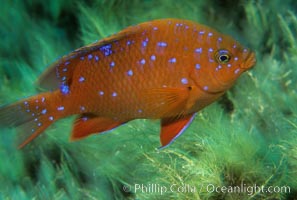
Juvenile garibaldi in motion.
Species: Garibaldi, Hypsypops rubicundus
Location: Catalina Island, California
Image ID: 02343
Species: Garibaldi, Hypsypops rubicundus
Location: Catalina Island, California
Image ID: 02343
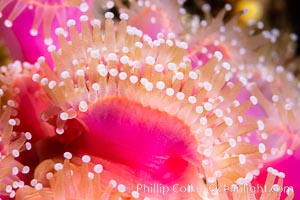
Corynactis anemone polyp, a corallimorph, extends its arms into passing ocean currents to catch food.
Species: Strawberry anemone, Corynactis californica
Image ID: 35070
Species: Strawberry anemone, Corynactis californica
Image ID: 35070
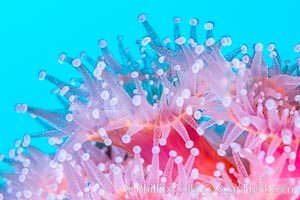
Corynactis anemone polyp, a corallimorph, extends its arms into passing ocean currents to catch food.
Species: Strawberry anemone, Corynactis californica
Image ID: 35071
Species: Strawberry anemone, Corynactis californica
Image ID: 35071
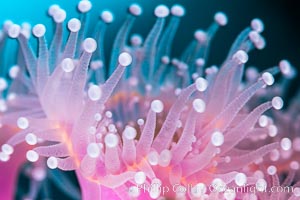
Corynactis anemone polyp, a corallimorph, extends its arms into passing ocean currents to catch food.
Species: Strawberry anemone, Corynactis californica
Image ID: 35072
Species: Strawberry anemone, Corynactis californica
Image ID: 35072
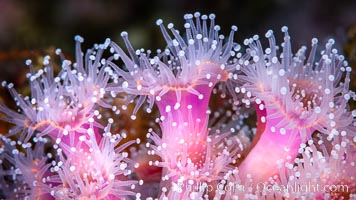
Corynactis anemone polyp, a corallimorph, extends its arms into passing ocean currents to catch food.
Species: Strawberry anemone, Corynactis californica
Image ID: 35073
Species: Strawberry anemone, Corynactis californica
Image ID: 35073
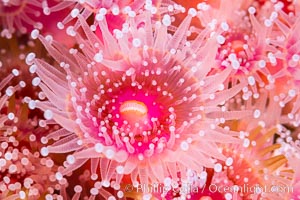
Corynactis anemone polyp, a corallimorph, extends its arms into passing ocean currents to catch food.
Species: Strawberry anemone, Corynactis californica
Image ID: 35075
Species: Strawberry anemone, Corynactis californica
Image ID: 35075
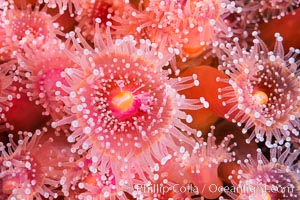
Corynactis anemone polyp, a corallimorph, extends its arms into passing ocean currents to catch food.
Species: Strawberry anemone, Corynactis californica
Image ID: 35076
Species: Strawberry anemone, Corynactis californica
Image ID: 35076
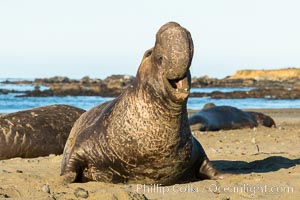
Bull elephant seal, adult male, bellowing. Its huge proboscis is characteristic of male elephant seals. Scarring from combat with other males.
Species: Elephant seal, Mirounga angustirostris
Location: Piedras Blancas, San Simeon, California
Image ID: 35149
Species: Elephant seal, Mirounga angustirostris
Location: Piedras Blancas, San Simeon, California
Image ID: 35149
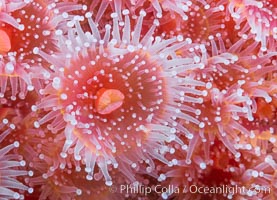
The corallimorph Corynactis californica, similar to both stony corals and anemones, is typified by a wide oral disk and short tentacles that radiate from the mouth. The tentacles grasp food passing by in ocean currents.
Species: Strawberry anemone, Corynactis californica
Location: San Diego, California
Image ID: 37203
Species: Strawberry anemone, Corynactis californica
Location: San Diego, California
Image ID: 37203
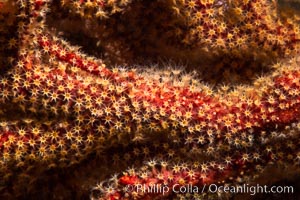
California Golden gorgonian polyps. The golden gorgonian is a colonial organism composed of thousands of tiny polyps. Each polyp secretes calcium which accumulates to form the structure of the colony. The fan-shaped gorgonian is oriented perpendicular to prevailing ocean currents to better enable to filter-feeding polyps to capture passing plankton and detritus passing by.
Species: California Golden Gorgonian, Muricea californica
Location: San Diego, California
Image ID: 37204
Species: California Golden Gorgonian, Muricea californica
Location: San Diego, California
Image ID: 37204
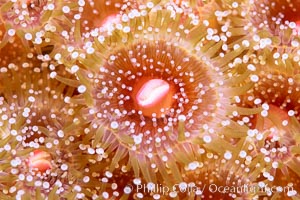
The corallimorph Corynactis californica, similar to both stony corals and anemones, is typified by a wide oral disk and short tentacles that radiate from the mouth. The tentacles grasp food passing by in ocean currents.
Species: Strawberry anemone, Corynactis californica
Location: San Diego, California
Image ID: 37209
Species: Strawberry anemone, Corynactis californica
Location: San Diego, California
Image ID: 37209