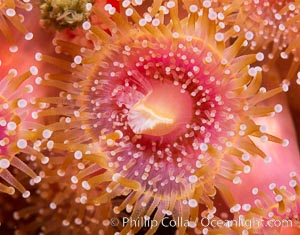
The corallimorph Corynactis californica, similar to both stony corals and anemones, is typified by a wide oral disk and short tentacles that radiate from the mouth. The tentacles grasp food passing by in ocean currents.
Species: Strawberry anemone, Corynactis californica
Location: San Diego, California
Image ID: 37210
Species: Strawberry anemone, Corynactis californica
Location: San Diego, California
Image ID: 37210
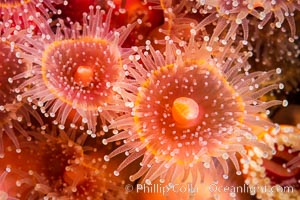
The corallimorph Corynactis californica, similar to both stony corals and anemones, is typified by a wide oral disk and short tentacles that radiate from the mouth. The tentacles grasp food passing by in ocean currents.
Species: Strawberry anemone, Corynactis californica
Location: San Diego, California
Image ID: 37213
Species: Strawberry anemone, Corynactis californica
Location: San Diego, California
Image ID: 37213
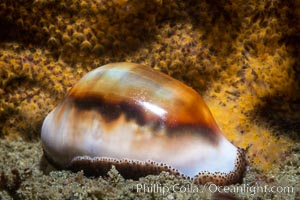
Chestnut cowrie with mantle withdrawn, in front of golden gorgonian.
Species: Chestnut Cowrie, Date Cowrie, Cypraea spadicea
Location: San Diego, California
Image ID: 37289
Species: Chestnut Cowrie, Date Cowrie, Cypraea spadicea
Location: San Diego, California
Image ID: 37289
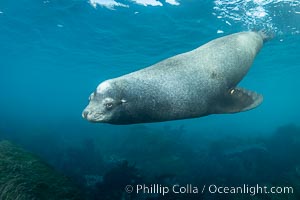
Huge California Sea Lion Male Underwater, a bull, patrolling his breeding harem and territory, Coronado Islands, Mexico. His sagittal crest, the bony bump on his head that distinguishes adult male sea lions, is clearly seen. This particular sea lion bears an orange tag on his left foreflipper, probably as a result of rescue and release as a young sea lion years earlier.
Species: California sea lion, Zalophus californianus
Location: Coronado Islands (Islas Coronado), Baja California, Mexico
Image ID: 38653
Species: California sea lion, Zalophus californianus
Location: Coronado Islands (Islas Coronado), Baja California, Mexico
Image ID: 38653
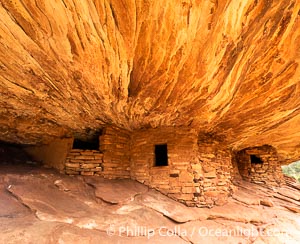
House on Fire Ruin in Mule Canyon, Utah. Part of the Bears Ears National Monument, House on Fire Ruin is an ancestral Puebloan ruin that appears to burst into flames when reflected sunlight hits the ceiling above the ruin.
Location: Bears Ears National Monument, Utah
Image ID: 39373
Location: Bears Ears National Monument, Utah
Image ID: 39373
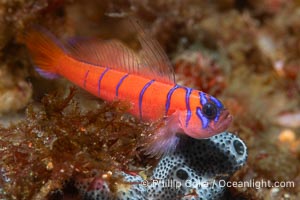
Blue-banded goby in the Midriff Islands, Sea of Cortez, Mexico.
Species: Bluebanded goby, Lythrypnus dalli
Location: Isla Angel de la Guarda, Baja California, Mexico
Image ID: 40364
Species: Bluebanded goby, Lythrypnus dalli
Location: Isla Angel de la Guarda, Baja California, Mexico
Image ID: 40364

Panorama of Bear Creek Spire over Long Lake at Sunrise, Little Lakes Valley, John Muir Wilderness, Inyo National Forest.
Location: Little Lakes Valley, Inyo National Forest, California
Image ID: 31173
Panorama dimensions: 5473 x 15812
Location: Little Lakes Valley, Inyo National Forest, California
Image ID: 31173
Panorama dimensions: 5473 x 15812
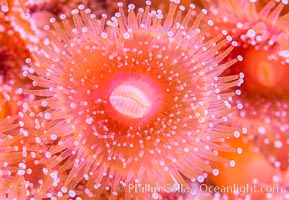
A corynactis anemone polyp, Corynactis californica is a corallimorph found in genetically identical clusters, club-tipped anemone.
Species: Strawberry anemone, Corynactis californica
Location: San Diego, California
Image ID: 33454
Species: Strawberry anemone, Corynactis californica
Location: San Diego, California
Image ID: 33454
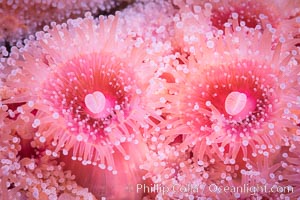
A corynactis anemone polyp, Corynactis californica is a corallimorph found in genetically identical clusters, club-tipped anemone.
Species: Strawberry anemone, Corynactis californica
Location: San Diego, California
Image ID: 33456
Species: Strawberry anemone, Corynactis californica
Location: San Diego, California
Image ID: 33456
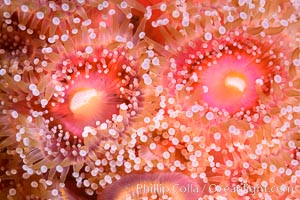
Corynactis anemone polyp, a corallimorph, extends its arms into passing ocean currents to catch food.
Species: Strawberry anemone, Corynactis californica
Location: San Diego, California
Image ID: 33478
Species: Strawberry anemone, Corynactis californica
Location: San Diego, California
Image ID: 33478
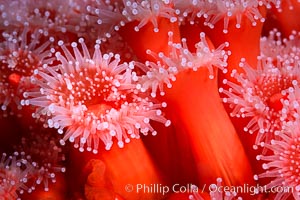
Corynactis anemone polyp, a corallimorph, extends its arms into passing ocean currents to catch food.
Species: Strawberry anemone, Corynactis californica
Location: San Diego, California
Image ID: 33479
Species: Strawberry anemone, Corynactis californica
Location: San Diego, California
Image ID: 33479
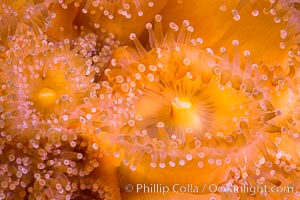
Corynactis anemone polyp, a corallimorph, extends its arms into passing ocean currents to catch food.
Species: Strawberry anemone, Corynactis californica
Location: San Diego, California
Image ID: 33480
Species: Strawberry anemone, Corynactis californica
Location: San Diego, California
Image ID: 33480
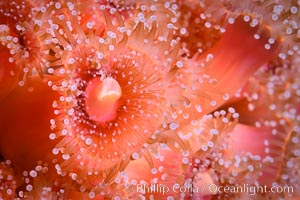
Corynactis anemone polyp, a corallimorph, extends its arms into passing ocean currents to catch food.
Species: Strawberry anemone, Corynactis californica
Location: San Diego, California
Image ID: 33481
Species: Strawberry anemone, Corynactis californica
Location: San Diego, California
Image ID: 33481
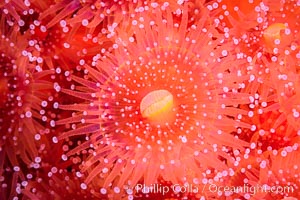
Corynactis anemone polyp, a corallimorph, extends its arms into passing ocean currents to catch food.
Species: Strawberry anemone, Corynactis californica
Location: San Diego, California
Image ID: 33482
Species: Strawberry anemone, Corynactis californica
Location: San Diego, California
Image ID: 33482
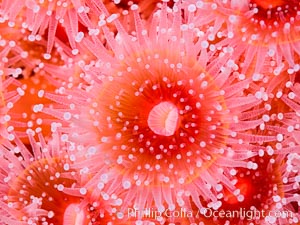
Corynactis anemone polyp, a corallimorph, extends its arms into passing ocean currents to catch food.
Species: Strawberry anemone, Corynactis californica
Location: San Diego, California
Image ID: 33483
Species: Strawberry anemone, Corynactis californica
Location: San Diego, California
Image ID: 33483
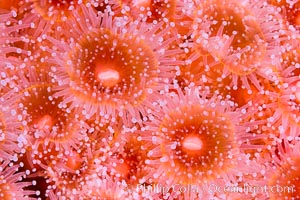
Corynactis anemone polyp, a corallimorph, extends its arms into passing ocean currents to catch food.
Species: Strawberry anemone, Corynactis californica
Location: San Diego, California
Image ID: 33484
Species: Strawberry anemone, Corynactis californica
Location: San Diego, California
Image ID: 33484
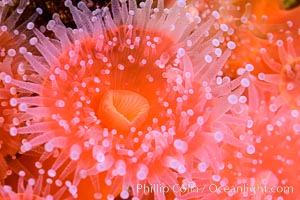
Corynactis anemone polyp, a corallimorph, extends its arms into passing ocean currents to catch food.
Species: Strawberry anemone, Corynactis californica
Location: San Diego, California
Image ID: 33485
Species: Strawberry anemone, Corynactis californica
Location: San Diego, California
Image ID: 33485
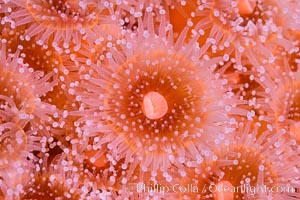
Corynactis anemone polyp, a corallimorph, extends its arms into passing ocean currents to catch food.
Species: Strawberry anemone, Corynactis californica
Location: San Diego, California
Image ID: 33486
Species: Strawberry anemone, Corynactis californica
Location: San Diego, California
Image ID: 33486
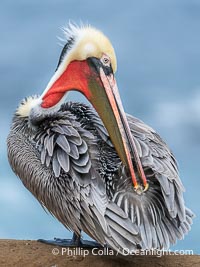
A brown pelican preening, reaching with its beak to the uropygial gland (preen gland) near the base of its tail. Preen oil from the uropygial gland is spread by the pelican's beak and back of its head to all other feathers on the pelican, helping to keep them water resistant and dry. Adult winter breeding plumage.
Species: Brown Pelican, Pelecanus occidentalis, Pelecanus occidentalis californicus
Location: La Jolla, California
Image ID: 40020
Species: Brown Pelican, Pelecanus occidentalis, Pelecanus occidentalis californicus
Location: La Jolla, California
Image ID: 40020
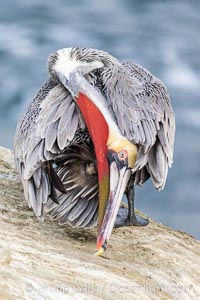
A California brown pelican preening, rubbing the back of its head and neck on the uropygial gland (preen gland) near the base of its tail. Preen oil from the uropygial gland is spread by the pelican's beak and back of its head to all other feathers on the pelican, helping to keep them water resistant and dry. Adult winter non-breeding plumage showing white hindneck and red gular throat pouch (but transitioning to brown hind neck).
Species: Brown Pelican, Pelecanus occidentalis, Pelecanus occidentalis californicus
Location: La Jolla, California
Image ID: 37627
Species: Brown Pelican, Pelecanus occidentalis, Pelecanus occidentalis californicus
Location: La Jolla, California
Image ID: 37627
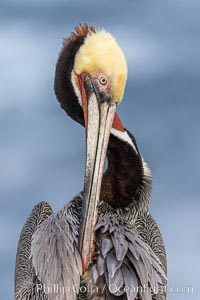
A brown pelican preening, reaching with its beak to the uropygial gland (preen gland) near the base of its tail. Preen oil from the uropygial gland is spread by the pelican's beak and back of its head to all other feathers on the pelican, helping to keep them water resistant and dry.
Species: Brown Pelican, Pelecanus occidentalis, Pelecanus occidentalis californicus
Location: La Jolla, California
Image ID: 37693
Species: Brown Pelican, Pelecanus occidentalis, Pelecanus occidentalis californicus
Location: La Jolla, California
Image ID: 37693
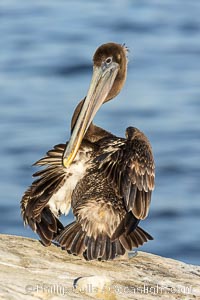
A juvenile brown pelican preening, reaching with its beak to the uropygial gland (preen gland) near the base of its tail. Preen oil from the uropygial gland is spread by the pelican's beak and back of its head to all other feathers on the pelican, helping to keep them water resistant and dry. Adult winter non-breeding plumage. Pelican yoga.
Species: Brown, Brown Pelican, Pelecanus occidentalis, Pelecanus occidentalis californicus
Location: La Jolla, California
Image ID: 38693
Species: Brown, Brown Pelican, Pelecanus occidentalis, Pelecanus occidentalis californicus
Location: La Jolla, California
Image ID: 38693
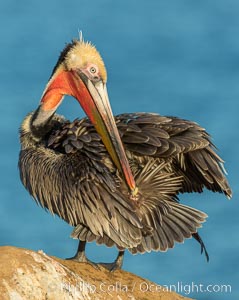
A brown pelican preening, reaching with its beak to the uropygial gland (preen gland) near the base of its tail. Preen oil from the uropygial gland is spread by the pelican's beak and back of its head to all other feathers on the pelican, helping to keep them water resistant and dry.
Species: Brown Pelican, Pelecanus occidentalis, Pelecanus occidentalis californicus
Location: La Jolla, California
Image ID: 30290
Species: Brown Pelican, Pelecanus occidentalis, Pelecanus occidentalis californicus
Location: La Jolla, California
Image ID: 30290
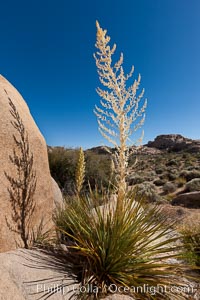
Parry's Nolina, or Giant Nolina, a flowering plant native to southern California and Arizona founds in deserts and mountains to 6200'. It can reach 6' in height with its flowering inflorescence reaching 12'.
Species: Parry's nolina, Nolina parryi
Location: Joshua Tree National Park, California
Image ID: 26725
Species: Parry's nolina, Nolina parryi
Location: Joshua Tree National Park, California
Image ID: 26725
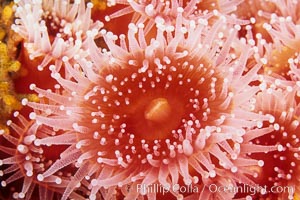
Polyp of a strawberry anemone (club-tipped anemone, more correctly a corallimorph).
Species: Strawberry anemone, Corynactis californica
Location: San Miguel Island, California
Image ID: 01039
Species: Strawberry anemone, Corynactis californica
Location: San Miguel Island, California
Image ID: 01039
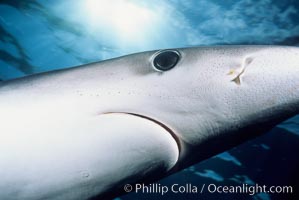
Blue shark showing ampullae of Lorenzini, eye and small portion of nictitating membrane.
Species: Blue shark, Prionace glauca
Location: San Diego, California
Image ID: 01076
Species: Blue shark, Prionace glauca
Location: San Diego, California
Image ID: 01076
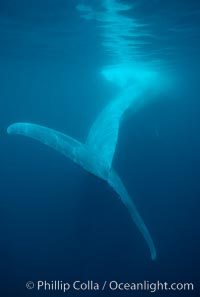
Blue whale fluke, powerful tail that propels the huge whale through the open ocean.
Species: Blue whale, Balaenoptera musculus
Image ID: 01910
Species: Blue whale, Balaenoptera musculus
Image ID: 01910
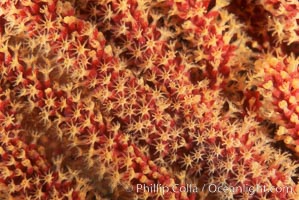
California Golden gorgonian polyps. The golden gorgonian is a colonial organism composed of thousands of tiny polyps. Each polyp secretes calcium which accumulates to form the structure of the colony. The fan-shaped gorgonian is oriented perpendicular to prevailing ocean currents to better enable to filter-feeding polyps to capture passing plankton and detritus passing by.
Species: California golden gorgonian, Muricea californica
Location: San Clemente Island, California
Image ID: 03481
Species: California golden gorgonian, Muricea californica
Location: San Clemente Island, California
Image ID: 03481
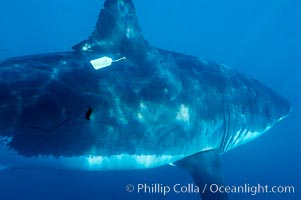
A great white shark bearing a white plastic researcher's identification ID tag near its dorsal fin swims through the clear waters of Isla Guadalupe, far offshore of the Pacific Coast of Baja California. Guadalupe Island is host to a concentration of large great white sharks, which visit the island to feed on pinnipeds and tuna.
Species: Great white shark, Carcharodon carcharias
Location: Guadalupe Island (Isla Guadalupe), Baja California, Mexico
Image ID: 07739
Species: Great white shark, Carcharodon carcharias
Location: Guadalupe Island (Isla Guadalupe), Baja California, Mexico
Image ID: 07739