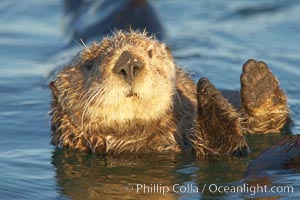
A sea otter resting, holding its paws out of the water to keep them warm and conserve body heat as it floats in cold ocean water.
Species: Sea otter, Enhydra lutris
Location: Elkhorn Slough National Estuarine Research Reserve, Moss Landing, California
Image ID: 21614
Species: Sea otter, Enhydra lutris
Location: Elkhorn Slough National Estuarine Research Reserve, Moss Landing, California
Image ID: 21614
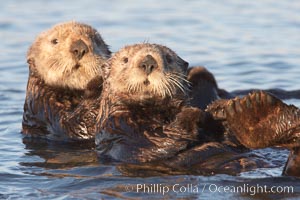
Sea otters, resting on the surface by lying on their backs, in a group known as a raft.
Species: Sea otter, Enhydra lutris
Location: Elkhorn Slough National Estuarine Research Reserve, Moss Landing, California
Image ID: 21604
Species: Sea otter, Enhydra lutris
Location: Elkhorn Slough National Estuarine Research Reserve, Moss Landing, California
Image ID: 21604
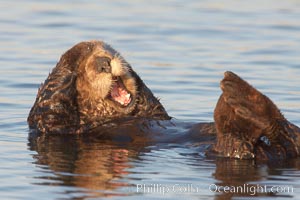
A sea otter, resting on its back, grooms the fur on its head. A sea otter depends on its fur to keep it warm and afloat, and must groom its fur frequently.
Species: Sea otter, Enhydra lutris
Location: Elkhorn Slough National Estuarine Research Reserve, Moss Landing, California
Image ID: 21605
Species: Sea otter, Enhydra lutris
Location: Elkhorn Slough National Estuarine Research Reserve, Moss Landing, California
Image ID: 21605
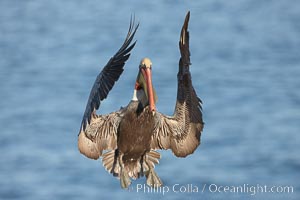
California brown pelican spreads its wings wide as it slows before landing on seacliffs.
Species: Brown Pelican, Pelecanus occidentalis, Pelecanus occidentalis californicus
Location: La Jolla, California
Image ID: 22157
Species: Brown Pelican, Pelecanus occidentalis, Pelecanus occidentalis californicus
Location: La Jolla, California
Image ID: 22157
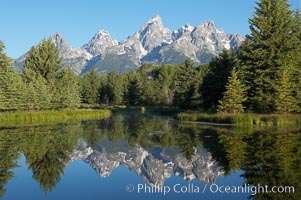
The Teton Range is reflected in the glassy waters of the Snake River at Schwabacher Landing.
Location: Schwabacher Landing, Grand Teton National Park, Wyoming
Image ID: 12984
Location: Schwabacher Landing, Grand Teton National Park, Wyoming
Image ID: 12984
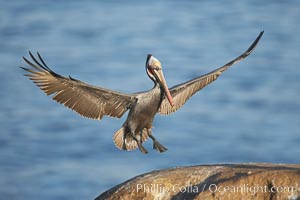
California brown pelican spreads its wings wide as it slows before landing on seacliffs.
Species: Brown Pelican, Pelecanus occidentalis, Pelecanus occidentalis californicus
Location: La Jolla, California
Image ID: 20280
Species: Brown Pelican, Pelecanus occidentalis, Pelecanus occidentalis californicus
Location: La Jolla, California
Image ID: 20280
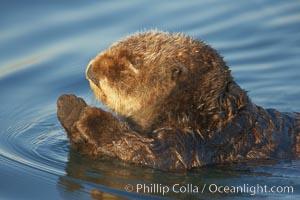
A sea otter, resting on its back, holding its paw out of the water for warmth. While the sea otter has extremely dense fur on its body, the fur is less dense on its head, arms and paws so it will hold these out of the cold water to conserve body heat.
Species: Sea otter, Enhydra lutris
Location: Elkhorn Slough National Estuarine Research Reserve, Moss Landing, California
Image ID: 21603
Species: Sea otter, Enhydra lutris
Location: Elkhorn Slough National Estuarine Research Reserve, Moss Landing, California
Image ID: 21603
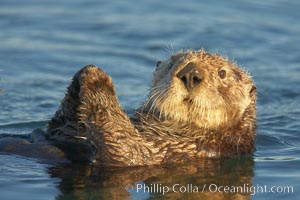
A sea otter, resting on its back, holding its paw out of the water for warmth. While the sea otter has extremely dense fur on its body, the fur is less dense on its head, arms and paws so it will hold these out of the cold water to conserve body heat.
Species: Sea otter, Enhydra lutris
Location: Elkhorn Slough National Estuarine Research Reserve, Moss Landing, California
Image ID: 21608
Species: Sea otter, Enhydra lutris
Location: Elkhorn Slough National Estuarine Research Reserve, Moss Landing, California
Image ID: 21608
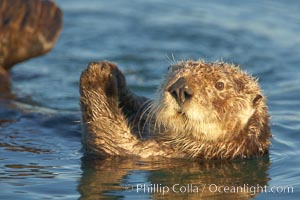
A sea otter, resting on its back, holding its paw out of the water for warmth. While the sea otter has extremely dense fur on its body, the fur is less dense on its head, arms and paws so it will hold these out of the cold water to conserve body heat.
Species: Sea otter, Enhydra lutris
Location: Elkhorn Slough National Estuarine Research Reserve, Moss Landing, California
Image ID: 21613
Species: Sea otter, Enhydra lutris
Location: Elkhorn Slough National Estuarine Research Reserve, Moss Landing, California
Image ID: 21613
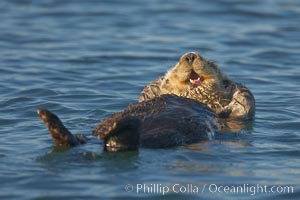
A sea otter, resting and floating on its back, in Elkhorn Slough.
Species: Sea otter, Enhydra lutris
Location: Elkhorn Slough National Estuarine Research Reserve, Moss Landing, California
Image ID: 21615
Species: Sea otter, Enhydra lutris
Location: Elkhorn Slough National Estuarine Research Reserve, Moss Landing, California
Image ID: 21615
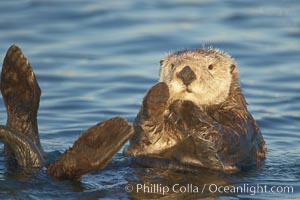
A sea otter resting, holding its paws out of the water to keep them warm and conserve body heat as it floats in cold ocean water.
Species: Sea otter, Enhydra lutris
Location: Elkhorn Slough National Estuarine Research Reserve, Moss Landing, California
Image ID: 21616
Species: Sea otter, Enhydra lutris
Location: Elkhorn Slough National Estuarine Research Reserve, Moss Landing, California
Image ID: 21616
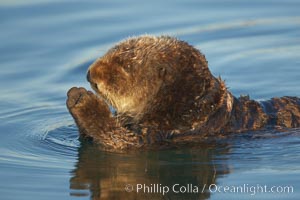
A sea otter, resting on its back, holding its paw out of the water for warmth. While the sea otter has extremely dense fur on its body, the fur is less dense on its head, arms and paws so it will hold these out of the cold water to conserve body heat.
Species: Sea otter, Enhydra lutris
Location: Elkhorn Slough National Estuarine Research Reserve, Moss Landing, California
Image ID: 21618
Species: Sea otter, Enhydra lutris
Location: Elkhorn Slough National Estuarine Research Reserve, Moss Landing, California
Image ID: 21618
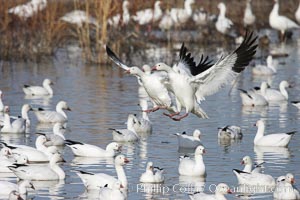
Snow geese landing on water.
Species: Snow goose, Chen caerulescens
Location: Bosque del Apache National Wildlife Refuge, New Mexico
Image ID: 19990
Species: Snow goose, Chen caerulescens
Location: Bosque del Apache National Wildlife Refuge, New Mexico
Image ID: 19990
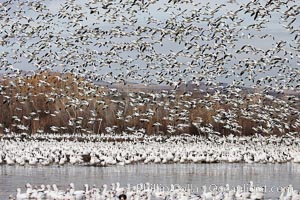
Snow geese gather in massive flocks over water, taking off and landing in synchrony.
Species: Snow goose, Chen caerulescens
Location: Bosque del Apache National Wildlife Refuge, New Mexico
Image ID: 19991
Species: Snow goose, Chen caerulescens
Location: Bosque del Apache National Wildlife Refuge, New Mexico
Image ID: 19991
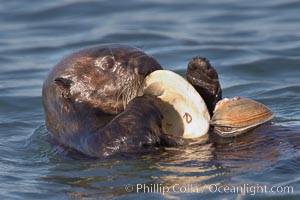
A sea otter eats a clam that it has taken from the shallow sandy bottom of Elkhorn Slough. Because sea otters have such a high metabolic rate, they eat up to 30% of their body weight each day in the form of clams, mussels, urchins, crabs and abalone. Sea otters are the only known tool-using marine mammal, using a stone or old shell to open the shells of their prey as they float on their backs.
Species: Sea otter, Enhydra lutris
Location: Elkhorn Slough National Estuarine Research Reserve, Moss Landing, California
Image ID: 21609
Species: Sea otter, Enhydra lutris
Location: Elkhorn Slough National Estuarine Research Reserve, Moss Landing, California
Image ID: 21609
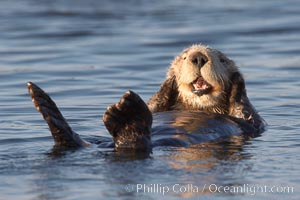
A sea otter, resting on its back, grooms the fur on its head. A sea otter depends on its fur to keep it warm and afloat, and must groom its fur frequently.
Species: Sea otter, Enhydra lutris
Location: Elkhorn Slough National Estuarine Research Reserve, Moss Landing, California
Image ID: 21610
Species: Sea otter, Enhydra lutris
Location: Elkhorn Slough National Estuarine Research Reserve, Moss Landing, California
Image ID: 21610
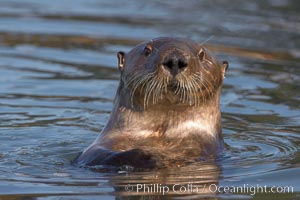
A sea otter, looking at the photographer as it forages for food in Elkhorn Slough.
Species: Sea otter, Enhydra lutris
Location: Elkhorn Slough National Estuarine Research Reserve, Moss Landing, California
Image ID: 21611
Species: Sea otter, Enhydra lutris
Location: Elkhorn Slough National Estuarine Research Reserve, Moss Landing, California
Image ID: 21611
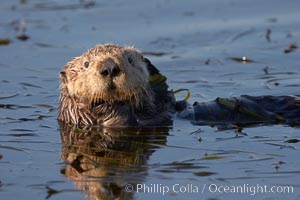
A sea otter, resting and floating on its back, in Elkhorn Slough.
Species: Sea otter, Enhydra lutris
Location: Elkhorn Slough National Estuarine Research Reserve, Moss Landing, California
Image ID: 21617
Species: Sea otter, Enhydra lutris
Location: Elkhorn Slough National Estuarine Research Reserve, Moss Landing, California
Image ID: 21617
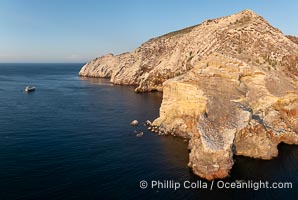
Rugged Terrain of Isla San Pedro Martir, Sea of Cortez. Aerial photo. The large bird population deposits enormous quantities of guano on the island, resulting in the white appearance of the island contrasted with sparse vegetation. In the late 19th and early 20th century guano was heavily mined off the island and shipped as far as Europe for use as fertilizer. San Pedro Martir is seldom visited, having near vertical sides leaving only questionable fair weather anchorages in two locations. Landing access was possible near a small isthmus in the southeast of the island, but is now forbidden. In 2005, the island was classified along with 244 others as a World Heritage Site by UNESCO, and included in the Islands and Protected Areas of the Gulf of California.
Location: Isla San Pedro Martir, Sonora, Mexico
Image ID: 40401
Location: Isla San Pedro Martir, Sonora, Mexico
Image ID: 40401
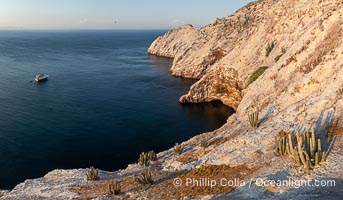
Rugged Terrain of Isla San Pedro Martir, Sea of Cortez. Aerial photo. The large bird population deposits enormous quantities of guano on the island, resulting in the white appearance of the island contrasted with sparse vegetation. In the late 19th and early 20th century guano was heavily mined off the island and shipped as far as Europe for use as fertilizer. San Pedro Martir is seldom visited, having near vertical sides leaving only questionable fair weather anchorages in two locations. Landing access was possible near a small isthmus in the southeast of the island, but is now forbidden. In 2005, the island was classified along with 244 others as a World Heritage Site by UNESCO, and included in the Islands and Protected Areas of the Gulf of California.
Location: Isla San Pedro Martir, Sonora, Mexico
Image ID: 40402
Location: Isla San Pedro Martir, Sonora, Mexico
Image ID: 40402
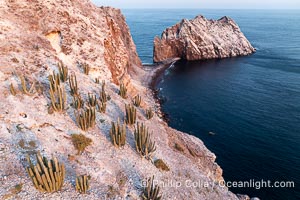
Rugged Terrain of Isla San Pedro Martir, Sea of Cortez. Aerial photo. The large bird population deposits enormous quantities of guano on the island, resulting in the white appearance of the island contrasted with sparse vegetation. In the late 19th and early 20th century guano was heavily mined off the island and shipped as far as Europe for use as fertilizer. San Pedro Martir is seldom visited, having near vertical sides leaving only questionable fair weather anchorages in two locations. Landing access was possible near a small isthmus in the southeast of the island, but is now forbidden. In 2005, the island was classified along with 244 others as a World Heritage Site by UNESCO, and included in the Islands and Protected Areas of the Gulf of California.
Location: Isla San Pedro Martir, Sonora, Mexico
Image ID: 40407
Location: Isla San Pedro Martir, Sonora, Mexico
Image ID: 40407
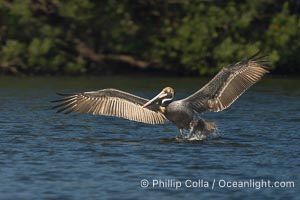
Brown pelican landing on water, Alafia Banks, Florida.
Species: Brown Pelican, Pelecanus occidentalis
Location: Alafia Banks Critical Wildlife Area, Tampa, Florida
Image ID: 40544
Species: Brown Pelican, Pelecanus occidentalis
Location: Alafia Banks Critical Wildlife Area, Tampa, Florida
Image ID: 40544
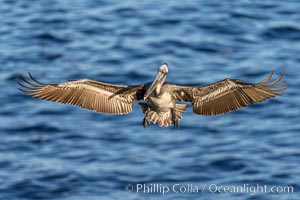
California brown pelican in flight, spreading wings wide to slow in anticipation of landing on seacliffs.
Species: Brown Pelican, Pelecanus occidentalis, Pelecanus occidentalis californicus
Location: La Jolla, California
Image ID: 37799
Species: Brown Pelican, Pelecanus occidentalis, Pelecanus occidentalis californicus
Location: La Jolla, California
Image ID: 37799
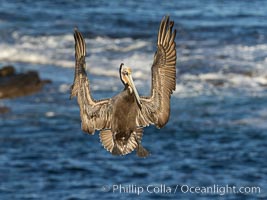
California brown pelican in flight, spreading wings wide to slow in anticipation of landing on seacliffs.
Species: Brown Pelican, Pelecanus occidentalis, Pelecanus occidentalis californicus
Location: La Jolla, California
Image ID: 37805
Species: Brown Pelican, Pelecanus occidentalis, Pelecanus occidentalis californicus
Location: La Jolla, California
Image ID: 37805
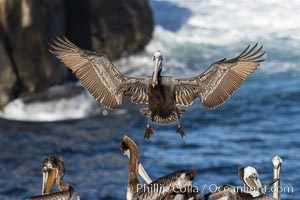
California brown pelican in flight, spreading wings wide to slow in anticipation of landing on seacliffs.
Species: Brown Pelican, Pelecanus occidentalis, Pelecanus occidentalis californicus
Location: La Jolla, California
Image ID: 37810
Species: Brown Pelican, Pelecanus occidentalis, Pelecanus occidentalis californicus
Location: La Jolla, California
Image ID: 37810
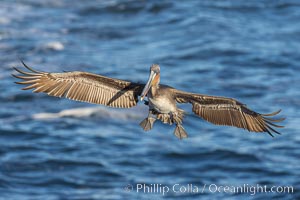
California brown pelican in flight, spreading wings wide to slow in anticipation of landing on seacliffs.
Species: Brown, Brown Pelican, Pelecanus occidentalis, Pelecanus occidentalis californicus
Location: La Jolla, California
Image ID: 37841
Species: Brown, Brown Pelican, Pelecanus occidentalis, Pelecanus occidentalis californicus
Location: La Jolla, California
Image ID: 37841
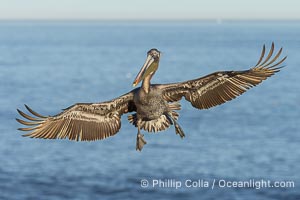
California Brown Pelican in flight, spreading wings wide to slow before landing on cliffs, Pelecanus occidentalis.
Species: Brown Pelican, Pelecanus occidentalis, Pelecanus occidentalis californicus
Location: La Jolla, California
Image ID: 38852
Species: Brown Pelican, Pelecanus occidentalis, Pelecanus occidentalis californicus
Location: La Jolla, California
Image ID: 38852
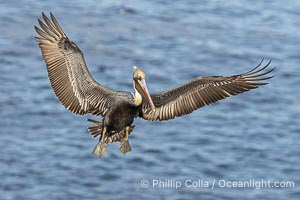
California Brown Pelican in flight, spreading wings wide to slow before landing on cliffs, Pelecanus occidentalis.
Species: Brown Pelican, Pelecanus occidentalis, Pelecanus occidentalis californicus
Location: La Jolla, California
Image ID: 38853
Species: Brown Pelican, Pelecanus occidentalis, Pelecanus occidentalis californicus
Location: La Jolla, California
Image ID: 38853
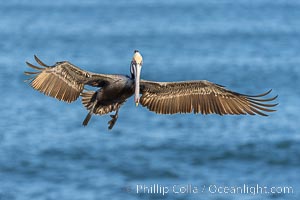
California Brown pelican in flight, La Jolla, wings outstretched, spreading wings wide to slow in anticipation of landing on seacliffs. Adult winter breeding plumage colors.
Species: Brown, Brown Pelican, Pelecanus occidentalis, Pelecanus occidentalis californicus
Location: La Jolla, California
Image ID: 38925
Species: Brown, Brown Pelican, Pelecanus occidentalis, Pelecanus occidentalis californicus
Location: La Jolla, California
Image ID: 38925
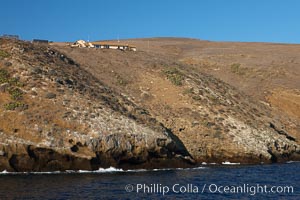
Western landing and National Park buildings on Santa Barbara Island, part of the Channel Islands National Marine Sanctuary. Santa Barbara Island lies 38 miles offshore of the coast of California, near Los Angeles and San Pedro.
Location: Santa Barbara Island, California
Image ID: 23563
Location: Santa Barbara Island, California
Image ID: 23563