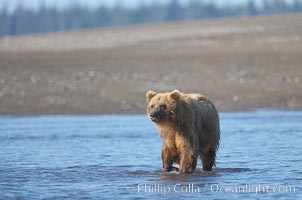
Coastal brown bear forages for razor clams on mud flats at extreme low tide.
Species: Brown bear, Ursus arctos
Location: Silver Salmon Creek, Lake Clark National Park, Alaska
Image ID: 19222
Species: Brown bear, Ursus arctos
Location: Silver Salmon Creek, Lake Clark National Park, Alaska
Image ID: 19222
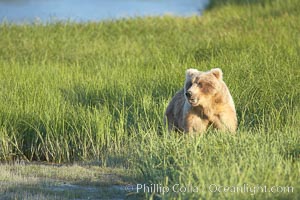
Coastal brown bear in meadow. The tall sedge grasses in this coastal meadow are a food source for brown bears, who may eat 30 lbs of it each day during summer while waiting for their preferred food, salmon, to arrive in the nearby rivers.
Species: Brown bear, Ursus arctos
Location: Lake Clark National Park, Alaska
Image ID: 19235
Species: Brown bear, Ursus arctos
Location: Lake Clark National Park, Alaska
Image ID: 19235
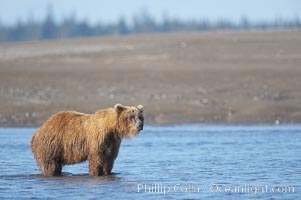
Coastal brown bear forages for salmon returning from the ocean to Silver Salmon Creek. Grizzly bear.
Species: Brown bear, Ursus arctos
Location: Silver Salmon Creek, Lake Clark National Park, Alaska
Image ID: 19237
Species: Brown bear, Ursus arctos
Location: Silver Salmon Creek, Lake Clark National Park, Alaska
Image ID: 19237
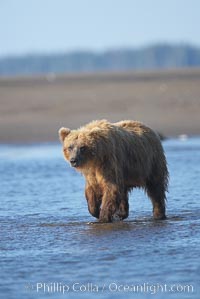
Coastal brown bear forages for salmon returning from the ocean to Silver Salmon Creek. Grizzly bear.
Species: Brown bear, Ursus arctos
Location: Silver Salmon Creek, Lake Clark National Park, Alaska
Image ID: 19238
Species: Brown bear, Ursus arctos
Location: Silver Salmon Creek, Lake Clark National Park, Alaska
Image ID: 19238
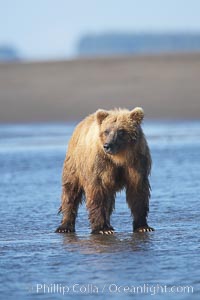
Coastal brown bear forages for salmon returning from the ocean to Silver Salmon Creek. Grizzly bear.
Species: Brown bear, Ursus arctos
Location: Silver Salmon Creek, Lake Clark National Park, Alaska
Image ID: 19239
Species: Brown bear, Ursus arctos
Location: Silver Salmon Creek, Lake Clark National Park, Alaska
Image ID: 19239
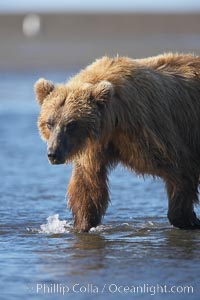
Coastal brown bear forages for salmon returning from the ocean to Silver Salmon Creek. Grizzly bear.
Species: Brown bear, Ursus arctos
Location: Silver Salmon Creek, Lake Clark National Park, Alaska
Image ID: 19240
Species: Brown bear, Ursus arctos
Location: Silver Salmon Creek, Lake Clark National Park, Alaska
Image ID: 19240
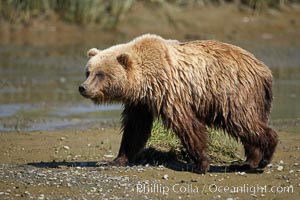
Coastal brown bear walks in Silver Salmon Creek.
Species: Brown bear, Ursus arctos
Location: Silver Salmon Creek, Lake Clark National Park, Alaska
Image ID: 19242
Species: Brown bear, Ursus arctos
Location: Silver Salmon Creek, Lake Clark National Park, Alaska
Image ID: 19242
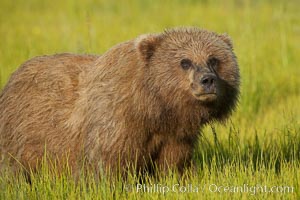
Portrait of a young brown bear, pausing while grazing in tall sedge grass. Brown bears can consume 30 lbs of sedge grass daily, waiting weeks until spawning salmon fill the rivers.
Species: Brown bear, Ursus arctos
Location: Lake Clark National Park, Alaska
Image ID: 19245
Species: Brown bear, Ursus arctos
Location: Lake Clark National Park, Alaska
Image ID: 19245
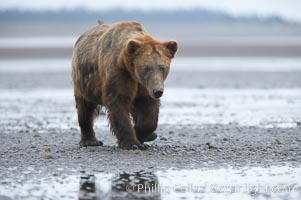
Mature male coastal brown bear boar waits on the tide flats at the mouth of Silver Salmon Creek for salmon to arrive. Grizzly bear.
Species: Brown bear, Ursus arctos
Location: Lake Clark National Park, Alaska
Image ID: 19252
Species: Brown bear, Ursus arctos
Location: Lake Clark National Park, Alaska
Image ID: 19252
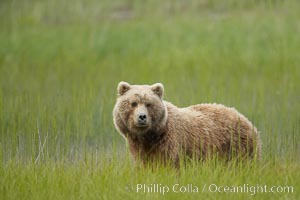
Coastal brown bear in meadow. The tall sedge grasses in this coastal meadow are a food source for brown bears, who may eat 30 lbs of it each day during summer while waiting for their preferred food, salmon, to arrive in the nearby rivers.
Species: Brown bear, Ursus arctos
Location: Lake Clark National Park, Alaska
Image ID: 19253
Species: Brown bear, Ursus arctos
Location: Lake Clark National Park, Alaska
Image ID: 19253
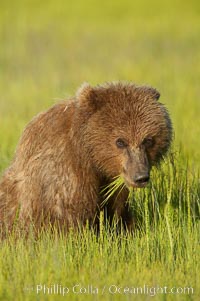
Young brown bear grazes in tall sedge grass. Brown bears can consume 30 lbs of sedge grass daily, waiting weeks until spawning salmon fill the rivers.
Species: Brown bear, Ursus arctos
Location: Lake Clark National Park, Alaska
Image ID: 19263
Species: Brown bear, Ursus arctos
Location: Lake Clark National Park, Alaska
Image ID: 19263
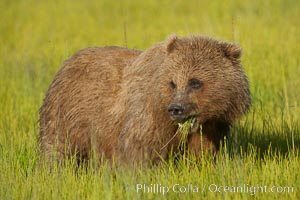
Young brown bear grazes in tall sedge grass. Brown bears can consume 30 lbs of sedge grass daily, waiting weeks until spawning salmon fill the rivers.
Species: Brown bear, Ursus arctos
Location: Lake Clark National Park, Alaska
Image ID: 19264
Species: Brown bear, Ursus arctos
Location: Lake Clark National Park, Alaska
Image ID: 19264
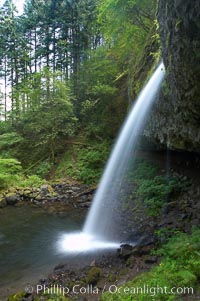
Ponytail Falls, where Horsetail Creeks drops 100 feet over an overhang below which hikers can walk.
Location: Ponytail Falls, Columbia River Gorge National Scenic Area, Oregon
Image ID: 19338
Location: Ponytail Falls, Columbia River Gorge National Scenic Area, Oregon
Image ID: 19338
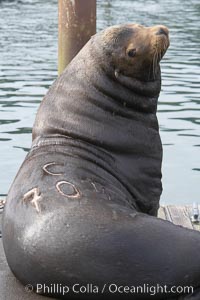
A bull sea lion shows a brand burned into its hide by the Oregon Department of Fish and Wildlife, to monitor it from season to season as it travels between California, Oregon and Washington. Some California sea lions, such as this one C-704, prey upon migrating salmon that gather in the downstream waters and fish ladders of Bonneville Dam on the Columbia River. The "C" in its brand denotes Columbia River. These sea lions also form bachelor colonies that haul out on public docks in Astoria's East Mooring Basin and elsewhere, where they can damage or even sink docks.
Species: California sea lion, Zalophus californianus
Location: Columbia River, Astoria, Oregon
Image ID: 19419
Species: California sea lion, Zalophus californianus
Location: Columbia River, Astoria, Oregon
Image ID: 19419
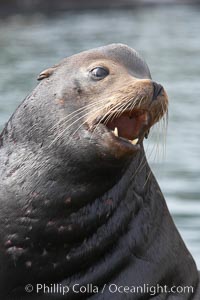
Sea lion head profile, showing small external ear, prominant forehead typical of adult males, whiskers. This sea lion is hauled out on public docks in Astoria's East Mooring Basin. This bachelor colony of adult males takes up residence for several weeks in late summer on public docks in Astoria after having fed upon migrating salmon in the Columbia River. The sea lions can damage or even sink docks and some critics feel that they cost the city money in the form of lost dock fees.
Species: California sea lion, Zalophus californianus
Location: Columbia River, Astoria, Oregon
Image ID: 19420
Species: California sea lion, Zalophus californianus
Location: Columbia River, Astoria, Oregon
Image ID: 19420
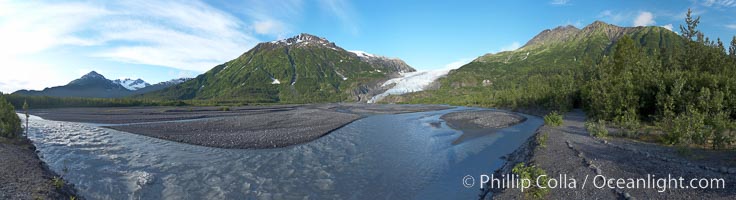
Panorama of Exit Creek, early morning, summer, as it washes over the flood plain below Exit Glacier.
Location: Exit Glacier, Kenai Fjords National Park, Alaska
Image ID: 19109
Panorama dimensions: 4068 x 14964
Location: Exit Glacier, Kenai Fjords National Park, Alaska
Image ID: 19109
Panorama dimensions: 4068 x 14964
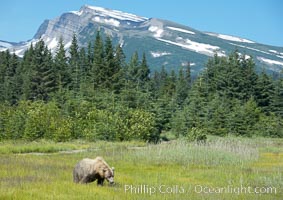
Coastal brown bear in meadow. The tall sedge grasses in this coastal meadow are a food source for brown bears, who may eat 30 lbs of it each day during summer while waiting for their preferred food, salmon, to arrive in the nearby rivers.
Species: Brown bear, Ursus arctos
Location: Lake Clark National Park, Alaska
Image ID: 19188
Species: Brown bear, Ursus arctos
Location: Lake Clark National Park, Alaska
Image ID: 19188
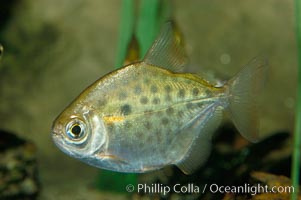
Silver dollar, a freshwater fish native to the Amazon and Paraguay river basins of South America.
Species: Silver dollar fish, Metynnis hypsauchen
Image ID: 09329
Species: Silver dollar fish, Metynnis hypsauchen
Image ID: 09329
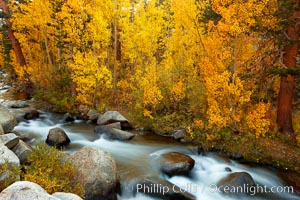
Aspens turn yellow in autumn, changing color alongside the south fork of Bishop Creek at sunset.
Species: Aspen, Populus tremuloides
Location: Bishop Creek Canyon, Sierra Nevada Mountains, California
Image ID: 23323
Species: Aspen, Populus tremuloides
Location: Bishop Creek Canyon, Sierra Nevada Mountains, California
Image ID: 23323
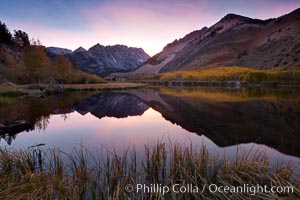
Sunset on North Lake in the eastern Sierra Nevada, autumn.
Location: Bishop Creek Canyon Sierra Nevada Mountains, California
Image ID: 26054
Location: Bishop Creek Canyon Sierra Nevada Mountains, California
Image ID: 26054
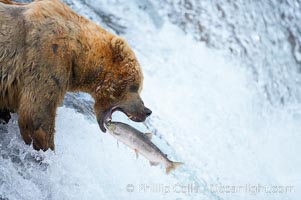
Brown bear catches a silver salmon at Brooks Falls.
Location: Brooks River, Katmai National Park, Alaska
Image ID: 16949
Location: Brooks River, Katmai National Park, Alaska
Image ID: 16949
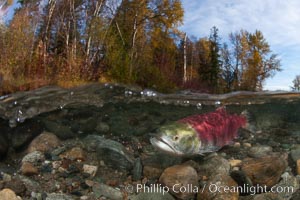
A sockeye salmon swims in the shallows of the Adams River, with the surrounding forest visible in this split-level over-under photograph.
Species: Sockeye salmon, Oncorhynchus nerka
Location: Adams River, Roderick Haig-Brown Provincial Park, British Columbia, Canada
Image ID: 26150
Species: Sockeye salmon, Oncorhynchus nerka
Location: Adams River, Roderick Haig-Brown Provincial Park, British Columbia, Canada
Image ID: 26150
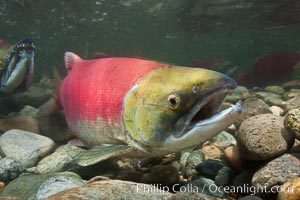
Adams River sockeye salmon. A female sockeye salmon swims upstream in the Adams River to spawn, having traveled hundreds of miles upstream from the ocean.
Species: Sockeye salmon, Oncorhynchus nerka
Location: Adams River, Roderick Haig-Brown Provincial Park, British Columbia, Canada
Image ID: 26159
Species: Sockeye salmon, Oncorhynchus nerka
Location: Adams River, Roderick Haig-Brown Provincial Park, British Columbia, Canada
Image ID: 26159
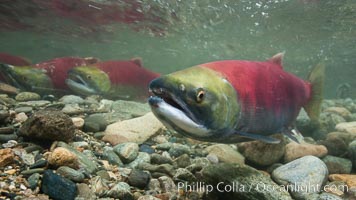
Adams River sockeye salmon. A female sockeye salmon swims upstream in the Adams River to spawn, having traveled hundreds of miles upstream from the ocean.
Species: Sockeye salmon, Oncorhynchus nerka
Location: Adams River, Roderick Haig-Brown Provincial Park, British Columbia, Canada
Image ID: 26160
Species: Sockeye salmon, Oncorhynchus nerka
Location: Adams River, Roderick Haig-Brown Provincial Park, British Columbia, Canada
Image ID: 26160
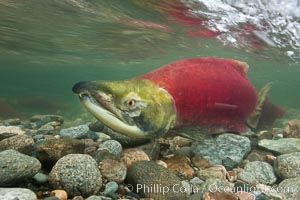
A male sockeye salmon, showing injuries sustained as it migrated hundreds of miles from the ocean up the Fraser River, swims upstream in the Adams River to reach the place where it will fertilize eggs laid by a female in the rocks. It will die soon after spawning.
Species: Sockeye salmon, Oncorhynchus nerka
Location: Adams River, Roderick Haig-Brown Provincial Park, British Columbia, Canada
Image ID: 26162
Species: Sockeye salmon, Oncorhynchus nerka
Location: Adams River, Roderick Haig-Brown Provincial Park, British Columbia, Canada
Image ID: 26162
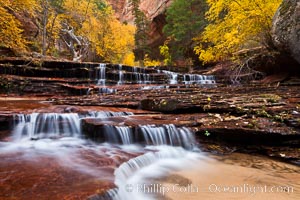
Archangel Falls in autumn, near the Subway in North Creek Canyon, with maples and cottonwoods turning fall colors.
Location: Zion National Park, Utah
Image ID: 26112
Location: Zion National Park, Utah
Image ID: 26112
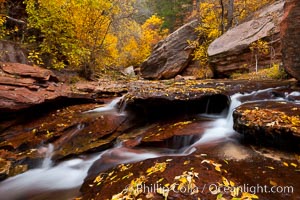
Small waterfalls and autumn trees, along the left fork in North Creek Canyon, with maple and cottonwood trees turning fall colors.
Location: Zion National Park, Utah
Image ID: 26142
Location: Zion National Park, Utah
Image ID: 26142
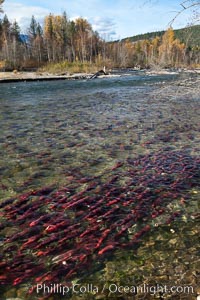
Sockeye salmon, swim upstream in the Adams River, traveling to reach the place where they hatched four years earlier in order to spawn a new generation of salmon eggs.
Species: Sockeye salmon, Oncorhynchus nerka
Location: Adams River, Roderick Haig-Brown Provincial Park, British Columbia, Canada
Image ID: 26172
Species: Sockeye salmon, Oncorhynchus nerka
Location: Adams River, Roderick Haig-Brown Provincial Park, British Columbia, Canada
Image ID: 26172
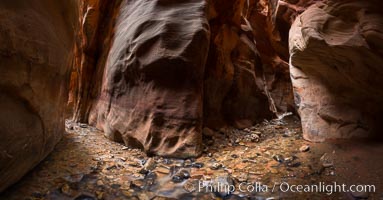
Kanarra Creek Canyon, Utah.
Location: Kanarra Creek, Kanarraville, Utah
Image ID: 32636
Panorama dimensions: 5125 x 9824
Location: Kanarra Creek, Kanarraville, Utah
Image ID: 32636
Panorama dimensions: 5125 x 9824
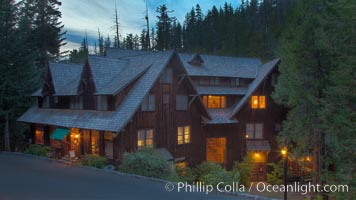
The Chateau at Oregon Caves National Monument. Considered one of the National Park System's classic Great Lodges, and a National Historic Landmark, the Chateau was completed in 1934. The Chateau is a six-story structure with a reinforced concrete foundation and a superstructure of wood frame construction with enormous post and beam interior supports. The building spans a small gorge and a great deal of the building's mass is banked into that depression. Exterior walls are shiplap siding sheathed with cedar bark, giving the building a shaggy, rustic appearance.
Location: Oregon Caves National Monument
Image ID: 25860
Location: Oregon Caves National Monument
Image ID: 25860