Research Photo


-1- 2 3 4 5    Next ›››

Home   >   Natural History Photography Blog   >   Search   >   Research
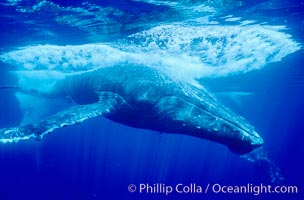
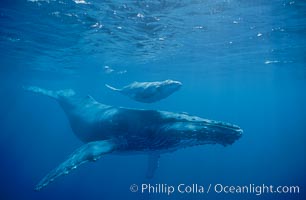
North Pacific humpback whales, a mother and calf pair swim closely together just under the surface of the ocean.  The calf with remain with its mother for about a year, migrating from Hawaii to Alaska to feed on herring, Megaptera novaeangliae, Maui North Pacific humpback whale, breach, Megaptera novaeangliae, Maui A humpback whale hovers motionless underwater in the ocean, inverted with head down and long pectoral fins held wide, near the Hawaiian island of Maui as it sings the famous "Song of the Humpback Whale".  Scientists have strong evidence that only male humpback whales sing, Megaptera novaeangliae
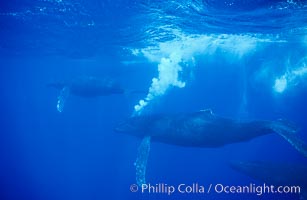
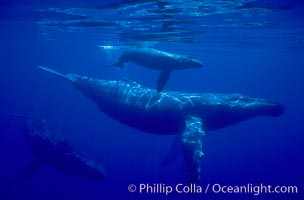
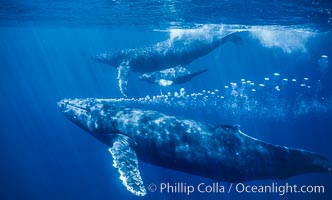
North Pacific humpback whales, a mother and calf pair swim closely together just under the surface of the ocean. The calf with remain with its mother for about a year, migrating from Hawaii to Alaska to feed on herring. Research Photo.
Image ID: 00140  
Species: Humpback whale, Megaptera novaeangliae
Location: Maui, Hawaii, USA
 
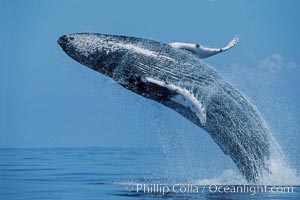
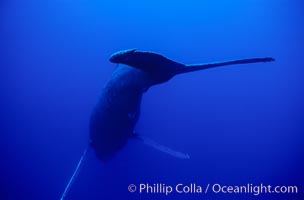
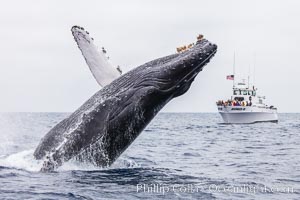
North Pacific humpback whale, breach. Research Picture.
Image ID: 00205  
Species: Humpback whale, Megaptera novaeangliae
Location: Maui, Hawaii, USA
 
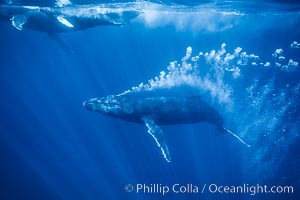
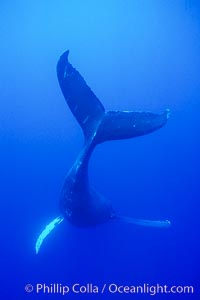
A humpback whale hovers motionless underwater in the ocean, inverted with head down and long pectoral fins held wide, near the Hawaiian island of Maui as it sings the famous "Song of the Humpback Whale". Scientists have strong evidence that only male humpback whales sing. Stock Photography of Research.
Image ID: 02796  
Species: Humpback whale, Megaptera novaeangliae
Location: Maui, Hawaii, USA
 
Humpback whale breaching with pectoral fins lifting spray from the ocean surface, Megaptera novaeangliae, Maui SIO Pier.  The Scripps Institution of Oceanography research pier is 1090 feet long and was built of reinforced concrete in 1988, replacing the original wooden pier built in 1915. The Scripps Pier is home to a variety of sensing equipment above and below water that collects various oceanographic data. The Scripps research diving facility is located at the foot of the pier. Fresh seawater is pumped from the pier to the many tanks and facilities of SIO, including the Birch Aquarium. The Scripps Pier is named in honor of Ellen Browning Scripps, the most significant donor and benefactor of the Institution, La Jolla, California Two satellite tags, below dorsal fin of great white shark.  The tags record the sharks movements, relaying data to researchers via satellite, Carcharodon carcharias, Guadalupe Island (Isla Guadalupe)
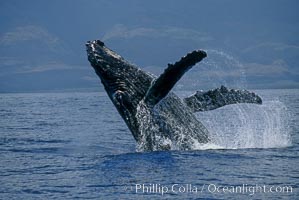
Humpback whale breaching with pectoral fins lifting spray from the ocean surface. Photograph of Research.
Image ID: 03854  
Species: Humpback whale, Megaptera novaeangliae
Location: Maui, Hawaii, USA
 
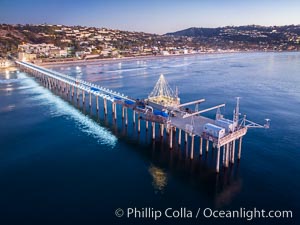
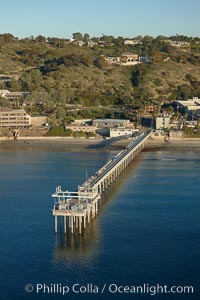
SIO Pier. The Scripps Institution of Oceanography research pier is 1090 feet long and was built of reinforced concrete in 1988, replacing the original wooden pier built in 1915. The Scripps Pier is home to a variety of sensing equipment above and below water that collects various oceanographic data. The Scripps research diving facility is located at the foot of the pier. Fresh seawater is pumped from the pier to the many tanks and facilities of SIO, including the Birch Aquarium. The Scripps Pier is named in honor of Ellen Browning Scripps, the most significant donor and benefactor of the Institution. Research Photos.
Image ID: 22286  
Location: Scripps Institution of Oceanography, La Jolla, California, USA
 
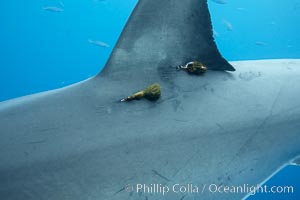
Two satellite tags, below dorsal fin of great white shark. The tags record the sharks movements, relaying data to researchers via satellite. Research Image.
Image ID: 21391  
Species: Great white shark, Carcharodon carcharias
Location: Guadalupe Island (Isla Guadalupe), Baja California, Mexico
 
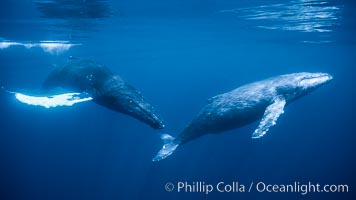
North Pacific humpback whale, escort in competitive group makes fast close pass, Megaptera novaeangliae, Maui North Pacific humpback whale, peduncle throw, Megaptera novaeangliae, Maui North Pacific humpback whale, peduncle throw, Megaptera novaeangliae, Maui
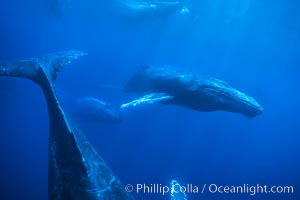
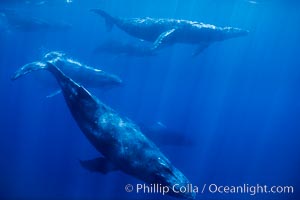
North Pacific humpback whale, escort in competitive group makes fast close pass. Professional stock photos of Research.
Image ID: 06057  
Species: Humpback whale, Megaptera novaeangliae
Location: Maui, Hawaii, USA
 
North Pacific humpback whale, peduncle throw. Pictures of Research.
Image ID: 02153  
Species: Humpback whale, Megaptera novaeangliae
Location: Maui, Hawaii, USA
 
North Pacific humpback whale, peduncle throw. Research Photo.
Image ID: 00443  
Species: Humpback whale, Megaptera novaeangliae
Location: Maui, Hawaii, USA
 
North Pacific humpback whale, Megaptera novaeangliae, Maui A great white shark bearing a white plastic researcher's identification ID tag near its dorsal fin swims through the clear waters of Isla Guadalupe, far offshore of the Pacific Coast of Baja California.  Guadalupe Island is host to a concentration of large great white sharks, which visit the island to feed on pinnipeds and tuna, Carcharodon carcharias, Guadalupe Island (Isla Guadalupe) A great white shark is countershaded, with a dark gray dorsal color and light gray to white underside, making it more difficult for the shark's prey to see it as approaches from above or below in the water column.  The particular undulations of the countershading line along its side, where gray meets white, is unique to each shark and helps researchers to identify individual sharks in capture-recapture studies. Guadalupe Island is host to a relatively large population of great white sharks who, through a history of video and photographs showing their  countershading lines, are the subject of an ongoing study of shark behaviour, migration and population size, Carcharodon carcharias, Guadalupe Island (Isla Guadalupe)
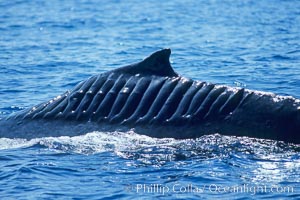
North Pacific humpback whale. Research Picture.
Image ID: 06006  
Species: Humpback whale, Megaptera novaeangliae
Location: Maui, Hawaii, USA
 
A great white shark bearing a white plastic researcher's identification ID tag near its dorsal fin swims through the clear waters of Isla Guadalupe, far offshore of the Pacific Coast of Baja California. Guadalupe Island is host to a concentration of large great white sharks, which visit the island to feed on pinnipeds and tuna. Stock Photography of Research.
Image ID: 07739  
Species: Great white shark, Carcharodon carcharias
Location: Guadalupe Island (Isla Guadalupe), Baja California, Mexico
 
A great white shark is countershaded, with a dark gray dorsal color and light gray to white underside, making it more difficult for the shark's prey to see it as approaches from above or below in the water column. The particular undulations of the countershading line along its side, where gray meets white, is unique to each shark and helps researchers to identify individual sharks in capture-recapture studies. Guadalupe Island is host to a relatively large population of great white sharks who, through a history of video and photographs showing their countershading lines, are the subject of an ongoing study of shark behaviour, migration and population size. Photograph of Research.
Image ID: 19468  
Species: Great white shark, Carcharodon carcharias
Location: Guadalupe Island (Isla Guadalupe), Baja California, Mexico
 
A sea otter, resting on its back, holding its paw out of the water for warmth.  While the sea otter has extremely dense fur on its body, the fur is less dense on its head, arms and paws so it will hold these out of the cold water to conserve body heat, Enhydra lutris, Elkhorn Slough National Estuarine Research Reserve, Moss Landing, California A bull sea lion shows a brand burned into its hide by the Oregon Department of Fish and Wildlife, to monitor it from season to season as it travels between California, Oregon and Washington.  Some California sea lions, such as this one C-704, prey upon migrating salmon that gather in the downstream waters and fish ladders of Bonneville Dam on the Columbia River.  The "C" in its brand denotes Columbia River. These  sea lions also form bachelor colonies that haul out on public docks in Astoria's East Mooring Basin and elsewhere, where they can damage or even sink docks, Zalophus californianus A great white shark is countershaded, with a dark gray dorsal color and light gray to white underside, making it more difficult for the shark's prey to see it as approaches from above or below in the water column.  The particular undulations of the countershading line along its side, where gray meets white, is unique to each shark and helps researchers to identify individual sharks in capture-recapture studies. Guadalupe Island is host to a relatively large population of great white sharks who, through a history of video and photographs showing their  countershading lines, are the subject of an ongoing study of shark behaviour, migration and population size, Carcharodon carcharias, Guadalupe Island (Isla Guadalupe)
A sea otter, resting on its back, holding its paw out of the water for warmth. While the sea otter has extremely dense fur on its body, the fur is less dense on its head, arms and paws so it will hold these out of the cold water to conserve body heat. Research Photos.
Image ID: 21602  
Species: Sea otter, Enhydra lutris
Location: Elkhorn Slough National Estuarine Research Reserve, Moss Landing, California, USA
 
A bull sea lion shows a brand burned into its hide by the Oregon Department of Fish and Wildlife, to monitor it from season to season as it travels between California, Oregon and Washington. Some California sea lions, such as this one C-704, prey upon migrating salmon that gather in the downstream waters and fish ladders of Bonneville Dam on the Columbia River. The "C" in its brand denotes Columbia River. These sea lions also form bachelor colonies that haul out on public docks in Astoria's East Mooring Basin and elsewhere, where they can damage or even sink docks. Research Image.
Image ID: 19419  
Species: California sea lion, Zalophus californianus
Location: Columbia River, Astoria, Oregon, USA
 
A great white shark is countershaded, with a dark gray dorsal color and light gray to white underside, making it more difficult for the shark's prey to see it as approaches from above or below in the water column. The particular undulations of the countershading line along its side, where gray meets white, is unique to each shark and helps researchers to identify individual sharks in capture-recapture studies. Guadalupe Island is host to a relatively large population of great white sharks who, through a history of video and photographs showing their countershading lines, are the subject of an ongoing study of shark behaviour, migration and population size. Professional stock photos of Research.
Image ID: 19455  
Species: Great white shark, Carcharodon carcharias
Location: Guadalupe Island (Isla Guadalupe), Baja California, Mexico
 
A great white shark is countershaded, with a dark gray dorsal color and light gray to white underside, making it more difficult for the shark's prey to see it as approaches from above or below in the water column.  The particular undulations of the countershading line along its side, where gray meets white, is unique to each shark and helps researchers to identify individual sharks in capture-recapture studies. Guadalupe Island is host to a relatively large population of great white sharks who, through a history of video and photographs showing their  countershading lines, are the subject of an ongoing study of shark behaviour, migration and population size, Carcharodon carcharias, Guadalupe Island (Isla Guadalupe) A great white shark is countershaded, with a dark gray dorsal color and light gray to white underside, making it more difficult for the shark's prey to see it as approaches from above or below in the water column.  The particular undulations of the countershading line along its side, where gray meets white, is unique to each shark and helps researchers to identify individual sharks in capture-recapture studies. Guadalupe Island is host to a relatively large population of great white sharks who, through a history of video and photographs showing their  countershading lines, are the subject of an ongoing study of shark behaviour, migration and population size, Carcharodon carcharias, Guadalupe Island (Isla Guadalupe) A great white shark is countershaded, with a dark gray dorsal color and light gray to white underside, making it more difficult for the shark's prey to see it as approaches from above or below in the water column.  The particular undulations of the countershading line along its side, where gray meets white, is unique to each shark and helps researchers to identify individual sharks in capture-recapture studies. Guadalupe Island is host to a relatively large population of great white sharks who, through a history of video and photographs showing their  countershading lines, are the subject of an ongoing study of shark behaviour, migration and population size, Carcharodon carcharias, Guadalupe Island (Isla Guadalupe)
A great white shark is countershaded, with a dark gray dorsal color and light gray to white underside, making it more difficult for the shark's prey to see it as approaches from above or below in the water column. The particular undulations of the countershading line along its side, where gray meets white, is unique to each shark and helps researchers to identify individual sharks in capture-recapture studies. Guadalupe Island is host to a relatively large population of great white sharks who, through a history of video and photographs showing their countershading lines, are the subject of an ongoing study of shark behaviour, migration and population size. Pictures of Research.
Image ID: 19456  
Species: Great white shark, Carcharodon carcharias
Location: Guadalupe Island (Isla Guadalupe), Baja California, Mexico
 
A great white shark is countershaded, with a dark gray dorsal color and light gray to white underside, making it more difficult for the shark's prey to see it as approaches from above or below in the water column. The particular undulations of the countershading line along its side, where gray meets white, is unique to each shark and helps researchers to identify individual sharks in capture-recapture studies. Guadalupe Island is host to a relatively large population of great white sharks who, through a history of video and photographs showing their countershading lines, are the subject of an ongoing study of shark behaviour, migration and population size. Research Photo.
Image ID: 19458  
Species: Great white shark, Carcharodon carcharias
Location: Guadalupe Island (Isla Guadalupe), Baja California, Mexico
 
A great white shark is countershaded, with a dark gray dorsal color and light gray to white underside, making it more difficult for the shark's prey to see it as approaches from above or below in the water column. The particular undulations of the countershading line along its side, where gray meets white, is unique to each shark and helps researchers to identify individual sharks in capture-recapture studies. Guadalupe Island is host to a relatively large population of great white sharks who, through a history of video and photographs showing their countershading lines, are the subject of an ongoing study of shark behaviour, migration and population size. Research Picture.
Image ID: 19459  
Species: Great white shark, Carcharodon carcharias
Location: Guadalupe Island (Isla Guadalupe), Baja California, Mexico
 
A great white shark is countershaded, with a dark gray dorsal color and light gray to white underside, making it more difficult for the shark's prey to see it as approaches from above or below in the water column.  The particular undulations of the countershading line along its side, where gray meets white, is unique to each shark and helps researchers to identify individual sharks in capture-recapture studies. Guadalupe Island is host to a relatively large population of great white sharks who, through a history of video and photographs showing their  countershading lines, are the subject of an ongoing study of shark behaviour, migration and population size, Carcharodon carcharias, Guadalupe Island (Isla Guadalupe) A great white shark is countershaded, with a dark gray dorsal color and light gray to white underside, making it more difficult for the shark's prey to see it as approaches from above or below in the water column.  The particular undulations of the countershading line along its side, where gray meets white, is unique to each shark and helps researchers to identify individual sharks in capture-recapture studies. Guadalupe Island is host to a relatively large population of great white sharks who, through a history of video and photographs showing their  countershading lines, are the subject of an ongoing study of shark behaviour, migration and population size, Carcharodon carcharias, Guadalupe Island (Isla Guadalupe) A great white shark is countershaded, with a dark gray dorsal color and light gray to white underside, making it more difficult for the shark's prey to see it as approaches from above or below in the water column.  The particular undulations of the countershading line along its side, where gray meets white, is unique to each shark and helps researchers to identify individual sharks in capture-recapture studies. Guadalupe Island is host to a relatively large population of great white sharks who, through a history of video and photographs showing their  countershading lines, are the subject of an ongoing study of shark behaviour, migration and population size, Carcharodon carcharias, Guadalupe Island (Isla Guadalupe)
A great white shark is countershaded, with a dark gray dorsal color and light gray to white underside, making it more difficult for the shark's prey to see it as approaches from above or below in the water column. The particular undulations of the countershading line along its side, where gray meets white, is unique to each shark and helps researchers to identify individual sharks in capture-recapture studies. Guadalupe Island is host to a relatively large population of great white sharks who, through a history of video and photographs showing their countershading lines, are the subject of an ongoing study of shark behaviour, migration and population size. Stock Photography of Research.
Image ID: 19460  
Species: Great white shark, Carcharodon carcharias
Location: Guadalupe Island (Isla Guadalupe), Baja California, Mexico
 
A great white shark is countershaded, with a dark gray dorsal color and light gray to white underside, making it more difficult for the shark's prey to see it as approaches from above or below in the water column. The particular undulations of the countershading line along its side, where gray meets white, is unique to each shark and helps researchers to identify individual sharks in capture-recapture studies. Guadalupe Island is host to a relatively large population of great white sharks who, through a history of video and photographs showing their countershading lines, are the subject of an ongoing study of shark behaviour, migration and population size. Photograph of Research.
Image ID: 19463  
Species: Great white shark, Carcharodon carcharias
Location: Guadalupe Island (Isla Guadalupe), Baja California, Mexico
 
A great white shark is countershaded, with a dark gray dorsal color and light gray to white underside, making it more difficult for the shark's prey to see it as approaches from above or below in the water column. The particular undulations of the countershading line along its side, where gray meets white, is unique to each shark and helps researchers to identify individual sharks in capture-recapture studies. Guadalupe Island is host to a relatively large population of great white sharks who, through a history of video and photographs showing their countershading lines, are the subject of an ongoing study of shark behaviour, migration and population size. Research Photos.
Image ID: 19464  
Species: Great white shark, Carcharodon carcharias
Location: Guadalupe Island (Isla Guadalupe), Baja California, Mexico
 
A great white shark is countershaded, with a dark gray dorsal color and light gray to white underside, making it more difficult for the shark's prey to see it as approaches from above or below in the water column.  The particular undulations of the countershading line along its side, where gray meets white, is unique to each shark and helps researchers to identify individual sharks in capture-recapture studies. Guadalupe Island is host to a relatively large population of great white sharks who, through a history of video and photographs showing their  countershading lines, are the subject of an ongoing study of shark behaviour, migration and population size, Carcharodon carcharias, Guadalupe Island (Isla Guadalupe) A great white shark is countershaded, with a dark gray dorsal color and light gray to white underside, making it more difficult for the shark's prey to see it as approaches from above or below in the water column.  The particular undulations of the countershading line along its side, where gray meets white, is unique to each shark and helps researchers to identify individual sharks in capture-recapture studies. Guadalupe Island is host to a relatively large population of great white sharks who, through a history of video and photographs showing their  countershading lines, are the subject of an ongoing study of shark behaviour, migration and population size, Carcharodon carcharias, Guadalupe Island (Isla Guadalupe) A great white shark is countershaded, with a dark gray dorsal color and light gray to white underside, making it more difficult for the shark's prey to see it as approaches from above or below in the water column.  The particular undulations of the countershading line along its side, where gray meets white, is unique to each shark and helps researchers to identify individual sharks in capture-recapture studies. Guadalupe Island is host to a relatively large population of great white sharks who, through a history of video and photographs showing their  countershading lines, are the subject of an ongoing study of shark behaviour, migration and population size, Carcharodon carcharias, Guadalupe Island (Isla Guadalupe)
A great white shark is countershaded, with a dark gray dorsal color and light gray to white underside, making it more difficult for the shark's prey to see it as approaches from above or below in the water column. The particular undulations of the countershading line along its side, where gray meets white, is unique to each shark and helps researchers to identify individual sharks in capture-recapture studies. Guadalupe Island is host to a relatively large population of great white sharks who, through a history of video and photographs showing their countershading lines, are the subject of an ongoing study of shark behaviour, migration and population size. Research Image.
Image ID: 19467  
Species: Great white shark, Carcharodon carcharias
Location: Guadalupe Island (Isla Guadalupe), Baja California, Mexico
 
A great white shark is countershaded, with a dark gray dorsal color and light gray to white underside, making it more difficult for the shark's prey to see it as approaches from above or below in the water column. The particular undulations of the countershading line along its side, where gray meets white, is unique to each shark and helps researchers to identify individual sharks in capture-recapture studies. Guadalupe Island is host to a relatively large population of great white sharks who, through a history of video and photographs showing their countershading lines, are the subject of an ongoing study of shark behaviour, migration and population size. Professional stock photos of Research.
Image ID: 19471  
Species: Great white shark, Carcharodon carcharias
Location: Guadalupe Island (Isla Guadalupe), Baja California, Mexico
 
A great white shark is countershaded, with a dark gray dorsal color and light gray to white underside, making it more difficult for the shark's prey to see it as approaches from above or below in the water column. The particular undulations of the countershading line along its side, where gray meets white, is unique to each shark and helps researchers to identify individual sharks in capture-recapture studies. Guadalupe Island is host to a relatively large population of great white sharks who, through a history of video and photographs showing their countershading lines, are the subject of an ongoing study of shark behaviour, migration and population size. Pictures of Research.
Image ID: 19474  
Species: Great white shark, Carcharodon carcharias
Location: Guadalupe Island (Isla Guadalupe), Baja California, Mexico
 
A great white shark is countershaded, with a dark gray dorsal color and light gray to white underside, making it more difficult for the shark's prey to see it as approaches from above or below in the water column.  The particular undulations of the countershading line along its side, where gray meets white, is unique to each shark and helps researchers to identify individual sharks in capture-recapture studies. Guadalupe Island is host to a relatively large population of great white sharks who, through a history of video and photographs showing their  countershading lines, are the subject of an ongoing study of shark behaviour, migration and population size, Carcharodon carcharias, Guadalupe Island (Isla Guadalupe) North Pacific humpback whale, Megaptera novaeangliae, Maui North Pacific humpback whales, a mother and young calf swim near scientific research divers, Megaptera novaeangliae, Maui
A great white shark is countershaded, with a dark gray dorsal color and light gray to white underside, making it more difficult for the shark's prey to see it as approaches from above or below in the water column. The particular undulations of the countershading line along its side, where gray meets white, is unique to each shark and helps researchers to identify individual sharks in capture-recapture studies. Guadalupe Island is host to a relatively large population of great white sharks who, through a history of video and photographs showing their countershading lines, are the subject of an ongoing study of shark behaviour, migration and population size. Research Photo.
Image ID: 19481  
Species: Great white shark, Carcharodon carcharias
Location: Guadalupe Island (Isla Guadalupe), Baja California, Mexico
 
North Pacific humpback whale. Research Picture.
Image ID: 00167  
Species: Humpback whale, Megaptera novaeangliae
Location: Maui, Hawaii, USA
 
North Pacific humpback whales, a mother and young calf swim near scientific research divers. Stock Photography of Research.
Image ID: 00543  
Species: Humpback whale, Megaptera novaeangliae
Location: Maui, Hawaii, USA
 
Northern fur seal, Callorhinus ursinus, San Miguel Island North Pacific humpback whale raising its fluke before diving underwater to forage for herring in southeast Alaska, Megaptera novaeangliae, Maui Humpback whale breaching, Megaptera novaeangliae, Maui
Northern fur seal. Photograph of Research.
Image ID: 00965  
Species: Northern fur seal, Callorhinus ursinus
Location: San Miguel Island, California, USA
 
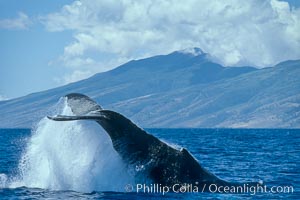
North Pacific humpback whale raising its fluke before diving underwater to forage for herring in southeast Alaska. Research Photos.
Image ID: 02154  
Species: Humpback whale, Megaptera novaeangliae
Location: Maui, Hawaii, USA
 
Humpback whale breaching. Research Image.
Image ID: 03855  
Species: Humpback whale, Megaptera novaeangliae
Location: Maui, Hawaii, USA


Natural History Photography Blog posts (20) related to Research


Related Topics:


Keywords:

Page:   -1- 2 3 4 5   Next ›››   New Search
Most Common Categories Appearing Among These Images:
Animal  >  Bird  >  Goose (Anatidae)  >  Snow Goose
Animal  >  Bird  >  Penguin  >  Gentoo Penguin
Animal  >  Cetacean  >  Whale  >  Humpback Whale
Animal  >  Cetacean  >  Whale  >  Humpback Whale  >  Humpback Whale Breaching
Animal  >  Cetacean  >  Whale  >  Humpback Whale  >  Humpback Whale Juvenile / Calf
Animal  >  Cetacean  >  Whale  >  Humpback Whale  >  Humpback Whale Mother and Calf
Animal  >  Cetacean  >  Whale  >  Humpback Whale  >  Humpback Whale in Alaska
Animal  >  Cetacean  >  Whale  >  Juvenile / Calf
Animal  >  Cetacean  >  Whale  >  Whale Anatomy  >  Whale Blowhole
Animal  >  Cetacean  >  Whale  >  Whale Anatomy  >  Whale Fluke / Tail
Animal  >  Cetacean  >  Whale  >  Whale Anatomy  >  Whale Pectoral Fin
Animal  >  Cetacean  >  Whale  >  Whale Behavior  >  Competitive / Rowdy Group
Animal  >  Cetacean  >  Whale  >  Whale Behavior  >  Mother / Calf Nurturing
Animal  >  Cetacean  >  Whale  >  Whale Behavior  >  Tail Lob / Peduncle Throw
Animal  >  Cetacean  >  Whale  >  Whale Behavior  >  Whale Blow / Spout
Animal  >  Cetacean  >  Whale  >  Whale Behavior  >  Whale Breaching
Animal  >  Cetacean  >  Whale  >  Whale Behavior  >  Whale Lunging
Animal  >  Cetacean  >  Whale  >  Whale Behavior  >  Whale Pectoral Fin Display
Animal  >  Cetacean  >  Whale  >  Whale Behavior  >  Whale Singing
Animal  >  Cetacean  >  Whale  >  Whale Watching
Animal  >  Endangered / Threatened Species  >  Marine  >  Great White Shark
Animal  >  Endangered / Threatened Species  >  Marine  >  Humpback Whale
Animal  >  Endangered / Threatened Species  >  Marine  >  Northern Fur Seal
Animal  >  Mammal  >  Otter  >  Sea Otter
Animal  >  Pinniped  >  California Sea Lion
Animal  >  Pinniped  >  Northern Fur Seal
Animal  >  Pinniped  >  Pinniped Research
Animal  >  Shark  >  Great White Shark
Animal  >  Shark  >  Shark Research / Conservation  >  ID Tagging
Environmental Issues / Problems  >  Boat Strike / Propeller Scar  >  Whale Injury
Gallery  >  California
Gallery  >  California Sea Lion
Gallery  >  Cetacean
Gallery  >  Great White Shark
Gallery  >  Humpback Whales
Gallery  >  La Jolla
Gallery  >  New Work August 2011
Gallery  >  San Diego
Gallery  >  Wildlife Portraits
Location  >  Oceans  >  Pacific  >  California (USA) / Baja California (Mexico)  >  Channel Islands  >  San Miguel Island
Location  >  Oceans  >  Pacific  >  California (USA) / Baja California (Mexico)  >  Guadalupe Island (Isla Guadalupe)
Location  >  Oceans  >  Pacific  >  Hawaiian Islands
Location  >  Oceans  >  Pacific  >  Southeast Alaska
Location  >  Oceans  >  Southern Ocean  >  Antarctica
Location  >  Protected Threatened and Significant Places  >  International  >  Isla Guadalupe Special Biosphere Reserve (Mexico)
Location  >  Protected Threatened and Significant Places  >  National Marine Sanctuaries  >  Channel Islands National Marine Sanctuary
Location  >  Protected Threatened and Significant Places  >  National Marine Sanctuaries  >  Hawaiian Islands Humpback Whale National Marine Sanctuary
Location  >  Protected Threatened and Significant Places  >  National Marine Sanctuaries  >  Monterey Bay National Marine Sanctuary (California)  >  Elkhorn Slough National Estuarine Research Reserve
Location  >  USA  >  California  >  Moss Landing  >  Elkhorn Slough
Location  >  USA  >  California  >  San Diego  >  La Jolla
Location  >  USA  >  California  >  San Diego  >  Scripps Institution of Oceanography
Location  >  USA  >  California  >  San Diego  >  University of California San Diego (UCSD)
Location  >  USA  >  California  >  San Diego  >  University of California San Diego (UCSD)  >  Stuart Collection  >  Bear
Location  >  USA  >  California  >  San Diego  >  University of California San Diego (UCSD)  >  Stuart Collection  >  Giraffe Traps
Location  >  USA  >  California  >  San Diego  >  University of California San Diego (UCSD)  >  Stuart Collection  >  Stonehenge
Location  >  USA  >  California  >  San Diego  >  University of California San Diego (UCSD)  >  Stuart Collection  >  Sun God
Location  >  USA  >  California  >  San Diego  >  University of California San Diego (UCSD)  >  Stuart Collection  >  Vices and Virtues
Location  >  USA  >  California  >  San Diego  >  University of California San Diego (UCSD)  >  UCSD Library (Geisel Library)
Location  >  USA  >  Hawaii
Location  >  USA  >  New Mexico  >  Socorro  >  Bosque del Apache National Wildlife Refuge
Location  >  USA  >  Oregon  >  Astoria
Location  >  World  >  Antarctica  >  Antarctic Peninsula  >  Gerlache Strait
Location  >  World  >  Antarctica  >  Antarctic Peninsula  >  Paradise Bay
Location  >  World  >  Antarctica  >  Antarctic Peninsula  >  Petermann Island
Location  >  World  >  Mexico  >  Guadalupe Island (Isla Guadalupe)
Location  >  World  >  United Kingdom  >  South Georgia Island  >  Grytviken
Natural World  >  Abstracts and Patterns  >  Sunset
Portfolio
Subject  >  Inspirational
Subject  >  People  >  Activities  >  Whale Watching
Subject  >  People  >  Underwater
Subject  >  Technique  >  Aerial Photo
Subject  >  Technique  >  High Dynamic Range (HDR)
Subject  >  Technique  >  Panoramic Photo
Subject  >  Technique  >  Underwater

Species Appearing Among These Images:
Callorhinus ursinus
Carcharodon carcharias
Chen caerulescens
Enhydra lutris
Megaptera novaeangliae
Pygoscelis papua
Zalophus californianus

Natural History Photography Blog posts (20) related to Research
Imperial Beach Pier
Humpback Whale Fluke ID Identification Photos
Italy 2011
A Tale of Two Panoramas and One iPhone
Photos of Scripps Pier, Scripps Institution of Oceanography
La Jolla Photos
Photo Articles, Reports and Downloads
Peterman Island, Antarctica
Bosque Del Apache NWR, New Mexico, 2010
Cierva Cove, Antarctica
Grytviken, South Georgia Island
Cheesemans Antarctica, Falklands and South Georgia
Rose Atoll, A World Treasure in Peril
Heat Run: Humpback Whale Behavior Photos
Humpback Whale Pictures (Megaptera novaeangliae)
The Evolution of Oceanlight.com
Clouds on Fire, Abstract Photo
Post up ... Shoot ... Score!
Photographing Bald Eagles in Homer, Alaska
Boat Strikes Humpback Whale

Search for:     

Updated: February 10, 2012