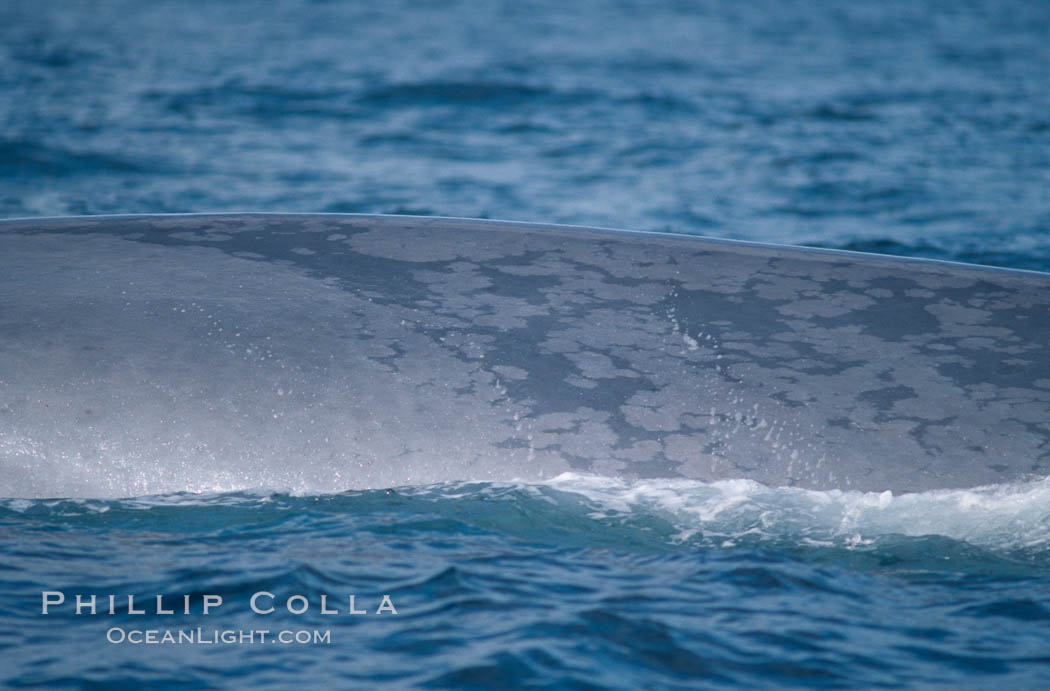
Blue whale, flank showing mottled skin pattern.
Species: Blue Whale, Balaenoptera musculus
Image ID: 02236
Lat/Long: 32.50811, -118.13466 (Coordinates: 32° 30' 29.20" N, 118° 08' 4.78" W)
Format: Film 3:2
Species: Blue Whale, Balaenoptera musculus
Image ID: 02236
Lat/Long: 32.50811, -118.13466 (Coordinates: 32° 30' 29.20" N, 118° 08' 4.78" W)
Format: Film 3:2
Keywords: animal, balaenoptera, balaenoptera musculus, balaenopteridae, baleine bleue, ballena azul, big, blue rorqual, blue whale, cetacea, cetacean, creature, endangered, endangered threatened species, enormous, great blue whale, great northern rorqual, huge, large, mammal, marine, marine mammal, musculus, mysticete, mysticeti, ocean, pacific, pacific ocean, rorqual, rorqual bleu, sea, sibbald's rorqual, sulphur bottom whale, threatened, whale, wild, wildlife
Categories:
- Animal > Cetacean > Whale > Blue Whale
- Animal > Endangered / Threatened Species > Marine > Blue Whale
Copyright © Phillip Colla / Oceanlight.com, all rights reserved worldwide.
This professional quality stock photo can be licensed in high resolution form by contacting the photographer: Phillip Colla, photos@oceanlight.com, (760) 707-7153, more info and photographer bio.