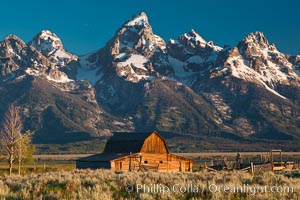
John Moulton barn at sunrise with Teton Range, on Mormon Row in Grand Teton National Park, Wyoming.
Location: Grand Teton National Park, Wyoming
Image ID: 26965
Location: Grand Teton National Park, Wyoming
Image ID: 26965
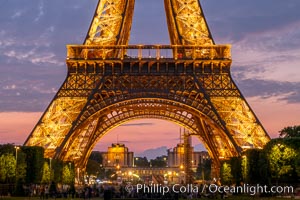
The Eiffel Tower with the Trocodero seen in the distance across the Seine, Paris, France. The Eiffel Tower is an iron lattice tower located on the Champ de Mars in Paris, named after the engineer Gustave Eiffel, who designed the tower in 1889 as the entrance arch to the 1889 World's Fair. The Eiffel tower is the tallest structure in Paris and the most-visited paid monument in the world.
Location: Tour Eiffel, Paris, France
Image ID: 35601
Location: Tour Eiffel, Paris, France
Image ID: 35601
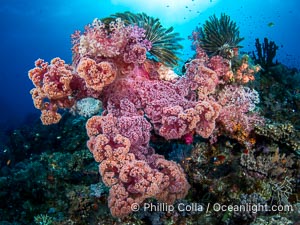
Beautiful Dendronephthya soft corals display incredible color on Fijian coral reefs. Two crinoids (feather stars) cling to the top of the reef structure. Soft corals swell when the current is running and extend outward to capture passing plankton and food.
Species: Dendronephthya soft coral, Dendronephthya
Location: Namena Marine Reserve, Namena Island, Fiji
Image ID: 41028
Species: Dendronephthya soft coral, Dendronephthya
Location: Namena Marine Reserve, Namena Island, Fiji
Image ID: 41028
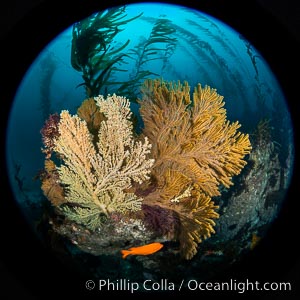
Parasitic zoanthid anemones cover, encrust and overwhelm a golden gorgonian. The gorgonian on the left has been completely parasitized by zoanthid anemones, while the gorgonian to the right remains free of zoanthids (for now). A garibaldi swims below the two sea fans. The golden gorgonian is a filter-feeding temperate colonial species that lives on the rocky bottom at depths between 50 to 200 feet deep. Each individual polyp is a distinct animal, together they secrete calcium that forms the structure of the colony. Gorgonians are oriented at right angles to prevailing water currents to capture plankton drifting by.
Species: California Golden Gorgonian, Luminescent Parazoanthid, Zoanthid Anemone, Giant Kelp, Garibaldi, Muricea californica, Parazoanthus lucificum, Savalia lucifica, Macrocystis pyrifera, Hypsypops rubicundus
Location: San Clemente Island, California
Image ID: 38493
Species: California Golden Gorgonian, Luminescent Parazoanthid, Zoanthid Anemone, Giant Kelp, Garibaldi, Muricea californica, Parazoanthus lucificum, Savalia lucifica, Macrocystis pyrifera, Hypsypops rubicundus
Location: San Clemente Island, California
Image ID: 38493
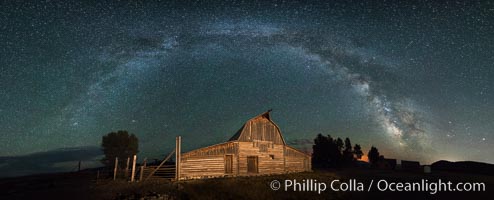
Milky Way over John Moulton Barn, Grand Teton National Park.
Image ID: 32305
Panorama dimensions: 4329 x 10697
Image ID: 32305
Panorama dimensions: 4329 x 10697
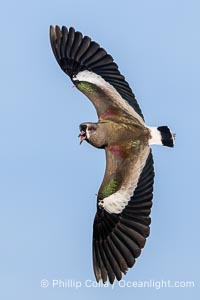
Southern Lapwing in flight, Vanellus chilensis, on Peninsula Valdes in Argentina's coastal Patagonia. Note the spur-like structure at the wrist joint which it uses to fight other birds in flight. By permission of the Government of Argentina, Chubut, permit # 51 / 2025-SsCyA.
Species: Southern Lapwing, Vanellus chilensis
Location: Puerto Piramides, Chubut, Argentina
Image ID: 41191
Species: Southern Lapwing, Vanellus chilensis
Location: Puerto Piramides, Chubut, Argentina
Image ID: 41191
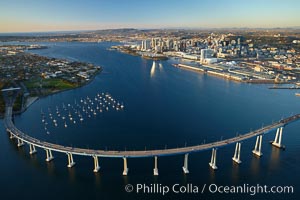
San Diego Coronado Bridge, known locally as the Coronado Bridge, links San Diego with Coronado, California. The bridge was completed in 1969 and was a toll bridge until 2002. It is 2.1 miles long and reaches a height of 200 feet above San Diego Bay. Coronado Island is to the left, and downtown San Diego is to the right in this view looking north.
Location: San Diego, California
Image ID: 22288
Location: San Diego, California
Image ID: 22288
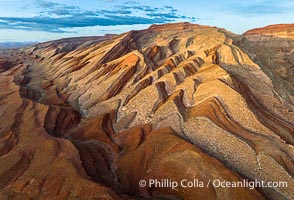
Aerial Photo of Raplee Ridge near Mexican Hat, Utah. Raplee Ridge is a spectacular series of multicolored triangular flatirons near the San Juan River. Often called "the Raplee Anticline" the geologic structure is in fact better described as a monocline, according to the Utah Geological Survey.
Location: Mexican Hat, Utah
Image ID: 39489
Location: Mexican Hat, Utah
Image ID: 39489
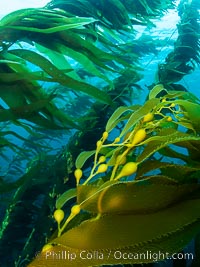
Kelp fronds showing pneumatocysts, bouyant gas-filled bubble-like structures which float the kelp plant off the ocean bottom toward the surface, where it will spread to form a roof-like canopy.
Species: Giant kelp, Macrocystis pyrifera
Location: San Clemente Island, California
Image ID: 38498
Species: Giant kelp, Macrocystis pyrifera
Location: San Clemente Island, California
Image ID: 38498
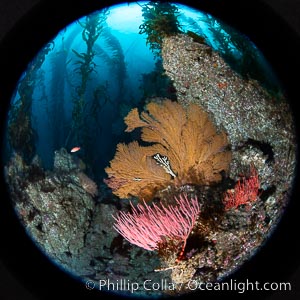
Red gorgonian and California golden gorgonian on underwater rocky reef, San Clemente Island. The golden gorgonian is a filter-feeding temperate colonial species that lives on the rocky bottom at depths between 50 to 200 feet deep. Each individual polyp is a distinct animal, together they secrete calcium that forms the structure of the colony. Gorgonians are oriented at right angles to prevailing water currents to capture plankton drifting by.
Species: Red Gorgonian, California Golden Gorgonian, Garibaldi, Leptogorgia chilensis, Lophogorgia chilensis, Muricea californica, Hypsypops rubicundus
Location: San Clemente Island, California
Image ID: 38499
Species: Red Gorgonian, California Golden Gorgonian, Garibaldi, Leptogorgia chilensis, Lophogorgia chilensis, Muricea californica, Hypsypops rubicundus
Location: San Clemente Island, California
Image ID: 38499
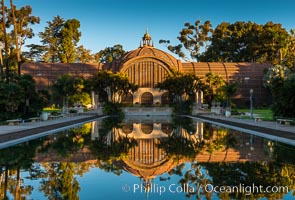
The Botanical Building in Balboa Park, San Diego. The Botanical Building, at 250 feet long by 75 feet wide and 60 feet tall, was the largest wood lath structure in the world when it was built in 1915 for the Panama-California Exposition. The Botanical Building, located on the Prado, west of the Museum of Art, contains about 2,100 permanent tropical plants along with changing seasonal flowers. The Lily Pond, just south of the Botanical Building, is an eloquent example of the use of reflecting pools to enhance architecture. The 193' by 43' foot pond and smaller companion pool were originally referred to as Las Lagunas de las Flores (The Lakes of the Flowers) and were designed as aquatic gardens. The pools contain exotic water lilies and lotus which bloom spring through fall.
Location: Balboa Park, San Diego, California
Image ID: 28823
Location: Balboa Park, San Diego, California
Image ID: 28823
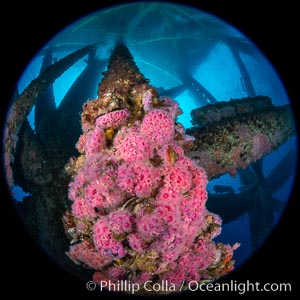
Oil Rig Eureka, Underwater Structure and invertebrate Life.
Species: Strawberry anemone, Corynactis californica
Location: Long Beach, California
Image ID: 34660
Species: Strawberry anemone, Corynactis californica
Location: Long Beach, California
Image ID: 34660
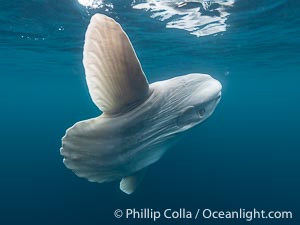
Dorsal and Caudal fins of the Ocean Sunfish Mola mola, as it Swims in the Open Ocean, near San Diego. The caudal fin is not a true tail but is a tail-like structure called a clavus that serves as a rudder. The dorsal (top) and anal (bottom) fins are used for propulsion.
Species: Ocean sunfish, Mola mola
Location: San Diego, California
Image ID: 39407
Species: Ocean sunfish, Mola mola
Location: San Diego, California
Image ID: 39407
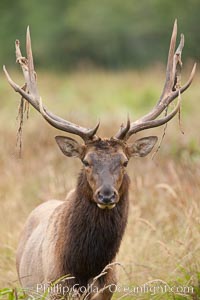
Roosevelt elk, adult bull male with large antlers. This bull elk has recently shed the velvet that covers its antlers. While an antler is growing, it is covered with highly vascular skin called velvet, which supplies oxygen and nutrients to the growing bone; once the antler has achieved its full size, the velvet is lost and the antler's bone dies. This dead bone structure is the mature antler, which is itself shed after each mating season. Roosevelt elk grow to 10' and 1300 lb, eating grasses, sedges and various berries, inhabiting the coastal rainforests of the Pacific Northwest.
Species: Roosevelt elk, Cervus canadensis roosevelti
Location: Redwood National Park, California
Image ID: 25890
Species: Roosevelt elk, Cervus canadensis roosevelti
Location: Redwood National Park, California
Image ID: 25890
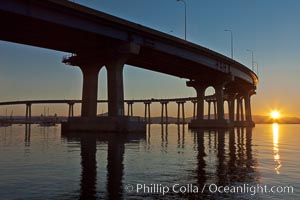
Coronado Bridge, linking San Diego to Coronado, sunrise, viewed from Coronado Island. San Diego Coronado Bridge, known locally as the Coronado Bridge, links San Diego with Coronado, California. The bridge was completed in 1969 and was a toll bridge until 2002. It is 2.1 miles long and reaches a height of 200 feet above San Diego Bay.
Location: San Diego, California
Image ID: 27101
Location: San Diego, California
Image ID: 27101
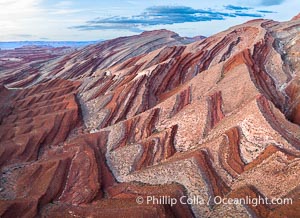
Aerial Photo of Raplee Ridge near Mexican Hat, Utah. Raplee Ridge is a spectacular series of multicolored triangular flatirons near the San Juan River. Often called "the Raplee Anticline" the geologic structure is in fact better described as a monocline, according to the Utah Geological Survey.
Location: Mexican Hat, Utah
Image ID: 39490
Location: Mexican Hat, Utah
Image ID: 39490
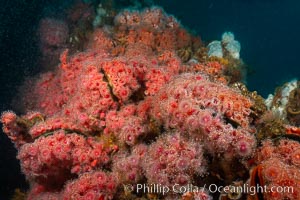
Corynactis anemones on Oil Rig Elly underwater structure.
Species: Strawberry anemone, Corynactis californica
Location: Long Beach, California
Image ID: 31121
Species: Strawberry anemone, Corynactis californica
Location: Long Beach, California
Image ID: 31121
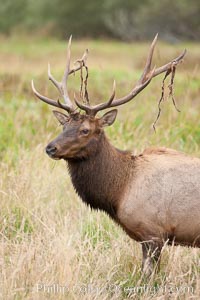
Roosevelt elk, adult bull male with large antlers. This bull elk has recently shed the velvet that covers its antlers. While an antler is growing, it is covered with highly vascular skin called velvet, which supplies oxygen and nutrients to the growing bone; once the antler has achieved its full size, the velvet is lost and the antler's bone dies. This dead bone structure is the mature antler, which is itself shed after each mating season. Roosevelt elk grow to 10' and 1300 lb, eating grasses, sedges and various berries, inhabiting the coastal rainforests of the Pacific Northwest.
Species: Roosevelt elk, Cervus canadensis roosevelti
Location: Redwood National Park, California
Image ID: 25878
Species: Roosevelt elk, Cervus canadensis roosevelti
Location: Redwood National Park, California
Image ID: 25878
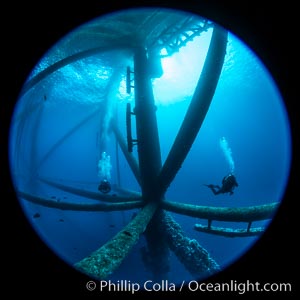
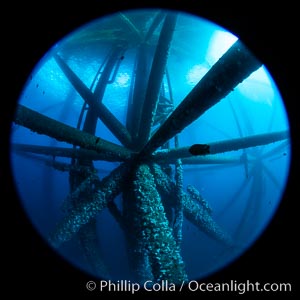
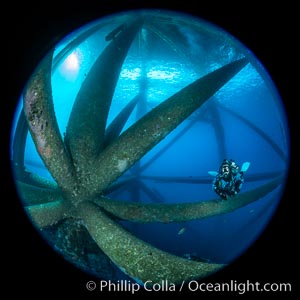
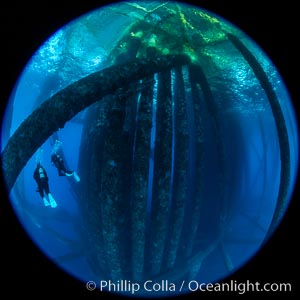
A SCUBA diver swims through oil rigs Ellen and Elly, underwater structure. Damn that is some clear water!.
Location: Long Beach, California
Image ID: 34659
Location: Long Beach, California
Image ID: 34659
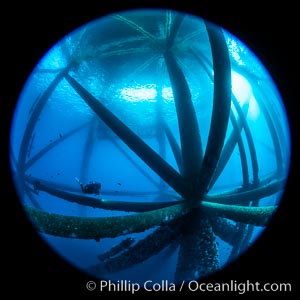
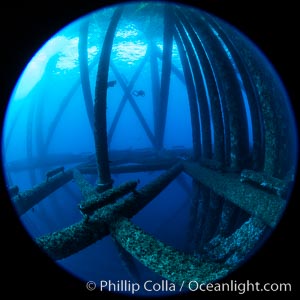
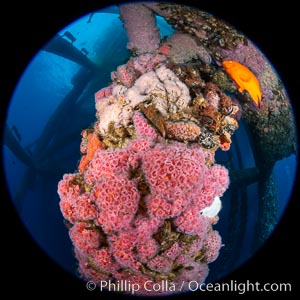
Oil Rig Eureka, Underwater Structure and invertebrate Life.
Species: Strawberry anemone, Corynactis californica
Location: Long Beach, California
Image ID: 34664
Species: Strawberry anemone, Corynactis californica
Location: Long Beach, California
Image ID: 34664
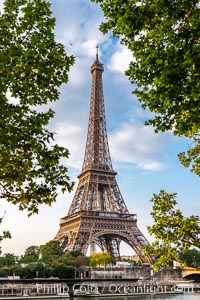
La Tour Eiffel. The Eiffel Tower is an iron lattice tower located on the Champ de Mars in Paris, named after the engineer Gustave Eiffel, who designed the tower in 1889 as the entrance arch to the 1889 World's Fair. The Eiffel tower is the tallest structure in Paris and the most-visited paid monument in the world.
Location: Tour Eiffel, Paris, France
Image ID: 35603
Location: Tour Eiffel, Paris, France
Image ID: 35603
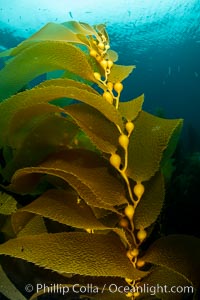
Kelp fronds showing pneumatocysts, bouyant gas-filled bubble-like structures which float the kelp plant off the ocean bottom toward the surface, where it will spread to form a roof-like canopy.
Species: Giant Kelp, Macrocystis pyrifera
Location: Santa Barbara Island, California
Image ID: 35827
Species: Giant Kelp, Macrocystis pyrifera
Location: Santa Barbara Island, California
Image ID: 35827
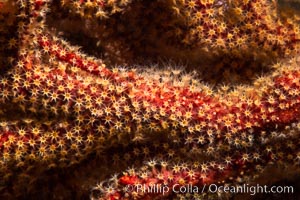
California Golden gorgonian polyps. The golden gorgonian is a colonial organism composed of thousands of tiny polyps. Each polyp secretes calcium which accumulates to form the structure of the colony. The fan-shaped gorgonian is oriented perpendicular to prevailing ocean currents to better enable to filter-feeding polyps to capture passing plankton and detritus passing by.
Species: California Golden Gorgonian, Muricea californica
Location: San Diego, California
Image ID: 37204
Species: California Golden Gorgonian, Muricea californica
Location: San Diego, California
Image ID: 37204
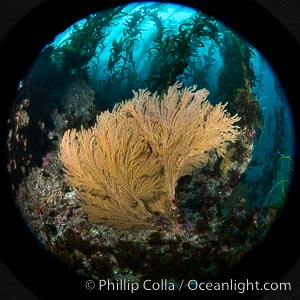
Garibaldi and California golden gorgonian on underwater rocky reef, San Clemente Island. The golden gorgonian is a filter-feeding temperate colonial species that lives on the rocky bottom at depths between 50 to 200 feet deep. Each individual polyp is a distinct animal, together they secrete calcium that forms the structure of the colony. Gorgonians are oriented at right angles to prevailing water currents to capture plankton drifting by.
Species: California Golden Gorgonian, Giant Kelp, Garibaldi, Muricea californica, Macrocystis pyrifera, Hypsypops rubicundus
Location: San Clemente Island, California
Image ID: 38501
Species: California Golden Gorgonian, Giant Kelp, Garibaldi, Muricea californica, Macrocystis pyrifera, Hypsypops rubicundus
Location: San Clemente Island, California
Image ID: 38501
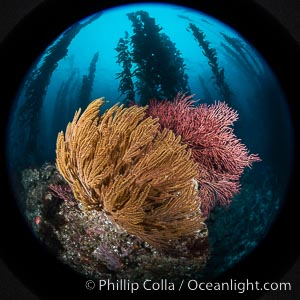
Garibaldi and California golden gorgonian on underwater rocky reef, San Clemente Island. The golden gorgonian is a filter-feeding temperate colonial species that lives on the rocky bottom at depths between 50 to 200 feet deep. Each individual polyp is a distinct animal, together they secrete calcium that forms the structure of the colony. Gorgonians are oriented at right angles to prevailing water currents to capture plankton drifting by.
Species: California Golden Gorgonian, Giant Kelp, Garibaldi, Muricea californica, Macrocystis pyrifera, Hypsypops rubicundus
Location: San Clemente Island, California
Image ID: 38504
Species: California Golden Gorgonian, Giant Kelp, Garibaldi, Muricea californica, Macrocystis pyrifera, Hypsypops rubicundus
Location: San Clemente Island, California
Image ID: 38504