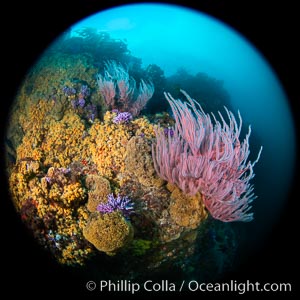
Red gorgonian Leptogorgia chilensis, purple hydrocoral Stylaster californicus, and yellow zoanthid anemone Epizoanthus giveni, at Farnsworth Banks, Catalina Island.
Species: Red gorgonian, Hydrocoral, Givens Zoanthid, Leptogorgia chilensis, Lophogorgia chilensis, Allopora californica, Stylaster californicus, Epizoanthus giveni
Location: Catalina Island, California
Image ID: 37251
Species: Red gorgonian, Hydrocoral, Givens Zoanthid, Leptogorgia chilensis, Lophogorgia chilensis, Allopora californica, Stylaster californicus, Epizoanthus giveni
Location: Catalina Island, California
Image ID: 37251
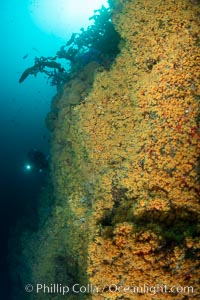
The rare yellow zoanthid anemone Epizoanthus giveni, in large aggregations on the Yellow Wall at Farnsworth Banks, Catalina Island.
Species: Givens Zoanthid, Epizoanthus giveni
Location: Catalina Island, California
Image ID: 37270
Species: Givens Zoanthid, Epizoanthus giveni
Location: Catalina Island, California
Image ID: 37270
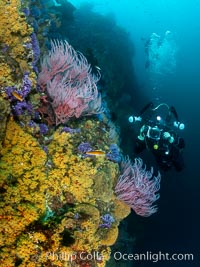
Red gorgonian Leptogorgia chilensis, purple hydrocoral Stylaster californicus, and yellow zoanthid anemone Epizoanthus giveni, at Farnsworth Banks, Catalina Island.
Species: Red gorgonian, Hydrocoral, Givens Zoanthid, Leptogorgia chilensis, Lophogorgia chilensis, Allopora californica, Stylaster californicus, Epizoanthus giveni
Location: Catalina Island, California
Image ID: 37271
Species: Red gorgonian, Hydrocoral, Givens Zoanthid, Leptogorgia chilensis, Lophogorgia chilensis, Allopora californica, Stylaster californicus, Epizoanthus giveni
Location: Catalina Island, California
Image ID: 37271
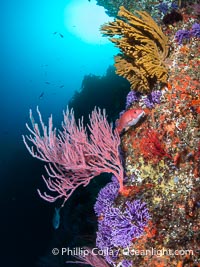
Red gorgonian Leptogorgia chilensis, purple hydrocoral Stylaster californicus, and yellow zoanthid anemone Epizoanthus giveni, at Farnsworth Banks, Catalina Island.
Location: Catalina Island, California
Image ID: 39540
Location: Catalina Island, California
Image ID: 39540
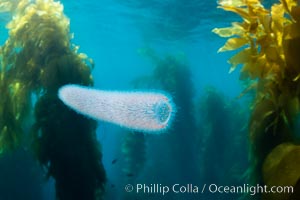
Pyrosome drifting through a kelp forest, Catalina Island. Pyrosomes are free-floating colonial tunicates that usually live in the upper layers of the open ocean in warm seas. Pyrosomes are cylindrical or cone-shaped colonies made up of hundreds to thousands of individuals, known as zooids.
Location: Catalina Island, California
Image ID: 37166
Location: Catalina Island, California
Image ID: 37166
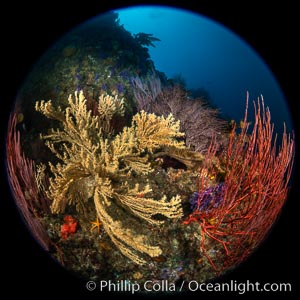
Gorgonian (yellow) that has been parasitized by zoanthid anemone (Savalia lucifica), and red gorgonian (Lophogorgia chilensis), Farnsworth Banks, Catalina Island.
Species: Luminescent parazoanthid, Zoanthid anemone, Red gorgonian, Parazoanthus lucificum, Savalia lucifica, Leptogorgia chilensis, Lophogorgia chilensis
Location: Catalina Island, California
Image ID: 37185
Species: Luminescent parazoanthid, Zoanthid anemone, Red gorgonian, Parazoanthus lucificum, Savalia lucifica, Leptogorgia chilensis, Lophogorgia chilensis
Location: Catalina Island, California
Image ID: 37185
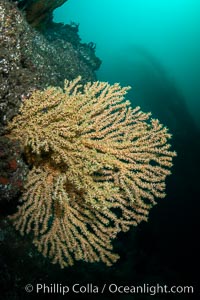
Parasitic zoanthid anemones cover and encrust and overwhelm a golden gorgonian, Catalina Head.
Species: Luminescent parazoanthid, Zoanthid anemone, Parazoanthus lucificum, Savalia lucifica
Location: Catalina Island, California
Image ID: 37293
Species: Luminescent parazoanthid, Zoanthid anemone, Parazoanthus lucificum, Savalia lucifica
Location: Catalina Island, California
Image ID: 37293
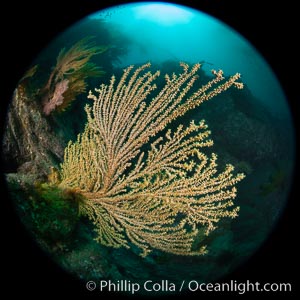
Parasitic zoanthid anemones cover and encrust and overwhelm a golden gorgonian, Catalina Head.
Species: Luminescent parazoanthid, Zoanthid anemone, Parazoanthus lucificum, Savalia lucifica
Location: Catalina Island, California
Image ID: 37294
Species: Luminescent parazoanthid, Zoanthid anemone, Parazoanthus lucificum, Savalia lucifica
Location: Catalina Island, California
Image ID: 37294
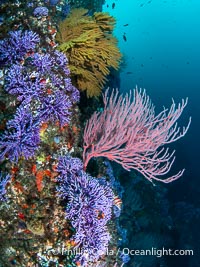
Red gorgonian Leptogorgia chilensis, purple hydrocoral Stylaster californicus, and yellow zoanthid anemone Epizoanthus giveni, at Farnsworth Banks, Catalina Island.
Location: Catalina Island, California
Image ID: 39539
Location: Catalina Island, California
Image ID: 39539
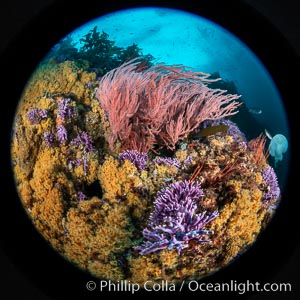
Red gorgonian Leptogorgia chilensis, purple hydrocoral Stylaster californicus, and yellow zoanthid anemone Epizoanthus giveni, at Farnsworth Banks, Catalina Island.
Species: Red gorgonian, Hydrocoral, Givens Zoanthid, Leptogorgia chilensis, Lophogorgia chilensis, Allopora californica, Stylaster californicus, Epizoanthus giveni
Location: Catalina Island, California
Image ID: 37220
Species: Red gorgonian, Hydrocoral, Givens Zoanthid, Leptogorgia chilensis, Lophogorgia chilensis, Allopora californica, Stylaster californicus, Epizoanthus giveni
Location: Catalina Island, California
Image ID: 37220
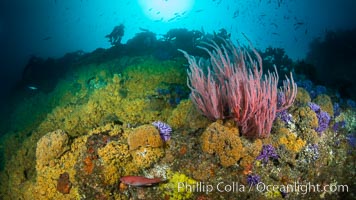
Red gorgonian Leptogorgia chilensis with yellow zoanthid anemone Epizoanthis giveni, Farnsworth Banks, Catalina Island, California.
Species: Red gorgonian, Givens Zoanthid, Leptogorgia chilensis, Lophogorgia chilensis, Epizoanthus giveni
Location: Catalina Island, California
Image ID: 37269
Species: Red gorgonian, Givens Zoanthid, Leptogorgia chilensis, Lophogorgia chilensis, Epizoanthus giveni
Location: Catalina Island, California
Image ID: 37269
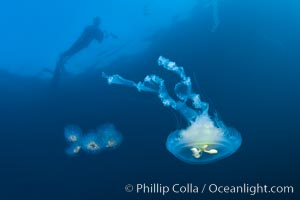
Freediver photographing pelagic gelatinous zooplankton, adrift in the open ocean.
Species: Fried-egg Jellyfish, Fried Egg Jellyfish, Phacellophora camtschatica
Location: San Diego, California
Image ID: 26817
Species: Fried-egg Jellyfish, Fried Egg Jellyfish, Phacellophora camtschatica
Location: San Diego, California
Image ID: 26817
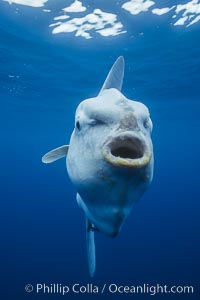
Ocean sunfish (Mola mola) with mouth wide open for slurping zooplankton, open ocean.
Species: Ocean sunfish, Mola mola
Location: San Diego, California
Image ID: 03319
Species: Ocean sunfish, Mola mola
Location: San Diego, California
Image ID: 03319
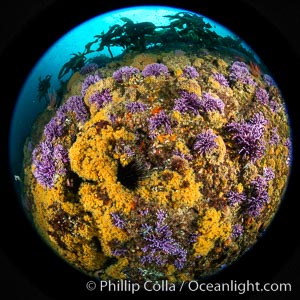
Purple hydrocoral Stylaster californicus and yellow zoanthid anemone Epizoanthus giveni, Farnsworth Banks, Catalina Island.
Species: Hydrocoral, Givens Zoanthid, Allopora californica, Stylaster californicus, Epizoanthus giveni
Location: Catalina Island, California
Image ID: 37217
Species: Hydrocoral, Givens Zoanthid, Allopora californica, Stylaster californicus, Epizoanthus giveni
Location: Catalina Island, California
Image ID: 37217
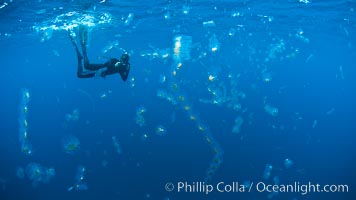
Freediving photographer in a cloud of salps, gelatinous zooplankton that drifts with open ocean currents.
Location: San Diego, California
Image ID: 27012
Location: San Diego, California
Image ID: 27012
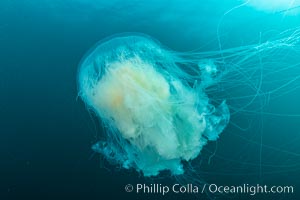
Fried-egg jellyfish, drifting through the open ocean.
Species: Fried Egg Jellyfish, Phacellophora camtschatica
Location: San Clemente Island, California
Image ID: 37088
Species: Fried Egg Jellyfish, Phacellophora camtschatica
Location: San Clemente Island, California
Image ID: 37088
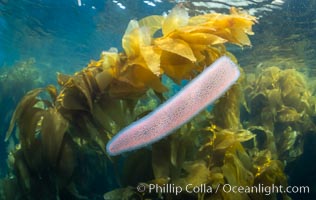
Pyrosome drifting through a kelp forest, Catalina Island. Pyrosomes are free-floating colonial tunicates that usually live in the upper layers of the open ocean in warm seas. Pyrosomes are cylindrical or cone-shaped colonies made up of hundreds to thousands of individuals, known as zooids.
Location: Catalina Island, California
Image ID: 37164
Location: Catalina Island, California
Image ID: 37164
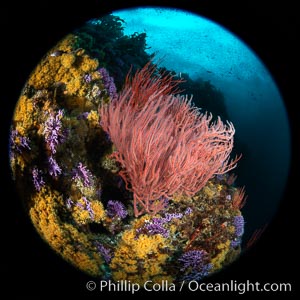
Red gorgonian Leptogorgia chilensis with yellow zoanthid anemone Epizoanthis giveni, Farnsworth Banks, Catalina Island, California.
Species: Red gorgonian, Givens Zoanthid, Leptogorgia chilensis, Lophogorgia chilensis, Epizoanthus giveni
Location: Catalina Island, California
Image ID: 37218
Species: Red gorgonian, Givens Zoanthid, Leptogorgia chilensis, Lophogorgia chilensis, Epizoanthus giveni
Location: Catalina Island, California
Image ID: 37218
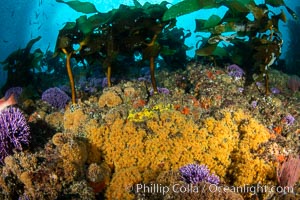
The rare yellow zoanthid anemone Epizoanthus giveni, in large aggregations on the Yellow Wall at Farnsworth Banks, Catalina Island.
Species: Givens Zoanthid, Epizoanthus giveni
Location: Catalina Island, California
Image ID: 37221
Species: Givens Zoanthid, Epizoanthus giveni
Location: Catalina Island, California
Image ID: 37221
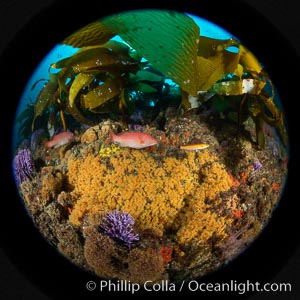
The rare yellow zoanthid anemone Epizoanthus giveni, in large aggregations on the Yellow Wall at Farnsworth Banks, Catalina Island.
Species: Givens Zoanthid, Epizoanthus giveni
Location: Catalina Island, California
Image ID: 37222
Species: Givens Zoanthid, Epizoanthus giveni
Location: Catalina Island, California
Image ID: 37222
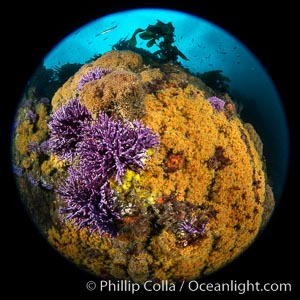
Purple hydrocoral Stylaster californicus and yellow zoanthid anemone Epizoanthus giveni, and clusters of hydroids, Farnsworth Banks, Catalina Island.
Species: Hydrocoral, Givens Zoanthid, Allopora californica, Stylaster californicus, Epizoanthus giveni
Location: Catalina Island, California
Image ID: 37223
Species: Hydrocoral, Givens Zoanthid, Allopora californica, Stylaster californicus, Epizoanthus giveni
Location: Catalina Island, California
Image ID: 37223
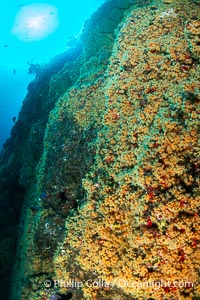
The rare yellow zoanthid anemone Epizoanthus giveni, in large aggregations on the Yellow Wall at Farnsworth Banks, Catalina Island.
Location: Catalina Island, California
Image ID: 39531
Location: Catalina Island, California
Image ID: 39531
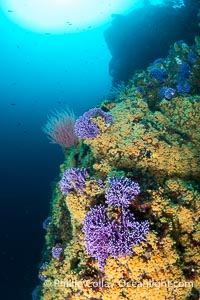
The rare yellow zoanthid anemone Epizoanthus giveni, in large aggregations on the Yellow Wall at Farnsworth Banks, Catalina Island.
Location: Catalina Island, California
Image ID: 39532
Location: Catalina Island, California
Image ID: 39532
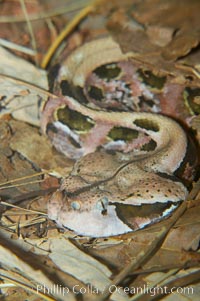
African gaboon viper camouflage blends into the leaves of the forest floor. This heavy-bodied snake is one of the largest vipers, reaching lengths of 4-6 feet (1.5-2m). It is nocturnal, living in rain forests in central Africa. Its fangs are nearly 2 inches (5cm) long.
Species: African gaboon viper, Bitis gabonica
Image ID: 12576
Species: African gaboon viper, Bitis gabonica
Image ID: 12576
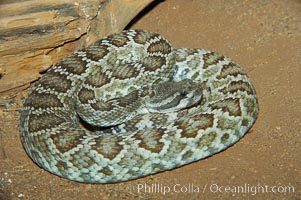
Southern Pacific rattlesnake. The southern Pacific rattlesnake is common in southern California from the coast through the desert foothills to elevations of 10,000 feet. It reaches 4-5 feet (1.5m) in length.
Species: Southern pacific rattlesnake, Crotalus viridis helleri
Image ID: 12585
Species: Southern pacific rattlesnake, Crotalus viridis helleri
Image ID: 12585
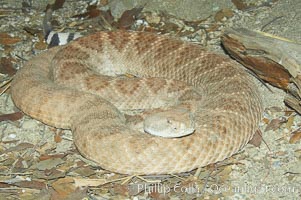
Western diamondback rattlesnake.
Species: Western diamondback rattlesnake, Crotalus atrox
Image ID: 12809
Species: Western diamondback rattlesnake, Crotalus atrox
Image ID: 12809
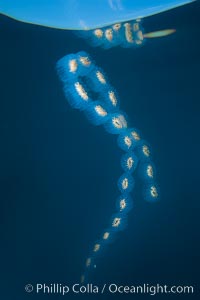
Colonial planktonic pelagic tunicate, adrift in the open ocean, forms rings and chains as it drifts with ocean currents.
Species: Salp, Cyclosalpa affinis
Location: San Diego, California
Image ID: 26819
Species: Salp, Cyclosalpa affinis
Location: San Diego, California
Image ID: 26819
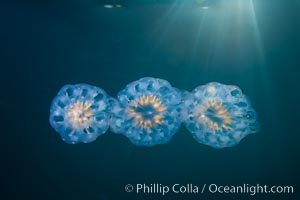
Colonial planktonic pelagic tunicate, adrift in the open ocean, forms rings and chains as it drifts with ocean currents.
Species: Salp, Cyclosalpa affinis
Location: San Diego, California
Image ID: 26823
Species: Salp, Cyclosalpa affinis
Location: San Diego, California
Image ID: 26823
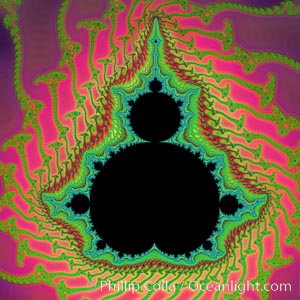
Detail within the Mandelbrot set fractal. This detail is found by zooming in on the overall Mandelbrot set image, finding edges and buds with interesting features. Fractals are complex geometric shapes that exhibit repeating patterns typified by self-similarity, or the tendency for the details of a shape to appear similar to the shape itself. Often these shapes resemble patterns occurring naturally in the physical world, such as spiraling leaves, seemingly random coastlines, erosion and liquid waves. Fractals are generated through surprisingly simple underlying mathematical expressions, producing subtle and surprising patterns. The basic iterative expression for the Mandelbrot set is z = z-squared + c, operating in the complex (real, imaginary) number set.
Species: Mandelbrot fractal, Mandelbrot set
Image ID: 10375
Species: Mandelbrot fractal, Mandelbrot set
Image ID: 10375
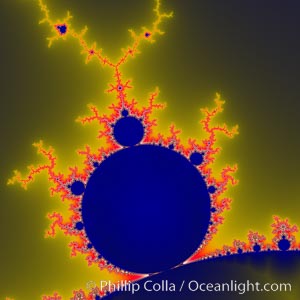
Detail within the Mandelbrot set fractal. This detail is found by zooming in on the overall Mandelbrot set image, finding edges and buds with interesting features. Fractals are complex geometric shapes that exhibit repeating patterns typified by self-similarity, or the tendency for the details of a shape to appear similar to the shape itself. Often these shapes resemble patterns occurring naturally in the physical world, such as spiraling leaves, seemingly random coastlines, erosion and liquid waves. Fractals are generated through surprisingly simple underlying mathematical expressions, producing subtle and surprising patterns. The basic iterative expression for the Mandelbrot set is z = z-squared + c, operating in the complex (real, imaginary) number set.
Species: Mandelbrot fractal, Mandelbrot set
Image ID: 10378
Species: Mandelbrot fractal, Mandelbrot set
Image ID: 10378