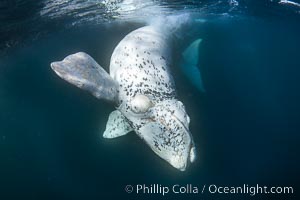
White southern right whale calf underwater, Eubalaena australis. About five per cent of southern right whales are born white due to a condition known as grey morphism and will gradually turn dark as they age. They are not albino (which is a complete lack of pigmentation). Sometimes referred to as "brindled", the white coloration is a recessive genetic trait and only lasts a few months. Typically, but not always, white calves will become much darker as they mature but will still be somewhat lighter than normal even as adults.
Species: Southern Right Whale, Eubalaena australis
Location: Puerto Piramides, Chubut, Argentina
Image ID: 38279
Species: Southern Right Whale, Eubalaena australis
Location: Puerto Piramides, Chubut, Argentina
Image ID: 38279
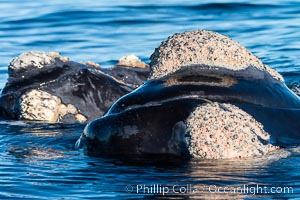
Rostrum and callosities of southern right whale, Eubalaena australis. Whale lice can be seen attached to the collosities, which are patches of thickened keratinized tissue, like calluses (thus the name). The pattern of callosities on a right whale are unique and serve as a way to identify individuals throughout their lifetime.
Species: Southern Right Whale, Eubalaena australis
Location: Puerto Piramides, Chubut, Argentina
Image ID: 38450
Species: Southern Right Whale, Eubalaena australis
Location: Puerto Piramides, Chubut, Argentina
Image ID: 38450
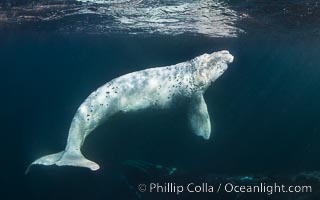
White southern right whale calf underwater, Eubalaena australis. About five per cent of southern right whales are born white due to a condition known as grey morphism and will gradually turn dark as they age. They are not albino (which is a complete lack of pigmentation). Sometimes referred to as "brindled", the white coloration is a recessive genetic trait and only lasts a few months. Typically, but not always, white calves will become much darker as they mature but will still be somewhat lighter than normal even as adults.
Species: Southern Right Whale, Eubalaena australis
Location: Puerto Piramides, Chubut, Argentina
Image ID: 38261
Species: Southern Right Whale, Eubalaena australis
Location: Puerto Piramides, Chubut, Argentina
Image ID: 38261
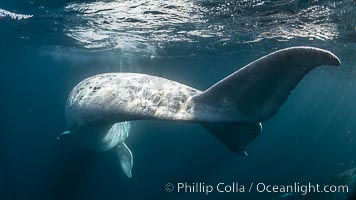
White southern right whale calf underwater, Eubalaena australis. About five per cent of southern right whales are born white due to a condition known as grey morphism and will gradually turn dark as they age. They are not albino (which is a complete lack of pigmentation). Sometimes referred to as "brindled", the white coloration is a recessive genetic trait and only lasts a few months. Typically, but not always, white calves will become much darker as they mature but will still be somewhat lighter than normal even as adults.
Species: Southern Right Whale, Eubalaena australis
Location: Puerto Piramides, Chubut, Argentina
Image ID: 38434
Species: Southern Right Whale, Eubalaena australis
Location: Puerto Piramides, Chubut, Argentina
Image ID: 38434
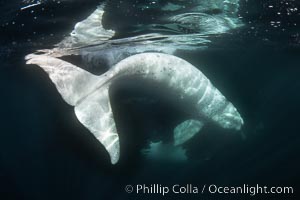
White southern right whale calf underwater, Eubalaena australis. About five per cent of southern right whales are born white due to a condition known as grey morphism and will gradually turn dark as they age. They are not albino (which is a complete lack of pigmentation). Sometimes referred to as "brindled", the white coloration is a recessive genetic trait and only lasts a few months. Typically, but not always, white calves will become much darker as they mature but will still be somewhat lighter than normal even as adults.
Species: Southern Right Whale, Eubalaena australis
Location: Puerto Piramides, Chubut, Argentina
Image ID: 38438
Species: Southern Right Whale, Eubalaena australis
Location: Puerto Piramides, Chubut, Argentina
Image ID: 38438
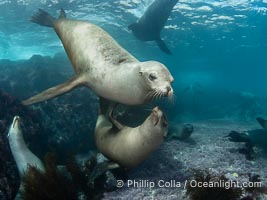
A mother California sea lion and her pup, underwater at the Coronado Islands, Mexico. Mothers and pups spend much time together with the mother teaching her young padawan learner how to pursue prey.
Species: California sea lion, Zalophus californianus
Location: Coronado Islands (Islas Coronado), Baja California, Mexico
Image ID: 40729
Species: California sea lion, Zalophus californianus
Location: Coronado Islands (Islas Coronado), Baja California, Mexico
Image ID: 40729
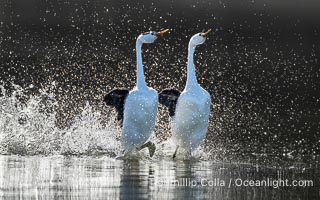
Clark's Grebes rushing side by side, a spectacular courtship behavior in which the aquatic birds literally run on the surface of the water while slapping their feet up to 20 times per second.
Species: Clark's Grebe, Aechmophorus clarkii
Location: Lake Wohlford, Escondido, California
Image ID: 40842
Species: Clark's Grebe, Aechmophorus clarkii
Location: Lake Wohlford, Escondido, California
Image ID: 40842
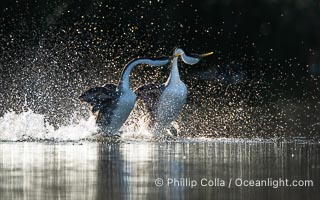
Two Western Grebes Walk on Water, Rushing, Backlit by the Rising Sun. Grebe rushing, a courtship behavior, happens when the birds slap the lake surface up to 20 times per second, literally running across the water.
Species: Western Grebe, Aechmophorus occidentalis
Location: Lake Wohlford, Escondido, California
Image ID: 40890
Species: Western Grebe, Aechmophorus occidentalis
Location: Lake Wohlford, Escondido, California
Image ID: 40890
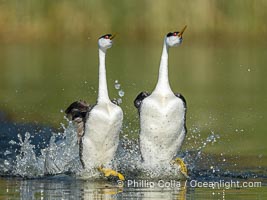
Western Grebes rushing across Lake Wohlford, exhibiting a spectacular courtship behavior in which the aquatic birds literally run across the surface of the water while their feet hit the water up to 20 times per second.
Species: Western Grebe, Aechmophorus occidentalis
Location: Lake Wohlford, Escondido, California
Image ID: 41538
Species: Western Grebe, Aechmophorus occidentalis
Location: Lake Wohlford, Escondido, California
Image ID: 41538
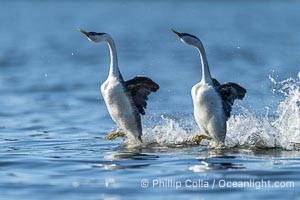
Western Grebes rushing across Lake Wohlford, exhibiting a spectacular courtship behavior in which the aquatic birds literally run across the surface of the water while their feet hit the water up to 20 times per second.
Species: Western Grebe, Aechmophorus occidentalis
Location: Lake Wohlford, Escondido, California
Image ID: 41541
Species: Western Grebe, Aechmophorus occidentalis
Location: Lake Wohlford, Escondido, California
Image ID: 41541
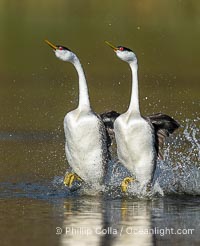
Two Western Grebes Rushing on Lake Wohlford near San Diego. Grebe rushing, a courtship behavior, happens when the birds slap the lake surface up to 20 times per second, literally running across the water.
Species: Western Grebe, Aechmophorus occidentalis
Location: Lake Wohlford, Escondido, California
Image ID: 41562
Species: Western Grebe, Aechmophorus occidentalis
Location: Lake Wohlford, Escondido, California
Image ID: 41562
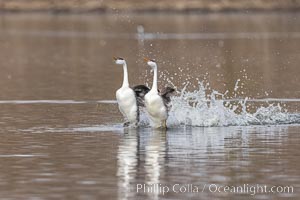
Western Grebes rushing in a courtship display. Rushing grebes run across the water 60 feet (20m) or further with their feet hitting the water as rapidly as 20 times per second. Lake Hodges, San Diego.
Species: Western grebe, Aechmophorus occidentalis
Image ID: 36887
Species: Western grebe, Aechmophorus occidentalis
Image ID: 36887
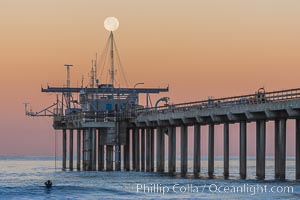
Full Moon Setting Over SIO Pier in the moments just before sunrise, Scripps Institution of Oceanography.
Location: Scripps Institution of Oceanography, La Jolla, California
Image ID: 37509
Location: Scripps Institution of Oceanography, La Jolla, California
Image ID: 37509
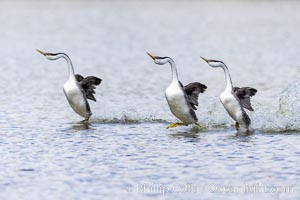
Western Grebes rushing in a courtship display. Rushing grebes run across the water 60 feet (20m) or further with their feet hitting the water as rapidly as 20 times per second.
Species: Western grebe, Aechmophorus occidentalis
Location: Lake Hodges, San Diego, California
Image ID: 37854
Species: Western grebe, Aechmophorus occidentalis
Location: Lake Hodges, San Diego, California
Image ID: 37854
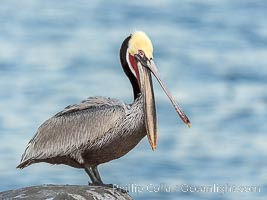
California Brown Pelican claps its jaws, sometimes rapidly several times, perhaps to dislodge debris or simply because its fun and feels good. This is not the same as the "yawn" that precedes a head throw. Adult winter breeding plumage with brown hind-neck.
Species: Brown Pelican, Pelecanus occidentalis, Pelecanus occidentalis californicus
Location: La Jolla, California
Image ID: 38590
Species: Brown Pelican, Pelecanus occidentalis, Pelecanus occidentalis californicus
Location: La Jolla, California
Image ID: 38590
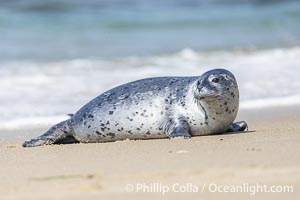
Pacific Harbor Seal Pup About Three Weeks Old, hauled out on a white sand beach along the coast of San Diego. This young seal will be weaned off its mothers milk and care when it is about four to six weeks old, and before that time it must learn how to forage for food on its own, a very difficult time for a young seal.
Species: Pacific harbor seal, Phoca vitulina richardsi
Location: La Jolla, California
Image ID: 39068
Species: Pacific harbor seal, Phoca vitulina richardsi
Location: La Jolla, California
Image ID: 39068
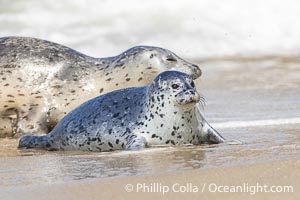
Pacific Harbor Seal Pup About Three Weeks Old, hauled out on a white sand beach along the coast of San Diego. This young seal will be weaned off its mothers milk and care when it is about four to six weeks old, and before that time it must learn how to forage for food on its own, a very difficult time for a young seal.
Species: Pacific harbor seal, Phoca vitulina richardsi
Location: La Jolla, California
Image ID: 39069
Species: Pacific harbor seal, Phoca vitulina richardsi
Location: La Jolla, California
Image ID: 39069
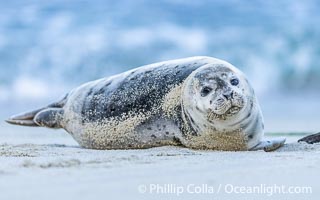
Pacific Harbor Seal Pup About Two Weeks Old, hauled out on a white sand beach along the coast of San Diego. This young seal will be weaned off its mothers milk and care when it is about four to six weeks old, and before that time it must learn how to forage for food on its own, a very difficult time for a young seal.
Species: Pacific harbor seal, Phoca vitulina richardsi
Location: La Jolla, California
Image ID: 39089
Species: Pacific harbor seal, Phoca vitulina richardsi
Location: La Jolla, California
Image ID: 39089
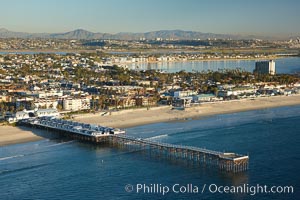
Crystal Pier, 872 feet long and built in 1925, extends out into the Pacific Ocean from the town of Pacific Beach. Mission Bay and downtown San Diego are seen in the distance.
Location: San Diego, California
Image ID: 22294
Location: San Diego, California
Image ID: 22294
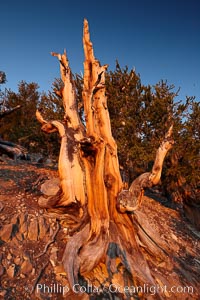
Ancient bristlecone pine tree, rising above the arid, dolomite-rich slopes of the Schulman Grove in the White Mountains at an elevation of 9500 above sea level, along the Methuselah Walk. The oldest bristlecone pines in the world are found in the Schulman Grove, some of them over 4700 years old. Ancient Bristlecone Pine Forest.
Species: Bristlecone pine, Pinus longaeva
Location: White Mountains, Inyo National Forest, California
Image ID: 23233
Species: Bristlecone pine, Pinus longaeva
Location: White Mountains, Inyo National Forest, California
Image ID: 23233
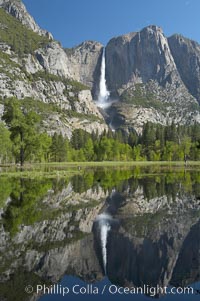
Yosemite Falls is reflected in a springtime pool in flooded Cooks Meadow, Yosemite Valley.
Location: Yosemite Falls, Yosemite National Park, California
Image ID: 16135
Location: Yosemite Falls, Yosemite National Park, California
Image ID: 16135
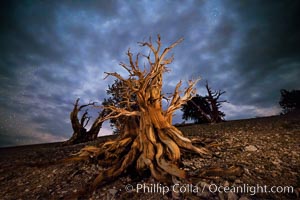
Ancient Bristlecone Pine Tree at night, stars and the Milky Way galaxy visible in the evening sky, near Patriarch Grove.
Species: Ancient bristlecone pine, Pinus longaeva
Location: Ancient Bristlecone Pine Forest, White Mountains, Inyo National Forest, California
Image ID: 28786
Species: Ancient bristlecone pine, Pinus longaeva
Location: Ancient Bristlecone Pine Forest, White Mountains, Inyo National Forest, California
Image ID: 28786
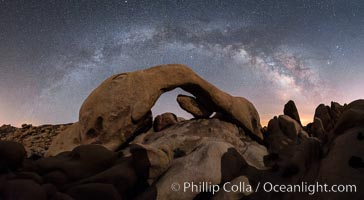
Milky Way during Full Lunar Eclipse over Arch Rock, Joshua Tree National Park, April 4 2015. The arch and surrounding landscape are illuminated by the faint light of the fully-eclipsed blood red moon. Light from the sun has passed obliquely through the Earth's thin atmosphere, taking on a red color, and is then reflected off the moon and reaches the Earth again to light the arch. The intensity of this light is so faint that the Milky Way can be seen clearly at the same time.
Location: Joshua Tree National Park, California
Image ID: 30717
Panorama dimensions: 8903 x 14184
Location: Joshua Tree National Park, California
Image ID: 30717
Panorama dimensions: 8903 x 14184
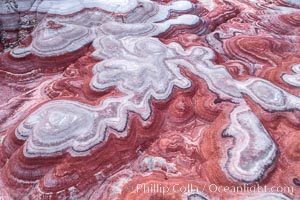
Fantastic colorful sedimentary patterns of Bentonite layers, seen as striations exposed in the Utah Badlands. The Bentonite Hills are composed of the Brushy Basin shale member of the Morrison Formation formed during Jurassic times when mud, silt, fine sand, and volcanic ash were deposited in swamps and lakes into layers, now revealed through erosion. Aerial photograph.
Location: Utah
Image ID: 37947
Location: Utah
Image ID: 37947
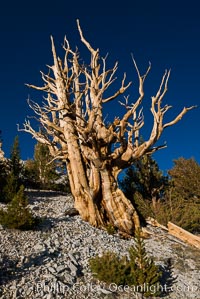
Ancient bristlecone pine trees in Patriarch Grove, display characteristic gnarled, twisted form as it rises above the arid, dolomite-rich slopes of the White Mountains at 11000-foot elevation. Patriarch Grove, Ancient Bristlecone Pine Forest.
Species: Ancient bristlecone pine, Pinus longaeva
Location: White Mountains, Inyo National Forest, California
Image ID: 28526
Species: Ancient bristlecone pine, Pinus longaeva
Location: White Mountains, Inyo National Forest, California
Image ID: 28526
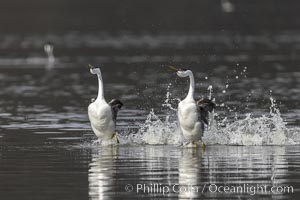
Western Grebes rushing in a courtship display. Rushing grebes run across the water 60 feet (20m) or further with their feet hitting the water as rapidly as 20 times per second. Lake Hodges, San Diego.
Species: Western grebe, Aechmophorus occidentalis
Image ID: 36888
Species: Western grebe, Aechmophorus occidentalis
Image ID: 36888
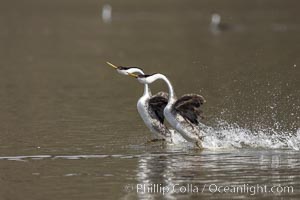
Western Grebes rushing in a courtship display. Rushing grebes run across the water 60 feet (20m) or further with their feet hitting the water as rapidly as 20 times per second. Lake Hodges, San Diego.
Species: Western grebe, Aechmophorus occidentalis
Image ID: 36889
Species: Western grebe, Aechmophorus occidentalis
Image ID: 36889
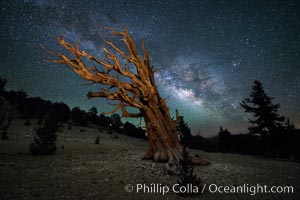
Milky Way over Ancient Bristlecone Pine Trees, Inyo National Forest.
Species: Bristlecone pine, Pinus longaeva
Location: Ancient Bristlecone Pine Forest, White Mountains, Inyo National Forest, California
Image ID: 29318
Species: Bristlecone pine, Pinus longaeva
Location: Ancient Bristlecone Pine Forest, White Mountains, Inyo National Forest, California
Image ID: 29318
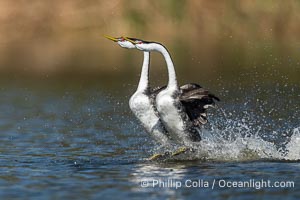
Two Rushing Western Grebes Walk on Water. Grebe rushing, a courtship behavior, happens when the birds slap the lake surface up to 20 times per second, literally running across the water.
Species: Western Grebe, Aechmophorus occidentalis
Location: Lake Wohlford, Escondido, California
Image ID: 40912
Species: Western Grebe, Aechmophorus occidentalis
Location: Lake Wohlford, Escondido, California
Image ID: 40912
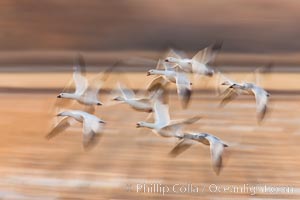
Snow geese in flight, wings are blurred in long time exposure as they are flying.
Species: Snow goose, Chen caerulescens
Location: Bosque Del Apache, Socorro, New Mexico
Image ID: 26211
Species: Snow goose, Chen caerulescens
Location: Bosque Del Apache, Socorro, New Mexico
Image ID: 26211