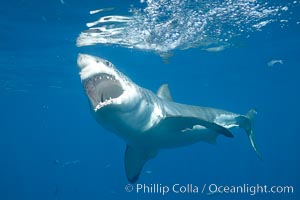
A great white shark opens it mouth just before it attacks its prey with a crippling, powerful bite. After the prey has been disabled, the shark will often wait for it to weaken from blood loss before resuming the attack. If the shark looses a tooth in the course of the bite, a replacement just behind it will move forward to take its place.
Species: Great white shark, Carcharodon carcharias
Location: Guadalupe Island (Isla Guadalupe), Baja California, Mexico
Image ID: 19452
Species: Great white shark, Carcharodon carcharias
Location: Guadalupe Island (Isla Guadalupe), Baja California, Mexico
Image ID: 19452
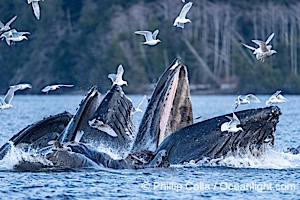
Humpback whales surface together during coordinated bubble-net feeding in Southeast Alaska. The whales use bubbles, sound, and movement to corral fish before capturing them in their open mouths.
Species: Humpback whale, Megaptera novaeangliae
Location: Sitka Sound, Alaska
Image ID: 41587
Species: Humpback whale, Megaptera novaeangliae
Location: Sitka Sound, Alaska
Image ID: 41587
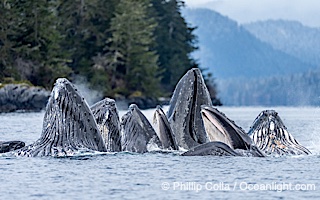
Humpback whales surface together during coordinated bubble-net feeding in Southeast Alaska. The whales use bubbles, sound, and movement to corral fish before capturing them in their open mouths.
Species: Humpback whale, Megaptera novaeangliae
Location: Sitka Sound, Alaska
Image ID: 41583
Species: Humpback whale, Megaptera novaeangliae
Location: Sitka Sound, Alaska
Image ID: 41583
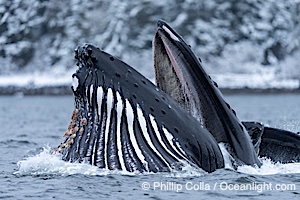
Humpback whale surfaces during coordinated bubble-net feeding in Southeast Alaska. The whales use bubbles, sound, and movement to corral fish before capturing them in their open mouths.
Species: Humpback whale, Megaptera novaeangliae
Location: Sitka Sound, Alaska
Image ID: 41582
Panorama dimensions: 5699 x 8548
Species: Humpback whale, Megaptera novaeangliae
Location: Sitka Sound, Alaska
Image ID: 41582
Panorama dimensions: 5699 x 8548
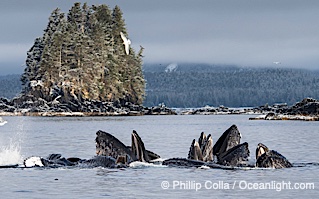
Humpback whales surface together during coordinated bubble-net feeding in Southeast Alaska. The whales use bubbles, sound, and movement to corral fish before capturing them in their open mouths.
Species: Humpback whale, Megaptera novaeangliae
Location: Sitka Sound, Alaska
Image ID: 41580
Species: Humpback whale, Megaptera novaeangliae
Location: Sitka Sound, Alaska
Image ID: 41580
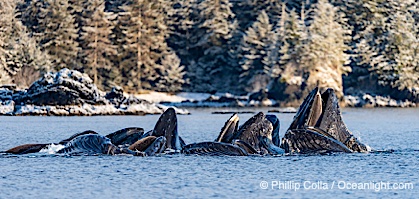
Humpback whales surface together during coordinated bubble-net feeding in Southeast Alaska. The whales use bubbles, sound, and movement to corral fish before capturing them in their open mouths.
Species: Humpback whale, Megaptera novaeangliae
Location: Sitka Sound, Alaska
Image ID: 41581
Panorama dimensions: 5297 x 11117
Species: Humpback whale, Megaptera novaeangliae
Location: Sitka Sound, Alaska
Image ID: 41581
Panorama dimensions: 5297 x 11117
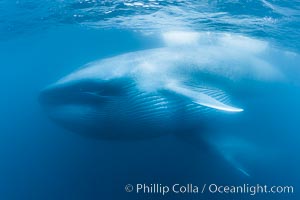
Blue whales feeding on krill underwater closeup photo. A picture of a blue whale with its throat pleats inflated with a mouthful of krill. A calf swims behind and below the adult. Over 80' long and just a few feet from the camera, an extremely wide lens was used to photograph the entire enormous whale.
Species: Blue whale, Balaenoptera musculus
Location: California
Image ID: 27314
Species: Blue whale, Balaenoptera musculus
Location: California
Image ID: 27314
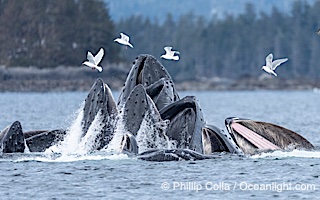
Humpback whales surface together during coordinated bubble-net feeding in Southeast Alaska. The whales use bubbles, sound, and movement to corral fish before capturing them in their open mouths.
Species: Humpback whale, Megaptera novaeangliae
Location: Sitka Sound, Alaska
Image ID: 41601
Species: Humpback whale, Megaptera novaeangliae
Location: Sitka Sound, Alaska
Image ID: 41601
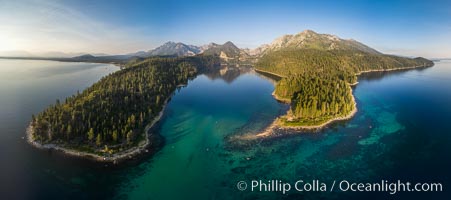
Emerald Bay Lake Tahoe, aerial panoramic photo of the mouth of the bay, early morning.
Location: Lake Tahoe, California
Image ID: 38130
Panorama dimensions: 4417 x 9952
Location: Lake Tahoe, California
Image ID: 38130
Panorama dimensions: 4417 x 9952
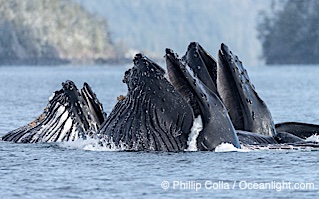
Humpback whales surface together during coordinated bubble-net feeding in Southeast Alaska. The whales use bubbles, sound, and movement to corral fish before capturing them in their open mouths.
Species: Humpback whale, Megaptera novaeangliae
Location: Sitka Sound, Alaska
Image ID: 41585
Species: Humpback whale, Megaptera novaeangliae
Location: Sitka Sound, Alaska
Image ID: 41585
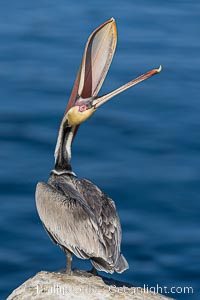
Spectacular Brown Pelican Head Throw Display. This California brown pelican is arching its head and neck way back, opening its mouth in a behavior known as a head throw or bill throw.
Species: Brown Pelican, Pelecanus occidentalis, Pelecanus occidentalis californicus
Location: La Jolla, California
Image ID: 38675
Species: Brown Pelican, Pelecanus occidentalis, Pelecanus occidentalis californicus
Location: La Jolla, California
Image ID: 38675
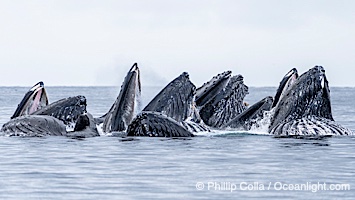
Humpback whales surface together during coordinated bubble-net feeding in Southeast Alaska. The whales use bubbles, sound, and movement to corral fish before capturing them in their open mouths.
Species: Humpback whale, Megaptera novaeangliae
Location: Sitka Sound, Alaska
Image ID: 41584
Species: Humpback whale, Megaptera novaeangliae
Location: Sitka Sound, Alaska
Image ID: 41584
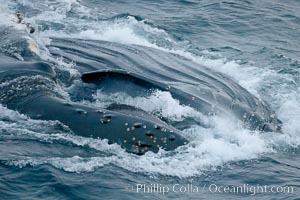
Humpback whale lunge feeding on Antarctic krill, with mouth open and baleen visible. The humbpack's throat grooves are seen as its pleated throat becomes fully distended as the whale fills its mouth with krill and water. The water will be pushed out, while the baleen strains and retains the small krill.
Species: Humpback whale, Megaptera novaeangliae
Location: Gerlache Strait, Antarctic Peninsula, Antarctica
Image ID: 25648
Species: Humpback whale, Megaptera novaeangliae
Location: Gerlache Strait, Antarctic Peninsula, Antarctica
Image ID: 25648
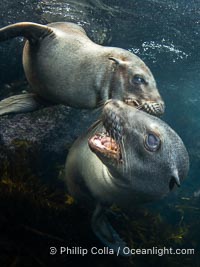
California sea lions playing underwater, socializing at North Coronado Island, Baja California, Mexico. Much of the play and mock sparring young sea lions perform involves biting and mouthing because what else can they use - they have no hands, duh.
Species: California sea lion, Zalophus californianus
Location: Coronado Islands (Islas Coronado), Baja California, Mexico
Image ID: 39762
Species: California sea lion, Zalophus californianus
Location: Coronado Islands (Islas Coronado), Baja California, Mexico
Image ID: 39762
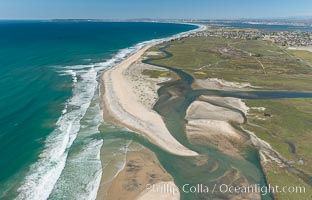
Aerial Photo of Tijuana River Mouth SMCA. Tijuana River Mouth State Marine Conservation Area borders Imperial Beach and the Mexican Border.
Location: Imperial Beach, California
Image ID: 30660
Location: Imperial Beach, California
Image ID: 30660
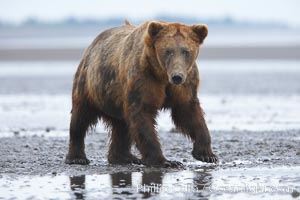
Mature male coastal brown bear boar waits on the tide flats at the mouth of Silver Salmon Creek for salmon to arrive. Grizzly bear.
Species: Brown bear, Ursus arctos
Location: Lake Clark National Park, Alaska
Image ID: 19149
Species: Brown bear, Ursus arctos
Location: Lake Clark National Park, Alaska
Image ID: 19149
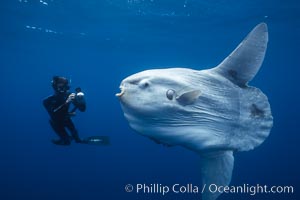
Ocean sunfish and freediving photographer, open ocean.
Species: Ocean sunfish, Mola mola
Location: San Diego, California
Image ID: 03325
Species: Ocean sunfish, Mola mola
Location: San Diego, California
Image ID: 03325
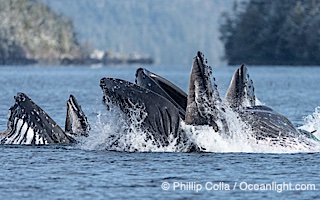
Humpback whales surface together during coordinated bubble-net feeding in Southeast Alaska. The whales use bubbles, sound, and movement to corral fish before capturing them in their open mouths.
Species: Humpback whale, Megaptera novaeangliae
Location: Sitka Sound, Alaska
Image ID: 41593
Species: Humpback whale, Megaptera novaeangliae
Location: Sitka Sound, Alaska
Image ID: 41593
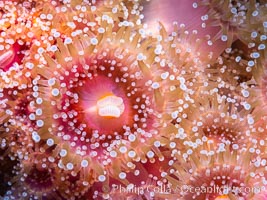
The corallimorph Corynactis californica, similar to both stony corals and anemones, is typified by a wide oral disk and short tentacles that radiate from the mouth. The tentacles grasp food passing by in ocean currents.
Species: Strawberry anemone, Corynactis californica
Location: San Diego, California
Image ID: 37212
Species: Strawberry anemone, Corynactis californica
Location: San Diego, California
Image ID: 37212
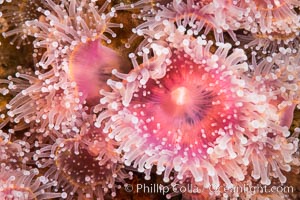
The corallimorph Corynactis californica, similar to both stony corals and anemones, is typified by a wide oral disk and short tentacles that radiate from the mouth. The tentacles grasp food passing by in ocean currents.
Species: Strawberry anemone, Corynactis californica
Location: San Diego, California
Image ID: 37215
Species: Strawberry anemone, Corynactis californica
Location: San Diego, California
Image ID: 37215
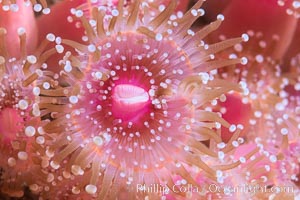
The corallimorph Corynactis californica, similar to both stony corals and anemones, is typified by a wide oral disk and short tentacles that radiate from the mouth. The tentacles grasp food passing by in ocean currents.
Species: Strawberry anemone, Corynactis californica
Location: San Diego, California
Image ID: 37201
Species: Strawberry anemone, Corynactis californica
Location: San Diego, California
Image ID: 37201
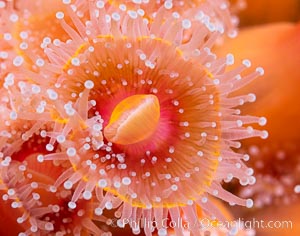
The corallimorph Corynactis californica, similar to both stony corals and anemones, is typified by a wide oral disk and short tentacles that radiate from the mouth. The tentacles grasp food passing by in ocean currents.
Species: Strawberry anemone, Corynactis californica
Location: San Diego, California
Image ID: 37208
Species: Strawberry anemone, Corynactis californica
Location: San Diego, California
Image ID: 37208
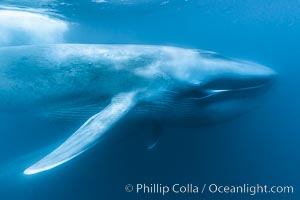
Blue whale underwater with mouth full of krill, calf is partially seen below the mother. This incredible picture of a blue whale, the largest animal ever to inhabit earth, shows it swimming through the open ocean, a rare underwater view. Over 80' long and just a few feet from the camera, an extremely wide lens was used to photograph the entire enormous whale.
Species: Blue whale, Balaenoptera musculus
Location: California
Image ID: 27317
Species: Blue whale, Balaenoptera musculus
Location: California
Image ID: 27317
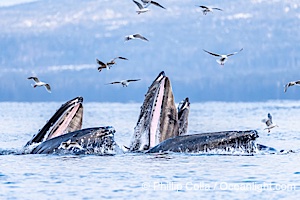
Humpback whales surface together during coordinated bubble-net feeding in Southeast Alaska. The whales use bubbles, sound, and movement to corral fish before capturing them in their open mouths.
Species: Humpback whale, Megaptera novaeangliae
Location: Sitka Sound, Alaska
Image ID: 41598
Species: Humpback whale, Megaptera novaeangliae
Location: Sitka Sound, Alaska
Image ID: 41598
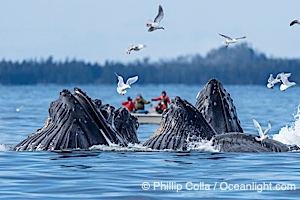
Humpback whales surface together during coordinated bubble-net feeding in Southeast Alaska. The whales use bubbles, sound, and movement to corral fish before capturing them in their open mouths.
Species: Humpback whale, Megaptera novaeangliae
Location: Sitka Sound, Alaska
Image ID: 41602
Species: Humpback whale, Megaptera novaeangliae
Location: Sitka Sound, Alaska
Image ID: 41602
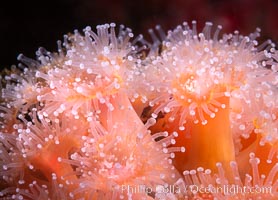
The corallimorph Corynactis californica, similar to both stony corals and anemones, is typified by a wide oral disk and short tentacles that radiate from the mouth. The tentacles grasp food passing by in ocean currents.
Species: Strawberry anemone, Corynactis californica
Location: San Diego, California
Image ID: 37202
Species: Strawberry anemone, Corynactis californica
Location: San Diego, California
Image ID: 37202
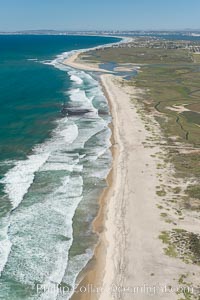
Aerial Photo of Tijuana River Mouth SMCA. Tijuana River Mouth State Marine Conservation Area borders Imperial Beach and the Mexican Border.
Location: Imperial Beach, California
Image ID: 30649
Location: Imperial Beach, California
Image ID: 30649
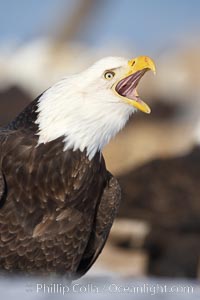
Bald eagle, appears to be calling vocalizing, actually is swallowing a fish, a bit of which is just visible in the eagles mouth.
Species: Bald eagle, Haliaeetus leucocephalus, Haliaeetus leucocephalus washingtoniensis
Location: Kachemak Bay, Homer, Alaska
Image ID: 22603
Species: Bald eagle, Haliaeetus leucocephalus, Haliaeetus leucocephalus washingtoniensis
Location: Kachemak Bay, Homer, Alaska
Image ID: 22603
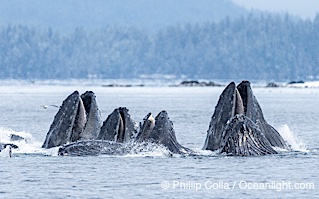
Humpback whales surface together during coordinated bubble-net feeding in Southeast Alaska. The whales use bubbles, sound, and movement to corral fish before capturing them in their open mouths.
Species: Humpback whale, Megaptera novaeangliae
Location: Sitka Sound, Alaska
Image ID: 41592
Species: Humpback whale, Megaptera novaeangliae
Location: Sitka Sound, Alaska
Image ID: 41592
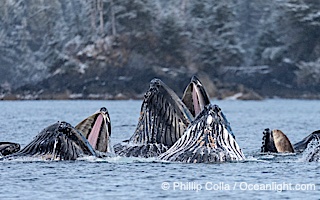
Humpback whales surface together during coordinated bubble-net feeding in Southeast Alaska. The whales use bubbles, sound, and movement to corral fish before capturing them in their open mouths.
Species: Humpback whale, Megaptera novaeangliae
Location: Sitka Sound, Alaska
Image ID: 41594
Species: Humpback whale, Megaptera novaeangliae
Location: Sitka Sound, Alaska
Image ID: 41594