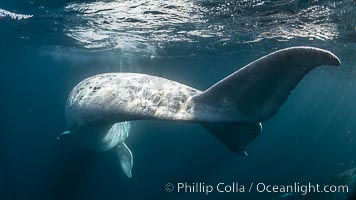
White southern right whale calf underwater, Eubalaena australis. About five per cent of southern right whales are born white due to a condition known as grey morphism and will gradually turn dark as they age. They are not albino (which is a complete lack of pigmentation). Sometimes referred to as "brindled", the white coloration is a recessive genetic trait and only lasts a few months. Typically, but not always, white calves will become much darker as they mature but will still be somewhat lighter than normal even as adults.
Species: Southern Right Whale, Eubalaena australis
Location: Puerto Piramides, Chubut, Argentina
Image ID: 38434
Species: Southern Right Whale, Eubalaena australis
Location: Puerto Piramides, Chubut, Argentina
Image ID: 38434
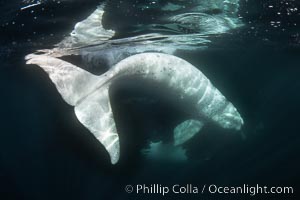
White southern right whale calf underwater, Eubalaena australis. About five per cent of southern right whales are born white due to a condition known as grey morphism and will gradually turn dark as they age. They are not albino (which is a complete lack of pigmentation). Sometimes referred to as "brindled", the white coloration is a recessive genetic trait and only lasts a few months. Typically, but not always, white calves will become much darker as they mature but will still be somewhat lighter than normal even as adults.
Species: Southern Right Whale, Eubalaena australis
Location: Puerto Piramides, Chubut, Argentina
Image ID: 38438
Species: Southern Right Whale, Eubalaena australis
Location: Puerto Piramides, Chubut, Argentina
Image ID: 38438
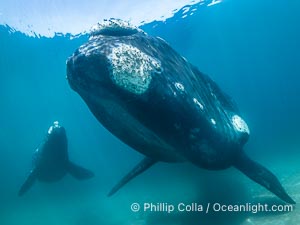
Portrait of Mother and Calf Southern Right Whales Underwater, Eubalaena australis, hovering over sand bottom on Golfo Nuevo, Peninsula Valdes. By permission of the Government of Argentina, Chubut, permit # 51 / 2025-SsCyA.
Species: Southern Right Whale, Eubalaena australis
Location: Puerto Piramides, Chubut, Argentina
Image ID: 41183
Species: Southern Right Whale, Eubalaena australis
Location: Puerto Piramides, Chubut, Argentina
Image ID: 41183
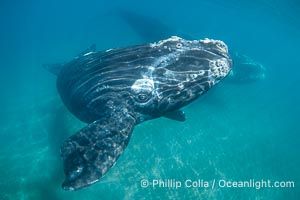
Southern right whale calf underwater, Eubalaena australis. By permission of the Government of Argentina, Chubut, permit # 51 / 2025-SsCyA.
Species: Southern Right Whale, Eubalaena australis
Location: Puerto Piramides, Chubut, Argentina
Image ID: 41184
Species: Southern Right Whale, Eubalaena australis
Location: Puerto Piramides, Chubut, Argentina
Image ID: 41184
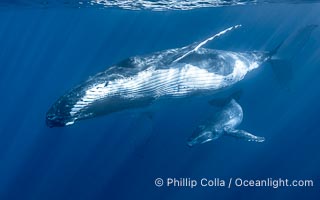
Humpback mother and calf swimming together underwater, Moorea Island, French Polynesia.
Species: Humpback whale, Megaptera novaeangliae
Location: Moorea, French Polynesia, France
Image ID: 41341
Species: Humpback whale, Megaptera novaeangliae
Location: Moorea, French Polynesia, France
Image ID: 41341
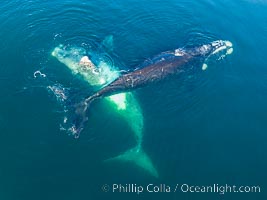
Courting group of southern right whales, aerial photo. Mating may occur as a result of this courting and social behavior. The white whale seen here is a serious player named El Copulador (the copulator) and is often seen in mating and courting groups of southern right whales at Peninsula Valdes. His light coloration is an indication that he was a white calf, but he did not darken as he aged in the way most white southern right whale calves do.
Species: Southern Right Whale, Eubalaena australis
Location: Puerto Piramides, Chubut, Argentina
Image ID: 38357
Species: Southern Right Whale, Eubalaena australis
Location: Puerto Piramides, Chubut, Argentina
Image ID: 38357
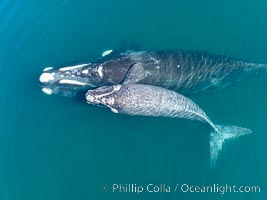
Southern right whale mother and calf, aerial photo, Eubalaena australis.
Species: Southern Right Whale, Eubalaena australis
Location: Puerto Piramides, Chubut, Argentina
Image ID: 38385
Species: Southern Right Whale, Eubalaena australis
Location: Puerto Piramides, Chubut, Argentina
Image ID: 38385
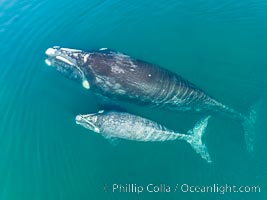
Southern right whale mother and calf, aerial photo, Eubalaena australis.
Species: Southern Right Whale, Eubalaena australis
Location: Puerto Piramides, Chubut, Argentina
Image ID: 38386
Species: Southern Right Whale, Eubalaena australis
Location: Puerto Piramides, Chubut, Argentina
Image ID: 38386
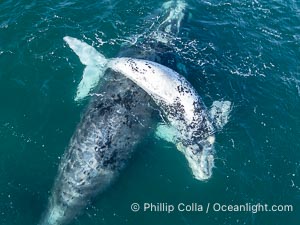
Aerial photo of white Southern Right Whale calf with its mother. The mother is gray in color, rather than dark black, since she was a white calf herself and gradually darkened to gray as she matured. About five per cent of southern right whales are born white due to a condition known as grey morphism and will gradually turn dark as they age. They are not albino (which is a complete lack of pigmentation). The white coloration is a recessive genetic trait and only lasts a few months. Typically white calves become much darker as they mature but will still be lighter than normal even as adults. By permission of the Government of Argentina, Chubut, permit # 51 / 2025-SsCyA.
Species: Southern Right Whale, Eubalaena australis
Location: Puerto Piramides, Chubut, Argentina
Image ID: 41180
Species: Southern Right Whale, Eubalaena australis
Location: Puerto Piramides, Chubut, Argentina
Image ID: 41180
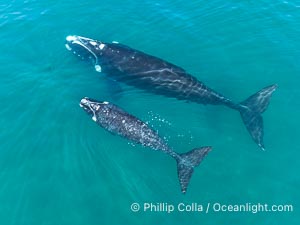
Aerial photo of Southern Right Whale Mother and Calf. Golfo Nuevo, Peninsula Valdes, Argentina. By permission of the Government of Argentina, Chubut, permit # 51 / 2025-SsCyA.
Species: Southern Right Whale, Eubalaena australis
Location: Puerto Piramides, Chubut, Argentina
Image ID: 41181
Species: Southern Right Whale, Eubalaena australis
Location: Puerto Piramides, Chubut, Argentina
Image ID: 41181
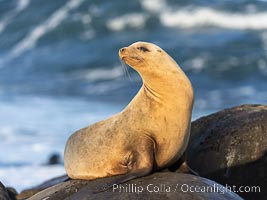
Beautiful golden female Calfornia sea lion on rocks at sunrise. This sea lion has hauled out of the ocean onto rocks near Point La Jolla to rest and warm in the morning sun.
Species: California sea lion, Zalophus californianus
Location: La Jolla, California
Image ID: 38647
Species: California sea lion, Zalophus californianus
Location: La Jolla, California
Image ID: 38647
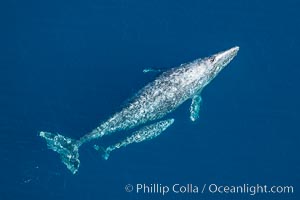
Aerial photo of gray whale calf and mother. This baby gray whale was born during the southern migration, far to the north of the Mexican lagoons of Baja California where most gray whale births take place.
Species: Gray whale, Eschrichtius robustus
Location: San Clemente, California
Image ID: 29017
Species: Gray whale, Eschrichtius robustus
Location: San Clemente, California
Image ID: 29017
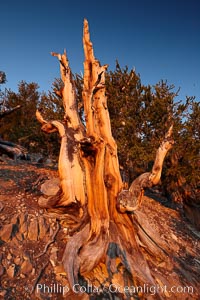
Ancient bristlecone pine tree, rising above the arid, dolomite-rich slopes of the Schulman Grove in the White Mountains at an elevation of 9500 above sea level, along the Methuselah Walk. The oldest bristlecone pines in the world are found in the Schulman Grove, some of them over 4700 years old. Ancient Bristlecone Pine Forest.
Species: Bristlecone pine, Pinus longaeva
Location: White Mountains, Inyo National Forest, California
Image ID: 23233
Species: Bristlecone pine, Pinus longaeva
Location: White Mountains, Inyo National Forest, California
Image ID: 23233
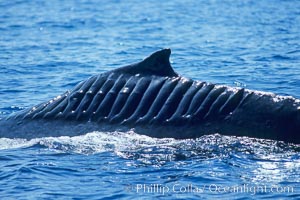
North Pacific humpback whale showing extensive scarring, almost certainly from a boat propeller, on dorsal ridge. This female North Pacific humpback whale was first seen with the depicted lacerations near the island of Maui in the Hawaiian Islands in the mid-90s, and is the original humpback to bear the name 'Blade Runner'. This female has apparently recovered, as evidenced the calf she was observed nurturing. A South Pacific humpback whale endured a similar injury in Sydney Australia in 2001, and bears a remarkably similar scar pattern to the above-pictured whale.
Species: Humpback whale, Megaptera novaeangliae
Location: Maui, Hawaii
Image ID: 05909
Species: Humpback whale, Megaptera novaeangliae
Location: Maui, Hawaii
Image ID: 05909

Ancient Bristlecone Pine Tree at night, stars and the Milky Way galaxy visible in the evening sky, near Patriarch Grove.
Species: Ancient bristlecone pine, Pinus longaeva
Location: Ancient Bristlecone Pine Forest, White Mountains, Inyo National Forest, California
Image ID: 28786
Species: Ancient bristlecone pine, Pinus longaeva
Location: Ancient Bristlecone Pine Forest, White Mountains, Inyo National Forest, California
Image ID: 28786
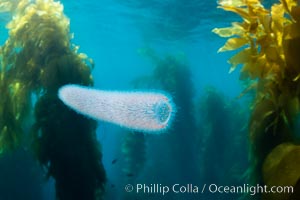
Pyrosome drifting through a kelp forest, Catalina Island. Pyrosomes are free-floating colonial tunicates that usually live in the upper layers of the open ocean in warm seas. Pyrosomes are cylindrical or cone-shaped colonies made up of hundreds to thousands of individuals, known as zooids.
Location: Catalina Island, California
Image ID: 37166
Location: Catalina Island, California
Image ID: 37166
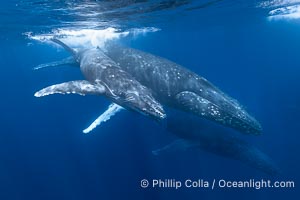
Mother, Calf and Escort South Pacific Humpback Whales Underwater, Moorea, French Polynesia.
Species: Humpback whale, Megaptera novaeangliae
Location: Moorea, French Polynesia, France
Image ID: 40679
Species: Humpback whale, Megaptera novaeangliae
Location: Moorea, French Polynesia, France
Image ID: 40679
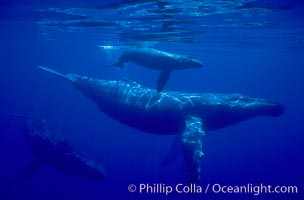
Humpback whale mother, calf (top), male escort (rear), underwater. A young humpback calf typically swims alongside or above its mother, and male escorts will usually travel behind the mother.
Species: Humpback whale, Megaptera novaeangliae
Location: Maui, Hawaii
Image ID: 02819
Species: Humpback whale, Megaptera novaeangliae
Location: Maui, Hawaii
Image ID: 02819
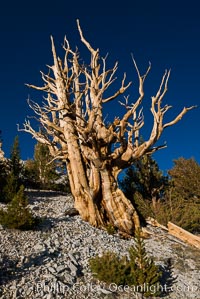
Ancient bristlecone pine trees in Patriarch Grove, display characteristic gnarled, twisted form as it rises above the arid, dolomite-rich slopes of the White Mountains at 11000-foot elevation. Patriarch Grove, Ancient Bristlecone Pine Forest.
Species: Ancient bristlecone pine, Pinus longaeva
Location: White Mountains, Inyo National Forest, California
Image ID: 28526
Species: Ancient bristlecone pine, Pinus longaeva
Location: White Mountains, Inyo National Forest, California
Image ID: 28526
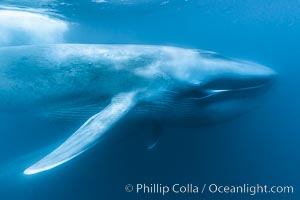
Blue whale underwater with mouth full of krill, calf is partially seen below the mother. This incredible picture of a blue whale, the largest animal ever to inhabit earth, shows it swimming through the open ocean, a rare underwater view. Over 80' long and just a few feet from the camera, an extremely wide lens was used to photograph the entire enormous whale.
Species: Blue whale, Balaenoptera musculus
Location: California
Image ID: 27317
Species: Blue whale, Balaenoptera musculus
Location: California
Image ID: 27317
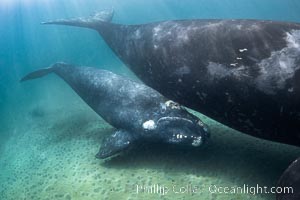
Southern right whale mother and calf underwater, Eubalaena australis.
Species: Southern Right Whale, Eubalaena australis
Location: Puerto Piramides, Chubut, Argentina
Image ID: 38305
Species: Southern Right Whale, Eubalaena australis
Location: Puerto Piramides, Chubut, Argentina
Image ID: 38305

Milky Way over Ancient Bristlecone Pine Trees, Inyo National Forest.
Species: Bristlecone pine, Pinus longaeva
Location: Ancient Bristlecone Pine Forest, White Mountains, Inyo National Forest, California
Image ID: 29318
Species: Bristlecone pine, Pinus longaeva
Location: Ancient Bristlecone Pine Forest, White Mountains, Inyo National Forest, California
Image ID: 29318
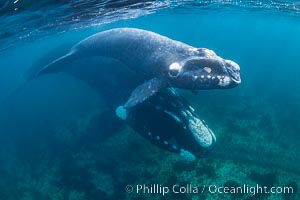
Southern right whale mother and calf underwater, Eubalaena australis.
Species: Southern Right Whale, Eubalaena australis
Location: Puerto Piramides, Chubut, Argentina
Image ID: 38310
Species: Southern Right Whale, Eubalaena australis
Location: Puerto Piramides, Chubut, Argentina
Image ID: 38310
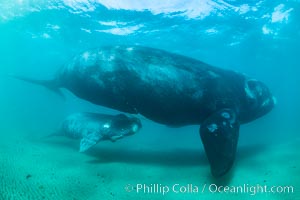
Southern right whale mother and calf, Eubalaena australis, Argentina.
Species: Southern right whale, Eubalaena australis
Location: Puerto Piramides, Chubut, Argentina
Image ID: 35918
Species: Southern right whale, Eubalaena australis
Location: Puerto Piramides, Chubut, Argentina
Image ID: 35918
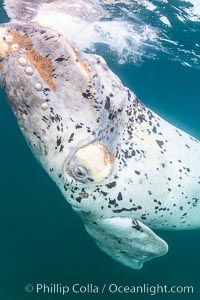
White southern right whale calf underwater, Eubalaena australis, Argentina.
Species: Southern right whale, Eubalaena australis
Location: Puerto Piramides, Chubut, Argentina
Image ID: 35952
Species: Southern right whale, Eubalaena australis
Location: Puerto Piramides, Chubut, Argentina
Image ID: 35952
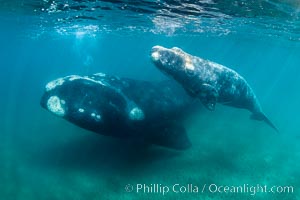
Southern right whale mother and calf underwater, Eubalaena australis, Argentina.
Species: Southern right whale, Eubalaena australis
Location: Puerto Piramides, Chubut, Argentina
Image ID: 35953
Species: Southern right whale, Eubalaena australis
Location: Puerto Piramides, Chubut, Argentina
Image ID: 35953
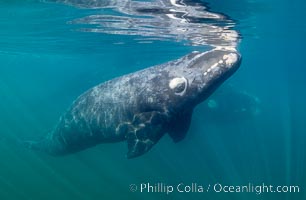
Southern right whale calf underwater, Eubalaena australis.
Species: Southern Right Whale, Eubalaena australis
Location: Puerto Piramides, Chubut, Argentina
Image ID: 38260
Species: Southern Right Whale, Eubalaena australis
Location: Puerto Piramides, Chubut, Argentina
Image ID: 38260
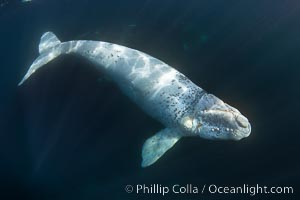
White southern right whale calf underwater, Eubalaena australis. About five per cent of southern right whales are born white due to a condition known as grey morphism and will gradually turn dark as they age. They are not albino (which is a complete lack of pigmentation). Sometimes referred to as "brindled", the white coloration is a recessive genetic trait and only lasts a few months. Typically, but not always, white calves will become much darker as they mature but will still be somewhat lighter than normal even as adults.
Species: Southern Right Whale, Eubalaena australis
Location: Puerto Piramides, Chubut, Argentina
Image ID: 38276
Species: Southern Right Whale, Eubalaena australis
Location: Puerto Piramides, Chubut, Argentina
Image ID: 38276
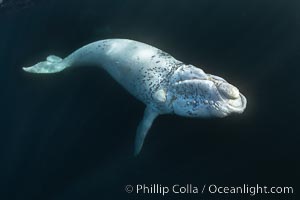
White southern right whale calf underwater, Eubalaena australis. About five per cent of southern right whales are born white due to a condition known as grey morphism and will gradually turn dark as they age. They are not albino (which is a complete lack of pigmentation). Sometimes referred to as "brindled", the white coloration is a recessive genetic trait and only lasts a few months. Typically, but not always, white calves will become much darker as they mature but will still be somewhat lighter than normal even as adults.
Species: Southern Right Whale, Eubalaena australis
Location: Puerto Piramides, Chubut, Argentina
Image ID: 38277
Species: Southern Right Whale, Eubalaena australis
Location: Puerto Piramides, Chubut, Argentina
Image ID: 38277
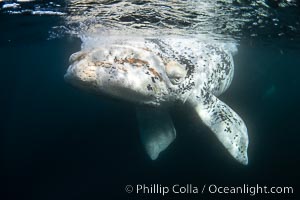
White southern right whale calf underwater, Eubalaena australis. About five per cent of southern right whales are born white due to a condition known as grey morphism and will gradually turn dark as they age. They are not albino (which is a complete lack of pigmentation). Sometimes referred to as "brindled", the white coloration is a recessive genetic trait and only lasts a few months. Typically, but not always, white calves will become much darker as they mature but will still be somewhat lighter than normal even as adults.
Species: Southern Right Whale, Eubalaena australis
Location: Puerto Piramides, Chubut, Argentina
Image ID: 38278
Species: Southern Right Whale, Eubalaena australis
Location: Puerto Piramides, Chubut, Argentina
Image ID: 38278