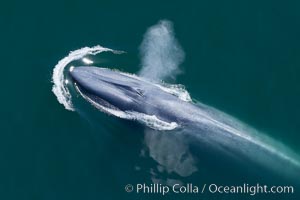
Blue whale, exhaling as it surfaces from a dive, aerial photo. The blue whale is the largest animal ever to have lived on Earth, exceeding 100' in length and 200 tons in weight.
Species: Blue whale, Balaenoptera musculus
Location: Redondo Beach, California
Image ID: 25953
Species: Blue whale, Balaenoptera musculus
Location: Redondo Beach, California
Image ID: 25953
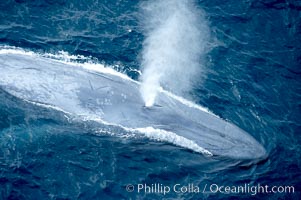
Blue whale, exhaling in a huge blow as it swims at the surface between deep dives. The blue whale's blow is a combination of water spray from around its blowhole and condensation from its warm breath.
Species: Blue whale, Balaenoptera musculus
Location: La Jolla, California
Image ID: 21249
Species: Blue whale, Balaenoptera musculus
Location: La Jolla, California
Image ID: 21249
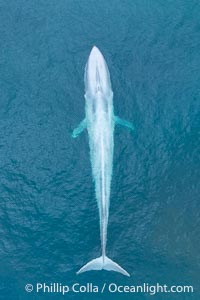
Aerial photo of blue whale near San Diego. This enormous blue whale glides at the surface of the ocean, resting and breathing before it dives to feed on subsurface krill.
Species: Blue whale, Balaenoptera musculus
Location: San Diego, California
Image ID: 39421
Species: Blue whale, Balaenoptera musculus
Location: San Diego, California
Image ID: 39421
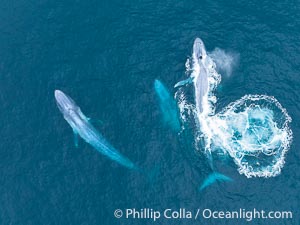
Aerial photo of three blue whales socializing near San Diego.
Species: Blue whale, Balaenoptera musculus
Location: San Diego, California
Image ID: 39429
Species: Blue whale, Balaenoptera musculus
Location: San Diego, California
Image ID: 39429
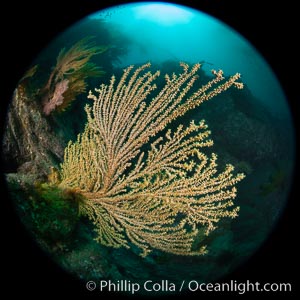
Parasitic zoanthid anemones cover and encrust and overwhelm a golden gorgonian, Catalina Head.
Species: Luminescent parazoanthid, Zoanthid anemone, Parazoanthus lucificum, Savalia lucifica
Location: Catalina Island, California
Image ID: 37294
Species: Luminescent parazoanthid, Zoanthid anemone, Parazoanthus lucificum, Savalia lucifica
Location: Catalina Island, California
Image ID: 37294
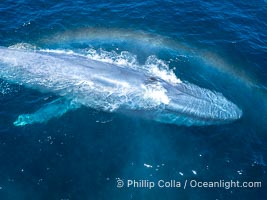
Aerial photo of blue whale with a rainbow in its blow (spout), near San Diego. This enormous blue whale glides at the surface of the ocean, resting and breathing before it dives to feed on subsurface krill.
Species: Blue whale, Balaenoptera musculus
Location: San Diego, California
Image ID: 40612
Species: Blue whale, Balaenoptera musculus
Location: San Diego, California
Image ID: 40612
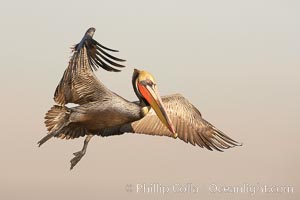
Brown pelican in flight in golden early-morning light. The wingspan of the brown pelican is over 7 feet wide. The California race of the brown pelican holds endangered species status. In winter months, breeding adults assume a dramatic plumage.
Species: Brown Pelican, Pelecanus occidentalis, Pelecanus occidentalis californicus
Location: La Jolla, California
Image ID: 20293
Species: Brown Pelican, Pelecanus occidentalis, Pelecanus occidentalis californicus
Location: La Jolla, California
Image ID: 20293
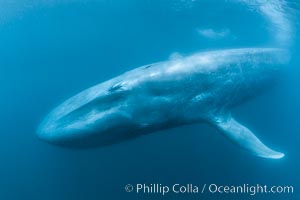
Blue whale underwater closeup photo. This incredible picture of a blue whale, the largest animal ever to inhabit earth, shows it swimming through the open ocean, a rare underwater view.
Species: Blue whale, Balaenoptera musculus
Location: California
Image ID: 27324
Species: Blue whale, Balaenoptera musculus
Location: California
Image ID: 27324
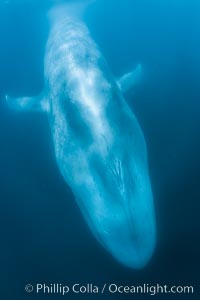
Blue whale underwater closeup photo. This incredible picture of a blue whale, the largest animal ever to inhabit earth, shows it swimming through the open ocean, a rare underwater view.
Species: Blue whale, Balaenoptera musculus
Location: California
Image ID: 27331
Species: Blue whale, Balaenoptera musculus
Location: California
Image ID: 27331
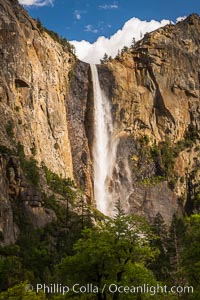
Bridalveil Falls at sunset, with clouds and blue sky in the background. Bridalveil Falls in Yosemite drops 620 feet (188 m) from a hanging valley to the floor of Yosemite Valley.
Location: Bridalveil Falls, Yosemite National Park, California
Image ID: 34540
Location: Bridalveil Falls, Yosemite National Park, California
Image ID: 34540
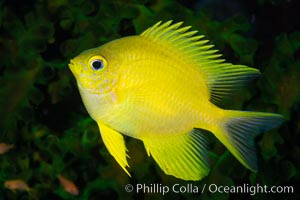
Golden Damselfish, Fiji.
Species: Golden damselfish, Amblyglyphidodon aureus
Location: Fiji
Image ID: 34809
Species: Golden damselfish, Amblyglyphidodon aureus
Location: Fiji
Image ID: 34809
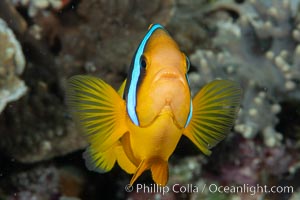
Bluestripe clownfish, Amphiprion chrysopterus, Fiji.
Species: Bluestripe clownfish, Amphiprion chrysopterus
Location: Fiji
Image ID: 34826
Species: Bluestripe clownfish, Amphiprion chrysopterus
Location: Fiji
Image ID: 34826
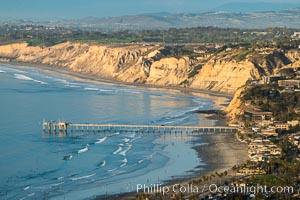
La Jolla Shores Coastline and Scripps Pier, Blacks Beach and Torrey Pines Golf Course and State Reserve, aerial photo, sunset. The Gold Coast of La Jolla basks in the warm waning light of a winter afternoon.
Location: La Jolla, California
Image ID: 36669
Location: La Jolla, California
Image ID: 36669
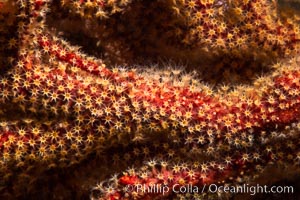
California Golden gorgonian polyps. The golden gorgonian is a colonial organism composed of thousands of tiny polyps. Each polyp secretes calcium which accumulates to form the structure of the colony. The fan-shaped gorgonian is oriented perpendicular to prevailing ocean currents to better enable to filter-feeding polyps to capture passing plankton and detritus passing by.
Species: California Golden Gorgonian, Muricea californica
Location: San Diego, California
Image ID: 37204
Species: California Golden Gorgonian, Muricea californica
Location: San Diego, California
Image ID: 37204
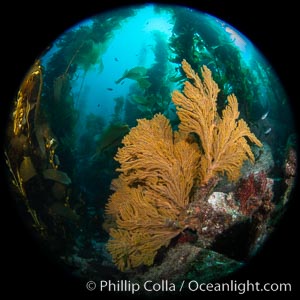
Golden gorgonian on underwater rocky reef, amid kelp forest, Catalina Island.
Species: California golden gorgonian, Muricea californica
Location: Catalina Island, California
Image ID: 37256
Species: California golden gorgonian, Muricea californica
Location: Catalina Island, California
Image ID: 37256
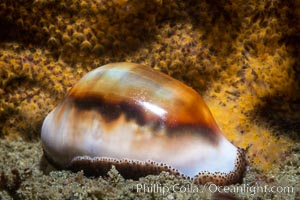
Chestnut cowrie with mantle withdrawn, in front of golden gorgonian.
Species: Chestnut Cowrie, Date Cowrie, Cypraea spadicea
Location: San Diego, California
Image ID: 37289
Species: Chestnut Cowrie, Date Cowrie, Cypraea spadicea
Location: San Diego, California
Image ID: 37289
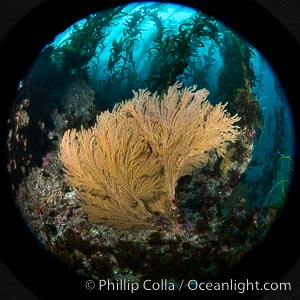
Garibaldi and California golden gorgonian on underwater rocky reef, San Clemente Island. The golden gorgonian is a filter-feeding temperate colonial species that lives on the rocky bottom at depths between 50 to 200 feet deep. Each individual polyp is a distinct animal, together they secrete calcium that forms the structure of the colony. Gorgonians are oriented at right angles to prevailing water currents to capture plankton drifting by.
Species: California Golden Gorgonian, Giant Kelp, Garibaldi, Muricea californica, Macrocystis pyrifera, Hypsypops rubicundus
Location: San Clemente Island, California
Image ID: 38501
Species: California Golden Gorgonian, Giant Kelp, Garibaldi, Muricea californica, Macrocystis pyrifera, Hypsypops rubicundus
Location: San Clemente Island, California
Image ID: 38501
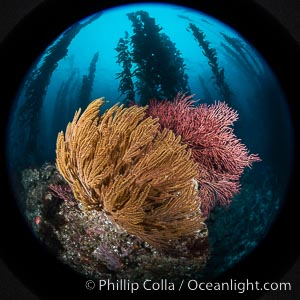
Garibaldi and California golden gorgonian on underwater rocky reef, San Clemente Island. The golden gorgonian is a filter-feeding temperate colonial species that lives on the rocky bottom at depths between 50 to 200 feet deep. Each individual polyp is a distinct animal, together they secrete calcium that forms the structure of the colony. Gorgonians are oriented at right angles to prevailing water currents to capture plankton drifting by.
Species: California Golden Gorgonian, Giant Kelp, Garibaldi, Muricea californica, Macrocystis pyrifera, Hypsypops rubicundus
Location: San Clemente Island, California
Image ID: 38504
Species: California Golden Gorgonian, Giant Kelp, Garibaldi, Muricea californica, Macrocystis pyrifera, Hypsypops rubicundus
Location: San Clemente Island, California
Image ID: 38504
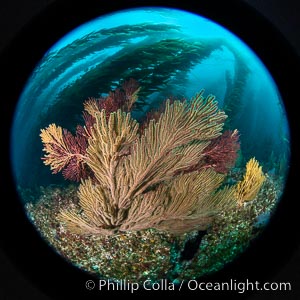
Garibaldi and California golden gorgonian on underwater rocky reef, San Clemente Island. The golden gorgonian is a filter-feeding temperate colonial species that lives on the rocky bottom at depths between 50 to 200 feet deep. Each individual polyp is a distinct animal, together they secrete calcium that forms the structure of the colony. Gorgonians are oriented at right angles to prevailing water currents to capture plankton drifting by.
Species: California Golden Gorgonian, Giant Kelp, Garibaldi, Muricea californica, Macrocystis pyrifera, Hypsypops rubicundus
Location: San Clemente Island, California
Image ID: 38509
Species: California Golden Gorgonian, Giant Kelp, Garibaldi, Muricea californica, Macrocystis pyrifera, Hypsypops rubicundus
Location: San Clemente Island, California
Image ID: 38509
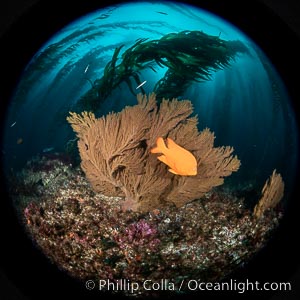
Garibaldi and California golden gorgonian on underwater rocky reef, San Clemente Island. The golden gorgonian is a filter-feeding temperate colonial species that lives on the rocky bottom at depths between 50 to 200 feet deep. Each individual polyp is a distinct animal, together they secrete calcium that forms the structure of the colony. Gorgonians are oriented at right angles to prevailing water currents to capture plankton drifting by.
Species: California golden gorgonian, Giant kelp, Garibaldi, Muricea californica, Macrocystis pyrifera, Hypsypops rubicundus
Location: San Clemente Island, California
Image ID: 38510
Species: California golden gorgonian, Giant kelp, Garibaldi, Muricea californica, Macrocystis pyrifera, Hypsypops rubicundus
Location: San Clemente Island, California
Image ID: 38510
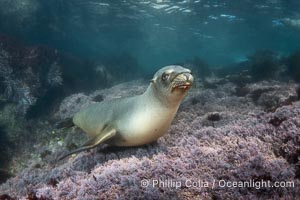
A beautiful golden-brown female California Sea Lion at the Coronado Islands, posing on a carpet of purple marine algae, Baja California, Mexico.
Species: California sea lion, Zalophus californianus
Location: Coronado Islands (Islas Coronado), Baja California, Mexico
Image ID: 38566
Species: California sea lion, Zalophus californianus
Location: Coronado Islands (Islas Coronado), Baja California, Mexico
Image ID: 38566
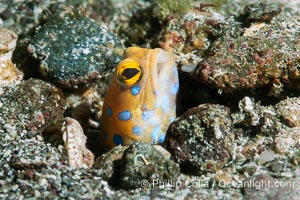
The blue-spotted jawfish is a species of jawfish native to the Gulf of California. It is an inhabitant of reefs where it is found in large colonies at depths of around 12 metres. This species hides in its burrow at night, completely sealing the entrance. Every morning, it rebuilds the burrow entrance.
Species: Blue-Spotted Jawfish, Opistognathus rosenblatti
Location: Isla Angel de la Guarda, Baja California, Mexico
Image ID: 40315
Species: Blue-Spotted Jawfish, Opistognathus rosenblatti
Location: Isla Angel de la Guarda, Baja California, Mexico
Image ID: 40315
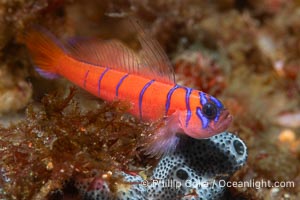
Blue-banded goby in the Midriff Islands, Sea of Cortez, Mexico.
Species: Bluebanded goby, Lythrypnus dalli
Location: Isla Angel de la Guarda, Baja California, Mexico
Image ID: 40364
Species: Bluebanded goby, Lythrypnus dalli
Location: Isla Angel de la Guarda, Baja California, Mexico
Image ID: 40364
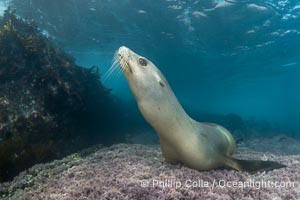
A beautiful golden-brown female California Sea Lion at the Coronado Islands, posing on a carpet of purple marine algae, Baja California, Mexico.
Species: California sea lion, Zalophus californianus
Location: Coronado Islands (Islas Coronado), Baja California, Mexico
Image ID: 40740
Species: California sea lion, Zalophus californianus
Location: Coronado Islands (Islas Coronado), Baja California, Mexico
Image ID: 40740
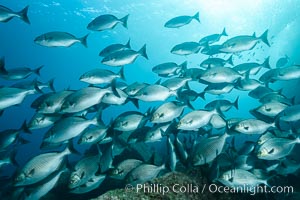
Blue-bronze sea chub schooling, Sea of Cortez.
Species: Blue-bronze chub, Kyphosus analogus
Location: Sea of Cortez, Baja California, Mexico
Image ID: 31230
Species: Blue-bronze chub, Kyphosus analogus
Location: Sea of Cortez, Baja California, Mexico
Image ID: 31230
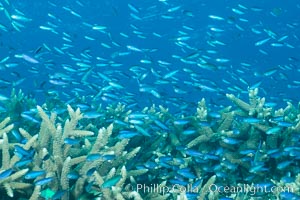
Juvenile blue-green chromis schooling in ocean current over hard corals, Fijii.
Species: Blue-green chromis, Chromis viridis
Location: Makogai Island, Lomaiviti Archipelago, Fiji
Image ID: 31398
Species: Blue-green chromis, Chromis viridis
Location: Makogai Island, Lomaiviti Archipelago, Fiji
Image ID: 31398
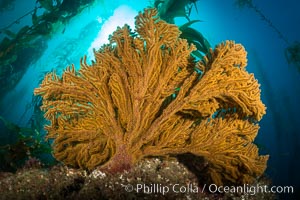
Golden gorgonian on underwater rocky reef, amid kelp forest, Catalina Island. The golden gorgonian is a filter-feeding temperate colonial species that lives on the rocky bottom at depths between 50 to 200 feet deep. Each individual polyp is a distinct animal, together they secrete calcium that forms the structure of the colony. Gorgonians are oriented at right angles to prevailing water currents to capture plankton drifting by.
Species: California golden gorgonian, Muricea californica
Location: Catalina Island, California
Image ID: 34219
Species: California golden gorgonian, Muricea californica
Location: Catalina Island, California
Image ID: 34219
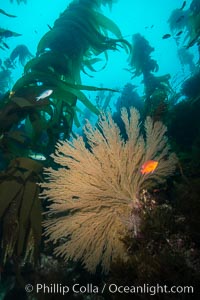
Garibaldi and California golden gorgonian on underwater rocky reef, San Clemente Island. The golden gorgonian is a filter-feeding temperate colonial species that lives on the rocky bottom at depths between 50 to 200 feet deep. Each individual polyp is a distinct animal, together they secrete calcium that forms the structure of the colony. Gorgonians are oriented at right angles to prevailing water currents to capture plankton drifting by.
Species: California golden gorgonian, Garibaldi, Hypsypops rubicundus, Muricea californica
Location: San Clemente Island, California
Image ID: 30864
Species: California golden gorgonian, Garibaldi, Hypsypops rubicundus, Muricea californica
Location: San Clemente Island, California
Image ID: 30864
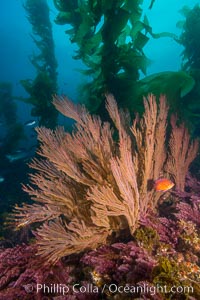
California golden gorgonian on underwater rocky reef below kelp forest, San Clemente Island. The golden gorgonian is a filter-feeding temperate colonial species that lives on the rocky bottom at depths between 50 to 200 feet deep. Each individual polyp is a distinct animal, together they secrete calcium that forms the structure of the colony. Gorgonians are oriented at right angles to prevailing water currents to capture plankton drifting by, San Clemente Island.
Species: California golden gorgonian, Muricea californica
Location: San Clemente Island, California
Image ID: 30909
Species: California golden gorgonian, Muricea californica
Location: San Clemente Island, California
Image ID: 30909
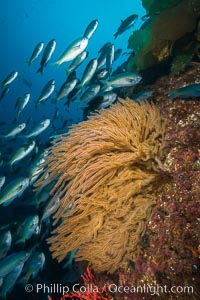
Blacksmith Chromis and California golden gorgonian on underwater rocky reef, San Clemente Island. The golden gorgonian is a filter-feeding temperate colonial species that lives on the rocky bottom at depths between 50 to 200 feet deep. Each individual polyp is a distinct animal, together they secrete calcium that forms the structure of the colony. Gorgonians are oriented at right angles to prevailing water currents to capture plankton drifting by.
Species: Blacksmith, California golden gorgonian, Chromis punctipinnis, Muricea californica
Location: San Clemente Island, California
Image ID: 30956
Species: Blacksmith, California golden gorgonian, Chromis punctipinnis, Muricea californica
Location: San Clemente Island, California
Image ID: 30956