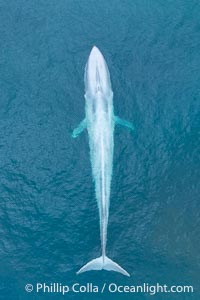
Aerial photo of blue whale near San Diego. This enormous blue whale glides at the surface of the ocean, resting and breathing before it dives to feed on subsurface krill.
Species: Blue whale, Balaenoptera musculus
Location: San Diego, California
Image ID: 39421
Species: Blue whale, Balaenoptera musculus
Location: San Diego, California
Image ID: 39421
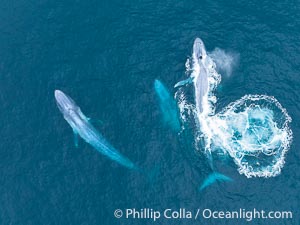
Aerial photo of three blue whales socializing near San Diego.
Species: Blue whale, Balaenoptera musculus
Location: San Diego, California
Image ID: 39429
Species: Blue whale, Balaenoptera musculus
Location: San Diego, California
Image ID: 39429
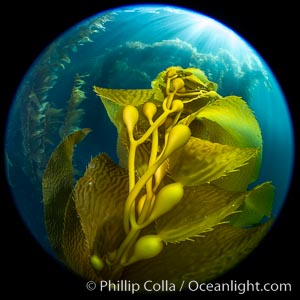
Kelp fronds and pneumatocysts. Pneumatocysts, gas-filled bladders, float the kelp off the ocean bottom toward the surface and sunlight, where the leaf-like blades and stipes of the kelp plant grow fastest. Catalina Island, California.
Species: Giant kelp, Macrocystis pyrifera
Location: Catalina Island, California
Image ID: 37282
Species: Giant kelp, Macrocystis pyrifera
Location: Catalina Island, California
Image ID: 37282
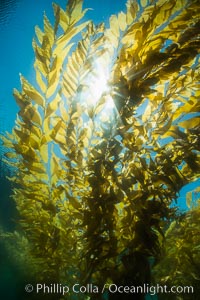
The Kelp Forest offshore of La Jolla, California. A kelp forest. Giant kelp grows rapidly, up to 2' per day, from the rocky reef on the ocean bottom to which it is anchored, toward the ocean surface where it spreads to form a thick canopy. Myriad species of fishes, mammals and invertebrates form a rich community in the kelp forest. Lush forests of kelp are found throughout California's Southern Channel Islands.
Species: Giant kelp, Macrocystis pyrifera
Image ID: 30986
Species: Giant kelp, Macrocystis pyrifera
Image ID: 30986
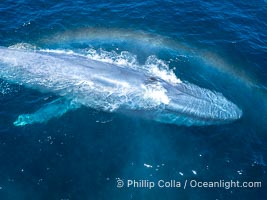
Aerial photo of blue whale with a rainbow in its blow (spout), near San Diego. This enormous blue whale glides at the surface of the ocean, resting and breathing before it dives to feed on subsurface krill.
Species: Blue whale, Balaenoptera musculus
Location: San Diego, California
Image ID: 40612
Species: Blue whale, Balaenoptera musculus
Location: San Diego, California
Image ID: 40612
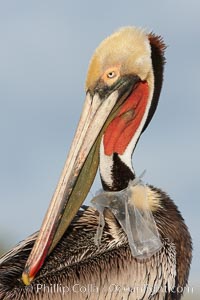
A California brown pelican entangled in a plastic bag which is wrapped around its neck. This unfortunate pelican probably became entangled in the bag by mistaking the floating plastic for food and diving on it, spearing it in such a way that the bag has lodged around the pelican's neck. Plastic bags kill and injure untold numbers of marine animals each year.
Species: Brown Pelican, Pelecanus occidentalis, Pelecanus occidentalis californicus
Location: La Jolla, California
Image ID: 22562
Species: Brown Pelican, Pelecanus occidentalis, Pelecanus occidentalis californicus
Location: La Jolla, California
Image ID: 22562
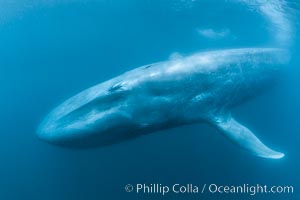
Blue whale underwater closeup photo. This incredible picture of a blue whale, the largest animal ever to inhabit earth, shows it swimming through the open ocean, a rare underwater view.
Species: Blue whale, Balaenoptera musculus
Location: California
Image ID: 27324
Species: Blue whale, Balaenoptera musculus
Location: California
Image ID: 27324
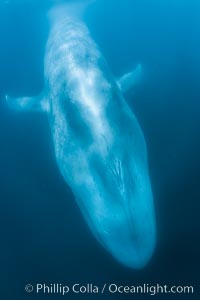
Blue whale underwater closeup photo. This incredible picture of a blue whale, the largest animal ever to inhabit earth, shows it swimming through the open ocean, a rare underwater view.
Species: Blue whale, Balaenoptera musculus
Location: California
Image ID: 27331
Species: Blue whale, Balaenoptera musculus
Location: California
Image ID: 27331
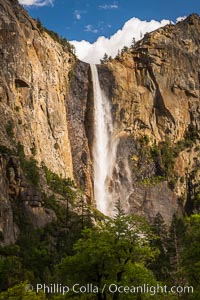
Bridalveil Falls at sunset, with clouds and blue sky in the background. Bridalveil Falls in Yosemite drops 620 feet (188 m) from a hanging valley to the floor of Yosemite Valley.
Location: Bridalveil Falls, Yosemite National Park, California
Image ID: 34540
Location: Bridalveil Falls, Yosemite National Park, California
Image ID: 34540
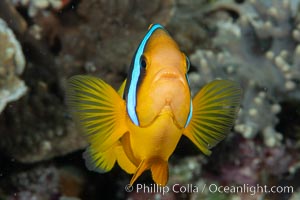
Bluestripe clownfish, Amphiprion chrysopterus, Fiji.
Species: Bluestripe clownfish, Amphiprion chrysopterus
Location: Fiji
Image ID: 34826
Species: Bluestripe clownfish, Amphiprion chrysopterus
Location: Fiji
Image ID: 34826
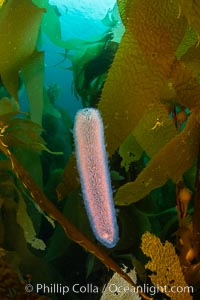
Pyrosome in Kelp Forest, Santa Barbara Island.
Species: Pyrosome, Giant Kelp, Pyrosoma, Macrocystis pyrifera
Location: Santa Barbara Island, California
Image ID: 35826
Species: Pyrosome, Giant Kelp, Pyrosoma, Macrocystis pyrifera
Location: Santa Barbara Island, California
Image ID: 35826
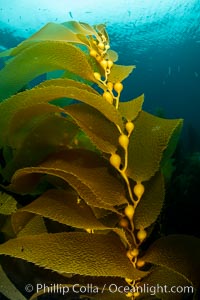
Kelp fronds showing pneumatocysts, bouyant gas-filled bubble-like structures which float the kelp plant off the ocean bottom toward the surface, where it will spread to form a roof-like canopy.
Species: Giant Kelp, Macrocystis pyrifera
Location: Santa Barbara Island, California
Image ID: 35827
Species: Giant Kelp, Macrocystis pyrifera
Location: Santa Barbara Island, California
Image ID: 35827
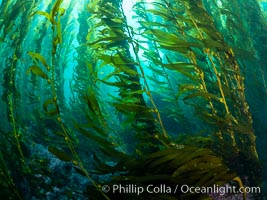
Kelp Forest, Santa Barbara Island.
Species: Giant Kelp, Macrocystis pyrifera
Location: Santa Barbara Island, California
Image ID: 35830
Species: Giant Kelp, Macrocystis pyrifera
Location: Santa Barbara Island, California
Image ID: 35830
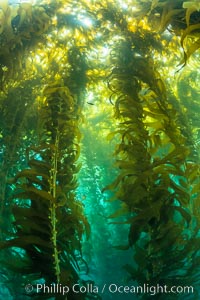
Sunlight glows throughout a giant kelp forest. Giant kelp, the fastest growing plant on Earth, reaches from the rocky reef to the ocean's surface like a submarine forest.
Species: Giant kelp, Macrocystis pyrifera
Location: San Clemente Island, California
Image ID: 37086
Species: Giant kelp, Macrocystis pyrifera
Location: San Clemente Island, California
Image ID: 37086
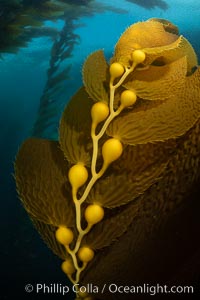
Kelp fronds and pneumatocysts. Pneumatocysts, gas-filled bladders, float the kelp plant off the ocean bottom toward the surface and sunlight, where the leaf-like blades and stipes of the kelp plant grow fastest. Giant kelp can grow up to 2' in a single day given optimal conditions. Epic submarine forests of kelp grow throughout California's Southern Channel Islands.
Species: Giant kelp, Macrocystis pyrifera
Location: San Clemente Island, California
Image ID: 37100
Species: Giant kelp, Macrocystis pyrifera
Location: San Clemente Island, California
Image ID: 37100
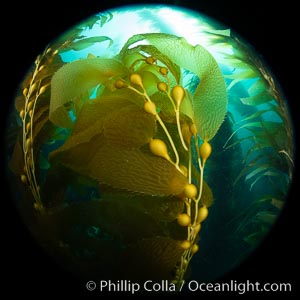
Kelp fronds and pneumatocysts. Pneumatocysts, gas-filled bladders, float the kelp off the ocean bottom toward the surface and sunlight, where the leaf-like blades and stipes of the kelp plant grow fastest.
Species: Giant kelp, Macrocystis pyrifera
Location: Catalina Island, California
Image ID: 37297
Species: Giant kelp, Macrocystis pyrifera
Location: Catalina Island, California
Image ID: 37297
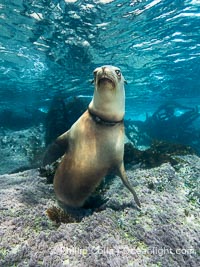
Female California Sea Lion with Severe Fishing Line Entanglement Injury, in the Coronado Islands, Baja California, Mexico. The line is buried in the sea lion's tissue so far that is difficult to see. It is possible this synthetic line will continue to cut into the skin of this sea lion until it succumbs to infection or blood loss. I have never seen any marine mammal rescue teams at the Coronado islands and suspect this poor animal will not live long.
Species: California sea lion, Zalophus californianus
Location: Coronado Islands (Islas Coronado), Baja California, Mexico
Image ID: 39959
Species: California sea lion, Zalophus californianus
Location: Coronado Islands (Islas Coronado), Baja California, Mexico
Image ID: 39959
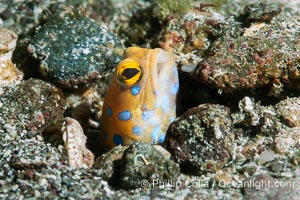
The blue-spotted jawfish is a species of jawfish native to the Gulf of California. It is an inhabitant of reefs where it is found in large colonies at depths of around 12 metres. This species hides in its burrow at night, completely sealing the entrance. Every morning, it rebuilds the burrow entrance.
Species: Blue-Spotted Jawfish, Opistognathus rosenblatti
Location: Isla Angel de la Guarda, Baja California, Mexico
Image ID: 40315
Species: Blue-Spotted Jawfish, Opistognathus rosenblatti
Location: Isla Angel de la Guarda, Baja California, Mexico
Image ID: 40315
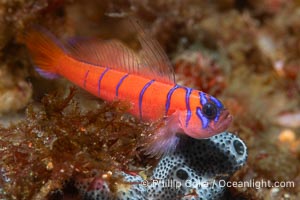
Blue-banded goby in the Midriff Islands, Sea of Cortez, Mexico.
Species: Bluebanded goby, Lythrypnus dalli
Location: Isla Angel de la Guarda, Baja California, Mexico
Image ID: 40364
Species: Bluebanded goby, Lythrypnus dalli
Location: Isla Angel de la Guarda, Baja California, Mexico
Image ID: 40364
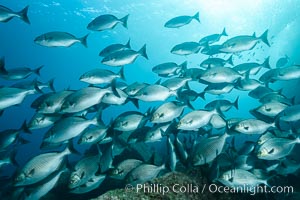
Blue-bronze sea chub schooling, Sea of Cortez.
Species: Blue-bronze chub, Kyphosus analogus
Location: Sea of Cortez, Baja California, Mexico
Image ID: 31230
Species: Blue-bronze chub, Kyphosus analogus
Location: Sea of Cortez, Baja California, Mexico
Image ID: 31230
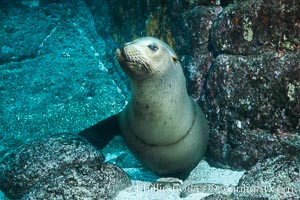
California sea lion with scar around neck from monofiliment fishing line entanglement at Los Islotes in the Sea of Cortez, Mexico.
Species: California sea lion, Zalophus californianus
Location: Sea of Cortez, Baja California, Mexico
Image ID: 31234
Species: California sea lion, Zalophus californianus
Location: Sea of Cortez, Baja California, Mexico
Image ID: 31234
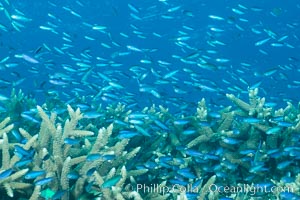
Juvenile blue-green chromis schooling in ocean current over hard corals, Fijii.
Species: Blue-green chromis, Chromis viridis
Location: Makogai Island, Lomaiviti Archipelago, Fiji
Image ID: 31398
Species: Blue-green chromis, Chromis viridis
Location: Makogai Island, Lomaiviti Archipelago, Fiji
Image ID: 31398
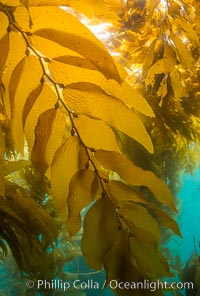
Giant kelp frond showing pneumatocysts. Small gas bladders -- pneumatocysts -- connect the kelp's stipes ("stems") to its blades ("leaves"). These bladders help elevate the kelp plant from the bottom, towards sunlight and the water's surface.
Species: Giant kelp, Macrocystis pyrifera
Location: Catalina Island, California
Image ID: 33439
Species: Giant kelp, Macrocystis pyrifera
Location: Catalina Island, California
Image ID: 33439
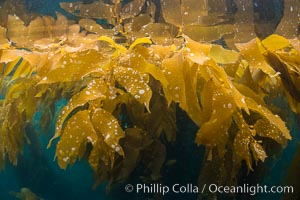
Giant kelp frond showing pneumatocysts. Small gas bladders -- pneumatocysts -- connect the kelp's stipes ("stems") to its blades ("leaves"). These bladders help elevate the kelp plant from the bottom, towards sunlight and the water's surface.
Species: Giant kelp, Macrocystis pyrifera
Location: Catalina Island, California
Image ID: 33440
Species: Giant kelp, Macrocystis pyrifera
Location: Catalina Island, California
Image ID: 33440
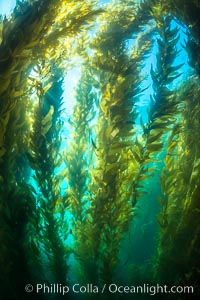
Sunlight streams through giant kelp forest. Giant kelp, the fastest growing plant on Earth, reaches from the rocky reef to the ocean's surface like a submarine forest.
Species: Giant kelp, Macrocystis pyrifera
Location: Catalina Island, California
Image ID: 33441
Species: Giant kelp, Macrocystis pyrifera
Location: Catalina Island, California
Image ID: 33441
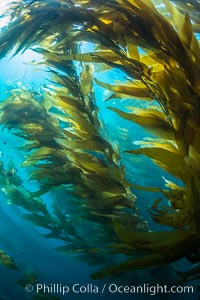
Sunlight streams through giant kelp forest. Giant kelp, the fastest growing plant on Earth, reaches from the rocky reef to the ocean's surface like a submarine forest.
Species: Giant kelp, Macrocystis pyrifera
Location: Catalina Island, California
Image ID: 33442
Species: Giant kelp, Macrocystis pyrifera
Location: Catalina Island, California
Image ID: 33442
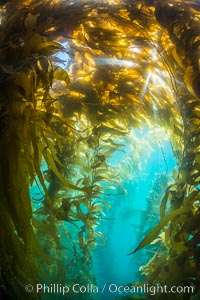
Sunlight streams through giant kelp forest. Giant kelp, the fastest growing plant on Earth, reaches from the rocky reef to the ocean's surface like a submarine forest.
Species: Giant kelp, Macrocystis pyrifera
Location: Catalina Island, California
Image ID: 33443
Species: Giant kelp, Macrocystis pyrifera
Location: Catalina Island, California
Image ID: 33443
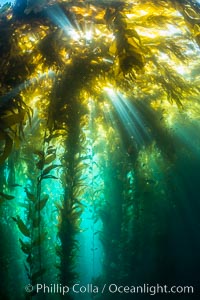
Sunlight streams through giant kelp forest. Giant kelp, the fastest growing plant on Earth, reaches from the rocky reef to the ocean's surface like a submarine forest.
Species: Giant kelp, Macrocystis pyrifera
Location: Catalina Island, California
Image ID: 33444
Species: Giant kelp, Macrocystis pyrifera
Location: Catalina Island, California
Image ID: 33444
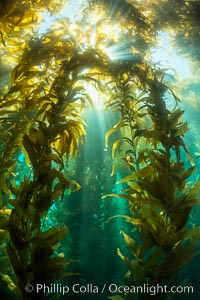
Sunlight streams through giant kelp forest. Giant kelp, the fastest growing plant on Earth, reaches from the rocky reef to the ocean's surface like a submarine forest.
Species: Giant kelp, Macrocystis pyrifera
Location: Catalina Island, California
Image ID: 33445
Species: Giant kelp, Macrocystis pyrifera
Location: Catalina Island, California
Image ID: 33445
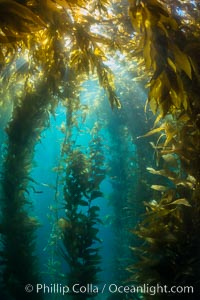
Sunlight streams through giant kelp forest. Giant kelp, the fastest growing plant on Earth, reaches from the rocky reef to the ocean's surface like a submarine forest.
Species: Giant kelp, Macrocystis pyrifera
Location: Catalina Island, California
Image ID: 33446
Species: Giant kelp, Macrocystis pyrifera
Location: Catalina Island, California
Image ID: 33446