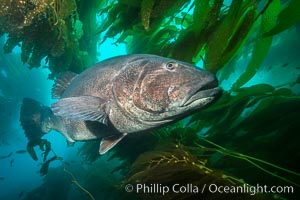
Giant black sea bass, endangered species, reaching up to 8' in length and 500 lbs, amid giant kelp forest.
Species: Giant black sea bass, Stereolepis gigas
Location: Catalina Island, California
Image ID: 33354
Species: Giant black sea bass, Stereolepis gigas
Location: Catalina Island, California
Image ID: 33354
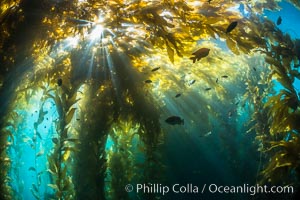
Sunlight streams through giant kelp forest. Giant kelp, the fastest growing plant on Earth, reaches from the rocky reef to the ocean's surface like a submarine forest.
Species: Giant kelp, Macrocystis pyrifera
Location: Catalina Island, California
Image ID: 33433
Species: Giant kelp, Macrocystis pyrifera
Location: Catalina Island, California
Image ID: 33433
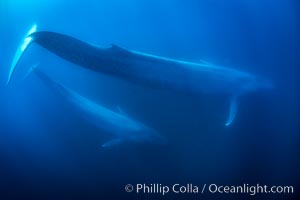
Blue whales, adult and juvenile (likely mother and calf), swimming together side by side underwater in the open ocean.
Species: Blue whale, Balaenoptera musculus
Location: San Diego, California
Image ID: 34568
Species: Blue whale, Balaenoptera musculus
Location: San Diego, California
Image ID: 34568
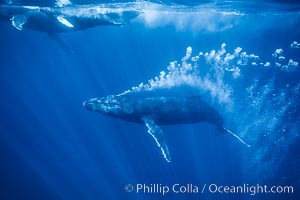
Adult male humpback whale bubble streaming underwater. The male escort humpback whale seen here is emitting a curtain of bubbles as it swims behind a mother and calf. The bubble curtain may be meant as warning or visual obstruction to other nearby male whales interested in the mother.
Species: Humpback whale, Megaptera novaeangliae
Location: Maui, Hawaii
Image ID: 05925
Species: Humpback whale, Megaptera novaeangliae
Location: Maui, Hawaii
Image ID: 05925
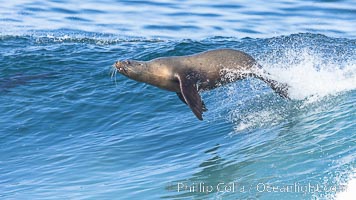
California sea lion bodysurfing in La Jolla, surfing huge waves close to shore at Boomer Beach.
Species: California Sea Lion, Zalophus californianus
Location: La Jolla, California
Image ID: 38970
Species: California Sea Lion, Zalophus californianus
Location: La Jolla, California
Image ID: 38970
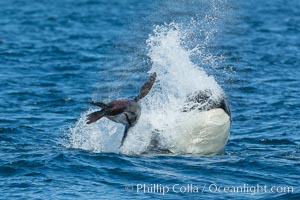
Killer whale attacking sea lion. Biggs transient orca and California sea lion.
Species: California sea lion, Killer whale, Orcinus orca, Zalophus californianus
Location: Palos Verdes, California
Image ID: 30428
Species: California sea lion, Killer whale, Orcinus orca, Zalophus californianus
Location: Palos Verdes, California
Image ID: 30428
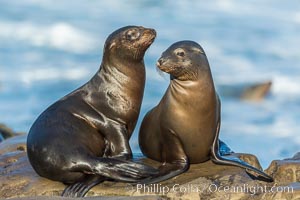
Double side-eye from two young California sea lions resting on a reef in La Jolla.
Species: California sea lion, Zalophus californianus
Location: La Jolla, California
Image ID: 34273
Species: California sea lion, Zalophus californianus
Location: La Jolla, California
Image ID: 34273
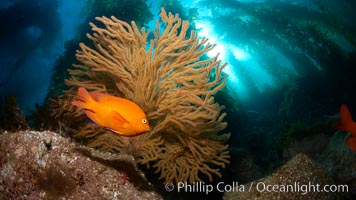
Garibaldi and golden gorgonian, with a underwater forest of giant kelp rising in the background, underwater.
Species: California golden gorgonian, Garibaldi, Hypsypops rubicundus, Muricea californica
Location: Catalina Island, California
Image ID: 23432
Species: California golden gorgonian, Garibaldi, Hypsypops rubicundus, Muricea californica
Location: Catalina Island, California
Image ID: 23432
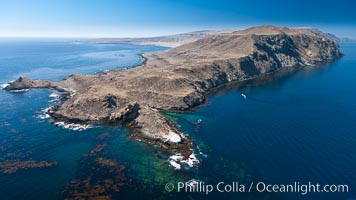
San Clemente Island Pyramid Head, the distinctive pyramid shaped southern end of the island. San Clemente Island Pyramid Head, showing geologic terracing, underwater reefs and giant kelp forests.
Location: San Clemente Island, California
Image ID: 26003
Location: San Clemente Island, California
Image ID: 26003
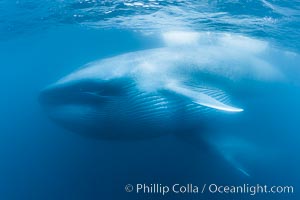
Blue whales feeding on krill underwater closeup photo. A picture of a blue whale with its throat pleats inflated with a mouthful of krill. A calf swims behind and below the adult. Over 80' long and just a few feet from the camera, an extremely wide lens was used to photograph the entire enormous whale.
Species: Blue whale, Balaenoptera musculus
Location: California
Image ID: 27314
Species: Blue whale, Balaenoptera musculus
Location: California
Image ID: 27314
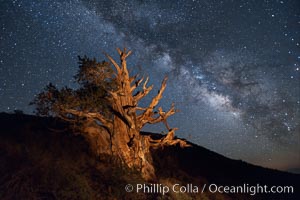
Stars and the Milky Way rise above ancient bristlecone pine trees, in the White Mountains at an elevation of 10,000' above sea level. These are some of the oldest trees in the world, reaching 4000 years in age.
Species: Bristlecone pine, Pinus longaeva
Location: Ancient Bristlecone Pine Forest, White Mountains, Inyo National Forest, California
Image ID: 27772
Species: Bristlecone pine, Pinus longaeva
Location: Ancient Bristlecone Pine Forest, White Mountains, Inyo National Forest, California
Image ID: 27772
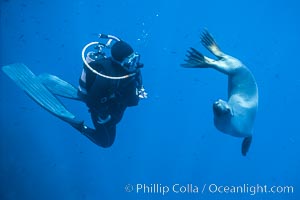
California sea lion and diver consider each other, underwater in the clear ocean water of Guadalupe Island.
Species: California sea lion, Zalophus californianus
Location: Guadalupe Island (Isla Guadalupe), Baja California, Mexico
Image ID: 02251
Species: California sea lion, Zalophus californianus
Location: Guadalupe Island (Isla Guadalupe), Baja California, Mexico
Image ID: 02251
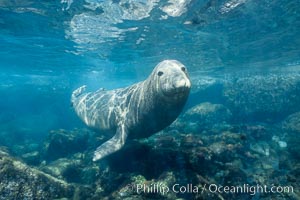
A northern elephant seal hovers underwater over a rocky bottom along the coastline of Guadalupe Island.
Species: Elephant seal, Mirounga angustirostris
Location: Guadalupe Island (Isla Guadalupe), Baja California, Mexico
Image ID: 03505
Species: Elephant seal, Mirounga angustirostris
Location: Guadalupe Island (Isla Guadalupe), Baja California, Mexico
Image ID: 03505
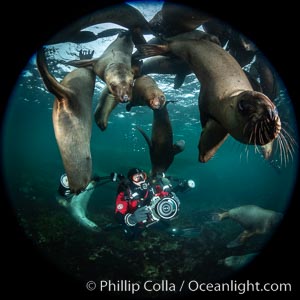
SCUBA Diver and Steller Sea Lions Underwater, underwater photographer, Hornby Island, British Columbia, Canada.
Species: Steller sea lion, Eumetopias jubatus
Image ID: 36118
Species: Steller sea lion, Eumetopias jubatus
Image ID: 36118
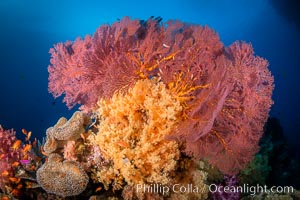
Plexauridae sea fan or gorgonian on coral reef. This gorgonian is a type of colonial alcyonacea soft coral that filters plankton from passing ocean currents.
Species: Gorgonian, Gorgonacea
Location: Vatu I Ra Passage, Bligh Waters, Viti Levu Island, Fiji
Image ID: 34712
Species: Gorgonian, Gorgonacea
Location: Vatu I Ra Passage, Bligh Waters, Viti Levu Island, Fiji
Image ID: 34712
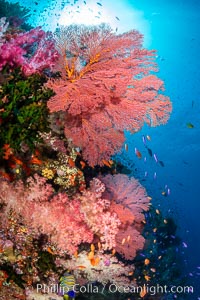
Beautiful South Pacific coral reef, with Plexauridae sea fans, schooling anthias fish and colorful dendronephthya soft corals, Fiji.
Species: Anthias, Dendronephthya soft coral, Gorgonian, Dendronephthya, Gorgonacea, Pseudanthias
Location: Fiji
Image ID: 34716
Species: Anthias, Dendronephthya soft coral, Gorgonian, Dendronephthya, Gorgonacea, Pseudanthias
Location: Fiji
Image ID: 34716
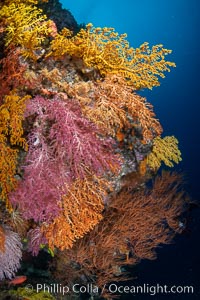
Colorful Chironephthya soft coral colonies in Fiji, hanging off wall, resembling sea fans or gorgonians.
Species: Chironephthya soft coral, Chironephthya
Location: Vatu I Ra Passage, Bligh Waters, Viti Levu Island, Fiji
Image ID: 34718
Species: Chironephthya soft coral, Chironephthya
Location: Vatu I Ra Passage, Bligh Waters, Viti Levu Island, Fiji
Image ID: 34718
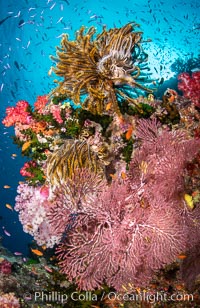
Beautiful South Pacific coral reef, with Plexauridae sea fans, schooling anthias fish and colorful dendronephthya soft corals, Fiji.
Species: Anthias, Dendronephthya soft coral, Gorgonian, Dendronephthya, Gorgonacea, Pseudanthias
Location: Namena Marine Reserve, Namena Island, Fiji
Image ID: 34726
Species: Anthias, Dendronephthya soft coral, Gorgonian, Dendronephthya, Gorgonacea, Pseudanthias
Location: Namena Marine Reserve, Namena Island, Fiji
Image ID: 34726
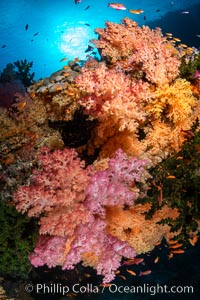
Colorful and exotic coral reef in Fiji, with soft corals, hard corals, anthias fishes, anemones, and sea fan gorgonians.
Species: Anthias, Dendronephthya soft coral, Dendronephthya, Pseudanthias
Location: Fiji
Image ID: 34739
Species: Anthias, Dendronephthya soft coral, Dendronephthya, Pseudanthias
Location: Fiji
Image ID: 34739
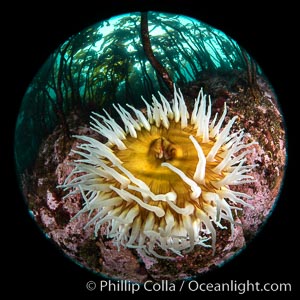
The Fish Eating Anemone Urticina piscivora, a large colorful anemone found on the rocky underwater reefs of Vancouver Island, British Columbia.
Species: Fish-eating anemone, Urticina piscivora
Location: British Columbia, Canada
Image ID: 35249
Species: Fish-eating anemone, Urticina piscivora
Location: British Columbia, Canada
Image ID: 35249
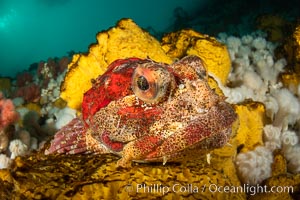
Red Irish Lord sculpinfish, Browning Pass, British Columbia.
Species: Red irish lord, Hemilepidotus hemilepidotus
Location: British Columbia, Canada
Image ID: 35256
Species: Red irish lord, Hemilepidotus hemilepidotus
Location: British Columbia, Canada
Image ID: 35256
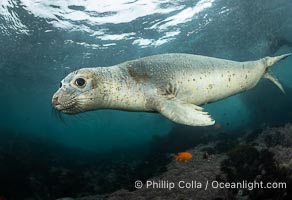
Juvenile Northern Elephant Seal Underwater, Coronado Islands, Mexico.
Species: Elephant seal, Mirounga angustirostris
Location: Coronado Islands (Islas Coronado), Baja California, Mexico
Image ID: 36465
Species: Elephant seal, Mirounga angustirostris
Location: Coronado Islands (Islas Coronado), Baja California, Mexico
Image ID: 36465
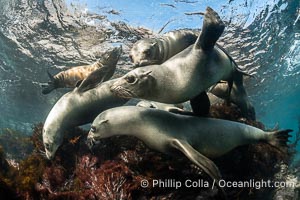
California Sea Lions Underwater, Coronado Islands, Baja California, Mexico.
Species: California sea lion, Zalophus californianus
Location: Coronado Islands (Islas Coronado), Baja California, Mexico
Image ID: 36467
Species: California sea lion, Zalophus californianus
Location: Coronado Islands (Islas Coronado), Baja California, Mexico
Image ID: 36467
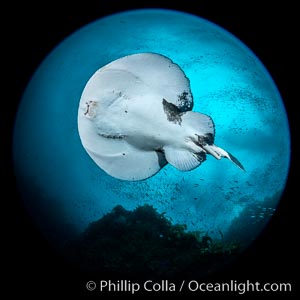
Pacific torpedo ray Tetronarce californica, amidst huge schools of fish and baitfish, Farnsworth Banks, Catalina Island. This electric ray will shock the hell out of you if you are not careful.
Species: Pacific torpedo ray, Tetronarce californica, Torpedo californica
Location: Catalina Island, California
Image ID: 37231
Species: Pacific torpedo ray, Tetronarce californica, Torpedo californica
Location: Catalina Island, California
Image ID: 37231
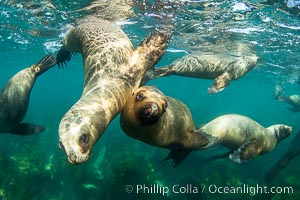
South American sea lions underwater, Otaria flavescens, Patagonia, Argentina.
Species: South American Sea Lion, Otaria flavescens
Location: Puerto Piramides, Chubut, Argentina
Image ID: 38269
Species: South American Sea Lion, Otaria flavescens
Location: Puerto Piramides, Chubut, Argentina
Image ID: 38269
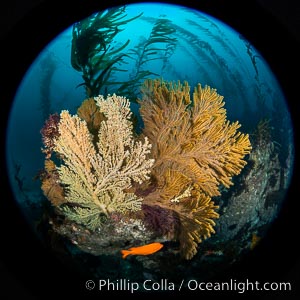
Parasitic zoanthid anemones cover, encrust and overwhelm a golden gorgonian. The gorgonian on the left has been completely parasitized by zoanthid anemones, while the gorgonian to the right remains free of zoanthids (for now). A garibaldi swims below the two sea fans. The golden gorgonian is a filter-feeding temperate colonial species that lives on the rocky bottom at depths between 50 to 200 feet deep. Each individual polyp is a distinct animal, together they secrete calcium that forms the structure of the colony. Gorgonians are oriented at right angles to prevailing water currents to capture plankton drifting by.
Species: California Golden Gorgonian, Luminescent Parazoanthid, Zoanthid Anemone, Giant Kelp, Garibaldi, Muricea californica, Parazoanthus lucificum, Savalia lucifica, Macrocystis pyrifera, Hypsypops rubicundus
Location: San Clemente Island, California
Image ID: 38493
Species: California Golden Gorgonian, Luminescent Parazoanthid, Zoanthid Anemone, Giant Kelp, Garibaldi, Muricea californica, Parazoanthus lucificum, Savalia lucifica, Macrocystis pyrifera, Hypsypops rubicundus
Location: San Clemente Island, California
Image ID: 38493
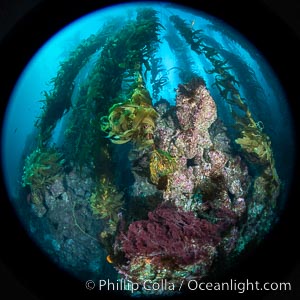
The Kelp Forest and Rocky Reef of San Clemente Island. Giant kelp grows rapidly, up to 2' per day, from the rocky reef on the ocean bottom to which it is anchored, toward the ocean surface where it spreads to form a thick canopy. Myriad species of fishes, mammals and invertebrates form a rich community in the kelp forest. Lush forests of kelp are found throughout California's Southern Channel Islands.
Species: Giant kelp, Macrocystis pyrifera
Location: San Clemente Island, California
Image ID: 38494
Species: Giant kelp, Macrocystis pyrifera
Location: San Clemente Island, California
Image ID: 38494
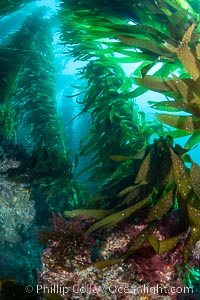
The Kelp Forest and Rocky Reef of San Clemente Island. Giant kelp grows rapidly, up to 2' per day, from the rocky reef on the ocean bottom to which it is anchored, toward the ocean surface where it spreads to form a thick canopy. Myriad species of fishes, mammals and invertebrates form a rich community in the kelp forest. Lush forests of kelp are found throughout California's Southern Channel Islands.
Species: Giant kelp, Macrocystis pyrifera
Location: San Clemente Island, California
Image ID: 38495
Species: Giant kelp, Macrocystis pyrifera
Location: San Clemente Island, California
Image ID: 38495
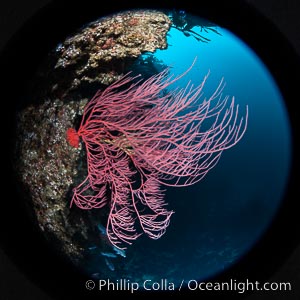
Red gorgonian on rocky reef, below kelp forest, underwater. The red gorgonian is a filter-feeding temperate colonial species that lives on the rocky bottom at depths between 50 to 200 feet deep. Gorgonians are typically oriented at right angles to prevailing water currents to capture plankton drifting by.
Species: Red gorgonian, Leptogorgia chilensis, Lophogorgia chilensis
Location: San Clemente Island, California
Image ID: 38496
Species: Red gorgonian, Leptogorgia chilensis, Lophogorgia chilensis
Location: San Clemente Island, California
Image ID: 38496
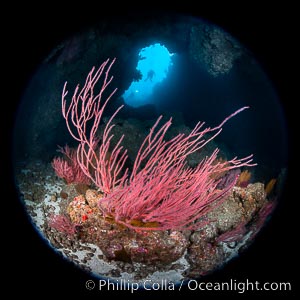
Red Gorgonians form a lush colorful garden below a submarine arch, while two scuba divers pass through the opening to the cavern.
Species: Red gorgonian, Leptogorgia chilensis, Lophogorgia chilensis
Location: San Clemente Island, California
Image ID: 38497
Species: Red gorgonian, Leptogorgia chilensis, Lophogorgia chilensis
Location: San Clemente Island, California
Image ID: 38497