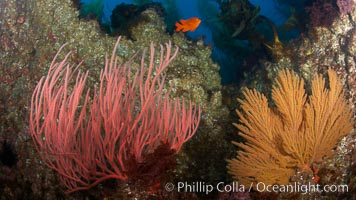
Red gorgonian (left) and California golden gorgonian (right) on rocky reef, below kelp forest, underwater. Gorgonians are filter-feeding temperate colonial species that live on the rocky bottom at depths between 50 to 200 feet deep. Each individual polyp is a distinct animal, together they secrete calcium that forms the structure of the colony. Gorgonians are oriented at right angles to prevailing water currents to capture plankton drifting by.
Species: Red gorgonian, Leptogorgia chilensis, Lophogorgia chilensis
Location: San Clemente Island, California
Image ID: 23452
Species: Red gorgonian, Leptogorgia chilensis, Lophogorgia chilensis
Location: San Clemente Island, California
Image ID: 23452
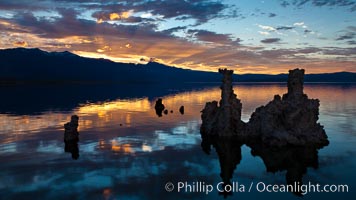
Tufa towers rise from Mono Lake, with the Eastern Sierra visible in the distance. Tufa towers are formed when underwater springs rich in calcium mix with lakewater rich in carbonates, forming calcium carbonate (limestone) structures below the surface of the lake. The towers were eventually revealed when the water level in the lake was lowered starting in 1941.
Location: Mono Lake, California
Image ID: 26983
Location: Mono Lake, California
Image ID: 26983
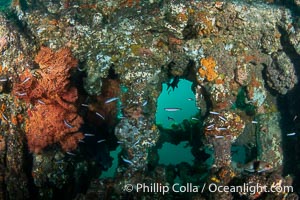
Wreck of the Portland Maru, some structure still visible, Kangaroo Island, South Australia. The Portland Maru was a 117-meter Japanese cargo ship which struck a submerged object and was beached near Cape Borda, Kangaroo Island, on March 19, 1935.
Location: Wreck of the Portland Maru, Kangaroo Island, South Australia
Image ID: 39288
Location: Wreck of the Portland Maru, Kangaroo Island, South Australia
Image ID: 39288
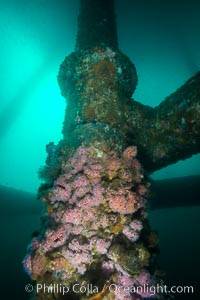
Oil Rig Eureka, Underwater Structure and invertebrate Life.
Species: Strawberry anemone, Corynactis californica
Location: Long Beach, California
Image ID: 31073
Species: Strawberry anemone, Corynactis californica
Location: Long Beach, California
Image ID: 31073
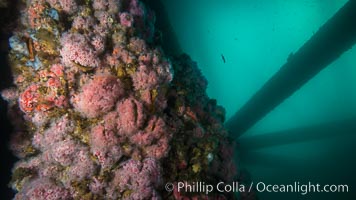
Oil Rig Eureka, Underwater Structure and invertebrate Life.
Species: Strawberry anemone, Corynactis californica
Location: Long Beach, California
Image ID: 31079
Species: Strawberry anemone, Corynactis californica
Location: Long Beach, California
Image ID: 31079
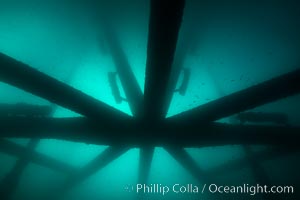
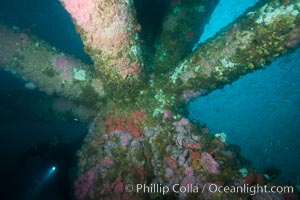
Oil Rig Ellen underwater structure covered in invertebrate life.
Location: Long Beach, California
Image ID: 31099
Location: Long Beach, California
Image ID: 31099
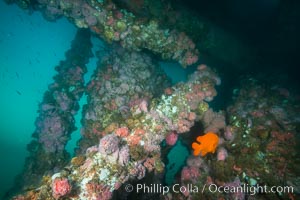
Oil Rig Ellen underwater structure covered in invertebrate life.
Location: Long Beach, California
Image ID: 31100
Location: Long Beach, California
Image ID: 31100
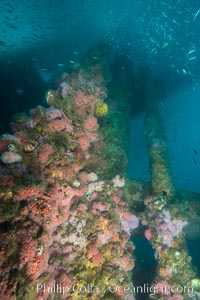
Oil Rig Ellen underwater structure covered in invertebrate life.
Location: Long Beach, California
Image ID: 31106
Location: Long Beach, California
Image ID: 31106
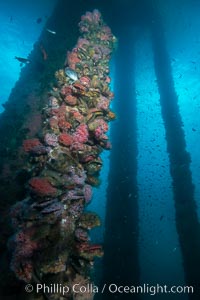
Oil Rig Ellen underwater structure covered in invertebrate life.
Location: Long Beach, California
Image ID: 31115
Location: Long Beach, California
Image ID: 31115
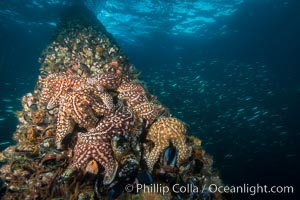
Starfish on Oil Rig Ellen underwater structure, covered in invertebrate life.
Location: Long Beach, California
Image ID: 31117
Location: Long Beach, California
Image ID: 31117
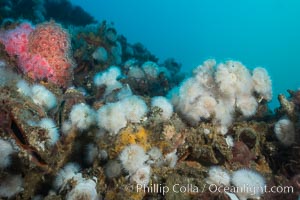
Metridium anemones covering Oil Rig Elly underwater structure.
Species: Plumose anemone, Metridium senile
Location: Long Beach, California
Image ID: 31125
Species: Plumose anemone, Metridium senile
Location: Long Beach, California
Image ID: 31125
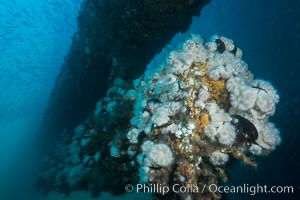
Metridium anemones covering Oil Rig Elly underwater structure.
Species: Plumose anemone, Metridium senile
Location: Long Beach, California
Image ID: 31129
Species: Plumose anemone, Metridium senile
Location: Long Beach, California
Image ID: 31129
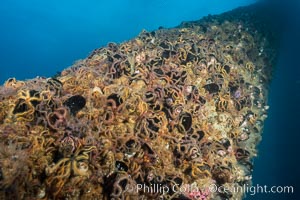
Brittle stars covering beams of Oil Rig Elly, underwater structure covered in invertebrate life.
Location: Long Beach, California
Image ID: 31136
Location: Long Beach, California
Image ID: 31136
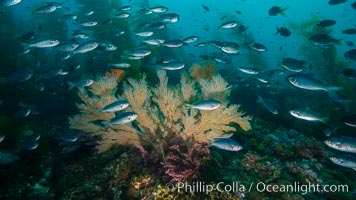
Blacksmith Chromis and California golden gorgonian on underwater rocky reef, San Clemente Island. The golden gorgonian is a filter-feeding temperate colonial species that lives on the rocky bottom at depths between 50 to 200 feet deep. Each individual polyp is a distinct animal, together they secrete calcium that forms the structure of the colony. Gorgonians are oriented at right angles to prevailing water currents to capture plankton drifting by.
Species: Blacksmith, California golden gorgonian, Chromis punctipinnis, Muricea californica
Location: San Clemente Island, California
Image ID: 30905
Species: Blacksmith, California golden gorgonian, Chromis punctipinnis, Muricea californica
Location: San Clemente Island, California
Image ID: 30905
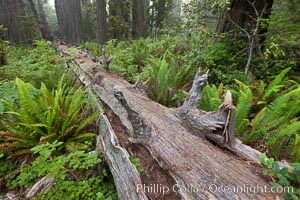
Fallen coast redwood tree. This tree will slowly decompose, providing a substrate and nutrition for new plants to grow and structure for small animals to use. Nurse log.
Species: California redwood, Coast redwood, Giant redwood, Sequoia sempervirens
Location: Redwood National Park, California
Image ID: 25803
Species: California redwood, Coast redwood, Giant redwood, Sequoia sempervirens
Location: Redwood National Park, California
Image ID: 25803
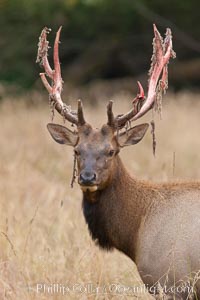
Roosevelt elk, adult bull male with large antlers. This bull elk has recently shed the velvet that covers its antlers. While an antler is growing, it is covered with highly vascular skin called velvet, which supplies oxygen and nutrients to the growing bone; once the antler has achieved its full size, the velvet is lost and the antler's bone dies. This dead bone structure is the mature antler, which is itself shed after each mating season. Roosevelt elk grow to 10' and 1300 lb, eating grasses, sedges and various berries, inhabiting the coastal rainforests of the Pacific Northwest.
Species: Roosevelt elk, Cervus canadensis roosevelti
Location: Redwood National Park, California
Image ID: 25880
Species: Roosevelt elk, Cervus canadensis roosevelti
Location: Redwood National Park, California
Image ID: 25880
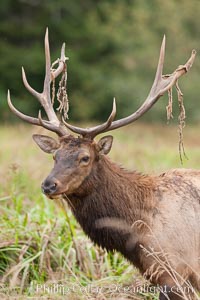
Roosevelt elk, adult bull male with large antlers. This bull elk has recently shed the velvet that covers its antlers. While an antler is growing, it is covered with highly vascular skin called velvet, which supplies oxygen and nutrients to the growing bone; once the antler has achieved its full size, the velvet is lost and the antler's bone dies. This dead bone structure is the mature antler, which is itself shed after each mating season. Roosevelt elk grow to 10' and 1300 lb, eating grasses, sedges and various berries, inhabiting the coastal rainforests of the Pacific Northwest.
Species: Roosevelt elk, Cervus canadensis roosevelti
Location: Redwood National Park, California
Image ID: 25881
Species: Roosevelt elk, Cervus canadensis roosevelti
Location: Redwood National Park, California
Image ID: 25881
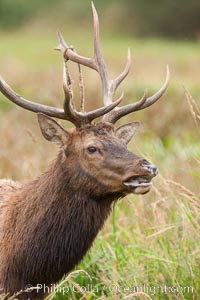
Roosevelt elk, adult bull male with large antlers. This bull elk has recently shed the velvet that covers its antlers. While an antler is growing, it is covered with highly vascular skin called velvet, which supplies oxygen and nutrients to the growing bone; once the antler has achieved its full size, the velvet is lost and the antler's bone dies. This dead bone structure is the mature antler, which is itself shed after each mating season. Roosevelt elk grow to 10' and 1300 lb, eating grasses, sedges and various berries, inhabiting the coastal rainforests of the Pacific Northwest.
Species: Roosevelt elk, Cervus canadensis roosevelti
Location: Redwood National Park, California
Image ID: 25891
Species: Roosevelt elk, Cervus canadensis roosevelti
Location: Redwood National Park, California
Image ID: 25891
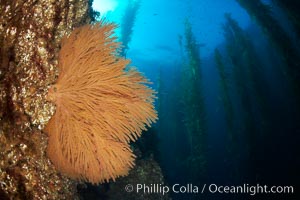
California golden gorgonian on rocky reef, below kelp forest, underwater. The golden gorgonian is a filter-feeding temperate colonial species that lives on the rocky bottom at depths between 50 to 200 feet deep. Each individual polyp is a distinct animal, together they secrete calcium that forms the structure of the colony. Gorgonians are oriented at right angles to prevailing water currents to capture plankton drifting by.
Species: California Golden Gorgonian, Giant Kelp, Macrocystis pyrifera, Muricea californica
Location: San Clemente Island, California
Image ID: 23477
Species: California Golden Gorgonian, Giant Kelp, Macrocystis pyrifera, Muricea californica
Location: San Clemente Island, California
Image ID: 23477
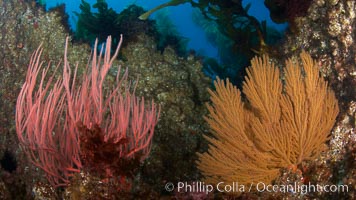
Red gorgonian (left) and California golden gorgonian (right) on rocky reef, below kelp forest, underwater. Gorgonians are filter-feeding temperate colonial species that live on the rocky bottom at depths between 50 to 200 feet deep. Each individual polyp is a distinct animal, together they secrete calcium that forms the structure of the colony. Gorgonians are oriented at right angles to prevailing water currents to capture plankton drifting by.
Species: Red gorgonian, Leptogorgia chilensis, Lophogorgia chilensis
Location: San Clemente Island, California
Image ID: 23509
Species: Red gorgonian, Leptogorgia chilensis, Lophogorgia chilensis
Location: San Clemente Island, California
Image ID: 23509
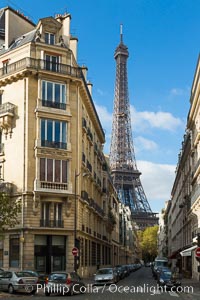
La Tour Eiffel. The Eiffel Tower is an iron lattice tower located on the Champ de Mars in Paris, named after the engineer Gustave Eiffel, who designed the tower in 1889 as the entrance arch to the 1889 World's Fair. The Eiffel tower is the tallest structure in Paris and the most-visited paid monument in the world.
Location: Tour Eiffel, Paris, France
Image ID: 28147
Location: Tour Eiffel, Paris, France
Image ID: 28147
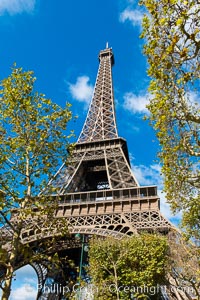
La Tour Eiffel. The Eiffel Tower is an iron lattice tower located on the Champ de Mars in Paris, named after the engineer Gustave Eiffel, who designed the tower in 1889 as the entrance arch to the 1889 World's Fair. The Eiffel tower is the tallest structure in Paris and the most-visited paid monument in the world.
Location: Tour Eiffel, Paris, France
Image ID: 28116
Location: Tour Eiffel, Paris, France
Image ID: 28116
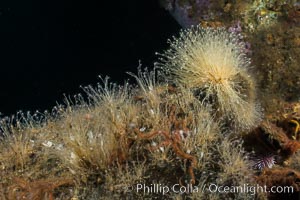
Oil Rig Elly underwater structure covered in invertebrate life.
Location: Long Beach, California
Image ID: 31122
Location: Long Beach, California
Image ID: 31122
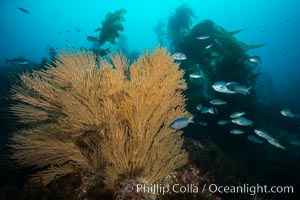
Blacksmith Chromis and California golden gorgonian on underwater rocky reef, San Clemente Island. The golden gorgonian is a filter-feeding temperate colonial species that lives on the rocky bottom at depths between 50 to 200 feet deep. Each individual polyp is a distinct animal, together they secrete calcium that forms the structure of the colony. Gorgonians are oriented at right angles to prevailing water currents to capture plankton drifting by.
Species: Blacksmith, California golden gorgonian, Chromis punctipinnis, Muricea californica
Location: San Clemente Island, California
Image ID: 30866
Species: Blacksmith, California golden gorgonian, Chromis punctipinnis, Muricea californica
Location: San Clemente Island, California
Image ID: 30866
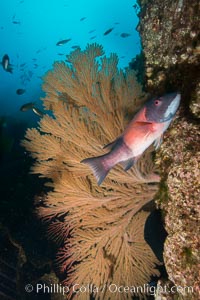
California golden gorgonian and Sheephead wrasse fishes on rocky reef, below kelp forest, underwater. The golden gorgonian is a filter-feeding temperate colonial species that lives on the rocky bottom at depths between 50 to 200 feet deep. Each individual polyp is a distinct animal, together they secrete calcium that forms the structure of the colony. Gorgonians are oriented at right angles to prevailing water currents to capture plankton drifting by.
Species: California Sheephead Wrasse, California Golden Gorgonian, Semicossyphus pulcher, Muricea californica
Location: San Clemente Island, California
Image ID: 30888
Species: California Sheephead Wrasse, California Golden Gorgonian, Semicossyphus pulcher, Muricea californica
Location: San Clemente Island, California
Image ID: 30888
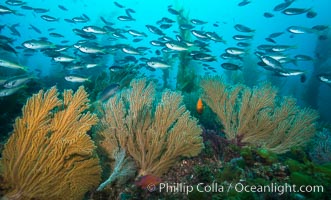
Blacksmith Chromis and California golden gorgonian on underwater rocky reef, San Clemente Island. The golden gorgonian is a filter-feeding temperate colonial species that lives on the rocky bottom at depths between 50 to 200 feet deep. Each individual polyp is a distinct animal, together they secrete calcium that forms the structure of the colony. Gorgonians are oriented at right angles to prevailing water currents to capture plankton drifting by.
Species: Blacksmith, California golden gorgonian, Chromis punctipinnis, Muricea californica
Location: San Clemente Island, California
Image ID: 30892
Species: Blacksmith, California golden gorgonian, Chromis punctipinnis, Muricea californica
Location: San Clemente Island, California
Image ID: 30892
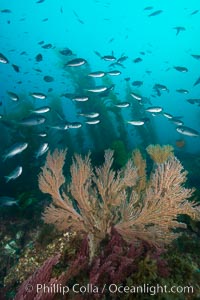
Blacksmith Chromis and California golden gorgonian on underwater rocky reef, San Clemente Island. The golden gorgonian is a filter-feeding temperate colonial species that lives on the rocky bottom at depths between 50 to 200 feet deep. Each individual polyp is a distinct animal, together they secrete calcium that forms the structure of the colony. Gorgonians are oriented at right angles to prevailing water currents to capture plankton drifting by.
Species: Blacksmith, California golden gorgonian, Chromis punctipinnis, Muricea californica
Location: San Clemente Island, California
Image ID: 30906
Species: Blacksmith, California golden gorgonian, Chromis punctipinnis, Muricea californica
Location: San Clemente Island, California
Image ID: 30906
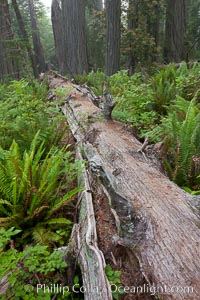
Fallen coast redwood tree. This tree will slowly decompose, providing a substrate and nutrition for new plants to grow and structure for small animals to use. Nurse log.
Species: California redwood, Coast redwood, Giant redwood, Sequoia sempervirens
Location: Redwood National Park, California
Image ID: 25820
Species: California redwood, Coast redwood, Giant redwood, Sequoia sempervirens
Location: Redwood National Park, California
Image ID: 25820
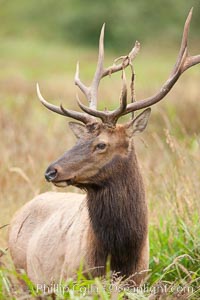
Roosevelt elk, adult bull male with large antlers. This bull elk has recently shed the velvet that covers its antlers. While an antler is growing, it is covered with highly vascular skin called velvet, which supplies oxygen and nutrients to the growing bone; once the antler has achieved its full size, the velvet is lost and the antler's bone dies. This dead bone structure is the mature antler, which is itself shed after each mating season. Roosevelt elk grow to 10' and 1300 lb, eating grasses, sedges and various berries, inhabiting the coastal rainforests of the Pacific Northwest.
Species: Roosevelt elk, Cervus canadensis roosevelti
Location: Redwood National Park, California
Image ID: 25892
Species: Roosevelt elk, Cervus canadensis roosevelti
Location: Redwood National Park, California
Image ID: 25892