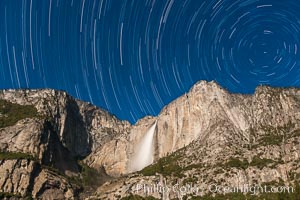
Yosemite Falls and star trails, at night, viewed from Cook's Meadow, illuminated by the light of the full moon.
Location: Yosemite Falls, Yosemite National Park, California
Image ID: 27733
Location: Yosemite Falls, Yosemite National Park, California
Image ID: 27733
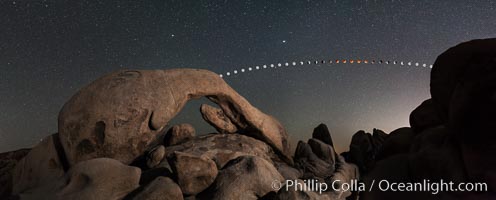
Lunar Eclipse and blood red moon sequence over Arch Rock, planet Mars above the moon, composite image, Joshua Tree National Park, April 14/15 2014.
Image ID: 29201
Panorama dimensions: 5835 x 14655
Image ID: 29201
Panorama dimensions: 5835 x 14655
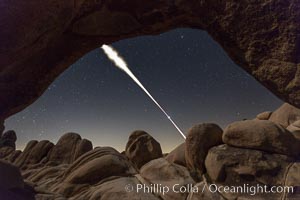
Lunar Eclipse Sequence, the path of the moon through the sky as it progresses from being fully visible (top) to fully eclipsed (middle) to almost fully visible again (bottom), viewed through Arch Rock, April 4 2015.
Location: Joshua Tree National Park, California
Image ID: 30713
Location: Joshua Tree National Park, California
Image ID: 30713
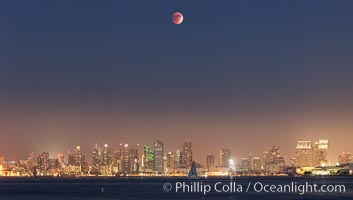
Supermoon Eclipse at Moonrise over San Diego, September 27 2015.
Image ID: 31868
Panorama dimensions: 6053 x 10673
Image ID: 31868
Panorama dimensions: 6053 x 10673
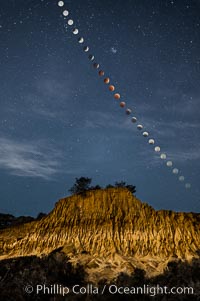
Lunar Eclipse Sequence Over Broken Hill, Torrey Pines State Reserve. While the moon lies in the full shadow of the earth (umbra) it receives only faint, red-tinged light refracted through the Earth's atmosphere. As the moon passes into the penumbra it receives increasing amounts of direct sunlight, eventually leaving the shadow of the Earth altogether. October 8, 2014.
Species: Torrey Pine, Pinus torreyana
Location: Torrey Pines State Reserve, San Diego, California
Image ID: 29412
Species: Torrey Pine, Pinus torreyana
Location: Torrey Pines State Reserve, San Diego, California
Image ID: 29412
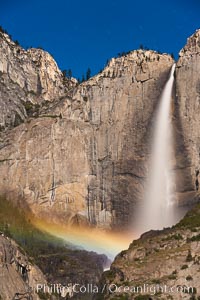
Upper Yosemite Falls and lunar rainbow, moonbow. A lunar rainbow (moonbow) can be seen to the left of Yosemite Falls, where the moon illuminates the spray of the falls.
Location: Yosemite Falls, Yosemite National Park, California
Image ID: 27751
Location: Yosemite Falls, Yosemite National Park, California
Image ID: 27751
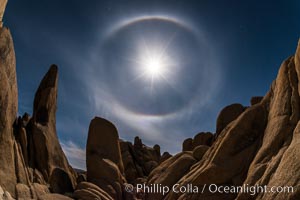
Full moon with 22-degree lunar halo, Joshua Tree National Park. The lunar halo (not to be cofused with lunar corona) forms when moonlight refracts through high altitude ice crystals. As no light is refracted at angles smaller than 22-degrees the sky is darker inside the halo.
Location: Joshua Tree National Park, California
Image ID: 30711
Location: Joshua Tree National Park, California
Image ID: 30711
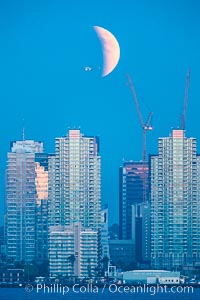
Jet Airliner Silhouetted Against Supermoon Eclipse, at Moonrise over San Diego, September 27 2015.
Image ID: 31869
Image ID: 31869
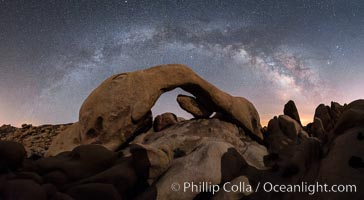
Milky Way during Full Lunar Eclipse over Arch Rock, Joshua Tree National Park, April 4 2015. The arch and surrounding landscape are illuminated by the faint light of the fully-eclipsed blood red moon. Light from the sun has passed obliquely through the Earth's thin atmosphere, taking on a red color, and is then reflected off the moon and reaches the Earth again to light the arch. The intensity of this light is so faint that the Milky Way can be seen clearly at the same time.
Location: Joshua Tree National Park, California
Image ID: 30717
Panorama dimensions: 8903 x 14184
Location: Joshua Tree National Park, California
Image ID: 30717
Panorama dimensions: 8903 x 14184
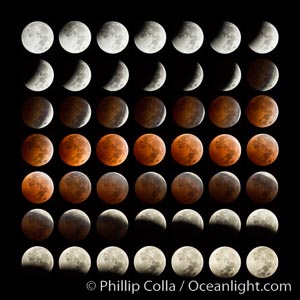
Lunar eclipse sequence. While the moon lies in the full shadow of the earth (umbra) it receives only faint, red-tinged light refracted through the Earth's atmosphere. As the moon passes into the penumbra it receives increasing amounts of direct sunlight, eventually leaving the shadow of the Earth altogether. October 8, 2014.
Image ID: 29411
Panorama dimensions: 8000 x 8000
Image ID: 29411
Panorama dimensions: 8000 x 8000
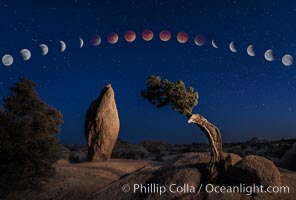
Lunar Eclipse and blood red moon sequence, over Juniper and Standing Rock, composite image, Joshua Tree National Park, April 14/15 2014.
Image ID: 29204
Image ID: 29204
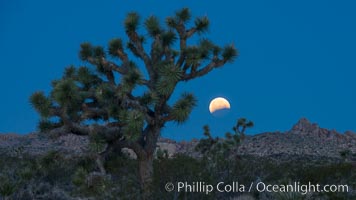
Lunar Eclipse Setting over Joshua Tree National Park, April 4 2015.
Location: Joshua Tree National Park, California
Image ID: 30720
Location: Joshua Tree National Park, California
Image ID: 30720
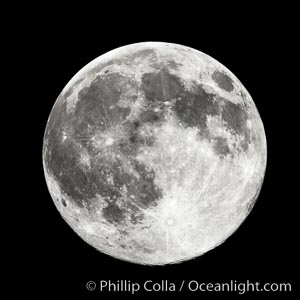
The Moon. Full Moon.
Location: Earth Orbit, Solar System, Milky Way Galaxy, The Universe
Image ID: 26047
Location: Earth Orbit, Solar System, Milky Way Galaxy, The Universe
Image ID: 26047
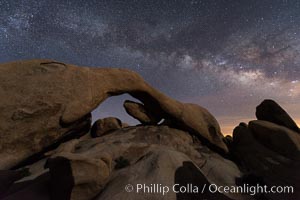
Milky Way during Full Lunar Eclipse over Arch Rock, Joshua Tree National Park, April 4 2015.
Location: Joshua Tree National Park, California
Image ID: 30718
Location: Joshua Tree National Park, California
Image ID: 30718
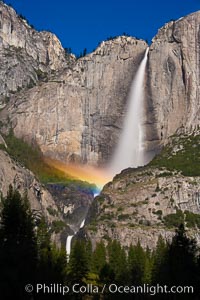
Upper Yosemite Falls and lunar rainbow, moonbow. A lunar rainbow (moonbow) can be seen to the left of Yosemite Falls, where the moon illuminates the spray of the falls.
Location: Yosemite Falls, Yosemite National Park, California
Image ID: 27752
Location: Yosemite Falls, Yosemite National Park, California
Image ID: 27752
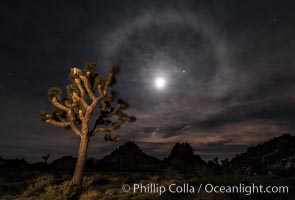
Lunar corona, or moon halo, also known as lunar nimbus, icebow or gloriole, occurring 22 degrees around the moon. Observed during the full lunar eclipse of April 14/15 2014. Planet Mars at upper right, blue star Spica to the right of the moon.
Location: Joshua Tree National Park, California
Image ID: 29229
Location: Joshua Tree National Park, California
Image ID: 29229
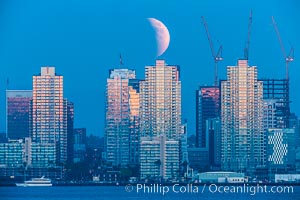
Supermoon Eclipse at Moonrise over San Diego, September 27 2015.
Image ID: 31871
Image ID: 31871

Lunar eclipse sequence, showing total eclipse (left) through full moon (right). While the moon lies in the full shadow of the earth (umbra) it receives only faint, red-tinged light refracted through the Earth's atmosphere. As the moon passes into the penumbra it receives increasing amounts of direct sunlight, eventually leaving the shadow of the Earth altogether. August 28, 2007.
Location: Earth Orbit, Solar System, Milky Way Galaxy, The Universe
Image ID: 19391
Panorama dimensions: 1826 x 14162
Location: Earth Orbit, Solar System, Milky Way Galaxy, The Universe
Image ID: 19391
Panorama dimensions: 1826 x 14162
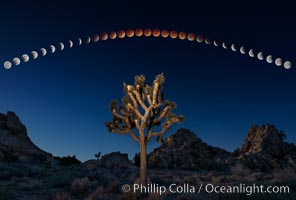
Lunar Eclipse and blood red moon sequence, stars, astronomical twilight, composite image, Joshua Tree National Park, April 14/15 2014.
Location: Joshua Tree National Park, California
Image ID: 29202
Location: Joshua Tree National Park, California
Image ID: 29202
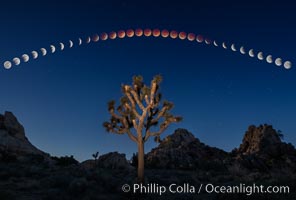
Lunar Eclipse and blood red moon sequence, composite image, Joshua Tree National Park, April 14/15 2014.
Location: Joshua Tree National Park, California
Image ID: 29203
Location: Joshua Tree National Park, California
Image ID: 29203
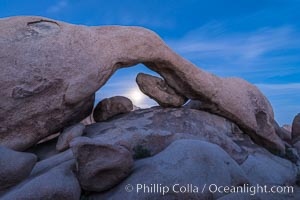
Full Moon Rising under Arch Rock, Joshua Tree National Park.
Location: Joshua Tree National Park, California
Image ID: 30710
Location: Joshua Tree National Park, California
Image ID: 30710
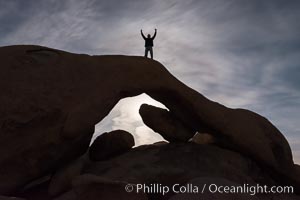
Triumphant Guy Atop Arch Rock in Full Moon.
Location: Joshua Tree National Park, California
Image ID: 30712
Location: Joshua Tree National Park, California
Image ID: 30712
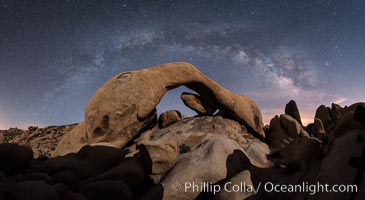
Milky Way during Full Lunar Eclipse over Arch Rock, Joshua Tree National Park, April 4 2015.
Location: Joshua Tree National Park, California
Image ID: 30715
Panorama dimensions: 7031 x 10580
Location: Joshua Tree National Park, California
Image ID: 30715
Panorama dimensions: 7031 x 10580
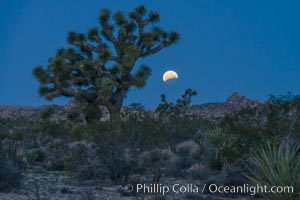
Lunar Eclipse Setting over Joshua Tree National Park, April 4 2015.
Location: Joshua Tree National Park, California
Image ID: 30719
Location: Joshua Tree National Park, California
Image ID: 30719
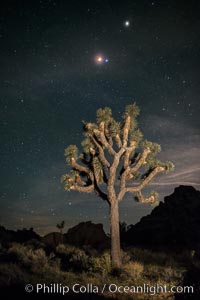
Full lunar eclipse, blood red moon, with blue star Spica (right of moon) and planet Mars (top right), over Joshua Tree National Park, April 14/15, 2014.
Location: Joshua Tree National Park, California
Image ID: 29205
Location: Joshua Tree National Park, California
Image ID: 29205
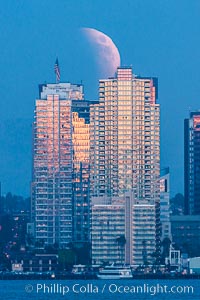
Supermoon Eclipse at Moonrise over San Diego, September 27 2015.
Image ID: 31870
Image ID: 31870
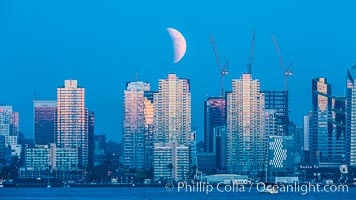
Supermoon Eclipse at Moonrise over San Diego, September 27 2015.
Image ID: 31872
Image ID: 31872
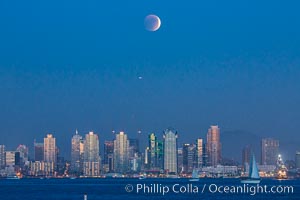
Supermoon Eclipse at Moonrise over San Diego, September 27 2015.
Image ID: 31873
Image ID: 31873
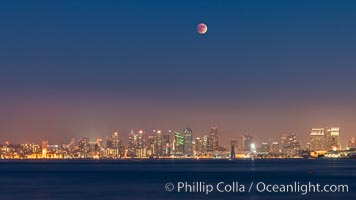
Supermoon Eclipse at Moonrise over San Diego, September 27 2015.
Image ID: 31874
Image ID: 31874
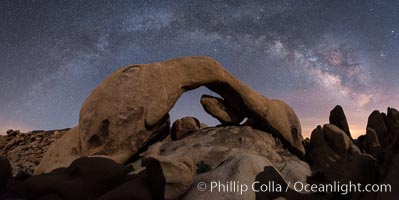
Milky Way during Full Lunar Eclipse over Arch Rock, Joshua Tree National Park, April 4 2015.
Location: Joshua Tree National Park, California
Image ID: 30716
Panorama dimensions: 7569 x 16828
Location: Joshua Tree National Park, California
Image ID: 30716
Panorama dimensions: 7569 x 16828