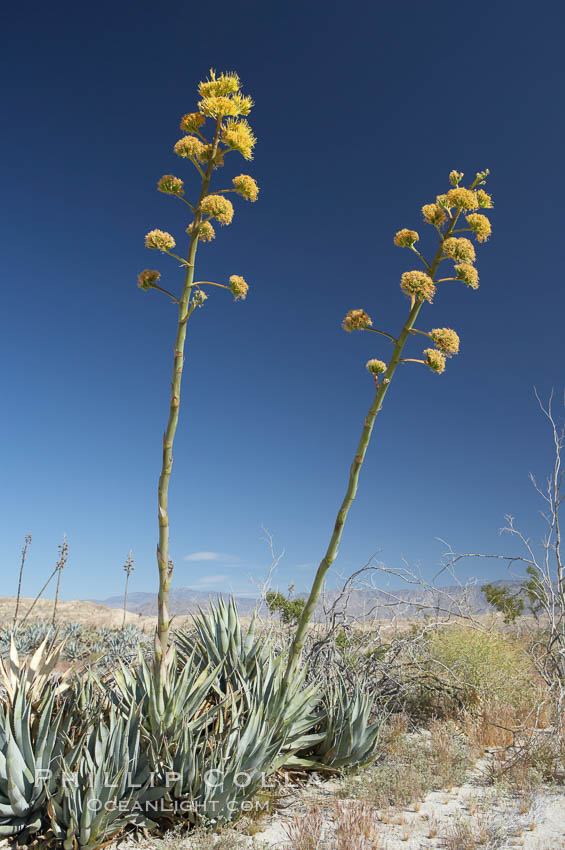
Desert Agave Photo, Agave deserti


Desert agave, also known as the Century Plant, blooms in spring in Anza-Borrego Desert State Park. Desert agave is the only agave species to be found on the rocky slopes and flats bordering the Coachella Valley. It occurs over a wide range of elevations from 500 to over 4,000.  It is called century plant in reference to the amount of time it takes it to bloom. This can be anywhere from 5 to 20 years. They send up towering flower stalks that can approach 15 feet in height. Sending up this tremendous display attracts a variety of pollinators including bats, hummingbirds, bees, moths and other insects and nectar-eating birds., Agave deserti, natural history stock photograph, photo id 11550 Purchase A Print Of This ImageHow to request, purchase or license this imageAdd To Light TableClick To View This Photo At Its Location in Google Earth.  You must have Google Earth installed for this feature to work correctly.Click To View This Photo At Its Location in Google Maps.Click To View This Photo At Its Location in Live Search Maps.


More Agave deserti:

Desert agave, also known as the Century Plant, blooms in spring in Anza-Borrego Desert State Park. Desert agave is the only agave species to be found on the rocky slopes and flats bordering the Coachella Valley. It occurs over a wide range of elevations from 500 to over 4,000.  It is called century plant in reference to the amount of time it takes it to bloom. This can be anywhere from 5 to 20 years. They send up towering flower stalks that can approach 15 feet in height. Sending up this tremendous display attracts a variety of pollinators including bats, hummingbirds, bees, moths and other insects and nectar-eating birds. Image #11551
Desert agave, brittlebush and various cacti and wildflowers color the sides of Glorietta Canyon.  Heavy winter rains led to a historic springtime bloom in 2005, carpeting the entire desert in vegetation and color for months. Anza-Borrego Desert State Park, Anza Borrego, California, USA. Image #10900
Desert agave, brittlebush and various cacti and wildflowers color the sides of Glorietta Canyon.  Heavy winter rains led to a historic springtime bloom in 2005, carpeting the entire desert in vegetation and color for months. Anza-Borrego Desert State Park, Anza Borrego, California, USA. Image #10901
Desert agave, brittlebush, ocotillo and various cacti and wildflowers color the sides of Glorietta Canyon.  Heavy winter rains led to a historic springtime bloom in 2005, carpeting the entire desert in vegetation and color for months. Anza-Borrego Desert State Park, Anza Borrego, California, USA. Image #10920
Desert agave, brittlebush, ocotillo and various cacti and wildflowers color the sides of Glorietta Canyon.  Heavy winter rains led to a historic springtime bloom in 2005, carpeting the entire desert in vegetation and color for months. Anza-Borrego Desert State Park, Anza Borrego, California, USA. Image #10921
Desert agave, also known as the Century Plant, blooms in spring in Anza-Borrego Desert State Park. Desert agave is the only agave species to be found on the rocky slopes and flats bordering the Coachella Valley. It occurs over a wide range of elevations from 500 to over 4,000.  It is called century plant in reference to the amount of time it takes it to bloom. This can be anywhere from 5 to 20 years. They send up towering flower stalks that can approach 15 feet in height. Sending up this tremendous display attracts a variety of pollinators including bats, hummingbirds, bees, moths and other insects and nectar-eating birds. Image #11552
Desert agave, also known as the Century Plant, blooms in spring in Anza-Borrego Desert State Park. Desert agave is the only agave species to be found on the rocky slopes and flats bordering the Coachella Valley. It occurs over a wide range of elevations from 500 to over 4,000.  It is called century plant in reference to the amount of time it takes it to bloom. This can be anywhere from 5 to 20 years. They send up towering flower stalks that can approach 15 feet in height. Sending up this tremendous display attracts a variety of pollinators including bats, hummingbirds, bees, moths and other insects and nectar-eating birds. Image #11553
Desert agave, also known as the Century Plant, blooms in spring in Anza-Borrego Desert State Park. Desert agave is the only agave species to be found on the rocky slopes and flats bordering the Coachella Valley. It occurs over a wide range of elevations from 500 to over 4,000.  It is called century plant in reference to the amount of time it takes it to bloom. This can be anywhere from 5 to 20 years. They send up towering flower stalks that can approach 15 feet in height. Sending up this tremendous display attracts a variety of pollinators including bats, hummingbirds, bees, moths and other insects and nectar-eating birds. Image #11554
Desert agave, also known as the Century Plant, blooms in spring in Anza-Borrego Desert State Park. Desert agave is the only agave species to be found on the rocky slopes and flats bordering the Coachella Valley. It occurs over a wide range of elevations from 500 to over 4,000.  It is called century plant in reference to the amount of time it takes it to bloom. This can be anywhere from 5 to 20 years. They send up towering flower stalks that can approach 15 feet in height. Sending up this tremendous display attracts a variety of pollinators including bats, hummingbirds, bees, moths and other insects and nectar-eating birds. Image #11555
Desert agave, also known as the Century Plant, blooms in spring in Anza-Borrego Desert State Park. Desert agave is the only agave species to be found on the rocky slopes and flats bordering the Coachella Valley. It occurs over a wide range of elevations from 500 to over 4,000.  It is called century plant in reference to the amount of time it takes it to bloom. This can be anywhere from 5 to 20 years. They send up towering flower stalks that can approach 15 feet in height. Sending up this tremendous display attracts a variety of pollinators including bats, hummingbirds, bees, moths and other insects and nectar-eating birds. Image #11556

Desert agave, also known as the Century Plant, blooms in spring in Anza-Borrego Desert State Park. Desert agave is the only agave species to be found on the rocky slopes and flats bordering the Coachella Valley. It occurs over a wide range of elevations from 500 to over 4,000. It is called century plant in reference to the amount of time it takes it to bloom. This can be anywhere from 5 to 20 years. They send up towering flower stalks that can approach 15 feet in height. Sending up this tremendous display attracts a variety of pollinators including bats, hummingbirds, bees, moths and other insects and nectar-eating birds.

Stock Photo: 11550  -?- 
Species: Desert agave, Agave deserti
Lat/Long: 33° 9' 54.35"N, 116° 15' 10.63"W (Coordinates: 33.16510°, -116.25295°)
Format: Digital 2:3
Other Names: Century plant
Copyright © Phillip Colla, all rights reserved worldwide.
Purchase a print of this image
Request a review copy of this image

Keywords: agave deserti, anza borrego, anza borrego desert state park, california, century plant, desert, desert agave, desert wildflower, landscape, nature, outdoors, outside, plant, scene, scenic, state parks, usa, wildflower

Categories:

Click To View This Photo At Its Location in Google Earth.  You must have Google Earth installed for this feature to work correctly. View this photo at its location in Google Earth!


Home   >   Natural History Photography Blog   >   Search   >   
This professional quality stock photo can be licensed in high resolution form by contacting the photographer: Phillip Colla, photos@oceanlight.com, (760) 707-7153 , more info and photographer bio.

If you are a student and this photo is helpful to you, you may use a printed copy of the photo as it appears on this page in your report provided you create a web link to this website. See the note to visitors for more information.

Close this Window
[50.16.166.175] : 4 image views

About color management and monitor adjustment.

Updated: June 18, 2013

     photos@oceanlight.com   (760) 707-7153