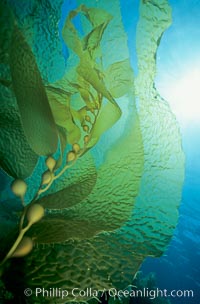
Kelp frond showing pneumatocysts.
Species: Giant kelp, Macrocystis pyrifera
Location: San Clemente Island, California
Image ID: 00627
Species: Giant kelp, Macrocystis pyrifera
Location: San Clemente Island, California
Image ID: 00627
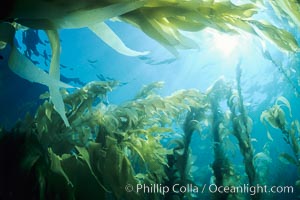
A kelp forest, with sunbeams passing through kelp fronds. Giant kelp, the fastest growing plant on Earth, reaches from the rocky bottom to the ocean's surface like a submarine forest.
Species: Giant kelp, Macrocystis pyrifera
Location: San Clemente Island, California
Image ID: 02411
Species: Giant kelp, Macrocystis pyrifera
Location: San Clemente Island, California
Image ID: 02411
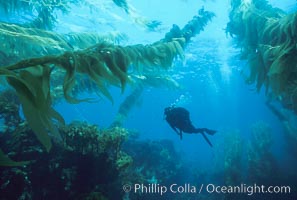
A SCUBA diver swims through a giant kelp forest which is tilted back by strong ocean currents. Giant kelp, the fastest plant on Earth, reaches from the rocky bottom to the ocean's surface like a submarine forest.
Species: Giant kelp, Macrocystis pyrifera
Location: San Clemente Island, California
Image ID: 01107
Species: Giant kelp, Macrocystis pyrifera
Location: San Clemente Island, California
Image ID: 01107
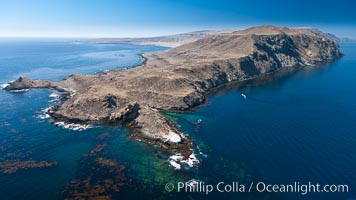
San Clemente Island Pyramid Head, the distinctive pyramid shaped southern end of the island. San Clemente Island Pyramid Head, showing geologic terracing, underwater reefs and giant kelp forests.
Location: San Clemente Island, California
Image ID: 26003
Location: San Clemente Island, California
Image ID: 26003
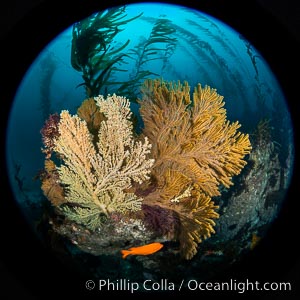
Parasitic zoanthid anemones cover, encrust and overwhelm a golden gorgonian. The gorgonian on the left has been completely parasitized by zoanthid anemones, while the gorgonian to the right remains free of zoanthids (for now). A garibaldi swims below the two sea fans. The golden gorgonian is a filter-feeding temperate colonial species that lives on the rocky bottom at depths between 50 to 200 feet deep. Each individual polyp is a distinct animal, together they secrete calcium that forms the structure of the colony. Gorgonians are oriented at right angles to prevailing water currents to capture plankton drifting by.
Species: California Golden Gorgonian, Luminescent Parazoanthid, Zoanthid Anemone, Giant Kelp, Garibaldi, Muricea californica, Parazoanthus lucificum, Savalia lucifica, Macrocystis pyrifera, Hypsypops rubicundus
Location: San Clemente Island, California
Image ID: 38493
Species: California Golden Gorgonian, Luminescent Parazoanthid, Zoanthid Anemone, Giant Kelp, Garibaldi, Muricea californica, Parazoanthus lucificum, Savalia lucifica, Macrocystis pyrifera, Hypsypops rubicundus
Location: San Clemente Island, California
Image ID: 38493
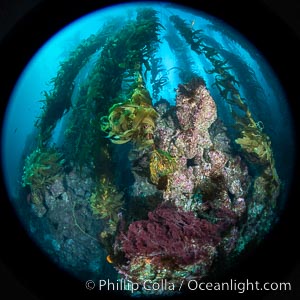
The Kelp Forest and Rocky Reef of San Clemente Island. Giant kelp grows rapidly, up to 2' per day, from the rocky reef on the ocean bottom to which it is anchored, toward the ocean surface where it spreads to form a thick canopy. Myriad species of fishes, mammals and invertebrates form a rich community in the kelp forest. Lush forests of kelp are found throughout California's Southern Channel Islands.
Species: Giant kelp, Macrocystis pyrifera
Location: San Clemente Island, California
Image ID: 38494
Species: Giant kelp, Macrocystis pyrifera
Location: San Clemente Island, California
Image ID: 38494
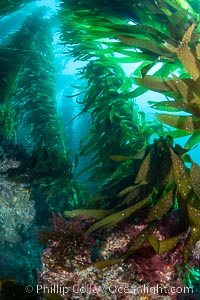
The Kelp Forest and Rocky Reef of San Clemente Island. Giant kelp grows rapidly, up to 2' per day, from the rocky reef on the ocean bottom to which it is anchored, toward the ocean surface where it spreads to form a thick canopy. Myriad species of fishes, mammals and invertebrates form a rich community in the kelp forest. Lush forests of kelp are found throughout California's Southern Channel Islands.
Species: Giant kelp, Macrocystis pyrifera
Location: San Clemente Island, California
Image ID: 38495
Species: Giant kelp, Macrocystis pyrifera
Location: San Clemente Island, California
Image ID: 38495
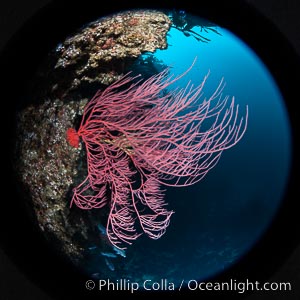
Red gorgonian on rocky reef, below kelp forest, underwater. The red gorgonian is a filter-feeding temperate colonial species that lives on the rocky bottom at depths between 50 to 200 feet deep. Gorgonians are typically oriented at right angles to prevailing water currents to capture plankton drifting by.
Species: Red gorgonian, Leptogorgia chilensis, Lophogorgia chilensis
Location: San Clemente Island, California
Image ID: 38496
Species: Red gorgonian, Leptogorgia chilensis, Lophogorgia chilensis
Location: San Clemente Island, California
Image ID: 38496
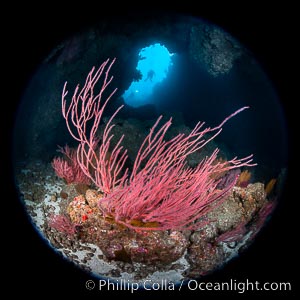
Red Gorgonians form a lush colorful garden below a submarine arch, while two scuba divers pass through the opening to the cavern.
Species: Red gorgonian, Leptogorgia chilensis, Lophogorgia chilensis
Location: San Clemente Island, California
Image ID: 38497
Species: Red gorgonian, Leptogorgia chilensis, Lophogorgia chilensis
Location: San Clemente Island, California
Image ID: 38497
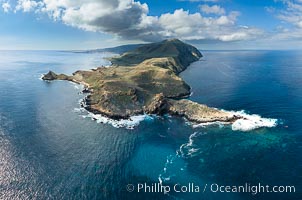
San Clemente Island aerial photo, Pyramid Head and Balanced Rock (China Hat) at the southern end of the island. San Clemente Island Pyramid Head, the distinctive pyramid shaped southern end of the island, exhibits distinctive geologic terracing, underwater reefs and giant kelp forests.
Location: San Clemente Island, California
Image ID: 38483
Location: San Clemente Island, California
Image ID: 38483
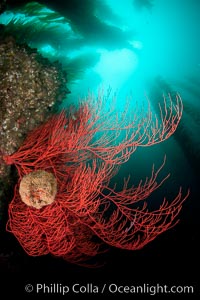
Bryozoan grows on a red gorgonian on rocky reef, below kelp forest, underwater. The red gorgonian is a filter-feeding temperate colonial species that lives on the rocky bottom at depths between 50 to 200 feet deep. Gorgonians are oriented at right angles to prevailing water currents to capture plankton drifting by.
Species: Red gorgonian, Leptogorgia chilensis, Lophogorgia chilensis
Location: San Clemente Island, California
Image ID: 25395
Species: Red gorgonian, Leptogorgia chilensis, Lophogorgia chilensis
Location: San Clemente Island, California
Image ID: 25395
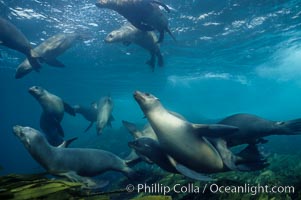
California sea lions swim and socialize over a kelp-covered rocky reef, underwater at San Clemente Island in California's southern Channel Islands.
Species: California sea lion, Zalophus californianus
Location: San Clemente Island, California
Image ID: 02158
Species: California sea lion, Zalophus californianus
Location: San Clemente Island, California
Image ID: 02158
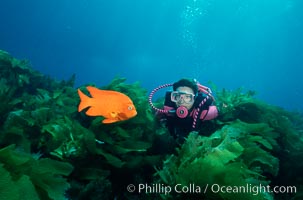
A SCUBA diver swimming over a rocky reef covered with kelp, watches a brightly colored orange garibaldi fish.
Species: Garibaldi, Hypsypops rubicundus
Location: San Clemente Island, California
Image ID: 01113
Species: Garibaldi, Hypsypops rubicundus
Location: San Clemente Island, California
Image ID: 01113
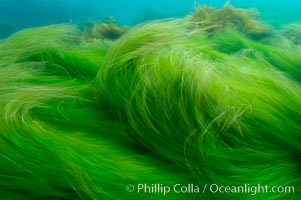
Surf grass on the rocky reef -- appearing blurred in this time exposure -- is tossed back and forth by powerful ocean waves passing by above. San Clemente Island.
Species: Surfgrass, Phyllospadix
Location: San Clemente Island, California
Image ID: 10237
Species: Surfgrass, Phyllospadix
Location: San Clemente Island, California
Image ID: 10237
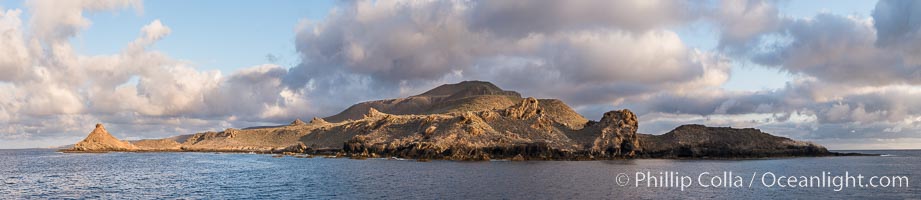
Sunrise at San Clemente Island, south end showing China Hat (Balanced Rock) and Pyramid Head, near Pyramid Cove, storm clouds. Panoramic photo.
Location: San Clemente Island, California
Image ID: 30855
Panorama dimensions: 5232 x 24109
Location: San Clemente Island, California
Image ID: 30855
Panorama dimensions: 5232 x 24109
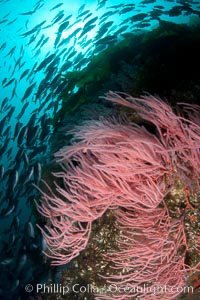
Red gorgonian on rocky reef, below kelp forest, underwater. The red gorgonian is a filter-feeding temperate colonial species that lives on the rocky bottom at depths between 50 to 200 feet deep. Gorgonians are oriented at right angles to prevailing water currents to capture plankton drifting by.
Species: Red gorgonian, Leptogorgia chilensis, Lophogorgia chilensis
Location: San Clemente Island, California
Image ID: 25393
Species: Red gorgonian, Leptogorgia chilensis, Lophogorgia chilensis
Location: San Clemente Island, California
Image ID: 25393
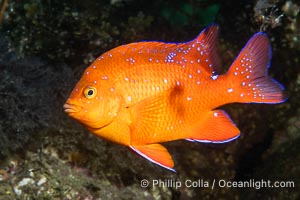
Juvenile garibaldi, vibrant spots distinguish it from pure orange adult form.
Species: Garibaldi, Hypsypops rubicundus
Location: Catalina Island, California
Image ID: 40527
Species: Garibaldi, Hypsypops rubicundus
Location: Catalina Island, California
Image ID: 40527
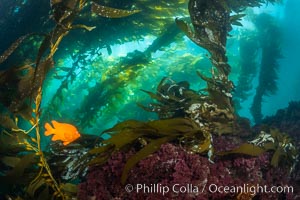
Garibaldi swims in the kelp forest, sunlight filters through towering giant kelp plants rising from the ocean bottom to the surface, underwater.
Species: Garibaldi, Hypsypops rubicundus
Location: San Clemente Island, California
Image ID: 37091
Species: Garibaldi, Hypsypops rubicundus
Location: San Clemente Island, California
Image ID: 37091
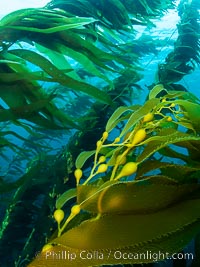
Kelp fronds showing pneumatocysts, bouyant gas-filled bubble-like structures which float the kelp plant off the ocean bottom toward the surface, where it will spread to form a roof-like canopy.
Species: Giant kelp, Macrocystis pyrifera
Location: San Clemente Island, California
Image ID: 38498
Species: Giant kelp, Macrocystis pyrifera
Location: San Clemente Island, California
Image ID: 38498
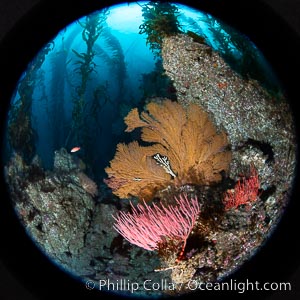
Red gorgonian and California golden gorgonian on underwater rocky reef, San Clemente Island. The golden gorgonian is a filter-feeding temperate colonial species that lives on the rocky bottom at depths between 50 to 200 feet deep. Each individual polyp is a distinct animal, together they secrete calcium that forms the structure of the colony. Gorgonians are oriented at right angles to prevailing water currents to capture plankton drifting by.
Species: Red Gorgonian, California Golden Gorgonian, Garibaldi, Leptogorgia chilensis, Lophogorgia chilensis, Muricea californica, Hypsypops rubicundus
Location: San Clemente Island, California
Image ID: 38499
Species: Red Gorgonian, California Golden Gorgonian, Garibaldi, Leptogorgia chilensis, Lophogorgia chilensis, Muricea californica, Hypsypops rubicundus
Location: San Clemente Island, California
Image ID: 38499

Sunset at San Clemente Island, south end showing Pyramid Head. Panoramic photo.
Location: San Clemente Island, California
Image ID: 38500
Panorama dimensions: 4489 x 35871
Location: San Clemente Island, California
Image ID: 38500
Panorama dimensions: 4489 x 35871
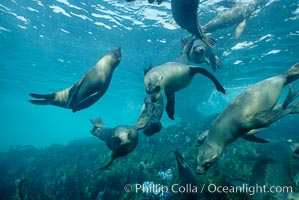
California sea lions swim and socialize over a kelp-covered rocky reef, underwater at San Clemente Island in California's southern Channel Islands.
Species: California sea lion, Zalophus californianus
Location: San Clemente Island, California
Image ID: 02031
Species: California sea lion, Zalophus californianus
Location: San Clemente Island, California
Image ID: 02031
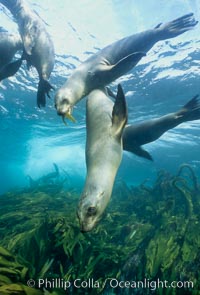
California sea lions swim and socialize over a kelp-covered rocky reef, underwater at San Clemente Island in California's southern Channel Islands.
Species: California sea lion, Zalophus californianus
Location: San Clemente Island, California
Image ID: 02159
Species: California sea lion, Zalophus californianus
Location: San Clemente Island, California
Image ID: 02159
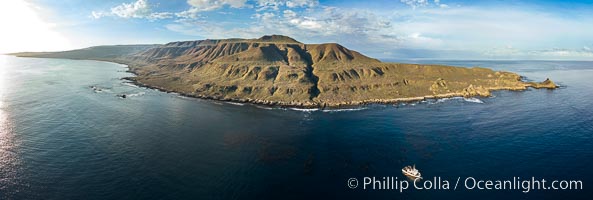
San Clemente Island aerial photo, Pyramid Head and Balanced Rock at the southern end of the island. San Clemente Island Pyramid Head, the distinctive pyramid shaped southern end of the island, exhibits distinctive geologic terracing, underwater reefs and giant kelp forests.
Location: San Clemente Island, California
Image ID: 38485
Panorama dimensions: 4232 x 12542
Location: San Clemente Island, California
Image ID: 38485
Panorama dimensions: 4232 x 12542
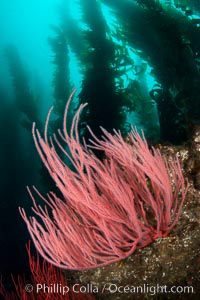
Red gorgonian on rocky reef, below kelp forest, underwater. The red gorgonian is a filter-feeding temperate colonial species that lives on the rocky bottom at depths between 50 to 200 feet deep. Gorgonians are oriented at right angles to prevailing water currents to capture plankton drifting by.
Species: Red gorgonian, Leptogorgia chilensis, Lophogorgia chilensis
Location: San Clemente Island, California
Image ID: 25394
Species: Red gorgonian, Leptogorgia chilensis, Lophogorgia chilensis
Location: San Clemente Island, California
Image ID: 25394
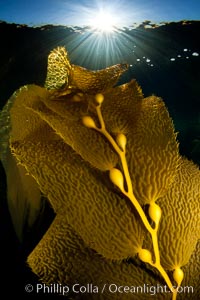
Kelp fronds and pneumatocysts. Pneumatocysts, gas-filled bladders, float the kelp plant off the ocean bottom toward the surface and sunlight, where the leaf-like blades and stipes of the kelp plant grow fastest. Giant kelp can grow up to 2' in a single day given optimal conditions. Epic submarine forests of kelp grow throughout California's Southern Channel Islands.
Species: Giant kelp, Macrocystis pyrifera
Location: San Clemente Island, California
Image ID: 25396
Species: Giant kelp, Macrocystis pyrifera
Location: San Clemente Island, California
Image ID: 25396
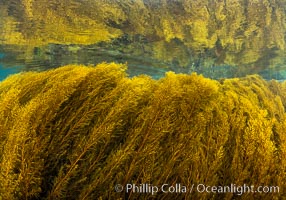
Stephanocystis dioica kelp algae on a shallow rocky reef, reflected underneath the surface of the ocean.
Species: Stephanocystis dioica
Location: San Clemente Island, California
Image ID: 37063
Species: Stephanocystis dioica
Location: San Clemente Island, California
Image ID: 37063
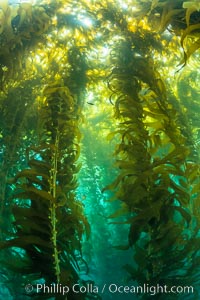
Sunlight glows throughout a giant kelp forest. Giant kelp, the fastest growing plant on Earth, reaches from the rocky reef to the ocean's surface like a submarine forest.
Species: Giant kelp, Macrocystis pyrifera
Location: San Clemente Island, California
Image ID: 37086
Species: Giant kelp, Macrocystis pyrifera
Location: San Clemente Island, California
Image ID: 37086
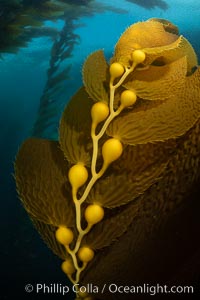
Kelp fronds and pneumatocysts. Pneumatocysts, gas-filled bladders, float the kelp plant off the ocean bottom toward the surface and sunlight, where the leaf-like blades and stipes of the kelp plant grow fastest. Giant kelp can grow up to 2' in a single day given optimal conditions. Epic submarine forests of kelp grow throughout California's Southern Channel Islands.
Species: Giant kelp, Macrocystis pyrifera
Location: San Clemente Island, California
Image ID: 37100
Species: Giant kelp, Macrocystis pyrifera
Location: San Clemente Island, California
Image ID: 37100
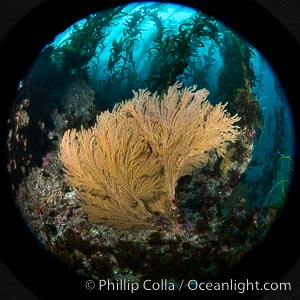
Garibaldi and California golden gorgonian on underwater rocky reef, San Clemente Island. The golden gorgonian is a filter-feeding temperate colonial species that lives on the rocky bottom at depths between 50 to 200 feet deep. Each individual polyp is a distinct animal, together they secrete calcium that forms the structure of the colony. Gorgonians are oriented at right angles to prevailing water currents to capture plankton drifting by.
Species: California Golden Gorgonian, Giant Kelp, Garibaldi, Muricea californica, Macrocystis pyrifera, Hypsypops rubicundus
Location: San Clemente Island, California
Image ID: 38501
Species: California Golden Gorgonian, Giant Kelp, Garibaldi, Muricea californica, Macrocystis pyrifera, Hypsypops rubicundus
Location: San Clemente Island, California
Image ID: 38501