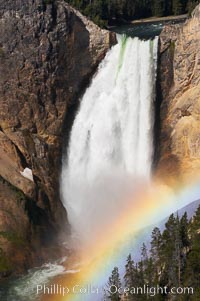
A rainbow appears in the mist of the Lower Falls of the Yellowstone River. At 308 feet, the Lower Falls of the Yellowstone River is the tallest fall in the park. This view is from Lookout Point on the North side of the Grand Canyon of the Yellowstone. When conditions are perfect in midsummer, a midmorning rainbow briefly appears in the falls.
Location: Grand Canyon of the Yellowstone, Yellowstone National Park, Wyoming
Image ID: 13319
Location: Grand Canyon of the Yellowstone, Yellowstone National Park, Wyoming
Image ID: 13319
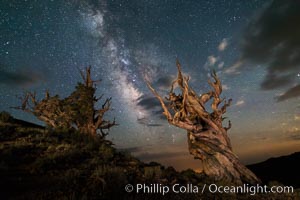
Stars and the Milky Way over ancient bristlecone pine trees, in the White Mountains at an elevation of 10,000' above sea level. These are some of the oldest trees in the world, some exceeding 4000 years in age.
Species: Bristlecone pine, Pinus longaeva
Location: Ancient Bristlecone Pine Forest, White Mountains, Inyo National Forest, California
Image ID: 29407
Species: Bristlecone pine, Pinus longaeva
Location: Ancient Bristlecone Pine Forest, White Mountains, Inyo National Forest, California
Image ID: 29407
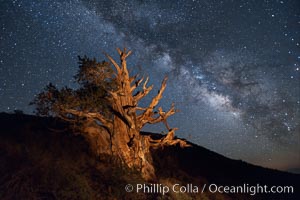
Stars and the Milky Way rise above ancient bristlecone pine trees, in the White Mountains at an elevation of 10,000' above sea level. These are some of the oldest trees in the world, reaching 4000 years in age.
Species: Bristlecone pine, Pinus longaeva
Location: Ancient Bristlecone Pine Forest, White Mountains, Inyo National Forest, California
Image ID: 27772
Species: Bristlecone pine, Pinus longaeva
Location: Ancient Bristlecone Pine Forest, White Mountains, Inyo National Forest, California
Image ID: 27772
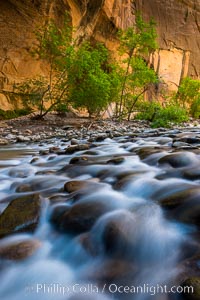
The Virgin River Narrows, where the Virgin River has carved deep, narrow canyons through the Zion National Park sandstone, creating one of the finest hikes in the world.
Location: Virgin River Narrows, Zion National Park, Utah
Image ID: 28575
Location: Virgin River Narrows, Zion National Park, Utah
Image ID: 28575
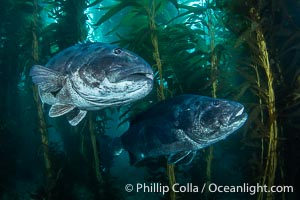
Two Giant Black Sea Bass in a Courtship Posture, in Kelp at Catalina Island. In summer months, black seabass gather in kelp forests in California to form mating aggregations. Courtship behaviors include circling of pairs of giant sea bass, production of booming sounds by presumed males, and nudging of females by males in what is though to be an effort to encourage spawning.
Species: Giant black sea bass, Stereolepis gigas
Location: Catalina Island, California
Image ID: 39432
Species: Giant black sea bass, Stereolepis gigas
Location: Catalina Island, California
Image ID: 39432
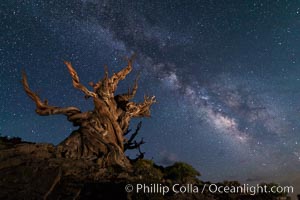
Stars and the Milky Way over ancient bristlecone pine trees, in the White Mountains at an elevation of 10,000' above sea level. These are the oldest trees in the world, some exceeding 4000 years in age.
Species: Bristlecone pine, Pinus longaeva
Location: Ancient Bristlecone Pine Forest, White Mountains, Inyo National Forest, California
Image ID: 29406
Species: Bristlecone pine, Pinus longaeva
Location: Ancient Bristlecone Pine Forest, White Mountains, Inyo National Forest, California
Image ID: 29406
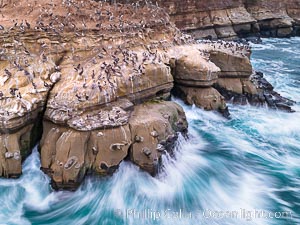
Brown Pelicans on Goldfish Point in La Jolla, time exposure blurs the large waves, aerial photograph. In the summer we used to jump off the cliff (the "Clam") in front of the twin cave entrances seen at middle-right.
Species: Brown Pelican, Pelecanus occidentalis, Pelecanus occidentalis californicus
Location: La Jolla, California
Image ID: 38865
Species: Brown Pelican, Pelecanus occidentalis, Pelecanus occidentalis californicus
Location: La Jolla, California
Image ID: 38865
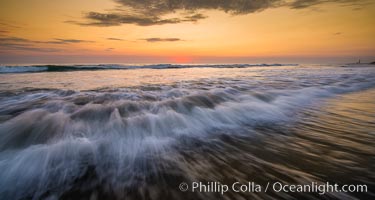
Waves rush in at sunset, Carlsbad beach sunset and ocean waves, seascape, dusk, summer.
Location: Carlsbad, California
Image ID: 27974
Location: Carlsbad, California
Image ID: 27974
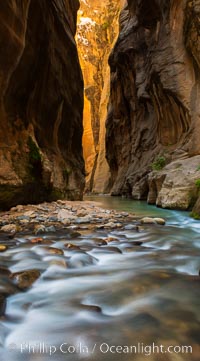
The Virgin River Narrows, where the Virgin River has carved deep, narrow canyons through the Zion National Park sandstone, creating one of the finest hikes in the world.
Location: Virgin River Narrows, Zion National Park, Utah
Image ID: 28583
Location: Virgin River Narrows, Zion National Park, Utah
Image ID: 28583
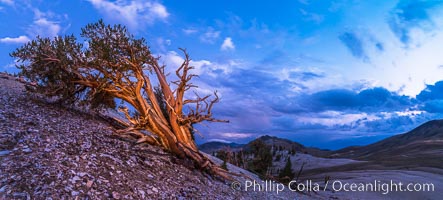
Ancient Bristlecone Pine Tree at sunset, panorama, with storm clouds passing over the White Mountains. The eastern Sierra Nevada is just visible in the distance.
Species: Ancient bristlecone pine, Pinus longaeva
Location: Ancient Bristlecone Pine Forest, White Mountains, Inyo National Forest, California
Image ID: 28781
Panorama dimensions: 4549 x 10085
Species: Ancient bristlecone pine, Pinus longaeva
Location: Ancient Bristlecone Pine Forest, White Mountains, Inyo National Forest, California
Image ID: 28781
Panorama dimensions: 4549 x 10085
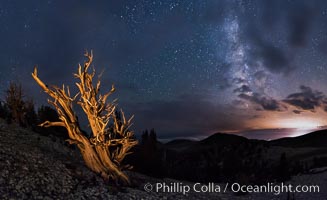
Ancient Bristlecone Pine Tree at night, stars and the Milky Way galaxy visible in the evening sky, near Patriarch Grove.
Species: Ancient bristlecone pine, Pinus longaeva
Location: Ancient Bristlecone Pine Forest, White Mountains, Inyo National Forest, California
Image ID: 28782
Panorama dimensions: 5237 x 8556
Species: Ancient bristlecone pine, Pinus longaeva
Location: Ancient Bristlecone Pine Forest, White Mountains, Inyo National Forest, California
Image ID: 28782
Panorama dimensions: 5237 x 8556
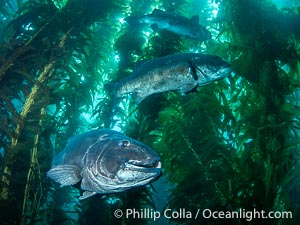
Three Giant Black Sea Bass in a Courtship Posture, Hovering One Above the Other in Kelp at Catalina Island. In summer months, black seabass gather in kelp forests in California to form mating aggregations. Courtship behaviors include circling of pairs of giant sea bass, production of booming sounds by presumed males, and nudging of females by males in what is though to be an effort to encourage spawning.
Species: Giant black sea bass, Stereolepis gigas
Location: Catalina Island, California
Image ID: 39434
Species: Giant black sea bass, Stereolepis gigas
Location: Catalina Island, California
Image ID: 39434
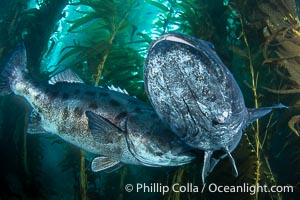
A male giant sea bass nudges a female giant sea bass to encourage spawning as they swim in a tight circle. This courting pair of giant sea bass is deep in the kelp forest at Catalina Island. In summer months, giant sea bass gather in kelp forests in California to form courtship and mating aggregations, eventually leading to spawning.
Species: Giant black sea bass, Stereolepis gigas
Location: Catalina Island, California
Image ID: 39435
Species: Giant black sea bass, Stereolepis gigas
Location: Catalina Island, California
Image ID: 39435
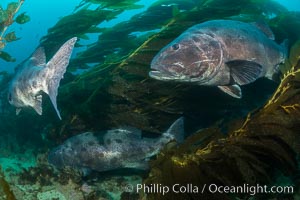
Three giant black sea bass, gathering in a mating/courtship aggregation amid kelp forest at Catalina Island. In summer months, black seabass gather in kelp forests in California to form mating aggregations. Courtship behaviors include circling of pairs of giant sea bass, production of booming sounds by presumed males, and nudging of females by males in what is though to be an effort to encourage spawning.
Species: Giant black sea bass, Stereolepis gigas
Location: Catalina Island, California
Image ID: 33355
Species: Giant black sea bass, Stereolepis gigas
Location: Catalina Island, California
Image ID: 33355
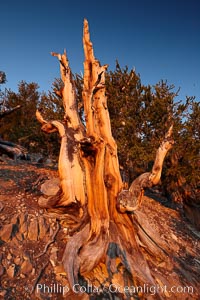
Ancient bristlecone pine tree, rising above the arid, dolomite-rich slopes of the Schulman Grove in the White Mountains at an elevation of 9500 above sea level, along the Methuselah Walk. The oldest bristlecone pines in the world are found in the Schulman Grove, some of them over 4700 years old. Ancient Bristlecone Pine Forest.
Species: Bristlecone pine, Pinus longaeva
Location: White Mountains, Inyo National Forest, California
Image ID: 23233
Species: Bristlecone pine, Pinus longaeva
Location: White Mountains, Inyo National Forest, California
Image ID: 23233
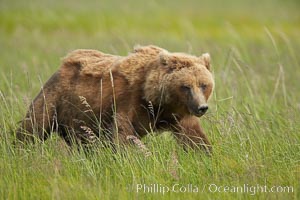
Coastal brown bear in meadow. The tall sedge grasses in this coastal meadow are a food source for brown bears, who may eat 30 lbs of it each day during summer while waiting for their preferred food, salmon, to arrive in the nearby rivers.
Species: Brown bear, Ursus arctos
Location: Lake Clark National Park, Alaska
Image ID: 19138
Species: Brown bear, Ursus arctos
Location: Lake Clark National Park, Alaska
Image ID: 19138
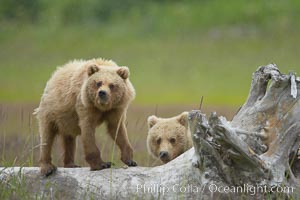
Brown bear cubs. These cubs are one and a half years old and have yet to leave their mother. They will be on their own and have to fend for themselves next summer.
Species: Brown bear, Ursus arctos
Location: Lake Clark National Park, Alaska
Image ID: 19150
Species: Brown bear, Ursus arctos
Location: Lake Clark National Park, Alaska
Image ID: 19150
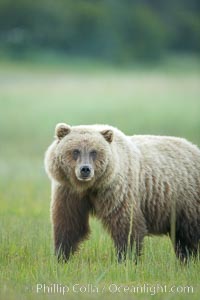
Coastal brown bear in meadow. The tall sedge grasses in this coastal meadow are a food source for brown bears, who may eat 30 lbs of it each day during summer while waiting for their preferred food, salmon, to arrive in the nearby rivers.
Species: Brown bear, Ursus arctos
Location: Lake Clark National Park, Alaska
Image ID: 19155
Species: Brown bear, Ursus arctos
Location: Lake Clark National Park, Alaska
Image ID: 19155
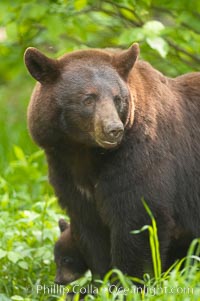
Black bear portrait. American black bears range in color from deepest black to chocolate and cinnamon brown. They prefer forested and meadow environments. This bear still has its thick, full winter coat, which will be shed soon with the approach of summer.
Species: American black bear, Ursus americanus
Location: Orr, Minnesota
Image ID: 18742
Species: American black bear, Ursus americanus
Location: Orr, Minnesota
Image ID: 18742
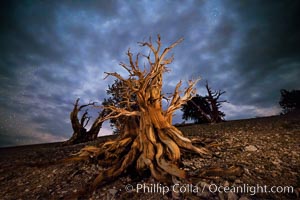
Ancient Bristlecone Pine Tree at night, stars and the Milky Way galaxy visible in the evening sky, near Patriarch Grove.
Species: Ancient bristlecone pine, Pinus longaeva
Location: Ancient Bristlecone Pine Forest, White Mountains, Inyo National Forest, California
Image ID: 28786
Species: Ancient bristlecone pine, Pinus longaeva
Location: Ancient Bristlecone Pine Forest, White Mountains, Inyo National Forest, California
Image ID: 28786
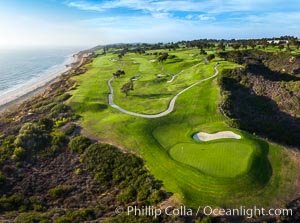
Torrey Pines Golf Course over looking Blacks Beach and the Pacific Ocean, south course, summer, afternoon.
Location: Torrey Pines Golf Course, San Diego, California
Image ID: 38050
Location: Torrey Pines Golf Course, San Diego, California
Image ID: 38050
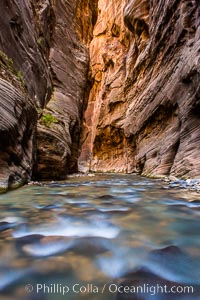
The Virgin River Narrows, where the Virgin River has carved deep, narrow canyons through the Zion National Park sandstone, creating one of the finest hikes in the world.
Location: Virgin River Narrows, Zion National Park, Utah
Image ID: 28578
Location: Virgin River Narrows, Zion National Park, Utah
Image ID: 28578
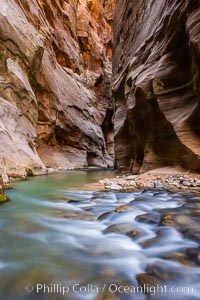
The Virgin River Narrows, where the Virgin River has carved deep, narrow canyons through the Zion National Park sandstone, creating one of the finest hikes in the world.
Location: Virgin River Narrows, Zion National Park, Utah
Image ID: 28579
Location: Virgin River Narrows, Zion National Park, Utah
Image ID: 28579
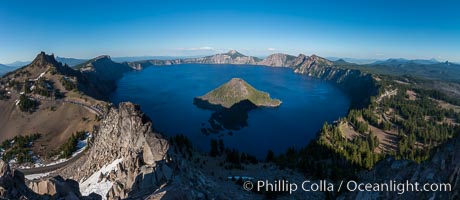
Panorama of Crater Lake from Watchman Lookout Station, panoramic picture. The Watchman Lookout Station No. 168 is one of two fire lookout towers in Crater Lake National Park in southern Oregon. For many years, National Park Service personnel used the lookout to watch for wildfires during the summer months. It is also a popular hiking destination because it offers an excellent view of Crater Lake and the surrounding area.
Location: Crater Lake National Park, Oregon
Image ID: 28633
Panorama dimensions: 4885 x 11229
Location: Crater Lake National Park, Oregon
Image ID: 28633
Panorama dimensions: 4885 x 11229
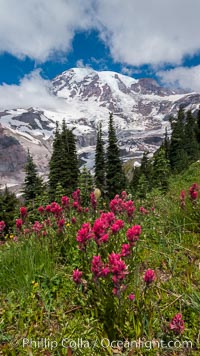
Paradise Meadows, wildflowers and Mount Rainier, summer.
Location: Paradise Meadows, Mount Rainier National Park, Washington
Image ID: 28715
Location: Paradise Meadows, Mount Rainier National Park, Washington
Image ID: 28715
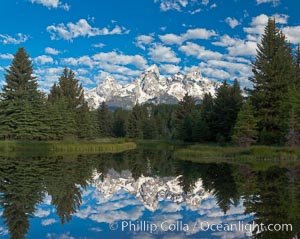
The Grand Tetons, reflected in the glassy waters of the Snake River at Schwabacher Landing, on a beautiful summer morning.
Location: Grand Teton National Park, Wyoming
Image ID: 26923
Panorama dimensions: 5318 x 6689
Location: Grand Teton National Park, Wyoming
Image ID: 26923
Panorama dimensions: 5318 x 6689
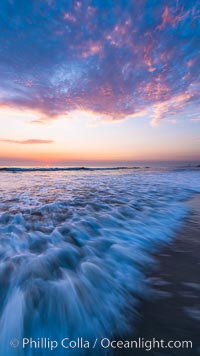
Waves rush in at sunset, Carlsbad beach sunset and ocean waves, seascape, dusk, summer.
Location: Carlsbad, California
Image ID: 27971
Location: Carlsbad, California
Image ID: 27971
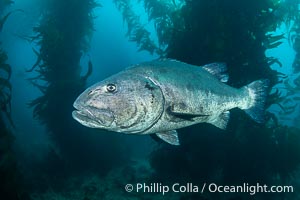
Giant black sea bass in the kelp forest at Catalina Island. An Endangered Giant Sea Bass can reach up to 8 feet in length and 500 pounds, seen here amid the giant kelp forest of Catalina Island. Once nearly fished to extinction and now thought to be at risk of a genetic bottleneck, the giant sea bass is slowly recovering and can be seen in summer months in California's kelp forests.
Species: Giant black sea bass, Stereolepis gigas
Location: Catalina Island, California
Image ID: 39439
Species: Giant black sea bass, Stereolepis gigas
Location: Catalina Island, California
Image ID: 39439
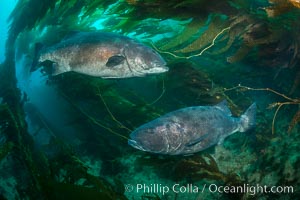
Two giant black sea bass swim in a courtship circle, part of a larger gathering of a mating aggregation amid kelp forest, Catalina Island. In summer months, black seabass gather in kelp forests in California to form mating aggregations. Courtship behaviors include circling of pairs of giant sea bass, production of booming sounds by presumed males, and nudging of females by males in what is though to be an effort to encourage spawning.
Species: Giant black sea bass, Stereolepis gigas
Location: Catalina Island, California
Image ID: 33357
Species: Giant black sea bass, Stereolepis gigas
Location: Catalina Island, California
Image ID: 33357
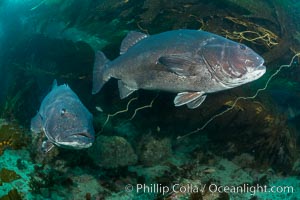
Two Giant black sea bass hover in the kelp forest as a courting pair, part of a larger mating aggregation at Catalina Island. In summer months, giant black seabass gather in kelp forests in California to form mating aggregations leading to spawning. Courtship behaviors include circling of pairs of giant sea bass, production of booming sounds by presumed males, and nudging of females by males in what is though to be an effort to encourage spawning.
Species: Giant black sea bass, Stereolepis gigas
Location: Catalina Island, California
Image ID: 33360
Species: Giant black sea bass, Stereolepis gigas
Location: Catalina Island, California
Image ID: 33360