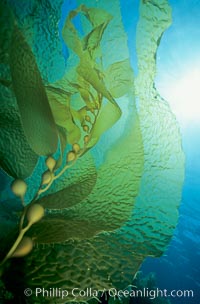
Kelp frond showing pneumatocysts.
Species: Giant kelp, Macrocystis pyrifera
Location: San Clemente Island, California
Image ID: 00627
Species: Giant kelp, Macrocystis pyrifera
Location: San Clemente Island, California
Image ID: 00627
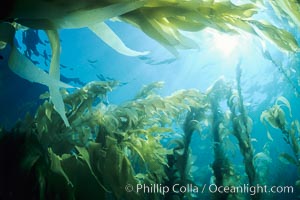
A kelp forest, with sunbeams passing through kelp fronds. Giant kelp, the fastest growing plant on Earth, reaches from the rocky bottom to the ocean's surface like a submarine forest.
Species: Giant kelp, Macrocystis pyrifera
Location: San Clemente Island, California
Image ID: 02411
Species: Giant kelp, Macrocystis pyrifera
Location: San Clemente Island, California
Image ID: 02411
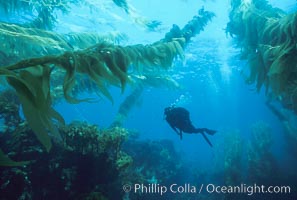
A SCUBA diver swims through a giant kelp forest which is tilted back by strong ocean currents. Giant kelp, the fastest plant on Earth, reaches from the rocky bottom to the ocean's surface like a submarine forest.
Species: Giant kelp, Macrocystis pyrifera
Location: San Clemente Island, California
Image ID: 01107
Species: Giant kelp, Macrocystis pyrifera
Location: San Clemente Island, California
Image ID: 01107
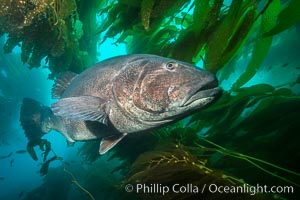
Giant black sea bass, endangered species, reaching up to 8' in length and 500 lbs, amid giant kelp forest.
Species: Giant black sea bass, Stereolepis gigas
Location: Catalina Island, California
Image ID: 33354
Species: Giant black sea bass, Stereolepis gigas
Location: Catalina Island, California
Image ID: 33354
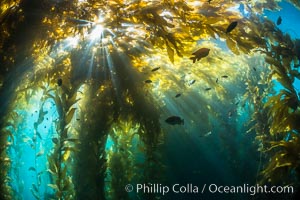
Sunlight streams through giant kelp forest. Giant kelp, the fastest growing plant on Earth, reaches from the rocky reef to the ocean's surface like a submarine forest.
Species: Giant kelp, Macrocystis pyrifera
Location: Catalina Island, California
Image ID: 33433
Species: Giant kelp, Macrocystis pyrifera
Location: Catalina Island, California
Image ID: 33433
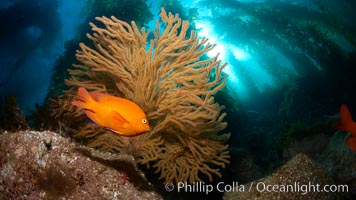
Garibaldi and golden gorgonian, with a underwater forest of giant kelp rising in the background, underwater.
Species: California golden gorgonian, Garibaldi, Hypsypops rubicundus, Muricea californica
Location: Catalina Island, California
Image ID: 23432
Species: California golden gorgonian, Garibaldi, Hypsypops rubicundus, Muricea californica
Location: Catalina Island, California
Image ID: 23432
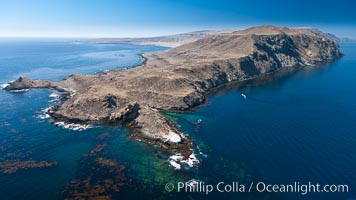
San Clemente Island Pyramid Head, the distinctive pyramid shaped southern end of the island. San Clemente Island Pyramid Head, showing geologic terracing, underwater reefs and giant kelp forests.
Location: San Clemente Island, California
Image ID: 26003
Location: San Clemente Island, California
Image ID: 26003
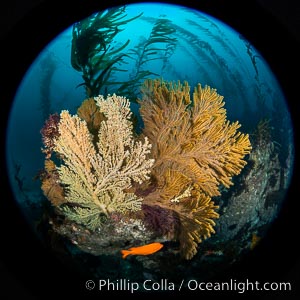
Parasitic zoanthid anemones cover, encrust and overwhelm a golden gorgonian. The gorgonian on the left has been completely parasitized by zoanthid anemones, while the gorgonian to the right remains free of zoanthids (for now). A garibaldi swims below the two sea fans. The golden gorgonian is a filter-feeding temperate colonial species that lives on the rocky bottom at depths between 50 to 200 feet deep. Each individual polyp is a distinct animal, together they secrete calcium that forms the structure of the colony. Gorgonians are oriented at right angles to prevailing water currents to capture plankton drifting by.
Species: California Golden Gorgonian, Luminescent Parazoanthid, Zoanthid Anemone, Giant Kelp, Garibaldi, Muricea californica, Parazoanthus lucificum, Savalia lucifica, Macrocystis pyrifera, Hypsypops rubicundus
Location: San Clemente Island, California
Image ID: 38493
Species: California Golden Gorgonian, Luminescent Parazoanthid, Zoanthid Anemone, Giant Kelp, Garibaldi, Muricea californica, Parazoanthus lucificum, Savalia lucifica, Macrocystis pyrifera, Hypsypops rubicundus
Location: San Clemente Island, California
Image ID: 38493
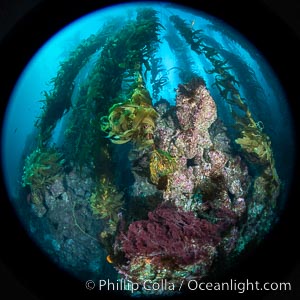
The Kelp Forest and Rocky Reef of San Clemente Island. Giant kelp grows rapidly, up to 2' per day, from the rocky reef on the ocean bottom to which it is anchored, toward the ocean surface where it spreads to form a thick canopy. Myriad species of fishes, mammals and invertebrates form a rich community in the kelp forest. Lush forests of kelp are found throughout California's Southern Channel Islands.
Species: Giant kelp, Macrocystis pyrifera
Location: San Clemente Island, California
Image ID: 38494
Species: Giant kelp, Macrocystis pyrifera
Location: San Clemente Island, California
Image ID: 38494
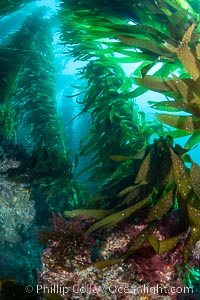
The Kelp Forest and Rocky Reef of San Clemente Island. Giant kelp grows rapidly, up to 2' per day, from the rocky reef on the ocean bottom to which it is anchored, toward the ocean surface where it spreads to form a thick canopy. Myriad species of fishes, mammals and invertebrates form a rich community in the kelp forest. Lush forests of kelp are found throughout California's Southern Channel Islands.
Species: Giant kelp, Macrocystis pyrifera
Location: San Clemente Island, California
Image ID: 38495
Species: Giant kelp, Macrocystis pyrifera
Location: San Clemente Island, California
Image ID: 38495
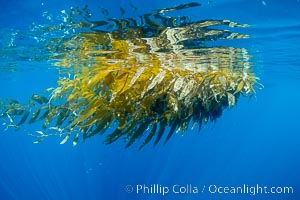
Drift kelp paddy floating on the ocean surface, San Diego.
Species: Giant kelp, Macrocystis pyrifera
Location: San Diego, California
Image ID: 38533
Species: Giant kelp, Macrocystis pyrifera
Location: San Diego, California
Image ID: 38533
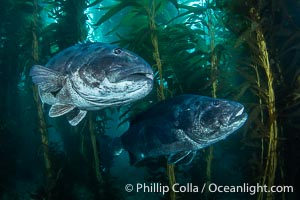
Two Giant Black Sea Bass in a Courtship Posture, in Kelp at Catalina Island. In summer months, black seabass gather in kelp forests in California to form mating aggregations. Courtship behaviors include circling of pairs of giant sea bass, production of booming sounds by presumed males, and nudging of females by males in what is though to be an effort to encourage spawning.
Species: Giant black sea bass, Stereolepis gigas
Location: Catalina Island, California
Image ID: 39432
Species: Giant black sea bass, Stereolepis gigas
Location: Catalina Island, California
Image ID: 39432
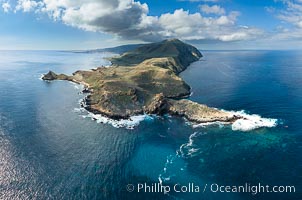
San Clemente Island aerial photo, Pyramid Head and Balanced Rock (China Hat) at the southern end of the island. San Clemente Island Pyramid Head, the distinctive pyramid shaped southern end of the island, exhibits distinctive geologic terracing, underwater reefs and giant kelp forests.
Location: San Clemente Island, California
Image ID: 38483
Location: San Clemente Island, California
Image ID: 38483
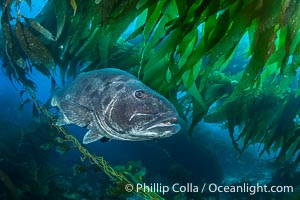
Giant Black Sea Bass with Distinctive Identifying Black Spots that allow researchers to carry out sight/resight studies on the animals distributions and growth. Black sea bass can reach 500 pounds and 8 feet in length.
Species: Giant black sea bass, Stereolepis gigas
Location: Catalina Island, California
Image ID: 39433
Species: Giant black sea bass, Stereolepis gigas
Location: Catalina Island, California
Image ID: 39433
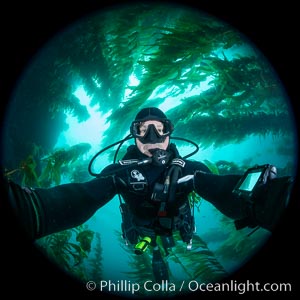
Self portrait in kelp forest, Catalina Island.
Species: Giant kelp, Macrocystis pyrifera
Location: Catalina Island, California
Image ID: 37274
Species: Giant kelp, Macrocystis pyrifera
Location: Catalina Island, California
Image ID: 37274
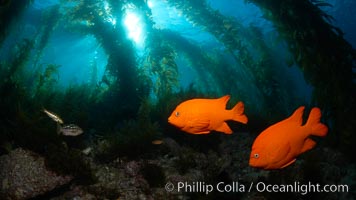
Garibaldi swims in the kelp forest, sunlight filters through towering giant kelp plants rising from the ocean bottom to the surface, underwater.
Species: Garibaldi, Hypsypops rubicundus
Location: Catalina Island, California
Image ID: 23419
Species: Garibaldi, Hypsypops rubicundus
Location: Catalina Island, California
Image ID: 23419
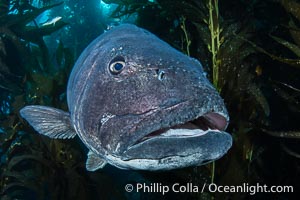
Closeup Portrait of the Face of a Giant Black Sea Bass, showing parasitic sea lice. The sea lice are parasites that find their nutrition from the skin and blood of the host giant sea bass. Smaller fishes such as senoritas and wrasses will commonly clean the sea lice off the giant sea bass.
Species: Giant black sea bass, Stereolepis gigas
Location: Catalina Island, California
Image ID: 39436
Species: Giant black sea bass, Stereolepis gigas
Location: Catalina Island, California
Image ID: 39436
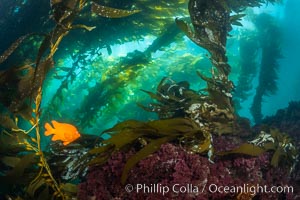
Garibaldi swims in the kelp forest, sunlight filters through towering giant kelp plants rising from the ocean bottom to the surface, underwater.
Species: Garibaldi, Hypsypops rubicundus
Location: San Clemente Island, California
Image ID: 37091
Species: Garibaldi, Hypsypops rubicundus
Location: San Clemente Island, California
Image ID: 37091
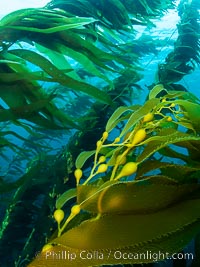
Kelp fronds showing pneumatocysts, bouyant gas-filled bubble-like structures which float the kelp plant off the ocean bottom toward the surface, where it will spread to form a roof-like canopy.
Species: Giant kelp, Macrocystis pyrifera
Location: San Clemente Island, California
Image ID: 38498
Species: Giant kelp, Macrocystis pyrifera
Location: San Clemente Island, California
Image ID: 38498
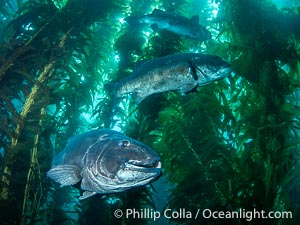
Three Giant Black Sea Bass in a Courtship Posture, Hovering One Above the Other in Kelp at Catalina Island. In summer months, black seabass gather in kelp forests in California to form mating aggregations. Courtship behaviors include circling of pairs of giant sea bass, production of booming sounds by presumed males, and nudging of females by males in what is though to be an effort to encourage spawning.
Species: Giant black sea bass, Stereolepis gigas
Location: Catalina Island, California
Image ID: 39434
Species: Giant black sea bass, Stereolepis gigas
Location: Catalina Island, California
Image ID: 39434
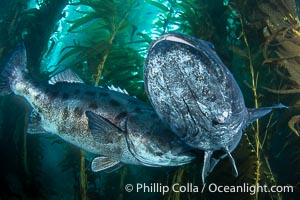
A male giant sea bass nudges a female giant sea bass to encourage spawning as they swim in a tight circle. This courting pair of giant sea bass is deep in the kelp forest at Catalina Island. In summer months, giant sea bass gather in kelp forests in California to form courtship and mating aggregations, eventually leading to spawning.
Species: Giant black sea bass, Stereolepis gigas
Location: Catalina Island, California
Image ID: 39435
Species: Giant black sea bass, Stereolepis gigas
Location: Catalina Island, California
Image ID: 39435
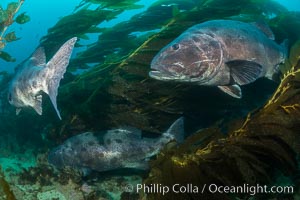
Three giant black sea bass, gathering in a mating/courtship aggregation amid kelp forest at Catalina Island. In summer months, black seabass gather in kelp forests in California to form mating aggregations. Courtship behaviors include circling of pairs of giant sea bass, production of booming sounds by presumed males, and nudging of females by males in what is though to be an effort to encourage spawning.
Species: Giant black sea bass, Stereolepis gigas
Location: Catalina Island, California
Image ID: 33355
Species: Giant black sea bass, Stereolepis gigas
Location: Catalina Island, California
Image ID: 33355
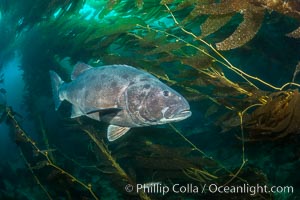
Giant Black Sea Bass with Unique Pattern of Black Spots at Catalina Island. The giant sea bass is an endangered species reaching up to 8' in length and 500 lbs, amid giant kelp forest.
Species: Giant black sea bass, Stereolepis gigas
Location: Catalina Island, California
Image ID: 33356
Species: Giant black sea bass, Stereolepis gigas
Location: Catalina Island, California
Image ID: 33356
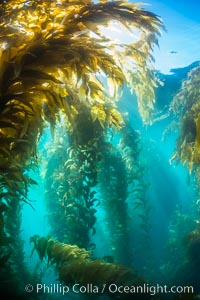
Sunlight streams through giant kelp forest. Giant kelp, the fastest growing plant on Earth, reaches from the rocky reef to the ocean's surface like a submarine forest.
Species: Giant kelp, Macrocystis pyrifera
Location: Catalina Island, California
Image ID: 33434
Species: Giant kelp, Macrocystis pyrifera
Location: Catalina Island, California
Image ID: 33434
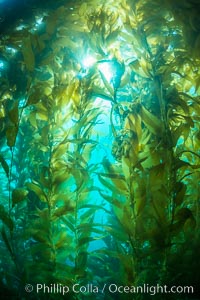
Sunlight streams through giant kelp forest. Giant kelp, the fastest growing plant on Earth, reaches from the rocky reef to the ocean's surface like a submarine forest.
Species: Giant kelp, Macrocystis pyrifera
Location: Catalina Island, California
Image ID: 33435
Species: Giant kelp, Macrocystis pyrifera
Location: Catalina Island, California
Image ID: 33435
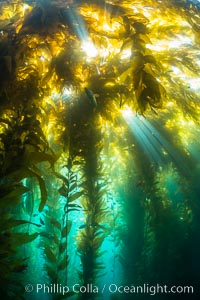
Sunlight streams through giant kelp forest. Giant kelp, the fastest growing plant on Earth, reaches from the rocky reef to the ocean's surface like a submarine forest.
Species: Giant kelp, Macrocystis pyrifera
Location: Catalina Island, California
Image ID: 33436
Species: Giant kelp, Macrocystis pyrifera
Location: Catalina Island, California
Image ID: 33436
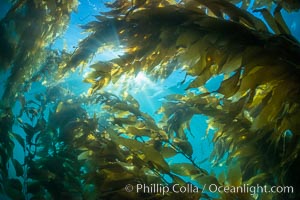
Sunlight streams through giant kelp forest. Giant kelp, the fastest growing plant on Earth, reaches from the rocky reef to the ocean's surface like a submarine forest.
Species: Giant kelp, Macrocystis pyrifera
Location: Catalina Island, California
Image ID: 33437
Species: Giant kelp, Macrocystis pyrifera
Location: Catalina Island, California
Image ID: 33437
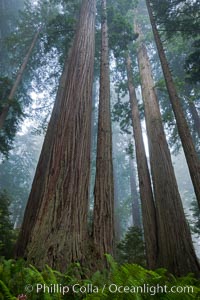
Giant redwood, Lady Bird Johnson Grove, Redwood National Park. The coastal redwood, or simply 'redwood', is the tallest tree on Earth, reaching a height of 379' and living 3500 years or more. It is native to coastal California and the southwestern corner of Oregon within the United States, but most concentrated in Redwood National and State Parks in Northern California, found close to the coast where moisture and soil conditions can support its unique size and growth requirements.
Species: California redwood, Coast redwood, Giant redwood, Sequoia sempervirens
Location: Redwood National Park, California
Image ID: 25795
Species: California redwood, Coast redwood, Giant redwood, Sequoia sempervirens
Location: Redwood National Park, California
Image ID: 25795
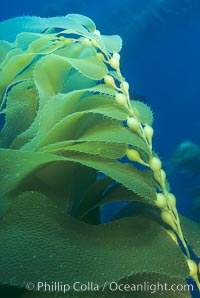
Kelp frond showing pneumatocysts.
Species: Giant kelp, Macrocystis pyrifera
Location: Santa Barbara Island, California
Image ID: 02435
Species: Giant kelp, Macrocystis pyrifera
Location: Santa Barbara Island, California
Image ID: 02435
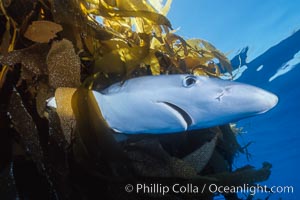
Blue shark and offshore drift kelp paddy, open ocean.
Species: Blue Shark, Giant Kelp, Macrocystis pyrifera, Prionace glauca
Location: San Diego, California
Image ID: 01081
Species: Blue Shark, Giant Kelp, Macrocystis pyrifera, Prionace glauca
Location: San Diego, California
Image ID: 01081