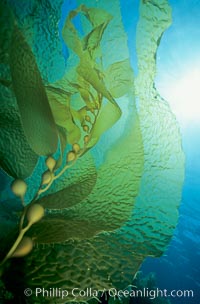
Kelp frond showing pneumatocysts.
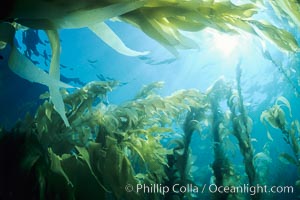
A kelp forest, with sunbeams passing through kelp fronds. Giant kelp, the fastest growing plant on Earth, reaches from the rocky bottom to the ocean's surface like a submarine forest.
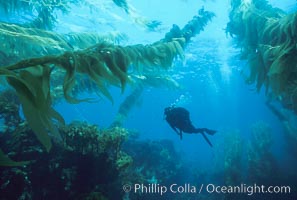
A SCUBA diver swims through a giant kelp forest which is tilted back by strong ocean currents. Giant kelp, the fastest plant on Earth, reaches from the rocky bottom to the ocean's surface like a submarine forest.
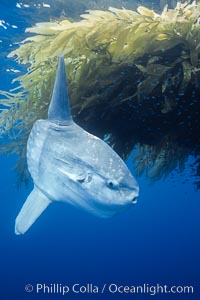
Ocean sunfish recruiting fish near drift kelp to clean parasites, open ocean, Baja California.
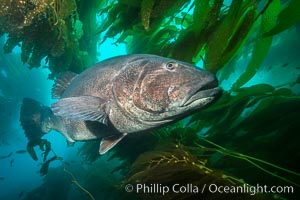
Giant black sea bass, endangered species, reaching up to 8' in length and 500 lbs, amid giant kelp forest.
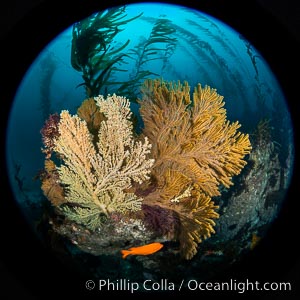
Parasitic zoanthid anemones cover, encrust and overwhelm a golden gorgonian. The gorgonian on the left has been completely parasitized by zoanthid anemones, while the gorgonian to the right remains free of zoanthids (for now). A garibaldi swims below the two sea fans. The golden gorgonian is a filter-feeding temperate colonial species that lives on the rocky bottom at depths between 50 to 200 feet deep. Each individual polyp is a distinct animal, together they secrete calcium that forms the structure of the colony. Gorgonians are oriented at right angles to prevailing water currents to capture plankton drifting by.
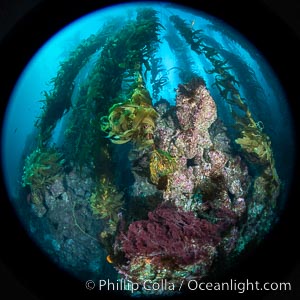
The Kelp Forest and Rocky Reef of San Clemente Island. Giant kelp grows rapidly, up to 2' per day, from the rocky reef on the ocean bottom to which it is anchored, toward the ocean surface where it spreads to form a thick canopy. Myriad species of fishes, mammals and invertebrates form a rich community in the kelp forest. Lush forests of kelp are found throughout California's Southern Channel Islands.
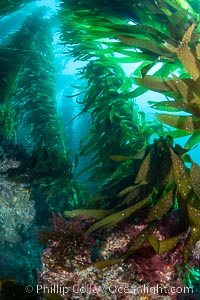
The Kelp Forest and Rocky Reef of San Clemente Island. Giant kelp grows rapidly, up to 2' per day, from the rocky reef on the ocean bottom to which it is anchored, toward the ocean surface where it spreads to form a thick canopy. Myriad species of fishes, mammals and invertebrates form a rich community in the kelp forest. Lush forests of kelp are found throughout California's Southern Channel Islands.
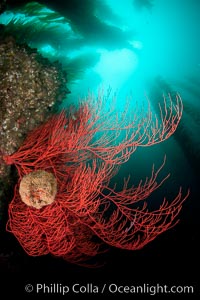
Bryozoan grows on a red gorgonian on rocky reef, below kelp forest, underwater. The red gorgonian is a filter-feeding temperate colonial species that lives on the rocky bottom at depths between 50 to 200 feet deep. Gorgonians are oriented at right angles to prevailing water currents to capture plankton drifting by.
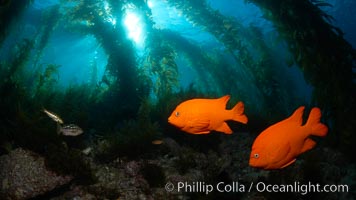
Garibaldi swims in the kelp forest, sunlight filters through towering giant kelp plants rising from the ocean bottom to the surface, underwater.
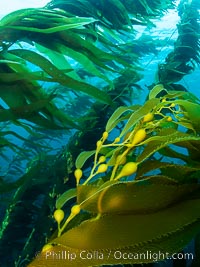
Kelp fronds showing pneumatocysts, bouyant gas-filled bubble-like structures which float the kelp plant off the ocean bottom toward the surface, where it will spread to form a roof-like canopy.
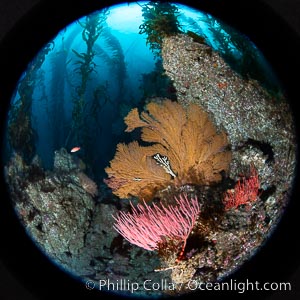
Red gorgonian and California golden gorgonian on underwater rocky reef, San Clemente Island. The golden gorgonian is a filter-feeding temperate colonial species that lives on the rocky bottom at depths between 50 to 200 feet deep. Each individual polyp is a distinct animal, together they secrete calcium that forms the structure of the colony. Gorgonians are oriented at right angles to prevailing water currents to capture plankton drifting by.
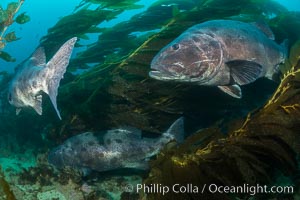
Three giant black sea bass, gathering in a mating/courtship aggregation amid kelp forest at Catalina Island. In summer months, black seabass gather in kelp forests in California to form mating aggregations. Courtship behaviors include circling of pairs of giant sea bass, production of booming sounds by presumed males, and nudging of females by males in what is though to be an effort to encourage spawning.
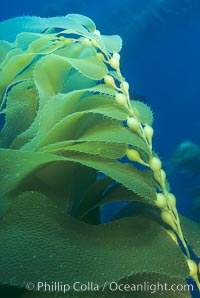
Kelp frond showing pneumatocysts.
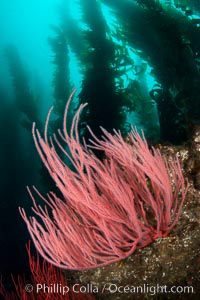
Red gorgonian on rocky reef, below kelp forest, underwater. The red gorgonian is a filter-feeding temperate colonial species that lives on the rocky bottom at depths between 50 to 200 feet deep. Gorgonians are oriented at right angles to prevailing water currents to capture plankton drifting by.
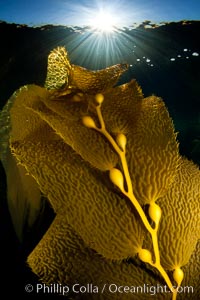
Kelp fronds and pneumatocysts. Pneumatocysts, gas-filled bladders, float the kelp plant off the ocean bottom toward the surface and sunlight, where the leaf-like blades and stipes of the kelp plant grow fastest. Giant kelp can grow up to 2' in a single day given optimal conditions. Epic submarine forests of kelp grow throughout California's Southern Channel Islands.
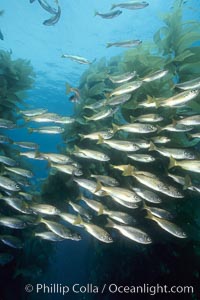
Salema schooling amid kelp forest.
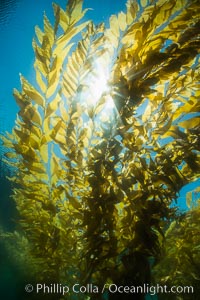
The Kelp Forest offshore of La Jolla, California. A kelp forest. Giant kelp grows rapidly, up to 2' per day, from the rocky reef on the ocean bottom to which it is anchored, toward the ocean surface where it spreads to form a thick canopy. Myriad species of fishes, mammals and invertebrates form a rich community in the kelp forest. Lush forests of kelp are found throughout California's Southern Channel Islands.
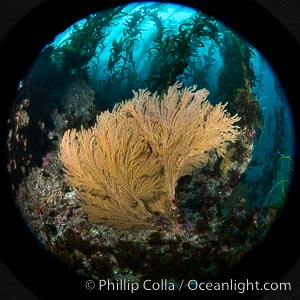
Garibaldi and California golden gorgonian on underwater rocky reef, San Clemente Island. The golden gorgonian is a filter-feeding temperate colonial species that lives on the rocky bottom at depths between 50 to 200 feet deep. Each individual polyp is a distinct animal, together they secrete calcium that forms the structure of the colony. Gorgonians are oriented at right angles to prevailing water currents to capture plankton drifting by.
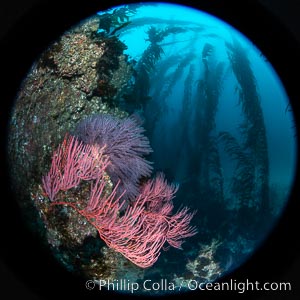
Red gorgonian on rocky reef, below kelp forest, underwater. The red gorgonian is a filter-feeding temperate colonial species that lives on the rocky bottom at depths between 50 to 200 feet deep. Gorgonians are typically oriented at right angles to prevailing water currents to capture plankton drifting by.
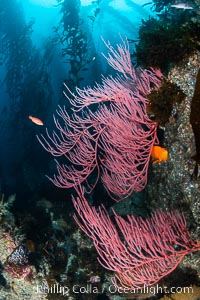
Red gorgonian on rocky reef, below kelp forest, underwater. The red gorgonian is a filter-feeding temperate colonial species that lives on the rocky bottom at depths between 50 to 200 feet deep. Gorgonians are typically oriented at right angles to prevailing water currents to capture plankton drifting by.
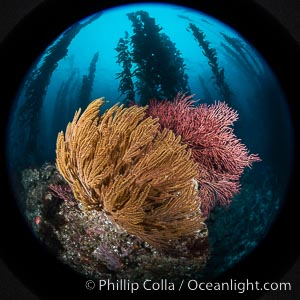
Garibaldi and California golden gorgonian on underwater rocky reef, San Clemente Island. The golden gorgonian is a filter-feeding temperate colonial species that lives on the rocky bottom at depths between 50 to 200 feet deep. Each individual polyp is a distinct animal, together they secrete calcium that forms the structure of the colony. Gorgonians are oriented at right angles to prevailing water currents to capture plankton drifting by.
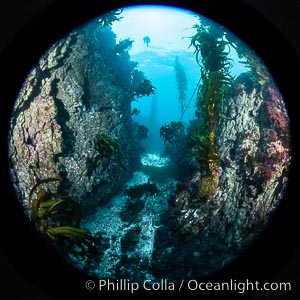
Spectacular underwater rocky reef topography at San Clemente Island, typified by crevices, walls and profuse vertical relief on the rocky ocean bottom below the kelp forest.
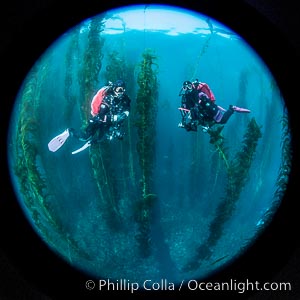
SCUBA divers, San Clemente Island.
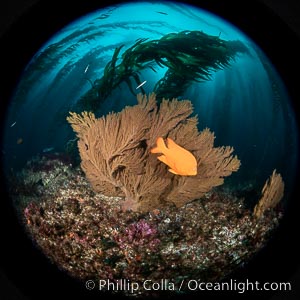
Garibaldi and California golden gorgonian on underwater rocky reef, San Clemente Island. The golden gorgonian is a filter-feeding temperate colonial species that lives on the rocky bottom at depths between 50 to 200 feet deep. Each individual polyp is a distinct animal, together they secrete calcium that forms the structure of the colony. Gorgonians are oriented at right angles to prevailing water currents to capture plankton drifting by.
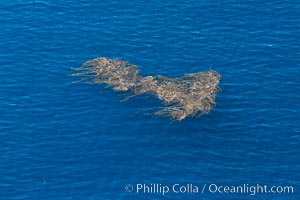
Drift kelp, a kelp paddy, floating patch of kelp on the open ocean which attracts marine life and forms of moving oasis of life, an open ocean habitat, aerial photo.
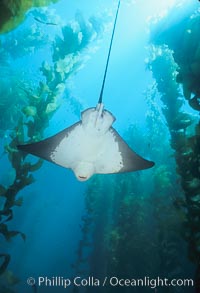
California bat ray in kelp forest.
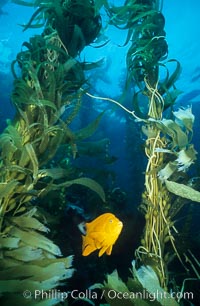
Garibaldi in kelp forest.
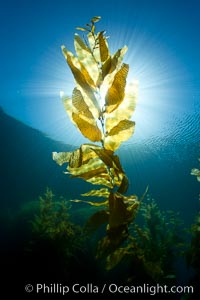
Giant kelp, blades, stipes and pneumatocysts, backlit by the sun in shallow water.
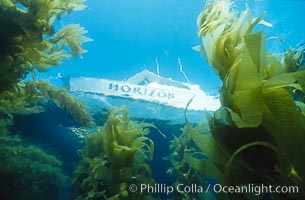
Boat Horizon above kelp forest.
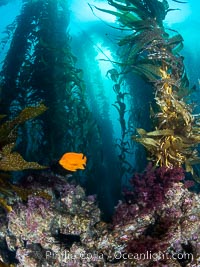
The Kelp Forest and Rocky Reef of San Clemente Island. Giant kelp grows rapidly, up to 2' per day, from the rocky reef on the ocean bottom to which it is anchored, toward the ocean surface where it spreads to form a thick canopy. Myriad species of fishes, mammals and invertebrates form a rich community in the kelp forest. Lush forests of kelp are found throughout California's Southern Channel Islands.
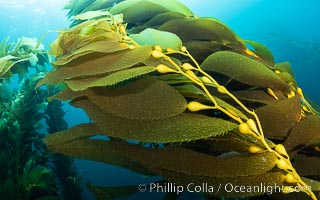
Kelp fronds showing pneumatocysts, bouyant gas-filled bubble-like structures which float the kelp plant off the ocean bottom toward the surface, where it will spread to form a roof-like canopy.
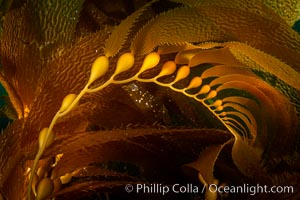
Kelp fronds and pneumatocysts. Pneumatocysts, gas-filled bladders, float the kelp plant off the ocean bottom toward the surface and sunlight, where the leaf-like blades and stipes of the kelp plant grow fastest. Giant kelp can grow up to 2' in a single day given optimal conditions. Epic submarine forests of kelp grow throughout California's Southern Channel Islands.
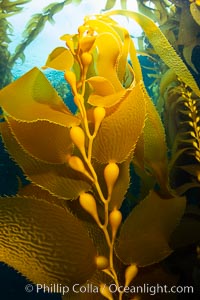
Kelp fronds and pneumatocysts. Pneumatocysts, gas-filled bladders, float the kelp plant off the ocean bottom toward the surface and sunlight, where the leaf-like blades and stipes of the kelp plant grow fastest. Giant kelp can grow up to 2' in a single day given optimal conditions. Epic submarine forests of kelp grow throughout California's Southern Channel Islands.
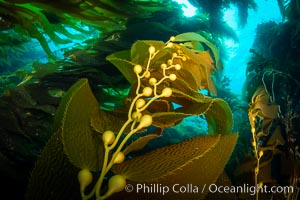
Kelp fronds and pneumatocysts. Pneumatocysts, gas-filled bladders, float the kelp plant off the ocean bottom toward the surface and sunlight, where the leaf-like blades and stipes of the kelp plant grow fastest. Giant kelp can grow up to 2' in a single day given optimal conditions. Epic submarine forests of kelp grow throughout California's Southern Channel Islands.
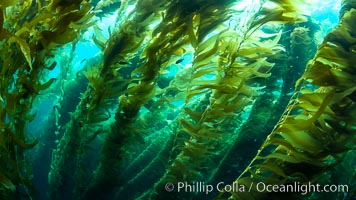
The Kelp Forest of San Clemente Island, California. A kelp forest. Giant kelp grows rapidly, up to 2' per day, from the rocky reef on the ocean bottom to which it is anchored, toward the ocean surface where it spreads to form a thick canopy. Myriad species of fishes, mammals and invertebrates form a rich community in the kelp forest. Lush forests of kelp are found throughout California's Southern Channel Islands.
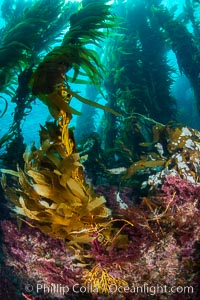
The Kelp Forest of San Clemente Island, California. A kelp forest. Giant kelp grows rapidly, up to 2' per day, from the rocky reef on the ocean bottom to which it is anchored, toward the ocean surface where it spreads to form a thick canopy. Myriad species of fishes, mammals and invertebrates form a rich community in the kelp forest. Lush forests of kelp are found throughout California's Southern Channel Islands.
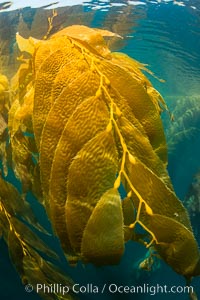
The Kelp Forest offshore of La Jolla, California. A kelp forest. Giant kelp grows rapidly, up to 2' per day, from the rocky reef on the ocean bottom to which it is anchored, toward the ocean surface where it spreads to form a thick canopy. Myriad species of fishes, mammals and invertebrates form a rich community in the kelp forest. Lush forests of kelp are found throughout California's Southern Channel Islands.
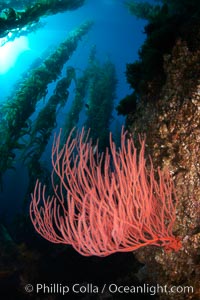
Red gorgonian on rocky reef, below kelp forest, underwater. The red gorgonian is a filter-feeding temperate colonial species that lives on the rocky bottom at depths between 50 to 200 feet deep. Gorgonians are oriented at right angles to prevailing water currents to capture plankton drifting by.
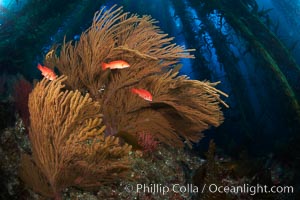
California golden gorgonian and small juvenile sheephead fishes on rocky reef, below kelp forest, underwater. The golden gorgonian is a filter-feeding temperate colonial species that lives on the rocky bottom at depths between 50 to 200 feet deep. Each individual polyp is a distinct animal, together they secrete calcium that forms the structure of the colony. Gorgonians are oriented at right angles to prevailing water currents to capture plankton drifting by.
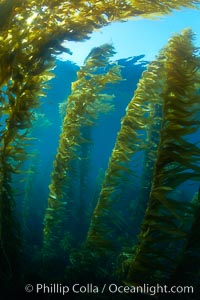
A kelp forest. Giant kelp grows rapidly, up to 2' per day, from the rocky reef on the ocean bottom to which it is anchored, toward the ocean surface where it spreads to form a thick canopy. Myriad species of fishes, mammals and invertebrates form a rich community in the kelp forest. Lush forests of kelp are found through California's Southern Channel Islands.
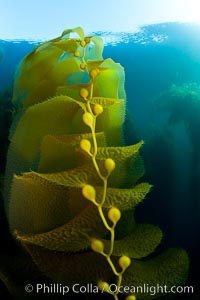
Kelp fronds and pneumatocysts. Pneumatocysts, gas-filled bladders, float the kelp plant off the ocean bottom toward the surface and sunlight, where the leaf-like blades and stipes of the kelp plant grow fastest. Giant kelp can grow up to 2' in a single day given optimal conditions. Epic submarine forests of kelp grow throughout California's Southern Channel Islands.
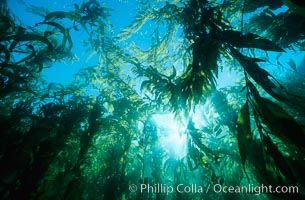
Kelp canopy.
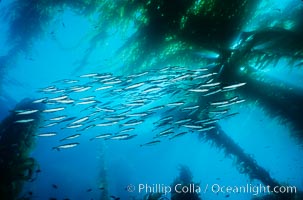
Jack mackerel schooling amid kelp forest.
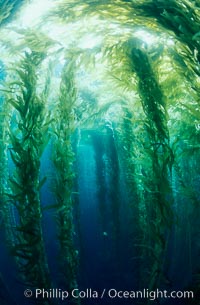
Kelp canopy.
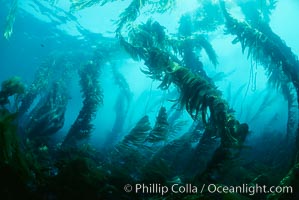
Kelp canopy.
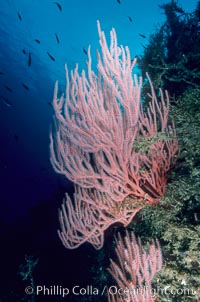
Red gorgonian clings to a vertical undersea reef at San Clemente Island, California.
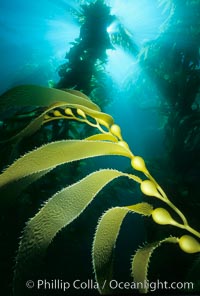
Kelp frond showing pneumatocysts.
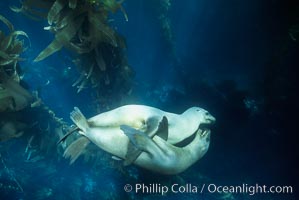
California sea lion, juveniles at play in kelp forest.
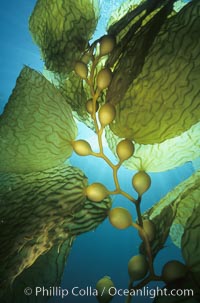
Kelp frond showing pneumatocysts.
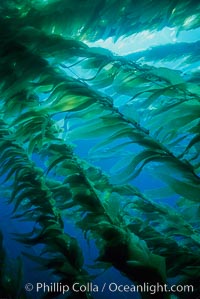
Kelp plants with fronds extended in current.
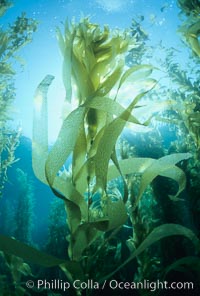
Kelp fronds.
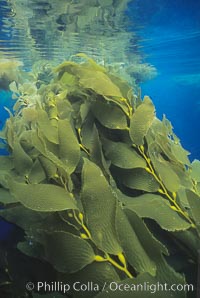
Kelp plants growing toward surface and spreading to form a canopy.
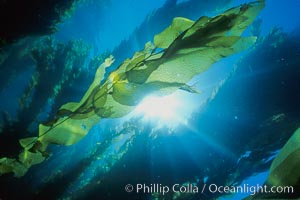
Kelp fronds and forest.
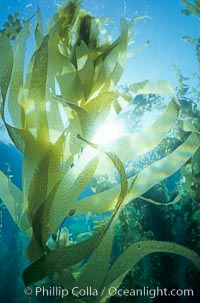
Kelp fronds.
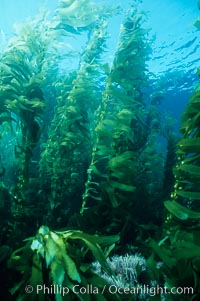
Kelp canopy.
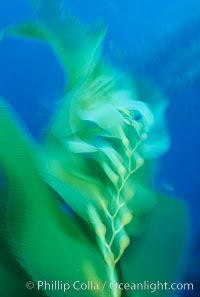
Kelp frond in motion, time exposure.
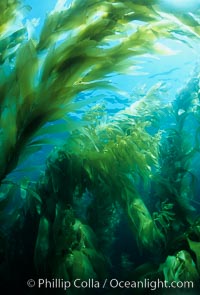
Kelp forest.
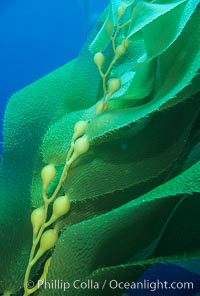
Kelp frond showing pneumatocysts.
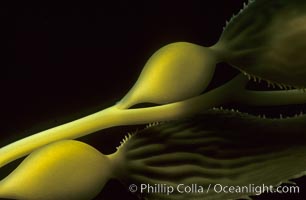
Kelp detail showing pneumatocysts (air bladders).
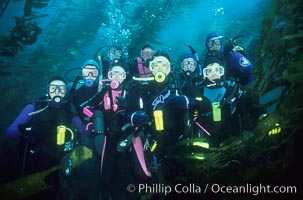
Divers and kelp forest.
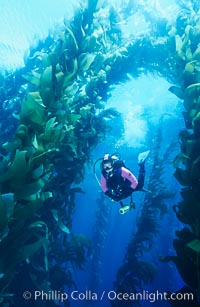
Diver amid kelp forest.
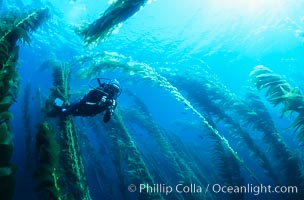
Diver amidst kelp forest.
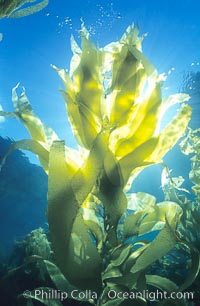
Kelp fronds.
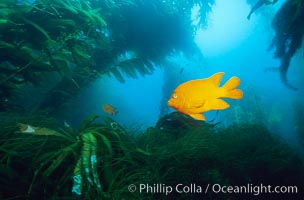
Garibaldi swimming over surfgrass in kelp forest.
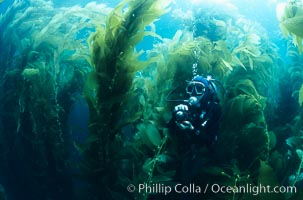
Diver amidst kelp forest.
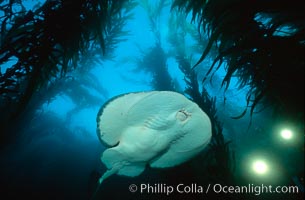
Pacific torpedo ray in kelp forest, filming lights.
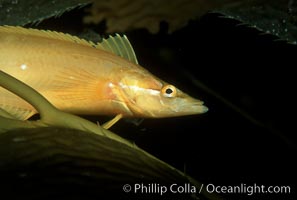
Giant kelpfish amidst kelp.
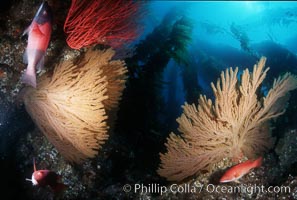
California Golden gorgonian in kelp forest.
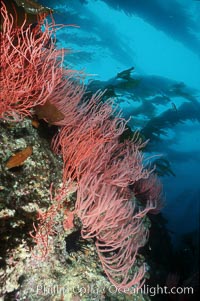
Red gorgonian on rocky reef below kelp forest.
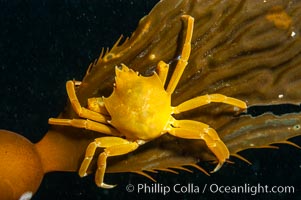
Northern kelp crab crawls amidst kelp blades and stipes, midway in the water column (below the surface, above the ocean bottom) in a giant kelp forest.
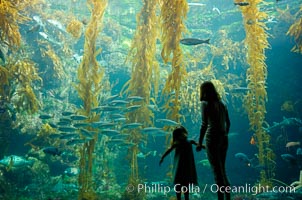
A parent and child admire the fascinating kelp forest tank at the Birch Aquarium at Scripps Institution of Oceanography, San Diego, California.
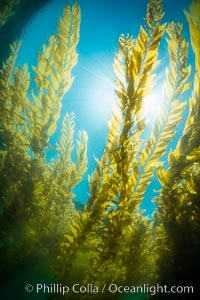
The Kelp Forest offshore of La Jolla, California. A kelp forest. Giant kelp grows rapidly, up to 2' per day, from the rocky reef on the ocean bottom to which it is anchored, toward the ocean surface where it spreads to form a thick canopy. Myriad species of fishes, mammals and invertebrates form a rich community in the kelp forest. Lush forests of kelp are found through California's Southern Channel Islands.
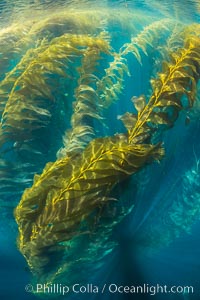
The Kelp Forest offshore of La Jolla, California. A kelp forest. Giant kelp grows rapidly, up to 2' per day, from the rocky reef on the ocean bottom to which it is anchored, toward the ocean surface where it spreads to form a thick canopy. Myriad species of fishes, mammals and invertebrates form a rich community in the kelp forest. Lush forests of kelp are found throughout California's Southern Channel Islands.
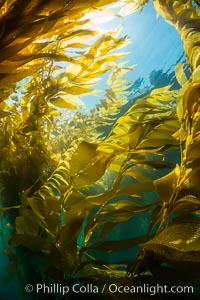
The Kelp Forest offshore of La Jolla, California. A kelp forest. Giant kelp grows rapidly, up to 2' per day, from the rocky reef on the ocean bottom to which it is anchored, toward the ocean surface where it spreads to form a thick canopy. Myriad species of fishes, mammals and invertebrates form a rich community in the kelp forest. Lush forests of kelp are found throughout California's Southern Channel Islands.
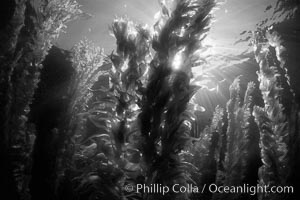
A kelp forest. Giant kelp grows rapidly, up to 2' per day, from the rocky reef on the ocean bottom to which it is anchored, toward the ocean surface where it spreads to form a thick canopy. Myriad species of fishes, mammals and invertebrates form a rich community in the kelp forest. Lush forests of kelp are found through California's Southern Channel Islands.
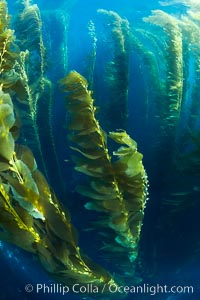
A kelp forest. Giant kelp grows rapidly, up to 2' per day, from the rocky reef on the ocean bottom to which it is anchored, toward the ocean surface where it spreads to form a thick canopy. Myriad species of fishes, mammals and invertebrates form a rich community in the kelp forest. Lush forests of kelp are found through California's Southern Channel Islands.
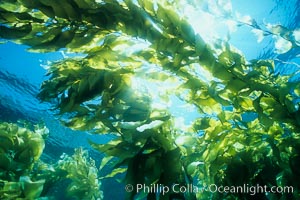
Kelp forest.
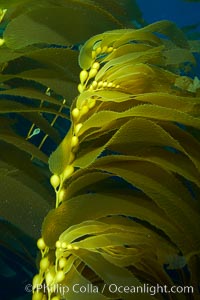
Kelp fronds and pneumatocysts. Pneumatocysts, gas-filled bladders, float the kelp plant off the ocean bottom toward the surface and sunlight, where the leaf-like blades and stipes of the kelp plant grow fastest. Giant kelp can grow up to 2' in a single day given optimal conditions. Epic submarine forests of kelp grow throughout California's Southern Channel Islands.
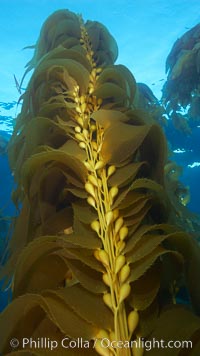
Kelp fronds and pneumatocysts. Pneumatocysts, gas-filled bladders, float the kelp plant off the ocean bottom toward the surface and sunlight, where the leaf-like blades and stipes of the kelp plant grow fastest. Giant kelp can grow up to 2' in a single day given optimal conditions. Epic submarine forests of kelp grow throughout California's Southern Channel Islands.
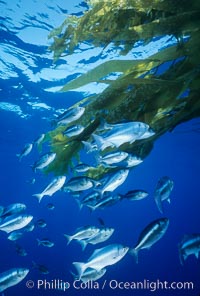
Half-moon perch schooling under offshore drift kelp, open ocean.
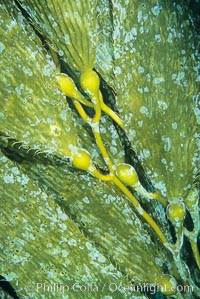
Kelp fronds with encrusting bryozoans.
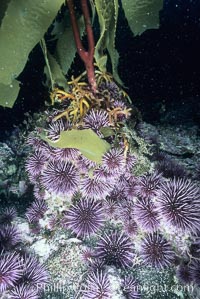
Purple urchins destroying/eating giant kelp holdfast.
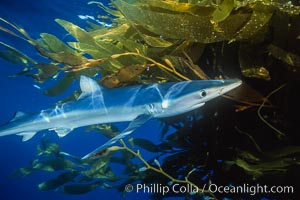
Blue shark and offshore drift kelp paddy, open ocean.
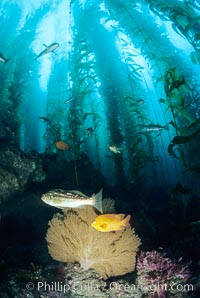
Gorgonian, garibaldi, kelp bass (calico bass) in kelp forest, San Clemente I.
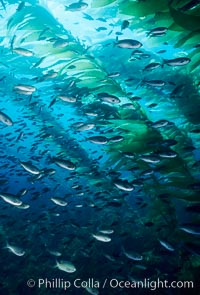
Blacksmith amidst kelp forest.
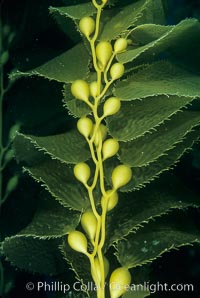
Kelp frond showing pneumatocysts (air bladders).
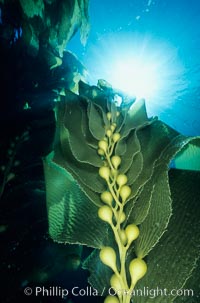
Kelp frond showing pneumatocysts (air bladders).
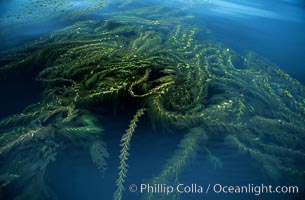
Kelp fronds reach the surface and spread out to form a canopy, Santa Barbara Island.
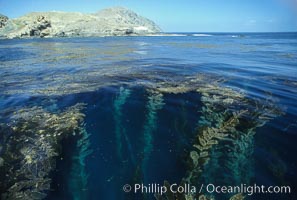
Giant kelp rises from the ocean depths toward sunlight and the surface. San Clemente Island.