We wrapped up our end-of-summer family vacation in Mammoth, which we love to visit in the summer. We took the bus to Devil’s Postpile National Monument, never having seen it before. Our timing could not have been better, we got there just before the sun went down, leaving the Devil’s Postpile itself in warm late-day light. The walk to the Postpile from the bus stop cannot even be called a hike, it is so short and flat. Next time, rather than visiting only the Devil’s Postpile, we’ll hike in from one of the surrounding trail heads and see some of the surrounding area too.
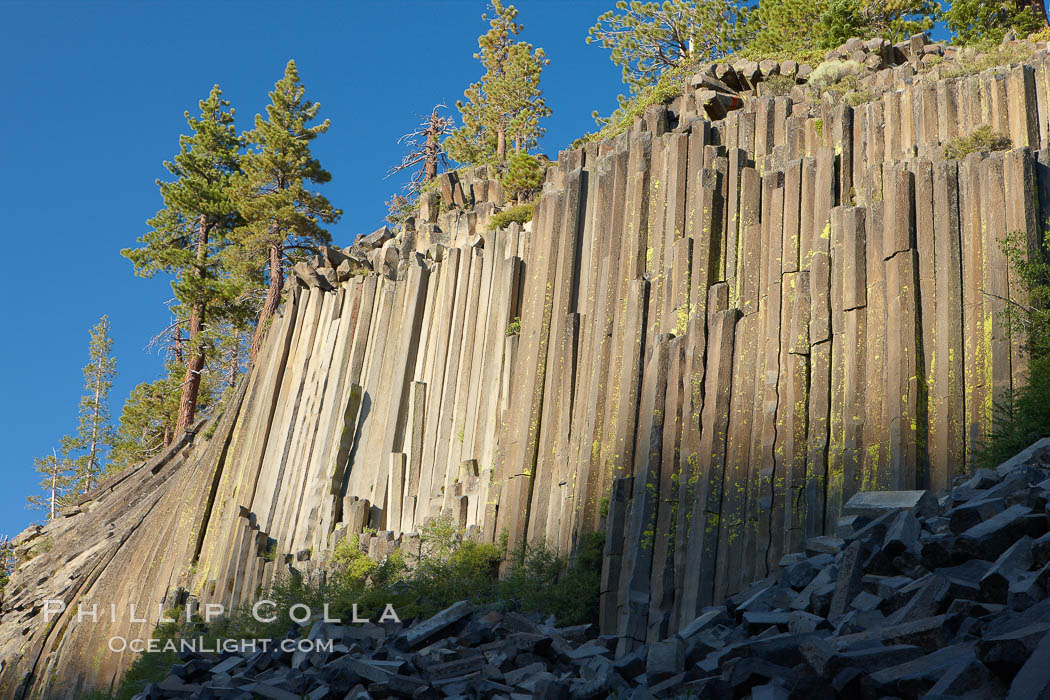
Devil’s Postpile, a spectacular example of columnar basalt. Once molten and under great pressure underground, the lava that makes up Devil’s Postpile cooled evenly and slowly, contracting and fracturing into polygonal-sided columns. The age of the formation is estimated between 100 and 700 thousand years old. Sometime after the basalt columns formed, a glacier passed over the formation, cutting and polishing the tops of the columns. The columns have from three to seven sides, varying because of differences in how quickly portions of the lava cooled.
Image ID: 23266
Location: Devils Postpile National Monument, California, USA
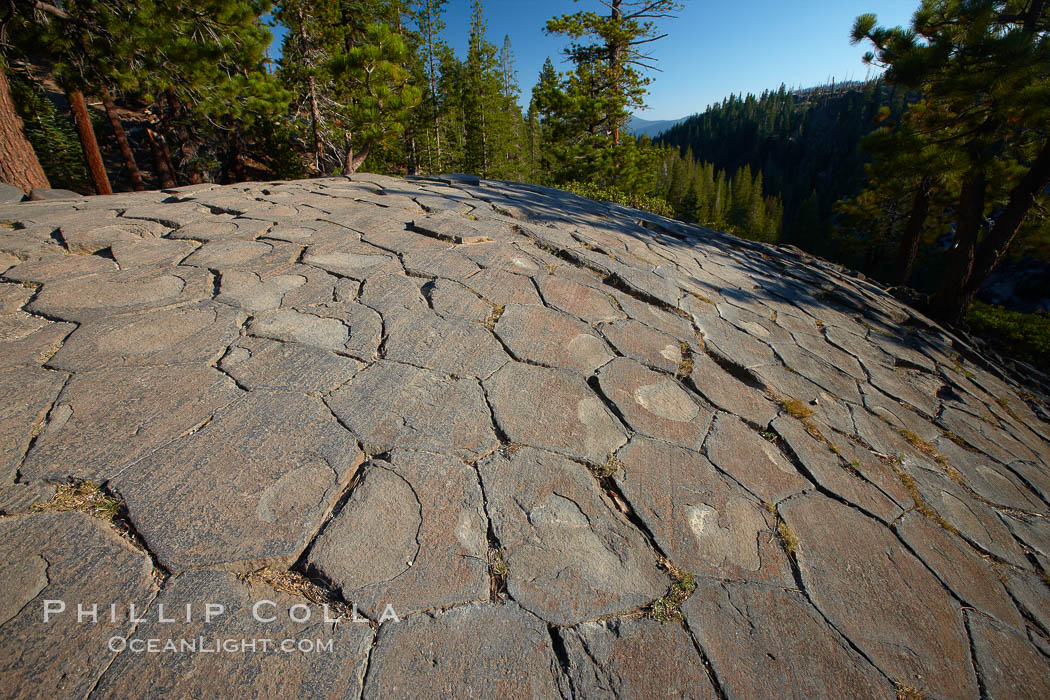
Devil’s Postpile, a spectacular example of columnar basalt. Once molten and under great pressure underground, the lava that makes up Devil’s Postpile cooled evenly and slowly, contracting and fracturing into polygonal-sided columns. The age of the formation is estimated between 100 and 700 thousand years old. Sometime after the basalt columns formed, a glacier passed over the formation, cutting and polishing the tops of the columns. The columns have from three to seven sides, varying because of differences in how quickly portions of the lava cooled.
Image ID: 23267
Location: Devils Postpile National Monument, California, USA
Interestingly, in spite of my having spent lots of time in Mammoth, I had never before seen Devil’s Postpile until last August. It is without a doubt the finest example of columnar jointing I’ve ever seen. The only previous example of such geologic columns that I have ever seen is in Yellowstone: the columns that make up Sheepeater Cliffs.
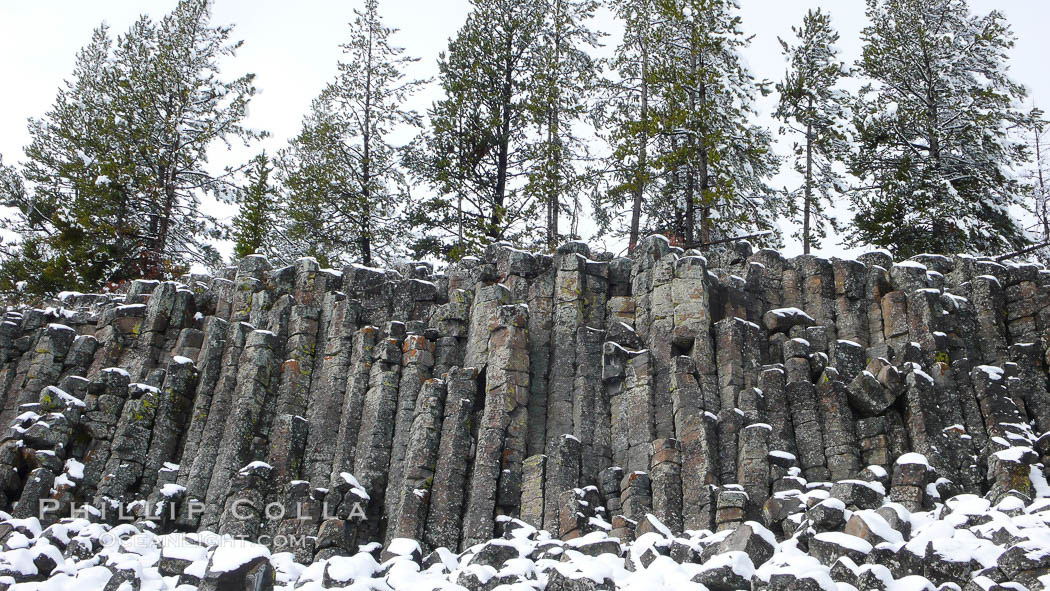
Sheepeater Cliffs, an example of columnar jointing in basalt due to shrinkage during cooling.
Image ID: 19794
Location: Yellowstone National Park, Wyoming, USA
Devil’s Postpile is much larger and more impressive, but Sheepeater Cliff’s is somewhat more accessible, being immediately adjacent to a road and picnic area. Both are pretty cool!
Trivia: Devil’s Postpile was originally part of Yosemite National Park, but the discovery of gold near Mammoth Lakes led to Devil’s Postpile being removed fromt the National Park and being placed in public land. A plan to dynamite the structure so that it would collapse into an adjacent creek to create a hydroelectric dam was proposed, but citizens managed to persuade President Taft to instead create the Devil’s Postpile National Monument to protect the spectacular geology and surrounding environment in 1911.
Keywords: Devil’s Postpile, photo, picture, Sierra Nevada, image, photograph, Mammoth Mountain.


