For researchers, the raised tail of a humpback whale is more than a dramatic moment at the surface. It is an identifying record that can connect one animal’s movements, survival, reproduction, and population history across years and locations. I was introduced to the practice of photographing humpback whale flukes in Hawaii in the 90s as a member of a research team and have continued to photograph flukes (and contribute them to research efforts) whenever the opportunity presents itself. The ones below were taken in 2026 in Southeast Alaska.
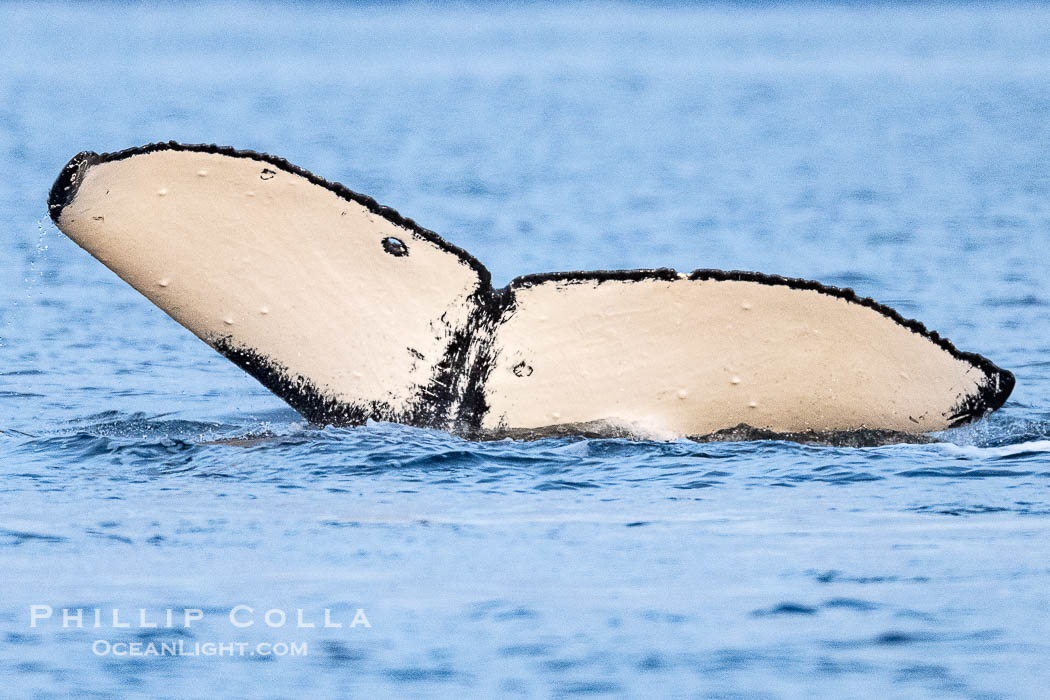
Humpback Whale Fluke ID. Perfect view of the ventral surface of a humpback whale's fluke, as the whale raises its fluke just before diving underwater. The white patches, spots, scratches and scalloping along the trailing edge of the fluke make this whale identifiable when it is observed from year to year.
Image ID: 41566
Location: Sitka Sound, Alaska
Humpback whale flukes are one of the most useful natural identification marks in marine mammal science. The underside of each tail is marked by a combination of black-and-white pigmentation, trailing-edge shape, notches, scars, and other features that can be photographed and compared much as a fingerprint is compared in people. The idea is generally credited to the early Southeast Alaska work of Charles Jurasz and the Jurasz family’s Sea Search Ltd.; NOAA Fisheries describes the Juneau-based Jurasz family as likely the first researchers anywhere to notice distinct humpback flukes and use them to document individual whales, while the National Park Service places the start of the Glacier Bay work in 1973 and identifies Jurasz as one of the first to recognize the value of fluke markings. The method was then formalized and spread through early scientific work by researchers including Steven Katona and Hal Whitehead, whose 1981 paper on identifying humpback whales from natural markings helped establish photo-identification as a standard research tool. What began as field observation in a few coastal study areas became a global way to follow animals that otherwise cross political boundaries and disappear into the open ocean for months at a time.
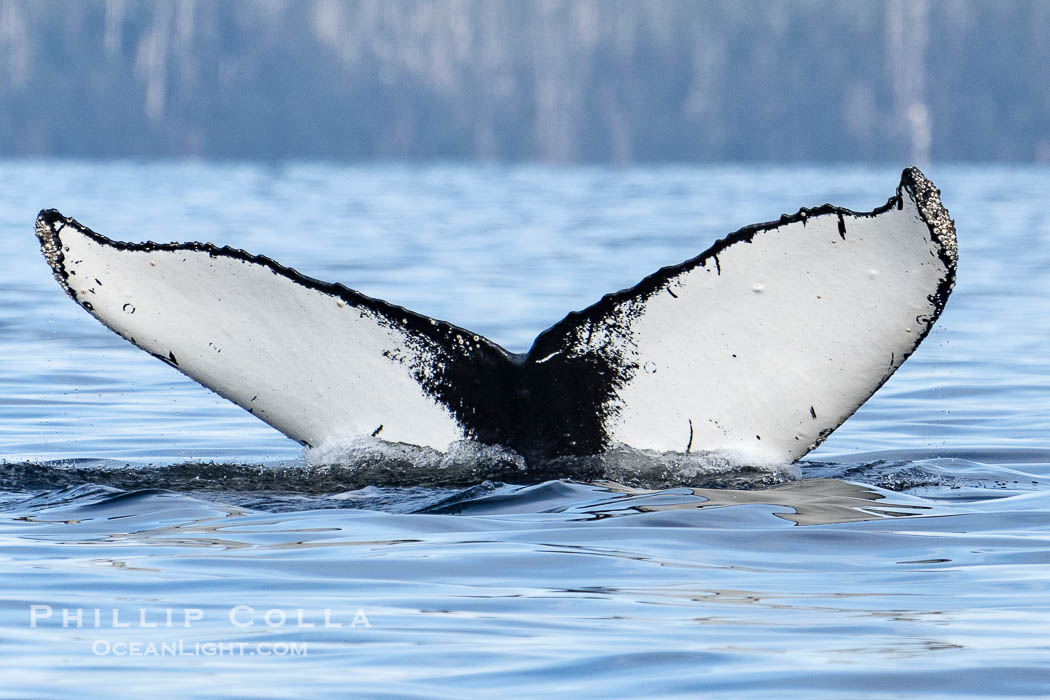
Humpback Whale Fluke ID. Perfect view of the ventral surface of a humpback whale's fluke, as the whale raises its fluke just before diving underwater. The white patches, spots, scratches and scalloping along the trailing edge of the fluke make this whale identifiable when it is observed from year to year.
Image ID: 41567
Location: Sitka Sound, Alaska
In capture/recapture terms, a usable fluke photograph is the “capture,” and a later photograph of the same whale is the “recapture.” Obviously, the whale is not physically captured; the photograph is the what is captured. When many whales are photographed in one place or season and then some of those same whales are photographed again elsewhere or later, researchers can estimate not only how many whales were seen, but how many were probably missed. That is an important leap: fluke identification turns scattered encounters into population science. NOAA explains that fluke pigmentation, shape, size, and scars are distinctive enough to identify individual humpbacks over time, and the large North Pacific study "SPLASH" used this principle in a formal capture-recapture design. In that project, researchers used more than 18,000 fluke-identification photographs from 2004–2006 to estimate North Pacific abundance at about 21,063 humpbacks after bias correction. The strength of the method is that it can answer questions that ordinary sightings cannot: whether a whale has returned to the same feeding ground, whether it has moved between breeding grounds, whether a female has calved repeatedly, whether survival is changing, and whether a population is actually growing or merely being watched more often.
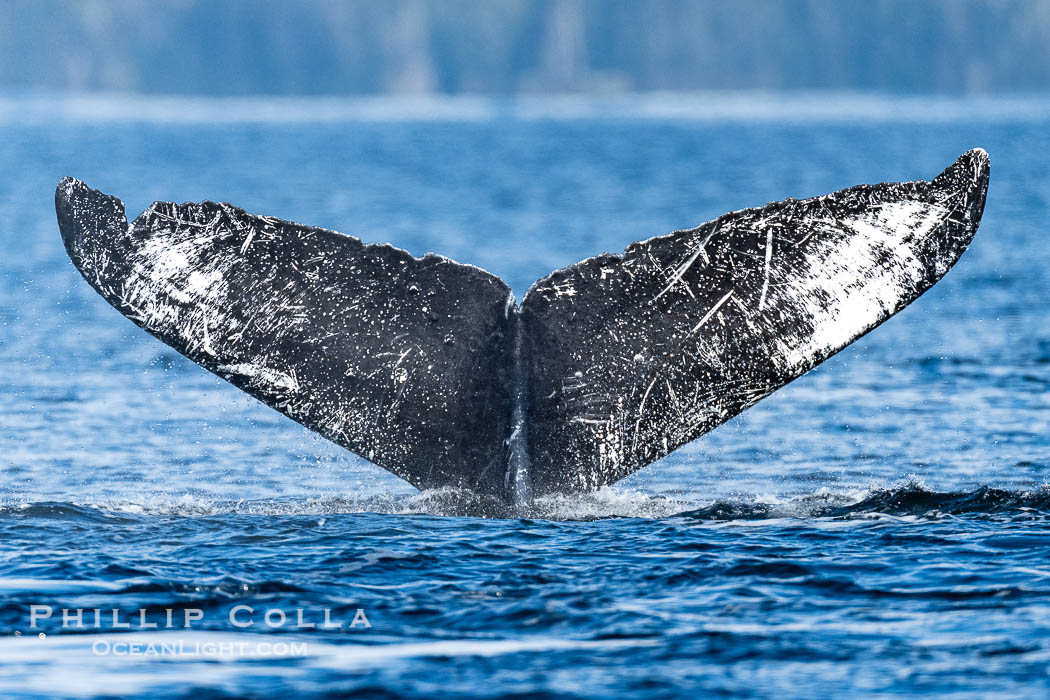
Humpback Whale Fluke ID. Perfect view of the ventral surface of a humpback whale's fluke, as the whale raises its fluke just before diving underwater. The white patches, spots, scratches and scalloping along the trailing edge of the fluke make this whale identifiable when it is observed from year to year.
Image ID: 41736
Location: Sitka Sound, Alaska
The scientific value of fluke identification comes from repetition over years and decades. A single fluke photograph may identify one animal; thousands of repeated identifications create life histories, family histories, migration records, and population models. The International Whaling Commission notes that much of what is known about humpbacks has come from photo-identification studies, especially in long-studied feeding grounds such as Alaska and the Gulf of Maine, where some individuals have been monitored for more than 40 years. These records have shown that humpbacks often return to particular feeding areas, that mothers and calves can be followed across years, that breeding and feeding regions are connected by regular migration routes, and that some populations have recovered strongly since commercial whaling. They have also made whale research more individual: animals are no longer only points on a map or counts in a survey, but known whales with ages, reproductive histories, movement records, wounds, recoveries, and sometimes documented deaths. The Center for Coastal Studies describes its Gulf of Maine catalog as containing information on age, sex, relatedness, reproduction, behavior, distribution, and human impacts, which shows how a fluke catalog can become a long-term biological archive.
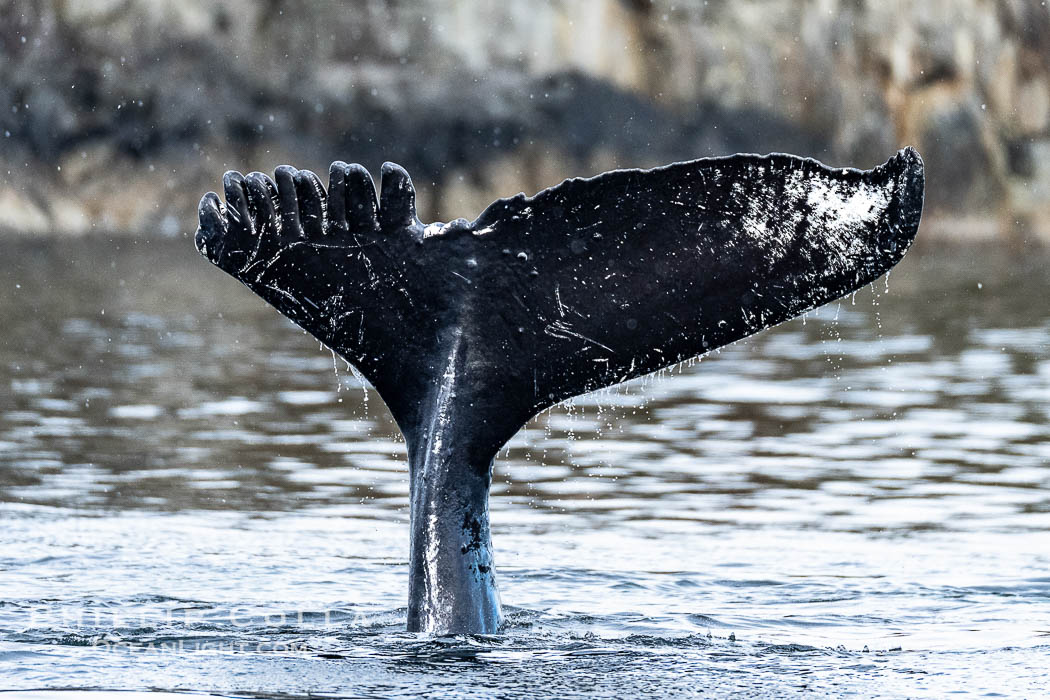
Humpback Whale Fluke ID. Perfect view of the ventral surface of a humpback whale's fluke, as the whale raises its fluke just before diving underwater. The white patches, spots, scratches and scalloping along the trailing edge of the fluke make this whale identifiable when it is observed from year to year.
Image ID: 41568
Location: Sitka Sound, Alaska
The largest published concentration of fluke-identification work is now in the North Pacific, especially the central and eastern North Pacific, although important long-running research also exists in the North Atlantic and Southern Hemisphere. The modern North Pacific Photo-ID collaboration combined older catalogs, newer research collections, and community-science submissions into a large dataset. In Scientific Reports, Cheeseman and colleagues reported 30,100 individual North Pacific humpbacks documented from 1977 through August 2022, including 27,956 unique individuals in 157,350 encounters during the 2001–2021 study period. The same paper notes that effort was uneven and skewed toward the central and eastern North Pacific, with data gaps in the western North Pacific, remote Aleutian feeding areas, and parts of the Mexican offshore breeding range. Regional catalogs remain essential within that broader picture: Cascadia Research reports more than 7,100 unique humpbacks and nearly 102,000 encounters in its U.S. West Coast catalog through 2022, while Allied Whale reports more than 11,000 individuals in the North Atlantic Humpback Whale Catalog. Globally, Happywhale reports more than 105,000 identified humpback whales, a measure of how large individual identification has become when formal research catalogs and public submissions are connected by automated matching and expert review.
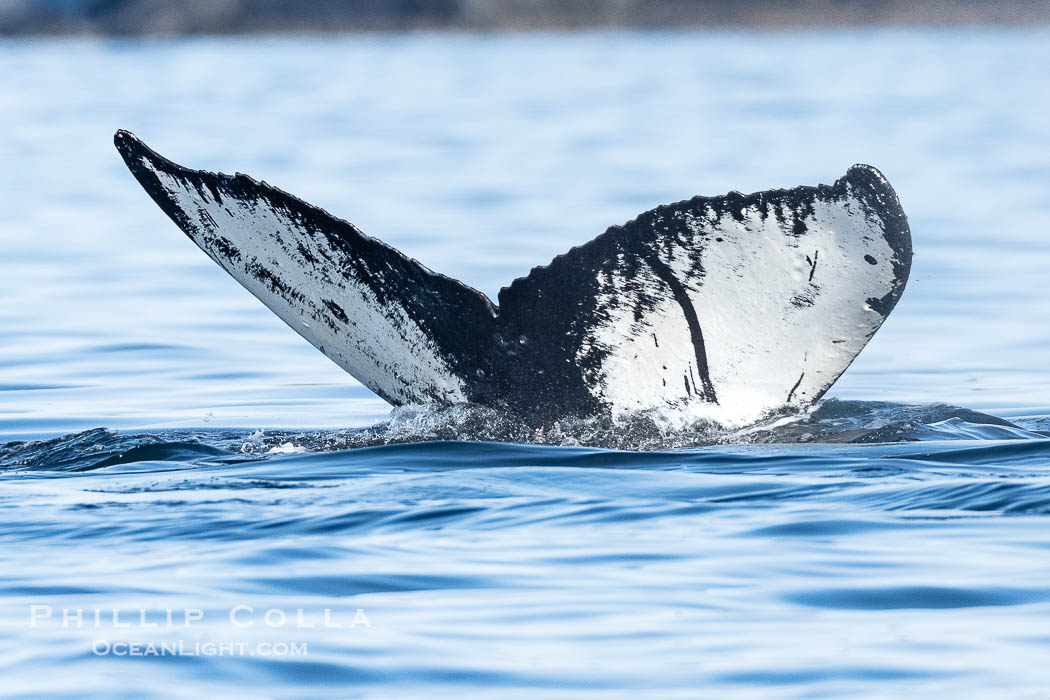
Humpback Whale Fluke ID. Perfect view of the ventral surface of a humpback whale's fluke, as the whale raises its fluke just before diving underwater. The white patches, spots, scratches and scalloping along the trailing edge of the fluke make this whale identifiable when it is observed from year to year.
Image ID: 41569
Location: Sitka Sound, Alaska
Population size estimates vary because humpbacks are divided into multiple breeding populations, feeding aggregations, management units, and survey regions, and because estimates come from different methods and years. As a broad global figure, NAMMCO summarizes the IUCN estimate at about 135,000 humpback whales worldwide, including roughly 84,000 mature individuals. The North Atlantic is often summarized at least in the tens of thousands, with NAMMCO giving at least about 35,000 and the International Whaling Commission listing regional North Atlantic survey estimates that include a little under 25,000 in the northeast Atlantic and about 12,000 in Canadian feeding-ground surveys. The North Pacific was estimated at more than 21,000 in 2004–2006 by SPLASH, then later work estimated a rise to about 33,488 whales in 2012 followed by a decline to about 26,662 by 2021. In the Southern Hemisphere, the IWC reports strong recovery in many areas and population models predicting more than 96,000 Southern Hemisphere humpbacks in 2015. Those big numbers should not obscure small, vulnerable populations: PLOS ONE research on Arabian Sea humpbacks described a highly isolated, non-migratory population with a mark-recapture estimate of about 82 individuals, with wide uncertainty. NOAA’s current U.S. management framework reflects this uneven recovery: 14 distinct population segments are recognized, with four listed as endangered, one as threatened, and nine not listed under the Endangered Species Act.
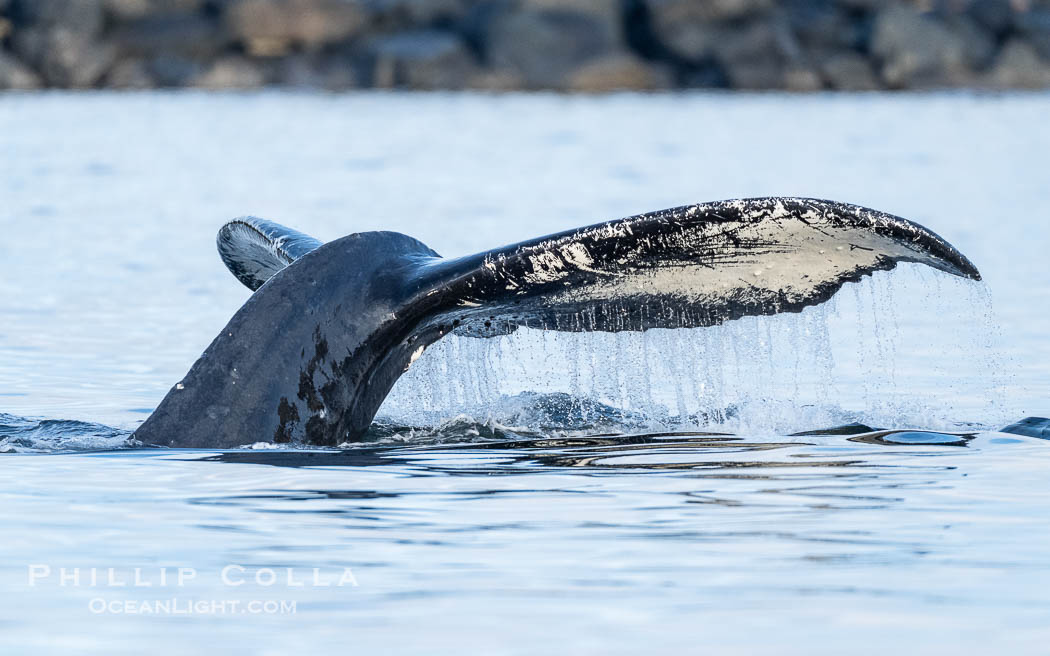
Humpback whale fluke raised out of the water before a dive.
Image ID: 41597
Location: Sitka Sound, Alaska
The state of the research is shifting from hand-matched regional catalogs toward large, collaborative, AI-assisted systems, but the underlying scientific principle is still the same: identify the individual, then ask what its repeated appearances reveal. Manual expertise remains important because image quality, changing scars, calf-to-adult changes, and look-alike flukes can produce errors. The new development is scale. A 2021 Mammalian Biology study described a convolutional neural-network system that reduced image-management time by at least 98 percent and reduced missed-match rates compared with older manual workflows. The North Pacific Photo-ID study reported automated fluke matching accuracy of about 97–99 percent for good- to high-quality images, while still emphasizing review, collaboration, and awareness of effort bias. The newest and most important questions are therefore less about whether flukes can identify whales—that question has been answered—and more about what long-term identifications reveal in a changing ocean. NOAA’s summary of recent Royal Society Open Science work reports that North Pacific humpbacks rose from about 16,875 in 2002 to a peak of 33,488 in 2012, then declined by about 7,000 whales by 2021 after the 2014–2016 marine heatwave disrupted prey availability. Fluke-identification research has helped answer where whales go, how populations recover, how individuals persist, and how mothers reproduce; it is now being used to ask how quickly populations respond to marine heatwaves, prey shifts, entanglement, ship strikes, habitat change, and the uneven pressures of climate change.
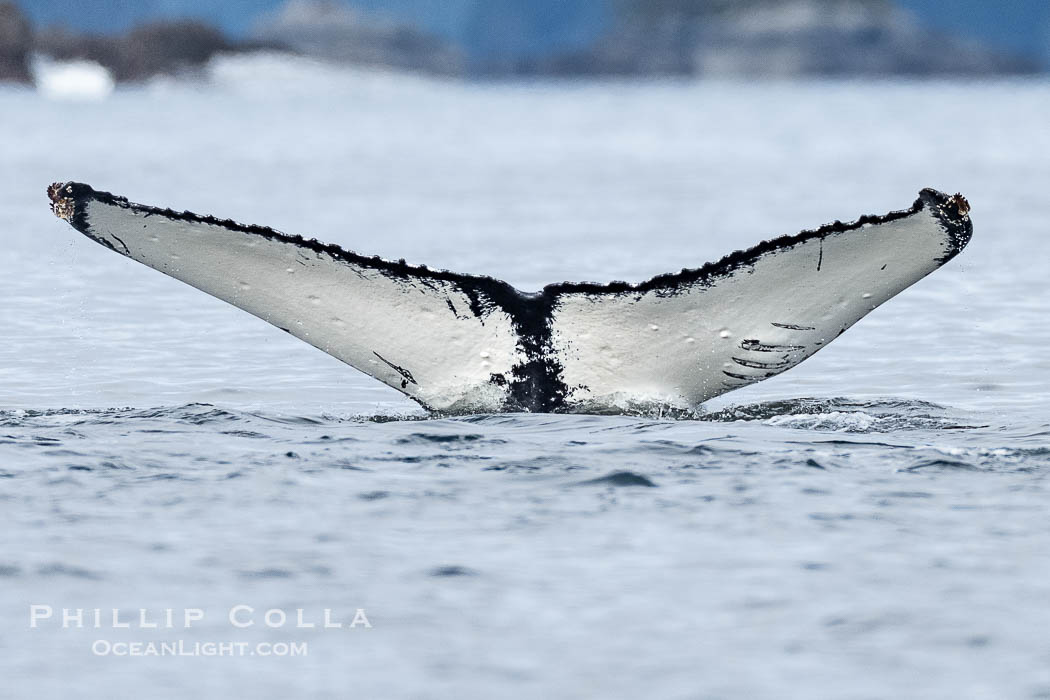
Humpback Whale Fluke ID. Perfect view of the ventral surface of a humpback whale's fluke, as the whale raises its fluke just before diving underwater. The white patches, spots, scratches and scalloping along the trailing edge of the fluke make this whale identifiable when it is observed from year to year.
Image ID: 41570
Location: Sitka Sound, Alaska
Resources:
- NOAA Fisheries: Jurasz family and early fluke identification
- National Park Service: Glacier Bay fluke-identification background
- Katona and Whitehead, 1981
- NOAA Fisheries humpback whale species page
- Barlow et al. North Pacific capture-recapture estimate
- Scientific Reports North Pacific Photo-ID dataset
- Cascadia Research U.S. West Coast Photo-ID Project
- Cascadia Research advanced image-recognition study
- Happywhale global identification project
- NOAA Fisheries summary of North Pacific climate-response findings
- International Whaling Commission humpback whale species page
- International Whaling Commission population status page
- NAMMCO humpback whale overview
- NOAA Fisheries ESA listing information
- Center for Coastal Studies Gulf of Maine Humpback Whale Catalog
- Allied Whale North Atlantic Humpback Whale Catalog
- PLOS ONE Arabian Sea humpback whale study
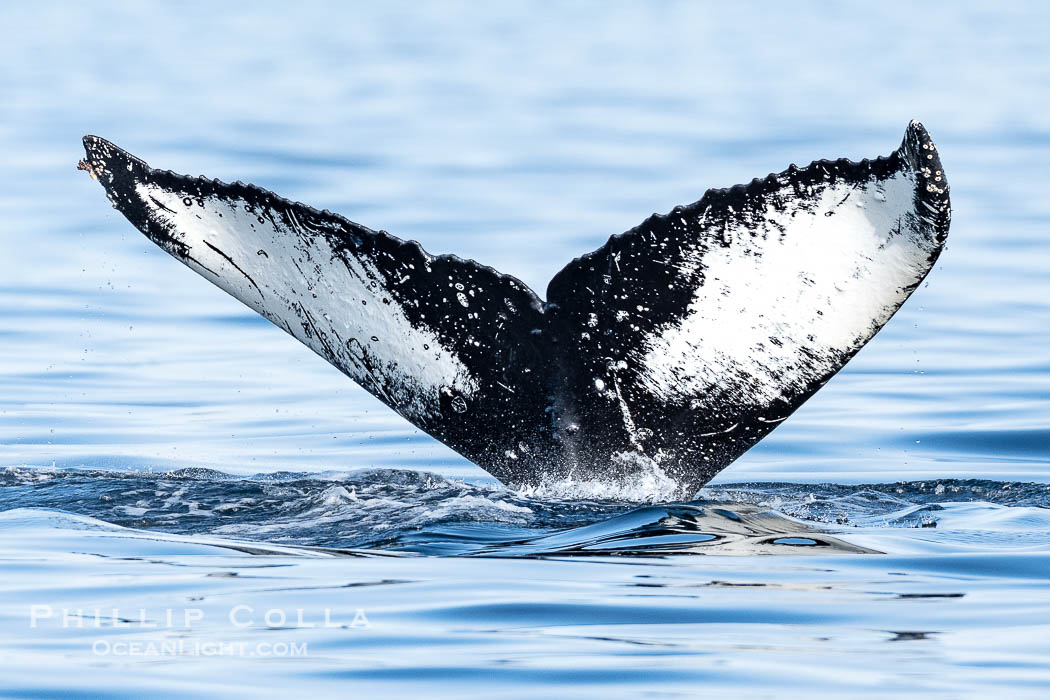
Humpback Whale Fluke ID. Perfect view of the ventral surface of a humpback whale's fluke, as the whale raises its fluke just before diving underwater. The white patches, spots, scratches and scalloping along the trailing edge of the fluke make this whale identifiable when it is observed from year to year.
Image ID: 41571
Location: Sitka Sound, Alaska
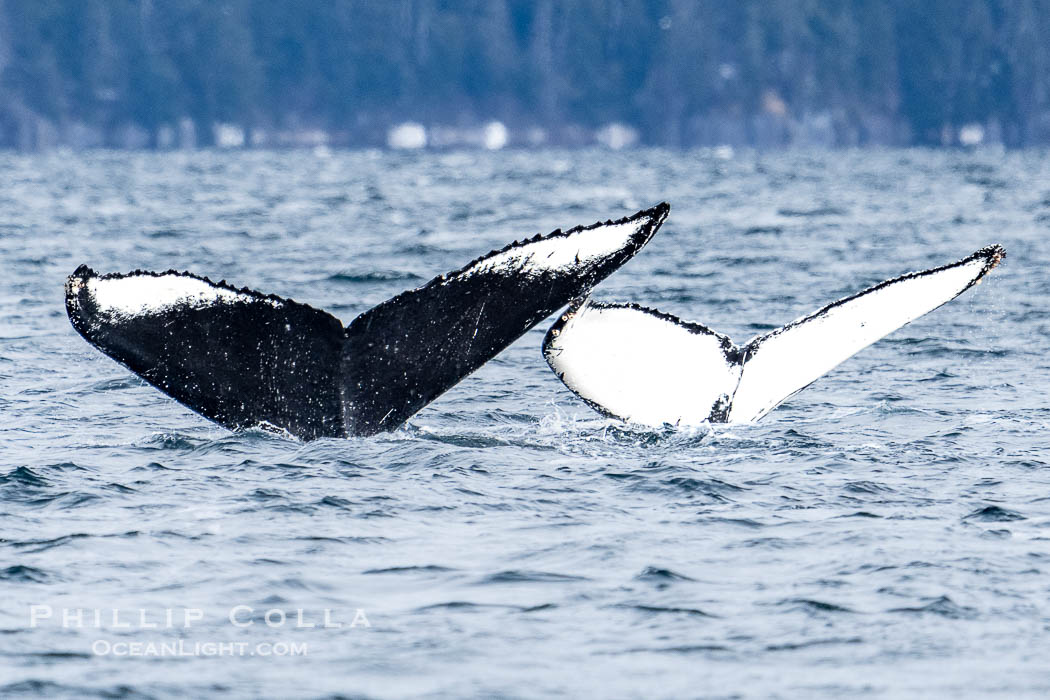
Humpback Whale Fluke ID. Perfect view of the ventral surface of a humpback whale's fluke, as the whale raises its fluke just before diving underwater. The white patches, spots, scratches and scalloping along the trailing edge of the fluke make this whale identifiable when it is observed from year to year.
Image ID: 41572
Location: Sitka Sound, Alaska
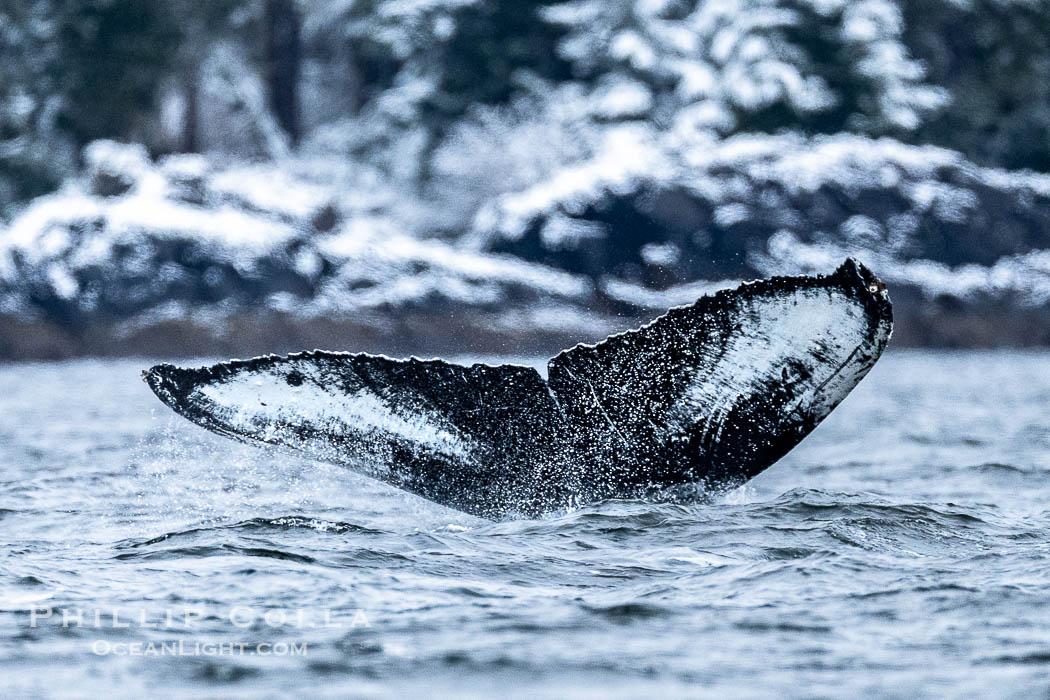
Humpback Whale Fluke ID. Perfect view of the ventral surface of a humpback whale's fluke, as the whale raises its fluke just before diving underwater. The white patches, spots, scratches and scalloping along the trailing edge of the fluke make this whale identifiable when it is observed from year to year.
Image ID: 41573
Location: Sitka Sound, Alaska
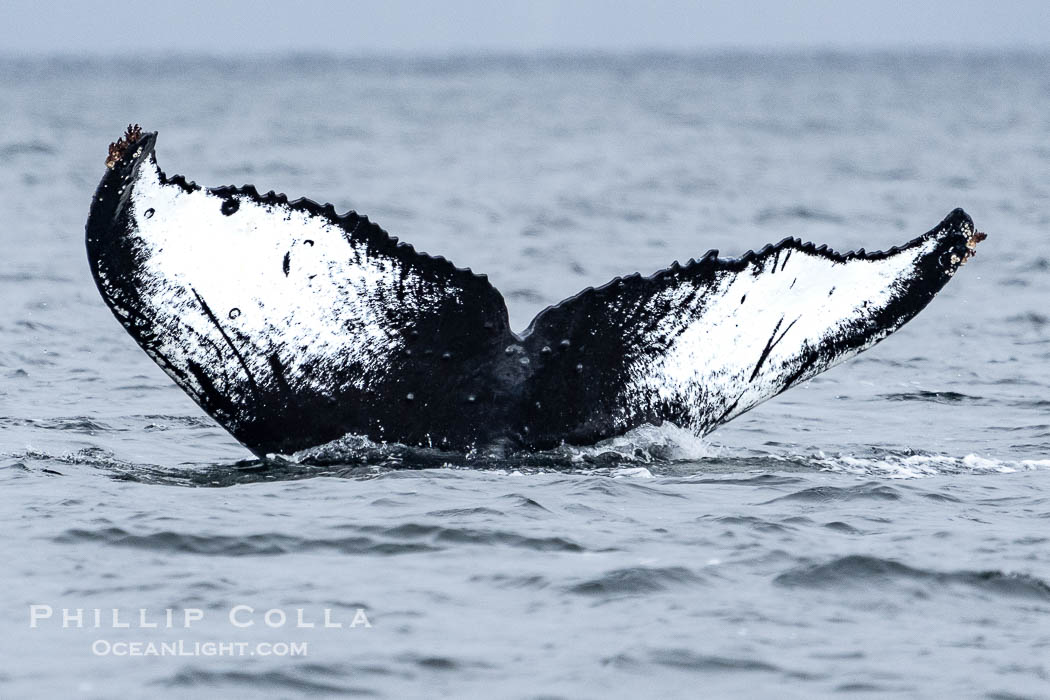
Humpback Whale Fluke ID. Perfect view of the ventral surface of a humpback whale's fluke, as the whale raises its fluke just before diving underwater. The white patches, spots, scratches and scalloping along the trailing edge of the fluke make this whale identifiable when it is observed from year to year.
Image ID: 41574
Location: Sitka Sound, Alaska
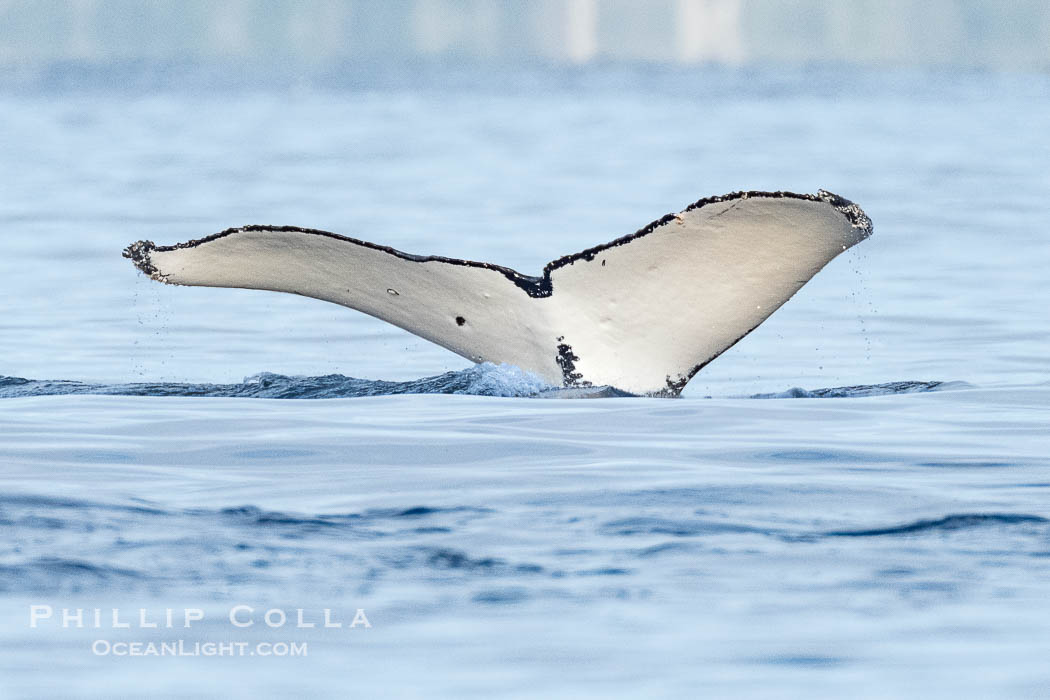
Humpback Whale Fluke ID. Perfect view of the ventral surface of a humpback whale's fluke, as the whale raises its fluke just before diving underwater. The white patches, spots, scratches and scalloping along the trailing edge of the fluke make this whale identifiable when it is observed from year to year.
Image ID: 41575
Location: Sitka Sound, Alaska
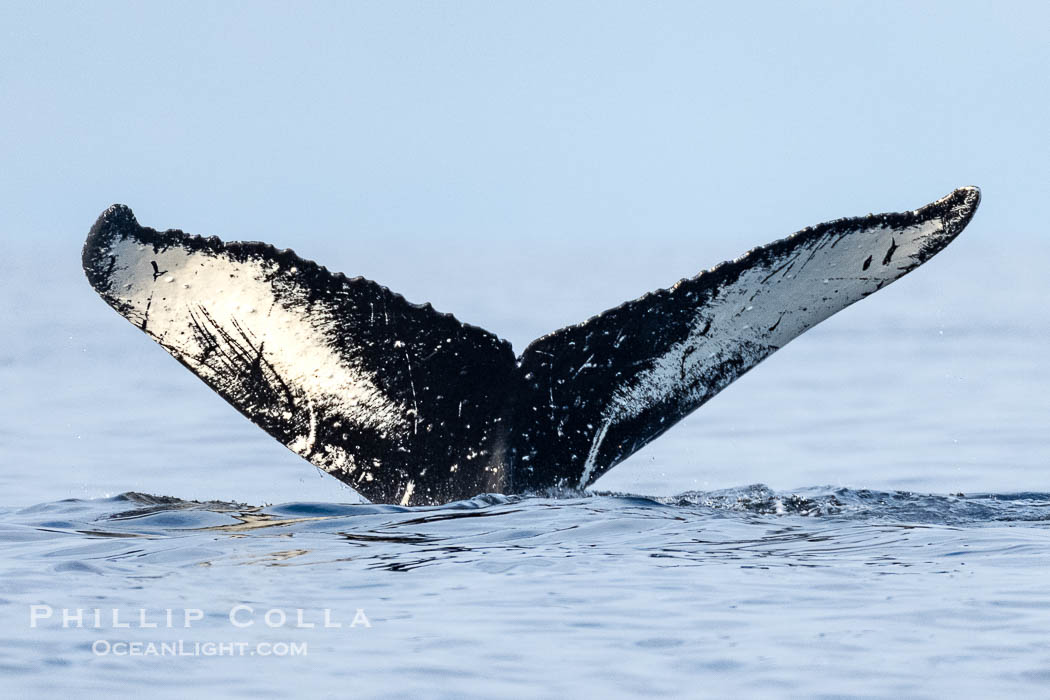
Humpback Whale Fluke ID. Perfect view of the ventral surface of a humpback whale's fluke, as the whale raises its fluke just before diving underwater. The white patches, spots, scratches and scalloping along the trailing edge of the fluke make this whale identifiable when it is observed from year to year.
Image ID: 41576
Location: Sitka Sound, Alaska
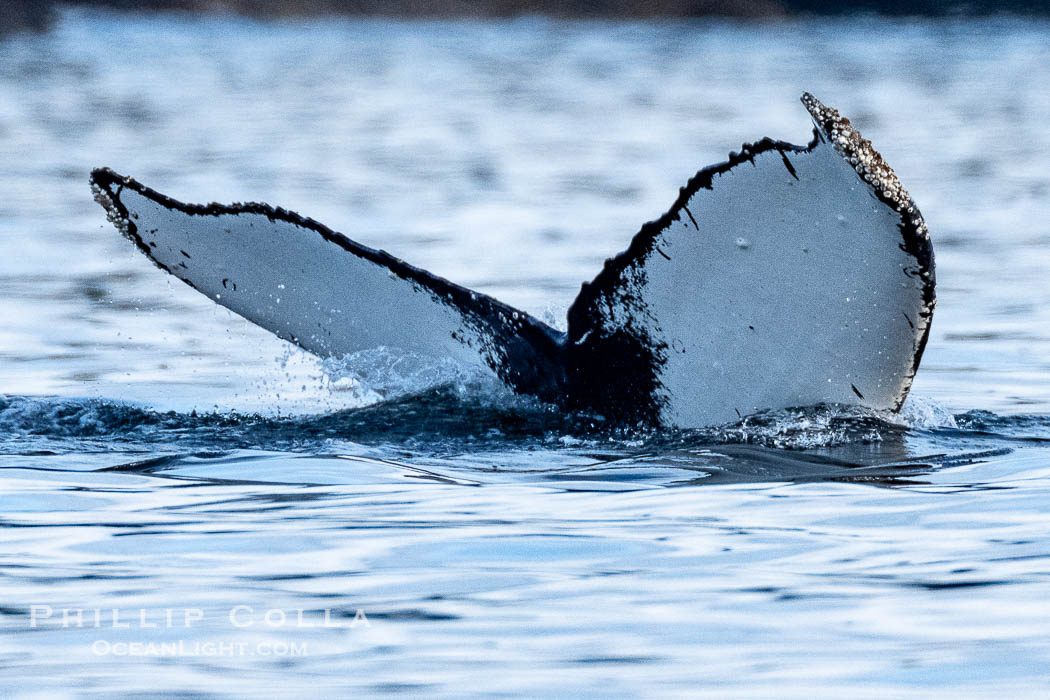
Humpback Whale Fluke ID. Perfect view of the ventral surface of a humpback whale's fluke, as the whale raises its fluke just before diving underwater. The white patches, spots, scratches and scalloping along the trailing edge of the fluke make this whale identifiable when it is observed from year to year.
Image ID: 41577
Location: Sitka Sound, Alaska
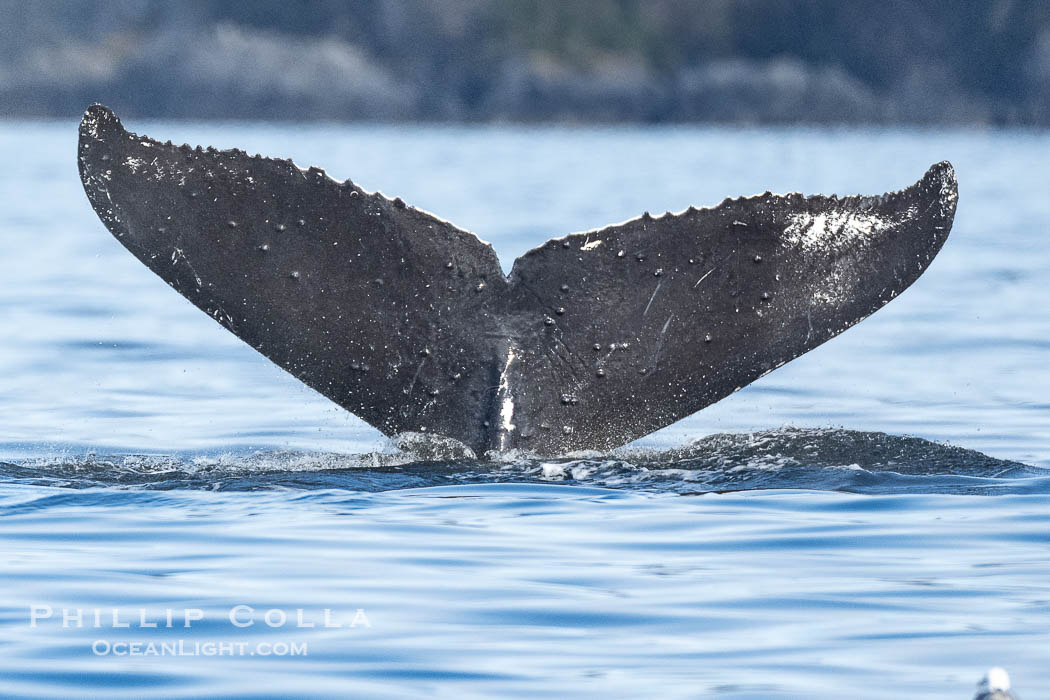
Humpback Whale Fluke ID. Perfect view of the ventral surface of a humpback whale's fluke, as the whale raises its fluke just before diving underwater. The white patches, spots, scratches and scalloping along the trailing edge of the fluke make this whale identifiable when it is observed from year to year.
Image ID: 41578
Location: Sitka Sound, Alaska
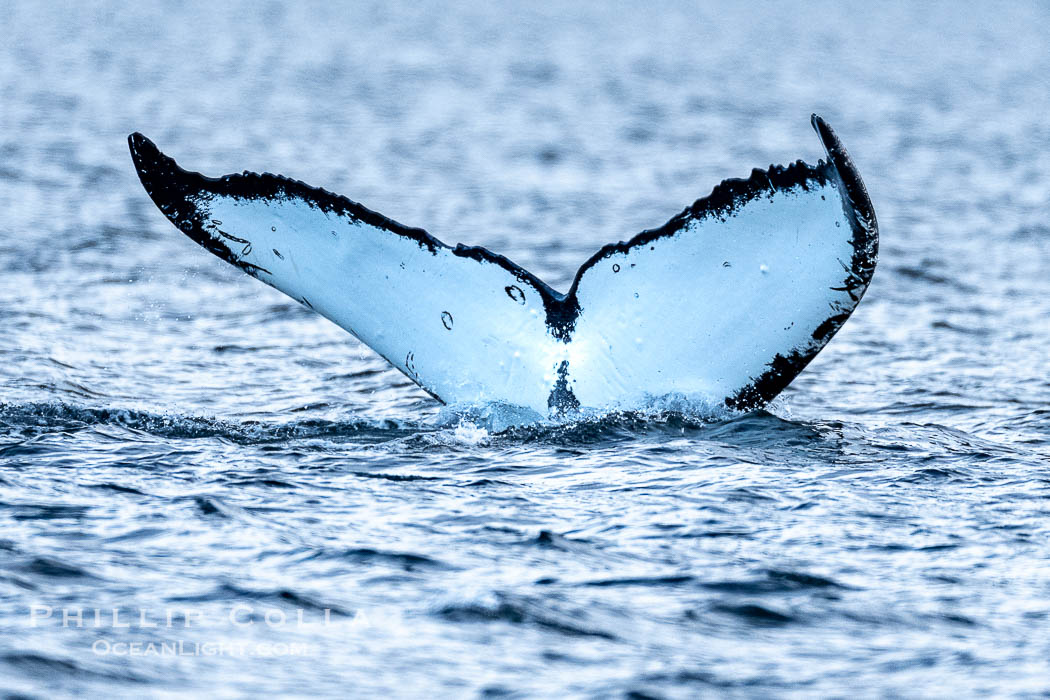
Humpback Whale Fluke ID. Perfect view of the ventral surface of a humpback whale's fluke, as the whale raises its fluke just before diving underwater. The white patches, spots, scratches and scalloping along the trailing edge of the fluke make this whale identifiable when it is observed from year to year.
Image ID: 41579
Location: Sitka Sound, Alaska


